
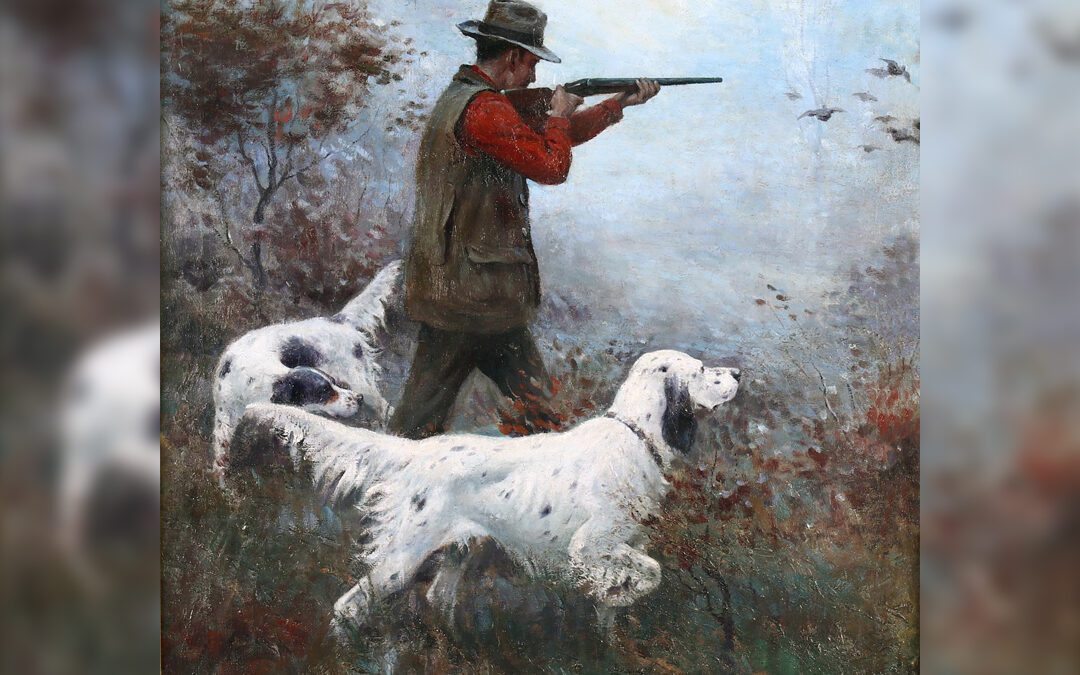
Some of the finest sporting literature ever published delves deeply into outdoor interactions between seasoned veterans of the field and apprentice hunters, fishermen or natural historians.
Unquestionably the finest example of this literary genre is Robert Ruark’s timeless tales of “The Old Man and the Boy.” First published as a long-running and immensely popular series of columns in Field & Stream magazine, most of these delightful tales subsequently found more permanent form in a pair of books, The Old Man and the Boy and The Old Man’s Boy Grows Older. Ten additional pieces that did not appear in either of these anthologies were included in The Lost Classics of Robert Ruark edited and compiled by the present writer.
Taken in their totality, these poignant, powerful and instructive stories, mostly set on the North Carolina coast, simultaneously capture the reader’s heart and provide a splendid example of what I have chosen to describe as the “Grandfather Factor.” They describe the interaction between a carefree youngster, “The Boy,” wildly in love with all aspects of the natural world and his sage mentor, his loving and infinitely patient grandfather, “The Old Man.” Autobiographical in nature but with plenty of Ruark’s literary flourishes thrown in the mix, the material is something that should be squarely at the top of every outdoor lover’s reading list. Simply put, there’s nothing finer.
Countless other writers have delved into the special sort of partnership that can grow out of situations where a generation is skipped. In the first half of the 19th century, Colonel Peter Hawker, a well-known British sportsman, published Instructions to Young Sportsmen in All that Relates to Shooting and Hunting. While more of a primer or instructional work than a trans-generational chronicle of partnerships between young and old, the book, which has been constantly in print for the better part of two centuries, readily recognizes the critical role seasoned shooters could play in doing what in today’s parlance is often described as “passing it on.”
Another less acclaimed writer, albeit one who merits close attention from any thinking sportsman, is Tennessean Gary Cook. In his book The Old Man, this now-retired Tennessee Wildlife Resources Agency biologist takes readers on journeys with a master teacher that are as fascinating as they are filled with common sense and lessons for life afield. Originally published as a series of columns in Tennessee Wildlife magazine, and almost certainly inspired by Ruark’s work, Cook’s engaging, well-written pieces highlight the wisdom a patient, insightful sportsman can share with a young boy or, indeed, in this case, a multitude of readers.
That rightly revered bard of the North Carolina high country, John Parris, wrote scores of his “Roaming the Mountains” columns for the Asheville Citizen-Times on experiences with his grandfather, and many of them subsequently found their way into books. Those included Roaming the Mountains, taken from the column’s title, along with Mountain Bred; My Mountains, My People; and These Storied Mountains. There are other examples of this type of material — lots of them. In a pair of my own books, A Smoky Mountain Boyhood and Fishing for Chickens: A Smokies Food Memoir, along with a number of magazine pieces and scores of newspaper columns, I have shared fond memories of my paternal grandfather and the way he influenced me as a youngster.
Books such as those noted above, along with numerous others of a similar nature, run through the world of outdoor literature like sparkling diamonds of frost bedecking a winter field of broom sedge at sunrise. Anyone who came of age with the benefit of loving and tolerant grandparents with whom they were able to spend a great deal of time has been truly blessed. They were privy to fonts of wisdom who tolerated much of their waywardness, shared in a fashion parents couldn’t and wouldn’t, and served as meaningful mentors along with being true friends.
On a personal level, overall I reckon my father loomed largest in my youthful days of hunting and fishing, at least in terms of actually being afield with me as I carried a gun or sharing time astream with a fly rod. But when it came to thinking as opposed to doing, to musing rather than woodland meandering, my paternal grandfather, Grandpa Joe, exerted a powerful and enduring influence on me — as a sportsman, a teller of tales, someone with a lifelong love affair with the land and as a person. To me, he is an exemplar of the Grandfather Factor and, in the present, having reached the age he was during those halcyon years that witnessed him shaping and molding me as an adoring understudy, I can only hope that others have enjoyed similar experiences or are now determined to share them with today’s youth. Perhaps what follows, a closer look at Grandpa Joe and the sort of influence he exerted, will provide fuller and richer understanding of the importance of such teachers in the school of the outdoors — a classroom where there is always another lesson to be learned and, thankfully in this case, never a graduation day.
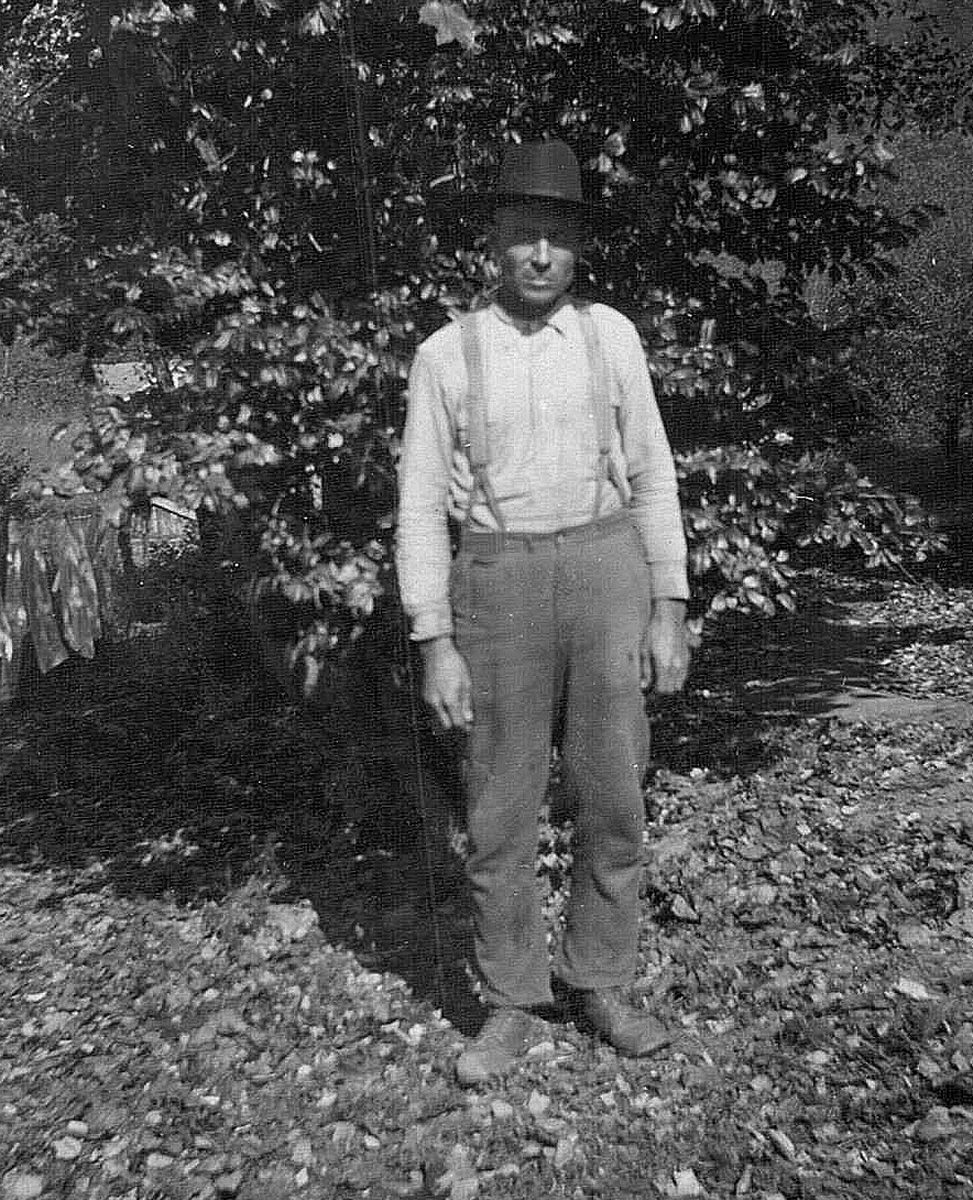
Joseph Hillbury Casada
I flat-out worshiped Joseph Hillbury Casada (1878-1967). Countless considerations endeared him to me. Of particular note were Grandpa Joe’s soft-spoken, folksy wisdom, countless magical hours spent in his company and his unlocking doors to the natural world while teaching through example the joys of living close to the good earth. He died more than a half century ago and, over time, as I have resurrected memories of days when we were staunch allies in all sorts of adventures, awareness has increasingly dawned on me of the myriad blessings with which I was endowed.
In what is arguably the most powerful and poignant of all his “Old Man” stories, Robert Ruark wrote of his grandfather’s death and the decidedly limited legacy he left in terms of material goods. The same was true for me, but to an even greater extent. There’s the rocking chair with a padded seat that served as Grandpa’s throne when he was in a storytelling mode (it rests two steps from where these words are being typed), a wide-bladed hoe that he wielded with a will as we dispatched weeds in long rows of Hickory King feed corn, what he styled a “push plow” for cultivating between garden rows, and not much more. Yet, to borrow from Ruark’s tale of his grandfather’s death, “All He Left Me Was the World.”
Somehow, there’s something about skipping a generation that makes a huge difference. Grandparents have decades of accumulated wisdom they can gladly share, yet they don’t have to exercise the same degree of discipline as parents. Similarly, interaction with grandchildren offers a dreamy sort of opportunity for them to recapture their own long-vanished youth. Nor should the fact that grandparents often can share that most precious of all commodities, time, be overlooked. These and other considerations can weave a tight-knit fabric making the linkage between a grandparent and the children of their children a thing of pure wonder.
I know of no better way to explain that wonder than through reflecting on my own mountain boyhood and some of the countless moments of jubilation, accompanied by the sharing of a grand accumulation of wisdom, spent with Grandpa Joe. At heart he was a boy trapped in an old man’s body, and during my formative years we shared adventures, worked hard, fished and hunted even harder, all the while managing to squeeze an incredible amount of delight out of daily life.
Youthful days spent with Grandpa Joe served as foundational building stones for key aspects of my life. Tough as leather and strong as a well-seasoned hickory shaft, he seldom showed emotion. Yet for all his curmudgeonly exterior, he was wonderfully patient and tenderhearted with his adoring grandson. Fiercely independent, he wouldn’t labor under the supervision of another man. Yet Grandpa possessed an admirable work ethic comprised of pure grit, keen understanding of the wisdom inherent in “making do with what you’ve got,” and sharply honed skills developed through a lifetime of living in close harmony with the land. He introduced me to storytelling, provided hands-on exposure to traditional means of subsistence, and was a walking encyclopedia of rural folkways.
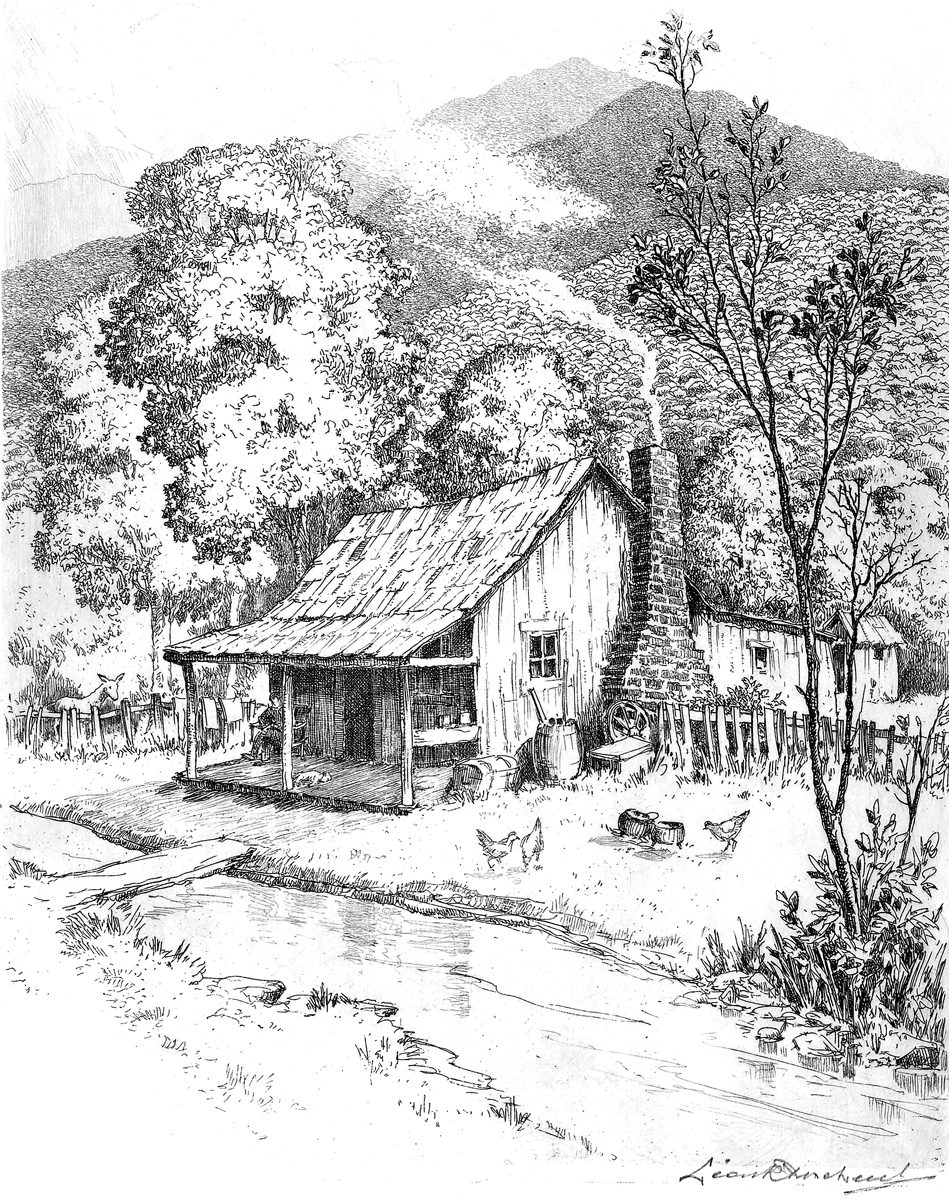
While I idolized him, Grandpa was undeniably an unusual and often prickly character — at times exasperating to his wife and children, out of touch with the mainstream in every imaginable manner and obstinate as only the most mule-headed of those of Scotch-Irish descent can be. Yet with me he was seldom judgmental, never critical, and ever willing to listen to a pesky, eternally curious youngster. Highly eccentric, his idiosyncrasies only endeared him to me, and much of his perspective and general approach to life closely resembled those of a rambunctious youngster. In truth, I think that in certain ways he viewed our partnership as a second childhood, and without question he went out of his way to infuse it with both fun and knowledge. He was a boy trapped in an old man’s body with the advantage of decades of living behind him.
Grandpa Joe had no tolerance whatsoever for a goodly portion of the adult world, yet was incredibly patient with me. He was distrustful of most of mankind, highly individualistic, perfectly comfortable in his own skin, religious after his own fashion, hardworking, self-sufficient, a devoted sportsman and as full of tricks as a pet ’coon.
There’s little in the way of material things that recall the man — the aforementioned rocking chair, a single grainy photograph of Grandpa by himself, a few snapshots showing him with family members, and a simple tombstone in a graveyard overlooking the mountain trout stream that loomed large in his life and mine. I didn’t even get to attend his funeral service. The bitterly cold winter day on which it occurred was one on which I had long been scheduled to take the Graduate Record Examination, a key requisite for admission to graduate studies. Missing that time of mourning really didn’t matter. We had already said our goodbyes. He knew death wasn’t far off and I had sensed it. Moreover, the magical days of my early youth and adolescence during which we spent so many hours together had come and gone, somehow drifting away like milkweed spores borne on a strong autumn breeze as I became an adult increasingly involved in a world filled with responsibility and restricted by the bonds of maturity. What did matter, and has continued to do so through all my years, was that Grandpa Joe infused me with a great deal of practical knowledge about the outdoors and filled the storehouse of my mind with a world of rich memories.
Grandpa was always a dreamer. In some senses he spent a lifetime dreaming, although his wanderings in the realm of wishful thinking lay outside normal approaches. Financial affairs meant virtually nothing to him other than fairly frequent usage of the quaint term “cash money.” He had so little of it that the redundancy was richly deserved. His was a life partly cast in the past and for the rest looking to the future rather than one of preoccupation with the present.
Grandpa Joe never saw the ocean, but he fished pristine streams and drank sweet spring water so icy it set your teeth on edge. He never drove a car, but he handled teams of horses and understood meaningful application of the words “gee,” “haw” and “whoa.” He never once ate in a restaurant, but he dined on sumptuous fare — pot likker, backbones and ribs, fried squirrel with sweet potatoes, country hams he cured from hogs he had raised and butchered, cathead biscuits with sausage gravy, cracklin’ cornbread, fried rabbit with all the fixin’s and other culinary wonders the likes of which no high-profile chef ever prepared.
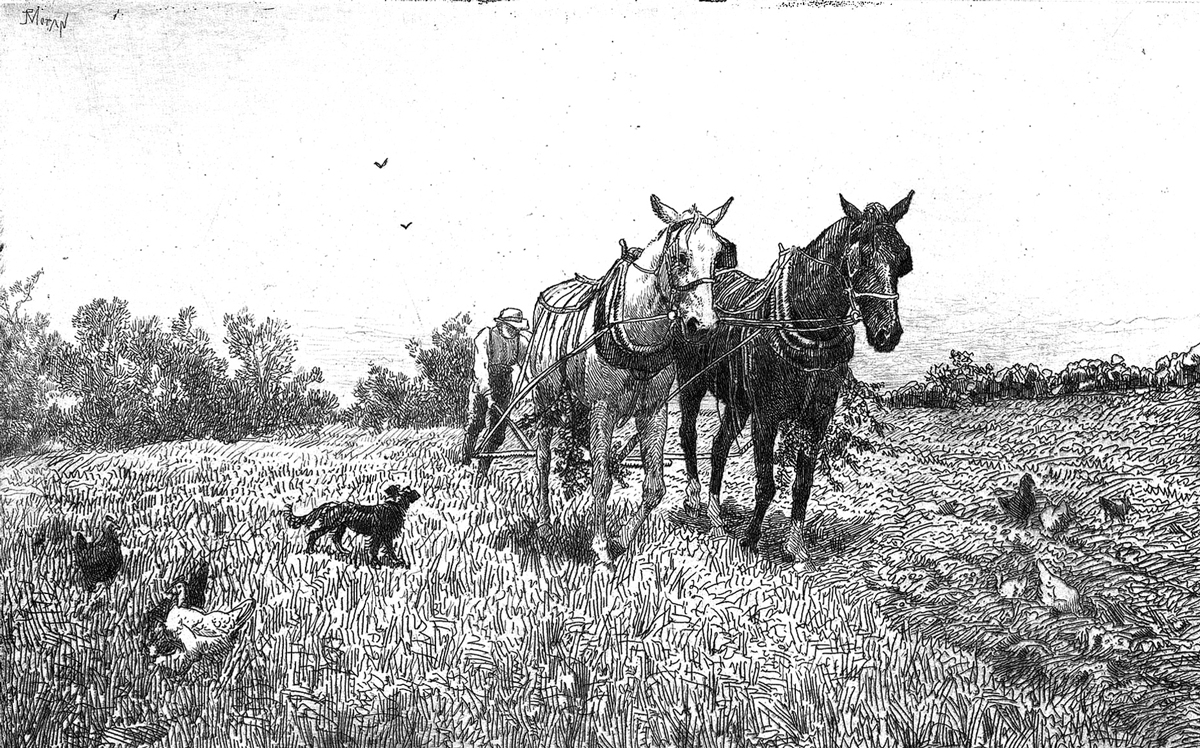
“Fall Ploughing” (detail) circa 1890, by Peter Moran. Etching on paper. Transfer from the National Museum of American History, Division of Graphic Arts, Smithsonian Institution
He never drank a soda, but he “sassered,” sipped and savored pepper tea prepared from parched red pepper pods like a connoisseur of fine wines. He never tasted seafood, but he dined on fish he caught, battered with stone-ground cornmeal from grain he grew fried in lard rendered from hogs he raised. He never ate papayas or pomegranates, but he grew cannonball watermelons so sweet they’d leave you sticky all over and raised muskmelons so juicy you drooled despite yourself when one was sliced. He never had crepes suzette, but he enjoyed buckwheat pancakes made with flour milled from grain he grew, adorned with butter his wife churned, covered with molasses made from cane he planted, and accompanied by milk from his own cows. He never ate eggs Benedict, but he dined daily on eggs from free-range chickens with yolks as yellow as the summer sun.
In short, Grandpa Joe was not, in the grander scheme of things, an individual who garnered fame, fortune, accolades or notable achievements. Yet he was, in my small world, the most unforgettable character I’ve ever known or will likely ever know. Sure, his life was one of limitations in many ways — geographically, technologically, economically, in breadth of vision and, at least from some perspectives, accomplishments.
On the other hand, in the eyes of a mesmerized boy, he accomplished wonders. He left me enthralled with a tale of killing a cougar with a shotgun at point-blank range when he was a young man; told stories of mighty chestnut trees so high that squirrels feeding in their uppermost limbs when mast began to ripen were out of shotgun range; and offered an unforgettable description of a soft, sudden snow so deep it left rabbits more or less trapped with their whereabouts discernible by a thin column of smoke emanating from where they had hunkered down. He caught a sack full by hand.
From him, I learned the basics of manipulating a seine to catch minnows, how to make and set rabbit gums, the best way to knock down a wasp nest or rob that of yellow jackets for fish bait, the hectic madness of a rat killing when they were doing too much damage in the corn crib, and deep knowledge about edible wild plants.
Thanks to his tutelage, I know how to make a slingshot and select the right type of wood for the task; have a solid understanding of down-to-earth subjects ranging from pulling weeds to feeding pigs to dealing with and locating the eggs of free-range chickens; can find fishing worms; know all the tricks of catching nightcrawlers and spring lizards for fish bait; have an advanced education in the finer points of fishing for horneyheads and catfish; know how to store pumpkins, turnips, cabbage, apples and other foodstuffs so they will keep for months; hold an advanced degree in practical woodsmanship; have solid grounding in many elements of storytelling; realize that formal education is by no means the only measure of a man’s intellect or his worth as a human being; am deeply imbued in traditional Appalachian culture and, most of all, have an abiding appreciation of the meaning of closeness to the good earth. To my way of thinking, in leaving me those qualities as well as many more, Grandpa Joe provided me with a mighty fine legacy.
That sort of knowledge was not only welcome but absorbed with doting delight. Yet the most meaningful of all the many facets of his mentorship was that Grandpa Joe epitomized love. He did so through liberal dispensation of hard-earned, hands-on knowledge, and the type of down-to-earth wisdom that constitutes true common sense. Qualities such as those are what make the Grandfather Factor a thing of pure, enduring wonder.
Jim Casada is Sporting Classics’ Editor at Large. To learn more about his books or to subscribe to his free monthly e-newsletter, visit his website at jimcasadaoutdoors.com.