
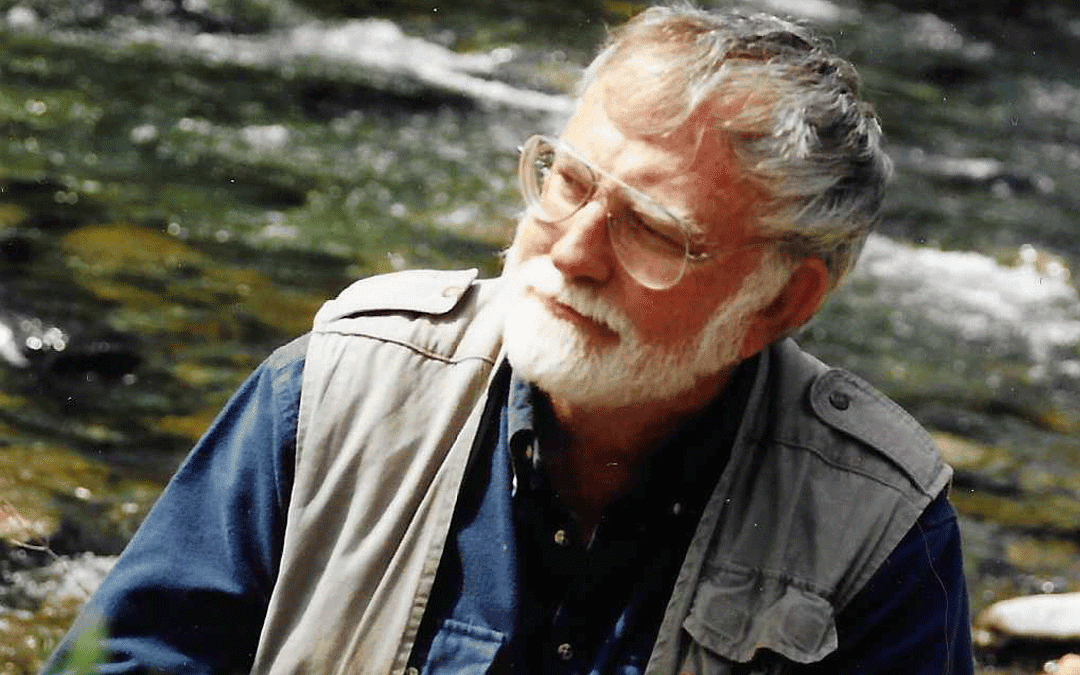
The last shall be first, we’re told, and for many years, when Outdoor Life arrived in the mail, readers would skip straight past the latest on guns and gear to get to the back page.
“I heard that almost daily,” says Todd W. Smith, who served as editor of the magazine from 1997 to 2011.
The page readers sought was the latest “Last Laugh” column from Patrick F. McManus, perhaps a story about childhood escapades in Idaho with Crazy Eddie Muldoon and Rancid Crabtree, or a comic discussion of hunting and fishing disasters.
Good humorists elicit grins and a chuckle now and then. McManus often made people howl until they had tears in their eyes.
Although Smith maintained a roster of iconic writers including Shooting Editor Jim Carmichael, Fishing Editor Jerry Gibbs and Hunting Editor Jim Zumbo, he credits McManus as a major draw.
“Everybody sort of read that magazine from back to front,” he says. “Pat’s columns were a favorite for many, many, many years.”
From his home in Washington state, McManus, known by friends and fans as Pat, first worked as a journalist, then a journalism and English professor at Eastern Washington State College (now university). He went on to write more than 20 books steeped in the rural Northwest, including humor collections and a mystery series, plays and articles for dozens of magazines. Books with titles such as They Shoot Canoes, Don’t They? and Never Sniff a Gift Fish lured readers in with the promise of a good time. Some clever titles are better than the books, but these did not disappoint.
Early on, McManus’ daughter, Peggy, one of four girls in the family, wasn’t excited about her father’s fame.
“I didn’t like it,” she recalls. “I felt like I didn’t want to share my dad with anybody else.”
When she eventually began helping run McManus Books, which offered autographed copies, her perspective changed.
“We had an 800 number set up in our house, and people would call and order their books that way. And when they did, they had so many fascinating stories to tell me about how Dad’s books had changed their lives.”
She heard about people specifying in their wills that they wanted to be buried with their collections of Pat’s books. Or the man in a coma, whose family discovered that he would smile if they read him a McManus story.
Bill Stimson, a former student of McManus who became a close lifelong friend, says Pat once got a letter from a woman whose father was dying of cancer. The woman had heard her father out on the front porch making a lot of noise and rushed out to see what the matter was. She discovered the sick man reading McManus and roaring with laughter.
“He said that was his best memory as a humor writer,” Stimson says.
After Mcmanus died in 2018, fans shared their experiences. “My wife is always giving me sideways looks when I read Pat McManus books … it’s just not possible to read them and not laugh out loud,” one contributor wrote in an online forum.
“I used to laugh so hard I’d choke,” another shared.
There’s even a website, The McManus Index, created by a superfan who had spent years compiling a database of McManus stories. He would field queries from readers who recalled basic details but couldn’t remember where they’d seen the piece. Those who wanted to save time could buy the book, Where’s the One About the Bobcat, the title of which refers to one of McManus’ funniest pieces.
As a kid, I discovered the joys of Patrick McManus in old issues of Outdoor Life piled in my grandpa’s magazine rack. The articles about fishing and hunting were mildly interesting, especially if they had photography of trophy bucks or anecdotes about bears eating people, but McManus’ stories were a delight that had me rifling through more of the back issues.
Decades later, I would hear my own children cackling as they flipped through the pages of The Grasshopper Trap or Rubber Legs and White Tail Hairs.
While McManus wrote many of his pieces about hunting, fishing and the outdoors, stories that fit comfortably within the pages of a hunting magazine, the stories hooked people from beyond that readership.
Managing Editor Camille Rankin came to Outdoor Life from a background working for magazines such as Esquire. The New York City resident knew almost nothing about the outdoors and had never heard of McManus, but she quickly became a fan.
“His appeal definitely goes beyond the stereotype of who you think he would appeal to, and that included me,” Rankin says.
As a copy editor, she had to read each piece multiple times. “And every time, I just would crack up at the same places.”
Rankin’s piano tuner, a young man from Manhattan, once borrowed McManus’ mystery novel Circles in the Snow after spotting it in her home—it turned out he was a huge McManus fan.
McManus’ work ended up in other unlikely places. When his kids were growing up, Smith lived just north of New York, where hunters, he notes, are “few and far between.” But he would visit his children’s school classrooms, toting along a skin from a huge bear he’d shot, and read the students McManus’ classic story, “The Night the Bear Ate Goombaw.”
“Walking into that classroom and laying that out and watching those kids’ eyes get big … it was magic. I treasure those memories,” Smith says. Quite likely, there are residents of the New York City region who still retain vivid memories of laughing along to McManus while sitting on a bear rug—certainly not the kind of experience many of their peers would share.
McManus’ appeal somehow cut across generations. Tim Behrens, who played Pat in a series of popular one-man plays that adapted his stories, remembers seeing grandparents in the theater alongside their grandchildren for the show.
How did McManusdo it?
In his book, The Deer on a Bicycle: Excursions into the Writing of Humor, McManus emphasized writing about everyday experiences people could identify with—like taking life’s irritants and turning them into humor.
“He could write about backing up a trailer, or something that we all go through and make it funny,” says Zumbo, who was a longtime friend.
“‘The Night the Bear Ate Goombaw’ isn’t about hunting,” Smith says. “It’s about a family that goes off for a week into the woods and, through all sorts of machinations, thinks they see a bear.” In this case McManus put his finger on the fear of what happens out in a dark woods when the noises start. “I think that’s innate in human nature. And I think the beauty of Pat’s writing was that he was able to tap that vein very successfully.”
If there’s anything people can relate to strongly, it’s problems. McManus milked much humor out of his own personal experiences growing up as a boy in Idaho, many of them quite difficult. As a young boy during the Great Depression, the child of a single mom who taught in deeply rural one-room schoolhouses, he was intimately acquainted with hardship and loss. His father died of cancer when Pat was quite young.
It was not the kind of childhood you’d expect someone to spin a lot of humor out of.
“No matter how tough your life could get,” Stimson said, “McManus could top you with his stories. ‘You take all the fun out of complaining,’” Stimson would tell him.
Once, he remembers, McManus shared an experience from graduate school at Washington State College, when he and his wife, Darlene, were renting a trailer near campus. During the night, a pipe froze and flooded the floor, and the puddled water then froze solid. Pat got out of bed and tried to put on his shoes so he could deal with the disaster. His shoes were frozen to the floor.
“His kind of humor was more like, just look at life, and you’ll see how funny things are,” Stimson says.
One of McManus’ stories, “The Big Trip,” recounts the fulfillment of a childhood fantasy of the ultimate remote camping trip. In real life, the trip nearly killed him—a detail that wasn’t included in the story. After significant misadventures, he and a friend ended up exhausted and injured, perched on a cliff ledge and absorbing icy rain. His friend said, “I don’t think we’re going to make it.”
For some reason, Pat burst out laughing, and eventually his friend did too. They managed to find the strength to drag themselves out, and the incident eventually became an epic tale. “Could it be that despair is the ultimate source of comedy, of laughter? I don’t know,” McManus wrote in Excursions into the Writing of Humor.
In his cookbook/memoir, Whatchagot Stew, he expanded on the theme. “Always include a good supply of humor in your survival kit … a dash of it improves the flavor of cold, soggy sandwiches eaten in the rain.” He added, “Best of all, it’s cheap.”
While he clearly drew inspiration from childhood escapades and adult misfortunes, the stories are so wild that the reader is led to wonder how much is invented.
Some is, of course. McManus describes, for example, coming up with the funny image of a deer on a bicycle and turning that into one of his most popular short stories. But a surprising amount of his writing was drawn from real-life experiences, albeit exaggerated for comedic effect.
Like camping trips with his family. “What I remember most are our drives up to some of these wild locations where we ended up to, on these more trail-like roads with these huge drop-offs and logging trucks roaring down on us,” Kelly says.
Another time, they heard noises outside their tent and Pat instructed the clan to grab pots and pans and make a lot of noise. Whatever it was, undeterred by the racket, carried on with its wildlife sounds. “So Dad opens up the tent to see a gigantic bear,” Peggy says. It was hanging off either end of their long picnic table. “The bear reached down and grabs the lid off of our metal ice chest and just rips it off like it’s pulling a wrapper off a piece of candy.”
Pat told them to get in the station wagon, and they drove away leaving their camping gear behind.
“I cannot imagine a better childhood,” Kelly says.
Peggy recalls the origins of one of her father’s stories about how to properly get lost. Pat had disappeared while out on an outdoor adventure with a friend. “Mom and I stayed up all night long, waiting for the phone to ring to hear something about (his body) being recovered, and planning his funeral.” Finally, early the next morning, the phone did ring—her father had been found down a ravine with a twisted ankle.
A couple months later, the story came out in a magazine, and it was hilarious, she says. “I remember being really mad, you know like ‘Too soon.’”
When it came to getting lost, McManus had plenty of material.
“He really had zero sense of direction his entire life,” Kelly says.
In his stories, Pat often faces the wrath of his wife, “Bun,” who takes a dim view of his escapades and excuses. In real life, he and his wife, Darlene, were devoted to each other. Darlene thought of Bun as a fictional character. (Pat’s real nickname for her was “Moose.”)
“We grew up with most of these people who were characters in his stories,” Kelly says. The foul-smelling, crotchety old woodsman Rancid Crabtree? The family used to have a photo somewhere of the real mountain man from Appalachia who inspired the character. And yes, you could tell he wasn’t fond of bathing.
McManus’ friends seemed to enjoy turning up as colorful characters with ridiculous names. His sister, Patricia, bore the moniker “the Troll” in stories of his childhood, a nickname inspired by the monster Grendel in Beowulf. She could have been forgiven for taking umbrage at that, but that’s not how the McManus family humor works.
“She just ate it up. She loved it,” Kelly says.
Zumbo, his longtime friend, got the privilege of appearing in stories by virtue of sharing in hunting trips. (Pat, he notes, was actually not the hapless hunter he claimed in his stories).
Once, on a Canadian bear hunt, Zumbo and his guide saw a bear standing about 80 yards away, just looking at them. He got out of the truck, set up his shooting sticks, and pulled the trigger. The bear ambled away.
“I couldn’t figure it out,” he says. Investigating further, he found a sapling that had deflected the bullet. He tossed the stick in the back of the truck and took it back to camp.
There, “I learned to my horror, that Pat had gotten a bear,” he says. In the resulting story, readers learned that Zumbo had been stalking the trophy twig when the bear moved behind it, presenting a perfect silhouette and allowing Zumbo to cleanly bag it.
“It was brilliant,” Zumbo admits.
Another time Zumbo got away with one. “I made one of the worst shots in my life on turkeys. It was only 25 yards away, and Pat was with me, and I missed it. And I thought, ‘Oh my God, he’s gonna write about that in Outdoor Life.’ But he never did.”
The Man Behind the Name
When fans find out what their idols are really like behind the public relations veneer, it’s often a disappointment. That’s not the portrait of McManus that emerges from those who knew him, though.
If you really want to know what writers are like, ask their editors.
“I was immediately smitten with him as a person,” says Rankin. “He [was] so kind.”
In their interactions, she remembers a man who was easy-going, funny and soft-spoken.
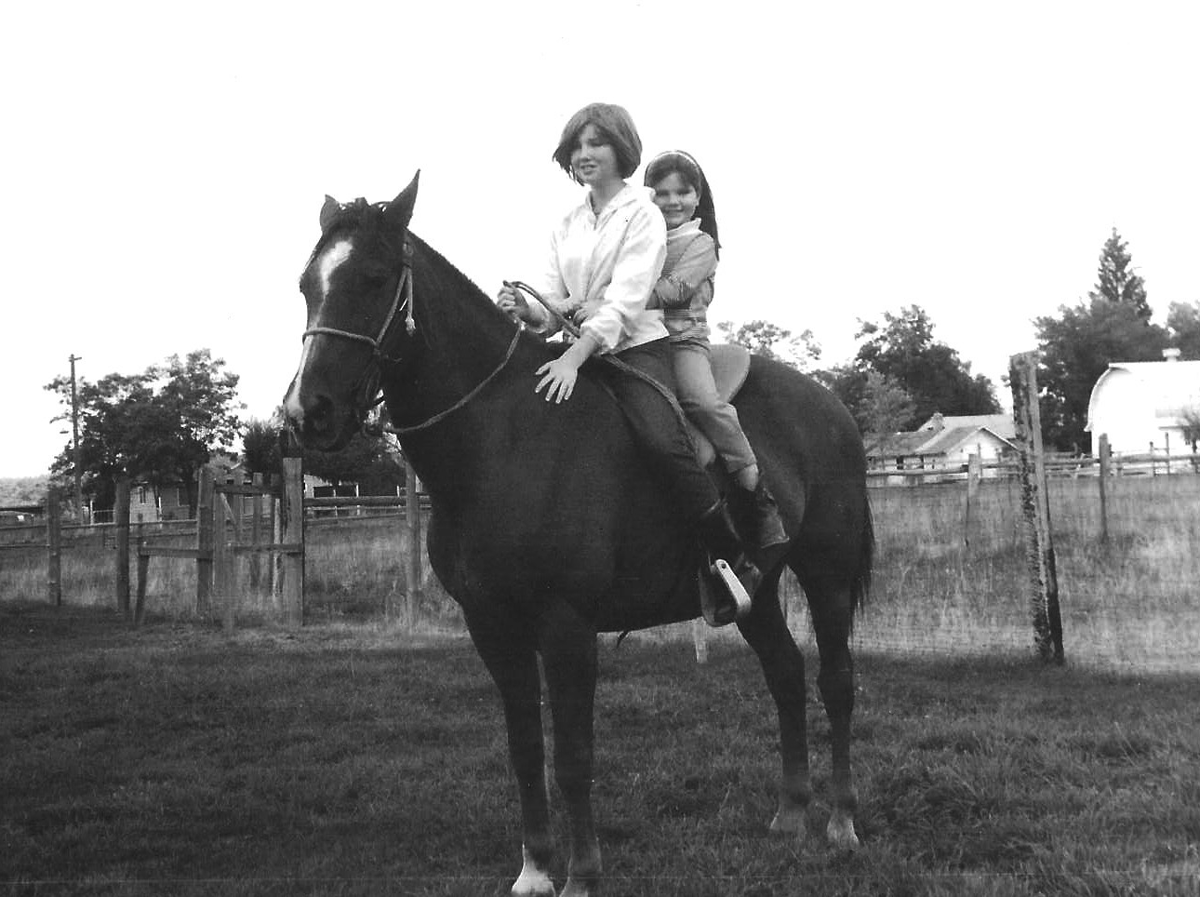
His daughter, Kelly, calls him kind and generous, a person who made others feel like they could do anything. “He loved making people laugh. Almost every night after dinner, we would sit around the table for hours, and Dad would tell us stories, and we would laugh and laugh,” she says. “And it was all the same kind of stories that ended up in the books.”
“He was as funny in person as he was on paper,” Smith says—but not like a Robin Williams cracking a lot of one-liners.
The Outdoor Life team would take annual trips to bond and discuss the plan for the coming year, and Rankin remembers sitting around the campfire with a dream team of big-time writers.
“Pat could just sit there and almost, not quite deadpan, but just in a very normal, conversational [way] tell a story, and you’d be rolling.”
Once, while going over material for one of the plays at a restaurant, Behrens says, he got to laughing so hard he fell out of his seat onto the floor. “They thought that I had had some kind of seizure or something, which made Pat laugh even more.”
McManus loved the outdoors, once writing, “I feel more at home in the mountains of Idaho than any other place on earth.”
He shared that love with the people he cared about, a memory that stands out for his daughters.
He would take each of them fishing individually, Kelly says, “and just focus on that girl. Just talk about our lives, our plans, our futures. He was great for encouraging dreams and just having that one-on-one attention.”
When the girls were fighting, McManus would puncture the tension, bouncing into the room doing the Tigger dance from Disney’s “Winnie the Pooh.”
“You couldn’t be mad anymore. You had to just burst out laughing,” Peggy says.
Eventually McManus’ books made him wealthy, but he retained the tastes of his simple upbringing to what Peggy dryly calls a “disappointing degree.”
“Yeah, we would have liked to enjoy the celebrity a little more,” Kelly agrees. Pat eventually did splurge a bit on a getaway property, and Darlene loved to travel, but Kelly says, “They were not into consumerism at all.”
McManus was able to connect with fans without developing a celebrity attitude.
Zumbo remembers being on a trip with Pat and other Outdoor Life staff in Montana, when they stopped at a roadside bar. Some of the locals recognized Pat and started making calls on a payphone. “Within the hour, there were about 75 residents in there shaking hands with Pat.”
“People would line up outside the building to meet him at public events, but around the house he was just Dad, and to friends he was Pat. He was not about his fame at all,” Kelly says. She didn’t grasp the full extent of his impact until after his death, when she began dealing with the estate.
Fame didn’t change McManus at all, Stimson agrees. “He still lived the same way … he just stuck to his business and his local friends and his local hobbies and so forth, and spent a lot of time in his garage fixing things.”
The Secret Sauce
A turning point in his career, as McManus described it, was his decision to set aside two hours every night to write, from 7 to 9 p.m., seven days a week. And he made a rule that he had to market all the pieces he wrote.
He even lugged the typewriter along on trips. Peggy recalls a favorite family photo of McManus as a young man, out in the forest, his typewriter set up on top of a stump.
In the evening, after the girls would go to bed, Kelly remembers, she would listen to the rhythm of her father typing in the utility room next door and smell his pipe tobacco drifting over.
“You’d hear typing, typing, typing, then this pause, then he’d take a long puff off his pipe. And there’d be quiet, because he’s going back, reading what he wrote, right? And then laugh at what he’d written, and then he’d start again.”
The material went to Darlene first for review. It wasn’t easy to make her laugh, her daughters remember, and he knew the material was really funny if it did.
“It comes across as a homespun humor, even though, behind it, there’s definite craftsmanship and sophistication and a lot of it is kind of dry, subtle humor,” Rankin says.
“Humor is probably the most difficult thing to write, which is why you don’t see a lot of good humor writers anywhere, let alone in outdoor genres,” Smith says. “There’s a few people who have tried to sort of follow in Pat’s footsteps, but I don’t think they even come close.”
While much of the writing that sits between the covers of hunting magazines is entertaining and useful, not much of it has been adapted for the stage and translated into other languages.
While he clearly had a great natural sense of humor, McManus also thought hard about his craft. His book about how to write humor is itself laugh-out-loud funny, while crammed with solid tips on building anticipation, timing, misdirection (a favorite tactic), finding the comic idea that drives the piece and how to exaggerate just the right amount.
“Take a dab of truth, stretch and varnish it, sprinkle with absurdity and a little foolishness, and salt with enough irony to suit your taste. But never point it at anyone you don’t intend to hurt. It might go off accidentally,” he wrote in Whatchagot Stew.
Rankin says, “You talk about a standup comic having good timing. But also, I think in humor writing, you have to have good timing as well. And his was really impeccable.”
Beyond humor, Behrens called him a master storyteller. “You either have that ability or you don’t … he had it in spades.”
McManus didn’t like fancy writing that called attention to itself, what he called “writing writing,” preferring instead, “a style in which the words vanish for the reader. Anytime writing draws attention to itself as writing, it detracts from the desired effect.”
That may have been why he was such an admirer of Ernest Hemingway. He also praised a roster of humor writers that included James Thurber, S.J. Perelman, E.B. White, Jean Shepherd and Roy Blount, Jr.
“Good writers,” Smith contends, “are something of an amalgamation of their influences, and McManus was very well-read. While he very much had his own style, you can spot pieces of Faulkner and Hemingway, delivered with some of the structural sense of a movie director,” he says. “If you look at a lot of his columns, they’re sort of almost written like three-act plays.”
Pat’s tales about his shiftless, morally bankrupt childhood dog named Strange call to mind Thurber’s piece about Muggs, the savage Airedale who bit people. But McManus’ take on the theme is funnier. (Bonus points if you can name the 1940s novel from which Pat borrowed Strange’s dying words: “A dog like me should live for a thousand years.”)
His admiration of the paintings of Norman Rockwell made sense. McManus’ own writing carried a similar punch—not beloved by highbrow critics but deeply enjoyed and appreciated by those who consumed it, who saw their own lives in the art.
McManus also managed to churn out a humorous column every month, like clockwork. It’s a feat that hasn’t been common in the realm of hunting magazines. Ed Zern comes to mind, who wrote “Exit Laughing” for Field & Stream. More recently, Bill Heavey wrote a last-page column for the same magazine.
“I think one of the most difficult things in writing [is] to be that original, come up, month in and month out, with great ideas that you’re going to be able to translate for your audience, that they’re going to get a kick out of,” Smith says.
Stimson, who was himself a longtime professor at Eastern Washington University, doesn’t just compare McManus to other outdoor writers, but more broadly to the great humorists from the golden age of magazine publishing.
“He was as good as any of ’em, and he was more original than a lot,” he says.
A magazine editor friend once compared McManus to Mark Twain, Stimson says.
In the world of humorists, that’s like comparing a quarterback to Joe Montana or Tom Brady.
“At the time, I thought, ‘Well, that’s a little overreach.’ Nobody is compared with Mark Twain. But honestly, he did the same thing.
“Like Twain, McManus took a rugged, rural, undisciplined and uneducated world and turned it into a great show,” Stimson says. “I just thought he was one hell of a fantastic writer.”
Twain himself observed in his autobiography that humor writers quickly fade in the popular consciousness. More than 100 years later, though, Twain is still revered. It remains to be seen what kind of longevity McManus’ work will enjoy but, as the years go by, he’s still making people laugh.
The McManus family is creating a new website as www.patrickfmcmanus.com to showcase Pat’s work and offer fans remaining first-edition autographed copies of his books. To contact them, email authorpatmcmanus@gmail.com. You can also purchase his books in the Sporting Classics Store.