It was literally zero degrees when I left Bucks County, PA. The everlasting snow had a thick crust of ice, and this, combined with the deep chill factor, had kept us out of the fields and off the range for weeks. I was antsy and really looking forward to heading to Charleston, SC, for the Southeastern Wildlife Exposition (SEWE), which ran from February 13–15. We would be setting up our booth, and I was eager to meet some great people and collect stories from those stopping by. But to make some tales of my own, I planned to first stop at Rick Hemingway’s Back Woods Quail Club in Georgetown, SC.
I was familiar with BWQC from attending last year’s Gator Cup and the 2025 Southeast Regional. Both events were exceptionally well-run and the targets were downright fun—challenging enough to let you know you were in a serious competition, but sensibly set by a skilled trapper. Even though I missed more than my fair share, the targets always made sense.
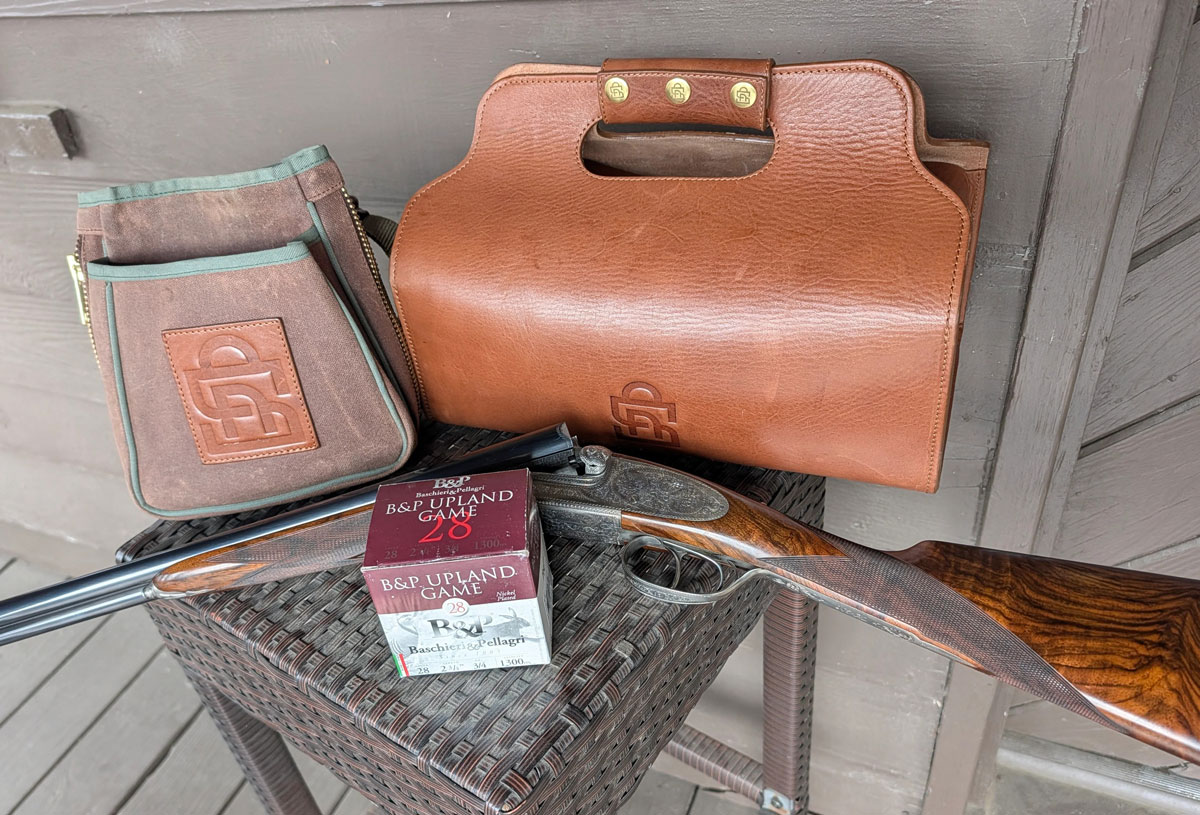
My plan was to arrive Tuesday afternoon, get some practice on the clays course, stay the night at the club, and hunt quail the next morning before an easy 70-minute drive to Charleston. I packed up my Krieghoff K-80 and my Grulla 216 RL 28 gauge in the Field Vault and was ready for the road. This type of trip really makes me appreciate our product line! I also brought along my Ultimate Range Bag for the clays course, a Shell & Hull Pouch for the Field, a Boot & Bird Tote for my gear and a Wine & Whiskey Tote for me.
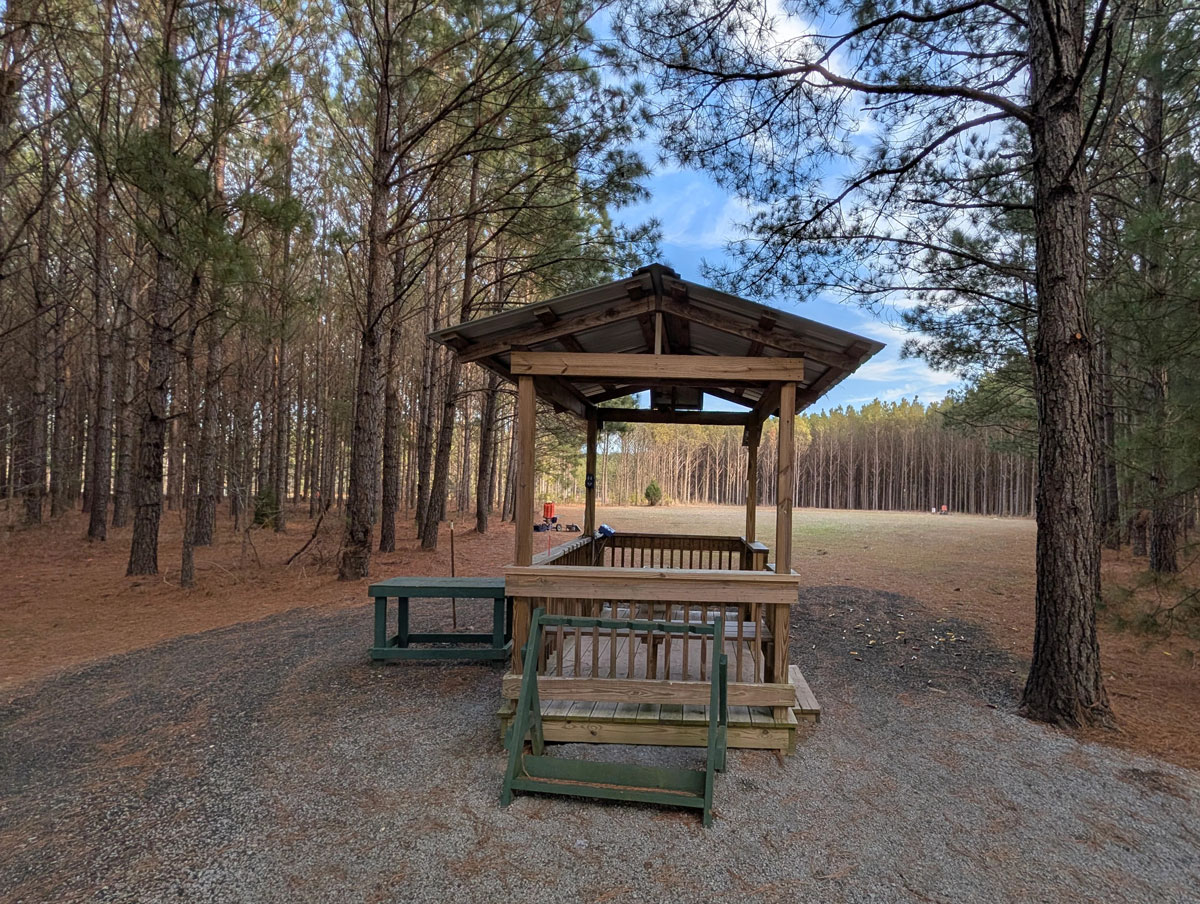
Upon arrival, I was greeted by 65-degree weather, bright blue skies, and a gentle breeze. It was a far cry from the weather we were experiencing in the Northeast! I was hoping to find some long crossers and maybe a tower or two to work on. The Orange Course did not disappoint.
Feeling reinvigorated by the clean air and the smell of tall pines, I headed out. My practice sessions generally consist of shooting a full flat of shells; beyond that, I start to get a little sloppy as fatigue sets in and my focus diminishes, though I hope to improve on that. At a new station, I hear Anthony Matarese’s voice in my head: the goal is to shoot six in a row where I think I am seeing the target best. But experience has taught me that I may not be smart enough to know where that “best” spot is, so I will then try to shoot another six clays earlier than the first batch, and then another six as late as possible. Interestingly, I seem to be able to break more targets when I shot earlier than when I waited. But this experience allows me to adjust my breakpoint and I like to close out with a few pairs at the “new” ideal breakpoint. Yeah, I am just trying to figure this game out.
If I am missing targets, I may vary my approach. My natural tendency is to go with a maintained lead, but I also heard Brandon Powell’s voice in my head. On those long crossers and tower shots, I was much more effective coming from behind the target. So, I tinker around until I am confident in my breakpoint and approach, then it was time to move to the next station.
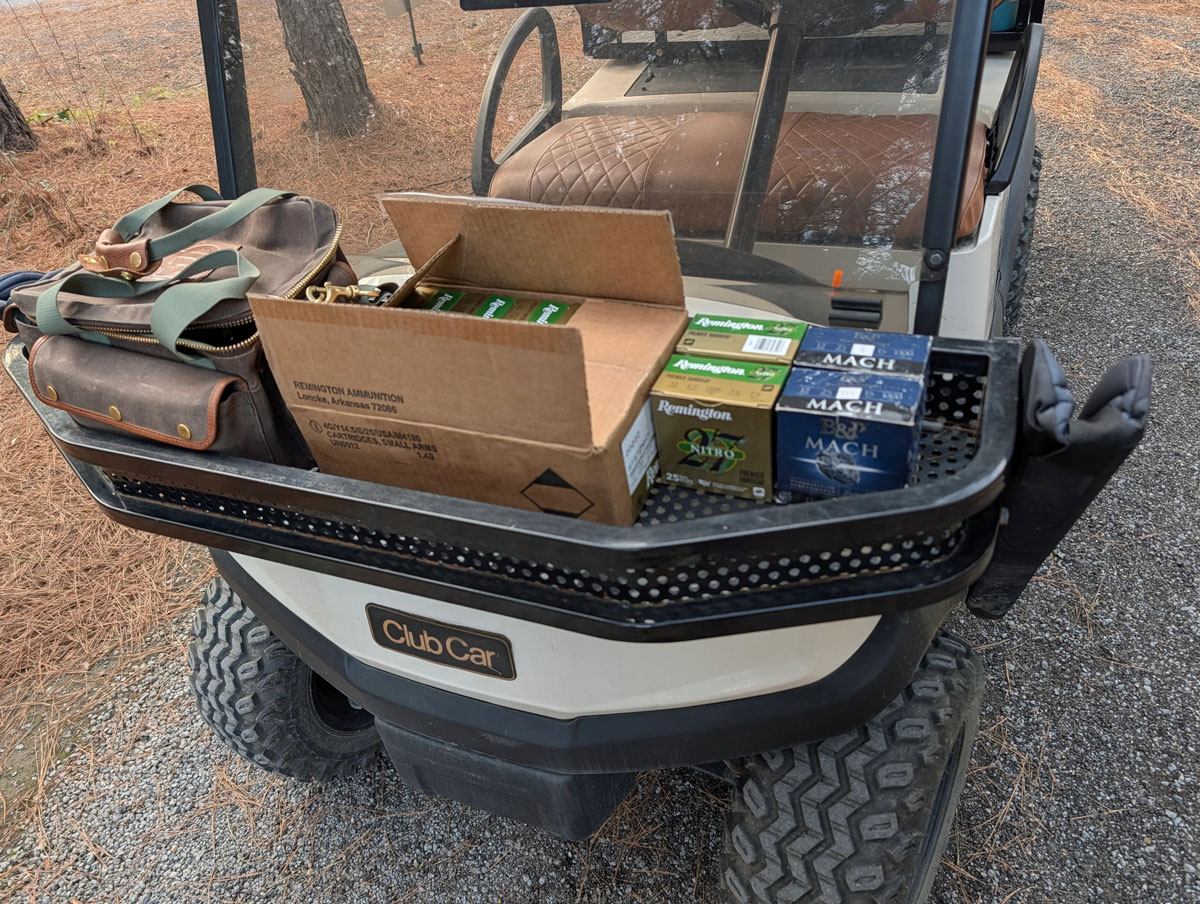
To make this game a little more complicated, I decided to compare two of my favorite shells on these longer targets. I wanted to see if there was a noticeable difference between the Remington Nitro 7 ½” at 1235 fps and the B&P Mach 7 ½” at 1300 fps. Both are 1 1/8 oz loads. Brandon swears by the Nitros, whereas a lot of my friends and I have had great experiences with the B&P.
There I was, at a premier sporting clays range in perfect weather facing incredible targets, and I was silly enough to throw in this self-inflicted distraction. The good news is that I won’t need to do it again. I initially gravitated toward the B&P shells because, despite the speed, the felt recoil was relatively soft. However, so were the Nitros. I assumed I would be giving up breaking power with the reduced speed of the Nitros (1235 fps), especially on longer targets. But I was surprised.
The Back Woods Quail Club proved to be the perfect testing ground. The Orange Course that day was set for Super Sporting, with three traps per station and plenty of different looks. I switched between shells randomly and found that neither provided a telling advantage over the other. Each station utilized the land perfectly, seemingly carved directly into the pine forest. Crossers came from traps both seen and hidden, fast and slow. There were incomers and the dreaded low, fast outgoing clays – a taste of everything.
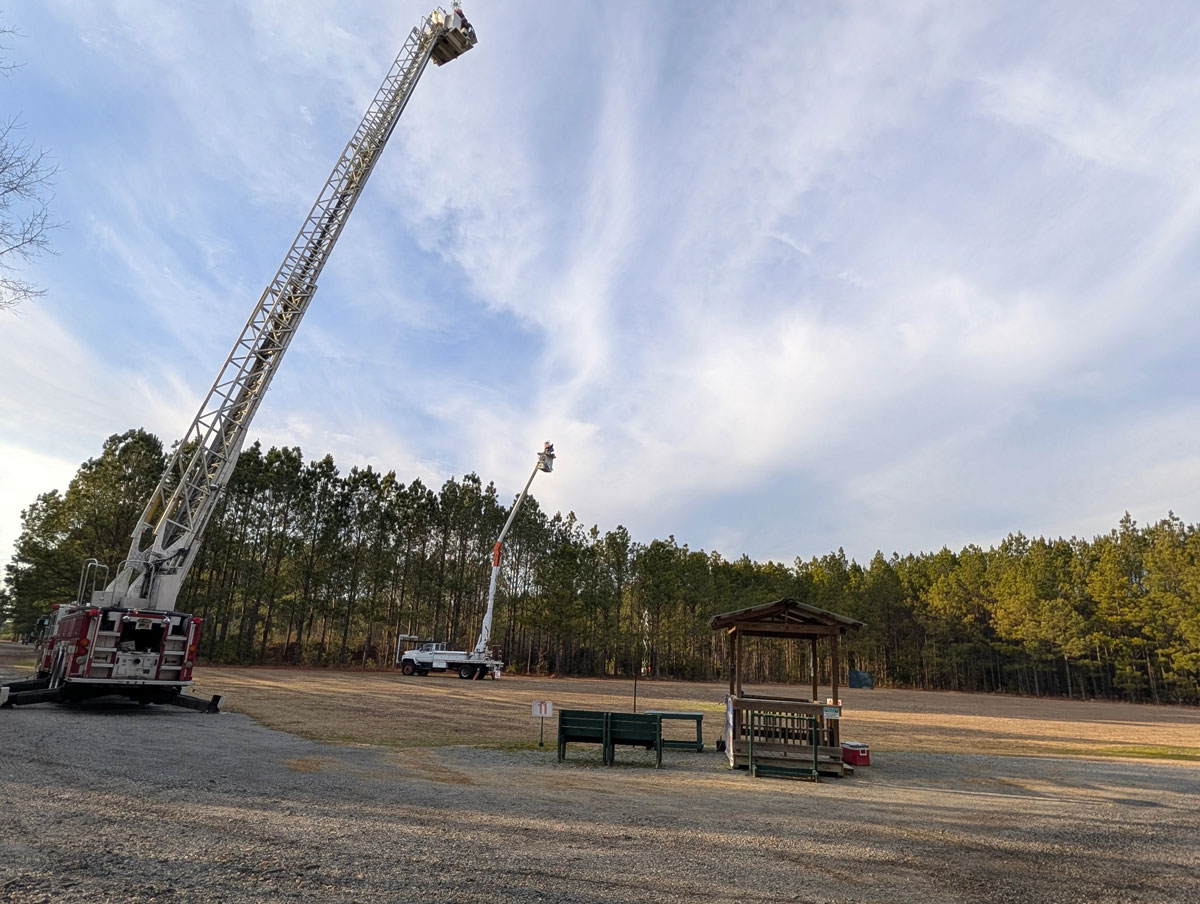
Then I came to the tower station – and it was amazing. The first two traps sat atop a fire truck roughly 30 yards to the left, with two of “Jacob’s Ladders” stretching high into the heavens. The springs were tight and the ladders were bloody tall. The second trap was much further out, just left of center, also scraping the clouds. These targets were high, fast, and full of interesting transitions. This is where I thought the B&P would have the advantage, but I ran out of those cartridges. So much for my scientific study. All I had left were the Nitros and again, Brandon’s voice in my ear.
He wasn’t wrong. I was surprised on two fronts: first, that I was hitting the targets, and second, that the targets were exploding. I’ve been inconsistent with towers, so hitting them was a win—perhaps thanks to the new custom stock on my K-80. But the second point was the real lesson: the “slower” Nitro shell had incredible breaking power at longer distances. Speed was never an issue; I could see the targets crumbling. Perhaps there is more to fps than what it says on the box. The Nitros were not necessarily softer on recoil and the B&P’s did not seem to hit any harder. Granted, I am no expert. Maybe the only lesson learned is that speed may not be as important as I thought and a premium patterning shell is all that matters. Friends told me this, but it was something else seeing it for myself. But as I said, I am still learning.
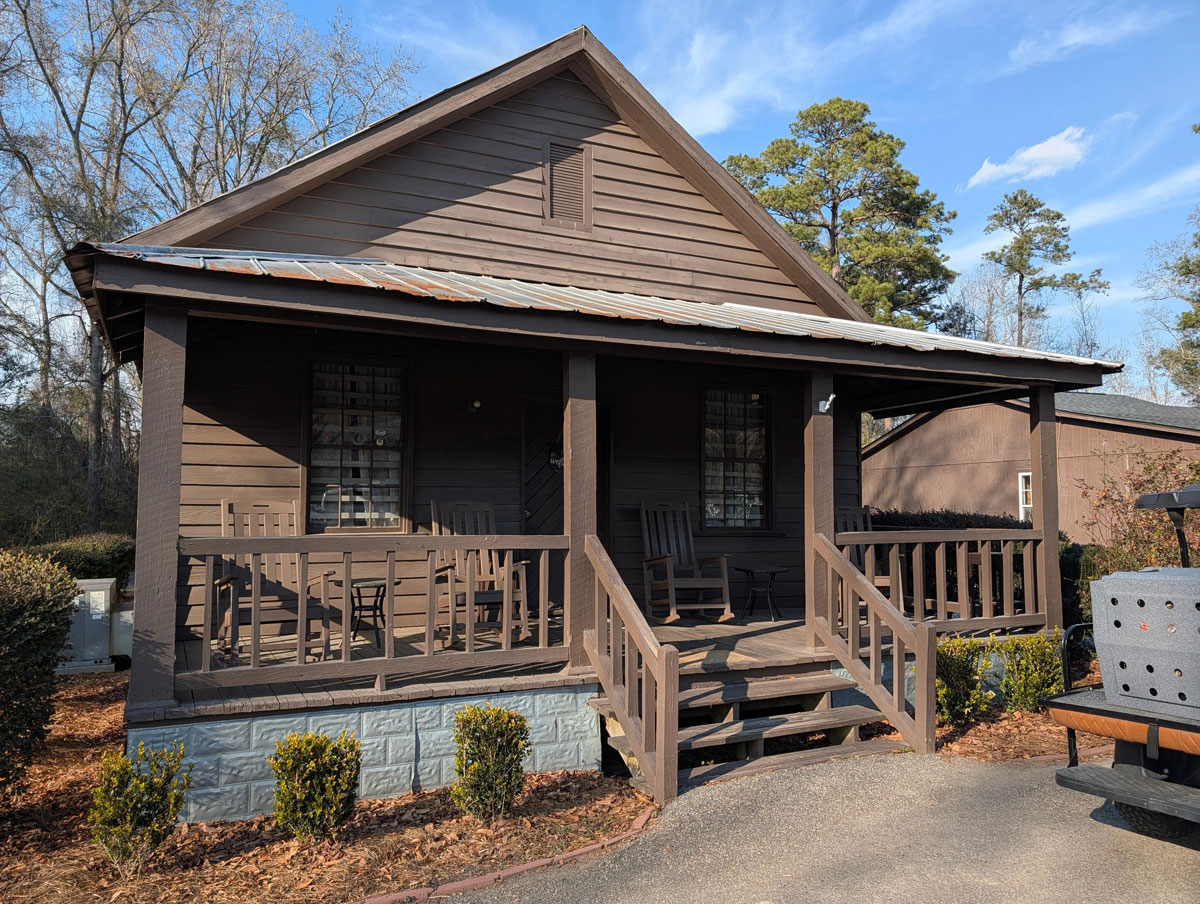
After a great experience on the course, I returned to my cabin for dinner and a glass of wine. The cabin, right next to the clubhouse, was exactly what a cabin should be: clean, comfortable, and made for conversation. Since I was alone, I picked up dinner from Jarritos Mexican Restaurant on my way in and had a relaxing evening replaying the lessons learned on the course. It was really nice that the owner, Rick Hemingway, stopped by to say hello and to make sure everything was okay. I am nobody special and this was not an organized event for Sporting Accessories, LTD. I was just a guy stopping in on my way to Charleston. But it seems they treat all their guests that way and genuinely care about the experience.
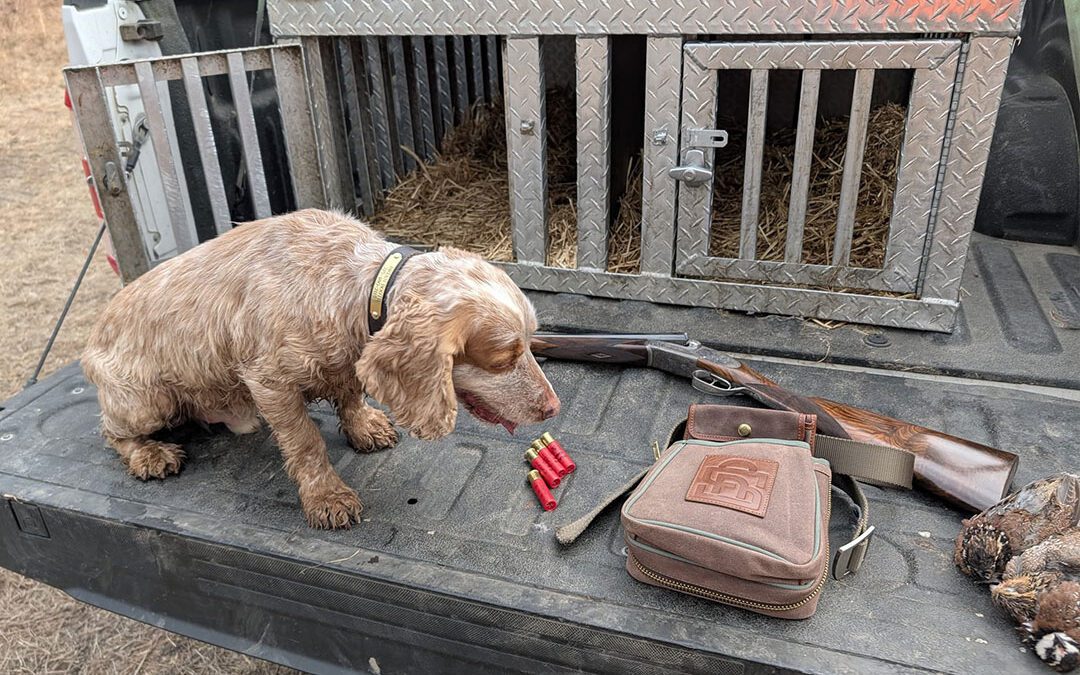
The next morning brought a gentle rain and some excitement for the quail hunt—the dogs could feel it! Dozer, my English Cocker, will be nine this May and is hunting beautifully. I got him six years ago from Tyla and Scott Kuhn at Sun Sage Sporting Dogs in Eatonton, GA. Every day with an English Cocker is an adventure, and Dozer is the epitome of that mischievous ball of energy. When not retrieving birds, he has an uncanny knack for finding socks and lady’s underwear. My other dog, Russell, is a rescue with pretty good bird instincts. We just celebrated his 13th birthday, and while he has been slowing down, he was showing enough excitement that we brought him along.
I met my guide, Tim Hall, a great guy who showed me around the extensive grounds. He explained that Back Woods offers two types of hunts: the morning hunt I booked (where birds are put out that day), and a “wild quail experience” for members, where birds are acclimated to the woods early in the year. Tim mentioned they generally find 4–5 solid, explosive coveys per hunt. That is something I will definitely look into for next year!
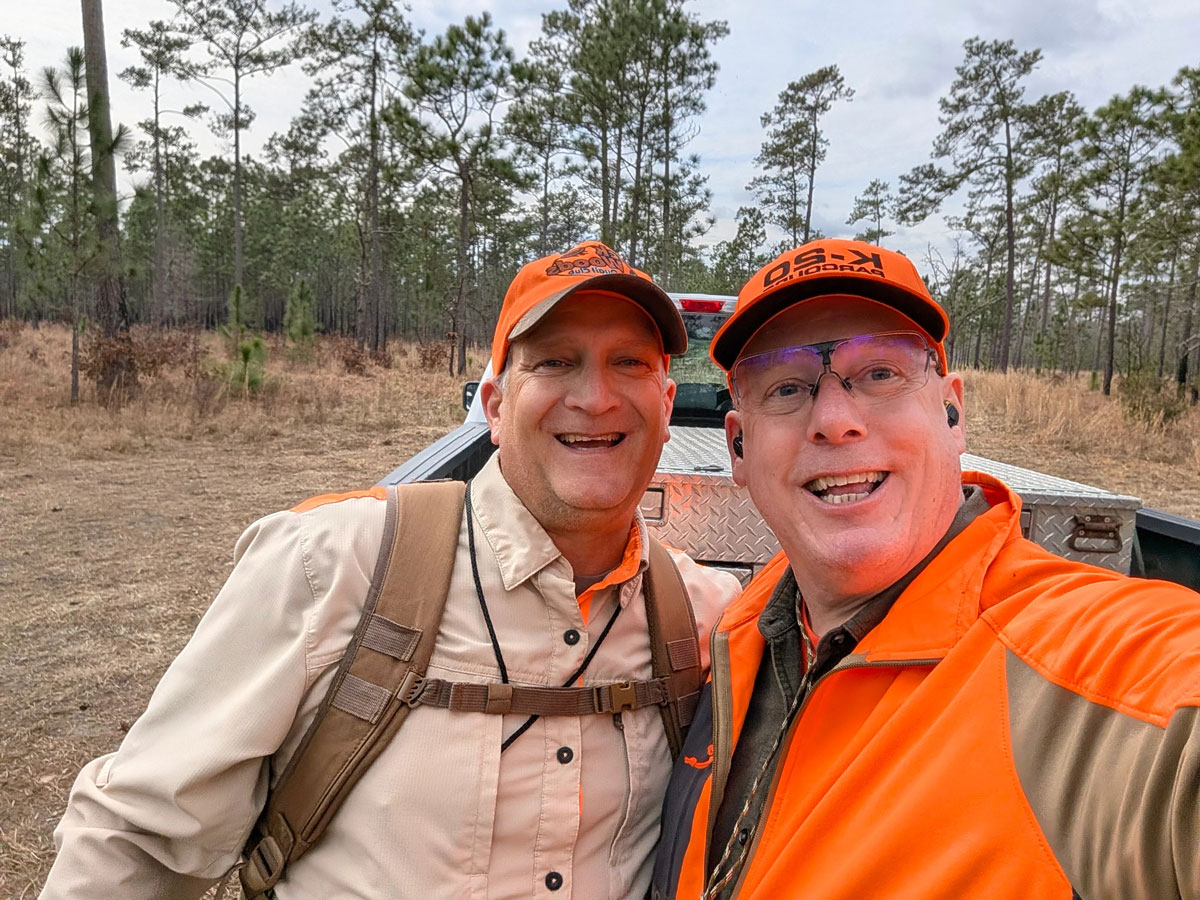
As we approached our spot, I spotted a quail about 50 yards away. The rain was slowing, and I thought this was the perfect opportunity for Russell. He caught the scent, put the bird up, and fortunately, I didn’t let him down. My Grulla 28-gauge dropped the quail about 35 yards out in a thicket. Russell came prancing back with a beautiful retrieve. I think Tim was as happy as I was.
This hunt was beautiful. We were not walking in typical carefully planted rows of cover, but we were in a beautiful South Carolina Pine forest after a pleasant rain. Dozer was on fire—flushing and retrieving like a small red roan typhoon. It was one of those days where the shots just connected. A wise man in Spain (at a driven partridge hunt) once told me to slow down and only take the shots I would remember. I try to follow that advice, but Dozer had other plans; he was finding every bird possible and I was hard-pressed to keep up. We were hunting mostly singles, and the pace was electric. Then, Russell put up another bird. I wasn’t ready for it, but the Grulla came through again, and Russell got his second retrieve of the day.
By the time we were through, the dogs were “happy-tired.” I booked this experience as a stopover to Charleston, and it was one of my better ideas. Next year, I hope to book the same cabin for a couple of days with friends. Finding a place with such a phenomenal sporting clays course and a top-notch bird operation is a rare gem to be celebrated.