
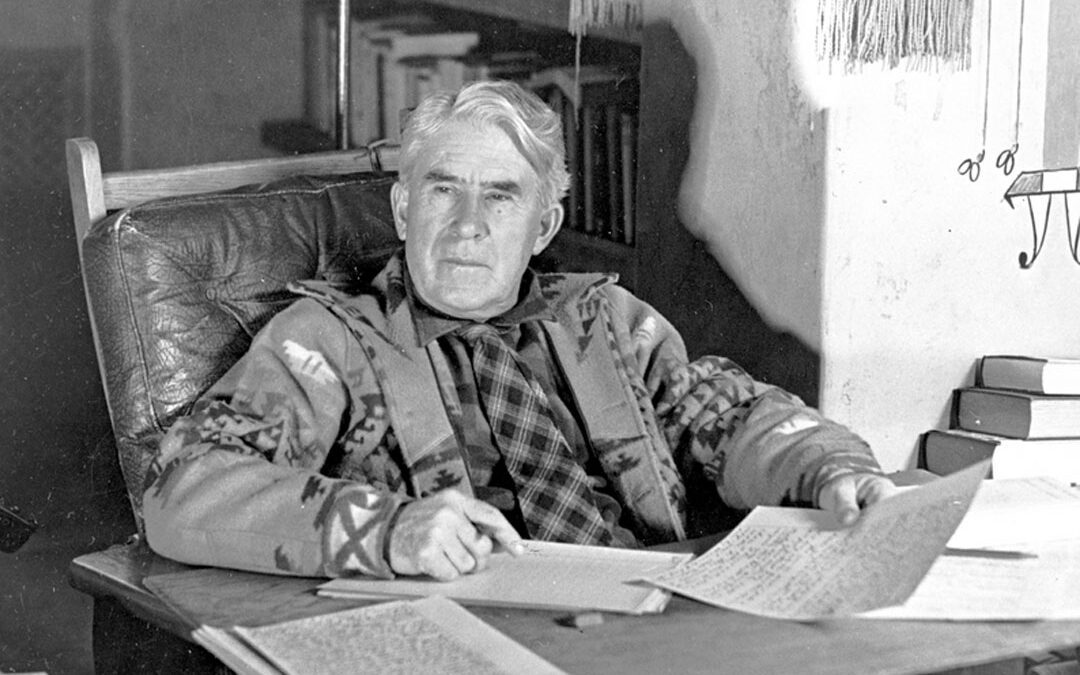
My earliest memories of Zane Grey remain as powerful as they were when I was first introduced to his writings a few years before reaching my teens. An astute grade school teacher with exceptional pedagogical skills recognized an unquenchable thirst for certain types of literature in a student whose behavior and attention span were often problematic. She also likely reckoned, even hoped, that getting my nose firmly glued to a book would becalm some of my boisterousness. Whatever the case, she noted that there were a couple of Zane Grey Westerns in the small library serving the school and many more in the local public library. That set me dancing down a delightful path to becoming a die-hard Zane Grey fan, and a timely addition to this literary bonanza came when my perceptive mother included an inexpensive edition of Grey’s Spirit of the Border among my Christmas gifts when I was 11 or 12 years old. It was the first book I ever owned and it still resides in a place of honor on my bulging shelves.
Most anyone who has ever delved into the genre of novels generally known by the simple description of Westerns (or less frequently Western Romances or Cowboy Tales) recognizes the name Zane Grey. Along with Louis L’Amour, he has been our greatest chronicler of the American West. That’s how I first made his acquaintance, devouring titles such as Riders of the Purple Sage, The Last of the Plainsmen, The Rainbow Trail and literally dozens of similar works. Grey cranked them out at a remarkable pace, and I sampled and savored every one of them. Yet it wasn’t until my late teens, with his ample offerings of tales of the frontier pretty much exhausted, that I discovered these bestselling adventures of the winning of the West came not from a deep, abiding affection for the place and era but rather as a means of financing Grey’s true love—fishing.
When one delves into Grey’s writings, there are hints of this all-consuming interest early on in his literary career. One of the finest pieces he ever wrote in any genre was “The Lord of Lackawaxen Creek” in a 1909 issue of Outing. The tale involves bass fishing in a real stream of that name, a feeder of the Delaware River in the area where Grey lived while penning so many of his Westerns. Another index to his considerable savvy as an angler in freshwater environs comes from the novel Spirit of the Border. Its setting is on the trans-Appalachian frontier in the Daniel Boone era as opposed to the American West, but the tone and tenor of the book is quite similar to his later novels. At one point in the book, Grey’s protagonist faces a tracking challenge when the man he is following begins wading and leaves no telltale footprints. When the stream he is wading forks, the tracker faces a real dilemma. He solves it by tossing grasshoppers into pools on each fork. When no fish rise to the insect offering on one fork, he knows that is the stream to follow. Only an angler familiar with fishing using flies in small streams would have possessed such information.
Pearl Zane Grey was born in Zanesville, Ohio, on January 21, 1872. His father, Lewis Grey, was a man of many parts—dentist, preacher, farmer and backwoodsman. By preference though, when the need to earn a livelihood didn’t get in the way, he was a fisherman and hunter. Thus, his son came by his love of sporting adventure and the outdoors quite naturally. Grey’s mother, Alice Josephine Zane Grey, was descended from Quakers who came to America with William Penn in the late 17th century. She was the one responsible for burdening her son with the embarrassing and ill-suited name Pearl. Fortunately, her family name, Zane, was far more manly and it was what Grey used.
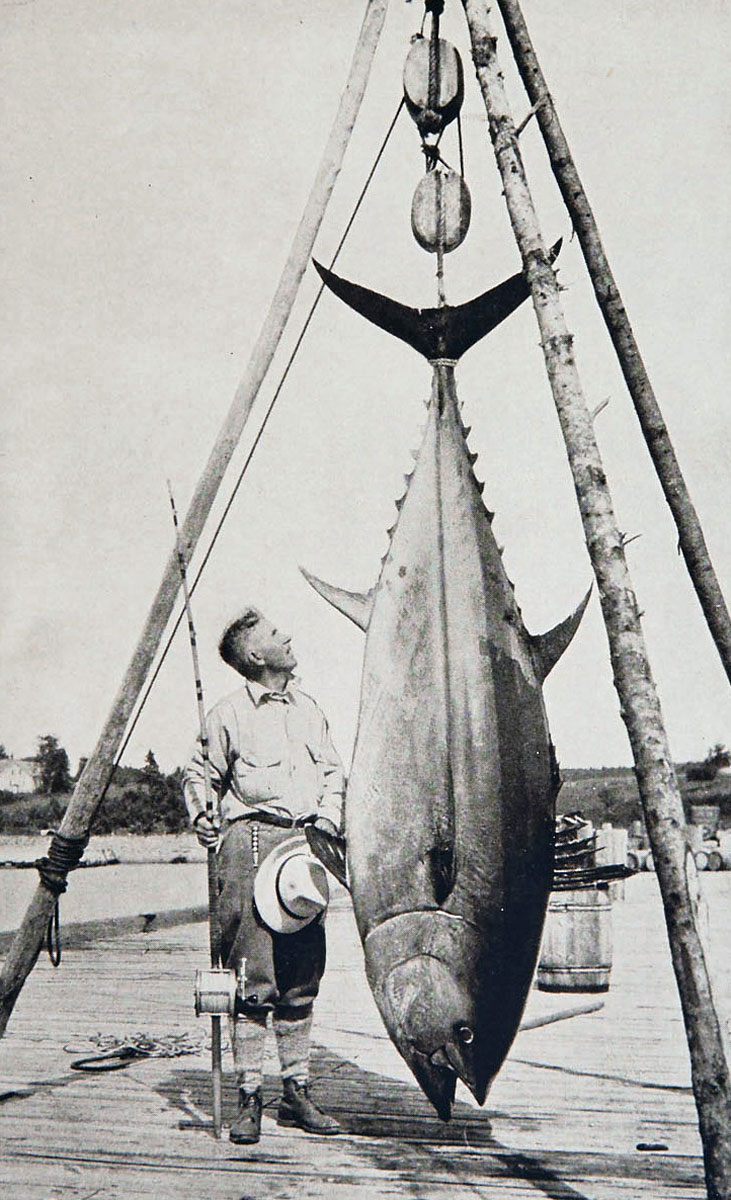
Zane Grey with his world-record 758-pound bluefin tuna. Nova Scotia, August, 1924.
That choice came in part because young Grey grew up hating the name Pearl and being involved in frequent fist fights connected with it. As a lad he loved to fish the waters of the nearby Muskingum River, to wander through the woods and to play sports. He was a gifted athlete, especially in baseball, and he received an athletic scholarship to attend the University of Pennsylvania as a pitcher. He performed exceptionally well on the diamond and led his team to an undefeated season in his senior year. Later, when he found his life’s path as a writer, Grey’s impressive literary outpourings would include several baseball-related books. The best known of these is The Red-Headed Outfield. Sporting accomplishments aside, Grey, who was studying dentistry, was an indifferent student at best. His interests simply lay elsewhere.
Although he had an opportunity to give professional baseball a try, out of financial necessity Grey opted to pursue a dental career in New York. He stuck to it for six years that must have seemed about as agonizing as the removal of a molar was to one of his patients, but along with dental work he was dipping his toes in the waters of writing. All the while there was growing realization that a professional life in the city was not for him. He wrote Betty Zane, a fictional work based in part on the real-life exploits of his great-grandmother, during this period. Although it would eventually not only be published but enjoy considerable popularity, at the time the manuscript was summarily rejected by every publisher he approached.
In the midst of misery associated with his dental endeavors and filled with self-doubt about whether he could make a transition from dentist to a literary career, Grey fell in love with and married Lina Roth. She was a blessing to his aspirations to become a writer, providing him with encouragement and the self-confidence required to break out of the doldrums of dental drudgery. Over the next few years, he wrote Spirit of the Border, The Last of the Plainsmen and The Last Trail. None of these works initially found a publisher, but all featured a formula Grey would make his own and that would eventually underlie his blockbuster success. In his pages, strong characters with a deeply rooted sense of right and wrong appear alongside villains who exude evil and women whose every action is synonymous with virtue.
Eventually the long-awaited and much desired breakthrough came with Riders of the Purple Sage. It immediately became a bestseller and Grey was on the way to literary fame and considerable fortune. From the outset critics detested him and lampooned his work, with one reviewer after another pilloried his prose as being little more than mindless drivel. Popular audiences, on the other hand, loved him and couldn’t get enough. Publishers had sufficient common sense to put impressive financial returns ahead of depressing critical reviews, and books by Grey poured out in a stream of productivity that is amazing by any standard. Over his career, Grey would write 71 books and countless articles. During the peak years of his career, beginning in the early 1920s, he earned a half million dollars or more annually, a sum that would equate to close to ten million dollars today.
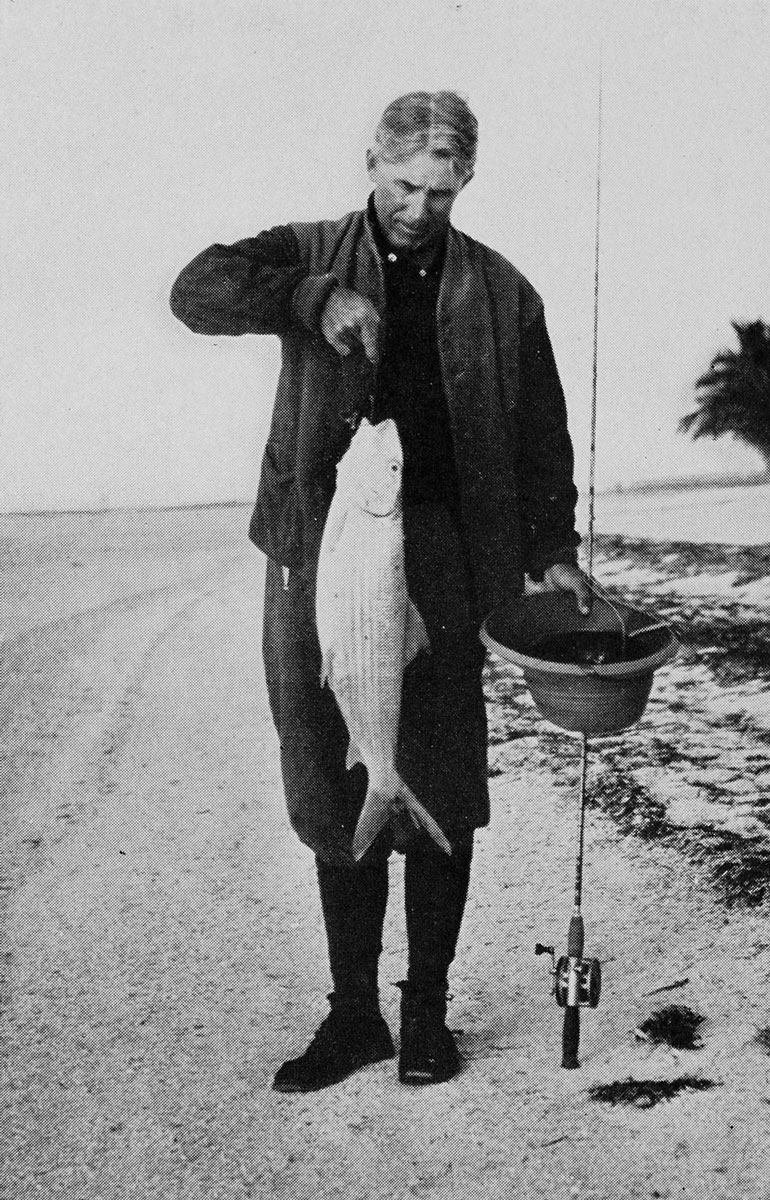
For Zane Grey, literary success and riches he could not have imagined during those early years of struggle in New York City opened the door to the real love of his life. It is in no sense an exaggeration to state that the man lived to fish and wrote simply because it enabled him to do so in exotic places and with the finest of equipment. The quest for world records became an obsession with him and at various points he held numerous ones. Even today, when globetrotting is comparably simple, he likely still remains the most widely traveled angler in the history of sport fishing. He delighted in seeking new angling frontiers, especially for billfish, and most of his fishing experiences eventually found their way into print. Grey’s books and articles on his piscatorial peregrinations didn’t bring the same kind of financial return as his novels, but they found a ready market with a fascinated outdoor audience. It also seems like they brought considerable satisfaction to Grey in the form of enabling him to share his love of fishing with readers.
From his auspicious beginning with his premier fishing story, the timeless and oft-anthologized “The Lord of Lackawaxen Creek,” over the years Grey would write hundreds of angling tales. These would be buttressed by a goodly number of hunting pieces. His articles appeared in virtually all the major sporting magazines of the day along with many general interest publications. Grey brought his considerable gifts of description and feel for mood into play in virtually all these efforts, and a sound argument could be made that this was the medium where his literary talents shone at their brightest.
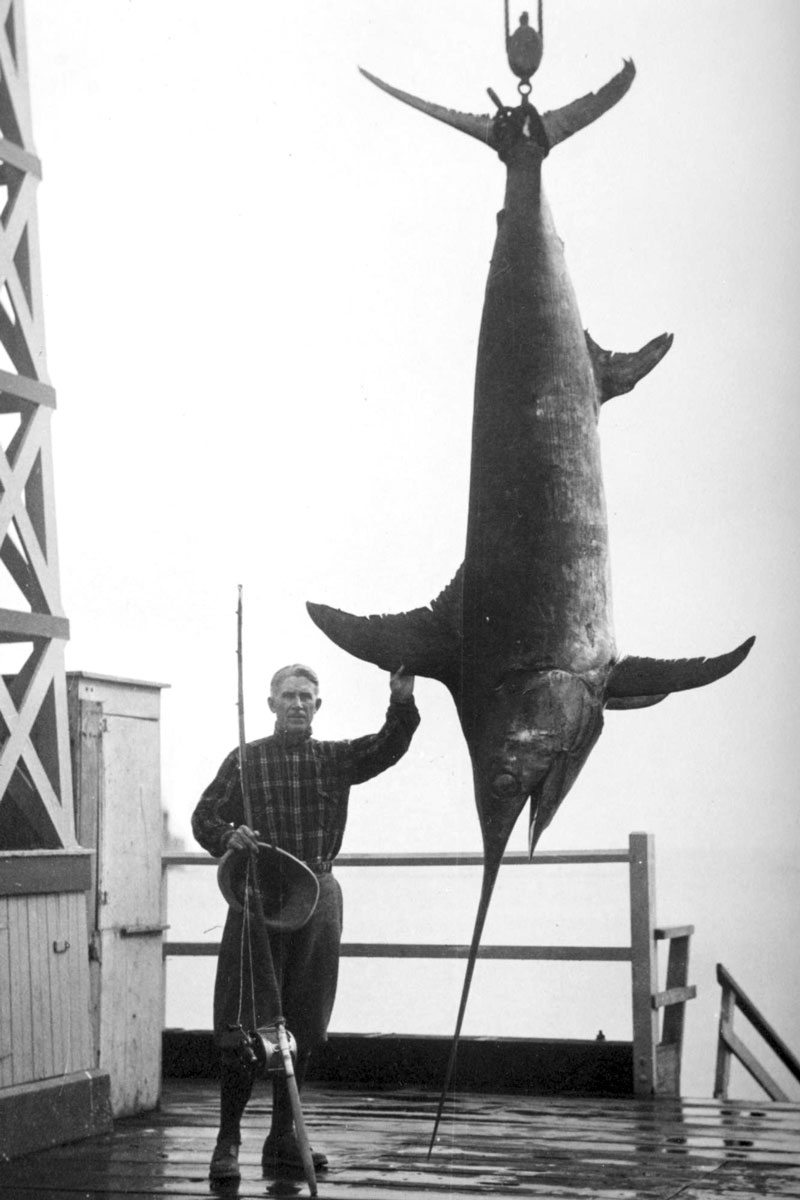
In his outdoor writings, Grey utilized much the same approach to be found in his Western sagas. First and foremost, he had an exceptional ability to take the reader with him to exotic locales. When he describes a sudden strike or line smoking off a reel, you feel you are at his side. Similarly, there is a palpable if vicarious sense of bone-deep weariness, counterbalanced by a goodly measure of satisfaction, when you join him in battling a mighty billfish. He was the first man to catch a fish topping 1,000 pounds with a rod and reel (a 1,040-pound marlin landed off Tahiti in 1931) and his billfish exploits thrilled tens of thousands of readers who would never personally have the opportunity to enjoy that sort of fishing except through the printed word.
Most modern readers, while likely conversant with his Westerns, have only modest familiarity, if any at all, with Grey’s writings on sport. Yet his fishing and hunting accounts have a certain quality of timelessness to them, and first editions of his fishing books are in great demand among collectors. The fact that they have been reprinted in various forms, most notably in attractive limited edition sets, indicates that among serious readers he remains a vital force.
During his lifetime, Grey wrote a total of 11 works that merit being described as sporting books. Almost all of those dealing with fishing carry the words “Tales of…” as the initial part of the title. His books on the outdoors, with the date being that of the first edition, include Tales of Fishes (1919), Tales of Lonely Trails (1922), Roping Lions in the Grand Canyon (1924), Tales of Southern Rivers (1924), Tales of Fishing Virgin Seas (1925), Tales of an Angler’s Eldorado (1926), Tales of Swordfish and Tuna (1927), Tales of Fresh Water Fishing (1928), Tales of Tahitian Waters (1931), Zane Grey’s Book of Camps & Trails 1931) and An American Angler in Australia (1937). Posthumously published works include Zane Grey’s Adventures in Fishing (edited by Ed Zern, 1952), Zane Grey, Outdoorsman (edited by George Reiger—1972) and The Undiscovered Zane Grey Fishing Stories (edited by George Reiger—1983). Also of note, and an essential reference item for any serious student of the man and his writings, is G. M. Farley’s Zane Grey: A Documented Portrait (1986). There are also multiple biographies, a Zane Grey Society and various serial publications devoted to perpetuating his memory.
In addition to his almost obsessive devotion to fishing, Grey was in some ways a pioneering conservationist. He realized the threats posed by water pollution and sounded warnings in his work. Similarly, he was keen aware that wild and remote places, areas lying back of beyond, were an integral part of what made the United States and its sportsmen special. A fine example of his thinking in this vein, written in the immediate aftermath of World War I and redolent of strident patriotism, is worth quoting. “We are a nation of fishermen and riflemen. Who says the Americans cannot shoot or fight? What made that great bunch of Yankee boys turn back the Hun hordes? It was the quick eye, the steady nerve, the unquenchable spirit of the American boy—his heritage from his hunter forefathers. We are great fishermen’s sons also, and we can save the fish that are being depleted in our waters.”
Zane Grey died from a heart attack on October 23, 1939. Over the two decades when he was most active as a writer, he produced a literary legacy that, when measured against the dual standards of quantity and quality, stands alone. Along with being a beloved novelist whose tales still stir images of the American West as once it was, he deserves lasting recognition as one of our country’s premier sporting scribes.