
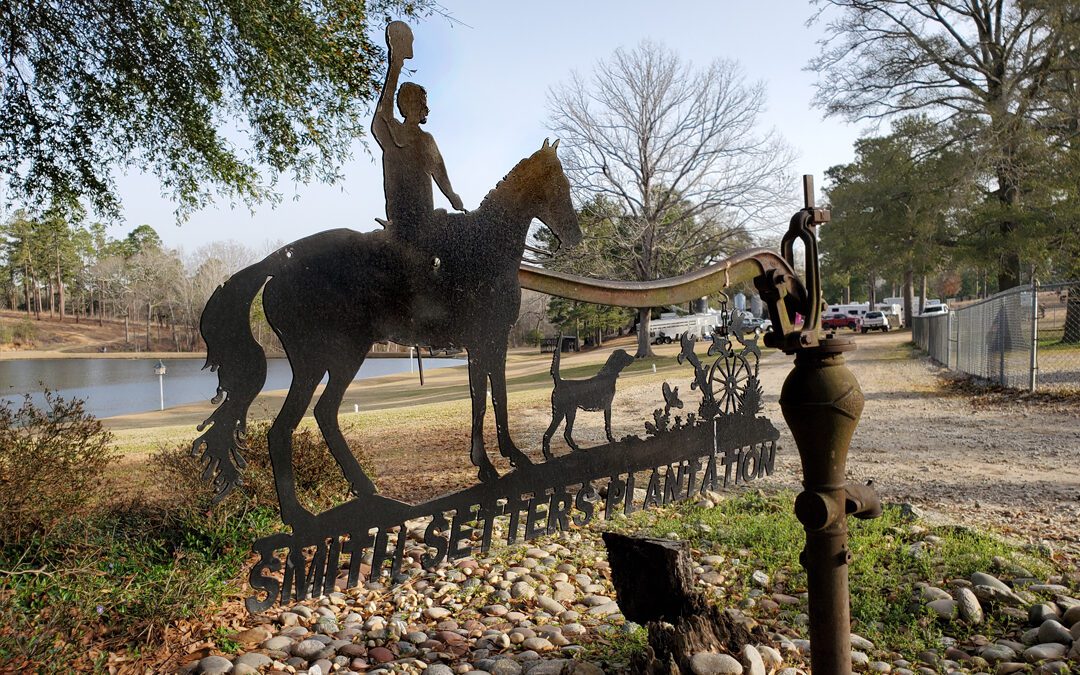
Next to the dirt road was a field full of a tangly mix of broomstraw, wire- and lovegrass. A thick column of switch cane revealed the seep running along the back side.
Off in the distance I could see the cotton in the neighboring farm’s field. It was so white that, if it weren’t for the 80-degree heat, I’d have thought of a winter scene from a Rockwell painting. I usually don’t sweat when it snows.
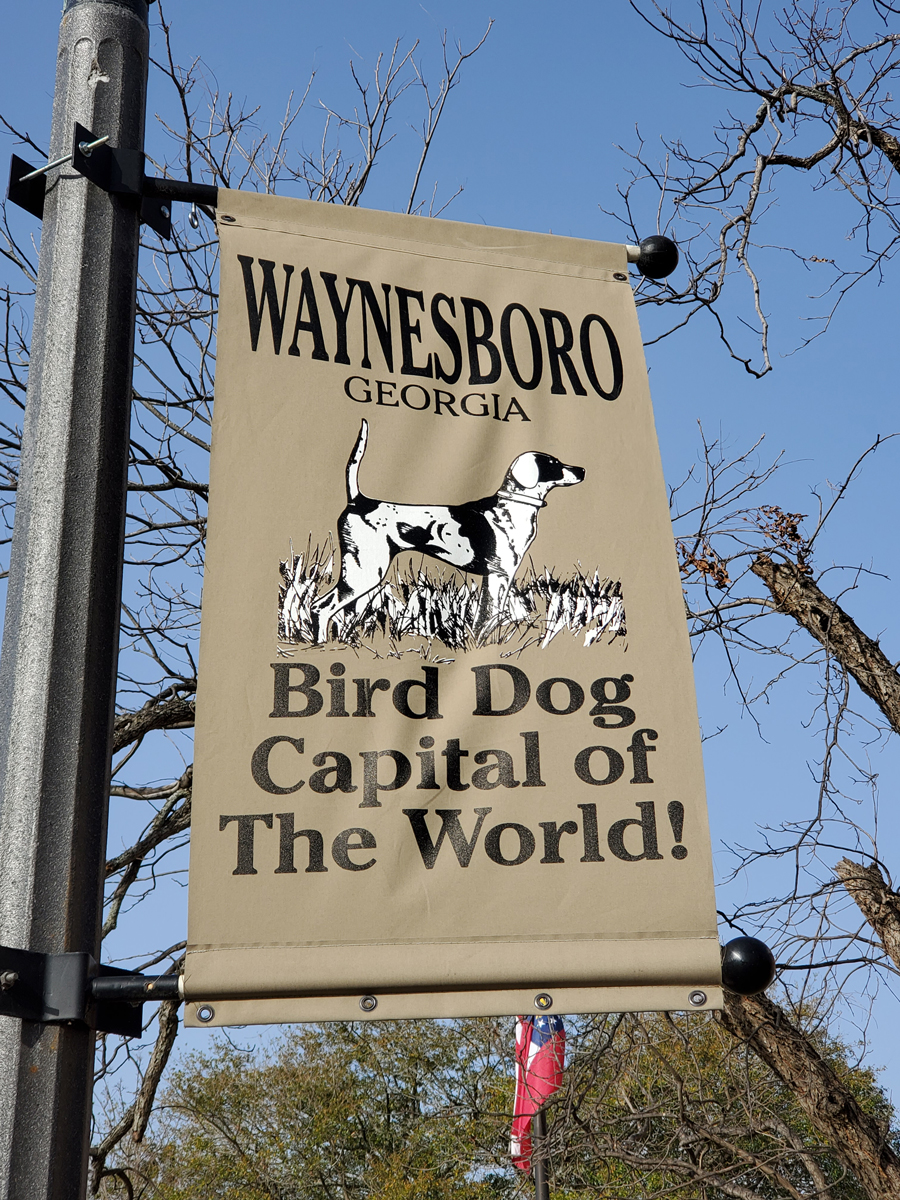
Seemingly every street pole in downtown Waynesboro flies a flag announcing that folks are in the bird dog capital.
Getting out of the snow is why Dr. John Metcalfe, a New York physician and sportsman, headed to southern Georgia in 1887. He was so impressed that he bought property near Thomasville, and proclaimed, “to the angler and the sportsman, Thomas County is paradise. I wish more northern doctors knew what I know. I have just bought me a ranch of some 1,600 acres on account of the excellent shooting and fishing obtainable from it.”
His “ranch” was Seward Plantation. Soon after, properties such as Pebble Hill, Elsoma, Millpond, Ichauway, Nilo and many others created Plantation Society.
Around a similar time, a quiet little town named Waynesboro began to emerge as the hub for all things bird dogs. These days you can’t miss it, for when I walked around town, I saw banners with images of statuesque pointers hanging from every street pole. On the street corners, metal pointing dog silhouettes framed signs listing every store name on that block. Bird dogs appear in advertising, only in this era they’re hawking a game of Keno instead of a pack of smokes. Businesses are named after bird dogs. A section in the Burke County Museum is devoted to field trial history but, get this — there even is a painting of an English setter with a 12 o’clock tail on the side of the town’s water tower. It’s over by the Walmart on Route 25.
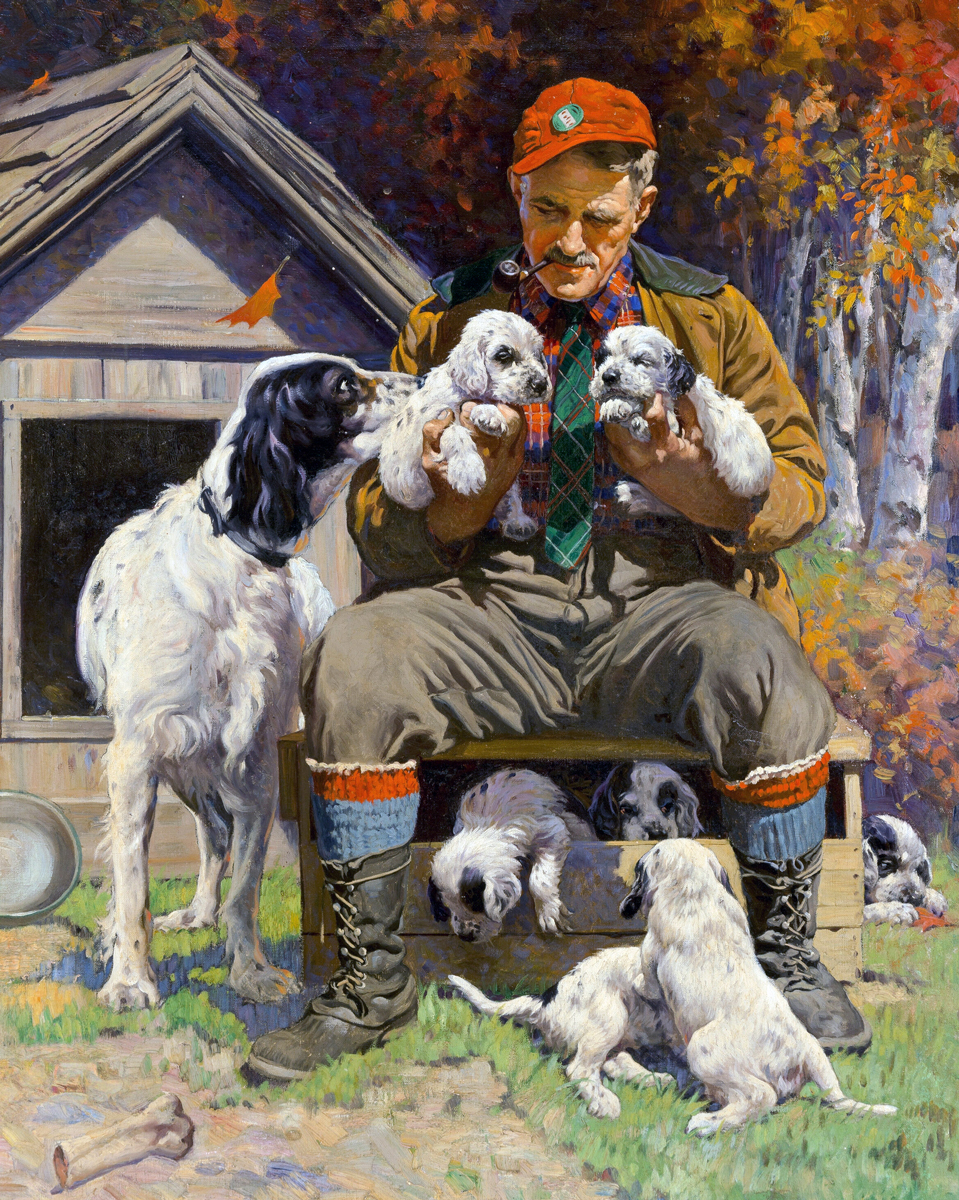
Joseph Francis Kernan
DB&M’s Royal Bohemian Beer advertisement, circa 1940. Oil on canvas
30 x 24 inches.
Field trials might be one of the main reasons that Waynesboro is known as the “Bird Dog Capital of the World.” Owners, trainers and handlers have been coming to run their dogs in trials sponsored by the Georgia Field Trial Association since 1903. These aren’t any ordinary competitions, they’re top-flight.
For instance, the winner of the Georgia Derby Championship is automatically qualified to run in the National Championship. And the Georgia Quail Championship is a qualifier for the National Championship, too. Two other trials have attracted the best bird dogs to the area for 123 years: the Georgia Shooting Dog Derby Classic and the Georgia Open Shooting Dog Championship. The more things change, the more they stay the same, and one reason Waynesboro is the capital is because of the field trials.
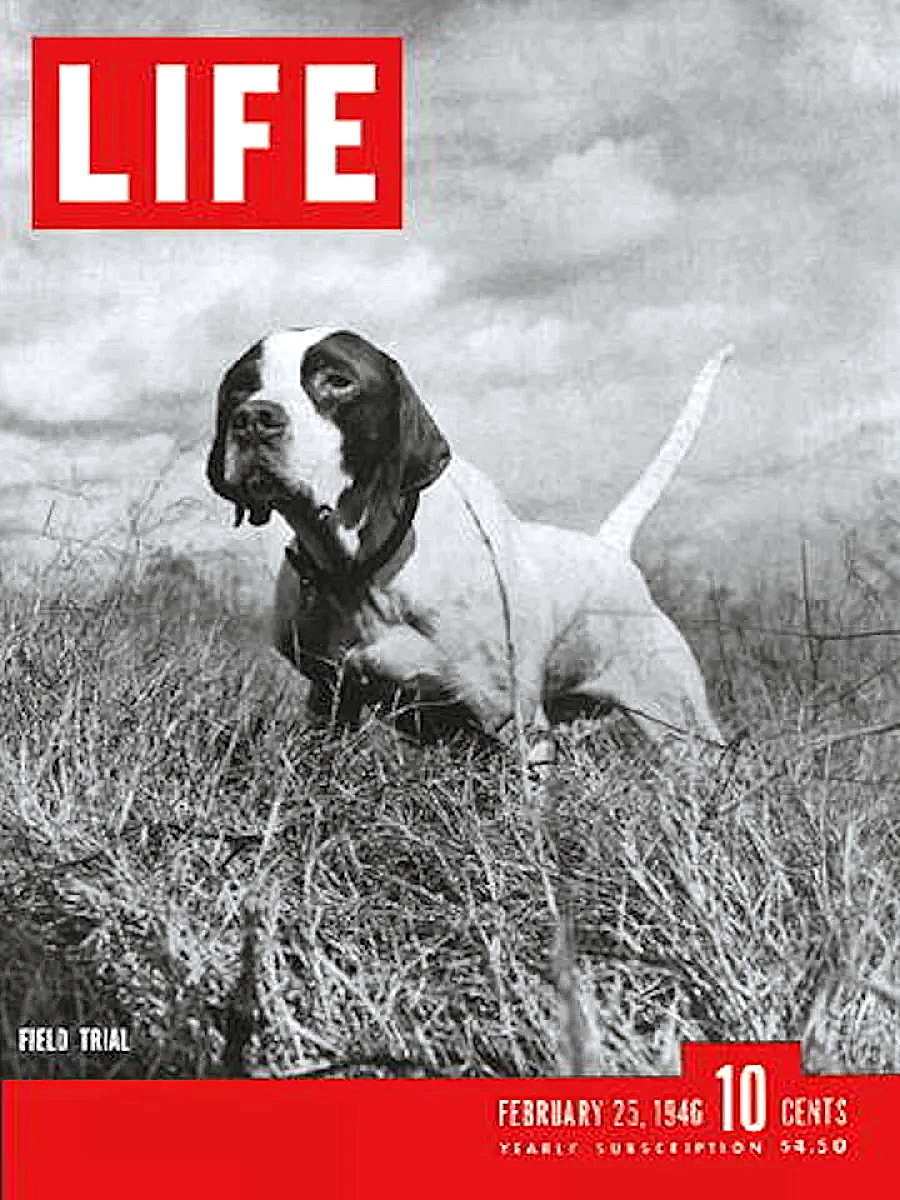
In the middle of the past century, field trials were so popular that even Life, a consumer and general interest magazine, featured Tarheelia’s Lucky Strike on the cover.
Someone had to make the proclamation at some point and Nell Mobley, the recently retired secretary of the Georgia Field Trial Association and a field trial organizer for more than 40 years, says she heard that Waynesboro, Georgia, was coined the “Bird Dog Capital of the World” shortly after the end of World War II. Magazine writers and photographers made the announcement while visiting the town to conduct research that appeared in an article on field trials for the February 25, 1946, issue of Life magazine. You might remember William C. Shrout’s image of George Livingston’s Tarheelia’s Lucky Strike that appeared on the cover.
That same sentiment of Waynesboro as the bird dog epicenter was echoed several years later by Joe Stearns in his April 12, 1951, column on field trials that ran in The True Citizen. “There are about ten professional trainers of dogs at Waynesboro. Each one handles about 30 dogs owned by sportsmen from all sections of the U.S. It is estimated that about 400 dogs are in training in or near Waynesboro. It costs about $35 per month to keep your dog with a trainer. The dog is exercised, gets the proper diet, resides in clean kennels, and gets expert instructions. Waynesboro is the bird dog training center of the U.S.”
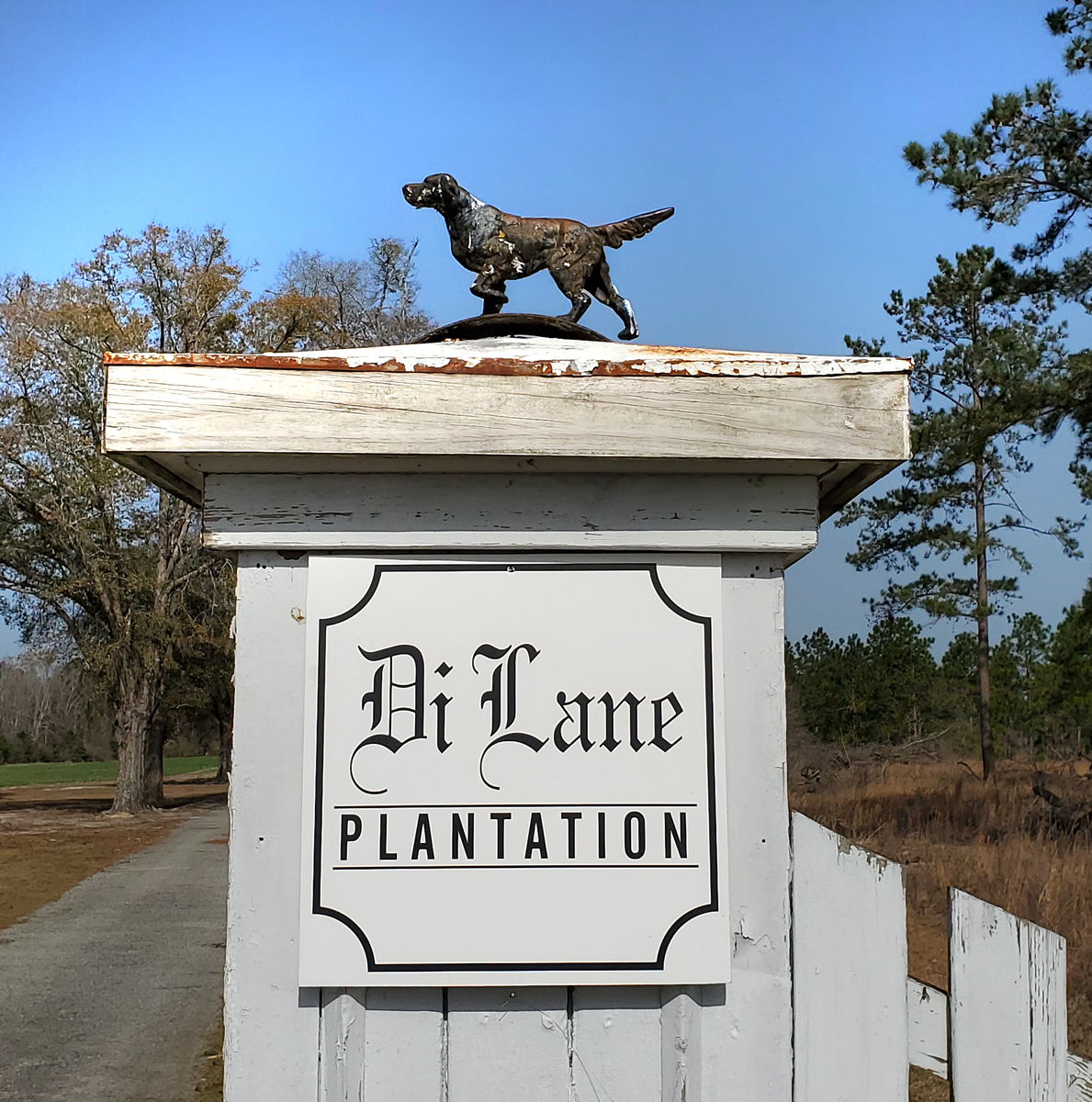
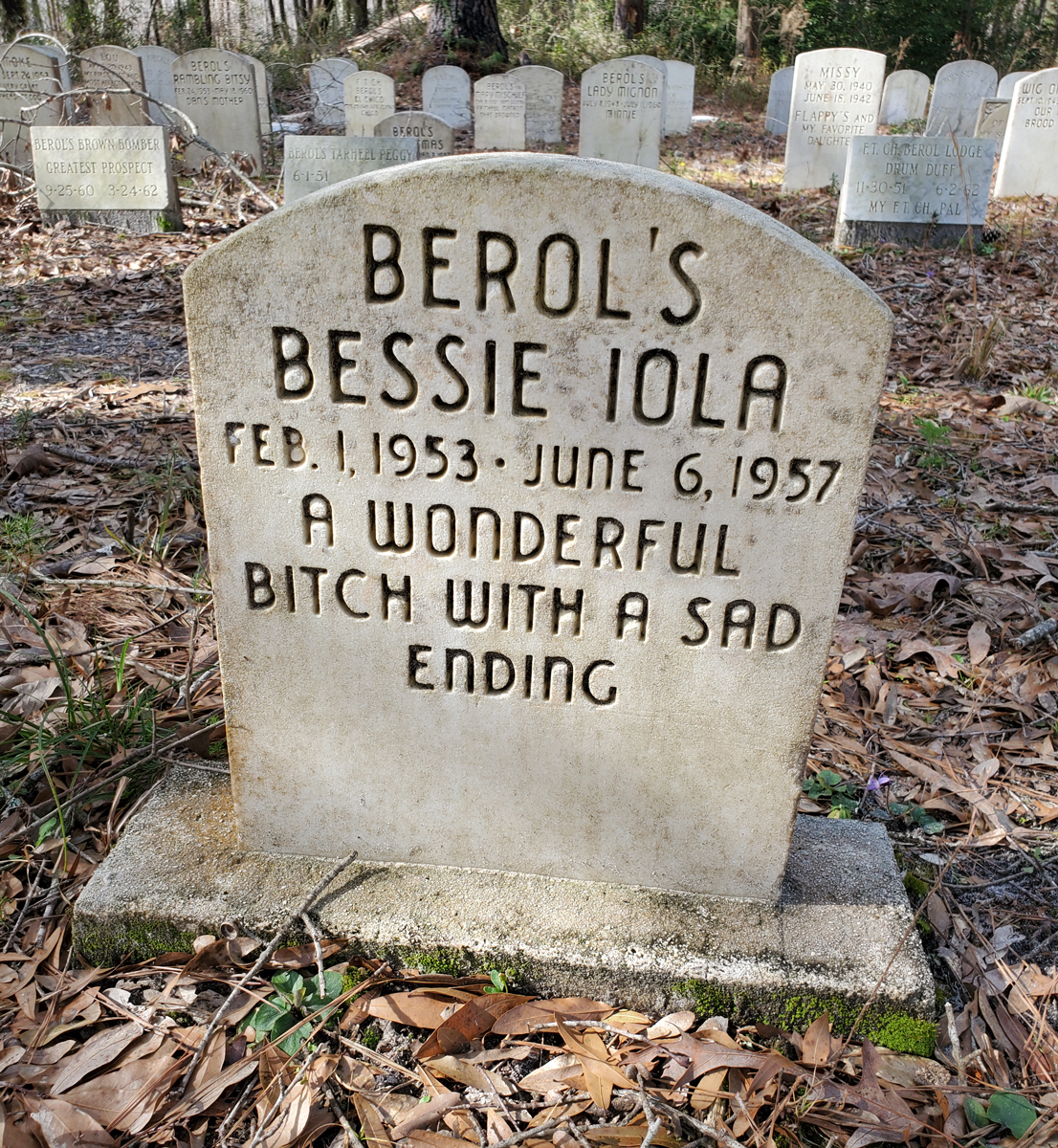
The late Henry Berol bought and established his Di Lane Plantation to further his field trial addiction. Creative epitaphs in his pet cemetery pay homage to his bird dogs, walking horses and family pets. Di Lane continues hosting field trials such as the Georgia Quail Championship and the Georgia Open Shooting Dog Championship.
Maybe Henry Berol’s property adds something to the mix? Berol, the heir to New York’s Eagle Pencil Company, was a breeder, trainer and field trialer. He moved to Waynesboro in the 1950s, purchased the Davis and Kilpatrick plantations, and combined them to form one, 8,100-acre property. Berol then blended the names of his two daughters Diane and Elaine into Di Lane, and played host to all of the Georgia Field Trial Association trials.
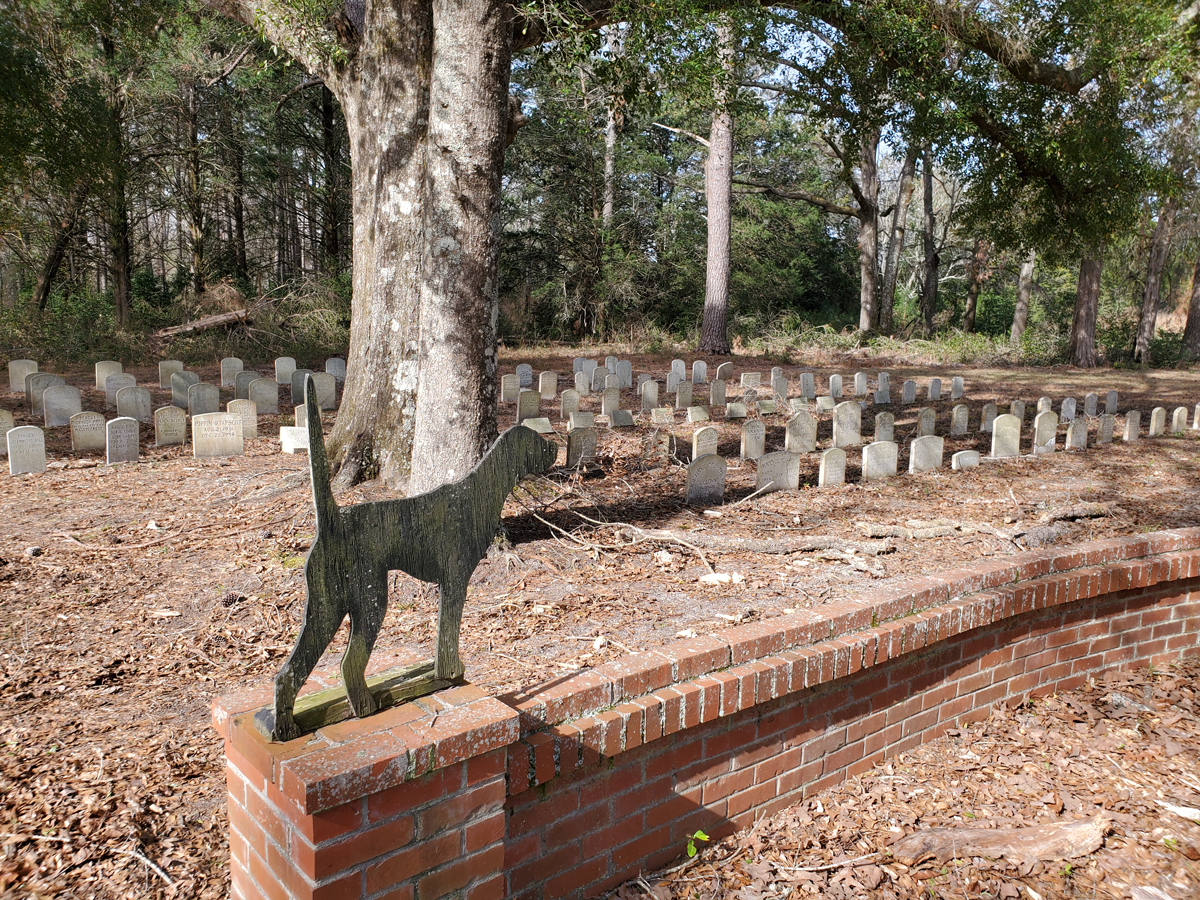
The Army Corps of Engineers currently owns Di Lane, and the field trials continue running on the property just as they have for more than 70 years.
If you’re in the area, be sure to visit Berol’s pet cemetery. Inscribed headstones pay tasteful homage to his beloved gundogs, horses and other animals.
A lot of excellent field trainers have lived in Waynesboro, too. Several were so good that they landed in the American Field Trial Hall of Fame. There is Charles H. Babcock (1965), George Crangle (1965), Henry Berol (1976), Elwin Smith (1978), Fred Bevan (1987), Inez Smith (1997) and Harold Ray (2006). Sherry Ray Ebert was nominated twice. But could Berol be counted twice? In addition to his bird dogs that landed him in the Hall of Fame, three of his cockers won the National Cocker Field Trial Championship, an event he organized in 1953. Berol was posthumously inducted into the English Cocker Spaniel Field Trial Hall of Fame, so he appears in two halls.
Then, there is that stately line of championship English setters that was developed in Waynesboro at Smith Setter Plantation. Elwin and Inez Smith and Harold Ray and Sherry Ray Ebert bred dogs that raised performance to higher levels. Champion shooting dogs had longer legs and bodies that provided them with speed, range and power. Those dogs were bold and ran hard with character, style and stamina. They had a natural drive and were heat tolerant. But something was missing, something that Harold Ray reasoned could be filled by genes from a championship cover dog.
Cover dogs were slightly smaller than shooting dogs, with males being between 50 and 55 pounds and females ranging between 40 and 45 pounds. Their smaller size made them athletic dogs that were light on their feet, an attribute that kept them from easily tiring. Cover dogs had outstanding noses and bird smarts, and a biddable nature.
It all came together with the pairing of the shooting dog, CH Susan’s Ladybird, to Grouse Ridge John, the cover dog and winner of the 1965 Pennsylvania Grouse Championship. The first lock produced CH Tomoka who earned 26 wins and a place in the National Bird Dog Museum’s Field Trial Hall of Fame. He sired six champions and 138 winning setters, all of which made him an easy pick to grace the Waynesboro water tower. Three other Smith setters — CH The Performer, CH Destinare and CH Bonafide — also landed in the Field Trial Hall of Fame.
Sherry Ray Ebert spent 35 years at Smith Setter Plantation breeding, training, developing and campaigning dogs with Elwin and Inez Smith and Harold Ray. She handled Her Grace to win the 1987-1988 Setter Derby of the Year award, became the first woman to win the Eastern Open Shooting Dog title with The Performer, and scouted 25 champions to 60 titles. While she spent a lot of her life traveling, she was among the few who called Waynesboro her home.
“There was a feeling in Waynesboro that really defined the Bird Dog Capital of the World,” she said, “and it was like the famous ‘it takes a village’ saying. Bird dogs brought all people together, and brought out the kindest, most helpful spirit that carries on to this day.
“When he built Di Lane Plantation, Henry Berol also built a horse barn, stalls, paddocks and kennels for field trialers to use during their visits. Lamar Mobley was a key figure in the success of the field trials, something that his brothers and his wife, Nell, devoted a lot of their time and passion to as well. The list goes on but, to me, the people and the dogs are what makes Waynesboro so special. That shared, deep connection is not something that you just find anywhere.”
There are a lot of associations between towns and movements. Cooperstown is to baseball, as Lexington is to thoroughbreds and Detroit is to cars and Motown. Waynesboro is that way for bird dogs. In fact, bird dogs are so important to the town that they’re woven into the fabric of town life. You know, the same way that a ball of cotton becomes a pair of jeans.