
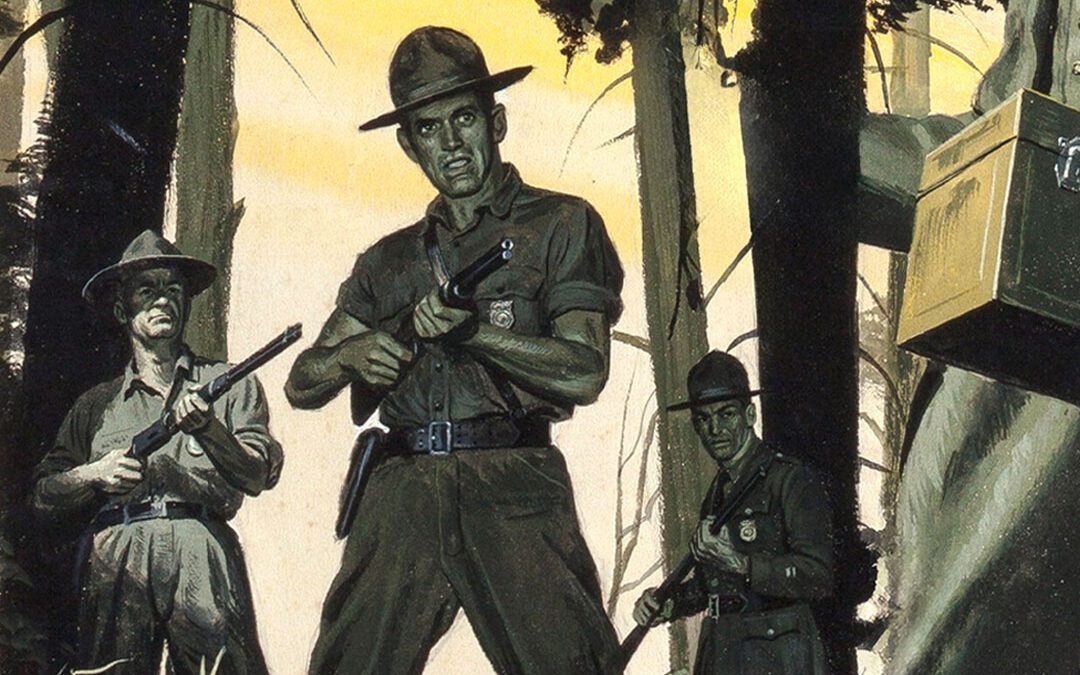
“There’s only two things to fear in Alleghany County— that’s God, and Forrest Hanks.”
The Texas firing range was hot as blue blazes, but not as hot as Forrest Hanks’ M1. His Garand boomed, each time the .30-’06 bullet ripping another dime-sized hole in the tattered bullseye. A handful of recruits from the 3rd Armored Division began to crowd and jabber. “Hot damn, Hanks can SHOOT!”
A Georgia boy mouthed off, “Let’s see you hit that little old crow, Mr. Virginia Marksman!” The crow flew into a tree branch far beyond the shooting range — an almost impossible shot. Hanks put the bird in his peep sight, his sharp eyes and steady hands guided by years of stalking squirrels in the mountain hardwoods back home.
BAM!
The crow exploded in a puff of feathers, followed by the metallic “ping!” of the clip ejecting — a fitting grace note just before the whoops and hollers. But the celebration was brief.
“Who shot that crow?” thundered the drill sergeant. Hanks raised his hand. “I did, Sir.”
“Son, I am sending you to sniper school!”
Germany had invaded France, Japan had bombed Pearl Harbor and every drill instructor in the country was on the lookout for capable soldiers like Hanks. There was dirty work to be done, and men with shooting skills, a killer instinct and a certain willingness to endure were in demand.
That unique set of skills would serve Hanks well later in life, in his legendary career as Virginia’s toughest and most infamous game warden. His adventures tracking down murderers, ending a kidnapping spree and saving lives is like a story out of an old western movie.
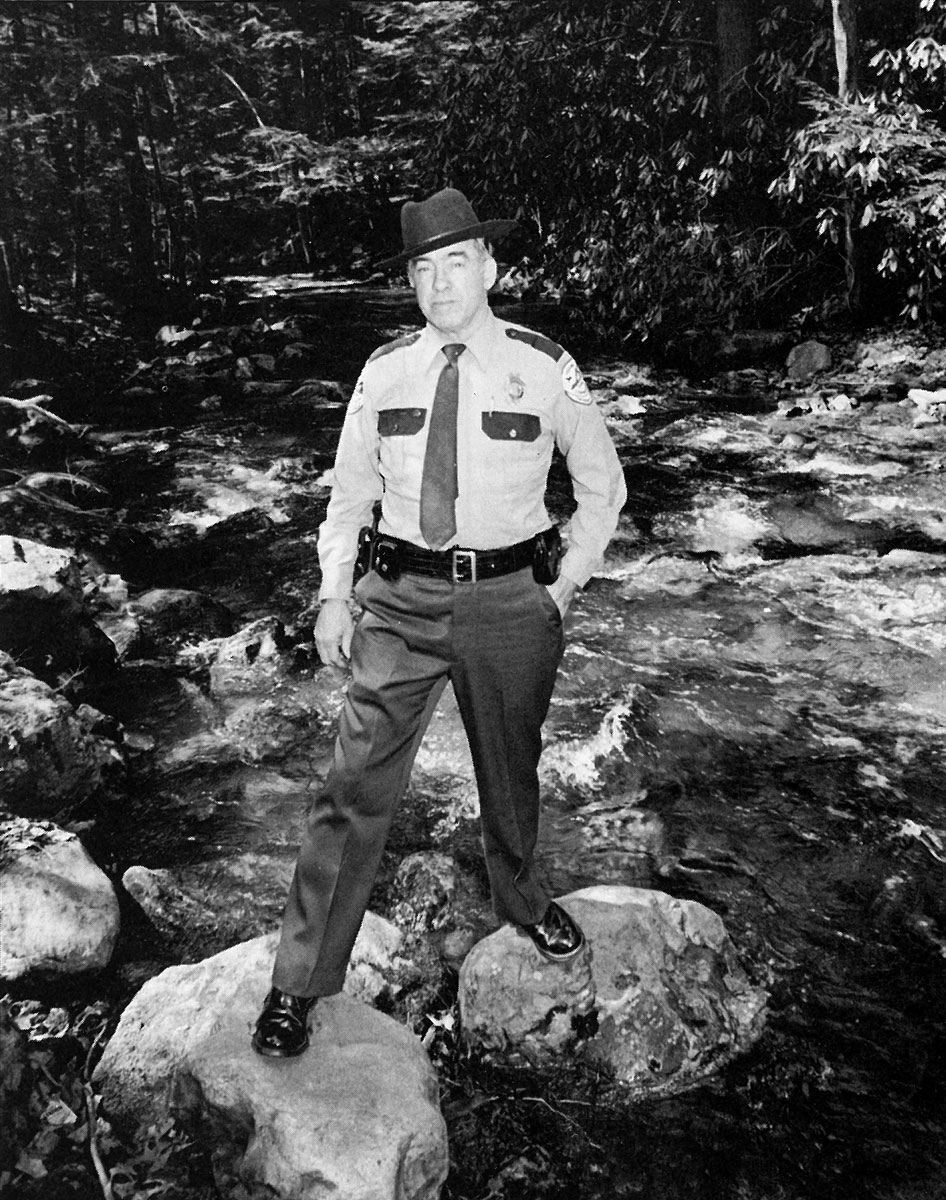
Forrest Wayne Hanks was born in Mount Hope, West Virginia, in 1920. He was the son of Ona Lilly, a Cherokee Indian, and Oscar Hanks, a coal miner. Forrest’s father was also a blacksmith, a farrier and part-time gunsmith.
Hanks learned to handle a gun at a young age. When he was 11 years old, his mother took him hunting, carrying a few .22 shells in her apron. When they found a good stand of oak trees, she would hand Forrest a single cartridge and show him how to load the rifle. This was in 1931 during the Great Depression when shells cost 12 cents a box. The squirrels Forrest shot went into Brunswick stew. The child remembered those first lessons for the rest of his life.
Forrest was a bright kid, drawn to the forge, hammering out horseshoes on his daddy’s anvil. He worked the farm and apprenticed at gunsmithing. But there was one place he was not destined to follow in his father’s footsteps. Each day at noon, he carried a lunch pail to his daddy at the mouth of the mine, where the tar-black faces emerging from the seam always gave him chills. The coal mine was one dark place Forrest didn’t want to go. He would live his life in the sunlight, as a law officer, working in the woods and fields of Virginia.
Hanks joined the Virginia Commission of Game and Inland Fisheries in 1951, a time when county game wardens supplied their own cars and weapons and worked six-day weeks. His assignment was to patrol the mountains of Alleghany County, located along the Virginia/West Virginia border — a sportsman’s paradise with the Jackson River flowing south through the town of Covington. Hanks often traversed the rugged territory on horseback, allowing access to even the most remote areas. The tough-as-nails country boy had found his dream job.
Hammer Time
After a long day in the field, Forrest enjoyed an occasional libation at the local watering hole. With Hanks — and his renowned mean streak — that usually ended in a dust-up of one kind or another involving local mill workers. One evening a rowdy drunk made the mistake of getting a bit too cozy with Hanks’ woman.
The man woke up in the men’s restroom with a big knot on his head, babbling, “There’s something wrong with the light switch!” Forrest had snuck in, unscrewed the light bulb and, when the man came in, busted him over the head with a farrier’s hammer, knocking him out cold. Word soon got around — don’t fight the law — Hanks was the law, and the law won. By all accounts, the hammer got a lot of use.
Forrest’s work guns were a .45 ACP he fed with custom loads, along with a backup 25 ACP semi-auto pistol. In his vehicle, he carried a long gun, either a .30-’06 rifle or a sawed-off shotgun.
But his iconic rifle — the lever-action that plays a role later in this story — came to him by chance. It was during deer season and Forrest was checking hunters up on Brushy Mountain. There, he met a hunter carrying an old Winchester Model 1895 .30-40 Krag rifle. For perhaps the first time in his life, Forrest swooned.
The Winchester .30-40 Krag is the famous repeater that one of Hanks’ heroes, Theodore Roosevelt, carried with him down in the jungles of Cuba with his all-volunteer regiment called the “Rough Riders” in the Spanish American War. It was a fine rifle.
Forrest asked the hunter how he liked the Krag, and the hunter said he really didn’t — it was too heavy and the barrel too long. Forrest showed the man a rifle that he had in his car, a light Remington semi-auto carbine in .30-’06 caliber. The hunter really liked it, so they traded guns and bullet for bullet, there on the mountain.
Not all of Hanks’ encounters with the public were as smooth. His penchant for skirt-chasing and bar fights, along with his avid pursuit of lawbreakers, did not endear him to a large segment of the local community.
One day he returned from the field to find his patrol car in flames — someone had set a tire ablaze under it. His next car ended up riddled with buckshot. They called him “dog killer,” because Virginia Game Wardens were also dog wardens at the time, with the responsibility to euthanize any stray or unlicensed dog. It was all part of a wildlife officer’s job.
Hanks had an uncanny knack for always being in the right place at the right time. A lifetime of experience stalking through the woods enabled him to move virtually unseen. He routinely surprised poachers by seemingly appearing out of the ether. In these encounters, he was always calm, even when things got tense. Forrest Hanks, for all his imperfections, was a steady man in times of trouble. His mettle would be tested in two bizarre and notable situations.
The Killers
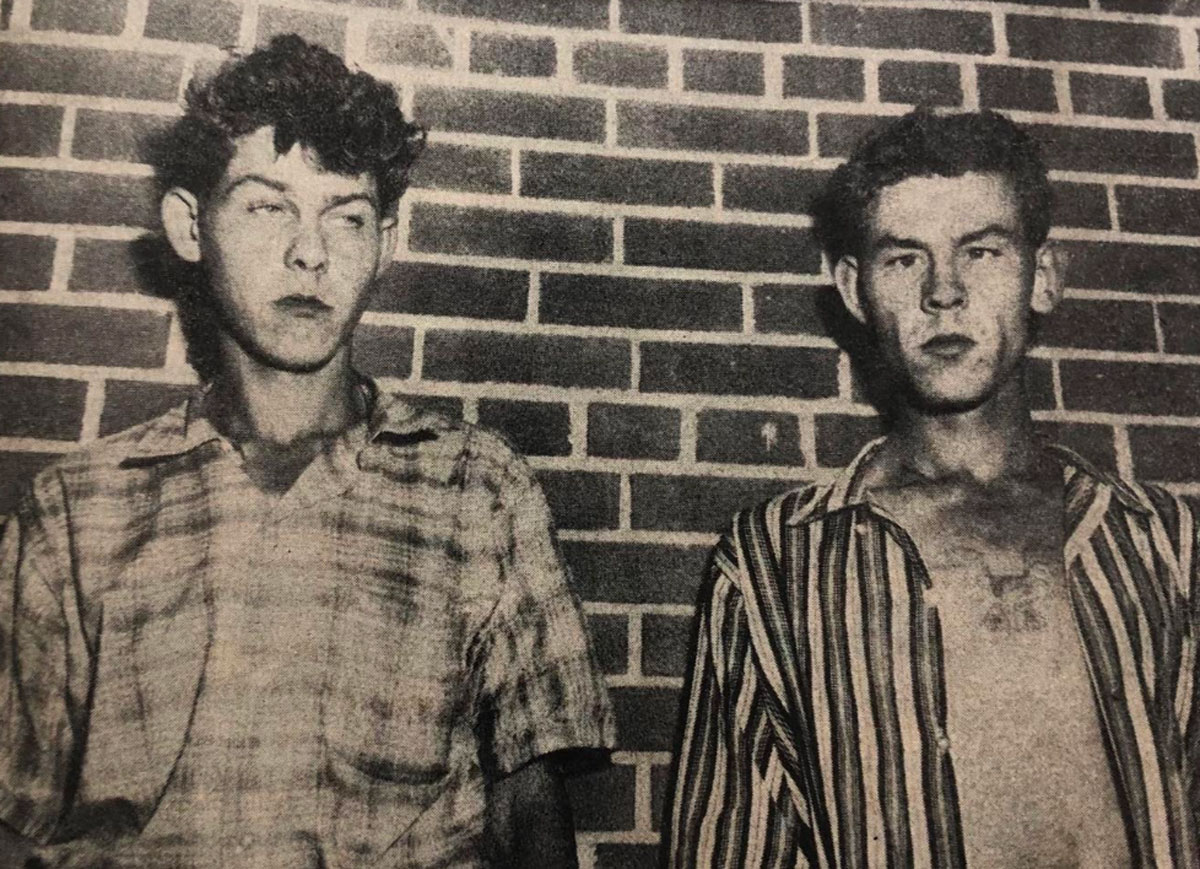
In August of 1962, trouble rolled into sleepy Alleghany County on a Greyhound bus. Two very twisted young men, brothers Paul Baker, 18, and John Baker, 22, arrived at the Covington bus station. They hailed a cab and robbed the driver. But that wasn’t enough. Paul shot the driver five times — to borrow a lyric from a popular Johnny Cash song of the day, “Folsom Prison Blues” — just to watch him die.
The brothers left the body by the side of the road. Police began a massive manhunt to catch the murderers, putting up roadblocks in both Virginia and West Virginia. State Police, county deputies, FBI agents, C & O Railway agents, K9 units and even civilian volunteers were all enlisted on the search.
The Baker brothers evaded the roadblocks, making their way out of Covington. They planned to disappear into the thick woods at Peter’s Mountain Wilderness Area, heading toward the nearby George Washington and Jefferson National Forests, into an immense 2,800 square miles of undeveloped land. Even two killers with their photos splashed across the front pages of every newspaper in the region could lose themselves there.
But Peters Mountain happened to be in Forrest Hanks’ territory. Alleghany County’s Sheriff, Max Swoope, got a tip the Bakers were seen up there. Well aware of Hanks’ reputation as an expert tracker, the sheriff deputized him on the spot. Together, with another trusted deputy, William Cummings, the officer who found the driver’s body, the lawmen set out to catch the killers. All three carried 12-gauge shotguns.
Up on the mountain, with Hanks leading the way, they were quickly able to locate the brothers’ location. Deputy Cummings gave this account of what happened next as the deputies closed in.
“They seemed to be busy talking and didn’t hear us closing in on them. They were sitting on the ground with one holding the shotgun and the other wearing a revolver in a black holster and gun belt. We had closed the distance to the fugitives to 20 yards. Hanks dropped down to one knee and raised his shotgun to his shoulder. Sheriff Swoope yelled, ‘Put up your hands!’ The one with the shotgun jumped up and raised his gun but when the Sheriff yelled to drop it, he threw it down without firing.”
Thus ended the Baker boys’ run. They got an all-expense-paid trip to the Big House, and Forrest took Sunday off, as usual. For most game wardens, catching cold-blooded murderers might be the defining moment of a whole career. But Hanks’ defining moment was still to come a few years later.
Kidnapper James Kelly
It was Thursday morning, Nov. 19, 1970. James Kelly, a 42-year-old ex-con, was having a bad day. He was looking at flashing lights in his rear-view mirror. Cleveland, Ohio, Police Sgt. Ronald Barcaz had stopped Kelly for a minor license tag violation and was about to radio the encounter to headquarters.
“Please don’t do that,” Kelly said. Barcaz turned to look into the barrel of a 45-caliber pistol pointed at his head. “I’m not going back to prison.”
Kelly had the mad dog look in his eyes, and Barcaz knew he wasn’t joking. He’d been released from Chillicothe Correctional Institute only a month earlier, after serving a long sentence for bank robbery and shooting at a guard.
Kelly took Barcaz’s gun and handcuffed him to a sink inside a church. Then he embarked on what would become a brutal, multi-state kidnapping and crime spree, one that would ultimately bring him face to face with Forrest Hanks.
He started by kidnapping another cop. He stuck a gun into the back of an Ohio Highway Patrolman, abducted him, took his uniform and car, and left him handcuffed alongside Barcaz inside the church.
In the stolen state police car and uniform, Kelly raced south down Interstate 77 and began pulling over vehicles. He took three hostages and ditched the police car, swapping it with one of the hostage’s cars, a Chevy Nova. Then James Kelly hit the open highway as news of his kidnapping spree began to spread. He continued driving through West Virginia and crossed into Virginia.
Kelly rolled into the small town of Covington on Friday evening with his three hostages, pulling into a Sunoco gas station. He forced everyone at the shop into the restroom, locked the door, took the cash from the register, and then fled.
Word got out that the fugitive was in Covington, armed and dangerous. His photo was plastered across every TV screen and newspaper in the country, and police in six states were looking for him. Kelly abandoned the Nova near Callahan, a small community on the outskirts of Covington, and hid during the night.
The Ayers family, who lived in Callahan, learned that a fugitive was in the area on Friday evening. Young Donna Ayers was at a high school dance Friday night when the principal sent all the students home because a dangerous outlaw was in the area.
The next morning, her younger brother Tommy answered the front door to see Kelly, still dressed in the Ohio State Police uniform. He told the boy he was a special policeman on assignment trying to get a convict from Ohio. Kelly asked if he could have a cup of coffee and Tommy, thinking he was policeman, got him coffee and fixed him breakfast.
Tommy’s mother, Dorothy Ayers, walked into her kitchen to find Kelly having breakfast at her table. She immediately recognized him as the felon from his photo in the newspaper. Shaking, she told him, “I’m real busy today,” and that she wouldn’t be able to help him.
Kelly pulled his revolver. “You’re a close family, aren’t you?” he asked. “And you love each other, don’t you?” They replied, “Yes, we are.”
“Then let’s go,” he said, pointing the gun barrel toward the door.
He forced Dorothy and Donna into the family’s Buick at gunpoint. Dorothy drove the car, Donna rode shotgun, while Kelly lay down in the backseat with three handguns barking out orders. Driving the expressway toward West Virginia, they noticed a car following them, and Kelly said, “Take the first exit.” It was the Jerry’s Run exit. The car kept following. They ended up on a gravel road that came to a dead end.
“Turn around!” Kelly demanded.
The trailing car, a Virginia State Police cruiser, pulled in sideways, blocking the road. Kelly wanted Dorothy to ram the police car, but she refused, throwing the keys out the window. When the officer got out of his car, James Kelly sprung up.
Kelly opened fire, blasting holes in the police car and shattering its passenger side window. The officer crouched behind his vehicle yelling, “Get down!”
The gunshots were deafening. Dorothy and Donna crouched down on the floorboards. A bullet hit the glove box next to Donna’s head. She looked up to see her mother’s arm exposed and reached up to pull it down. Another bullet ripped through her right palm. Blood spurted everywhere, and she called out, “Mama, I’m shot!” Donna managed to open the passenger door and fled. As more police vehicles arrived on the scene, Kelly forced Dorothy out of the car at gunpoint. Grasping her by the back of her dress, he put her between him and the police and started up a logging trail.
“I’ll kill her!” Kelly said. “Don’t come any closer!” Deputies feared he would shoot her if they got too close, so they stayed back just out of sight.
Sheriff Swoope, in the midst of this standoff, called the one man he had faith in to save the day. Forrest Hanks had been on his way to checking hunters on the first day of deer season. Hanks sped to the scene to find numerous police and deputies shadowing Kelly up the mountain while the outlaw held a .357 Magnum to Dorothy’s head. Hanks pulled his Krag rifle out of the car. He was the only officer on the scene with a long gun.
The outlaw tried to bargain with the officers, saying if the state legislature of Virginia would, “pass a law and build a stone wall around the mountain,” he’d just as soon spend the rest of his life there. Hanks talked to him, saying that if he would release Mrs. Ayers, he’d be treated fairly. Nothing worked.
Kelly kept moving higher up the trail, half-dragging Dorothy, gun pressed to her head, while farther behind a group of officers followed. Hanks broke off from the others and made a big circle, flanking Kelly. Hanks would quietly crawl forward a couple feet every time the police helicopters got close, so the noise of the dry leaves didn’t give him away.
Finally, Hanks got close enough to see Kelly through the brush. Kelly was looking downhill toward the deputies. Mrs. Ayers caught his eye, and Hanks motioned with his hand for her to move her head to the side. When she did, the former sniper squeezed the trigger on the old Krag lever-action, dropping James Kelly with one shot to the head, killing him instantly. Dorothy Ayers’ horrible ordeal was over, as was Kelly’s kidnapping spree.
The next day, the headline in the New York Times read: “Police Kill Parolee in Virginia Battle,” in an article citing Hank’s heroism. Once again, the tough mountain game warden had kept his community safe. His accomplishments enhanced an already larger-than-life reputation, leading to the local truism, “There’s only two things to fear in Alleghany County — that’s God, and Forrest Hanks.”
Forrest Hanks died in 1982, but his amazing legacy won’t be forgotten. Thanks to the work of historian Rick Perry, a former USFWS Special Investigator and Virginia Game Warden who researched Hank’s life, The Virginia Department of Wildlife Resources Law Enforcement Division formally recognized his accomplishments in 2024, posthumously awarding him it’s highest honor, the Medal of Valor.