
The long pull uphill meant standing on both the bicycle pedals pumping for all I was worth. Sweat rolled down my face to top out as our small town faded away behind me. At the top stood an old abandoned almond orchard, or what was left of one. Scraggily trees with broken branches stood in three scattered rows, some only rotting stumps where trees had once been. But this remote and long forgotten spot held a special kind of magic to us bicycle bird hunters. Summer mourning doves feeding many miles to the east in weedy flatlands used the old hilltop orchard as a flyway “marker” on their long flights west to wooded hill country. They came twisting in to pass exactly over the old tree rows literally by the dozens each morning after feeding. Even more amazing, only us kids knew about this fabulous hot spot.
Cars passing by on the rutted, two-lane road running by the old orchard were driven by adults on their way to someplace else—going to work, meeting schedules, another town—too busy to notice what we had. Our country town had plenty of adult dove hunters, but we never saw a single one there. These were the kinds of things only kids 12 or 13 years old knew from bicycle wandering the outside town. We were whiskerless hunters always on the prowl to find something new. It could be new dove flyways, backwater potholes filled with mallards and teal out on the edge of the Great Marsh or bow and arrow hunts for spring carp swimming up shallow streams to spawn out by the old railroad bridge. Adults never had time to learn these things. We did and reveled in them.
It was always something of a bicycle race to see who could reach the orchard first. The small area could handle two shooters well spaced out. Three meant one kid had to take up a spot on the low hillside about 50 yards away, next to the orchard. One morning three of us, Jim, Harold and I, were all there. Jim and I were in the trees. I was on the outside row opposite Harold. I’d stand behind a tree then step out to shoot when a dove came winging through.
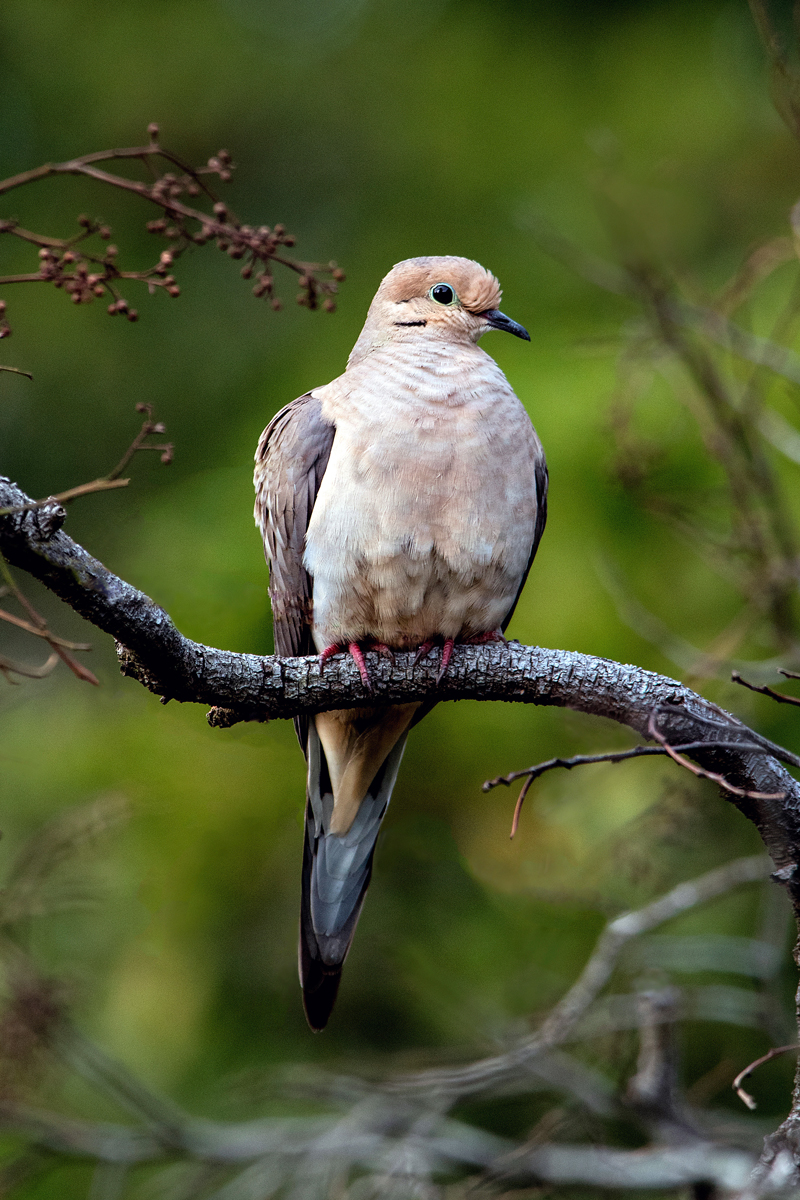
I learned early on that adult doves teach their young fledglings the same flyways they use year after year, always passing it on to the next generation. Many years after I’d grown up and moved away from my boyhood home, I was back in town for a brief visit. My old hilltop orchard hot spot had been plowed flat and replaced by rows of two-story apartment houses. Yet doves came cork screwing through the telephone wires and T.V. aerials on the very same flyways.
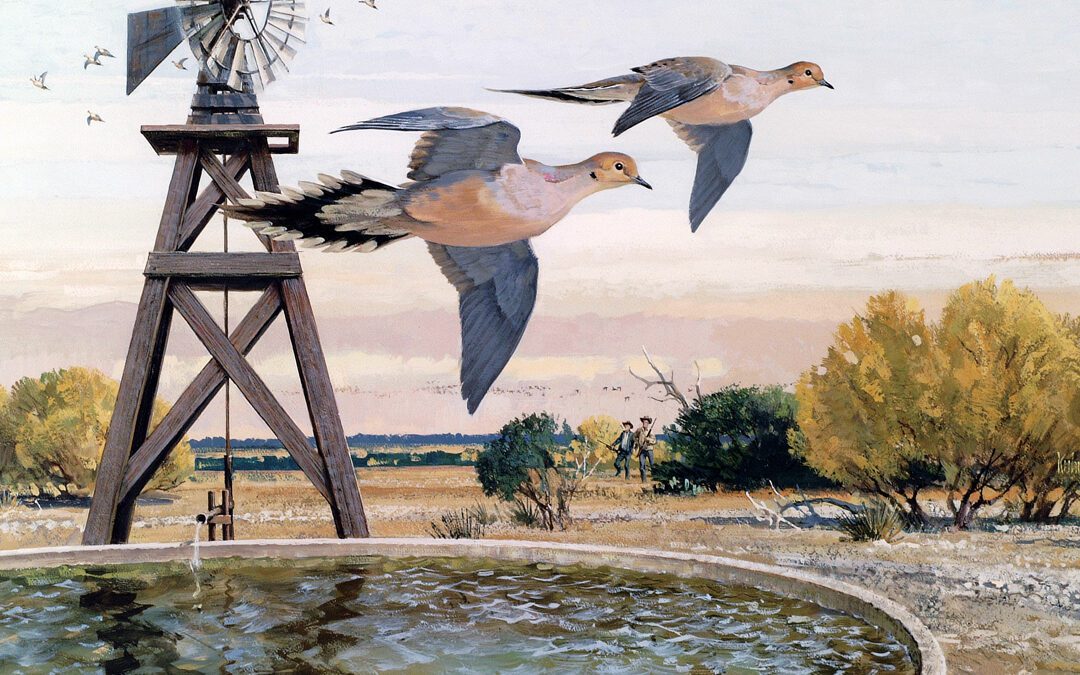
This wonderful discovery that doves used natural flyway markers on their daily flights led to another hot spot only us kids learned and hunted. Broad, flat, open fields of star thistles and wild oats stretched away endlessly there. There was no natural feature for doves to follow, but right in the middle of this was a tall windmill water tower with a tin water tank at the bottom kept full for sheep or cattle to drink.
Whether it was morning or afternoon flights, doves would swing in from different angles directly at the tower streaking right over the top. That’s when we learned man-made works were also used by winging doves. It became another bicycle race to see who could claim the tower hot spot first.
Several years later after I’d graduated out of the eighth grade and into high school, it was still a race but by then I was driving a snazzy 1931 Chevy two-door coupe with a rumble seat in back filled elbow to elbow with pals who also wanted to get in on the shoot. I don’t know how many doves we took standing under the creaking blades of that old windmill tower slowly spinning away above, but it must have run into the hundreds in the years between bicycle hunts and six-cylinder engines.
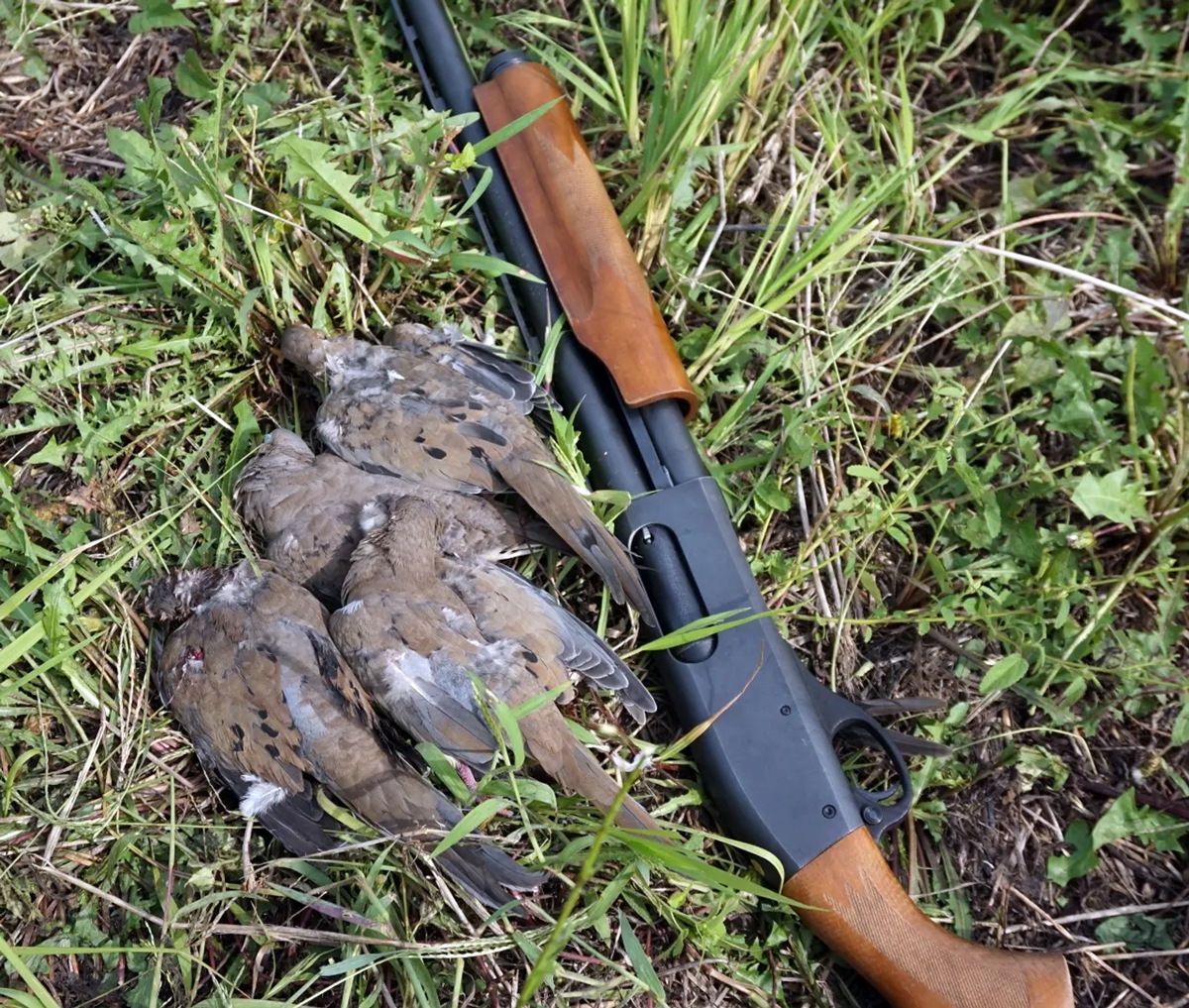
As we kids learned the lessons, timetables and travel habits of doves, it was only natural we’d follow them to the other end of the day where they went to water before going to roost for the night. This was in oak-studded foothills fronting higher portions of the Coast Range Mountains. This hill country was dotted with cattle ponds, some as large as small lakes, others you could underhand a rock across. When doves reached hill country, we learned they preferred to funnel only up certain canyons while avoiding all others. I came to believe they chose them by the number of tall trees available to roost in. I quickly learned what canyons were currently being used, then found a waterhole or pond close to it. This kind of shooting was spectacular and lighting fast, like jump shooting quail. Even the best adult hunters would have been hard pressed to drop more birds than miss under those circumstances. I missed dozens.
This wasn’t hilltop orchards or open field water towers. The entire hills were covered in thick, tall oaks. I had to take up my shooting spot out in the open around a pond where I had room to move and turn quickly to shoot up at any angle. It was, for lack of a better choice of words, “snap shooting.” You never knew where birds would show. They would suddenly come rocketing over treetops, then slam on air brakes dropping down to water. You only had milliseconds to get your gun up and shoot. It proved to be as exhilarating as it was maddening, all at the same time.
One of these watered spots was a lake of about an acre in size. Because oaks ran right down to the water’s edge, I could only shoot at one end where doves would come in over the trees before circling out over water, then turn back into oaks. That meant I could only drop birds over water. One time I had three floating and no wind to push them to shore, so I had only one choice. I put down my 12 gauge, stripped off all my clothes, boots and socks, and waded in. The birds were well out. Soon I was up to my waist, then armpits. Finally, I had to swim. I reached the first bird, throwing it awkwardly with one arm as far as I could, then swam for the next.
Eventually, I got all three on shore, swimming for it myself. I got out bone tired and out of breath. Bending over I picked up all three doves, while mooning the world behind me. Suddenly, a voice rang out from the far end of the lake in shadowing trees.
“Nice job!” Gary shouted, a high school friend and fellow dove hunter. Loud laughter followed. He’d watched the entire show without uttering a single word. It took me a while to live that one down.
As years rolled by my love affair for the “birds of summer,” never waned.
I live in the far northern portion of my state in mountain country. I always began dove hunting here when the season opens, but doves are travelers, and those travels are always south following sun and heat. When shooting slows up north, I began following them hundreds of miles south, living in strange motels, to keep hunting the current wave of migrating birds. Eventually I end up into the southern part of the state and a land of gyp corn, cotton and alfalfa. The gunning stays spectacular. It has become a yearly ritual.
My wife and I raised three sons who became dedicated dove hunters in their own right. We kept shotgun barrels smoking hot, and piles of spent hulls around us on the ground. I either had to continuously buy cases of shotgun shells or take up handloading to keep from going broke. I began handloading. It saved us from bankruptcy.
I’ve hunted doves in places I never dreamed possible and under circumstances just as strange and unusual. Shooting doves while standing hip deep in cotton fields is one such place. You must immediately run to a downed bird or lose them to location in a world of snowy white. I was once invited to a shoot in private almond orchards that seemed to run on for miles. Doves love to eat them. So as not to shred the nut fruits, you have to snap shoot the birds as they flash overhead between tree rows. We didn’t drop a single nut.
I remember a remote, southwest desert waterhole surrounded by tall willows where doves would come whistling in to drink. Chukers came sailing down, too, from high, rocky canyons around this little desert oasis. It was a vast, arid and lonely land but with a powerful magic all its own. The doves taken there were all plump and well fed, plus very dark in body color, the darkest I’ve ever seen. I always wondered why.
Of all these many places, the one that stays with me most of all is that old windmill water tower out in the star thistle flats. Today, many decades later, it’s nearly the middle of town. Expensive, two-story custom homes with swimming pools out back and broad, green lawns line block after block. “Progress” has come to my boyhood country town, but in my mind’s eye I still see a 12-year-old kid who ditched his bicycle out at the road and hiked out to the tower water tank.
The sky is shading sundown blue. Legal shooting time has almost come to an end. I take up my usual spot under the blades above. They’re dead still. No sundown breeze will greet the evening. Minutes tick by. I’m running out of time. Then far out I see a tiny black spec off to the right. It comes closer with that twisting wingbeat only doves have mastered. It sees the magical drawing power of the tower, and angles in straight for it. I hold my breath, switching the safety off my shotgun. I know it’s coming right over the top, and I’m going to get that last shot of the day.
If the red gods of the hunt decree it so, doves will be the last shots I ever take. It’s only a fitting tribute to four ounces of fluff and feathers that flies at 60 miles an hour on simitar wings. The little grey rockets made me into a lifelong bird hunter. I have to tip my hat to them, for the love affair they started that has lasted more than six decades. I can only say, “Salute!”