
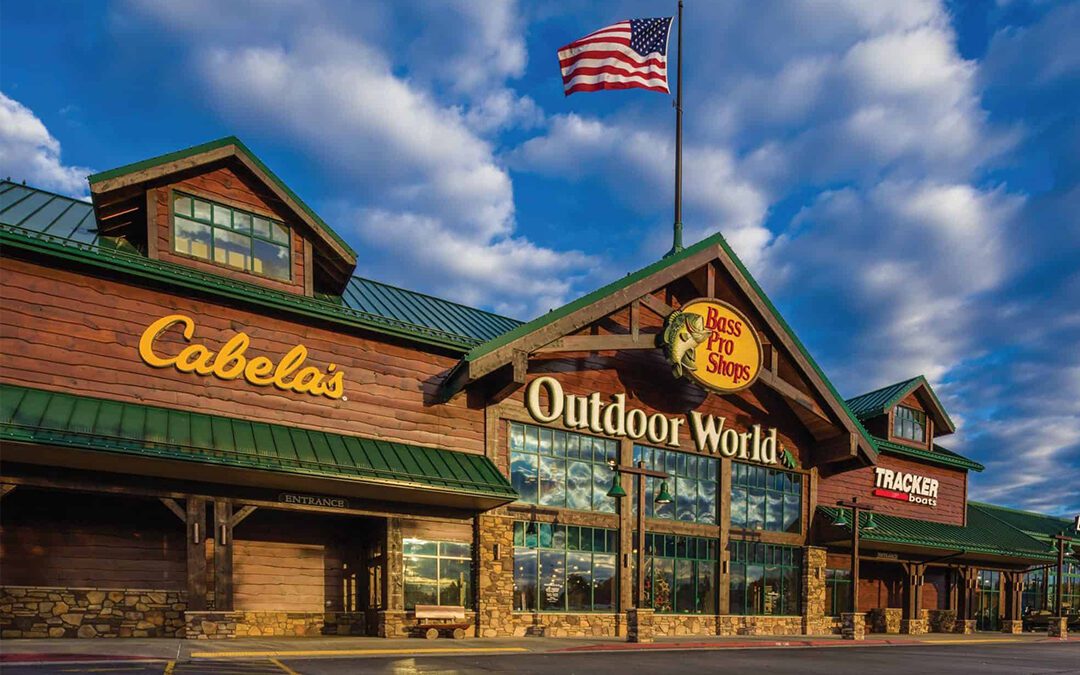
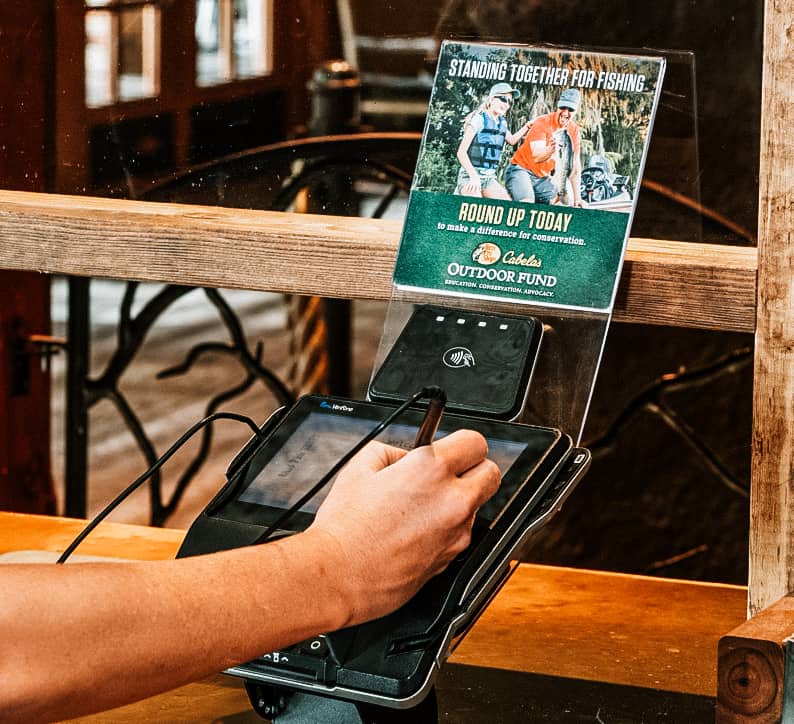
There may be no more elegant conservation program in America than a cashier asking a customer a ridiculously simple question: Would you like to round up for conservation? It takes only a few seconds. The answer might cost 17 cents, 43 cents, or 86 cents. Yet what Johnny Morris has built through the Bass Pro Shops and Cabela’s Outdoor Fund is far more important than loose change accumulating in a charitable account.
He has created millions of small moments in which people are made aware that the outdoor life they love carries with it an obligation to sustain it. Every transaction becomes an opportunity to connect fishing with healthy waters, hunting with wildlife habitat, and outdoor recreation with stewardship. It is conservation education delivered at precisely the moment when the customer is most likely to understand the connection.
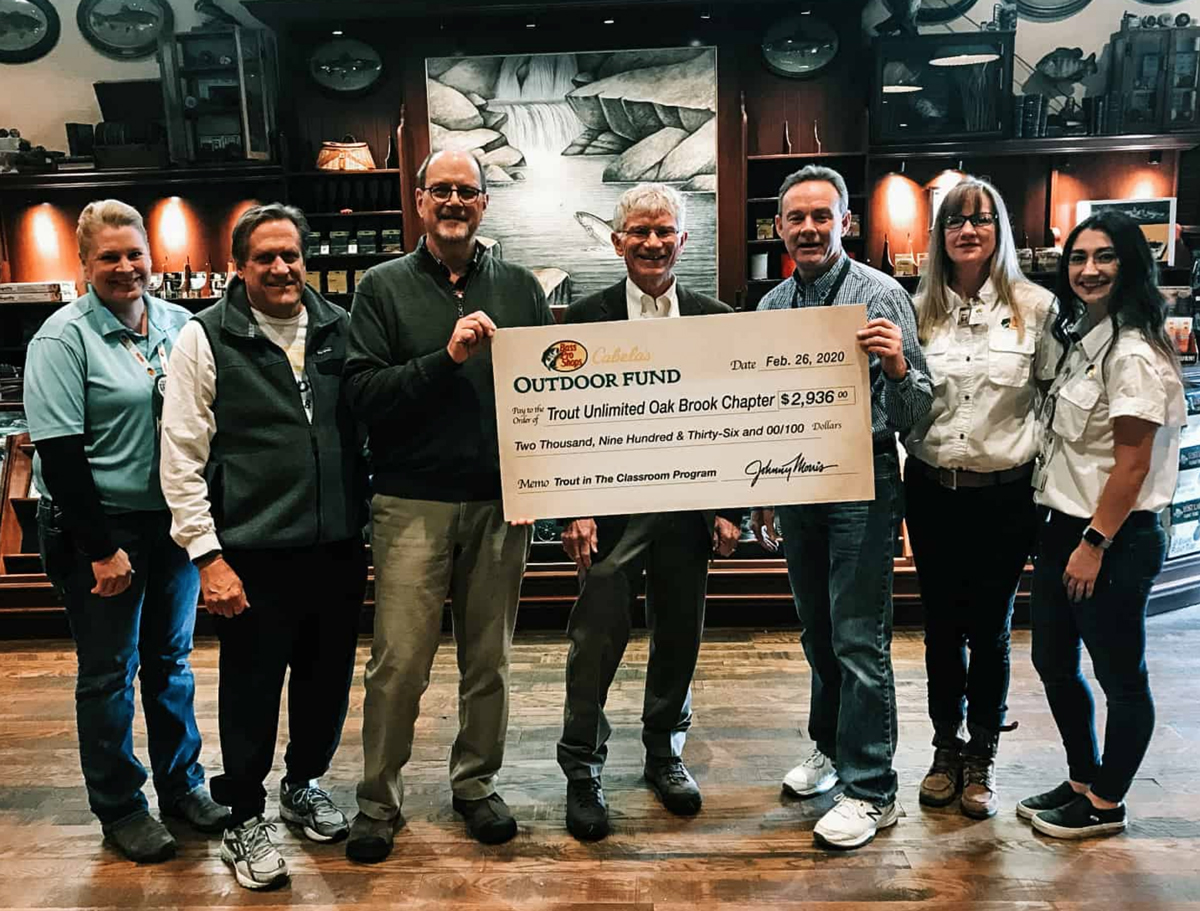
The scale is remarkable. Bass Pro Shops and Cabela’s say their Outdoor Fund engages more than 200 million customers and supports more than 2,000 conservation programs annually, with 97 cents of every donated dollar going to conservation. A public charitable filing for 2023 reported approximately $9.13 million in revenue and $8.35 million in expenses, with more than 97 percent of expenses devoted to charitable purposes.
Bass Pro does not appear to publish a current cumulative lifetime total for customer Round Up contributions, but the available numbers make one thing clear: customers are collectively generating millions of dollars for conservation year after year, and those quarters and dimes become something considerably larger when they hit the ground.
Since 2018, for example, the Outdoor Fund has contributed more than $3.8 million to Ducks Unlimited. DU reports that those dollars helped attract another $11 million, creating a $14.8 million habitat investment that has conserved or enhanced more than 83,000 acres of wetlands and grasslands, including more than 64,000 acres in the Prairie Pothole Region, the great waterfowl factory of North America.
In 2025 alone, another $500,000 commitment was directed toward permanently protecting nearly 1,400 additional acres there. Outdoor Fund dollars also helped establish the 27,000-acre DeLuca Preserve in Florida’s Everglades headwaters, including what Ducks Unlimited described as the largest conservation easement in its history.
Bass Pro-supported Rocky Mountain Elk Foundation projects have helped improve access to nearly 60,000 acres of public land in Montana and Nebraska, while habitat work in Idaho is combating conifer encroachment across tens of thousands of acres for elk, pronghorn, sage-grouse, and other wildlife. The Outdoor Fund has also put more than $1 million into the National Archery in the Schools Program, introducing children, many with no previous family connection to shooting or hunting, to an outdoor tradition.
Theodore Roosevelt never contemplated a retail checkout Round Up, of course, but he certainly would have understood the philosophy behind it. Roosevelt and the sportsmen who helped build the modern American conservation movement understood that wildlife did not survive merely because people admired it. Conservation required laws, institutions, habitat, professional management, money and, most importantly, citizens willing to take responsibility for protecting wildlife for those who came next. Johnny Morris has simply translated that ethic into the language of modern retail, and in doing so he has created something unusually powerful: a direct connection between consumption and conservation.
That distinction matters because you can buy an astonishing percentage of what is sold inside a Bass Pro Shops or Cabela’s somewhere else. Amazon can ship a tent, fishing reel, shotgun case, hiking boot, or camping stove to your doorstep tomorrow. But where is Amazon when conservation provisions in the Farm Bill are being debated? Where is it when prairie wetlands are being drained, grasslands in pheasant country are being broken, woody edges for quail are disappearing, young-growth aspen habitat for grouse and woodcock needs restoration, or elk migration corridors must be protected so animals can move across their historic range? Conservation requires more than moving merchandise. It requires people and institutions willing to show up when habitat, access, wildlife policy and sporting traditions are on the line.
Johnny reinforces that message throughout his stores by prominently displaying the logos and identities of the many conservation organizations supported by Bass Pro Shops, Cabela’s, and their customers. That may seem small, but it is not.
Ducks Unlimited, the National Wild Turkey Federation, Rocky Mountain Elk Foundation, and scores of other organizations are not distant charities disconnected from the people pushing shopping carts through those stores. In many cases, they are the very organizations those customers already belong to, volunteer for, and support. Bass Pro says it works alongside more than 250 conservation organizations, forming a visible ecosystem of groups working toward the same broad goal.
Just as importantly, plenty of people walking into Bass Pro Shops and Cabela’s do not hunt or fish at all. They camp, canoe, kayak, hike, boat, birdwatch, travel, or simply enjoy being outdoors. They are drawn to the same stores because the outdoor lifestyle is much broader than any one sporting pursuit.
The Round Up also sends those customers a subtle but important message: conservation is not somebody else’s responsibility. Healthy forests, wetlands, rivers, grasslands and wildlife populations underpin nearly every outdoor experience, whether somebody arrives carrying a shotgun, a fly rod, binoculars or a backpack.
Johnny Morris is not alone in understanding the enormous power of allowing customers to participate. Larry and Brenda Potterfield established MidwayUSA’s NRA Round-Up in 1992, allowing customers to round purchases upward and send the difference to the NRA Institute for Legislative Action. By 2022, those customers had contributed more than $21 million to the NRA-ILA National Endowment for the Protection of the Second Amendment. Larry Potterfield captured the significance of that program perfectly when he stressed that the money was not really the Potterfields’ money at all. It came from customers who chose, transaction by transaction, to make their own voices heard.
Therein lies the lesson for every outdoor retailer and manufacturer selling directly to consumers. By all means, write corporate checks. Sponsor habitat projects. Fund conservation organizations and sporting advocacy groups. Those investments matter enormously. But also give your customers the opportunity to stand beside you, because there is a major difference between a company deciding to support a cause and thousands or millions of customers making that same decision themselves. A corporate donation represents a company’s conviction; millions of small customer donations represent a constituency.
That is the real genius of Johnny Morris’ Round Up. At the very moment someone buys a fly rod, a duck call, a pair of hiking boots, or a tent, they are reminded that somewhere there still has to be clean water, healthy wetlands, intact grasslands, functioning forests, and abundant wildlife in which to use them.
For a few pennies, customers become participants rather than spectators, and in the process they learn that the fish and wildlife resources we enjoy do not exist by accident.
When millions of people speak with their own dollars, one transaction at a time, it becomes more than fundraising. It becomes culture. And that unified voice can echo across landscapes, political debates, and, ultimately, generations.