
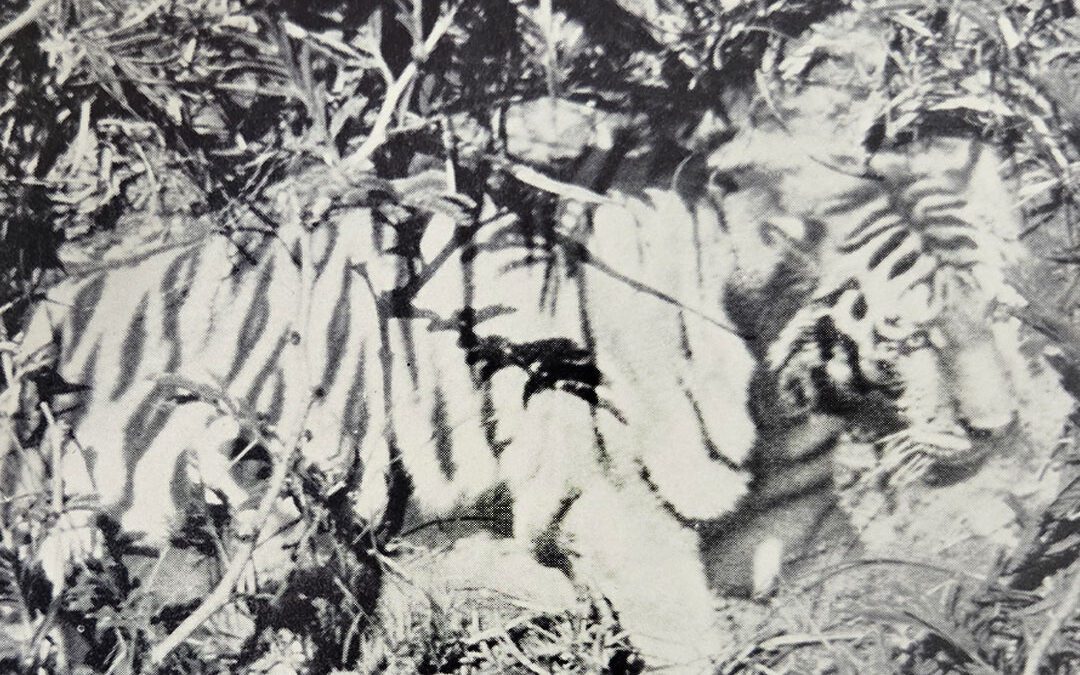
To the south-west of the city of Mysore lies the heavily forested area of the Kakankote jungles, for centuries the home of many herds of wild elephants that are partial to the kind of jungle that grows in this district. The rainfall is heavy and the vegetation is luxurious. Giant bamboos, rank grass and mighty trees grow together in dense profusion, and a passage through the forest, except for the elephants and the large and harmless bison, is almost impossible. Sambar and barking deer are found in the thinner areas, but as one moves farther south-west and the rainfall and the denseness of the jungle increase in direct ratio to each other, the deer become fewer and fewer, leaving the elephants and bison in almost entire possession of what appears from the narrow road to be primeval, virgin jungle.
Still further on is the Kabini River, one of the natural boundaries between Mysore State to the north-east and Kerala State to the south-west. In my opinion, the state of Kerala, in the extreme south-west of the Indian peninsula, offers a scenery second only in beauty to that of the Himalayas, though very different. It is a land of dense forests, fertile plantations of tea, coffee, cinnamon, rubber and tapioca, and emerald-green fields in the areas bordering the sea; of gently flowing rivers and waterways without number, along which palm-thatched river boats glide among coconut palms laden with huge bunches of green nuts, and a sea coast without parallel, culminating at the southern tip of the peninsula in the famous beach of Cape Comorin.
The town of Manantoddy, on the Kerala side of the border, stands on the Western Ghats, the range of mountains that run down the west coast of India, almost from Bombay to the far south, at an average elevation of about 4,000 feet above sea level. This district is known as the North Wynaad, to differentiate it from the country a few miles further south, which abuts the Nilgiri Mountains and is known as the South, or Nilgiri, Wynaad. Both areas are extremely fertile, enjoy a heavy rainfall, and are the site of many plantations, producing every conceivable crop.
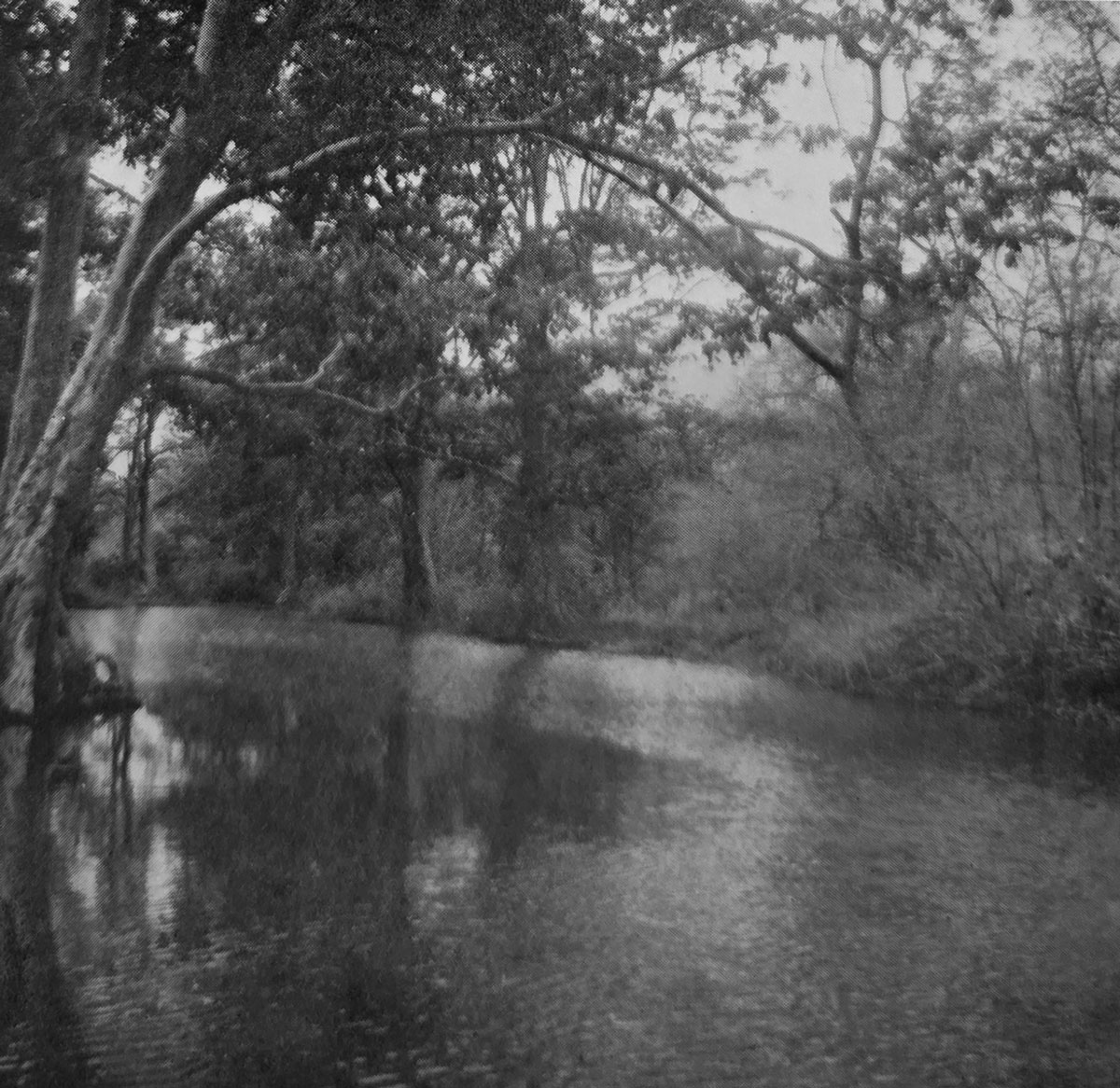
Pleasant as they are in all other respects, these regions abound in leeches throughout the year, and in the rainy season their numbers are enormous. Moreover, that curse of the drier jungles, the tick, thrives in yet greater comfort than he does in the forests of the interior—both the large crab-tick that gives you tick-fever when he bites you in sufficient numbers, and the microscopic jungle, or grass, tick, smaller than a pin’s head, that provokes a small sore wherever he has sucked your blood. Since he bites you all over the body, in hundreds of places, you become a very sore creature indeed, covered with sores that last for many months. You scratch and scratch yourself, night and day, into a mental and physical wreck.
Leeches and ticks suck the blood not only of human beings, but of animals as well. Even the bison suffer, while tigers, panthers and deer become covered with them, especially ticks, so that they hang from the softer portions of these animals’ bodies, gorged with blood, like bunches of small grapes.
For this reason, the jungles of the Wynaad hold few carnivorous animals or deer. Now and then a stray animal may roam in during the dry summer months to brave the discomforts, but with the advent of the rains they move to the higher ranges of the Western Ghats, or the drier areas of East Kakankote to escape from the leeches and ticks till the monsoon abates with the approach of winter.
Thus it came about that, when a traveller journeying from Kakankote to Manantoddy was taken by a tiger just within a few hundred yards of the outskirts of the latter, it was regarded as a quite unusual event. Tigers had been seen in these parts but were few in number, and no human had been harmed for as long as anybody could remember. The event was soon forgotten and many months passed.
Then, across the border in the State of Mysore, preparations were started for the next kheddah operation, in which many wild elephants were to be caught. Coolies were engaged in hundreds to build the mighty wooden stockade into which they would later drive the elephants before the gate was dropped and the bewildered beasts captured. Much preliminary work was required; timber had to be felled, the forest cleared, bamboos gathered and bound together and then moved to the spot selected for the stockade. This required not only hard work but experienced workers. Men from the jungle tribes, the Karumbas and the Sholagas, provided most of the recruits, for they were experienced not only in tree felling and bamboo binding, but in the ways of the elephants, in driving them into the stockade, and in roping and shackling them and taming them afterwards.
That was when the tiger struck, a second and a third time, before people realized that a man-eater was amongst them.
Two Karumbas vanished within three days of each other and the half-eaten remains of the first showed he had been devoured by a tiger. The body of the second Karumba, like that of the traveller to Manantoddy, was never seen again.
There is another way of getting to Manantoddy from Mysore City, and that is via Coorg, which was for years an independent state but has recently joined Mysore. It is a more circuitous route, but the scenery is even more picturesque. Like the Kakan kote road, this route traverses dense jungle inhabited by elephants and bison, where tigers are practically unknown for the reasons already explained.
The Coorgies are a hardy, lively people. In olden days the British conferred a special honour upon them unknown elsewhere in India. Every Coorgie living within the limits of his state was exempted from possessing an arms licence, no matter how many weapons he possessed. This privilege is, I believe, still maintained by the Indian Government. It was a laudable gesture but it had one bad result. The Coorgies never abused their privilege by using their weapons against each other or against other people, but they exercised it against the fauna of their beautiful little state to such an extent that the deer have been practically exterminated.
I know a large number of Coorgie families, most of whom are coffee planters, owning wide estates where the coffee berry flourishes to perfection, with oranges as a profitable secondary crop, and I happened to be a guest of one of these families when news of the man-eater trickled through.
The estate where I was staying was situated about mid-way between the towns of Sidapur and Virajpet, and at a considerable distance from both Manantoddy and Kakankote, where all three killings had occurred. Further, I had not brought my rifle with me from Bangalore, as I knew there was no shooting, at least of the kind in which I was interested, to be had in Coorg. So, when my friend gave me the news one morning over his breakfast table, I listened to it dispassionately, wondering like him as to how a man-eating tiger had found its way into an area so unpropitious, where ordinary tigers and panthers are almost unknown. But my friend waxed enthusiastic and suggested we go after it.
I told him I did not think much of the idea. In my opinion, the animal was not a confirmed man-eater, but was probably a sick or wounded tiger, or perhaps one that had escaped from one of the many miniature circuses that are always touring the country, and had strayed there because of the heavy jungles. I felt that it would either die of its sickness or wounds, or would soon leave these unfavourable haunts and move into normal tiger country, where it could find an abundance of its natural food, when it would stop man-hunting of its own accord. Besides, as I reminded him, I had not brought my rifle.
Timayya, for that was my host’s name, offered to bet that I was wrong. The tiger would remain where he was, he affirmed. As for a rifle! He had five, from which I could make my choice.
I reminded my friend that to do so would be illegal. His weapons were unlicensed. It was a part of the stipulation that he, as a Coorgie, was forbidden to lend his unlicensed weapons to a non-Coorgie. And in any case, it was against the rules for anybody, even a license-holder like myself, to borrow another man’s weapon.
Timayya laughed at me, and said, ‘What rot!’ Then, banteringly, he bet me ten rupees that the tiger would kill again before the week was out. Rather huffed at his words, I took him on.
Timayya won that bet; for on the third day we heard that the tiger had killed again. This time the victim was a woman. She had been washing clothes on the further bank of the Kabini River, just within the limits of Kerala State. And Timayya’s free arms permit was not valid in Kerala State.
My friend had set his heart on going after this tiger. I suppose to him, being something unusual, it became a must, and he stated flatly that I was included in the party.
Frankly, I was not keen; but to continue to refuse would have strained our relations. I had known Timayya for a long time, in fact we had been at school together, and stubbornness had always been his failing and his virtue! The estate, when he had bought it cheaply, was considered by the neighbours to be a complete ‘write off’. The soil was said to be no good, the variety of coffee that grew there was no good, the shade trees were no good, and so forth! But Timayya was determined to buy. He bought; he worked hard; and he made good.
So I gave in on one condition. I would go back to Bangalore for my .405 and bring along my .450/400 as a spare rifle. He would accompany me. Then we would return to Mysore City from where we would motor directly to Kakankote and the Kerala border. I stressed that I would much rather incur the expense of the additional 240 miles of motoring than be mixed up in arms licence disputes with the police of two states.
Timayya concurred, left his weapons behind and came with me to Bangalore the same night. We spent the next day in buying provisions for a fifteen-day camp in the jungles of the border where we knew no foodstuff, acceptable to our civilized palates, would be available. Timayya bought a jar of some patent cream and a huge tin of D.D.T. as protection against the leeches and ticks. We carried mosquito nets too, along with my small tent, a portable charpoy machan, batteries and torches, and my two rifles. Timayya said he did not want to shoot but would rather watch the fun. Knowing him as I did, I realized this was not strictly true.
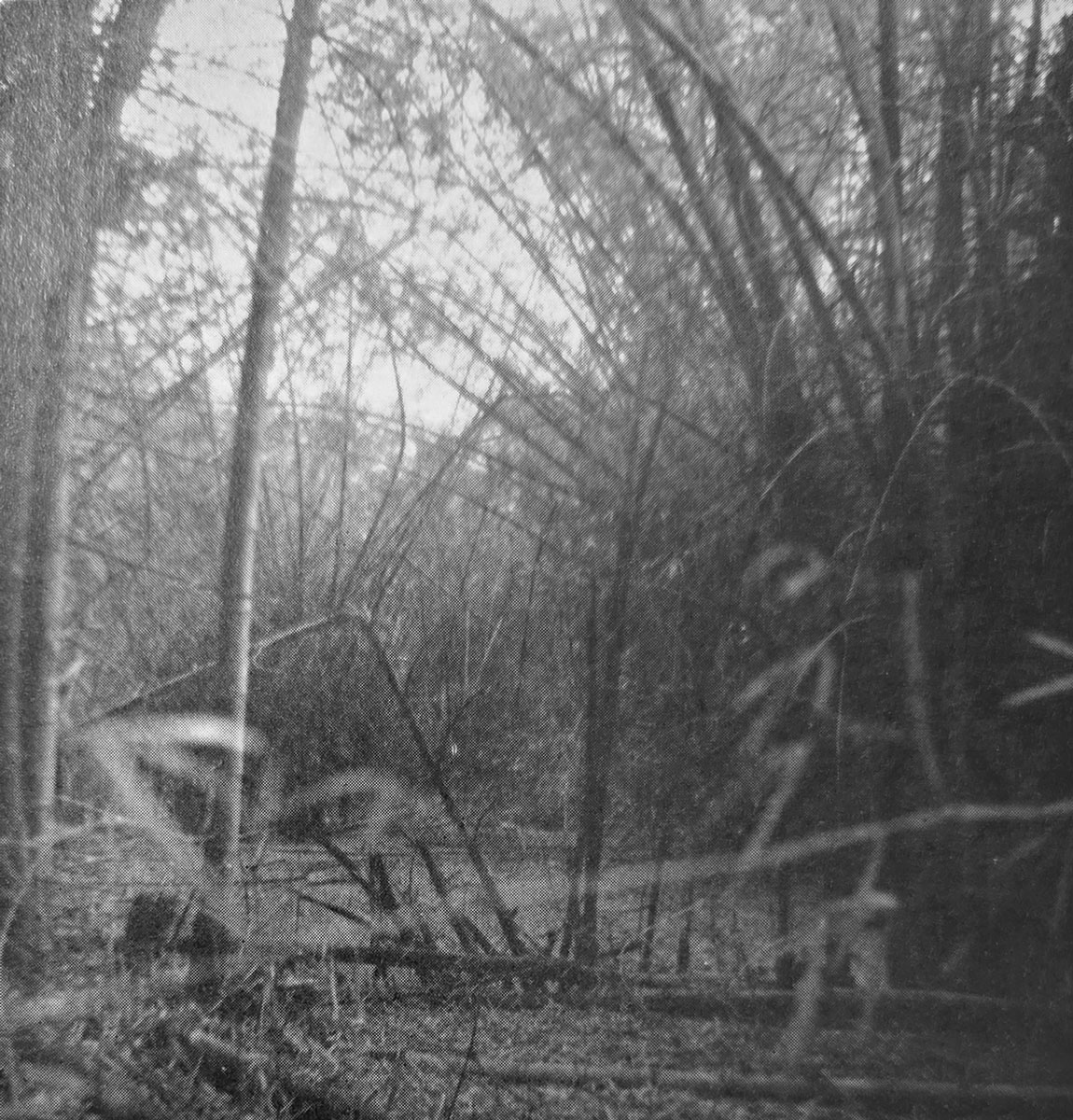
We arrived at Kakankote on the afternoon of the second day and then drove to the kheddah site to try to pick up what information we could about the tiger. As I anticipated, there was little to learn. So many coolies were about, working on the project, that no one appeared to know exactly when and where the tiger had taken his two victims. But rumour and universal fear were rife. The men had just vanished and their absence had not been noticed for two days or so. Even then it was only by mere chance that, being attracted by the stench of putrefying flesh, some travellers had gone to investigate and found some scanty remains.
Many people had theories to account for the presence of a man-eater in that zone, but not one of them had seen the animal.
What they had to say boiled down to the belief that an evil spirit was operating in the forest in the guise of a tiger. This instilled an even greater fear into the coolies, so much so that we knew if another of them was killed the kheddah operation would come to a stop. Such a happening, or even a postponement in the date, would be in the nature of a calamity to the local government, which had invited certain V.I.P.s from abroad as guests at the trapping.
Next morning, we motored the short distance to the Kerala border and came to the hamlet on the further bank of the Kabini River from which the latest victim—the woman who had been washing clothes—had been taken. Once more, nobody had seen the tiger. Only its pug-marks on the river bank, the trail of something that had been dragged away, and a few drops of blood on the leaves and earth had revealed a man-eater’s visit.
We went on to Manantoddy and made inquiries at that small town regarding the first victim, the traveller who had been coming from Kakankote. Here again nobody knew anything. A forest guard, returning to his quarters near the Forest Range Office, had come across an odd sandal by the roadside. As it was a good sandal, and people do not usually throw their footwear away, he stopped to look at it. That was when he noticed the other sandal lying on the sloping bank of a stream that ran parallel to the road. He walked down to see that too, and found a turban entangled in the bracken that grew by the waterside. Then he looked at the ground and saw the pug-marks of a tiger in the mud. They were deeply embedded in the ooze, indicating that the animal had been carrying additional weight, while a few carmine splashes on the fern leaves revealed the truth.
Blood! The tiger had been carrying away the wearer of the sandals and the turban.
We interviewed this guard and heard the story from his own lips. And that brought us to the end of the trail. There was nothing more we could learn, and we did not know where to make a start. Timayya confessed that he was sorry he had urged me to start upon this wild-goose chase.
Manantoddy is a beautiful place and we spent the night at the inspection bungalow which was fortunately vacant. Unlike most of the bungalows in other states, it is fully furnished with comfortable beds and foam mattresses, has neon lights and electric fans, and stands on a hillside opposite the ruins of an old British dwelling house that had its own private cemetery.
This is the land of fireflies. They come out after dark in their thousands, and the twinkling of their little lights are a fitting background to the chorus of the hundreds of small frogs, known as the ‘Wynaad’ or ‘tok-tok’ frog, and the hauntingly-sweet, never-to-be-forgotten aroma of sprays of the ‘Rath-ki-Rani’, the ‘Queen of the Night’ blooms that open only after dark. We lay in armchairs, smoking tranquilly as we listened to the endless ‘tok-tok-tok-tok-tok’ of the frogs. Now and again a firefly would find its way into the room through the open window, its little light eclipsed by the brilliance of the neon tube that lit the room.
The next morning we made a leisurely start, our intention being to motor by the direct route to Virajpet in Coorg State, and thence to Timayya’s plantation, where I would drop him, stay a day myself, and then go on to Mysore City and back to Bangalore.
We had travelled over ten miles from Manantoddy and were negotiating a stretch of dense forest, mostly of bamboo, on the Kerala bank of the Kabini River, when we saw a party of men approaching us, carrying a litter. And this is where my story really begins, for on the litter was a man, his tattered clothing soaked with his blood.
The bearers told us they were bamboo cutters and had been working on contract by the riverside, just over a mile away, when, shortly after dawn that morning and without warning, a tiger had suddenly charged upon two of them, in full view of the others, and struck down one, whom it had grabbed by the shoulder and begun to drag away.
But the two men were brothers, and the one the tiger had ignored was very brave. He had run after the beast with the large curved knife he had been using to cut bamboos.
Seeing he was pursued, the man-eater had started to gallop away, still carrying his victim. The pursuer, realizing he had no hope of catching up with the tiger to save his brother, had then hurled his knife at the departing animal in sheer desperation. Luck favored him, for the heavy weapon struck the carnivore in its flank. Either in pain, or from fright, the man-eater dropped his victim and bounded into the bamboos.
The hero of this episode, who was one of the men carrying the litter, had then assembled the scattered bamboo cutters and mobilized them into a team to help carry his sorely stricken brother to the nearest hospital, which was at Manantoddy.
There was no time to be lost and we acted quickly. Bundling the mauled man, with two others to help him, into the Studebaker, I told Timayya to turn around and drive them as fast as he could to the hospital, where he could leave the wounded man. He would then drive back to the bamboo cutters’ camp, directed by the two men who were with him, while I went ahead on foot with the rest to see if we could find the tiger.
While Timayya was still turning the car I started at a jog-trot for the camp, the brave brother, whose name I learned was Yega, running beside me while the rest of the party followed behind. There was not a minute to be lost. In all probability the man- eater was miles away by this time, but there was just the slimmest of chances that he might still be lingering in the vicinity.
We reached the encampment in good time, but did not stop till we came to the place where the tiger had dropped his victim. There was a rank undergrowth of weeds covering the ground that showed no pug-marks, but on the bright green leaves were splashes of red—fresh blood that had not yet had time to dry. Whether the blood came from Yega’s brother, who had been dropped here, or from a wound made by the knife in the man- eater’s flank, we could not at that moment tell.
At this spot I halted the men who had followed and whispered to them to return to their camp. Yega and I would see this thing through together. The presence of many people would frighten the man-eater away, if it happened to be still nearby.
The bent heads of the undergrowth showed the direction in which the man-eater had run after dropping his victim, and I followed Yega, alert for a surprise attack at any moment and from any direction, particularly our rear. He tip-toed in front with bent head, examining the foliage and such glimpses of the dark ‘black-cotton-soil’ type of earth as he could see between the green stems of the crowded plants.
Yega was looking for his knife. We wanted to make sure if his heavy weapon had actually hurt the tiger or not. If it had really done so, we might expect the animal to act quite differently from what he would have done if the blow from the knife had been a glancing one. Most likely, if injured, the tiger would roar and charge us from a fair distance, but if uninjured the man-eater would either attack only when we came fairly close to him, or slink away.
My part of the business now was to watch the jungle more carefully than ever before, ahead, on both sides, and also behind, to protect us against a surprise attack. I could not help Yega in his search.
Then we found the knife. Its edge was clean, with no trace of blood. The tiger had not been hurt and the blood we had passed had come from the wounded man.
We crept forward for some distance and stopped. Then Yega shook his head slowly from side to side. The man-eater had stopped running.
We followed for another furlong, when the trail of our quarry petered out. Here the animal had crossed an area of lemon-grass, which is a scented variety with leaves that are largely used for distilling an essential oil. This grass has long, hard, tough stems which had bent with the man-eater’s passing and then regained their position, so that no trace now remained of the direction in which he had gone. The earth between the large clumps of this lemon-grass was a matted carpet of decaying stems and seedlings, showing not the faintest trace of a pug-mark.
Quickening our pace, we cut directly across the lemon-grass area, which extended for perhaps a quarter of a mile, to where the jungle began again. But the tiger’s trail could not be found again and we were forced to conclude that we had lost him.
Apart from his courage, perseverance was another quality in which this little bamboo cutter was strong. He refused to admit defeat and urged in a whisper that we should go on and on till we eventually found the tiger. Stimulated by his keenness, I entered into the spirit of the chase and we pressed forward for many miles and most of the remaining hours of that day. We passed two herds of bison and a family of wild elephants and it was past 3 p.m. before we finally turned back for the bamboo cutters’ camp. This we reached after dark, at 7.30 p.m. I was covered with leech bites and with ticks, and I was unutterably tired, although glad that we had at last come to grips with the man-eater and had such a stout henchman as Yega to assist.
Timayya had returned in the car many hours earlier and was eagerly awaiting our news. Unfortunately, I had none to give him.
We decided to return to the inspection bungalow at Manantoddy, which was only eleven miles away, for the night and to the bamboo cutters’ camp the next morning. The prospect of spending the night with them, lying on the ground, with the mosquitoes and what not, was too terrible to contemplate.
That was where I made a big mistake. For when we did arrive the next morning we found the little camp in terrible confusion and all the bamboo cutters huddled together in a single hut. They swarmed out, led by Yega, to report that the man-eater had returned in the dead of the night. He had crept up and snatched one of them from beneath the walls of a hut!
Now you may wonder how a tiger could do that, but the explanation is simple. The huts which the bamboo cutters had constructed were but temporary shelters in the jungle which they would leave as soon as their work was done. They were built of split bamboos and leaves, and the sides of the structures were never allowed to touch the ground. For if they did, the termites—or white ants, as they are better known—would creep up into the walls in a matter of hours and the whole hut would be destroyed in no time. So a gap was left right round the hut, the ends of such bamboos as had necessarily to be embedded in the ground being first defended by a coating of tar.
The man-eater must indeed have been starving. Perhaps being deprived of his victim the previous day had whetted his appetite. He had returned in the early hours of the morning and, emboldened by the silence that reigned over the slumbering camp, had wandered up to the four huts. There, through the gap below the wall of one of them, he had seen the form of a sleeping man. The rest was easy to the hungry, daring beast. He had crept up to the hut and stretched his paw under the gap, fastening his claws into the sleeping man. The man had screamed for help, but no one had had the presence of mind to do anything and the man-eater had dragged his victim out of the hut, tearing down the lower portion of one of the walls in the process.
Unfortunately for the victim, Yega, the one person who might have given help, was not in that hut but in the one furthest away, enabling the tiger to make a clean getaway. The bamboo cutters related in horror that they had had to listen to the poor man’s screams for a very long time after the tiger dragged him out of the hut. Strangely, it had not killed him while he yelled and screamed, as man-eaters generally do when their victims make a noise. This animal had carried him away screaming and his comrades had heard his cries grow fainter and fainter as his captor bore him away.
Yega offered to accompany me at once, but the other coolies were utterly demoralized. They remained huddled in a group, calling to God to help them while they rained invectives upon the tiger. There were nine of them, excluding Yega. So I asked Timayya to squeeze them into the Studebaker, even if it came to letting a couple stand on the footboard, and to take them back to Manantoddy and safety without delay. He was then to return to the camp site and wait for me, but while doing so was not to leave the car on any account. In any case, he had my .450/400 with him, so there was no danger of being unable to protect himself.
Yega and I then took up the trail of the man-eater.
The ground was soft outside the huts and had been cleared of the usual weeds in an effort to keep away the ticks and the leeches. This helped us to find the tiger’s footprints, both as he had approached the hut and when he had left, carrying his victim with him. Whatever part of the poor man’s anatomy had been grasped by the tiger was clearly not a vital region, for the victim had struggled and kicked the ground, as tell-tale marks revealed. At one place he had grasped the stem of a sapling and must have held on tenaciously. The tiger had literally torn him free, as could be seen by the particles of skin from the palms of the man’s hands that still adhered to the stem, and the markedly increased quantity of blood on the ground and leaves at that spot. No doubt this had resulted from an enlargement of the wound as the tiger dragged his victim free.
Now we were able to follow the trail with ease. The poor man had bled terribly and splashes of blood on the weeds, grass and leaves marked the way the tiger had passed. A queer sensation of nausea came over me as I pictured that horrible scene at dead of night in the blackness of the jungle, and the victim’s realization that he was to be devoured, that nothing and no one could save him, and that he would never see his wife and children again.
At last we reached the spot where the tiger must have felt he had had enough of his victim’s cries and struggles. Here he had laid the man on the ground and, releasing his grip, had bitten him again and again till his wails had been stilled for ever.
All this was written in the marks on the ground and the pool of blood that had streamed from those last fierce and fatal bites. After that the man-eater had continued his journey.
We followed for another furlong, and here at last the tiger had decided to begin his meal. He had left the narrow trail and turned into a small hollow in the ground, sheltered by grass, bushes and bracken, where he had set about devouring the unfortunate bamboo cutter. As we had surmised, the beast must have been hungry, for little remained of the man beyond the usual parts: the head, hands and feet, and a small portion of his chest, with rib bones bereft of flesh. The entrails had been torn out and dragged aside. The meat had been removed from the victim’s pelvis, exposing the bone, and the thighs had also been devoured, here again leaving the bare bones in evidence of the great feast.
Far less than a quarter of the poor man remained, but this was enough to make the tiger return that night for a second meal, provided we played our cards cunningly enough and did not arouse his suspicions.
Yega and I looked around and at this point we encountered our first setback. There was no tree within at least eighty yards, a range far too great, as I well knew from past experience, to risk a shot by torchlight at night.
To the uninitiated this may seem an exaggeration. Eighty yards in daylight might appear a mere stone’s throw. But those who have sat on machans in a jungle at night will know what I mean. Bushes, leaves, blades of grass and rocks all cause obstructions at this distance, and to attempt to cut them away, to ensure a better view when the tiger returned, might arouse his suspicions and prevent him from returning at all. Remember, I could not risk wounding him. I had to shoot to kill.
Tigers and panthers, and man-eaters especially, are very cautious when they come back to their kills. They reconnoitre the approaches to the spot for a long time before they show themselves, and if they feel or sense anything suspicious, if they find any cut branches scattered about, any removal of bushes or undergrowth or rocks, or any addition of leaves or branches that may conceal a hidden enemy, they will give the spot a wide berth and never return. Although he lacks a sense of smell, the tiger makes up for this handicap with an uncanny caution and an ability almost to read the hunter’s mind and anticipate his every action.
As if to compensate for the distance of the nearest tree from the remains of the woodsman, a dense patch of tiger-grass bordered the bank of the small depression into which the tiger had taken him before beginning his meal, and this patch was barely fifteen feet away.
If I could hide in that grass without the man-eater becoming aware of my presence, he would offer a point-blank target. The moon would rise early, and conditions would be in my favor, always provided the tiger did not become aware of my presence. Would this be possible? For if he did find out, the situation could turn into a most unpleasant one for me.
As I well knew, all tigers and especially man-eaters, which appear to be endowed with a fiendish cunning, exceeding even the natural caution of their kind, have a habit of taking advantage of every vestige of natural cover when returning to the remains of their victims for a second meal. The clump of tiger-grass in which I contemplated concealing myself lay in the direct path of the man-eater’s return and so close to his victim that it was more than likely, if not certain, that he would make use of it to conceal his own approach. And however silent I might be, I knew well enough how silent would be his own coming. Should the man-eater discover me before I discovered f him, the bamboo [cutter’s bones would have those of another to keep them company before many hours had passed. It was a gamble, with a heavy stake, that I would have to take.
In order not to disturb the grass by unnecessary trampling, I walked around it while considering the problem in all its aspects. If I hid in that grass, I would have to keep a careful watch in two opposite directions: over the victim’s remains and also in the direction by which the man-eater might be expected to make his approach, which would almost certainly be through this patch of grass. This I could not do; I would have at least to turn my head from side to side, even though I kept my body still. That would mean movement, and movement of any sort would be fatal.
One of two things would happen if the tiger became aware of me: he might take fright and disappear, or he would deliberately stalk and leap upon me before I even suspected his presence. Frankly, I funked that terrible alternative.
At this point, Yega came up with a brilliant idea. He and I would sit back to back in the grass, one of us watching the bamboo cutter’s remains while the other listened for the rustle that would herald the man-eater’s entrance into that same clump of grass, by which time he would not be more than five or six feet away.
What transpired next would have a lot to do with whether I happened to be the one who was watching the victim’s remains or the tiger’s approach through the grass. If I were watching the remains and Yega the grass, he would have to warn me with a nudge, and I would have to turn around in a second to be in time to shoot. And I would have to shoot accurately. But if I chose to watch the approach through the grass and left Yega to watch over the kill, and the man-eater crept up to the latter from some other direction, I would have to react similarly, except that the situation would not be nearly so dangerous. At least, the tiger would be more than a mere five or six feet away and I should have a better chance to shoot.
I hated to risk Yega’s life. And I hated to risk my own. But this was our only chance and I nodded assent.
Strangely enough, in the Wynaad Forest area vultures are not nearly so numerous as in the drier jungles of south India. Nevertheless, we took no chances of them discovering the remains and finishing what little flesh remained on the bones. So Yega cut a few small branches from the tree that grew eighty yards away, and these we placed over the bones and entrails of the man to hide them from any chance vulture hovering in the sky above. Then we returned to the deserted encampment.
It took another fifteen minutes for Timayya to come back in the car from Manantoddy. I told him of our discovery and our plan of action. Then occurred one of those awkward situations that sometimes appear between friends. Timayya stated bluntly that he would sit with me in Yega’s stead, armed with my spare rifle, but I was not happy about his decision. I did not wish to risk my friend’s life for one thing. Secondly, quite frankly and I suppose selfishly, considering my own life was also at stake, I doubted his ability to keep watch for the tiger as efficiently as Yega would, with his lifetime of jungle experience. As tactfully as possible I put these points to my friend. Timmy became angry—and rude, too.
‘Damn it, I’m a planter,’ he said, ‘not a bloody town-dweller like you. What the hell do you think? If you don’t feel like sitting with me, at least lend me the .450/400 and… off back to Manantoddy yourself. I’ll do the rest.’
There was a very nasty look in his eye.
I shrugged. ‘Okay Timmy, you win,’ I said. ‘We’ll sit together.’
The nasty look faded and a gleam of pleasure and excitement took its place.
When Yega heard the change of plan he was crestfallen. Now it was his turn to look at me reproachfully. I avoided his glance and studied one of the Studebaker’s tires closely.
We returned to Manantoddy for lunch, bringing Yega with us, after which we put in a couple of hours sleep to fortify us for the long, sleepless night vigil ahead. At three o’clock we were ready. Timmy suggested we take tea and sandwiches along with us, to which I assented after reminding him that these refreshments could only be enjoyed the following morning. No sound or movements of the slightest kind could we risk while we awaited the man-eater’s return.
We left Yega at Manantoddy, as it would be dangerous for him to accompany us to the spot where we were going to sit and then return alone. Besides, we did not require his services in any way. By half-past three we had reached the woodcutters’ deserted encampment. Here we parked the Studebaker close to the huts and before four we were at the patch of tiger-grass.
I removed the small branches with which Yega and I had earlier covered the scattered remains of the bamboo cutter to protect them from vultures, carrying them to a spot quite a distance away. It was a hot and sunny afternoon and what remained of the woodcutter, little enough though it was, had begun to smell, especially the entrails, which the man-eater had dragged to one side. But we dared not remove them for fear of arousing the tiger’s suspicions when he returned.
I had already made it a condition with Timmy that I would face the side from which the tiger might be expected to approach through the grass, while he would face in the opposite direction towards the woodcutter’s remains. Fortunately, he had not been difficult about this and had acquiesced readily enough. We had brought two of the foam-rubber cushions from the Rest House to sit upon. They would not only provide comfort, but would deaden any sound we might make in movement. Placing these on the ground, we squatted on them back to back and facing in the directions already described. I crossed my legs and settled down to sit in silence, having trained myself to this position after many years of similar experience in the jungle. Timmy whispered that he could not make himself comfortable that way and stretched both his legs out before him. Straightaway a disquieting thought entered my mind: for how long would Timmy be able to sit thus without moving? To me it appeared physically impossible, and I knew he would become fidgety before sundown.
Jungle life in the forests of the Wynaad and the Western Ghats is rather different from that of the drier areas. Animals and reptiles are fewer in number, but bird and insect life is prolific. We quickly became aware of this, for within a few minutes of our arrival and things quietening down, we heard the twittering calls of birds from all directions, accompanied by the chirping of crickets. The cicada of these regions is different from those of the plains: the latter, to which I was accustomed, emits a shrill and continuous high note, but the hill variety, which abounded here, emits a rasping note of fluctuating volume. It almost dies away and then rises to a cadence that jars the nerves, before fading away, only to rise again.
As evening fell, distant jungle-cocks and spur-fowl began to vie with one another in their usual pre-roosting chorus, to the accompaniment of an occasional, plaintive, brassy cry from a peacock, feeding amidst the fallen seeds of the giant bamboo that grew so prolifically, or grubbing for caterpillars by scratching up the thick carpet of decaying leaves and mould. Around us, from the grass itself, came the very faint and indefinable sounds of insects of all kinds on the move: grasshoppers, beetles of countless varieties, and a host of other creatures. A green and slender mantis, that must have been at least eight inches long, appeared just before me, camouflaged so marvelously that I would not have noticed him had he not climbed upon my knee. His body was frail and indefinably delicate, for all the world like a sliver of bamboo and not more than a sixteenth of an inch in thickness, while his wings, of a transparent tissue and veined like leaves, folded across his back to resemble a green sepal of no consequence whatever. So wonderful and impartial is nature’s camouflage, that both those that prey upon others by habit, and those that seek to escape from being preyed upon, are equally disguised from one another. This inoffensive-looking mantis, that resembled so closely a slender twig with two green leaves attached, was quite as carnivorous and fierce in its own insect world as the man-eating tiger whose return we were awaiting was to the frightened jungle-dwellers.
Darkness came swiftly with the almost instant hushing of the bird-calls. The rustle of activity from the hidden insects in the grass around us increased apace. Although the gloom hid them from sight, we could feel their movements on all sides, and even upon our bodies. They climbed all over us and got inside our clothing, setting up such an itching that all our self-control was needed to prevent us from moving and scratching ourselves to secure an instant’s relief.
I missed my old friends of the jungles of the plains, the nightjars, and thought of them for a few moments. They would be active at this period of twilight, flitting around in their silent, ghost-like fashion, in search of their evening meal, stragglers among the insects of the day that were going to bed late, and early-comers among the insects of the night in search of food.
This diverted my thoughts to the primal instincts of life, the search for food and the urge to procreate that are the two issues that govern all the dwellers of the jungle; to man and his civilization, and the search for wealth, which brings food and power, pleasures and a means of satisfying ourselves in practically any way we desire; and to much similar musing, one idea leading to another. But eventually I pulled myself up with quite a start, discovering that it was now pitch dark and I had forgotten all about the man-eater and how close to me he might be.
The stench that came to us from the human fragments that had been exposed to the hot sun all day was now quite awful. Myriads of bluebottle flies had settled on them for the night.
The humble bluebottle fly is regarded everywhere as an obnoxious insect, associated only with filth and dirt and carrion.
Nevertheless, he can be a great and secret friend to the hunter who watches by night; for the flies in their thousands, when they cover a carcase at night, are alert though resting. Any creature approaching near enough, even if it does not touch the carcase, makes its presence felt to the watchful, restless flies, who rustle in unison. And that rustling can be clearly heard by the watcher in the darkness, provided he is not too far away, is alert enough, has reasonably good hearing, and above all recognizes its significance, The bluebottles were silent now and I was satisfied that neither the tiger, nor anything else for that matter, was anywhere near the carcase.
My friend’s back rested against mine tautly, uncomfortably, radiating heat through my sweater. I could sense his nervousness as he strained his eyes into the darkness. This is the most dangerous period for the hunter who risks his life sitting on the ground for a man-eater: the brief fifteen to thirty minutes from twilight till the light of the stars makes itself felt, be it ever so little.
Our greatest danger lay in the direction in which I was facing, the opposite end of the grassy clump in the midst of which we were hiding. If the man-eater approached from there, his keen eyesight, even in that darkness, would enable him to discover our presence while he was yet some distance away. He would not bother to come any closer then. What he would do would depend upon his individual character; he might launch himself from fifteen feet away and be upon us in the fraction of a second, or, if he were a coward, as many man-eaters are, he would just slink noiselessly away.
Then I remembered with considerable trepidation that this tiger could not possibly be called a coward. Barely a few hours ago he had sneaked up to a hut filled with people and dragged a human being away, With tensed nerves and strained ears, I listened for the faintest creak or rustle of grass that might betray the arrival of the man-eater from in front, while hearkening for the buzz of disturbed bluebottles that might herald his advent from behind. There was nothing but complete silence. Then the immediate danger passed as three things happened almost together. My eyes accustomed themselves to the gloom and I could begin to identify objects around me. The stars came out in their multitude and their gleam seemed to bring back the moments of half-light that had so recently gone. And above all, the fireflies of the Wynaad began their nightly display of living fireworks that would continue till the early hours of the morning, when the mist and the dew would chill the tiny lamp-bearers and force them to seek the shelter of the foliage.
There must have been thousands upon thousands of these little creatures within a few yards of us, winging their way hither and thither in restless flight. The glow of their combined light produced a radiation that dispelled the darkness like a flashlight, then broken again into a myriad of individual lights that sparkled through the darkness.
No sounds broke the stillness. The forest seemed strangely devoid of animal life. No friendly calls of sambar or spotted deer could we hear. No cries of the usual birds of the night. There came to us only the undefinable faint movements of the insects in the grass around us. And to the torment caused by the insect marauders on our bodies, the mosquitoes now began to add their torture. They had not worried us unduly until now, perhaps because they had not discovered our presence; but having done so they apparently decided to make the most of their discovery. I did not dare to betray our presence to the tiger which, at that very instant perhaps, might be approaching us. Faintly I could hear Timmy behind me, trying to blow the mosquitoes away.
It was at this instant that there came clearly to my hearing the faint rustling buzz of angry, disturbed bluebottle flies. Something was near the remains of the woodsman. Timmy had heard it too, for I felt him tauten against my back, while he ceased blowing at the mosquitoes. His elbows dug into me in the prearranged signal and remained there as he gripped the .450/400 in his lap.
The flies buzzed again as. they rose nervously a few inches above the bones and entrails on which they had been resting. They hummed awhile, then resettled themselves and the buzzing stopped. The intruder, whatever it was, had not yet reached the kill or the flies would never have resettled. It was approaching.
Something made the faintest sound from beyond the remains and there came the distant thud of a stone being turned over. Undoubtedly the man-eater had arrived. He was reconnoitring and would presently approach the remains of his feast.
Or was he creeping upon us?
Casting caution to the winds I whisked around, bringing the Winchester to my shoulder and pressing the torch-button, fitted to the barrel, with my left thumb, almost in one movement. The bright beam cut a swathe of light through the blackness and was reflected by two baleful eyes. But they were rather more reddish- white in colour than a brilliant whitish-red. And they were set rather too closely together.
Sitting on his haunches like a dog, the torchlight caught the panther in the act of licking his lips. We could see the red of his tongue sweep across the slightly opened mouth.
Could the man-eater be a panther after all? I dismissed the thought as soon as it crossed my mind, for I had seen the man- eater’s pug-marks on the trail we had followed. They had certainly been those of a tiger. Besides, he had been seen by Yega and some of the other woodcutters. This panther was merely there by chance. In passing by, he had stumbled on the kill. He was sitting there in doubt, wondering how it had all come about and if he could take a chance.
At that moment the panther became aware of the torch-beam that was shining straight into his eyes.
He stood up, snarled, turned and walked away. Disgust was written in his every movement. Clearly he did not wish to involve himself in such a compromising situation. I extinguished the torch as quickly as possible. Was the .man-eater nearby? If so, he would certainly have seen my light. That might cause him to run away. Or, having come to know of our presence and whereabouts, he might at that very moment be creeping upon us. But the attitude of the panther soon dispelled this disquietening thought. He seemed absolutely unconcerned. He would hardly be so indifferent if his hereditary and implacable foe, a tiger, were in the vicinity.
The bluebottles settled down and so did we, to a long and uneventful vigil, while the fireflies kept us company to lend enchantment to an otherwise macabre scene. It became cold, and then colder. The insects in the grass around us stopped their restless movements. Perhaps they were feeling the cold, too. The mosquitoes grew less active as well and the fireflies began to disappear.
The tiger should have returned long ago. He should have put in an appearance even before the panther. It seemed as if the man-eater did not intend to come back.
Time dragged on. I began to feel sleepy and perhaps I grew a bit careless too. For, although I heard the sound once or twice, it did not register straight away. Then, all of a sudden, I was wide awake and alert.
Something had approached the grass in which we were hiding. Not directly from in front but a little to my left. There had been a faint rustle and then a definite footfall as something heavy had placed its weight upon the grass. There had followed a faint but distinct creaking and cracking of stems.
And that thing, whatever it was, had now stopped.
Had the man-eater discovered our presence, as he must most surely have done? Was he crouching for a final spring? The answer came the very next second when the tiger snarled. He was not more than ten feet away.
I pressed the button of the torch.
The beam lit up a wild scene of violently swaying grass stems. I had a glimpse of something brown that catapulted itself backwards and was gone. Then came a shattering roar from the jungle.
I switched off the torch as the man-eater began to demonstrate by emitting roar after roar. He was very angry; but he was also frightened. I had switched on the torch a fraction too soon. He would otherwise have come on. Perhaps I had done the right thing after all. I might have been too late to stop his charge, once it had been launched.
Timmaya had whisked around and, like me, was facing in the direction from which the tiger was now roaring. The beast began |to circle us, snarling and roaring horribly as he did so. It was a war of nerves. Either he was trying to work up enough courage to drive home a charge, or he was trying to scare us away. I felt he was following the second plan.
We waited awhile, hoping he would decide to attack; but this he failed to do. The roars now sank to a series of growls, but they came from different directions as the tiger circled. It seemed he was trying to find out how many human beings were hidden in that grass. Was there only one, whom he could easily overwhelm, or were there many?
This went on for another fifteen minutes. But nothing happened. The tiger would not attack, nor did he go away. It was a game of nerves and I am afraid the tiger won.
I decided to draw him out by precipitating an attack. I whispered to Timmaya to remain where he was, while I got up and started to walk back towards the encampment, which was only a short distance away. The tiger would probably come after me. On the other hand, he might decide that it would be a better proposition to let the hated man-with-the-light depart while he went back for what was left of the kill. This would give Timmy the chance of a shot.
My friend protested vigorously, whispering ‘Don’t be a fool!’
But, with a restraining hand on his shoulder, I got slowly to my feet, stood there a few seconds to restore my circulation, and then started walking deliberately towards the woodcutters’ deserted huts, taking care to make the expected amount of sound a man might make in covering such ground.
The effect on the man-eater was instantaneous. He began to roar again; and then he came after me. You must bear in mind that, except for the starlight, it was quite dark. Purposely, I had kept the torch extinguished so as not to frighten the tiger, but the situation had turned into a most unpleasant one.
I had covered about twenty-five yards when the man-eater screwed up enough courage to charge. I remember thinking to myself that it was fortunate he had chosen to be so noisy about it, rather than make a silent and stealthy rush, when I would not have known from which direction he was coming.
There came the all-too-familiar ‘Wroof! Wroof! Wroof!’ as he launched his attack. I whirled around with the rifle to my shoulder, once again pressing the button of the torch with my left thumb. The bright beam of light cut through the darkness to shine upon the angry eyes of the enraged man-eater, coming towards me in an up-and-down motion as he charged.
It was difficult to hold the eyes in my sights as they moved, and while this thought flashed through my mind, something quite unexpected happened. I was blinded by another blaze of light that obscured the tiger, and indeed everything else, from sight as it shone fully into my eyes! Timayya had switched on his torch and was shining it directly in my face.
Instinctively, I raised my forearm to cover my eyes and jumped backwards to try to get out of the glare.
The next instant everything was plunged into inky darkness. My finger went off the button and my own torch went out while the beam of light from my friend’s torch turned away from me.
It cut through the darkness and on to the tiger, which was crouched on the ground hardly four feet away from me in a ludicrous pose. He looked rather foolish with his head bent low, almost to ground level, front paws outstretched, with his rear up in the air behind him, his curving tail upheld and stiff, brought to a halt by Timmy’s light.
It was not an instant too soon, for he had been about to spring upon me when Timmy’s unexpected light from behind stopped him.
There came an ear-splitting crash and I saw the crouching tiger literally pushed as if by some invisible force, when the bullet from my .450/400 rifle, fired by Timmy, took him somewhere in the side.
At that instant I stood directly in his path, his nearest enemy, and he came for me with all the hate and speed of which he was capable. My own torch-beam must have completely blinded him when I fired directly into his open mouth, followed by a second shot as he crashed at my feet while I jumped aside.
That was when Timmy fired again. His bullet passed over the tiger and hit the ground almost at my feet, raising a spurt of dust. Everything was over when I found myself running backwards at incredible speed to try to get away from the tiger as he rolled on the ground.
It was Timmy who got the man-eater, for apart from his first shot that had struck the tiger’s flank and halted the beast at the instant of springing upon me, he had fired a second which had entered the animal squarely behind the left shoulder. This second shot I had never heard in the confusion. My own bullet had blown out the back of the tiger’s head, while my second, also striking his head, had added to the mess. My friend’s third shot had struck the ground near me and had been a complete miss.
Timmy was overwhelmed with delight and executed a war-dance around the fallen enemy. Although the skin, and particularly the head, would not make much of a trophy, ruined as they were by the bullets from my two powerful rifles, he kept chanting and repeating over and, over again that he had never heard of a man-eater being killed under such unusual conditions.
Needless to say, although I was not nearly so exuberant, I fully concurred with Timmy’s sentiments. I might not object to having the same experience all over again providing I could be in Timmy’s place. But not where I had been!
This story is from the book The Tiger Roars by Kenneth Anderson. This—the sixth— is certainly the best f all Kenneth Anderson’s books. And that is saying a lot, for the earlier collections of jungle reminiscence have brought him a wide and faithful audience amongst both those who know the Indian jungle and those who have never been near it. Again, he tells of the man-killing tigers he has tracked and shot, of a panther that was filled with an unquenchable hatred of the human race, of the pathetic end of an aged elephant, of hours spent wandering in the primeval forests of India or sleeping under its stars and many curious and unexplainable incidents in these regions.