
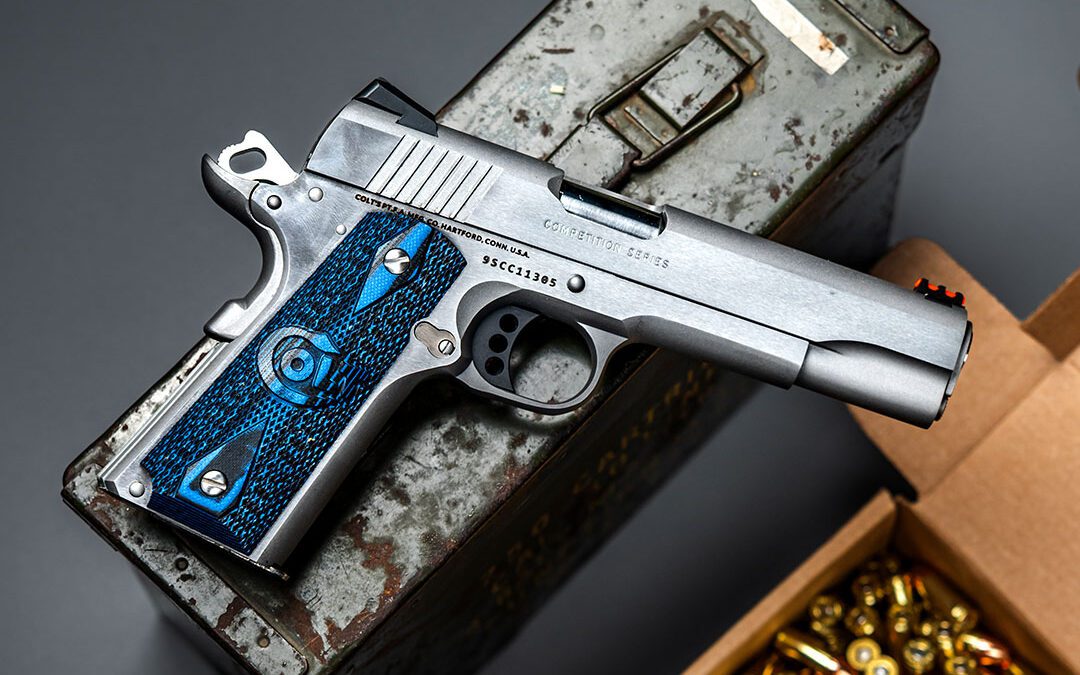
The great fly angler Lee Wulff once made the point that, “A trout is too great a gamefish to catch only once.”
Here at Sporting Classics, we also believe that many of our past articles deserve a second chance, a “redux,” if you will, that will delight new readers and serve as a pleasant, if not a poignant, reminder to our veteran subscribers.
We have, of course, reprinted classic stories from the past, but SPORTING CLASSICS REDUX is adding a new twist: Following the reprint, we will publish an interview with an individual relevant to that article.
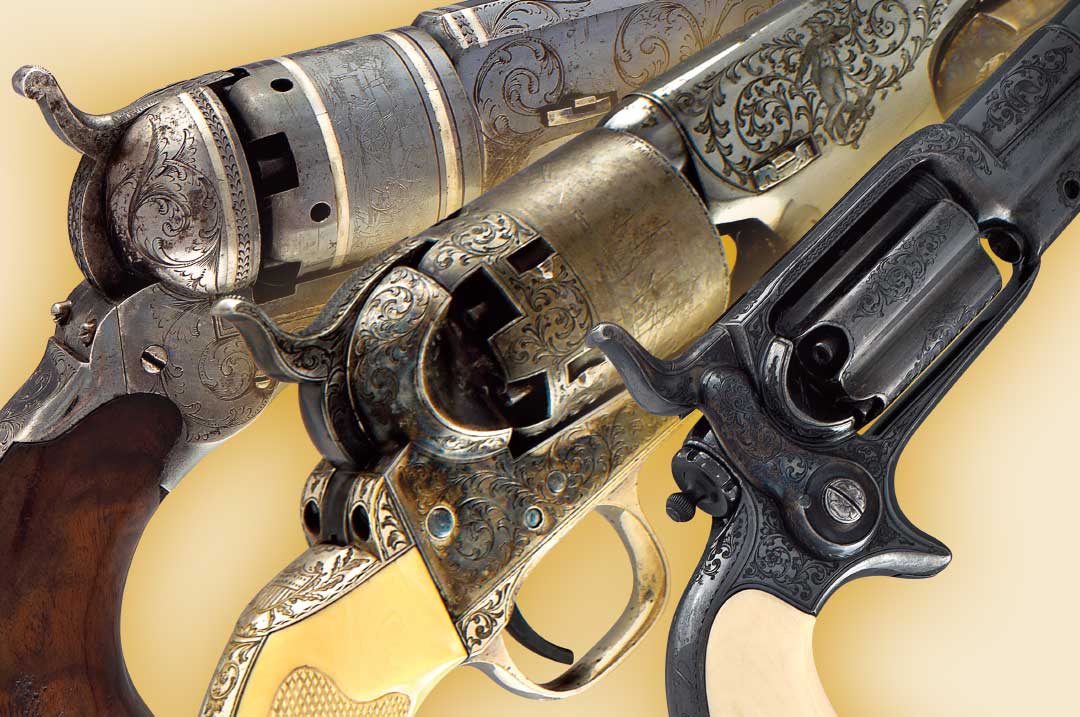
From top-left: Paterson Deluxe No. 5 Holster Model revolver, Colt Model 1861 Navy Pistol, and Colt’s Patent New Model 1855 Pocket Pistol. Paterson Colts are among the most sought-after firearms in American history.
In our first edition, we are bringing back “The Colt Chronicles,” a historical look at one of America’s most iconic firearms manufacturers originally published in 2012. Following is an interview between Sporting Classics Doug Painter and Tom Taylor, Chief Business Development Officer for Colt CZ Group.
We hope you enjoy this new perspective on looking back, but also with an eye to the future. As Paul Harvey liked to say, “And now, for the rest of the story.”
Doug – Tom, good to catch up with you. As the years go by, we might change jobs, but we tend not to stray very far.
Tom – Yeah, I mean, it’s so many good people. It’s an industry full of good people. A lot of us stay in the same jobs for a while, but when we do leave, nobody seems to leave the industry completely, because we love it. It’s such a passionate thing and people here are passionate about what they do.
Doug – Well, today we are going to talk about two iconic companies, Colt and CZ. One of the first things that I like to discuss about Colt is that it’s not only one of the most iconic and historic firearms companies in America, but it really was a key company in transforming our nation from the Jeffersonian agrarian world to an industrial society. And that really had to do with the notion of interchangeable parts. Today, we have AI and all sorts of phenomenal new things, but interchangeable parts were kind of the major focus back then.
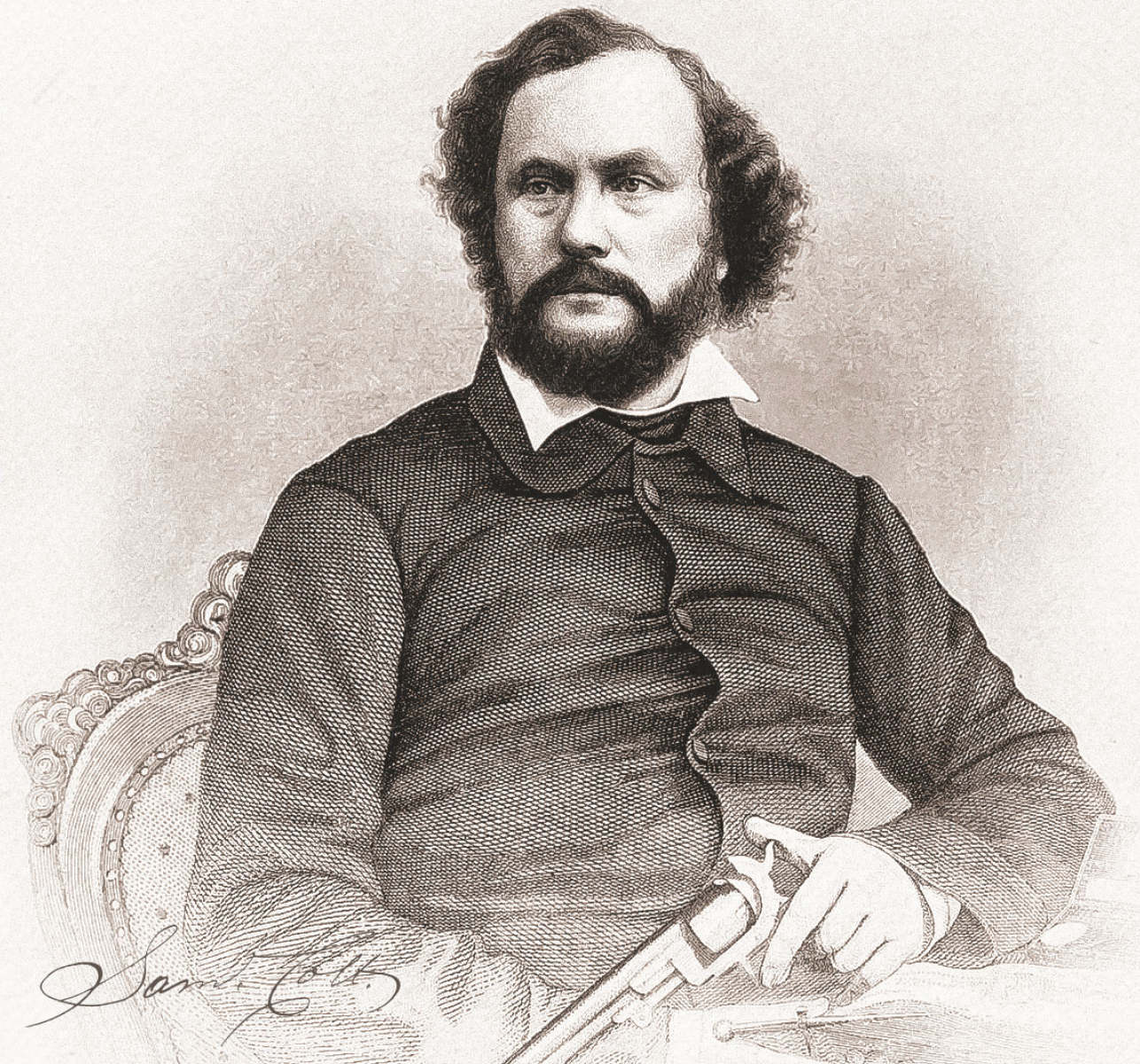
Tom – You know, Sam Colt is one of four or five Americans who shaped modern manufacturing in America. Years ago, he was placed in the Inventors Hall of Fame. It was quite an honor to be placed on that same list as Ford and other companies who really helped forge this country. You could probably make an argument that Samuel Colt was the first to help change America. And it wasn’t just the fact that his products were changing America because of what it was and what was necessary. He really led the way in America for modern manufacturing – producing interchangeable parts and all those things that Colt is famous for.
Doug – Colt was really the first company to put interchangeable parts on an assembly line in a fairly big way. It’s interesting that when he got back into business after failing originally in 1847, he went to Eli Whitney.
Tom – Yeah.
Doug – Eli Whitney started up in Hamden, Connecticut. By the time Colt came in, it was being managed by Eli’s son. And they were involved in interchangeable parts. There were three, four guys, who were sort a Silicon Valley of the time.
They all were working together on this notion of interchangeable parts. A great example of what a big deal it was is that in later years, when Colt would go to one of the big international exhibitions like the world’s fair, he’d take six Colt firearms with him into his room, where he’d disassemble all of them. Then, he’d leave the room, but not before asking the guys in the room to shuffle the parts around and reassemble the six Colts. To people back then, it seemed like magic.
Tom – I think in today’s world some gun companies might have trouble doing that. Today’s companies obviously have outstanding manufacturing. During my time with one of my former companies, one criterion for a U.S. military contract was to be able to disassemble a bunch of guns, theoretically put them in a bag, shake them up and reassemble them.
Doug – For sure.
Tom – When you look at what Colt was doing 150 years ago, it is just absolutely incredible when you compare it with the complex machines and the computers and AI and all the things that enable us to make all the interchangeable parts produced by modern firearms companies or in other industries.
Doug – It really is one of my favorite old-time stories. I think I’ve been in this industry longer than you have, Tom. And in the early ‘70s, there was no Shot Show. We exhibited at the National Sporting Goods Dealer Show and all of our exhibits were stored up in the Hartford area. Part of the storage area was the original Colt factory floor. I remember going up there to check our little booth. And there it was, this huge shaft that drove the machinery. It ran the entire length above all the assembly lines and the leather belts that hung from that. I always reminded myself that I was not looking at a museum; I was looking at what was an abandoned factory.
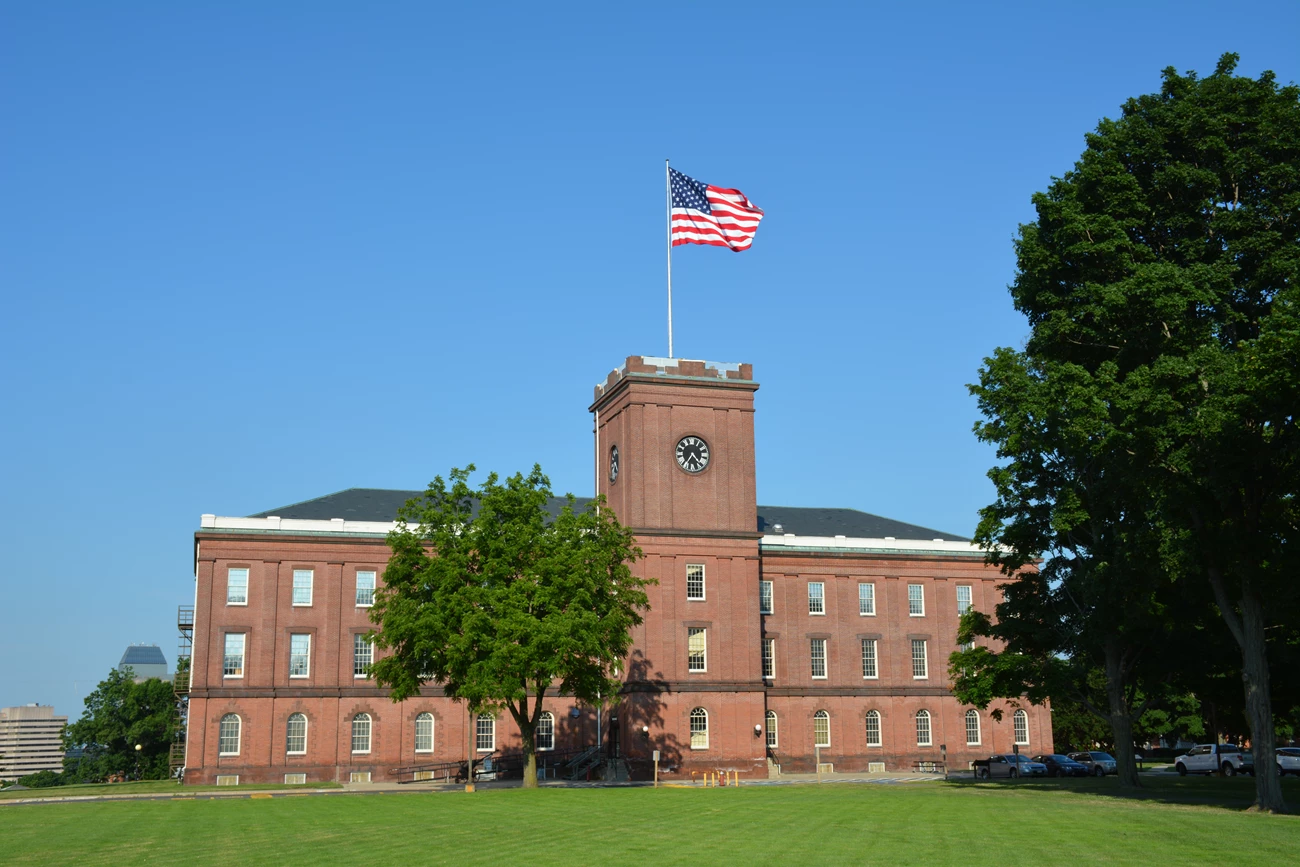
Tom – Yeah, it’s amazing that was still in place in the ‘70s. You know, I’ve seen pictures. I obviously didn’t have the pleasure of seeing the real thing, like the Colt factory. I have been in the Springfield Armory Museum, where they have recreated that kind of a manufacturing reproduction area. If you haven’t been to the Springfield Armory Museum in Springfield, MA, it’s a wonderful place to see what it was like. It has pictures from the 1940’s during World War II when they were building M1 Garand’s. Just seeing the leftovers from the original Springfield Armory factory sitting there and immersing yourself in a great page from American history.
Doug– Awesome. Let’s segue from there to ask: So, what’s your challenge with Colt these days?
Tom – I think the biggest challenge with Colt has been that in the last 20 years, maybe longer, some of their efforts have been a little bit futile. They didn’t know whether they wanted to focus on defense or civilian sales. They completely got out of the civilian sales business at one point during that time period. The fortunate thing for the company is that they’ve always maintained enough focus on the military and defense business to stay relevant and to continue their contracts with the U.S. military and countries all over the world.
Doug – That’s a good point.
Tom – During the Old West and then World War I and World War II and Vietnam, even in the more recent conflicts, Colt has remained iconic because of its modern production capabilities. But for many years, there was just no real stake in the ground as to what Colt wanted to be. There were financial troubles; the company has been in and out of bankruptcy. At one time, it was owned by the Connecticut Teachers Credit Union, which is ironic.
Doug – I know.
Tom – What’s important now, about five years ago, when the CZ group purchased Colt, I think that was significant stake in the ground. It took CZ a bit to figure out which way to go, because they had probably never seen such a reclamation project like Colt. It was like the classic definition of insanity – things being done the same way for so long without any real changes, and expecting a different result. I think for a couple of years they really had to get their bearings as to how big a bite they had taken off. But I think the most important thing is the CZ group has recognized that.
They brought in new leadership across the board. The CZ Group, now the Colt CZ Group, had very stable leadership in the Czech Republic. And so, they were able to use that stability and some trial and error with new people, new thoughts, and new ways to go to market. At one time, they combined the CZ and Colt businesses together, but that didn’t work too well so they’ve split those apart now. They’re operating independently, because they’re different business models.
Quite importantly, there’s new leadership. The new CEO is Jillair Kubish, who has been with the company for about 10 years. She has been leading the defense segment, the healthy part of COLT, for the last 10 years. She’s a wonderful leader, who had a career in the US government and ATF and was part of the formation of Orchid Advisers, which has been a very important playing for industry companies. Jillair has begun to assemble a team at Colt to functionally take on everything that needs to be done. . . new operations leadership, a new sales and marketing approach, and just really begin to treat Colt like a business that has the underwriting from the Colt CZ group to give it financial stability. It’s been fun at this point in my career to join an opportunity like this and to take, one of the most iconic brands in our industry and get it on the right track.
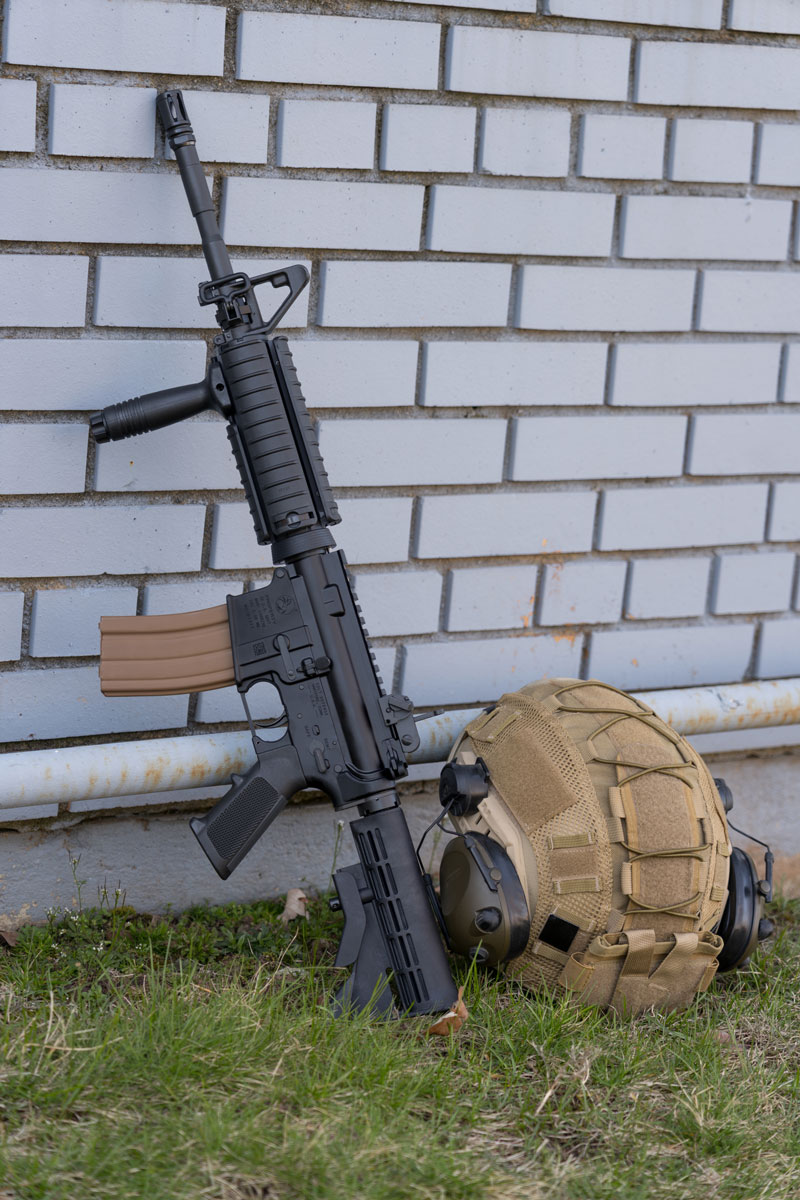
I don’t know how long they’ll have me around and how long I’ll be involved in it, but I’m so excited to see what’s happening at Colt, to watch the transformation. It’s good to know that not only are they renovating the things they do well in the large frame revolver market, the 1911 market, and M4/AR rifle markets, but knowing there’s new product innovation on the way. I mean, when’s the last time you heard of new product innovation at Colt.
Doug – Well, that’s been one of the real keys here. I know that companies faced a lot of changes, their location, the unions, an aging plant, etc. As for Colt, it didn’t have much of a product line anymore.
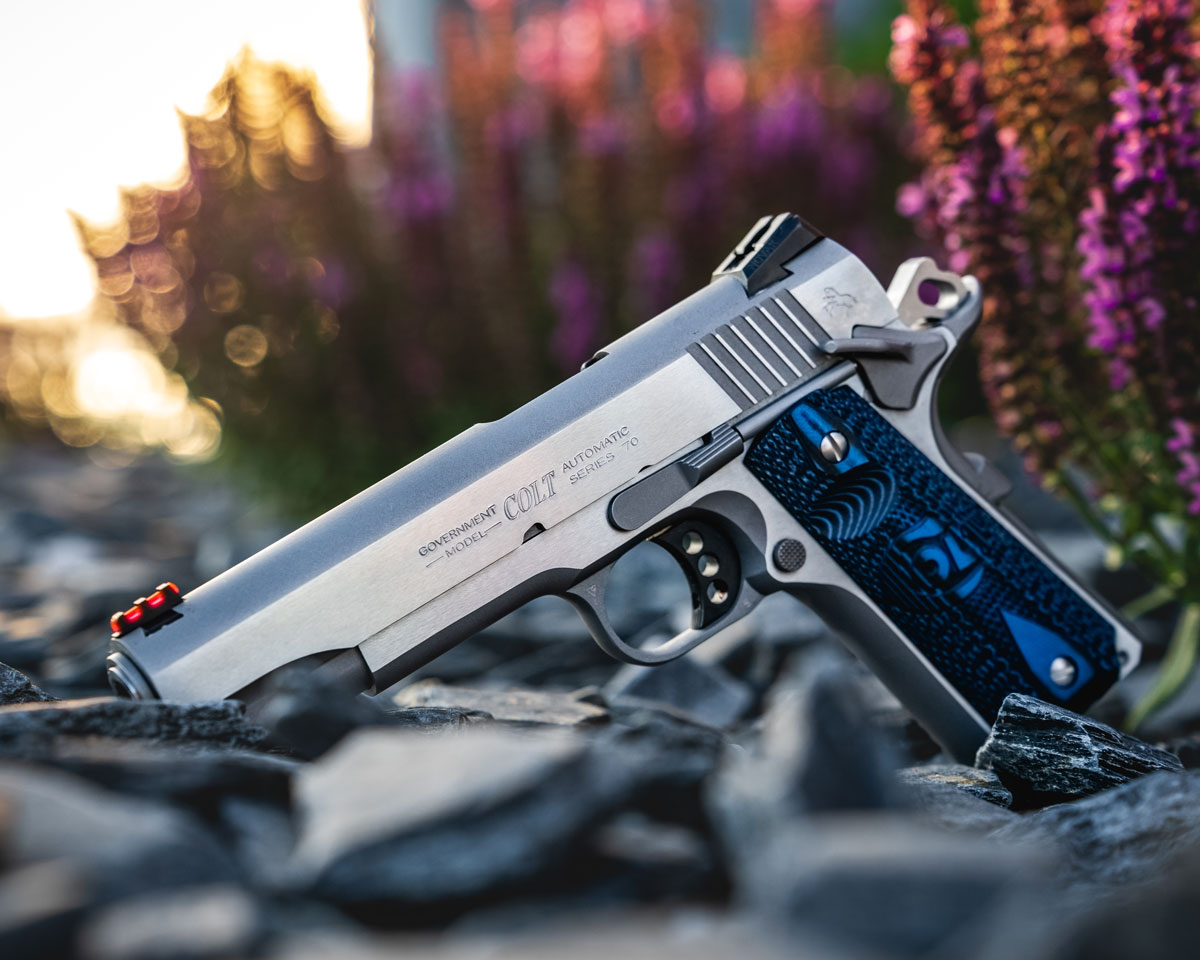
Tom – If you look at Colt’s 1911s, they are healthy in that market, though it’s been up and down . . . a kind of a cyclical market. It seems like every five years or so, people get interested in 1911s again, and then it wanes.
Doug – Well, and how many companies are making them?
Tom – There are countless companies making them. Meanwhile, the large-frame revolver market is definitely shrinking. As for the AR market, there may be hundreds of companies making them in America. Those are the markets that Colt does business in.
But going forward, the company is definitely diversifying in different markets, developing new products. If you listen to military units throughout the world, they’re like, well, I know Colt has been dependable and it’s been there forever as a dependable product, but I saw this really cool influencer talking about brand ABC. We hear that all the time, and you know those companies may or may not have as much discipline and quality and all the things that has made Colt great. They’re cool and they’re relevant and they have some modern features that Colt may not have. And so, Colt’s making sure to engage in modernizing its current line.
Equally important, it’s finally making great strides. Within the next 12 to 18 months, you’re going to see some really interesting new innovations and new product lines and even new categories coming out of Colt. I’m proud of what we’re accomplishing.
Doug – Great!
Tom – Today, there is a huge market for competitive shooting and self-defense guns, and women make up a big part of that market. Our challenge is to find ways to market to those people. The tagline that Colts has used forever is “Still Making History”. It’s very relevant and Colt has made history time and time again throughout all the wars and important times in American and even world history.
But while they have to embrace that history and that heritage, I think they have to look forward in a different way and say, okay, that’s great. We are this iconic company, but let’s look at some of the iconic brands in America and throughout the world who have remade themselves, companies that have found ways to be relevant to younger audiences and as importantly, catering to the markets and categories that are most important to today’s users.

Doug – That’s true. People forget that Sam Colt was not only a great engineer, he was also a great promoter in an era when marketing and merchandising of any kind hardly existed. But this guy was. . . you know, the Donald Trump of his time in terms of recognition and that kind of thing.
Look at that great dome on top of the factory in Hartford. After some research, I’ve concluded that isn’t just a replica of a Greek or Russian Orthodox church. It’s just something that Colt thought: Man, that’ll make my factory look cool. That’s the kind of guy he was.
Tom – Yeah, I’d heard all kinds of myths about the reason. I’ve heard people say: “Oh, they built that during World War II in case we were invaded, that it would look like a church, which is not true. When I joined the company, I thought I knew a lot about the history of Colt until I really started digging into it and reading more about it. Sam Colt just wanted something that would dominate the sky as people went down the Connecticut River, which as you know, the heart of Gun Valley.

Doug – Absolutely. I think I wrote it was the neon sign of its time. And actually, when the factory burned down during the Civil War, Sam’s widow rebuilt the factory and the dome.
Tom – Another piece of the history that I thought was so fascinating about Colt was that he was only 47 in 1862, when he died during the Civil War. Elizabeth ran the company about 40 years. She wasn’t always running the day-to-day operations, but she was the trustee and the primary shareholder. Many decisions stopped on her desk. And so, you have this incredible legacy of manufacturing and to your point, the original sales and marketing guy in our industry. And at the same time, from everything I’ve read, it was unheard of to have a woman run a company of that magnitude in those days, and she did it for four decades.
Doug – Yeah, she did a great job. And it was highly profitable, too. I remember reading that in 1860 and ‘61, Colt was bringing home around a million dollars a year. And that was before there was an income tax. My research showed that his average worker was making less than $300 a year. So, this guy was doing all right, and the company was doing great. Indeed, those were the glory years, and I hope you can bring those glory years back.
Tom – Yeah, that’s our goal. The Colt CZ Group is sneaky big. There are 14 companies under the Colt CZ Group umbrella. There’s even ties to Skoda Automotive, which is a car made in the Czech Republic. It’s owned by Volkswagen, but the Skoda division is in the Czech Republic and our company makes parts for that company. So, it’s a billion-dollar-plus entity. When you think about the billion-dollar companies in the gun industry, they’re few and far between.
Doug – Yeah.
Tom – But Colt CZ Group is already in that realm. And I think that financial backing is going to put them in a position where they can say in a grandiose way, Colt is back where it belongs. That’s one of the first things I promoted when I got to this position a little over a year ago.
I wanted to do a brand study, so I could understand the position of CZ and Colt and Dan Wesson. The company also owns Dan Wesson. It’s also a great historic story. I’ve really enjoyed getting to know Eric Wesson, Dan’s grandson. He’s a wonderful man, if you ever get a chance to meet him.
The bandwidth of what this company can provide for Colt and CZ and Dan Wesson, and the infrastructure they can put together, puts them in a place that will be unique. When I did my brand study, I was primarily focused on CZ and to gain an understanding where they were in the U.S. market. I also included Colt, which still has 95 percent aided brand awareness in America. And, you know, the companies that are almost always at the top of these studies are Smith and Wesson and Glock, who have become extremely well known in America.
Remington, Ruger and Beretta are some of these 90-plus-percent brand awareness companies, but Colt is right there, which is kind of amazing since it hasn’t spent much money or been very involved in marketing its brand in a very long time. In my study, Colt ranked 5th in brand awareness in America, which is just absolutely crazy. So, we have a big leg up starting with that kind of market share. Now, we need to come up with some new products that reinforce our brand loyalty and recognition.
Doug – You’re absolutely right. Colt has burned itself so deeply in the psyche of America, that it’s still very, very well recognized. It’s an amazing story in that context. But now, let’s talk a little bit about CZ. Was it in 2021 when CZ bought Colt? I’ve always maintained that one of the things that makes our industry unique is that we value things that are both national and international in scope. Great quality, accuracy, functionality, all the things that are important in making fine firearms are as appreciated in the Czech Republic as they are in the United States.
Tom – Yeah, I’ve been blessed to go over there four times now. I’ve toured all the facilities, and when you walk in the CZ facility in Uhersky Brod, it’s called CZUB, it’s interesting to see how it was moved from the Czechoslovakian-German border during the late-30s when the turmoil of the Nazi regime was starting to bubble. Back then, they said, OK, we better take this gun factory around the border and move it all the way to the other side of the country, which they did. When they built the complex in the late ‘30s, it was designed to look like apartment buildings in a small town. From the air, it would be camouflaged, if you will. By the way, it was never bombed during World War II. No damage in this little village called Uhersky Brod.
Doug – Fascinating!
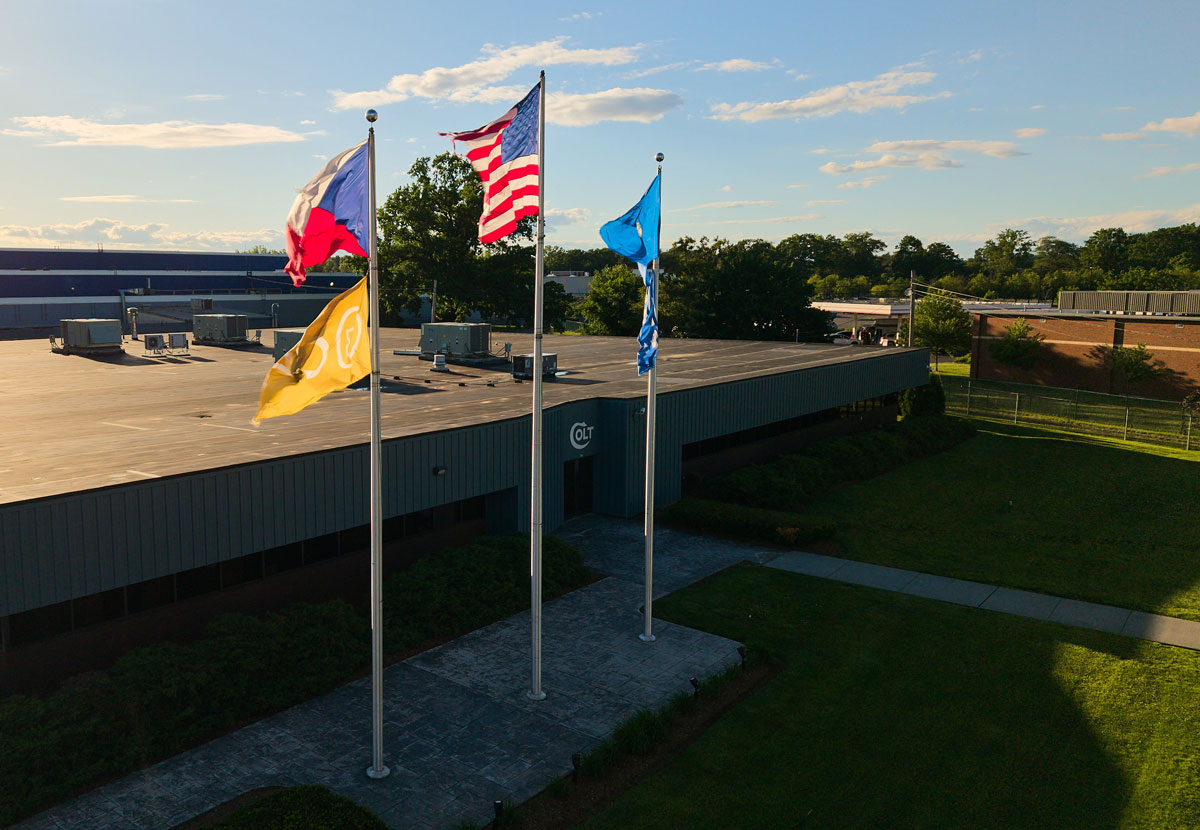
Tom – From the outside, it’s very historic looking. But when you walk inside, the facilities are amazing . . . absolutely state of the art. You know, and I’ve been in most of the major manufacturers in our industry. You could eat a picnic lunch off the floor. The amount of modern manufacturing would rival any of the major manufacturers in the U.S. And think about the engineering that Europe is so famous for. When gun sales were waning before World War II, they even started making motorcycles. And I mentioned they’re involved with Skoda Automotive. And they have another modern manufacturing and engineering facility that produces Sellier & Bellot (S&B) ammunition.
When I was there just last week, I was able to tour the facility. The modern manufacturing in the ammo facility is absolutely out of this world. You take that infusion of power and innovation and know-how and collaborate with the U.S. entities at Colt and Dan Wesson and the products that we bring in at CZ-USA, it’s fascinating to see the power. As Americans, we don’t often think outside our own borders. But while I was there, we had a global sales meeting, and we had 14 U.S. customers with us. We took a tour of the CZUB facility, and they were amazed. They had no idea that CZ had such incredible global bandwidth and all the products they supplied. We just won the German military contract for the P10 striker pistol. It’s going to be called the P13.
The German military, to my knowledge, has never gone outside of their country for small arms. And they’ve now chosen a CZ striker pistol. CZ has provided tremendous amounts of products for the war in Ukraine, including the AR style Bren rifle that CZ makes. And all those have been modernized and engineered in that factory in Uhersky Brod. It’s simply amazing to see that and know that kind of power is coming to Colt and to a lesser degree, Dan Wesson.
Doug – To me, the most hopeful sign is that this great company, founded in 1936, now has such tremendous product lines, tremendous strength, and that will do a great job in bringing the iconic Colt company back to life.
Tom –Yeah, I think you’ll start seeing some of the coming-out party, if you will, at SHOT Show 2027, when the brand will be relaunched. Some new products will be unveiled this year, and we even have a product roadmap for next year’s SHOT Show.
If you were to look back 18 months from now, when so many people were sort of like shaking their heads about Colt, you know, an underutilized brand and company for the past 20 or 30 years, I think that’s going to be an afterthought. You’re going to see Colt revitalized by some great new products.
Colt just won a five-year foreign military services contract. The contract has a non-compete clause. So, for the next few years, any rifle the American government buys to go out to an allied country will come from Colt. We continue to supply rifles to the U.S. military, including M4s and M5s.
Doug – Amazing.
Tom – If you are a Colt fan, I’m sure you will be pleased and excited about the future of Colt.
Doug – That’s a great message, one that I you would like to leave with our readers and our listeners . . . that Colt is coming back strong.
Tom – Yeah, it’s on its way back. There’s so much more I could talk about – to tell people what’s coming – because it’s all very exciting.
I’ve gotten to know a good number of influencers, different people, big celebrities like yourself. You know, I’ve gotten to know a lot of people and a lot of notable soldiers who have done amazing things in history. I’ve been blessed to be able to know those people. As I’ve gone about my day-to-day business, talking to those people, I said, hey, “How interested would you be in hearing the story about Colt coming back?” To a person, their eyes light up.
I was speaking with a Colt owner who is a very notable entertainer. When I asked him if he’d be willing to support some things we’re doing at Colt, he was like, “Oh my God, I grew up on Colt. My first rifle was a Colt, my first pistol was a Python.” He said, “You just tell me what you need me to help with.” People are unilaterally saying: “How can I help Colt?”
Doug – Well, you know, that’s a great message, Tom. It’s been great to have you on, and I’m sure the readers at our new digital edition of Sporting Classics Redux will enjoy your insightful message. Thanks, Tom, and I’ll talk to you soon.
Tom – Thank you, Doug.
Click Here to read “The Colt Chronicles,” a historical look at one of America’s most iconic firearms manufacturers originally published in 2012.