
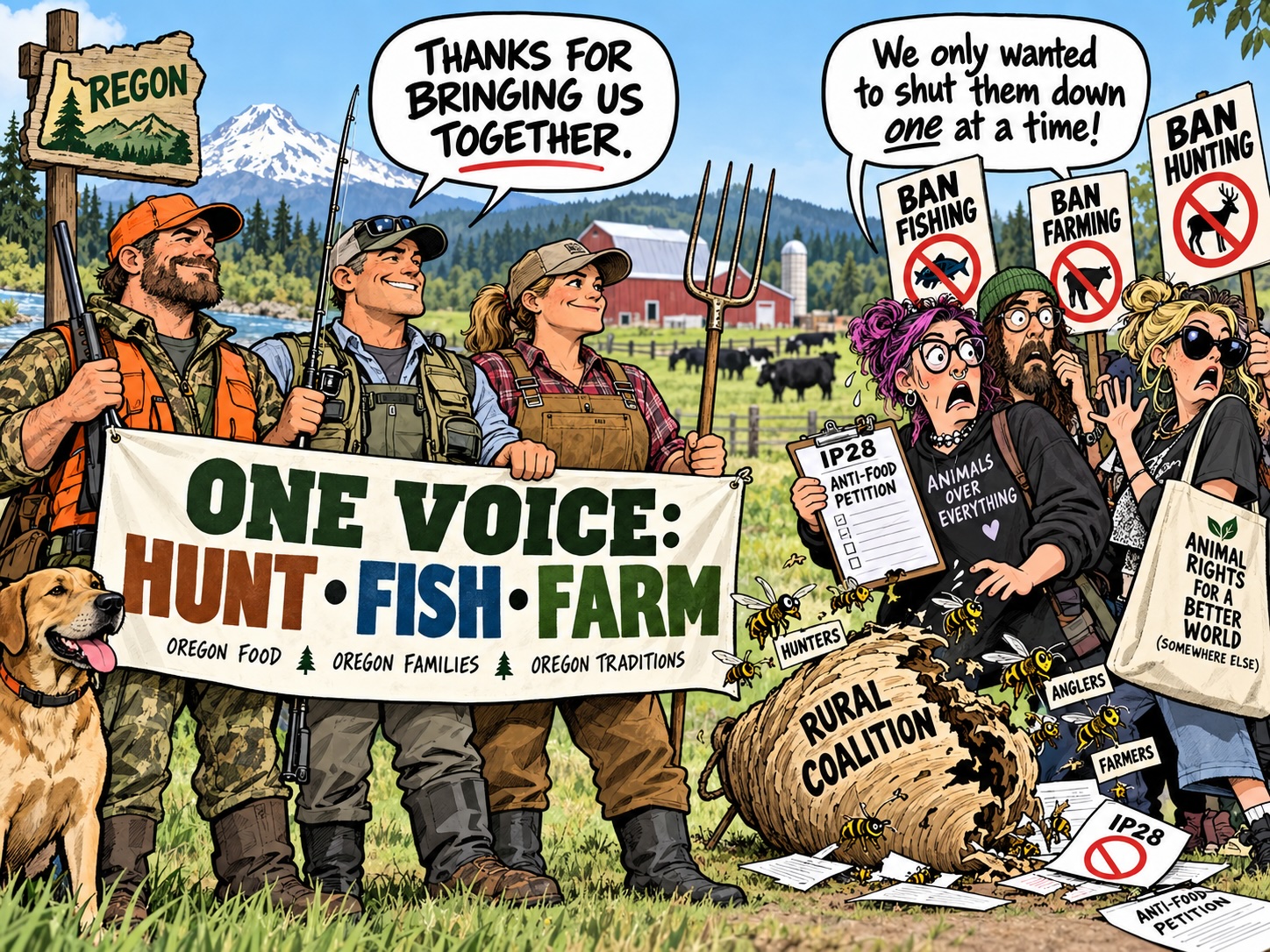
Somebody ought to send Oregon’s animal-rights activists a thank-you note. In trying to outlaw hunting, fishing, and farming, they have made an excellent case for organizing the people they’d like to shut down.
Their Initiative Petition 28 would have removed animal-cruelty exemptions covering those activities and routine livestock-husbandry practices. To be clear, this wasn’t a ban on growing wheat. But raising cattle for beef would have become a rather difficult business without the beef part.
The petition failed to qualify for Oregon’s November 3, 2026, ballot. Organizers submitted more than 142,000 signatures; election officials determined that 104,262 were valid, short of the 117,173 required. That’s welcome news. Before anyone declares victory, however, consider the organizing effort behind a hundred thousand valid signatures. Signatures aren’t votes, but they show the threat isn’t limited to fundraising letters from hunting organizations.
Chief petitioner David Michelson has been frank about his intentions. He sees repeated campaigns as a way to change public opinion over time, even when an immediate victory looks unlikely. He’s prepared to keep at it. Sportsmen and farmers would be wise to develop a strategy that lasts longer than the relief following another failed petition.
Britain offers a place to start. The Countryside Alliance formed in 1997, bringing together field-sports, rural-business and countryside organizations to defend interests that reached well beyond foxhunting. Its usefulness as a model ought to be obvious: You don’t have to enjoy everything your neighbor does to object when somebody proposes outlawing his livelihood. Waiting until they get around to yours is an expensive way to learn that lesson.
As we pursue constitutional protections in more states, we should advance the right to hunt, fish, and farm. Oregon already has a proposed amendment aimed at the 2028 ballot that brings those activities together, along with ranching and trapping. The language deserves careful scrutiny, but the wider approach makes sense. Agriculture shouldn’t be an afterthought in this fight, brought in when a hunting organization needs another name on a letter.
Put the farm bureaus, cattlemen, hunting groups and fishing organizations together before the next petition circulates. Pool money, share audiences and speak to the public throughout the year. A rancher shouldn’t have to become a wildlife-policy expert to recognize why a hunting ban matters to him. Oregon’s activists have helpfully explained the connection.
They’ve also given us a better way to explain ourselves. Venison in a hunter’s freezer, fish brought home for supper and beef raised on a family ranch all answer the same ordinary question: What’s for dinner? That is a conversation we should welcome. We can spend another generation arguing among ourselves about equipment and terminology, or we can explain why people should remain free to provide food through responsible hunting, fishing and farming.
Those protections should leave room for sound wildlife management, food-safety rules and legitimate animal-welfare standards. They should also welcome city residents who care about where their food comes from. There’s no acreage requirement to understand the difference between choosing not to eat meat and demanding that everyone else stop producing it.
So thank you, Mr. Michelson, and everyone who worked on IP28. Hunters, anglers, and farmers have good reason to defend one another. You’ve been kind enough to remind us of that.