
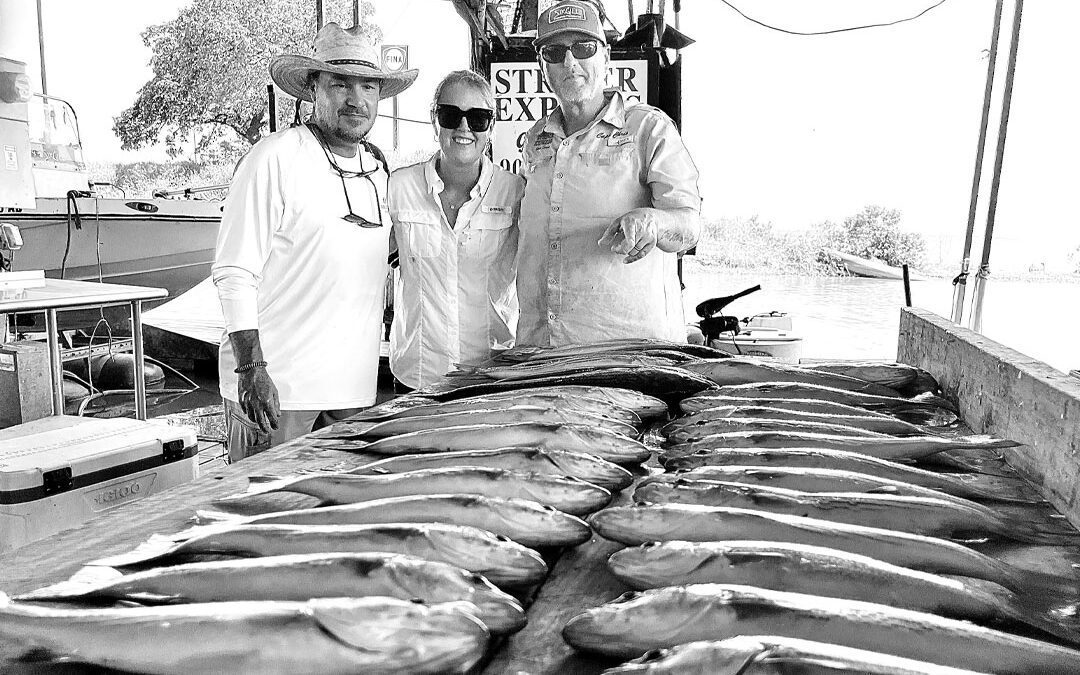
“We’re almost over the top of them . . . start dropping ‘em. When they hit bottom, crank up three rounds.” Chris Carey instructed Luke Clayton, Jeff Rice and me. Turning toward me specifically, Chris said with a chuckle, “Larry start stripping!”
Smiling wryly, I said: “Seems a bit cold and windy and an improper place to do so with all those other boats not that far away and watching us. I’ve done several things in my lifetime to catch fish and shoot a particular animal, but I don’t recall ever being told to strip to make it happen.”
Before Chris could respond, I added: “You didn’t tell me undressing in public was required to catch a striper.”
Chris laughed, “Noooo. You stopped your slab before it hit bottom. Strip some line off the reel, let the lure hit the bottom, then crank up three turns. That’s where the school should be!”
Before I could even think of a clever comeback, I felt a vicious tug on my line. The fish hit my lure so hard there was no reason nor actually any time to set the hook. The striped bass stayed near the bottom, taking out line.
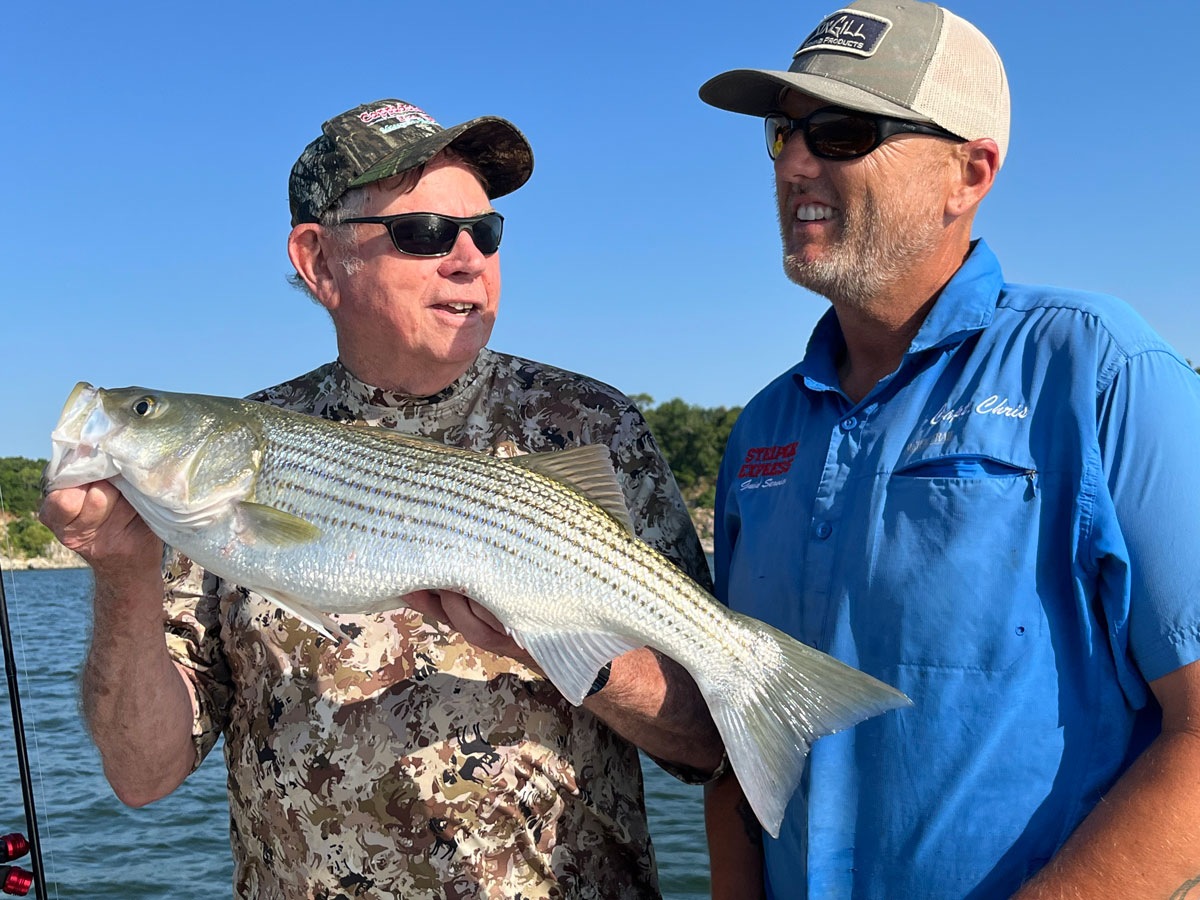
Striper Express’ father and son team, Bill and Chris Carey.
I followed Chris’ and his dad, Bill’s, instructions about keeping the rod tip high, so it could do its work in helping tire what was fighting on the end of my line. The striper made a 100-foot run straight away from the boat, then promptly turned to come straight back. For a heartbeat, I thought it might have come off the hook.
“Reel! Reel! Reel” shouted Bill, “Fish is headed this way!”
I cranked the reel as fast as I could to gain all the line possible, trying my best not to allow any slack. Knowing if I did, there was a good chance I might lose the fish.
To my left, I heard Jeff say: “Fish on!” Thankfully he and his striped bass were on the other side of the boat.
My line was taut, and my fish was almost under the boat, when it turned left at a pace that made the reel’s drag groan.
“Good fish!” I heard Luke say as he put down his rod and picked up my video camera to record the scene for our weekly A Sportsman’s Life digital television show on carbontv.com and our YouTube Channel of the same name.
My fish made one more run before Chris could net it. As Bill had said before leaving their dock, “Stripers fight all the way into the boat. They never give up!”
My striper weighed about eight pounds but fought like it had weighed twenty or more! After showing my fish to Luke for footage and photos, I dropped it in the live well. Stripers are delicious, no matter how you prepare them.
I dropped my slab overboard in hopes of catching another. Now, before anyone asks about “the slab” tied to my line, allow me to say I love to fish, and I love to prepare and eat fish. However, I am not someone who knows about lures or what names they go by. Frankly, I really do not care what they’re called, only that they catch fish.
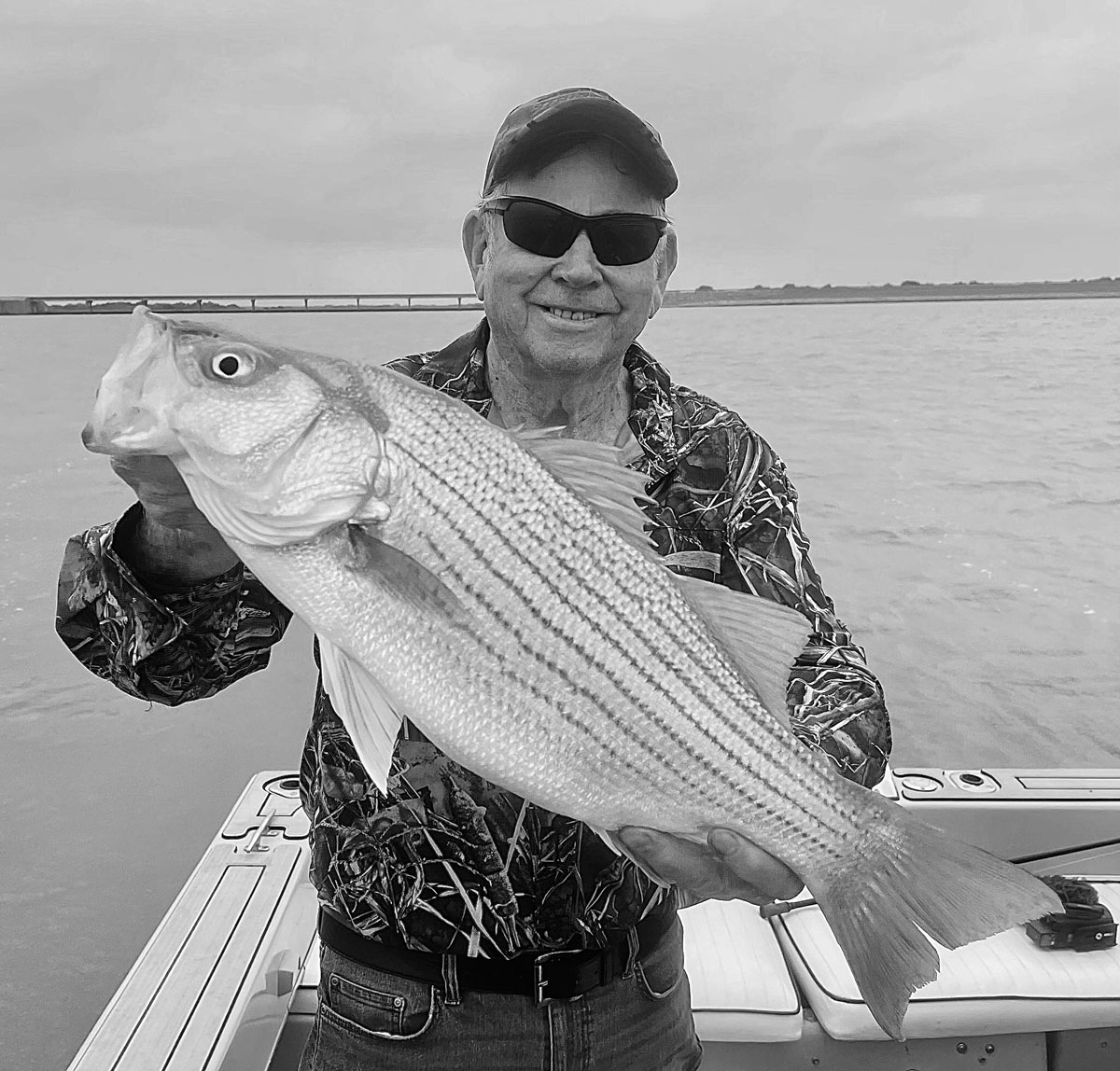
Luke Clayton with a typical Striper Express striped bass.
When it comes to fishing for striped bass on Lake Texoma, I trust all to Captains Bill and Chris Carey with Striper Express (www.striperexpress.com). They know Lake Texoma better than anyone, have the proper boats to fish for stripers, know where to find them and how to catch them. They have been doing so for several decades. They have the best equipment for catching striped bass, regardless of what they’re biting, and they fish almost exclusively with artificial lures as opposed to live bait, although some of their guides will do so on occasion. No one is better at what they do.
Striped bass (Morone saxatilis) are saltwater fish that can live in fresh water. Lake Texoma is unique in that it is the best documented freshwater lake in North America where they not only live but also reproduce. This is because of the salt content in the streams flowing into the Red River, which separates Texas from a portion of Oklahoma and forms Lake Texoma.
The salt content keeps the striped bass’ eggs buoyant as required for them to hatch and insures future generations of naturally reproduced striped bass.
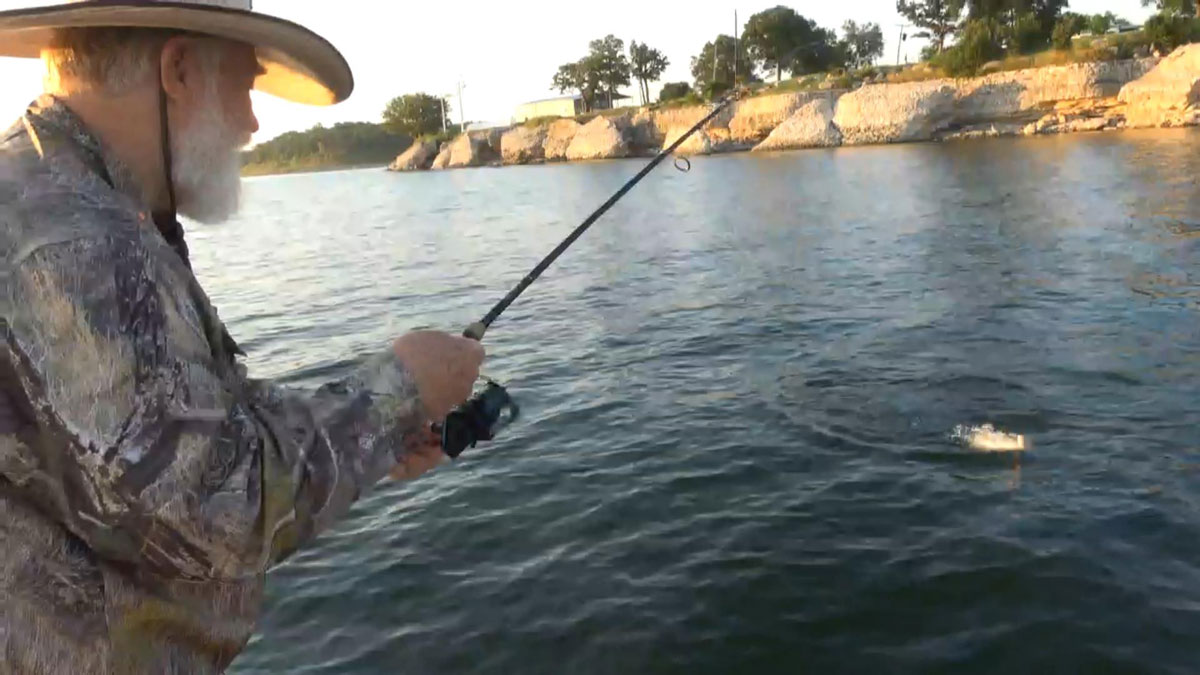
Fish on… a photo pulled from video – Larry Weishuhn hooked on to a Lake Texoma striped bass.
Because the lake is in both Texas and Oklahoma, it requires a special Texoma fishing license, which is available in both states. But if you are fortunate and are of a certain age to be considered a senior citizen, either a current Texas or Oklahoma fishing license suffices.
Thanks to Luke Clayton, with whom I have doing a weekly radio show now for 20 years and who has been fishing with Striper Express even longer, I have had numerous opportunities to fish stripers both down deep and on the surface. Given a choice between catching them near the bottom or on top, I will freely admit it is fabulous fun when they strike surface lures. When this is happening, you have to keep from jerking the lure out of a striper’s mouth just as he strikes. But oh my goodness is it fun!
As to the best time to fish Lake Texoma for striped bass, I will defer to Bill and Chris Carey. You can contact them through their website. Personally, THE best time as far as I’m concerned is whenever I can journey to Lake Texoma with Luke and Jeff to fish with Striper Express. Normally, we book dates months or even a year in advance to be assured a guide is available. That said, Bill and Chris have several extremely competent and fun-to-be-around guides, who have worked for them for years. Striper Express can accommodate individuals, large families and/or corporate groups. They can also help arrange comfortable lodging near Lake Texoma for the night before and the day after.
Luke, Jeff and I fish with Striper Express several times each year, and we have always caught striped bass, no matter the season. We not only enjoy catching them, we like to eat grilled and fried striped bass. Striper Express guides are experts at filleting fish and removing the dark red lateral line that can cause a “fishy” taste. Properly cared for, striped bass are absolutely fabulous table fare.
You say you have not yet fished on Lake Texoma with Striper Express? Well, partner, it is high time you did so!