
Traveling south on I-20, I cross the Savannah River at Augusta and ease into the Peach State. Determined to slow life’s pace and enjoy this 200-mile trip, I’ve silently vowed to take the backroads. So, I leave the frantic pace of the interstate, lower the passenger side window and aim my green Tacoma toward Wrens, Georgia, on U. S. 1. I’ve not gone far when the intoxicatingly sweet scent of yellow jasmine wafts in.
After passing through Wrens, traffic evaporates and, other than wind noise, an eerie quietness settles on this lonely road, so I turn on my truck’s stereo. With the volume set low, oldies music flows softly out of the speakers, taking me back in time. Outside, a rural countryside, similar to the one that I grew up in, slowly materializes. The few tiny towns I pass through morph into farms, then into pine forests, then into swampy, moss-embellished, hardwood bottomlands. It is early March, trees are budding, turning the warming countryside into a beautiful chartreuse. Mostly.
The only negative is witnessing the destruction Hurricane Helene wrought on its track north from Florida last fall. A sad, devastated swath of southern forests and pecan orchards crosses much of my path. Thousands of acres of tap-rooted pines lie splintered, beaten and broken, while mature pecan trees have been battered and uprooted by the fierce winds. Their majestic gray limbs pointing northward, they lie dead in heartbreaking horizontal disarray. Oddly, as I pass the ruined trees, emanating softly from my stereo George Harrison sings, “While My Guitar Gently Weeps.”
Like the landscape, the song also takes me back, reminding me of hearing the Beatles for the first time. It was 1963, one of those pivotal, defining moments in my life when I began to appreciate music. Until then, my hobbies focused mostly on fishing, hunting deer, squirrels and ducks in Santee’s swamps with my dad, and quail on my grandfather’s farm with my Uncle Crawford and his setter, Littlebit. Lightyears ago. And polar opposites, I think, smile to myself, and drive on, absentmindedly singing along:
I look at the world and I notice it’s turning
While my guitar gently weeps
With every mistake, we must surely be learning
Still, my guitar gently weeps
Deeper into the countryside, and thought, I go.
Tiny towns you’ve probably never heard of—Sandersville, Toomsboro, Nicklesville, Allentown and Danville—flow by my open windows like a slow-motion video. An hour goes by. Gradually, I leave most of Helene’s violence in my rear-view mirror. Turning right at Tarversville, I head toward Bullard and my final destination, Charlane Woodlands, its name a clue as to where I’m going and why.
Eventually, I turn off the paved road onto Charlane Drive, a tiny dirt path leading deep into this handsome 3,500-acre woodland. I switch off the stereo. The sandy track winds on for what seems like miles, and I think, Now, it’s really quiet.
The road forks a few times and I’m beginning to believe I’m lost, when up ahead I spot reddish-brown outbuildings through the pines. I stop and get out. No one is around, but I discover that these are just maintenance buildings. Climbing back in the truck, I hear a faint whistling call in the distance that gives me pause. The sound, bob-bob white, is music to my ears. I listen intently and hear another. Sixty-five-year-old memories of Littlebit pointing my first quail and my uncle’s congratulatory, “Good shot, Son!” bring another smile to my face. Sadly, that pleasant, once-common tune is long gone from where I, and most of us in the South, live today. In fact, it’s so rare, for those of us who recall our love for what it meant, the distinctive sound is striking, almost immobilizing.
It’s 11:30 a.m. when I come to what looks like a lodge. A huge, screened porch facing me, the understated building is painted in the same reddish-brown color you see on Forest Service signs. No one is here, either, but I get out of the truck and try the door anyway. It opens to a surprise.
Not something you’ll find in many quail hunting lodges, within a few feet of the door an imposing, black Yamaha grand piano stands ready, keyboard gleaming. A rattlesnake coils menacingly on its freshly polished lid. It takes me a few seconds to digest what I’m seeing. Thankfully, the rattler is only taxidermy. Above, magnificent wooden roof trusses span the length and breadth of this vaulted room. A towering fieldstone fireplace climbs the wall to my right and, to my left, a well-stocked bar awaits serious conversation and even more serious joking. Autographed posters of the Allman Brothers and the Rolling Stones hang alongside animal pelts, pheasant and deer mounts, fox mounts and shadow-boxed guitars. There are hundreds of interesting things to look at, including shelves of books on quail hunting, forestry and woodlands.
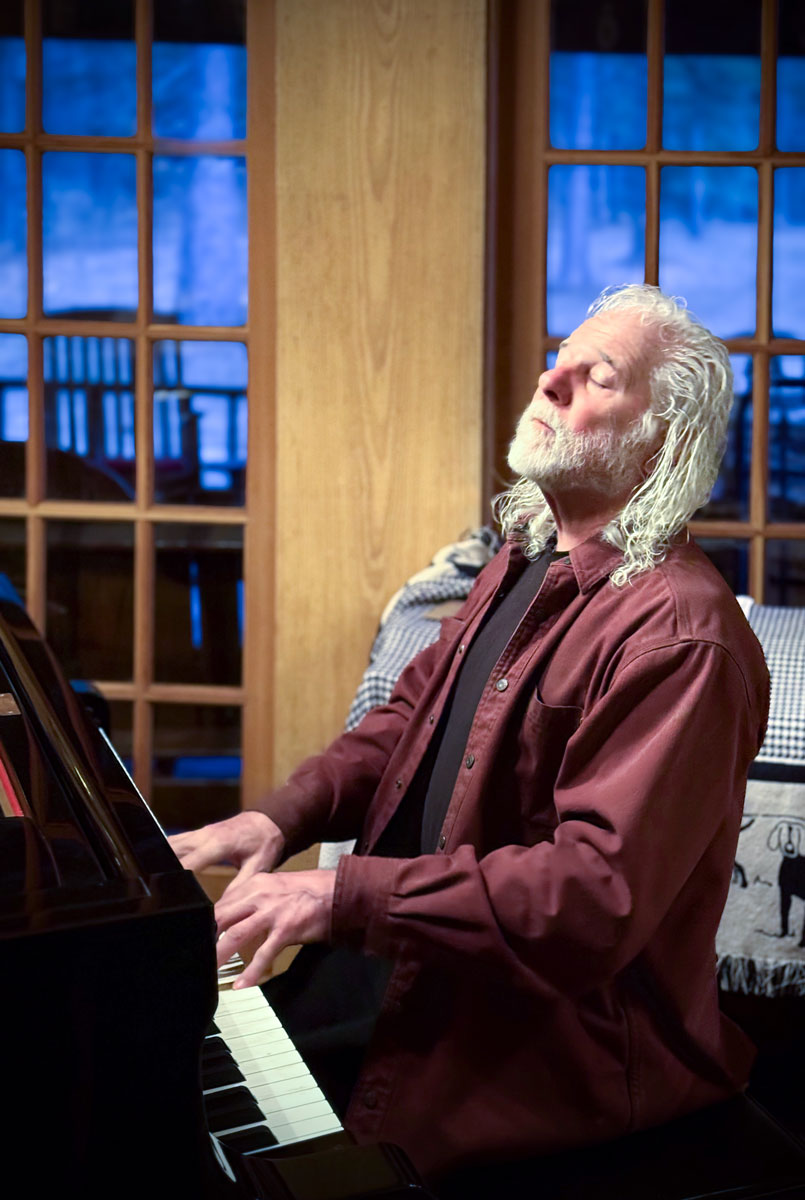
Chuck Leavell at his Yamaha playing songs for the the guests. He combines his love of music with his love of forests, and says, “The solitude and history of Charlane’s woodlands are inspirational.”
“Conundrum” comes to mind. I’m gawking, Alice In Wonderland-like, at a number of framed gold and platinum records when a guy, who could have easily been one of my best friends in high school, walks through the door, shakes my hand and says, “I’m Chuck Leavell, welcome to Charlane!”
He’s got longish, curly hair that’s as white as mine, but a young man’s eyes and smile, and a humble demeanor that makes you feel as if you’ve known him all your life. Beyond mentioning his playing with the Allman Brothers, the Rolling Stones and George Harrison, I won’t go into much detail here (See Tim Joseph’s comments in the sidebar). Of course, you can type his name into your browser and find reams (well, digital reams) of information about him, enough to fill a concert hall. Then again, I love the way Chuck describes himself: “I’m just the piano man,” he says modestly.
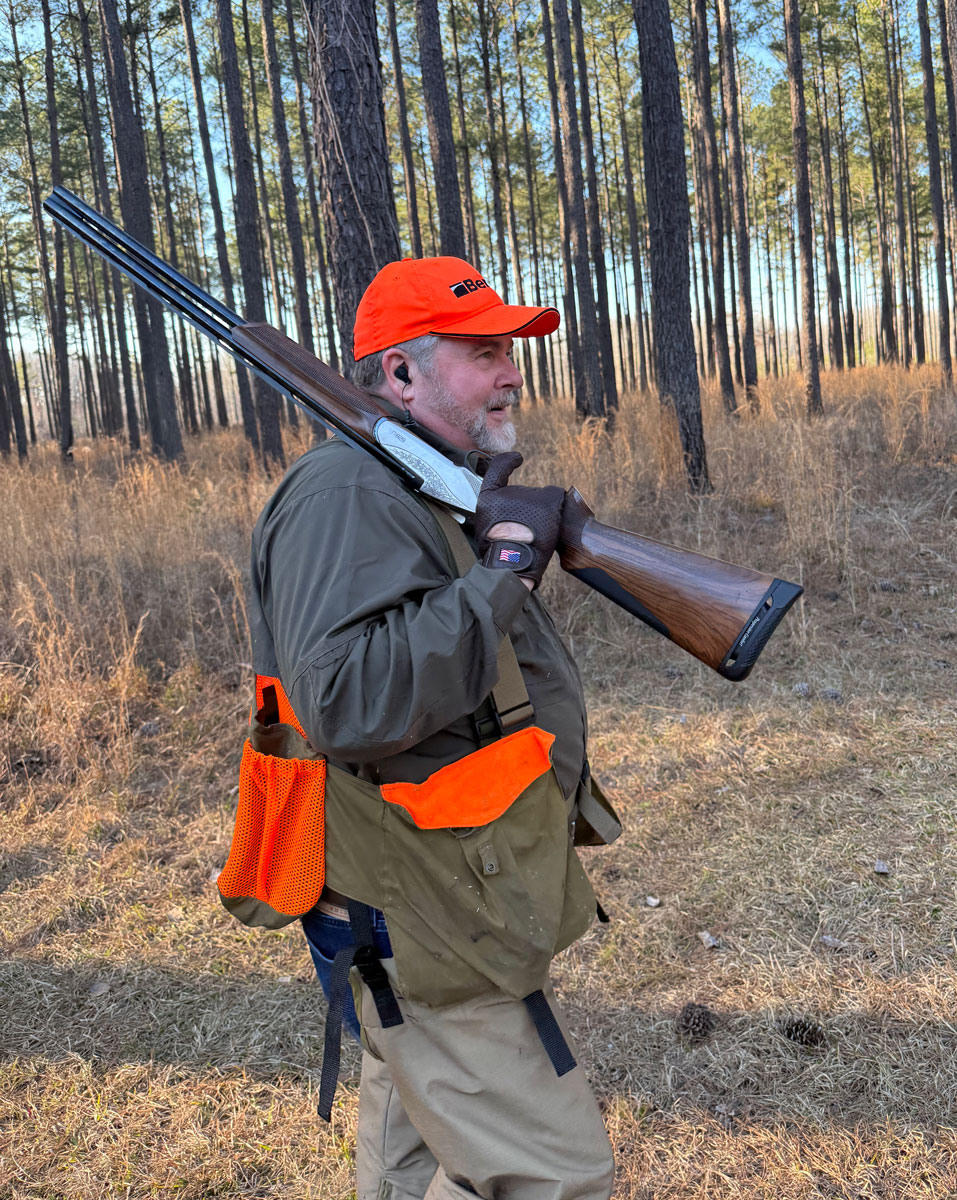
Tim Joseph is typical of the sportsmen who for thousands of years hunted with friends and family for food.
I discover that Chuck is also a forest management expert, the many framed awards surrounding us serving as testimonials. So, he and I are in the throes of conversation about our love of trees, forests and forestry, when the other guests begin arriving. Bags in hand, smiling, Benelli’s VP of Marketing, Tim Joseph, and Director of Marketing, Nick Andrews, Fiocchi Director of Marketing, Christian Hogg, Kali Parmley, editor of Gun Dog magazine, and Mark Sidelinger, president of Media Direct Creative, all enter Chuck Leavell’s domain.
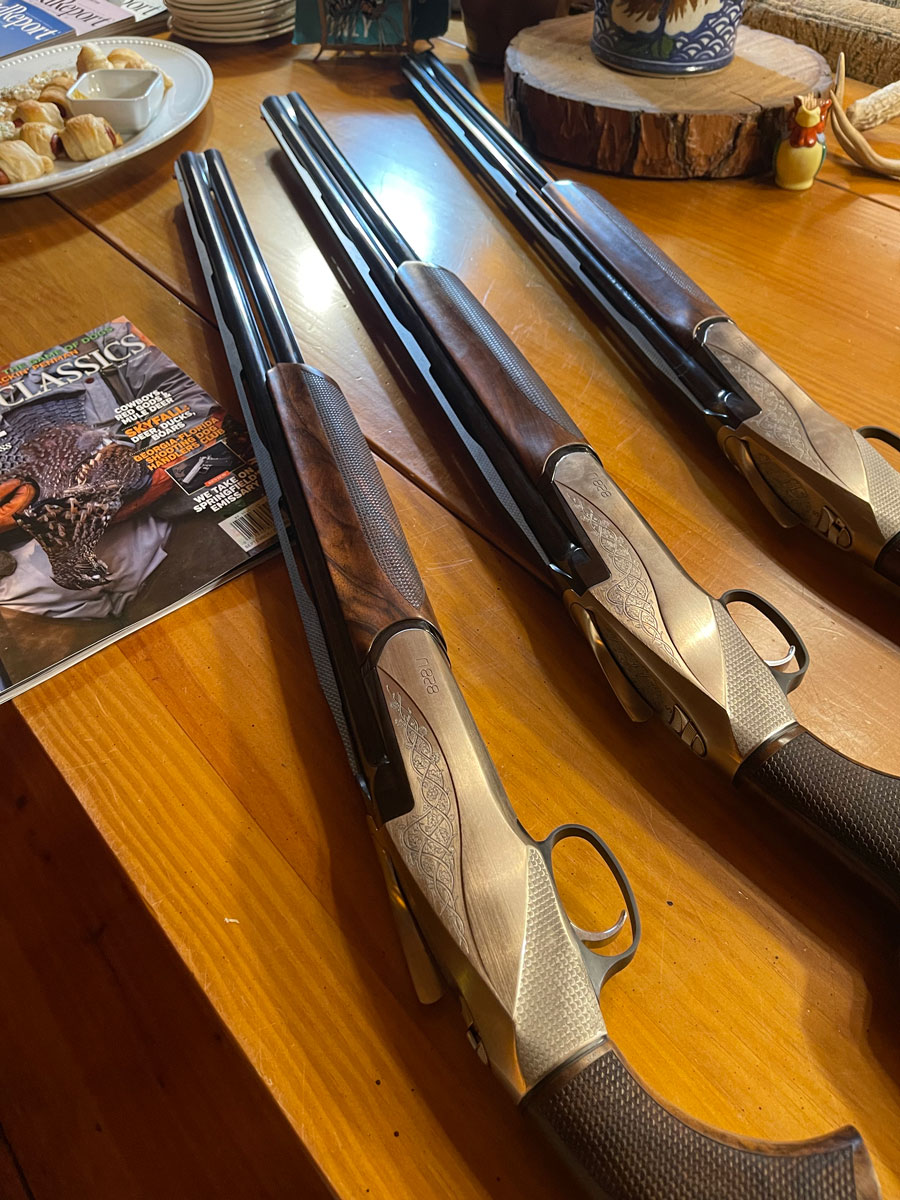
Combining the strength of steel with lightweight aluminum, Benelli began offering the 828U in 2015. Three new 20-bores line a table at Charlane.
After a delicious lunch in the restored old Bullard homeplace located just steps behind the lodge, we divide into two groups and climb aboard green hunting trailers. I’m partnered with Nick and Christian. With comfortable seats up front and dog boxes behind, the open trailers are towed by classic green, topless Jeeps. Benelli 20-gauge over/under 828Us clamped tightly in front of us, we motor down one of the sandy roads into the quail woods for an afternoon hunt. Somewhere along the way, the other group forks off toward another destination on Charlane.
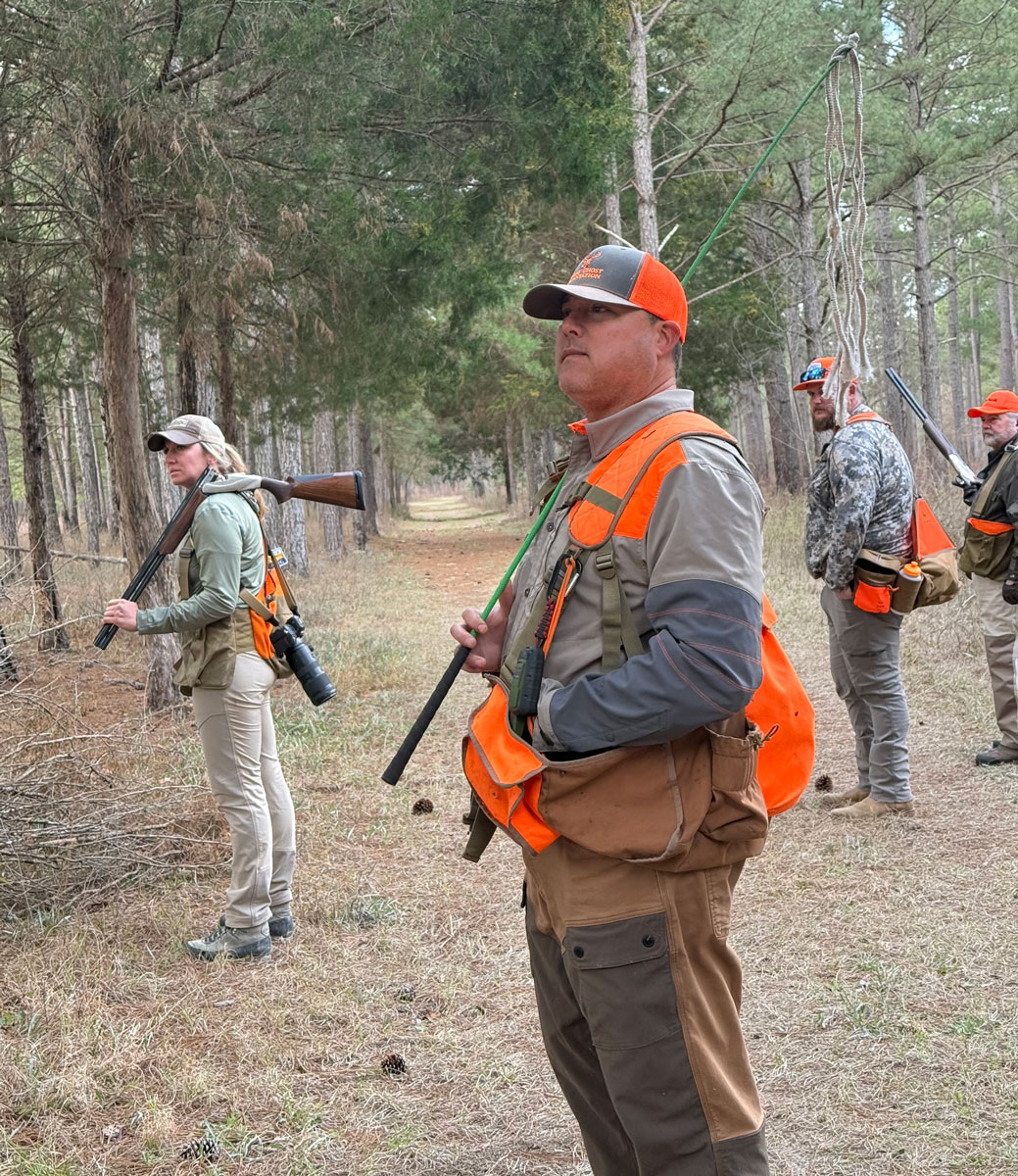
Guide Adam Reys, a former U.S. Air Force avionics technician, keeps careful watch over his pointing and flushing dogs.
The weather is perfect. The guides are perfect. The dogs are perfect. The quail are perfect. My shooting is not. I wish I could blame the gun. But I know better. Benelli knows exactly how to make a shotgun. And they’ve been making versions of the 828U since 2015. Oh, I hit a few, but I miss a lot more than I hit. It’s even more embarrassing because partners Christian and Nick are nailing them.
So, I’m silently grilling myself. Am I leading them enough? Am I following through? Are my feet in the right position? My arms? I realize that I’m not seeing the birds very well, so could it be birthdays? I sure hope not, but I can’t figure it out and trudge on. As the sun sinks lower in this scattered pine forest, taking my disposition with it, our guide tells us that it’s time to head back to the lodge to prepare for dinner.
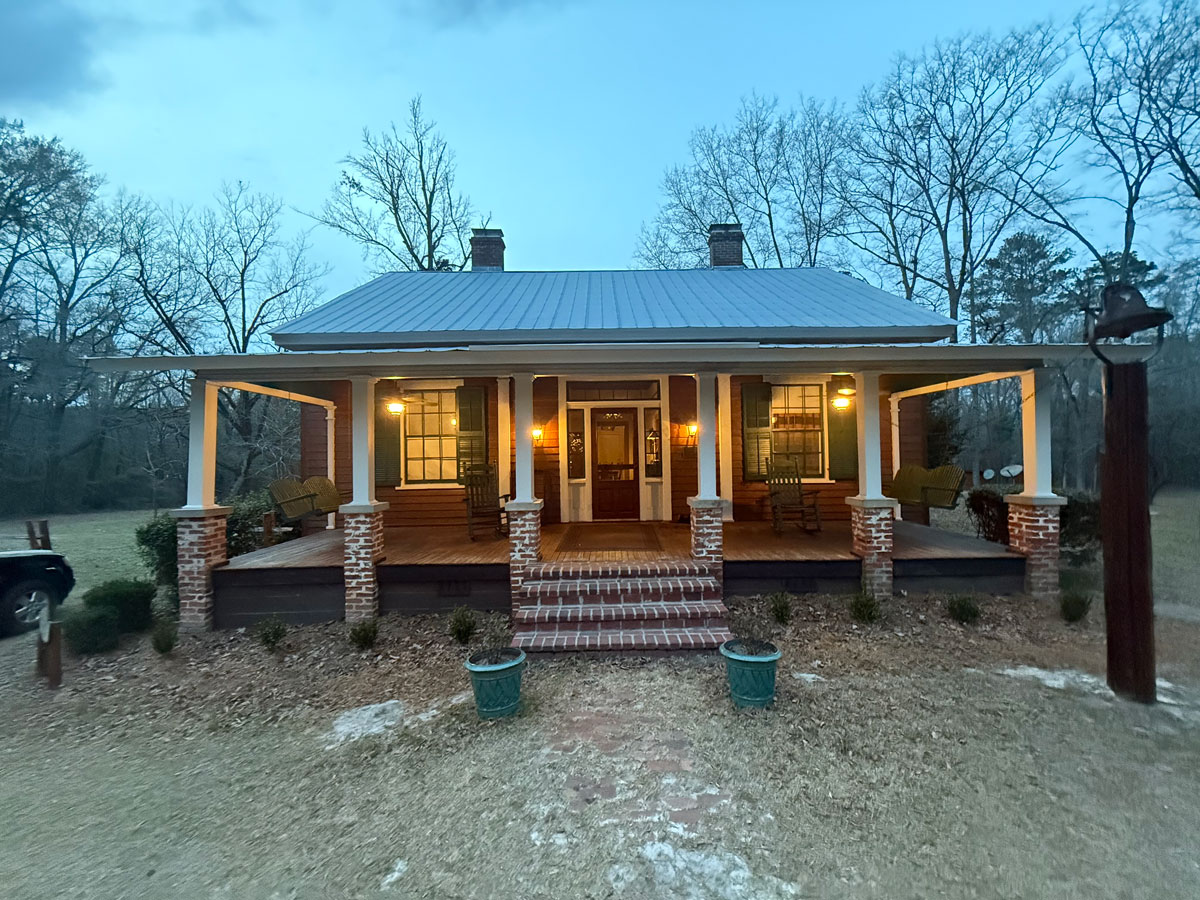
The handsomely restored old Bullard Place just behind the lodge provides a kitchen and dining area for Charlane’s guests.
Chuck (Charles) and his wife, Rose Lane, are waiting. I get to meet the other half of the “Charlane” name and learn more about a guy who’s reached the pinnacle of success in the music business, yet somehow managed to keep his feet firmly planted on this good earth—in this case, a place that’s been part of his wife’s family since 1932. The casual elegance of the lodge’s atmosphere, relaxed conversations, and watching the Leavells interact with their guests improves my mood. As I glance around the lodge, the realization of just how lucky I am in life forces my thoughts of bad shooting aside. That’s when I see Chuck slide up to the keyboard of the Yamaha. And the room grows quiet.
Pink Floyd’s “Comfortably Numb” starts softly but gradually fills the room in a crescendo of sound—a magnificent display of Chuck’s singing and piano playing ability come together just eight feet in front of me. While writing this, I can’t help wondering why he chose such a song, so I seek out what others say about the lyrics in online comments. Many people indicate that the words seem to ease the grief for a lost loved one, comfort those who’ve been through—or are enduring painful physical or mental trauma themselves. Regardless, listening to Chuck is absolutely enthralling. He plays a few more songs before he has to leave to take Rose Lane home. I’m left thinking, No, Chuck is far more than just a piano man.
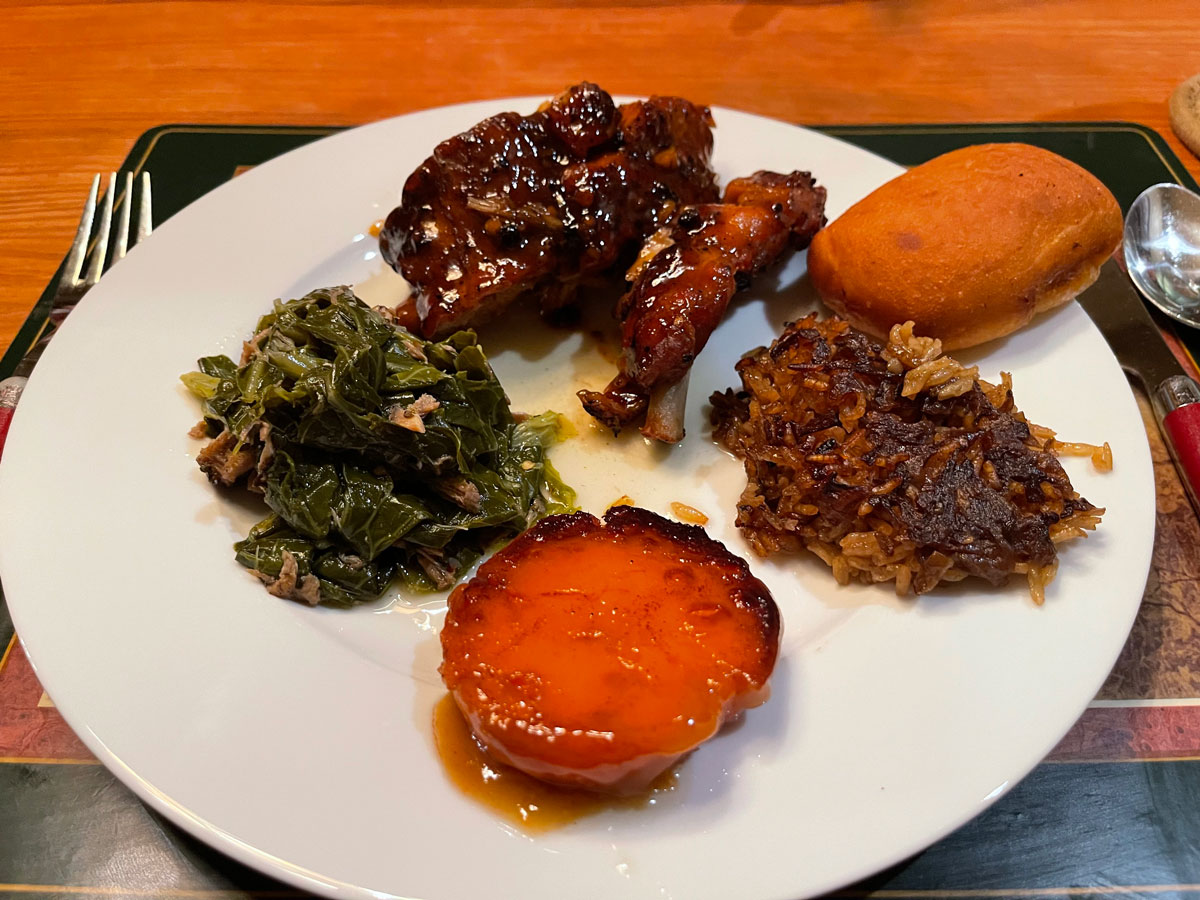
The impeccable food served at Charlane was worth the trip all by itself. Barbecued ribs with rice steamed in the juices, collards sprinkled with a special pepper-vinegar sauce, and delicious sweet potato cakes offered guests a culinary experience that matched the beauty of Charlane’s location and the talents of its host.
We are called to dinner. Chutney, mashed potatoes, butter beans and the best fried quail I’ve ever tasted grace the Bullard home’s antique dining table. The fine eating, along with a half a gallon of iced sweet tea, then an hour or so of conversation and it’s off to bed for me. I’d gotten up at 5:00 a.m., drove 200 miles and walked all afternoon following the excellent pointing dogs, so I’m tuckered out. Usually, I fall asleep fast, but my awful shooting that morning still plagues me, keeping me awake. (Well, it might have been the tea, too.) At last, when I believe I’ve figured it out, the hair on my neck stands up. The problem was not aiming or shooting. The problem was seeing. The shooting glasses I wore were old, about a dozen prescriptions back and the wrong tint for someone a bit colorblind to spot quail. At least, I hoped that’s what it was. Then, I doze off.
“The gentlemen’s sport” does not require its hunters to bail out of bed at the crack of dawn. So, first thing, we eat a huge, leisurely breakfast of eggs, bacon, grits and biscuits. And man, is it good! Then, gathered around the Jeeps, we determine who will hunt with who, climb aboard and motor off.
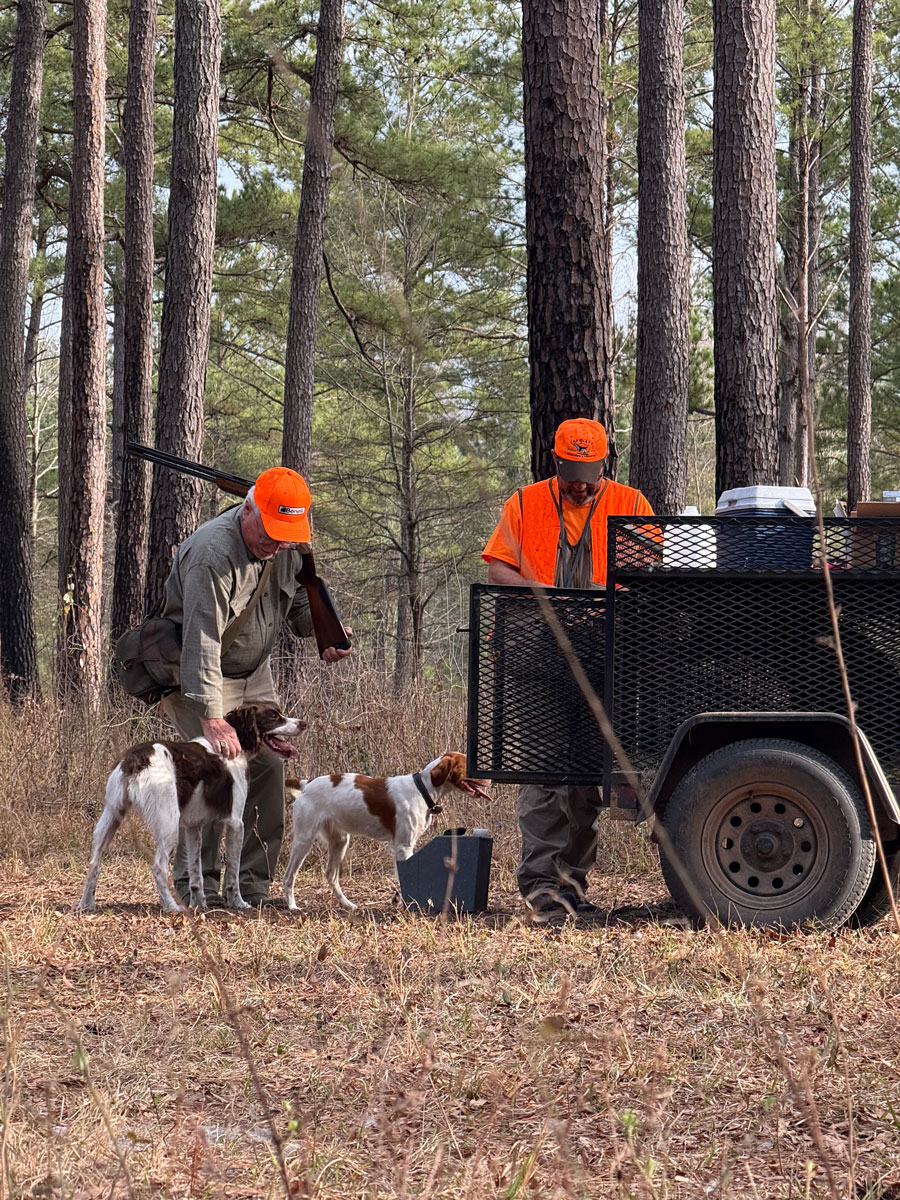
In 1764, Voltaire implied in his writings that, rather than just beasts, dogs are “friends” to man. Over the years, King Frederick II of Prussia, George Graham Vest and Ogden Nash helped cement the concept. Hunting dogs are perhaps the prime example.
Today, I’m partnered with Tim and Mark, two guys with broad interests and, as you might imagine, tons of experience. I’ve hunted in Alberta and Texas with them in the past and consider them both friends. Finally, hoping to shoot better, I’ve left the old tinted glasses in my room, replacing them with my everyday specs. My approach: Be a little more aggressive, plan my shots better and react faster in order to catch the birds closer.
Like magic, it helps when you can clearly see the birds, especially those flying through colors that closely match their plumage. Yesterday, I couldn’t hit. This morning, I can’t seem to miss. And I’m shooting a lot. As my cartridge bag lightens, the Benelli’s excellent engineering, balance and quality become more and more obvious. So do its innovations: The Progressive Comfort System, which includes a specialized stock design and recoil-absorbing components, lets me fire away in complete comfort with incredible accuracy. Tim is always an excellent shot, as is Mark, and they are doing just as well, or better than I am. In fact, Tim is bringing down birds at distances I’d have never thought possible with a 20 gauge.
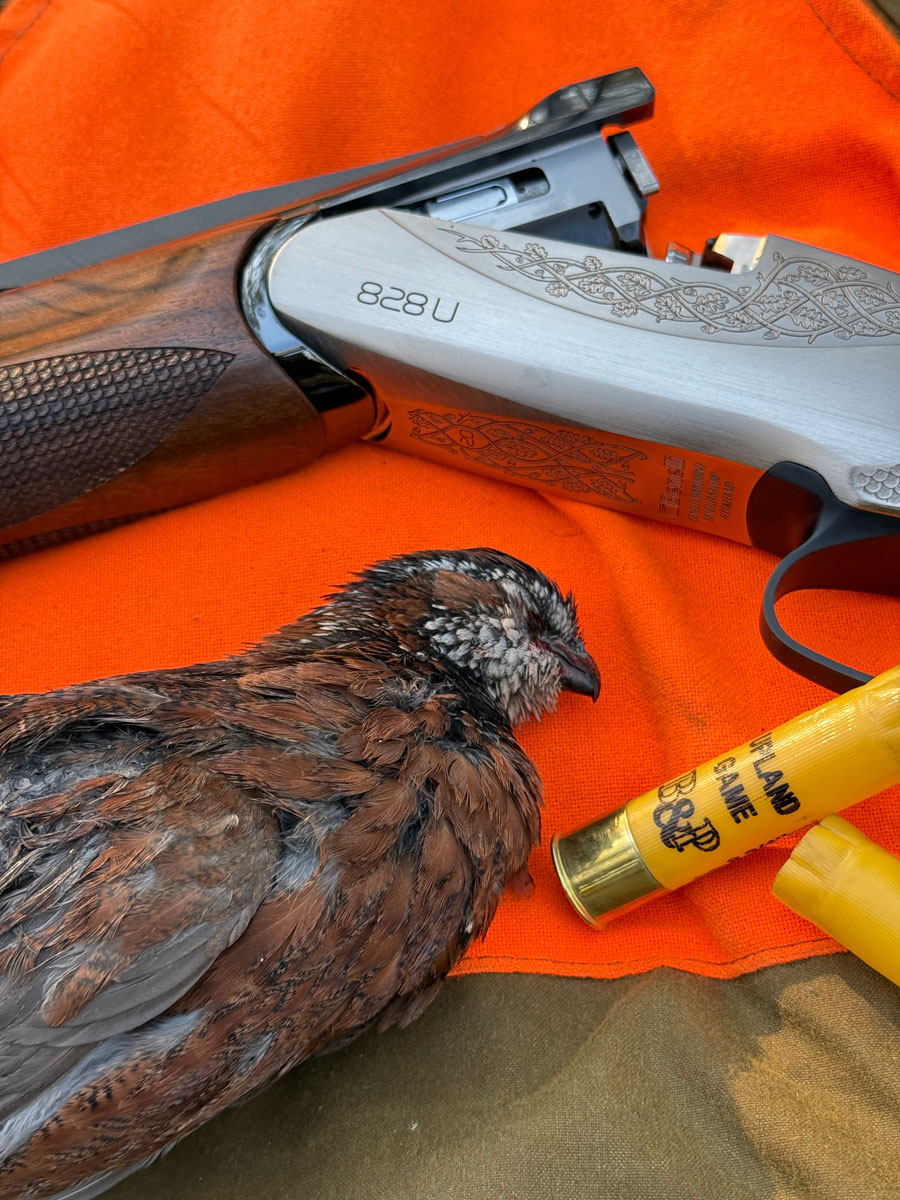
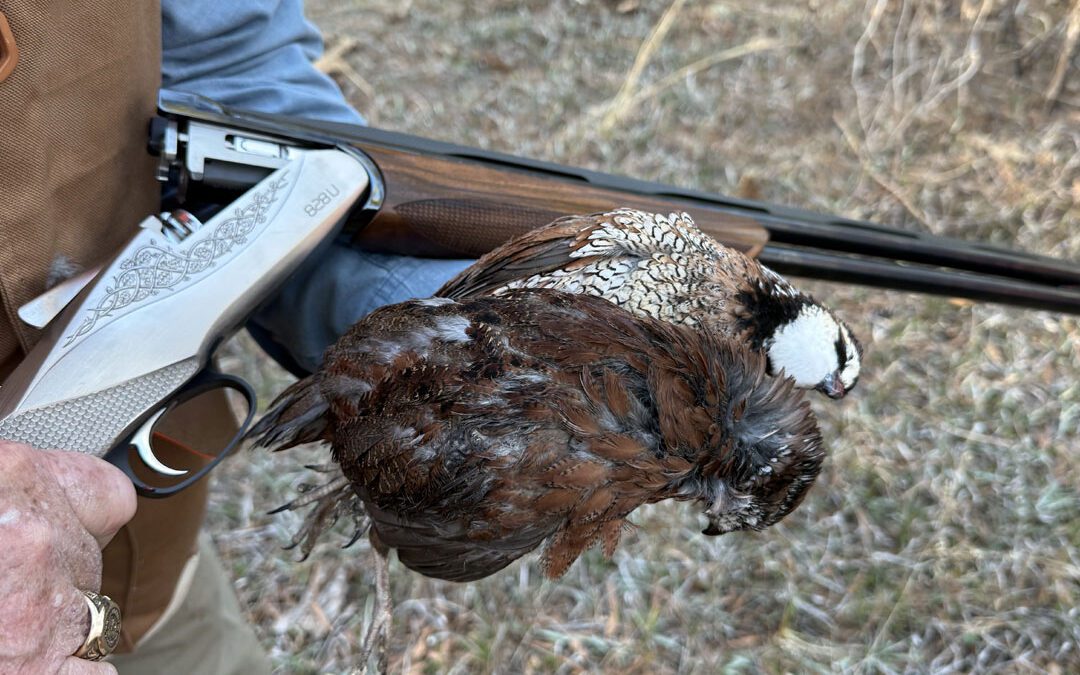
Some of the quail taken were Tennessee reds. Darker and redder, they are otherwise similar to the more familiar bobwhites.
Interestingly, a few of the bobwhites we bag are what our guide calls, “Tennessee Reds,” the first I’ve ever seen. Mixed in with the coveys, these birds are the same size and shape as the quail I’ve hunted all my life, though their distinctive plumage is darker and more reddish.
With the exception of coming in for lunch, we’re at it all day. As I become more familiar with the Benelli, my confidence and shooting continue to improve. And bringing down “doubles” is more common. Sure, we still miss a few birds.
On today’s quail hunting plantations, the birds have a way of luring you into complacency with coveys that are sometimes slow to rise and singles that seem downright confused. Then, just when you’ve relaxed, you approach a distant, pointed covey that bursts off the ground unexpectedly soon, their wild instincts intact, in a startling, thundering roar, gone before you can get your gun up.
Tim, Mark and I are having an incredible time enjoying beautiful weather in a dream-like place that could not be better. Part of the pleasure of quail hunting is seeing your friends shoot well. As the sun climbs high above the pines, satisfied now that I can still hit these fast-flying little birds, I back off my aggressiveness, slow my pace and focus my attention on the dog-work and watching my friends shoot.
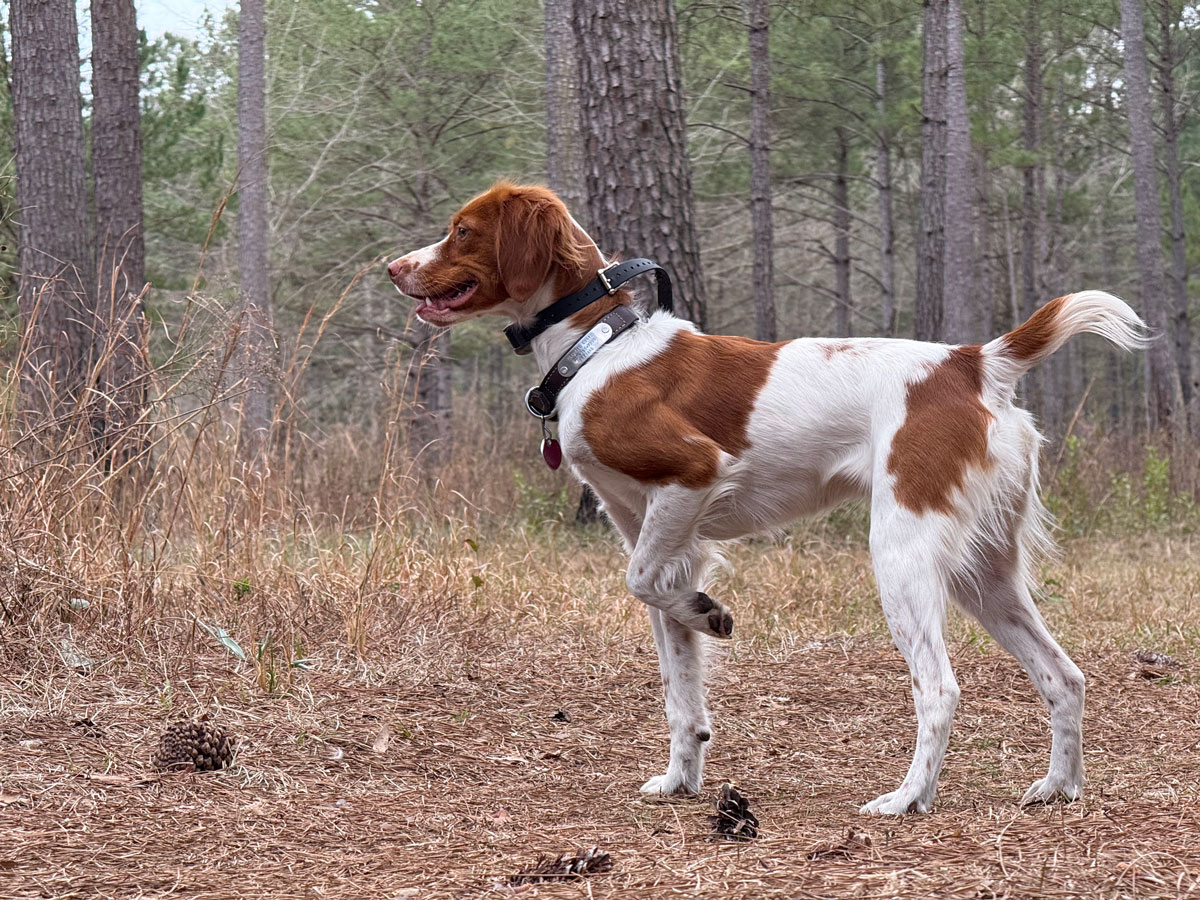
Watching well-trained pointing dogs work is a sight to behold. Brandy seems to be posing for a Percival Rosseau painting.
The afternoon wanes, and I find myself standing there in the pine and jasmine-scented woods of southern Georgia, thankful to be a part of this. There’s a heritage to it, a romance, an emotion that defies imitation. Artists such as Lynn Bogue Hunt, John James Audubon and Robert Abbett did their best to capture what I see in their paintings, while respected authors such as Havilah Babcock, Nash Buckingham and Archibald Rutledge worked tirelessly to describe their experiences with words. So strong is the emotion, however, I’d be willing to bet they all felt humbled by their talented endeavors.
Back at the lodge that evening, Chuck Leavell entertains us with more of his far-ranging, fascinating conversation. I learn that Chuck is not only a forestry expert but has written books on the subject. Contrast that with the fact that in 1992 he also played a 12-stop tour in Japan with The Beatles’ George Harrison, and you’ll start to get a picture of this complex man. Sadly, Harrison passed away in 2001.
“Duncan,” he tells me, “I’m standing on this huge stage in front of thousands of fans, their mouths wide open. I’m certain they’re screaming, but I can’t hear a thing because all I can think about is, I’m playing with George Harrison!”
That was 33 years ago, and Chuck’s face still expresses the humble awe of the experience as if it happened yesterday.
Engaging in, and listening to fragments of conversations around the room, I hear compliments on the quail, the guides and dogs, the guns, and especially the charm of this very special place. Later, Chuck Leavell sits down at his piano again. This time, Harrison’s, “Here Comes the Sun,” fills the room as Leavell sings a passionate tribute to his friend.
Just so there’s no doubt, the experiences at Charlane are not something those of us who were there will ever forget. Thank you, Chuck!
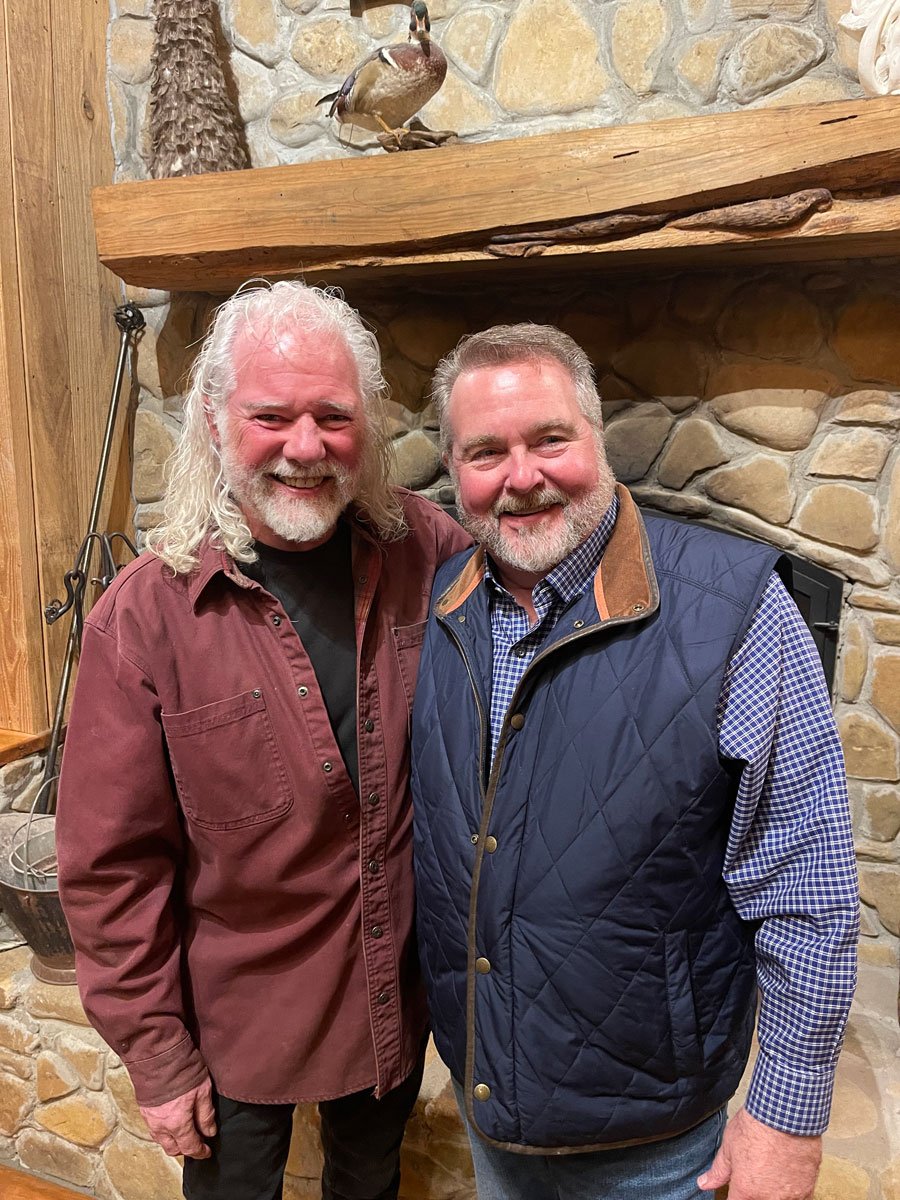
Tim Joseph, VP of Marketing for Benelli, On Chuck Leavell
I recently did my second quail hunt at Charlane Plantation in Georgia. The dog work was great; there were lots of birds and the camaraderie was spot on. But what makes Charlane special is the owner, Chuck Leavell. Early in his career, Chuck was the keyboardist for The Allman Brothers. His piano solo on “Jessica” is considered by many to be the greatest rock piano solo in history.
After the Allman Brothers, Chuck became the keyboardist and musical director for a little band called The Rolling Stones. He’s held that position for 40 years. And if that weren’t enough, Chuck went on to be an expert and author on forestry and forestry management. He currently hosts a show on PBS called “America’s Forests.” Yet with all of these accomplishments, gold and platinum records and recognition, Chuck is one of the kindest and most down-to-earth human beings I’ve met.
Wife Lori and I went with our son, Chris, and his wife, Sarah, to see Chuck and the Stones play in Philadelphia last summer and it was phenomenal. I’m very fortunate that my job with Benelli USA takes me around the world to hunt, but my time spent in Georgia with Chuck (and having Chuck pound out a few songs over cocktails for our six-person group on those trips) will always be high on my list of fondest memories.