
I’m very sorry, sir, but you cannot take a handgun to the United Kingdom.
Confused, I responded, “I understand that, Ma’am. Handguns are also prohibited in Canada.”
Yes, but your booking form says you are bringing a “shot gun,” which is a type of handgun.
Err . . . no Ma’am. It’s not.
Two and a half hours later, after phone calls to Ottawa and London, Air Canada determined that, indeed, a prewar Henry Adkin 12 bore sidelock was not a handgun.
My MacNab trip – to catch a salmon and bag both a grouse and a stag, all in one day – was not beginning well.
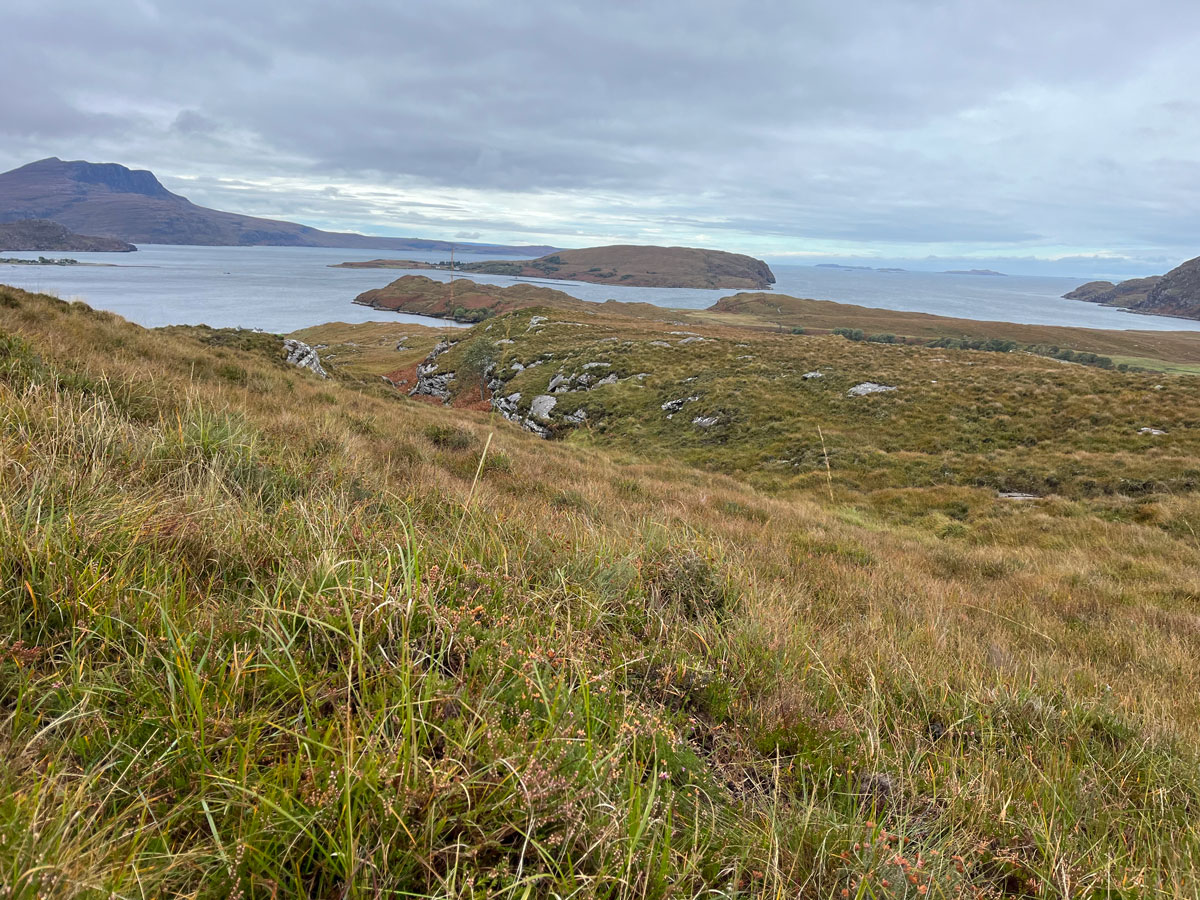
Beyond that inauspicious start, things moved remarkably smoothly, however. My trip had been masterfully coordinated by Cara and Alistair Hutchens of International Hunting Scotland. Overnight to Heathrow, then on to Inverness, a rainy drive to Ullapool, and a greenish ferry ride across the Minch to the Isle of Lewis found my wife and I at Garynahine Estate, which along with its sister Estate, Barvas, comprises some 45,000 acres of beautiful moor and scattered woodland. There we met Donnie Whiteford, salmon whisperer, and Angus MacLeod, head gamekeeper of Barvas and master of English Pointer and Labrador.
Donnie’s first words were exactly what I wanted to hear, “I’ve never seen it this bad. I don’t think there’s a salmon left in Scotland.” Ah well . . .
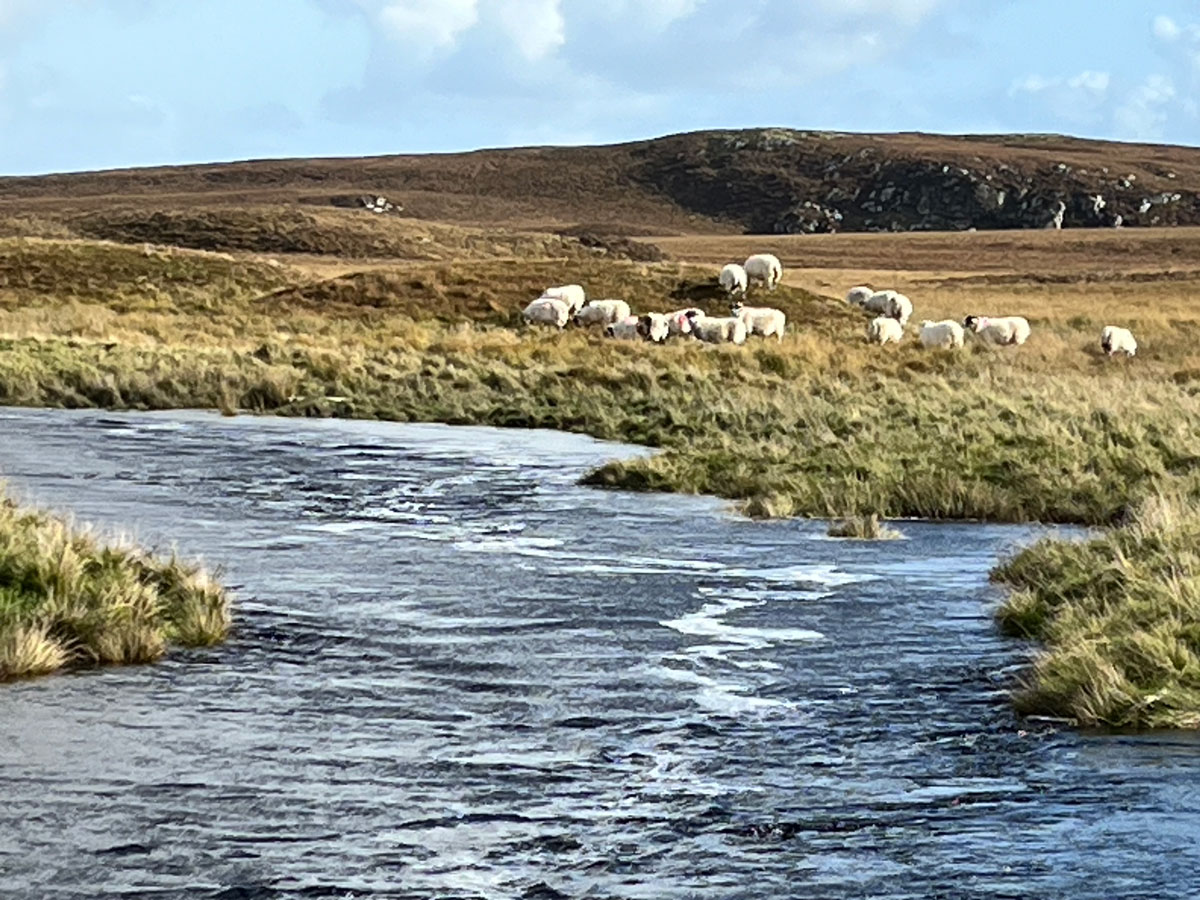
The following morning found us on the Blackwater River, working pool to pool, farther and farther out across the boggy moor. The terrain in this part of the Isle of Lewis is remarkably similar to the high muskeg plateau of northwestern British Columbia – a gentle palette of browning bracken and grey-green heather overlying unfathomed depths of boot-sucking mud.
While reminding me to keep to the streamside path, Donnie relayed a cautionary tale of nearly losing a group of four Frenchmen who, with Napoleonic confidence that the shortest distance from river to lodge was a straight line, marched themselves chest-deep into a hidden bog while shouts of “Merde!” echoed across the moor.
If we haven’t landed a fish by 2 p.m., we’ll call it a day. No point in attempting the impossible.
By now, 2:30 p.m. had passed, and the wind blew directly into our faces as we came to what would be the final pool.
Kneel down and cast under the wind.
Complying, I flipped the six-weight rod and ineptly dropped the Calvin Shrimp conehead fly onto the opposite bank.
Try that again, maybe in the river this time.
A few better-looking casts were no more productive.
Last cast, then we’re done.
The fly settled near the off bank, caught the current and drifted slowly down into the pool. Somewhere, under the bank unseen, a tired grilse hen struck on reflex – and the game was on.
Kneeling beside me, Donnie muttered soft words of calm encouragement: THIS IS YOUR ONLY CHANCE!!! YOU’LL NOT HOOK ANOTHER IN THE NEXT FIVE DAYS!!! AHHHH . . . I’M HAVING A HEART ATTACK!!!
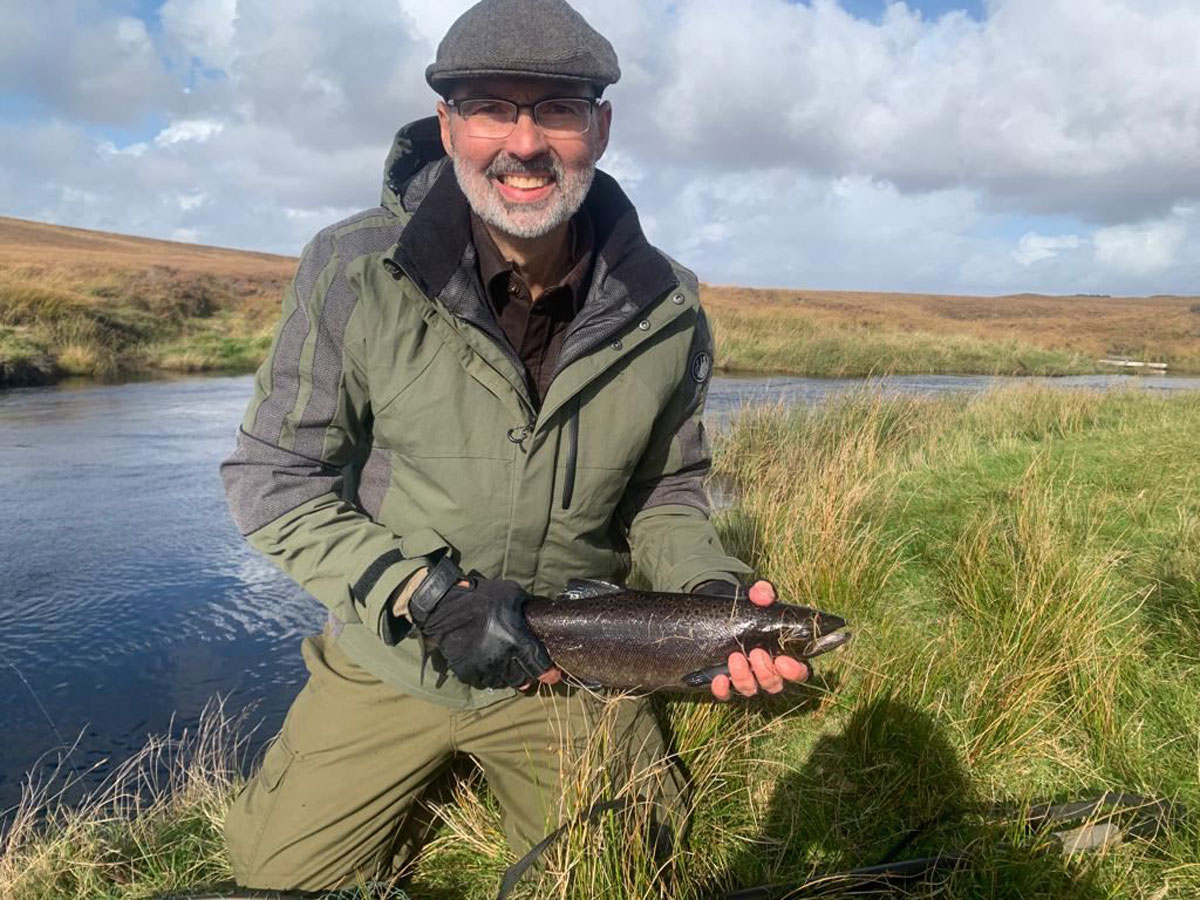
Unable to perform CPR and work the fish simultaneously, I held onto the rod, hoping Donnie’s ischemic myocardium would provide his arms with sufficient blood pressure to man the net. Amazingly, the fish, exhausted now at season’s end, came quickly to hand: 23.5 inches, about 3.5 pounds, her silver sides stained to lustrous brown by deep-steeping in the tea-colored river. We turned her gingerly in the water, removed the fly and let the river flow across her gills until, recovered, she flicked her tail and was away.
I knew we’d find one here. This is my best pool.
Why, then, did we come here last?
Because I had to teach you how to fish first….
I looked at my phone, 2:43 p.m.
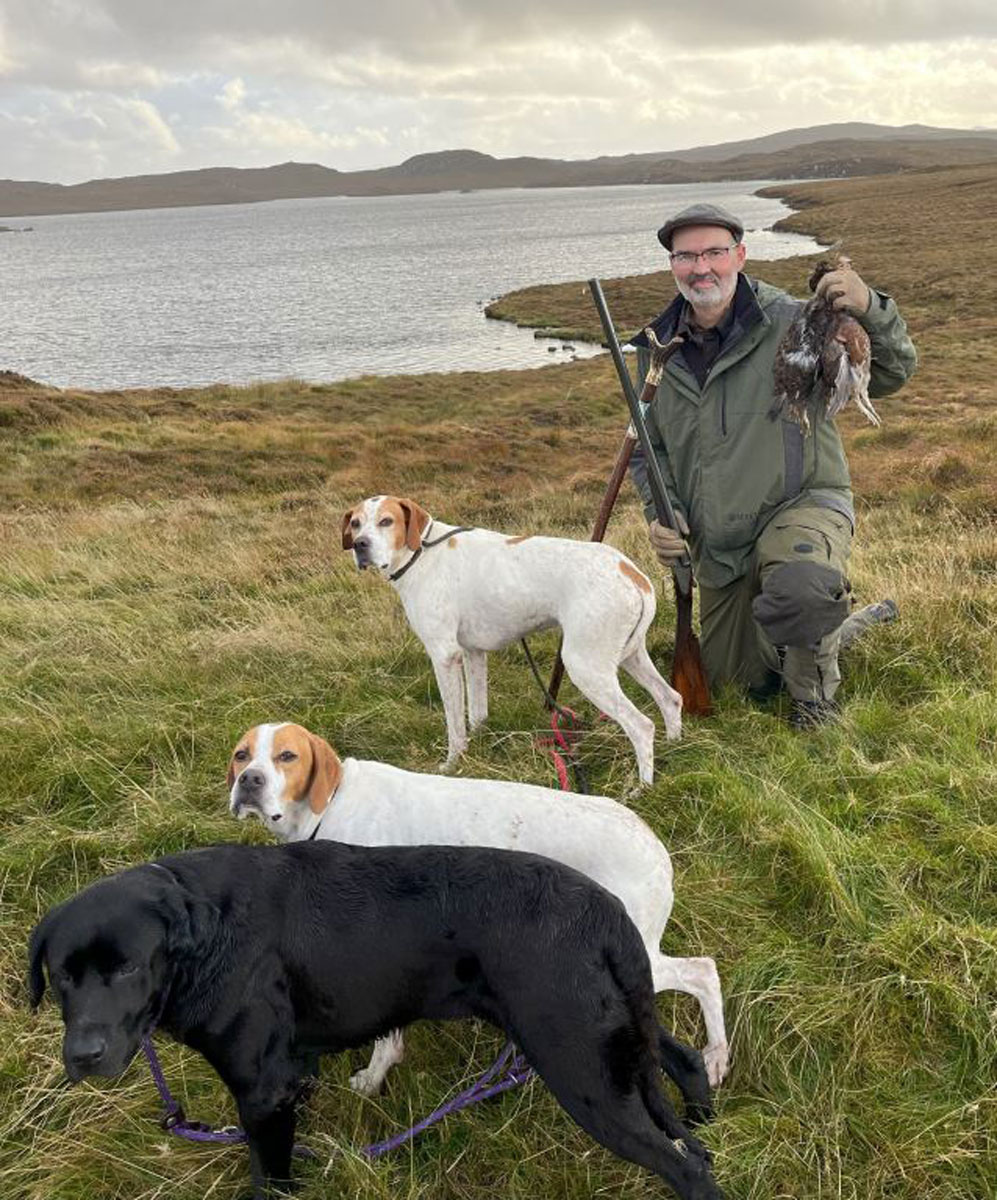
Thirty minutes back across the moor to the truck, a call to Angus and a meeting place arranged, Pointers and Labradors straining at the lead. After expending more shots than I care to discuss, we had a brace of grouse in hand. Beautiful to hold, red flecked with white as their winter plumage came on, they would bless our table the next evening.
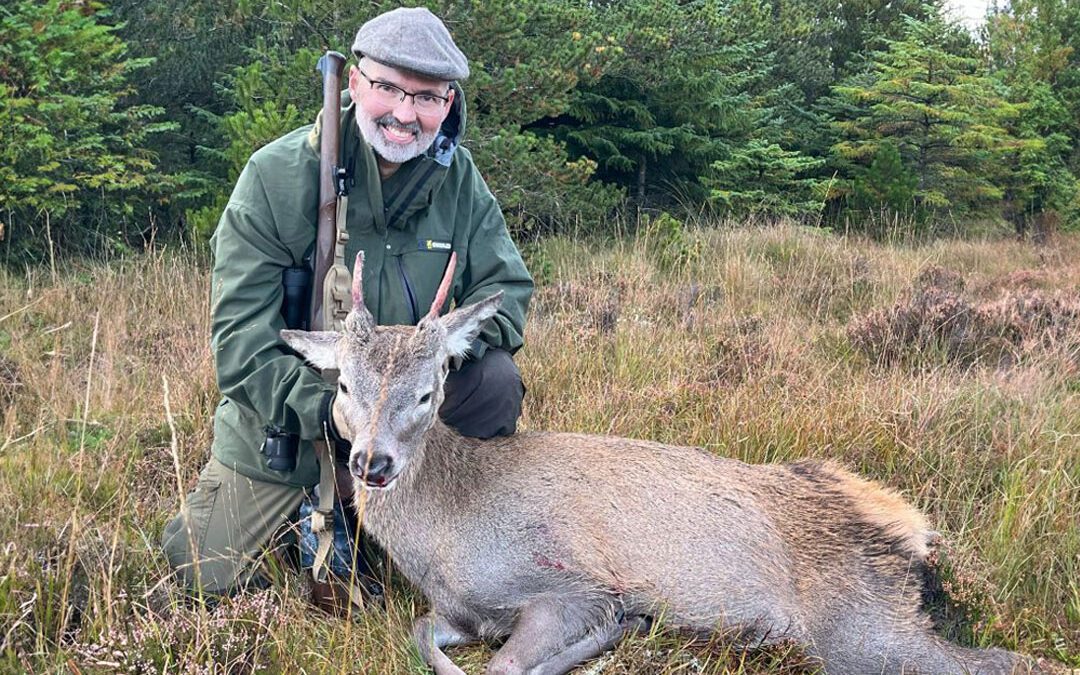
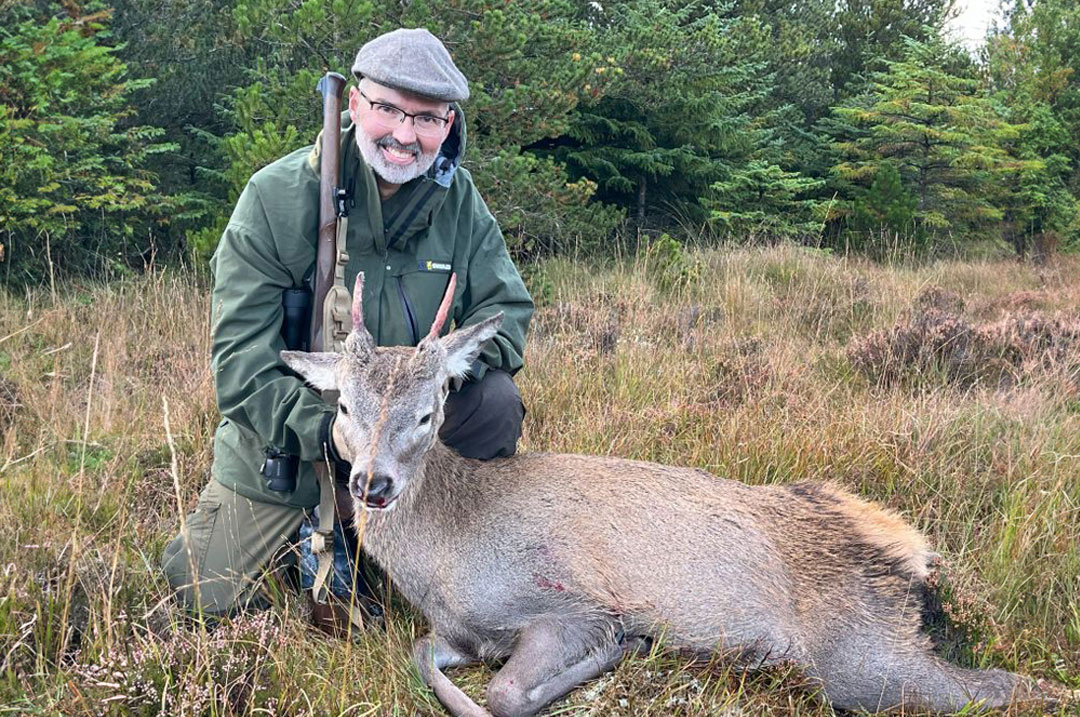
At 5:30 p.m., after a call to Donnie and a pell-mell drive over to the forestry edge, the light begins to fade. Climbing the hill, we saw a lone hind. The wind was in our favor and so we angled out across the moorland one after another, keeping the woodland-march upwind. It was darker now, the clouds gathering, and we noticed that the single hind had twinned. In the distant gloaming, stags roared, too far away to discern as night came on. Donnie turned back and glassed the paired hinds,
Bloody Hell, that second hind is actually a spiker. What say you?
I quickly checked the range, 160 yards, the heather too tall for a prone shot. As I knelt, the reticle was steady, centered just inside the stag’s shoulder. Cycle the bolt, round into the chamber. Breathe, one; breathe, two; breathe . . . hold. Index finger pressure. The stag bucked and locked his knees as I worked the bolt.
Hold on. He’s done. I’d forgotten how loud an unmoderated rifle is; why the Hell won’t they let you use them in Canada?
After clearing the rifle, we walked over, and Donnie made quick work of the gralloch. Turning back toward the hind, as the light faded and the clouds opened, we saw another stag creep out of the forest, a four-by-five.
He’s a bigger lad. Nothing says you can’t take two and claim the larger one for the MacNab.
Sitting now, the reticle steady on his shoulder as, 75 yards away, he nuzzled the hind, I flipped the safely back on.
“That’s okay, my friend. The MacNab is about process, not product, the journey, not the destination. It ain’t the trophy, it’s the tryin’. This has been a full and glorious day. Thank you.”
A couple weeks later, having successfully stalked reds, sika, fallow and roe from Loch Ness to the Cairngorms, I stood before the British Airways desk in Inverness.
I’m just reviewing you record locator, sir. Why did you try to bring a handgun to Scotland?
MEMORIES . . .
All of us have special memories from our days of hunting and fishing, which we have no doubt shared around campfires or inside sporting lodges.
Now, in our new Memories feature, we would like to share your fondest hunting and fishing experiences with all of our readers. Just write up your memory, keeping it between 250 and 1,000 words, and email it to us. You can even include up to six photographs.
Email your story to: Chuck@sportingclassics.com