
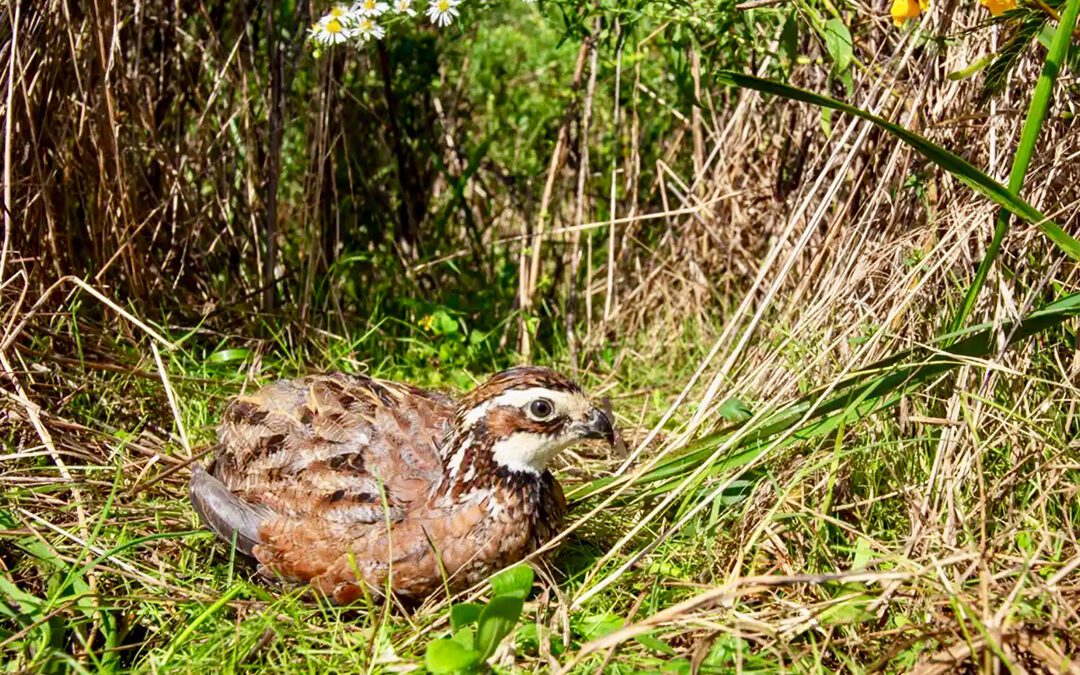
The tense second before a whopping covey explodes is the most nerve-wracking silence in history — Havilah Babcock, I Don’t Want to Shoot an Elephant (1958)
Virginia’s wild northern bobwhite quail population isn’t what it once was, but for Mr. Bob fans, there’s good news: The Old Dominion still has pockets of wild birds, and meaningful strides to create, restore, and expand quail habitat on both public and private lands is having a positive effect.
From colonial-era accounts of Colinus virginianus and presidential forays into the field for quail to the millions of wild birds harvested during the 20th century, the bobwhite is tightly woven into the fabric of the Commonwealth of Virginia’s rich hunting heritage. Thankfully, conservationists and upland hunters alike want to keep it that way for current and future generations.
The Virginia Quail Tale
Stories of quail and quail hunting in Virginia reach back to the early Colonial period. In the early 1600s, John Smith–of Jamestown Settlement acclaim and Pocahontas mythology–wrote of native Americans, likely from the Powhatan Confederacy, hunting “partridges.” (Bobwhites were often called “Virginia partridge” at the time.)
Virginia quail country has also caught the attention of some of America’s Chief Executives. Due to its proximity to the nation’s capital, 20th century American presidents Theodore Roosevelt and Calvin Coolidge hunted bobwhites in the Old Dominion.
A lifelong outdoorsman and big and small game hunter, TR pursued quail and other game in Virginia’s piedmont region at his rustic, 15-acre presidential retreat Pine Knot, located 100 miles or so southwest of the White House near Charlottesville in the shadow of the Blue Ridge Mountains.
Conversely, “Silent Cal” came to hunting while Commander-in-Chief. One anecdote recounts Coolidge visiting the Shenandoah Valley for a quail shoot at a local estate around Thanksgiving. The estate near Stuarts Draft was full of quail, according to its owner. Hunting over dogs, the President put up several coveys, but missed every shot.
His hunting companions diplomatically suggested to POTUS that his scattergun may have been too tightly choked.
And, of course, Virginia is the birthplace and boyhood home of the outdoor writer, Havilah Babcock, author of My Health is Better in November (1947) and Tales of Quails ‘N Such (1951). While better known for hunting quail in South Carolina’s Low Country, he flushed them as a boy in the Commonwealth, too.
Quail hunting has also been a popular pastime for lesser-known Virginians. In 1970, 133,000 hunters harvested 1.55 million wild Virginia quail, the largest number of harvested quail ever recorded in the state; about one-third of the state’s hunters gamed quail that year.
Even to this day, an elderly Virginian upland hunter will wax poetic about a childhood of hearing the whistles of wild birds while waiting at the bus stop or the whirring of wings as quail flushed while taking a shortcut through a grassy field on the way to school.
With a far off look in their eyes, they’ll tell tales of busting coveys on an after-school autumn afternoon near home with a beloved bird dog, a trusty pump shotgun, a pocket full of shells, and some dear childhood friends.
Numbers: The Rise and Fall
From the Colonial period on, Virginia quail benefited from small-plot farming, fallow fields, brushy fence rows, and untended field edges that produced the food, cover, nesting, brooding, and escape habitat that quail need to survive–and thrive.
According to some estimates, Virginia’s quail population peaked after the Civil War due an increase in habitat from abandoned and poorly tended farm fields. Bobwhites flourished for about a hundred years in Virginia.
The decline in quail numbers began in the mid-1900s. The post-World War II period promoted industrial-scale farming, generated a booming population, and increased suburbanization, slashing the availability of quail-friendly habitat.
The introduction of invasive plants (e.g., fescue grass) also played a role; some suggest that a reduction in fur hunting and trapping of quail predators also had a minor effect on Northern bobwhite reproduction and survival rates, too. Over time, all these factors led to a 70-80 percent decline in wild quail numbers over the last 70 years, according to a range of estimates.
Hunting Interest Endures
Today, according to the Virginia Department of Wildlife Resources (DWR), only about 3 percent of Virginia hunters (or some 4,300) chase wild quail. Harvest numbers of wild birds are closer to 15,000 per year, a significant decline from the 1970s.
But despite this, interest in quail and bobwhite hunting continues among Virginia upland hunters.
While Virginia doesn’t stock quail on public lands due to low survival rates in the wild of game farm birds and disease introduction concerns, DWR biologists say that upland enthusiasts harvest some 70,000 pen-raised quail at private hunting preserves yearly in the Old Dominion.
Clearly, the appetite for quail hunting hasn’t disappeared with the wild birds. Virginia’s private preserves show that thousands of hunters–and their hunting dogs–still want to hunt quail. The challenge is creating, restoring, and expanding enough habitat to support more wild birds for conservation and recreation.
Screenshot
Fields of Dreams
While the heady days of Commonwealth quail hunting are gone, a dedicated group of individuals and organizations are toiling in the field and the woods to preserve this beloved game bird–and they’re making progress.
As Jay Howell, DWR small game biologist, told me: “If you build it (habitat), they (quail) will come,” a sporting–and apt–play on a famous line from the movie Field of Dreams, where an Iowa farmer builds a baseball stadium in a cornfield, hoping to draw players from the past.
And that is exactly what DWR, nonprofits such as Quail Forever (QF), and some private land owners are doing in Virginia: building wild quail habitat that’ll produce a stable population of the Prince of Game Birds in their historic ranges.
These conservation concerns are working to create or restore the landscapes of trees, native grasses, forbs, and wildflowers where quail can prosper. They’re even stitching together land plots, creating larger tracts of quail-friendly, savanna-like habitat.
Low-intensity, prescribed burns are also part of habitat regeneration–and one of the most important quail conservation tools. Controlled fires knock back hardwood encroachment, enrich the soil, stimulate new undergrowth, expose bare ground, and improve foraging access to insects.
No wonder renowned wildlife biologist Herbert Stoddard dubbed the quail the “fire bird” in his 1931 book, The Bobwhite Quail: Its Habits, Preservation, and Increase, an important work on conservation in the Red Hills region of Florida and Georgia.
DWR and QF also cooperate with the National Wild Turkey Federation, another conservation nonprofit; turkey and quail habitats can be similar and restoring or creating their preferred conditions can be mutually beneficial for both birds.
Cautious Optimism
Progress is being made. Indeed, “Over the past three years, Quail Forever has helped restore and enhance over 17,000 acres of wildlife habitat across Virginia,” according to Quail Forever State Coordinator for Delaware, Maryland, and Virginia, Alison Menefee.
And like Howell said, if quail habitat is built, the birds will come. Indeed, in restored focus areas of Virginia’s piedmont and coastal plains, spring call-counts and fall covey sightings show signs of a modest recovery in quail numbers. While targeted conservation efforts are having an effect, it’s important to note that the recovery is localized–and not statewide.
For hunters concerned that harvesting wild birds could undermine recovery, Menefee reassured me: “Taking a wild quail or two from time to time isn’t going to break the Virginia wild quail population.” (Virginia’s bag limit is currently six birds per day.)
So while practicing ethical hunting, being cognizant of generally declining wild quail numbers, and supporting quail conservation, upland hunters shouldn’t be concerned about heading out and flushing a Virginia covey or two this year.
The goal isn’t to rewind the quail clock to the 1970s. It’s to ensure a kid born today in Virginia can still walk a hedgerow with a bird dog, hear that unmistakable bob-white! call, and watch a covey rocket from the grass into the air just like previous generations of Virginians enjoyed.
Dr. Peter Brookes is an award-winning outdoor writer and photographer at Brookes Outdoors. Brookesoutdoors@aol.com