
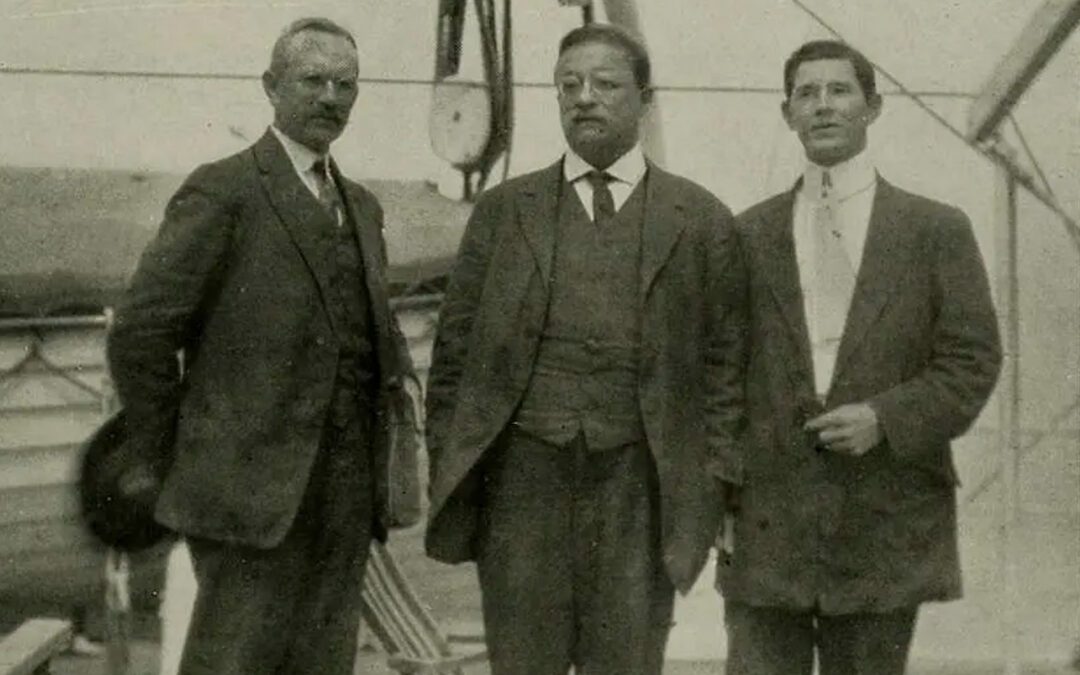
In his life of adventures, George Cherrie crossed the line from what was the known world to the unknown world many times and survived to tell about it.
It is a well-known phenomenon that virtually every bird dog owner believes his dog is the best. Therefore, it is not always the compliment that matters, but the giver of the compliment. Theodore Roosevelt, while speaking to his son Kermit prior to the River of Doubt expedition, told him that there was “no better companion for an arduous voyage” than George Cherrie. Considering the source being a former U.S. president, colonel, military warrior, explorer and Medal of Honor recipient, this was quite the compliment.
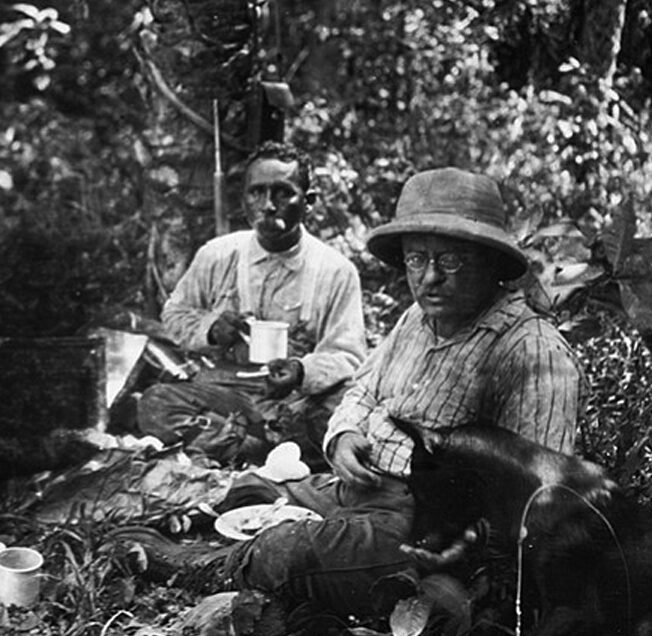
Cherrie and Roosevelt.
Born in 1865 in Iowa, George Kruck Cherrie grew up with a keen interest in the natural world, particularly birds. As a young adult, Cherrie had several conventional types of jobs and, although educated as a mechanical engineer, he drifted to the study of taxonomy and taxidermy. It was not just the love of birds that called to him, but a life of adventure that studying them could bring. He realized in early adulthood that he was not “destined to lead the fruitful, though unromantic life of an industrious private citizen of my good country. For by 1888,
I began to wander.”
His travels led him to Florida, then the West Indies, then to Central and South America where most of his travels occurred. Cherrie was involved in more than 40 expeditions. He was employed by various museums, usually as a curator of ornithology. Most of his expeditions were specimen collecting trips for museums. In the most abbreviated terms, he was a bird hunter, just one who was not limited by game regulations. He collected more than 100,000 animal and insect specimens during his lifetime abroad.
His adventures collecting bird specimens were not always as straightforward as a walk through the jungle toting a shotgun. On an expedition in Venezuela on the Orinoco River, Cherrie was after a hoatzin bird. An interesting species, the young are highly aquatic and able to swim and dive despite the fact that the adult birds of the species never enter water. The adults lay their eggs in nests at the treetops, hoping that when the annual flooding comes, they are a few feet above the high-water mark when they hatch. Typically, the Orinoco rises about 80 feet during the flood season, and the river can be anywhere between 20 to 40 miles wide.
Interestingly, hoatzin young are born with two claws on each wing to help them scramble around the tree branches. When danger from above is encountered, the baby birds drop into the water, hold their breath, and then use their wing claws to climb back above the surface and back into the nest.
In an effort to collect eggs, young and some nests for scientific study purposes, Cherrie was in a canoe with a native assistant paddling through treetops looking for hoatzin nests. Cherrie found several nests and eggs, and then spotted two tiny little hoatzins climbing over the edge of a nest and dropping into the water.
While waiting for the baby birds to return to the surface, he suddenly felt his feet getting wet. The canoe was filling with water. Knowing they were in crocodile- and piranha-infested waters, and more dauntingly, eight to ten miles from the shore, they were in serious peril. Even if they could find safe haven in the tops of the trees if the boat sank, they’d starve before the floodwaters receded.
Cherrie’s assistant panicked and started throwing things off of the boat, including the bowl they used for bailing water. After some loud and creative cursing in Spanish by Cherrie, his helper settled down and was brought back to his senses.
They found a large hole in the boat’s stern. Instead of being properly patched and fixed, the boat’s owner had simply shoved some rags in the hole, which had been dislodged as Cherrie made his way through the treetops. The only quick fix was to shove more cloth into the hole. His assistant, being naked, offered no help, so George stripped down to his underwear and plugged the rest of his wardrobe into the hole. Cherrie then used his sun helmet to frantically bail water before the two of them paddled to open water, and eventually, the shore. Cherrie’s attempt to capture hoatzin chicks was temporarily dismissed.
Not all bird-collecting excursions were as dangerous as his hoatzin collecting.
On one memorable trip, Cherrie attempted to secure a jabiru stork. Standing five-feet tall with a glossy white body, bright red neck patch and handsome black face, they proved evasive enough that they weren’t part of any museum’s display at that point.
After three weeks of hunting in some of his favorite collecting grounds in Venezuela, Cherrie finally located a single jabiru in the distance. Cherrie made a stalk on the bird and, after a shot from his 30-30 Sporting Mauser with a metal-jacketed bullet, the stork went down.
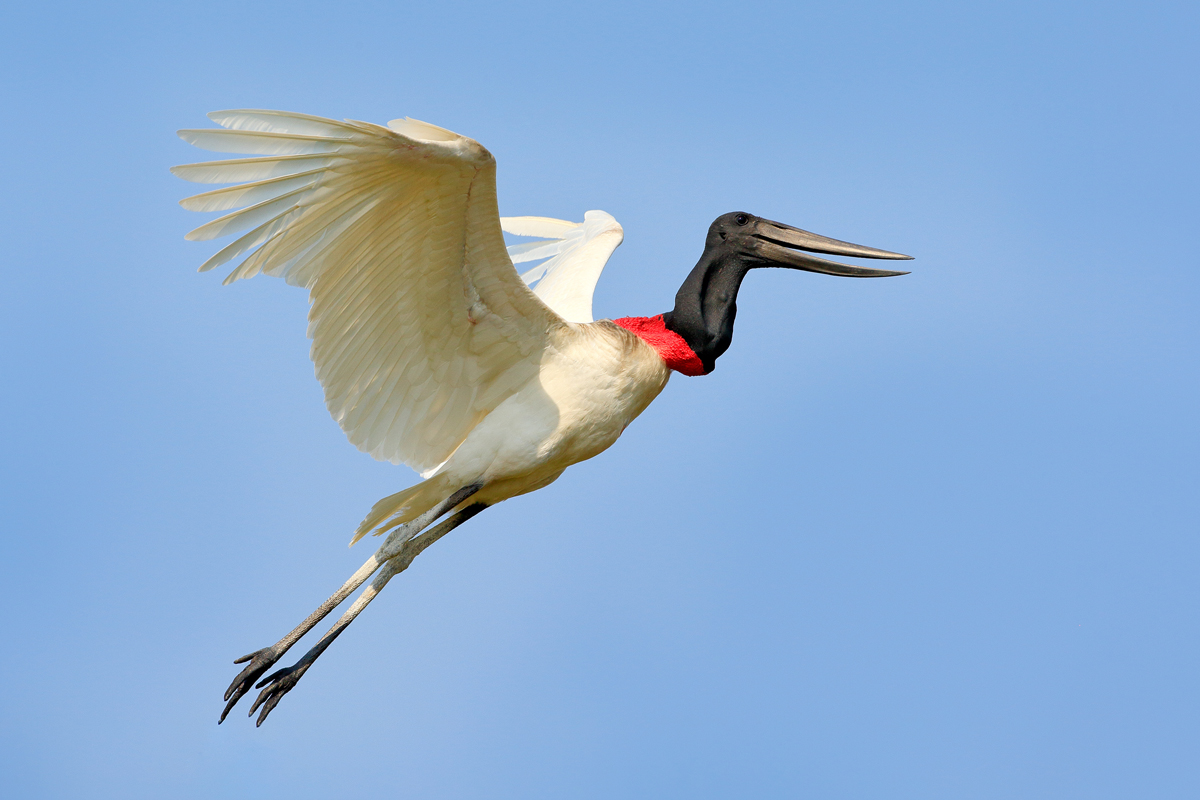
Jabiru (Jabiru mycteria)
The problem, however, was that there was standing water between him and the giant bird. Going around through the marsh meant a trip of more than an hour, and with the threat of vultures, as well as the boiling hot sun to ruin the specimen, Cherrie decided to ditch his rifle and all of his clothes before swimming the channel.
To his dismay, when he approached the bird, the jabiru was still alive, as the bullet had only broken its wings. The giant stork got up, and with legs as long as Cherrie’s, began to walk away through the marsh. So, Cherrie, likely glad he had no companions as witnesses, gave chase to the bird while being completely naked. After a valiant effort, and some sunburns in places the sun didn’t typically shine, Cherrie gave up pursuit. The jabiru got away.
Early in his career in 1891, while in Venezuela, Cherrie had a brief plunge into a somewhat more conventional lifestyle, though through a most unconventional way. He and three other men, a doctor, a photographer and drifter, set out for a night on the town of drinking and gambling in Caracas.
Cherrie got into a no-limit poker game with a group of players that included the proprietor of the establishment. Before dawn, he had $7,000 worth of chips in front of him (about $240,000 in today’s dollars). By the time the sun rose, he had added the very ownership of the casino to his winnings.
He took on his companions as partners. The doctor became the head croupier. The drifter was made manager, and the photographer ran the bar. Cherrie put himself in charge of the roulette wheel. This new business was fun for a little while, but in a few weeks, the novelty wore off. He sold the place and made a pretty significant bank deposit with the profits. Cherrie knew he was born to wander, and no other lifestyle would do.
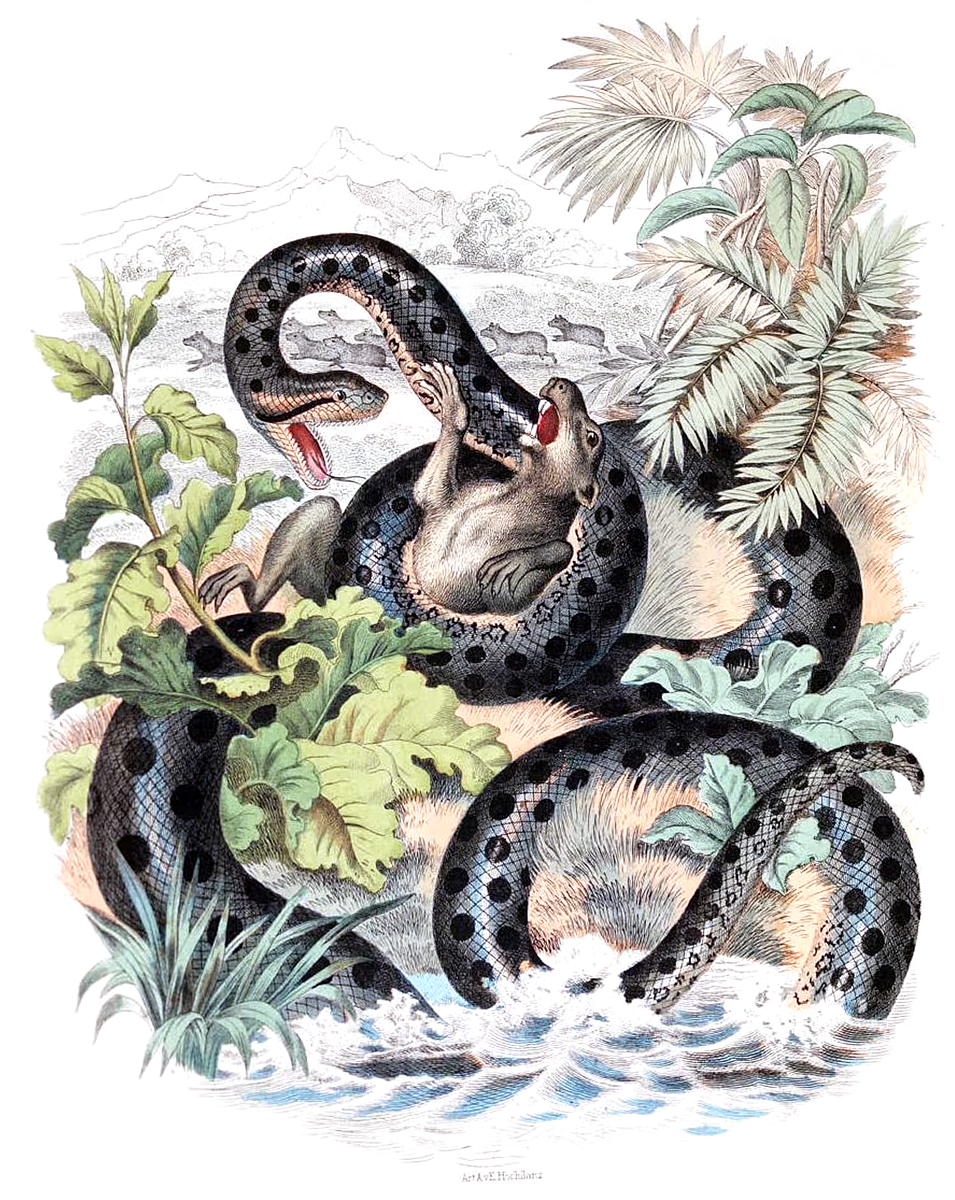
As most of Cherrie’s expeditions occurred in the South American wilderness, he faced constant dangers in many forms. Disease, insects, snakes, floods, drowning, jaguars and other dangers were ever present, as well as potential attacks from hostile natives, disgruntled expedition members and even starvation.
In addition to the perils while in the wilderness, Cherrie was not immune to common crime in the townships in which he stayed between expeditions. One night, while in his rental in town, he was awoken by a burglar. He grabbed his pistol and told the man to halt. He didn’t halt, so Cherrie shot him in the chest, ending the crime spree, and that particular criminal.
He reported his death to the local authorities. Cherrie was intentionally vague in asserting that the cause of death was “heart failure,” which one might say, in the most technical sense was in fact true, as any heart with a bullet hole in it is bound to fail. Fortunately, the man was a frequent flier at the jail and a known criminal. The authorities didn’t ask any further questions and seemed satisfied with Cherrie’s brief and vague story.
One of his closest brushes with death, however, came from a surprise confrontation with a disgruntled member of a prior expedition whom Cherrie had fired for pilfering. While collecting birds in the Peruvian frontier, he came face to face with the man who had a shotgun leveled at Cherrie. It was the last thing he expected so deep in the wilderness, but clearly the man had quite the grudge.
“If one man ever had the drop on another he certainly had it on me,” Cherrie wrote. Out of options, Cherrie walked toward the threat, undoubtably causing at least enough confusion in the man for Cherrie to survive the next three seconds. Then he whipped his own shotgun he had slung on his shoulder, swung it toward the man and pulled the trigger, while at the same time feeling a significant blow to his own shoulder.
When the smoke cleared, his assailant was dead with a gaping wound in his chest, but Cherrie’s shoulder and upper arm were destroyed and bleeding badly from a direct shotgun hit. He stumbled back to camp without bleeding to death, but his situation was dire.
He considered his options to get the medical help he needed and made a plan. He began by walking on to the nearest town, Santa Rosa, which was 100 miles away. It didn’t have a doctor but did have a ferry leaving every Saturday for Guayaquil, Ecuador, which did have a doctor.
When passing each town on the trail, it seemed he was met with the same fatalistic comments from the curious residents.
“It is a fatal wound. Señor, you will die,” a man would say.
Cherrie would respond, “tal ves” (perhaps).
In an attempt to get food, he tried several places to buy a chicken. No one was willing to give a up a perfectly good chicken to a guy who’d be dead in the morning.
The next village held the same encouragement.
“Señor, you will die,” a man said.
“Tal ves,” Cherrie again replied.
He made Santa Rosa by Saturday at noon, but the ferry was gone, and the infection was significant.
He quickly obtained a canoe and hired some paddlers. He decided his only option was to try and overtake the steamer as it made its way toward Guayaquil, hoping the next stop would slow it down. They paddled into the night, and by midnight, through the darkness, they saw the glow of something bright. Cherrie’s companions paddled harder toward the lights of the steamer and were able to get the attention of the crew and get on board.
Once he finally reached Guayauil, where a qualified doctor could help him, a weight was lifted. Perhaps he would live. He stepped off the ship and was greeted by a policeman holding a gun at his face who looked quite serious.
“You’re under arrest,” he said.
“What for?” asked Cherrie.
“For murder in Peru,” the policeman replied.
After some heated discussion, the police allowed Cherrie to get to the hospital, but kept someone stationed there. After examining Cherrie, the doctor was asked by his assistant when he would amputate. The doctor’s response wasn’t exactly reassuring.
“There will be no amputation,” he said. “Mr. Cherrie will be dead in the morning.”
Cherrie spent five and a half months in that hospital, but ultimately survived and mostly recovered. During those months, the patience of the police, or interest, fizzled. He never heard of the murder charges again.
While he barely escaped death from the gunshot incident, his most dangerous journey, according to Cherrie, was from the expedition that gained him the most notoriety, the Roosevelt-Randon Scientific Expedition down the River of Doubt. Cherrie was asked to accompany the expedition, and he agreed to join, although reluctantly. In doing so, he likely made it possible for Theodore Roosevelt to die at age 60 instead of five years earlier.
Candido Randon, a Brazilian colonel and head of the commission to expand telegraph lines in the Brazilian Amazon was tasked with leading the expedition. The expedition’s purpose was to map the unknown river that led into Brazil’s vast and mysterious interior. Randon had explored its headwaters on a telegraph commission mission. He postulated that it eventually flowed into the Aripuana River, nearly 500 miles away. After two months of overland travel, they descended into the river and began their journey with 19 men and seven canoes.
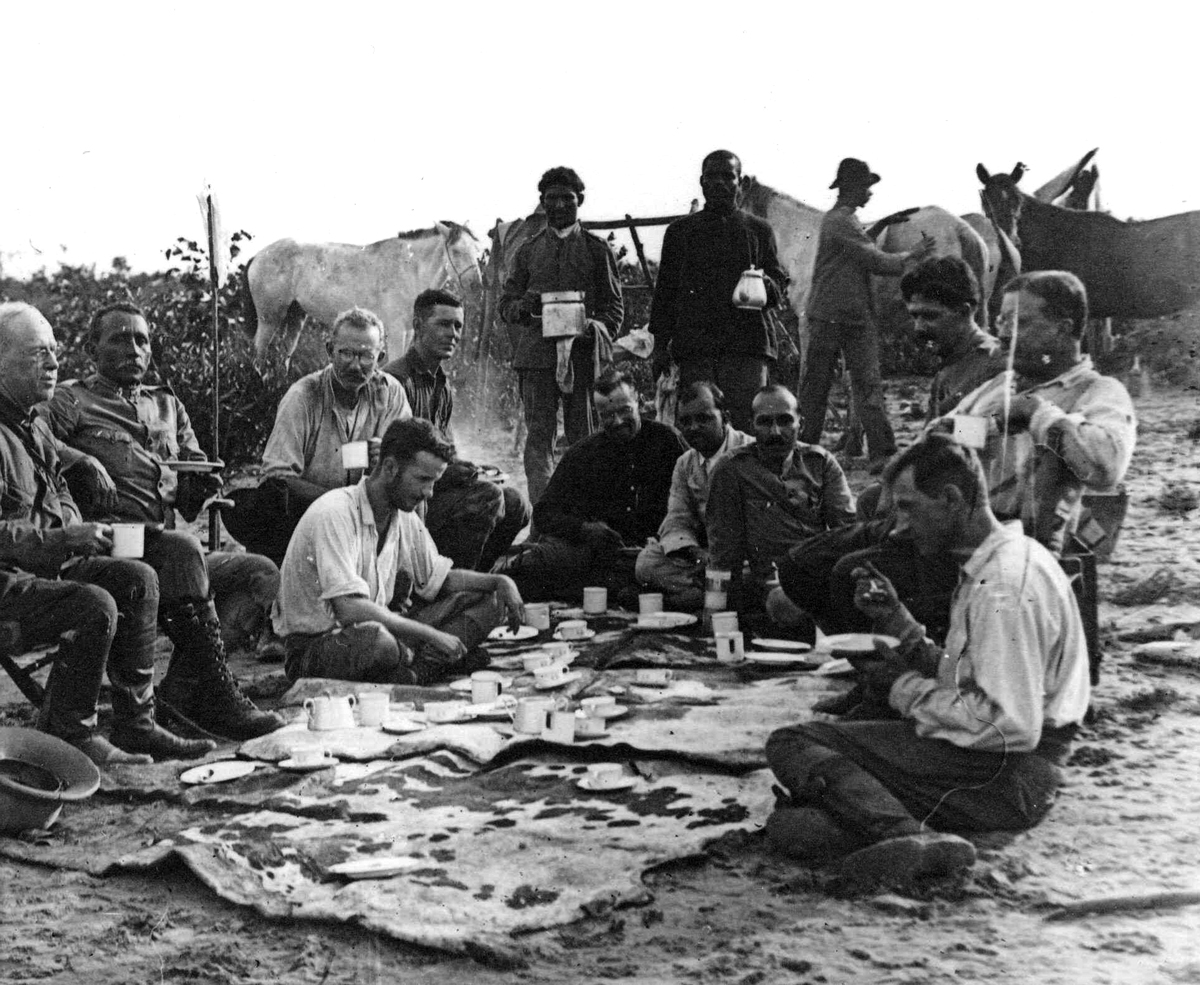
The initial members of the amazon expedition, From left to right (seated) Father Zahm, Rondon, Kermit, Cherrie, Miller, four Brazilians, Roosevelt and Fiala.
The party moved slowly, as Randon and Kermit were constantly plotting the course of the unknown river with a telemeter and compass, leapfrogging one section at a time. During their fastest days, they still moved slowly due to this exercise. The difficult days, however, presented themselves in the form of impassable rapids and cataracts. These became the bane of their existence.
They would have to portage on land through the jungle around the rapids. The canoes were too heavy to simply carry, and small trees had to be felled to make a continuous skidway to pull the boats along. Some portages took four days to complete to bypass even a small area of cataracts.
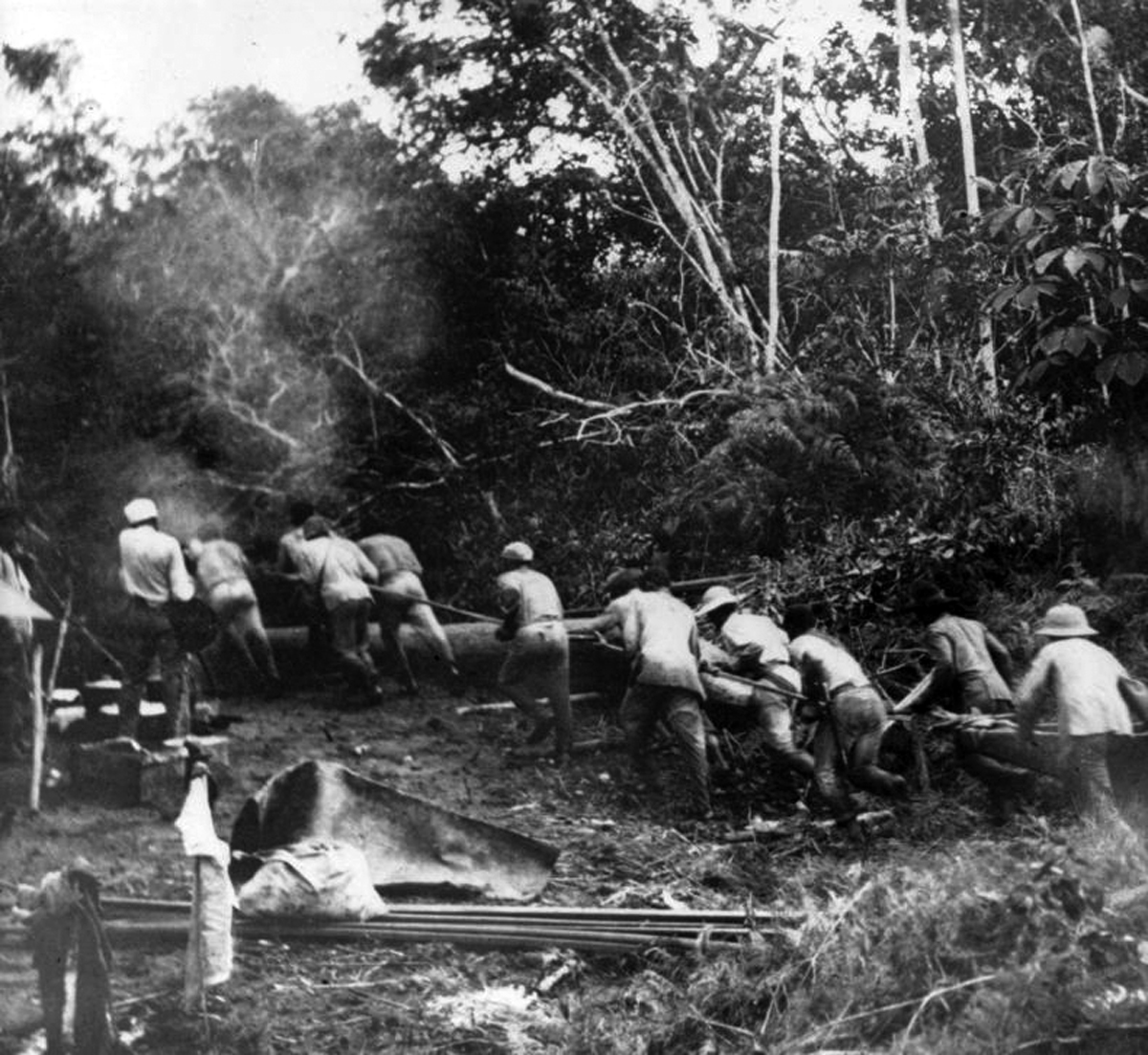
“… A suitable tree was found and work on a 25-foot canoe begun.”
Much of the expedition was characterized by periods of calm waters where things were relatively easier, to be suddenly punctuated by an unexpected, always inconvenient, back-breaking, multi-day portage. On several incidences, canoes were lost due to underestimating the water conditions and rapids. That meant the party had to halt, fell a tree, and actually build a new canoe from scratch. The difficulty of doing that was compounded by the fact that most of their boatmaking tools were sunk with the first canoe that was lost in a rapid, which also killed one of the expedition members.
The ever-present dangers persisted in many forms but were greatly amplified when one of the expedition’s dogs was killed with an arrow from a hostile, unknown native tribe. In subsequent days they came upon recently abandoned villages, footprints, and at times could even hear the voices of nearby natives. The constant threat loomed large in their minds.
Dwindling rations meant that starvation was a real possibility. It proved very difficult to catch fish, and only a handful were caught during the expedition. Furthermore, animal life was scarce. Occasionally, spirits would be lifted when party members, usually Cherrie and Kermit, were able to kill monkeys for the camp pot.
When things seemed at their absolute worst, one camarada (native porter) went rouge, stole a rifle, killed another one of the camaradas and then vanished into the jungle. Both Cherrie and Teddy wanted to find the man and execute him, but Colonel Randon would not allow it. The crew simply abandoned the man and moved on. His fate remains a mystery.
Although Cherrie praised the actions of the former president and stated that Roosevelt “could not stand idly watching others at a time when action was required,” the expedition was especially difficult on him. Besides the dysentery and hunger that all of the party faced, Roosevelt battled a high fever due to a lingering infection from an injury on his leg. Day after day, he slowly deteriorated, until late in the expedition, Theodore Roosevelt, a man who’d never given up, gave up.
Just before dawn, Cherrie heard the weakened voice of the ex-president, “Cherrie! Cherrie!” George and Kermit made their way to Roosevelt’s cot.
“Boys,” he said, “I realize that some of us are not going to finish this journey. Cherrie, I want you and Kermit to go on. You can get out. I will stop here.”
The great man had chosen suicide.
A conversation and emotional appeal came about between the three men. Cherrie and Kermit stressed to the former president that they simply would not leave him, and that he should continue on. Despite barely being able to walk, the former president showed incredible tenacity and kept going.
They continued down the river, and weeks later, when little hope remained of not starving, the expedition found people who were on the river collecting rubber. The rubber tappers accompanied the party farther down the river to the confluence with the Aripuana River, where a relief party had been waiting.
The trip was costly: 19 men went in; 16 men came out. Theodore Roosevelt died five years after returning from Brazil from causes related to the expedition, but it could have been five years sooner if not for Cherrie’s help and intervention.
In retrospect, Cherrie said that his journey down the River of Doubt in 1914 overshadowed all his other adventures, and he held Teddy Roosevelt as his finest companion of his many trials. This is interesting in light of the fact that when Cherrie was initially presented with the idea of assisting in an expedition with Roosevelt, he replied that he didn’t want to “babysit royalty.” His time spent with the former president completely changed his opinion of the man.
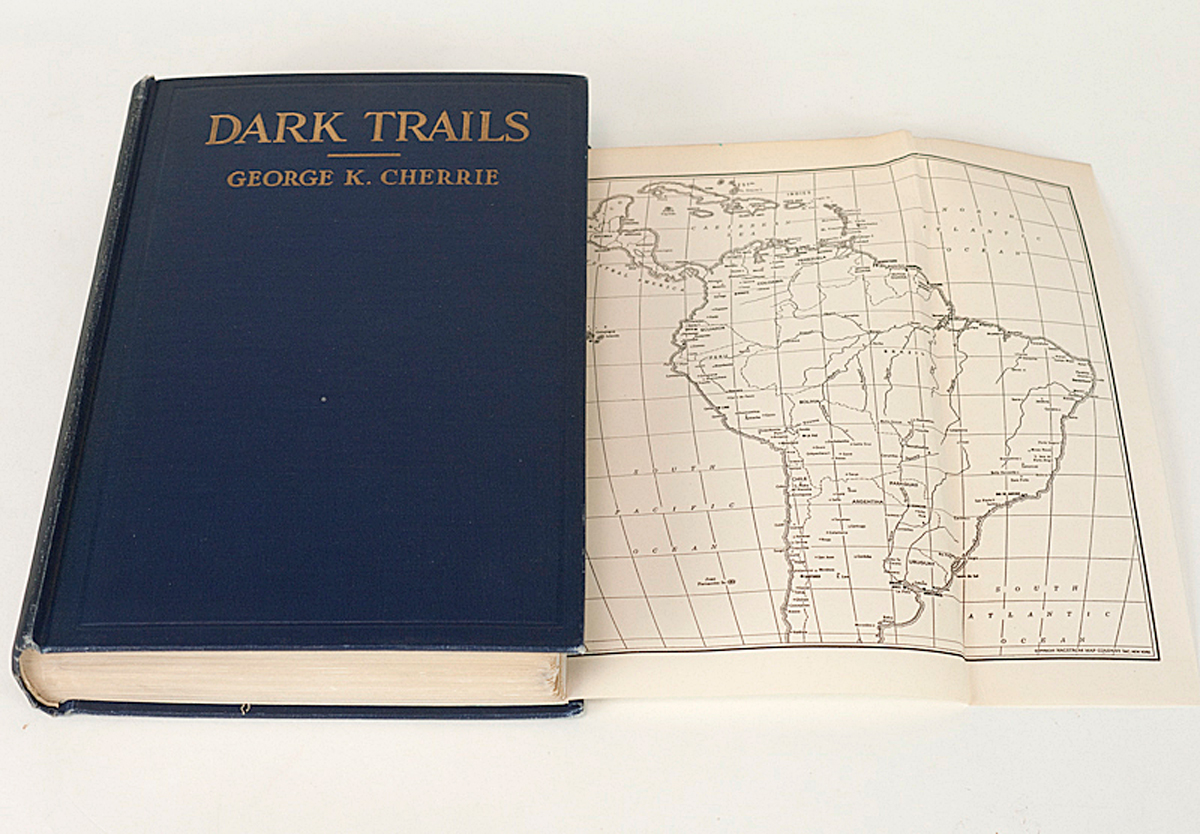
His memoir, Dark Trails: Adventures of a Naturalist was published in 1930. Cherrie’s observant nature is evident, as well as his sympathetic view of the native populations of the places he traveled. He retired in the green hills of Vermont and died in 1948 at the age of 82. Four bird species, and a species of lizard and mammal were named after Cherrie.
Whether traveling and exploring South America by foot or river, or the Himalayas by yak, he showed the ability to adapt and flourish wherever he ventured. He was a man who lived, worked and thrived well beyond the line that separated the known and the unknown world at a time when maps still had vast blank spaces. Those blank spaces and their mysteries called to Cherrie, and he was beckoned to the unknown.
Yet, despite his explorations as a naturalist, in reflecting on his life, he held that human relationships were the pinnacle, not simply the travels. Through all his experiences and trials trodden, successes and failures, and miles covered across the globe, Cherrie wrote that, “human contacts, if met with sympathy and understanding, are the greatest of all adventures.”
“Soon, with aviation, the globe will all be nicely catalogued and known. The thread of the traveller’s romance will be broken forever—until man essays the planetary spaces. For this reason, and because life is but a brief and often arduous journey, I am glad that I am over the hill.” — George Cherrie, 1930.