
July, 9-10 2026 | 632 Lots
Click Here to View Lots
Copley Fine Art Auctions’ annual Sporting Sale is a premier auction of sporting art, featuring exceptional paintings, important antique decoys, decorative and contemporary carvings, fishing tackle collectibles, gameboards, and American folk art. Antique decoys in the auction include works by renowned makers such as Elmer Crowell, the Ward Brothers, Charles Schoenheider, Robert Elliston, Shang Wheeler, George Boyd, and Gus Wilson. Contemporary bird carvings by Mark McNair, Cameron McIntyre, Frank Finney, Bob White, Bill Gibian, George Strunk, and many more will also be featured in the auction.
Included in the sale are paintings by leading sporting artists Ogden Pleissner, Aiden Lassell Ripley, Philip R. Goodwin, Bruno Liljefors, A.B. Frost, Edmund Osthaus, Alexander Pope Jr., and Lynn Bogue Hunt. An important collection of American paintings will also be offered, including works by Edmund Tarbell, Joseph DeCamp, Eric Sloane, and William Aiken Walker. The two-day auction will present 632 lots, offering collectors and sporting enthusiasts exceptional works celebrating waterfowl, quail, woodcock, ruffed grouse, pheasant, turkey, deer, moose, bear, Atlantic salmon, trout, marlin, striped bass, and more.
Day 1, Thursday, July 9, 10 AM EDT, Lots 1-299
Day 2, Friday, July 10, 10 AM EDT, Lots 300-632
Click Here to View the Sporting Sale Catalog Flipbook
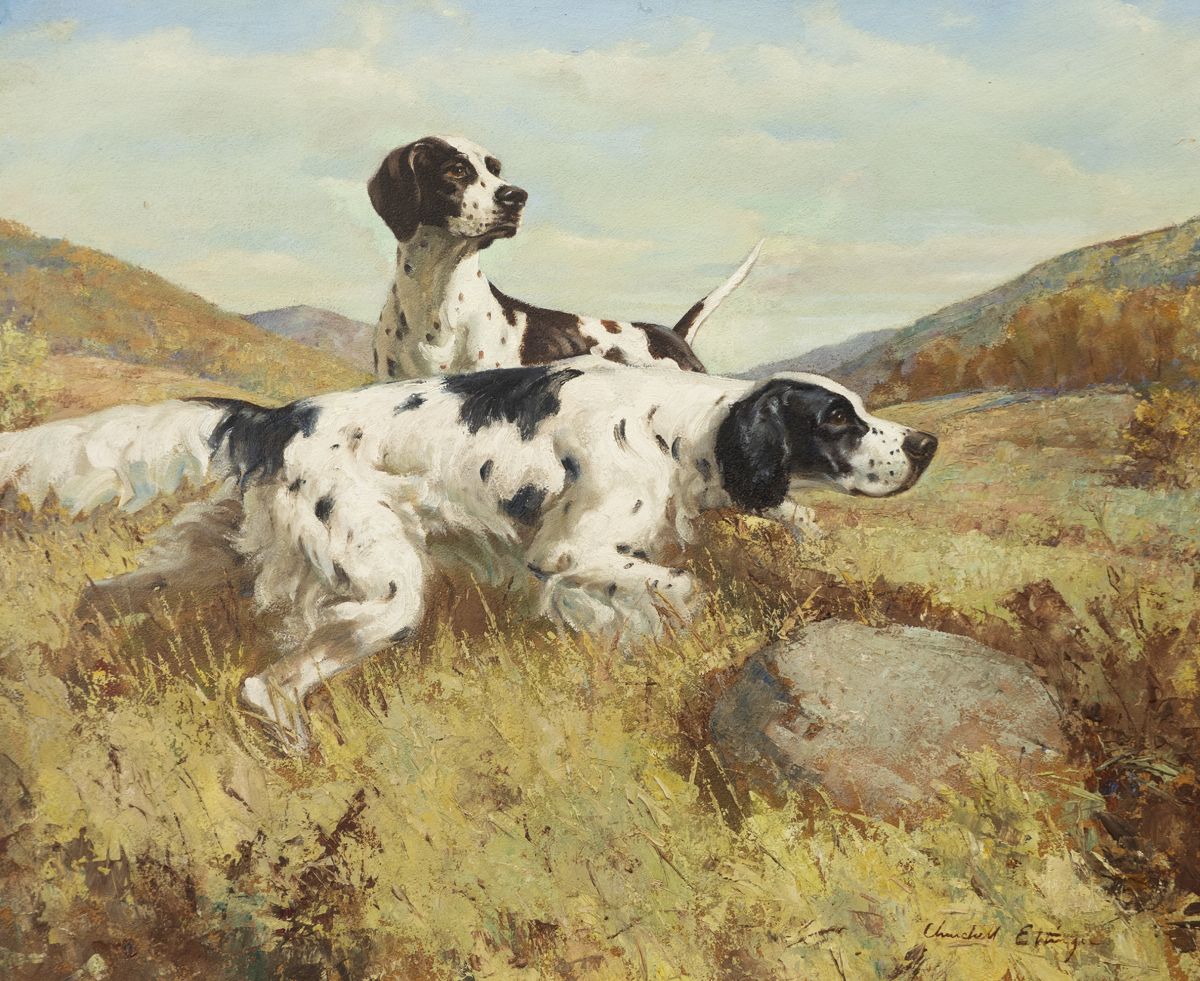
Churchill Ettinger (1903-1984), Pair of Aces
Estimate: $10,000 – $15,000
Starting Bid: $5,000
Click Here to Learn More
This bright work, depicting a pointer and setter on the scent mid-hunt, is one of Ettinger’s strongest dog works. Churchill Ettinger was born in New Jersey in 1903. After studying at Columbia University, the National Academy of Design, and the Arts Students League, he embarked on a career as a commercial artist. A dedicated sportsman, his artwork graced the covers of sporting magazines and books published by the Derrydale Press, such as “The Happy End.”
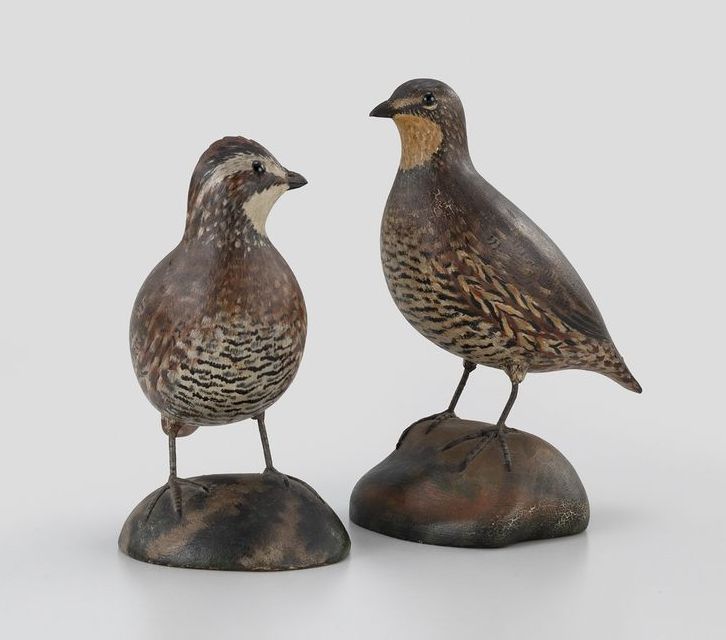
The du Mont Bobwhite Quail Pair by A. Elmer Crowell (1862-1952)
Estimate: $100,000 – $200,000
Starting Bid: $50,000
Click Here to Learn More
This pair hails from the distinguished du Mont Collection of early Elmer Crowell carvings. The pair has remained together for over 110 years, and each retains a crisp and complete oval brand on the underside of the early articulated bases. Each features fine paint atop beautifully sculpted bodies. The cock’s head is finished with a subtle crest and is turned ninety degrees. Crowell succeeded at creating a charming chemistry between this pair.
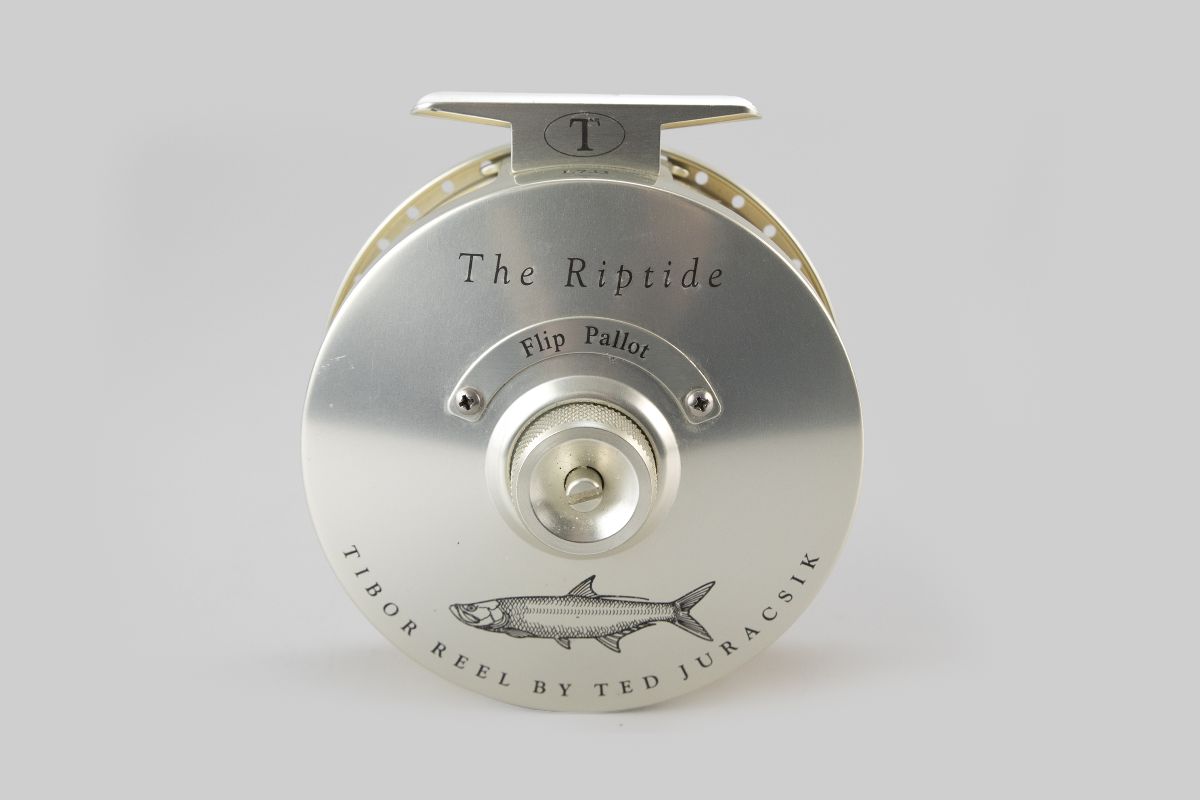
Flip Pallot’s Tibor Riptide Tarpon Reel
by Tibor Reel Corporation (1975-Present)
Estimate: $1,000 – $3,000
Starting Bid: $500
Click Here to Learn More
A Tibor Riptide from the personal tackle of Flip Pallot. This reel features Flip’s signature red handle, his personalized nameplate, and an engraved tarpon. Made for 9, 10, and 11-weight rods, Flip would have used this reel to target a variety of large fish, such as tarpon, permit, and redfish. In good working condition with light fishing wear.
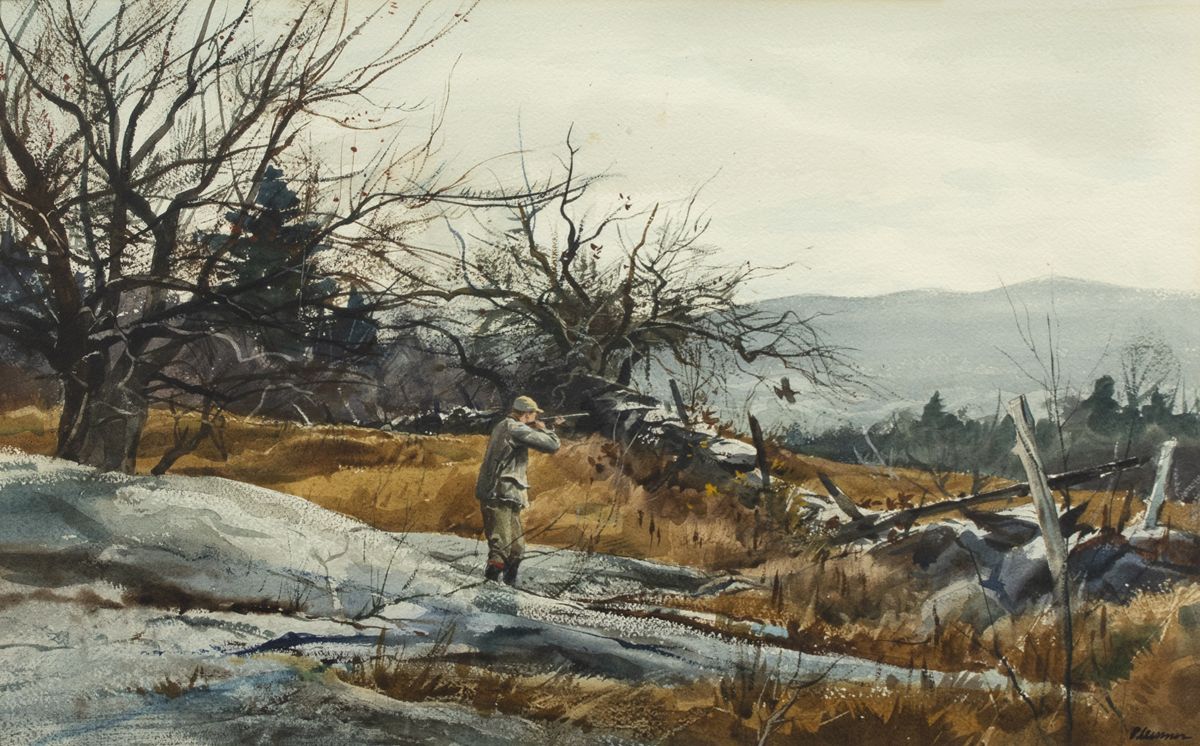
Ogden M. Pleissner (1905-1983), Old Orchard Cover
Estimate: $40,000 – $60,000
Starting Bid: $20,000
Click Here to Learn More
Pleissner said, “A fine painting is not just the subject…It is the feeling conveyed of form, bulk, space, dimensionality, and sensitivity. The mood of the picture, that is most important.” “Old Orchard Cover” shows a strong composition, complete with gunner at the ready and a grouse on the wing. The painting is set in an abandoned, overgrown apple orchard, perfect for New England partridge hunting.
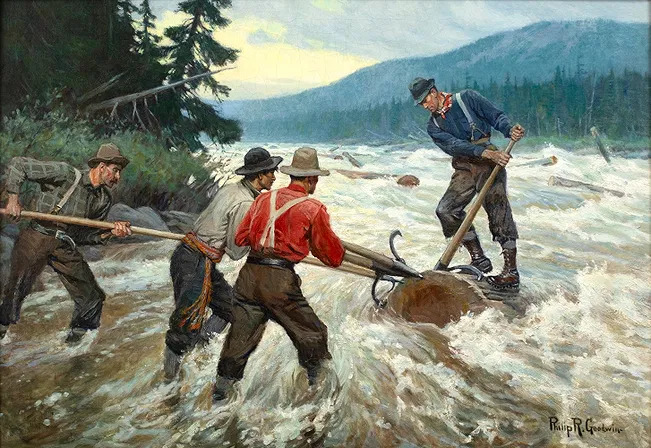
Philip R. Goodwin (1881-1935), The Spring Drive
Estimate: $200,000 – $400,000
Current bid: $100,000
Click Here to Learn More
This iconic Goodwin masterwork shows loggers running timber down a roaring river in the spring. The figures are big and bold in the foreground with strong jawlines and superbly executed postures. Beyond the rivermen, logs are tossed end-over-end as they pass through a stretch of fast-moving rapids. Despite the frenzy, these professionals are completely at ease in their environment, with the most prominent, sure-footed log driver even mounting a tree to spin it with his hook. This team of loggers represents a jam crew, consisting of only the most skilled rivermen, who were responsible for dislodging “key logs” and preventing log jams.
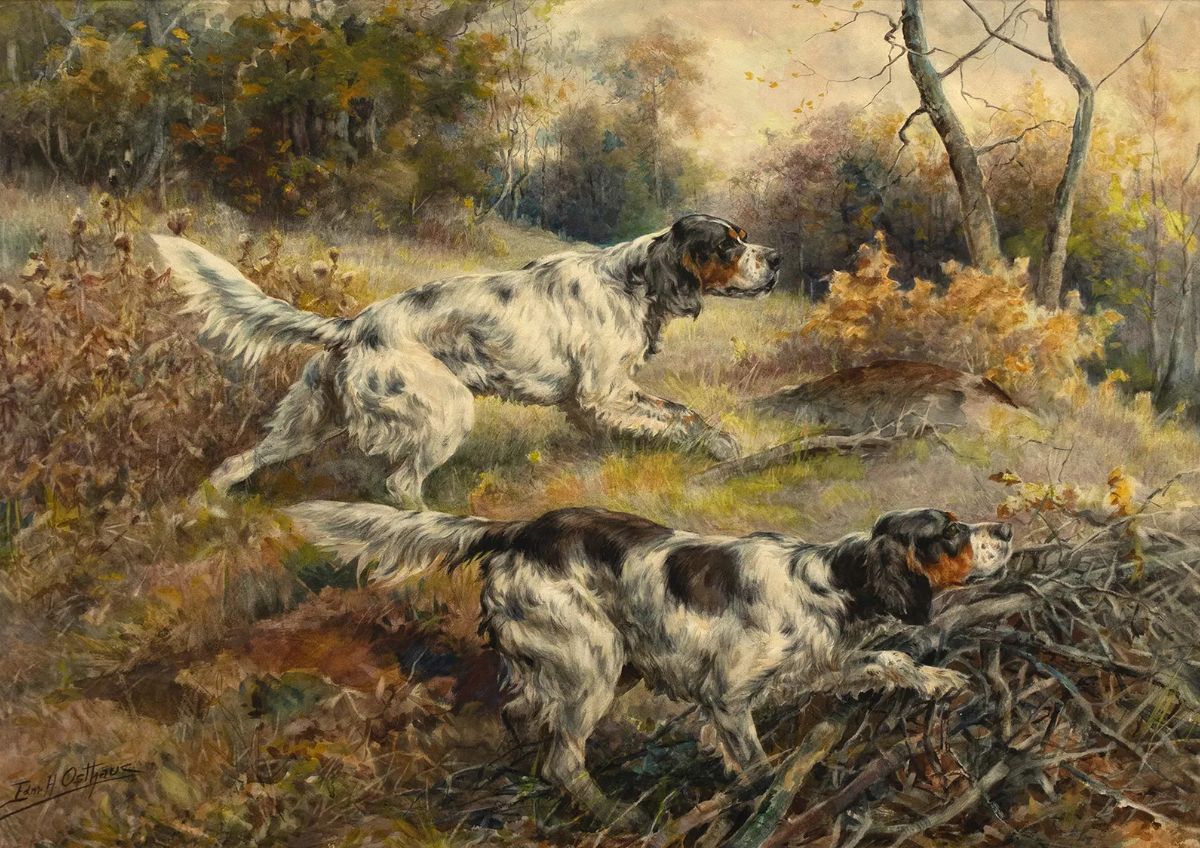
Edmund Henry Osthaus (1858-1928),
Pair of Setters in an Autumn Landscape
Estimate: $40,000 – $60,000
Starting Bid: $20,000
Click Here to Learn More
This painting reveals Osthaus as an acute student of hunting dogs, with the two English setters’ stances and locked-in gazes pointing at an unseen quarry. Edmund Henry Osthaus was born in Hildesheim, Germany, in 1858, the son of a prosperous farmer who subsequently immigrated to Toledo, Ohio. Osthaus studied at the Royal Academy of the Arts in Dusseldorf from 1874 to 1882 with Andreas Muller, Peter Jansen, Eduard von Gebhardt, Ernst Deger, and wildlife and landscape painter Christian Kroner.
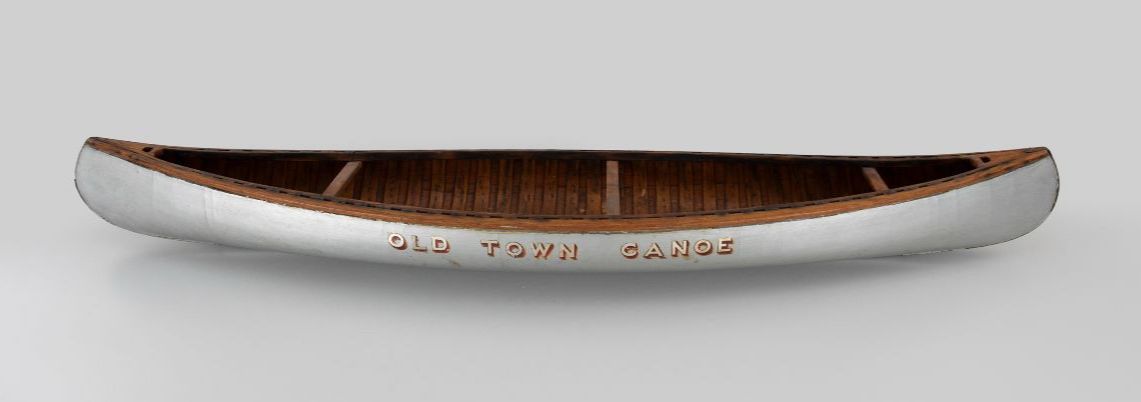
The Boy Scouts of America Old Town Canoe
by Old Town Canoe Company (1903-present)
Estimate: $15,000 – $25,000
Starting Bid: $7,500
Click Here to Learn More
As written by Roger Young, this canoe is “a unique Old Town ‘Ojibway’ sample 42″ long, made exclusively for the Boy Scouts of America; it hung in their NJ headquarters.” This piece was specially awarded to the Boy Scouts of America by the Old Town Canoe Company in recognition and thanks for their continuous business over many years. While any surviving Old Town sample is rare in its own right, this is the only model made with a silver-painted hull, as all the canoes purchased by the BSA were painted in this same aluminum color. True to the full-size Boy Scout canoes, this model has carved handles on either end and no seats, only thwarts, as scouts were taught to always kneel while paddling. With most Old Town samples being forty-eight inches, this forty-two-inch model may be derived from the Carleton Canoe Company molds acquired by Old Town in 1911, further adding to its uniqueness.
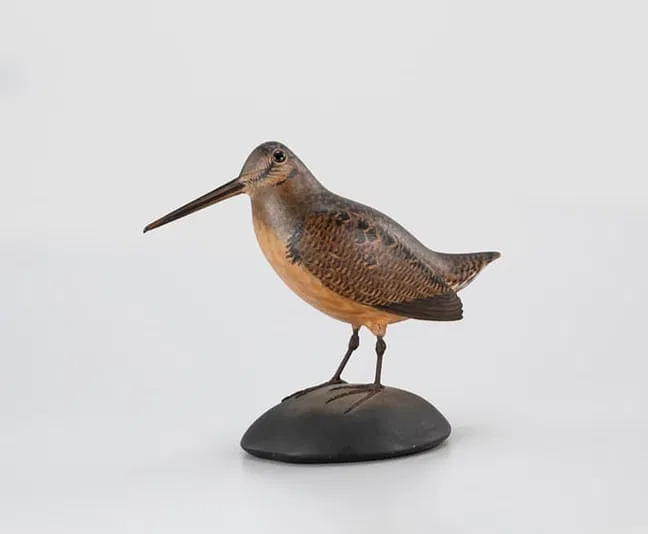
Outstanding Woodcock by A. Elmer Crowell (1862-1952)
Estimate: $60,000 – $90,000
Starting Bid: $30,000
Click Here to Learn More
This masterwork represents not only one of the maker’s best carvings of the species, but also one of his pinnacle forms and paint applications on any game bird. Of particular note are the upright stance, dropped wings with seven carved primary feathers, and the extra depth of feathering detail found from head to tail and top to bottom. Three related examples are known, including an exceptional carving made for George Abercrombie Spaulding of South Carolina in 1922, and two earlier models. One was made for Eugene E. du Pont and one was prominently featured in “Elmer Crowell: Father of American Bird Carving.” These related examples offer a strong reference for this lot by showcasing Crowell’s artistic development in carving detail, paint sophistication, and posture.
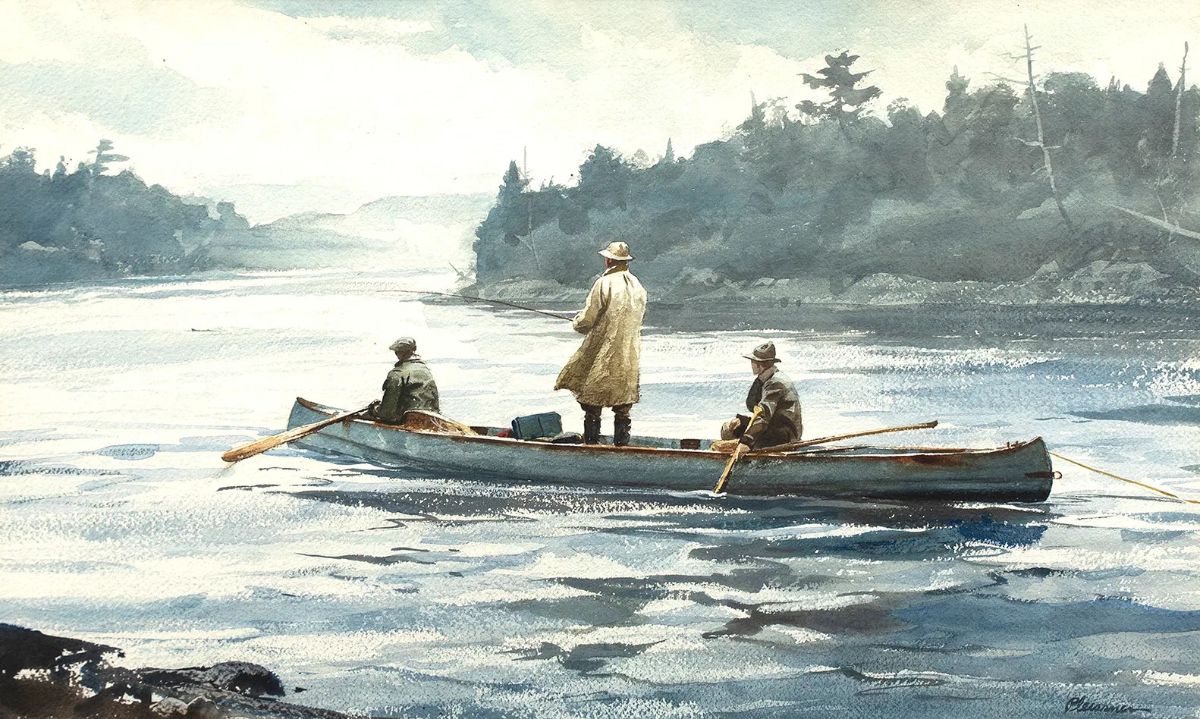
Ogden M. Pleissner (1905-1983), Fishing the Restigouche
Estimate: $15,000 – $25,000
Starting Bid: $7,500
Click Here to Learn More
A letter from the artist accompanies the painting, in which Pleissner notes, “It was painted about ten years ago and the scene is the upper Restigouche River near the junction of the Kedgwick. It is the Rogers water and is the Soldiers Gulch Pool. Incidentally I think you have a rather good example of my efforts.”
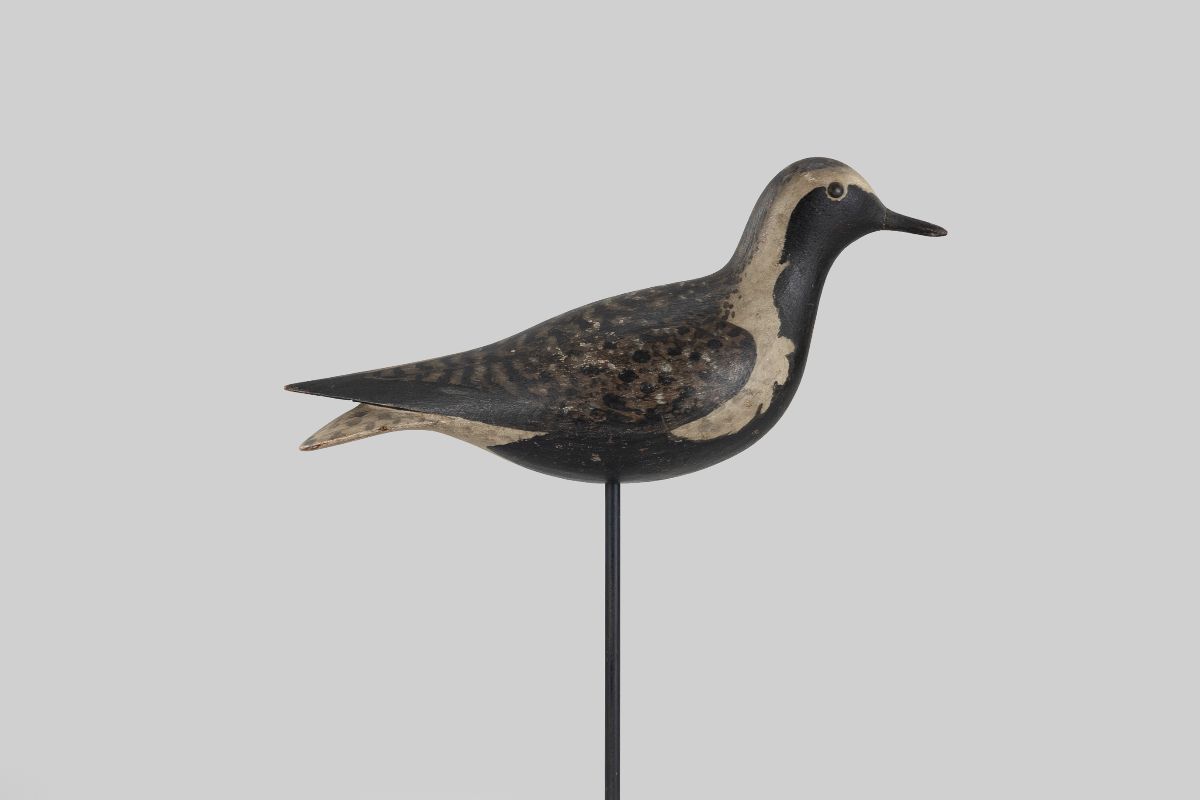
The McCleery-Holmes Plover by Lothrop Holmes (1824-1899)
Estimate: $125,000 – $175,000
Starting Bid: $62,500
Click Here to Learn More
The now-iconic McCleery Holmes plover has been featured in no less than seven important books, selected for major museum exhibitions, and is one of the most celebrated American shorebird decoys in existence. Over fifteen years later, New England decoy specialist Gigi Hopkins chronicled it as “the first vintage decoy I really fell in love with” in her “Massachusetts Masterpieces” book preface. She continued, “In fact, when museum director Amy Montague proposed the exhibition upon which our book is based, the bird was instantly number one on my must-have list.” Her essay dedicated to the bird states, “This Holmes plover is one of the most beautiful bird portraits ever found. Its silhouette, angle on the dowel, and shape of the wing, tail and head are all perfect.”
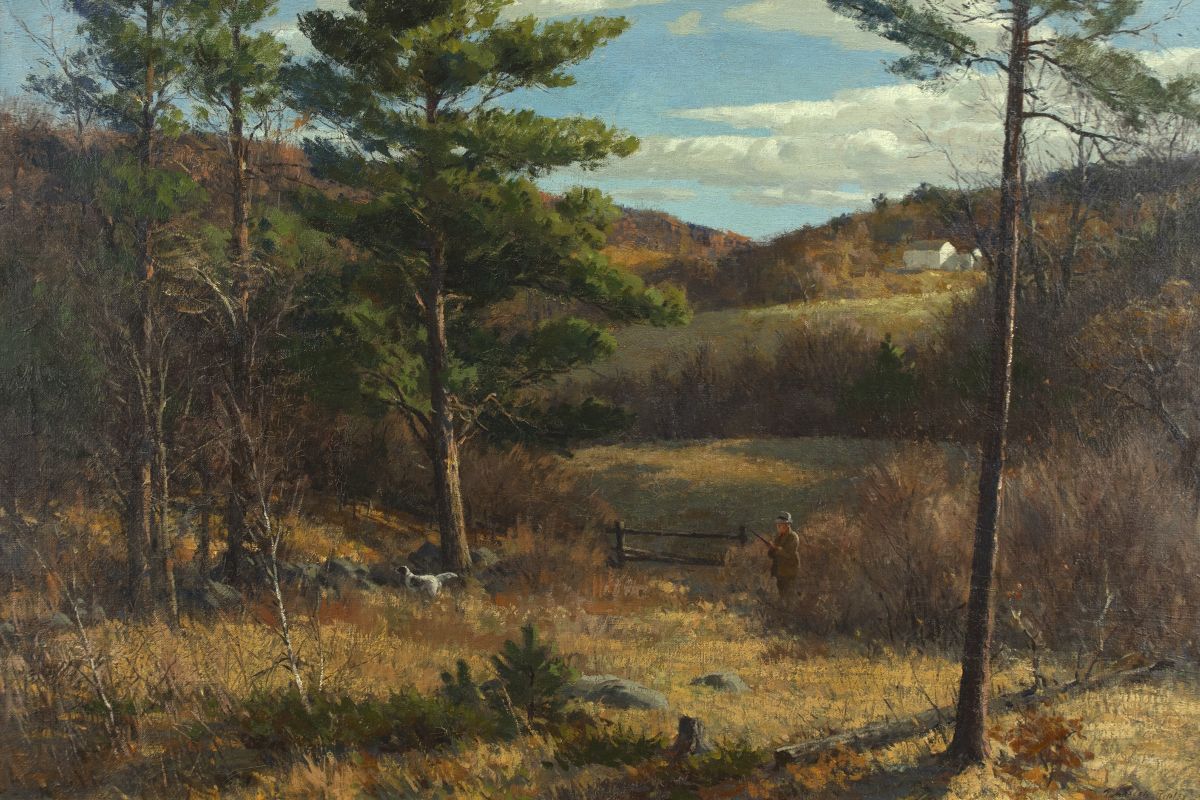
Aiden Lassell Ripley (1896-1969), Grouse Shooting
Estimate: $75,000 – $125,000
Starting Bid: $37,500
Click Here to Learn More
Ripley was awarded a Paige Traveling Fellowship to study in Europe. While abroad, he painted watercolors “en plein air” in North Africa, France, and Holland. Upon his return in 1925, he was elected to the prestigious Guild of Boston Artists. His work focused on the New England countryside as well as depictions of city life and railroad commuting scenes. The Great Depression, however, limited the sales potential for these works. Following a successful one-man show of his sporting art in 1930, Ripley decided to change tack and specialize in hunting, fishing, and outdoor scenes as subjects. This fine oil by the artist displays all the hallmarks of his best sporting scenes, with a sunlit hunting dog and a gentleman shooter emerging from Ripley’s classic bucolic landscape setting. This dynamic large-scale composition engages the viewer, who is left to anticipate the flush.
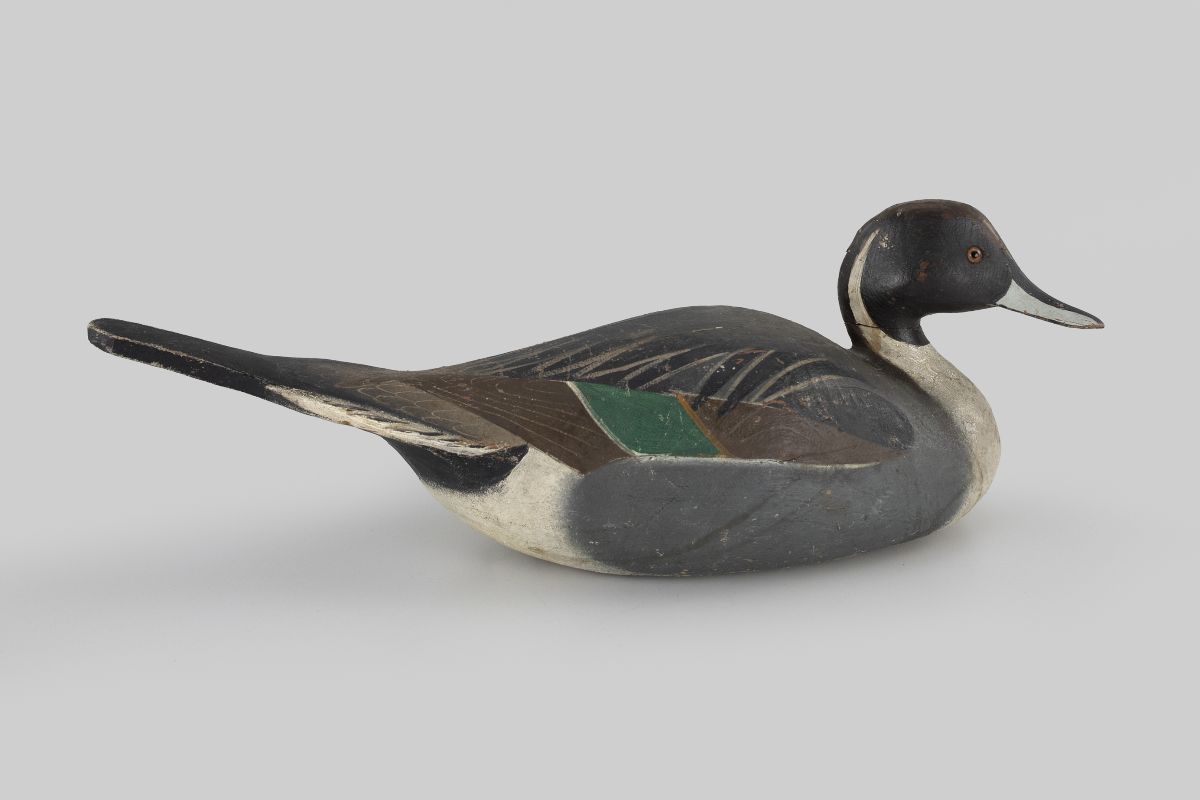
Purnell 1928 Humpback Pintail Drake by The Ward Brothers
Estimate: $100,000 – $125,000
Starting Bid: $50,000
Click Here to Learn More
This exceedingly rare Crisfield carving was collected by William H. Purnell Jr. and first introduced to the public when Ronald Gard and Brian McGrath selected it for their 1989 “Ward Brothers’ Decoys: a Collectors Guide” book. It had been sourced from a Crisfield waterman with two pintail rigmates, one of which displayed this refined humpback design. “The pintail was Lem Ward’s favorite bird and he shows this preference in the painting of his pintails.” – Ron Gard and Brian McGrath
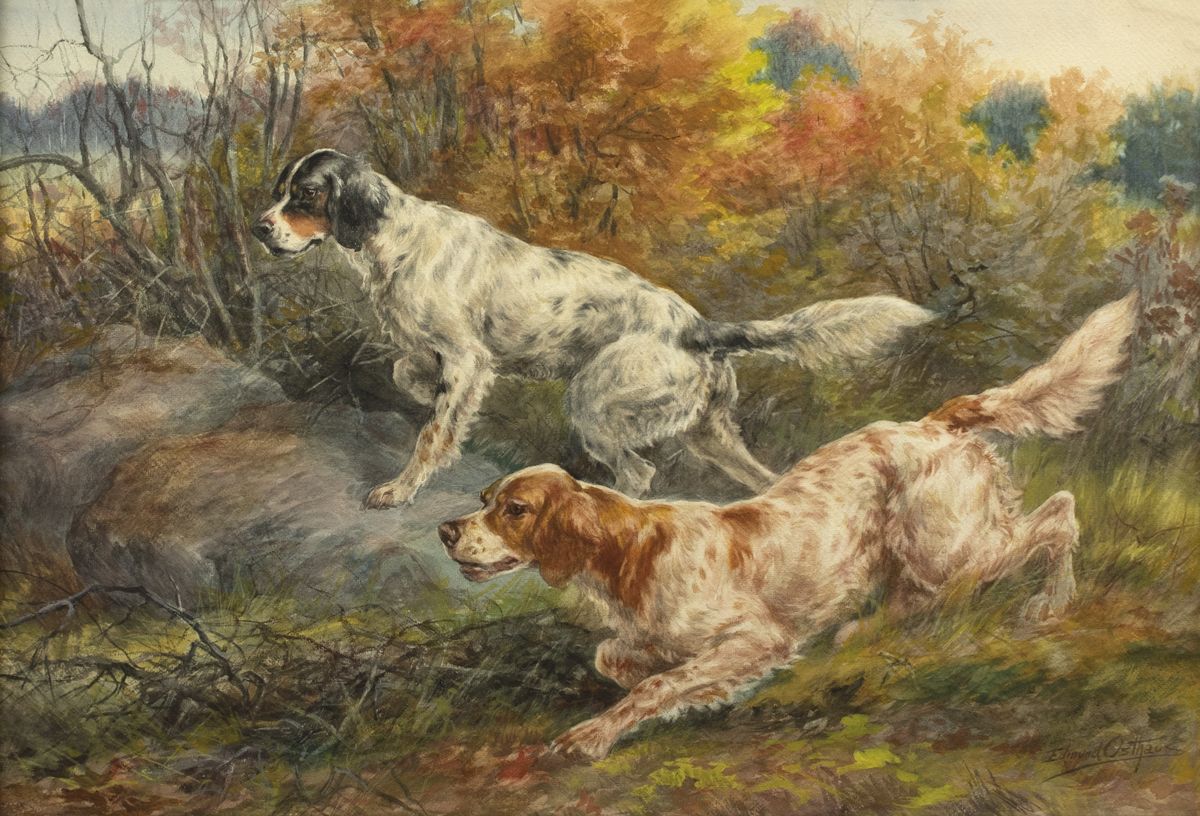
Edmund Henry Osthaus (1858-1928), Two Setters
Estimate: $30,000 – $50,000
Starting Bid: $15,000
Click Here to Learn More
Edmund Osthaus painted setters displaying a traditional sitting position. Setters were derived from medieval hunting dogs that were trained to find birds and then to “set” (crouch or lie down) so that a net could be thrown over both the birds and dogs. As firearms came into use, setters were trained to adopt a more upright stance. Over time, training elevated the tails of setters and pointers to an upright position. This classic hunting scene captures two alert, poised setters as their attention focuses on their quarry just outside the composition. Osthaus’ use of vibrant autumnal color in the trees in the background makes the white fur on this dynamic duo pop.
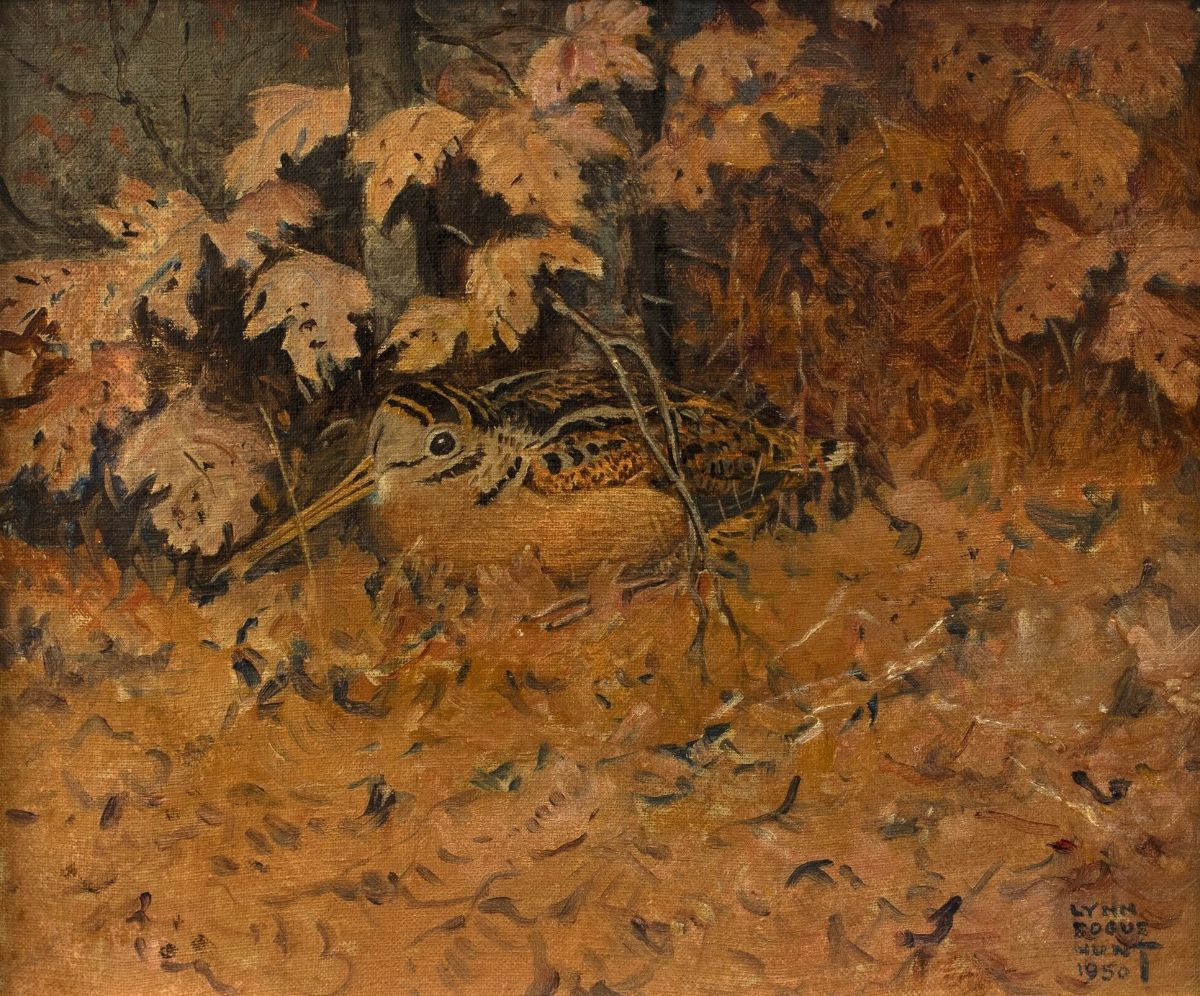
Lynn Bogue Hunt (1878-1960), Camouflage
Estimate: $10,000 – $20,000
Starting Bid: $5,000
Click Here to Learn More
In this intimate upland scene, a woodcock sits nestled in a cover, expertly blending in with the orange and brown hues shared by both the timberdoodle and the fall flora. Lynn Bogue Hunt was born in rural Honeoye Falls, New York, into a family that ran a small sawmill operation. He grew up with modest means, but spent hours outside exploring the natural surroundings in the woods near his home. He often collected birds and practiced taxidermy, a hobby that led to his accurate portrayal of his wildlife subjects.