
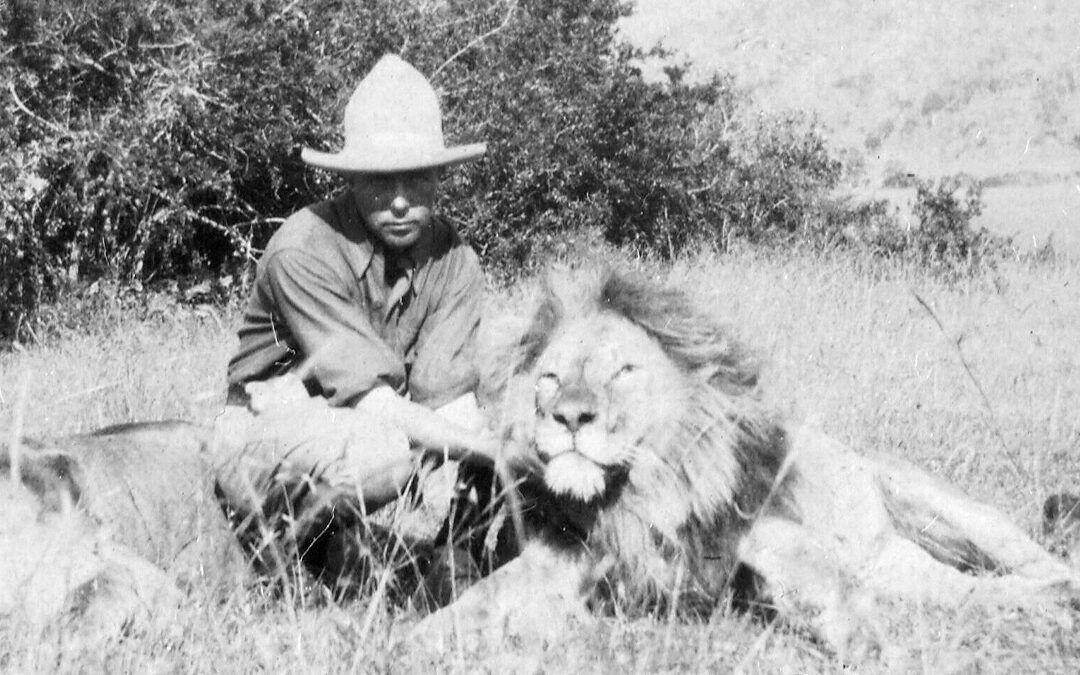
In Kenya he found big game and adventurous women–peril and economic ruin, too. He relished the risks.
They started on the Congo, at the former slaving hub, Stanleyville, in a steel boat bought from a Belgian trader. Its three-ton capacity belied its small size. Cramped quarters cooked the crew under sun’s fire in the wake of torrential rain. Three weeks on, by way of the Ubangi, The Vagrant reached the border of French Equatorial Africa. A long, trackless portage lay ahead. Fifty miles of bush and boulders, ascents and escarpments throttled the trek. Greater distance through scrub and savanna exhausted the men before they launched again on the Shari.
Short miles upstream, impact with a submerged log jarred the load to one side. Water rushed over a gunwale. The boat sank, taking gear, provisions, guns—all that mattered but their very lives.
Ten days of hard work re-floated The Vagrant, albeit the dry batteries were useless. The crew had to pole her to Chad’s Fort Lamy. The main lake basin, larger than Belgium, lay miles on. By chance they heard an American, Mr. King, working for International Harvester, had just left Ft. Lamy in a car he had driven 3,000 miles from Kenya—and that at journey’s end in Nigeria he would sell it. Having come so far north, someone suggested, why didn’t Sir Charles Markham’s expedition leave the boat and, rather than return east, press on in the car across the Sahara to Algiers, then to Europe?
Absurd! scoffed the French. At this time of the year, travelers would meet fierce sandstorms and find widely spaced waterholes dry; their vehicle would bury itself in dunes; bandits would finish them off.
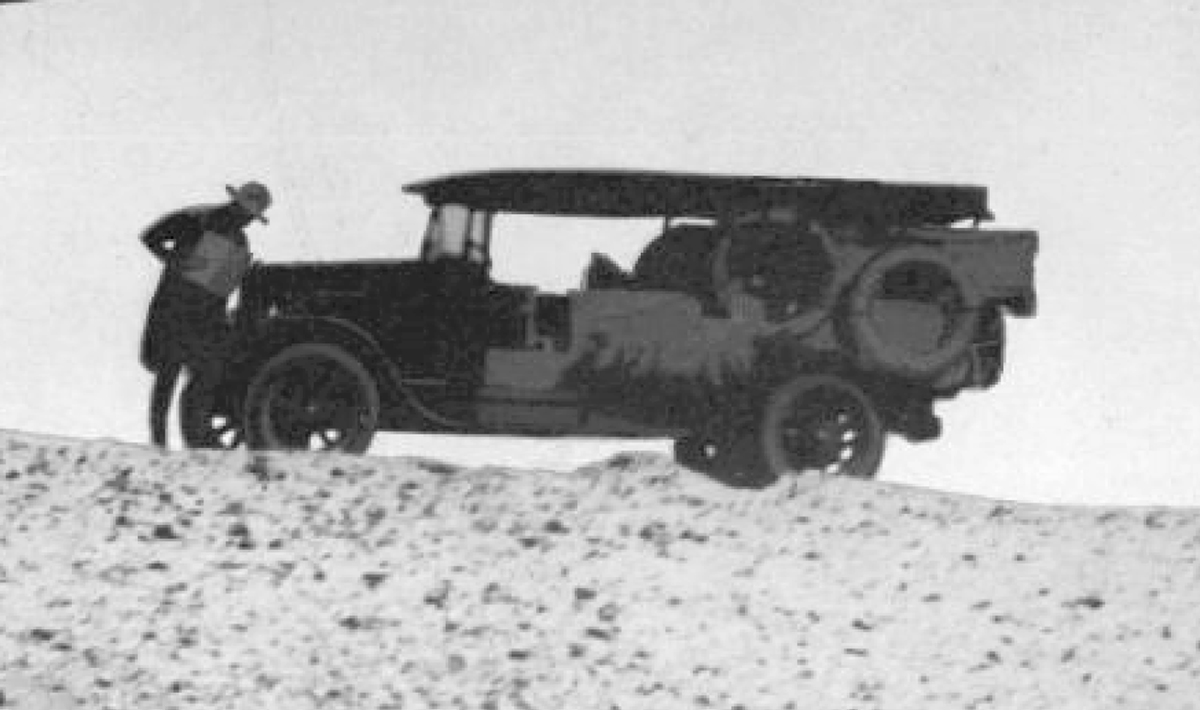
Markham’s cable to King got an immediate response. The car would be awaiting them at Kano, an 11th-century city on the trade route through northern Nigeria. Three days later, the men had peddled The Vagrant and inspected the modified “boxbody” (open-backed) International. Rounding up a native boy, spare tires and tools, then six gallons of oil and 120 of petrol took another couple of days.
A celebratory evening delayed their departure on the last day of March, 1928. But by dawn they were on the 300-mile sand track leading to Zinder in French West Africa….
No one had crossed the Sahara in an ordinary car.
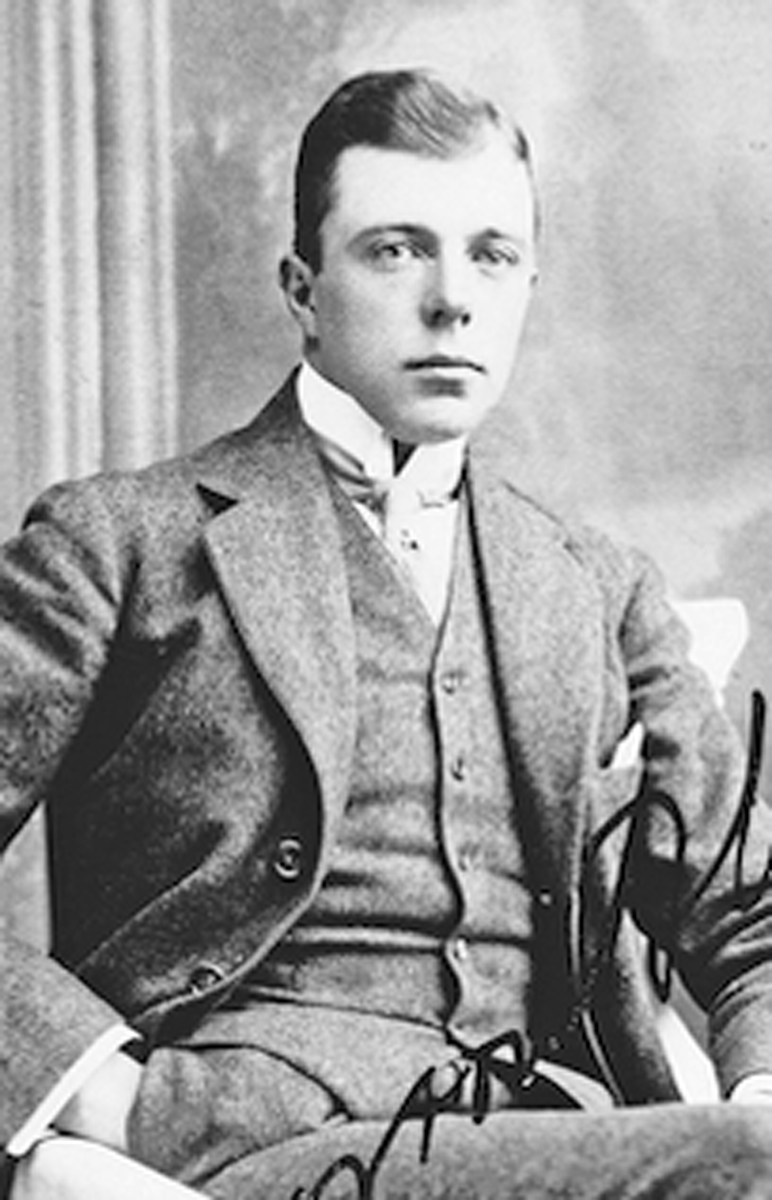
Bror Blixen
Charles Markham’s companion on that 1927 adventure, initially planned as a traverse of Africa—east to west—was Baron Bror von Blixen, grandson of Carl Frederick von Blixen and Princess Augusta of Hessen. One of their two sons, Frederick, raised prize livestock and would inherit the Swedish family estate, Nasbyholm. He and his wife Clara raised seven children. Bror and his twin brother, Hans, were the youngest, born in 1886. The pair grew up privileged, with access to horses and hunting. They took full advantage of forests around their home—and of their father’s deep pockets. Responsible spending would forever elude Bror. Declared a friend years later: “I think Blix was the only person in the world who truly believed that when he signed a bill it had been paid for.”
Blix. The nickname evidently came early. In school, he and Hans paid less mind to their studies than to girls, dancing and shooting sports. Hans excelled in the saddle. On graduation he entered military service in the cavalry, then learned to fly. A 1917 plane crash took him from his wife and young son.
Blix struggled through agricultural college. Despite his father’s encouragement, managing a dairy near Nasbyholm left him bored. Partying took precedence.
His family indulged his spending; dereliction brought only mild reprimands. Blix had charm. A ready smile lifted big cheeks under soft blue eyes. His bright enthusiasm, quick sense of humor and love of adventure endeared him to all. Fearless and capable, he was also admired. Women would find him irresistible.
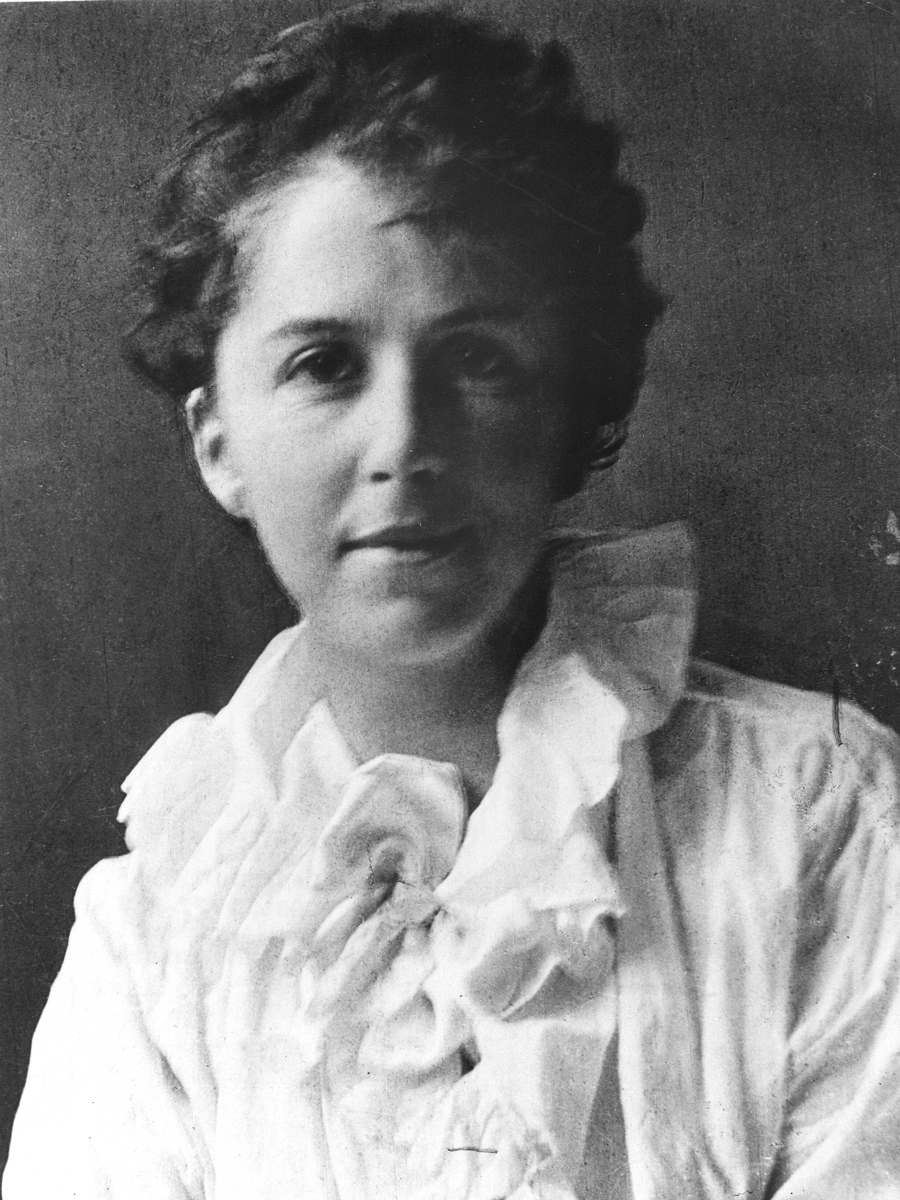
Karen Blixen
One lass was Karen Blixen, called Tanne (later, in English, Tania) by family and friends. Blix’s mother and Tanne’s father were cousins. Growing up with four siblings in Rungsted, a fishing town near Copenhagen, Tanne lost her father when she was nine. He had visited North America, living with plains tribes as a trapper. He was reported to have contracted syphilis there. Returning to Copenhagen, he served as an army officer, then a member of Parliament. Still a young man, he hanged himself.
After her schooling, Tanne left Scandinavia to taste bohemian life in Paris. Back in Denmark at 26, she fell in love with Blix’s brother Hans. He chose someone else. She got on well with Blix, who had failed to win the hand of 17-year-old Princess Margareta, or that of a Charlotte Wachtmeister.
In 1912, Blix and Tanne planned a wedding. It was as much a union of dreams as a joint passion, each for the other. Both were keen to make a future in Kenya, a frontier whose prospects had impressed a mutual uncle. Also a family advisor and trustee, he advanced the couple money to buy a farm.

“I once had a farm in Africa….” So begins Isak Dinesen’s (Karen Blixen’s) classic book, Out of Africa. A story re-imagined by Hollywood with Robert Redford and Meryl Streep, it was Tanne’s take on a cascade of events that both defined her life and drove her from the continent.
Blix left in 1913 to see the land they had bought to support dairy cattle. In Nairobi he was urged instead to grow coffee, introduced by missionaries in 1896. North and west of town coffee was profitable. Blix soon sold his 750 semi-developed acres to buy 4,500 raw acres at 6,000 feet below the Ngong Hills to the south. Cleared largely by Kikuyu laborers, who also had to remove stumps, the land was plowed by teams of oxen. Planting during the rains clogged cart wheels with mud as each seedling was hand-pressed into staked holes. Farming could be hard; wresting a farm from wilderness was hard and costly. Blix was a poor businessman. He also craved quicker prosperity and more adventure.
At that time, Kenya’s settlers were largely from landed European families. Most were intelligent, many ambitious. Fewer had the skills to ensure success on the East African frontier. Funding from home gave them at least temporary independence. Playing as hard as they worked, they ran free-wheeling social lives from Nairobi’s Muthaiga Club. It was a meeting place for “the Happy Valley set”—bold, well-bred, unapologetic people aware of their upscale roots but freed in this new land from traditional mores.
In January, 1914, Blix met Tanne upon her arrival in Mombasa. The next day they married. The wedding party, with important Swedish guests, traveled by train to Nairobi. Tanne and Blix reached their farm in a buggy drawn by six mules.
That spring brought good rains, but also smallpox and a fatal bovine fever. In a letter to his sister, Blix reported the setbacks, but finished on a bright note. It revealed a latent longing for a life off the farm, “… I feel as a lark, high in the sky. I am really enjoying all the splendor of Africa. I am not sure what it is. I suppose just being away from gossip and nagging. To set foot on land never ploughed before, to walk in forests that have known neither axe nor saw. A country in its cradle….”
The shot that killed Austria’s Archduke Ferdinand in June 28, 1914, brought war to Kenya. Boer farmers, defeated by the British in southern Africa just 15 years earlier, joined them to keep the Germans at bay. Blix volunteered to help hold the rail line north of the German-Tanganyika border, undefended for nearly 200 miles. Posts communicated with bicycles, carrier pigeons and native runners. Tanne organized supply transports. She completed her first 80-mile mission in four days on foot. One evening, as she out-spanned the oxen, a lion burst upon them. The teamsters fled. Unarmed and alone, Tanne grabbed a stock whip and lashed the big cat into retreat.
Oddly enough, Tanne counted the German commander in Tanganyika—the brilliant von Lettow—an acquaintance, if not a friend. While she kept that connection to herself, she later had to counter rumors of German sympathy.
While stalemate stacked the dead in European trenches, von Lettow frustrated the British in East Africa. The cost of skirmishes often paled beside threats from Nature. Drought in 1915 took thousands of Masai cattle. The Blixen farm lost laborers as coffee prices sank. Taken ill, Tanne left for Sweden. (Later she would be treated for syphilis. While this would implicate Blix, no such reports from his other amours have come to light; and he was not her first lover.)
In 1916, when Blix fetched Tanne from Sweden, native conscripts had swelled British ranks. Von Lettow’s troops were still at large, but no imminent threat to Kenya’s residents. The Blixens visited other farmers. Northrup McMillan, an American who’d led an expedition through Abyssinia (Ethiopia) in 1904 and established vast holdings, would be knighted for wartime service to Great Britain. At the Muthaiga Club in 1917 Tanne met the cultured young Brit, Denys Finch-Hatton. He enchanted her. The two had common interests and within two years were on safari together.

Jacqueline “Cockie” Birkbeck
War’s end came to Kenya with famine, then plague. Keen to see better returns from the farm, Mr. Westenholz, who controlled its purse for Tanne’s family, turned it into a company under his control. All shares went to Tanne’s kin, though Blix’s had invested heavily, too. On a 1919 stop in England, Blix met Jacqueline “Cockie” Birkbeck, the perky wife of a friend’s friend. The next year the Birkbecks traveled to Kenya. On safari, Cockie fanned the flame sparked in London. Shortly that affair would cause Tanne and Blix to separate. By then Westenhoz would insist Blix not only leave the company, but the property.
Hounded by creditors and with no income to stall them, Blix holed up with friends. He had many. Worried he might land in prison, Cockie offered her pearls to clear one of his debts. The creditor handed back the necklace and assured her, “The baron will hear no more of this little difficulty.”
The war, weather, market convulsions, Tanne’s family and Cockie’s affection had changed Blix’s life. Of the upshot in 1921, he wrote, “There I was empty handed in the bush. But I still had my rifle!”
Descriptions of Blix as a hunter leave the impression he was among the very best in East Africa at the time. There’s similar praise for his friend, Denys Finch-Hatton, a prep-school graduate with relatively few years in the bush. While Blix had grounding in field sport from his youth and by report was a gifted marksman, making heroes of popular bwanas seemed a habit of the day. It side-stepped comparisons with pioneers such as Samuel Baker and F.C. Selous, career ivory hunters such as W.D.M. Bell and men such as J.A. Hunter and John Taylor, whose long tenures afield bridged the ivory era and that of client safaris.
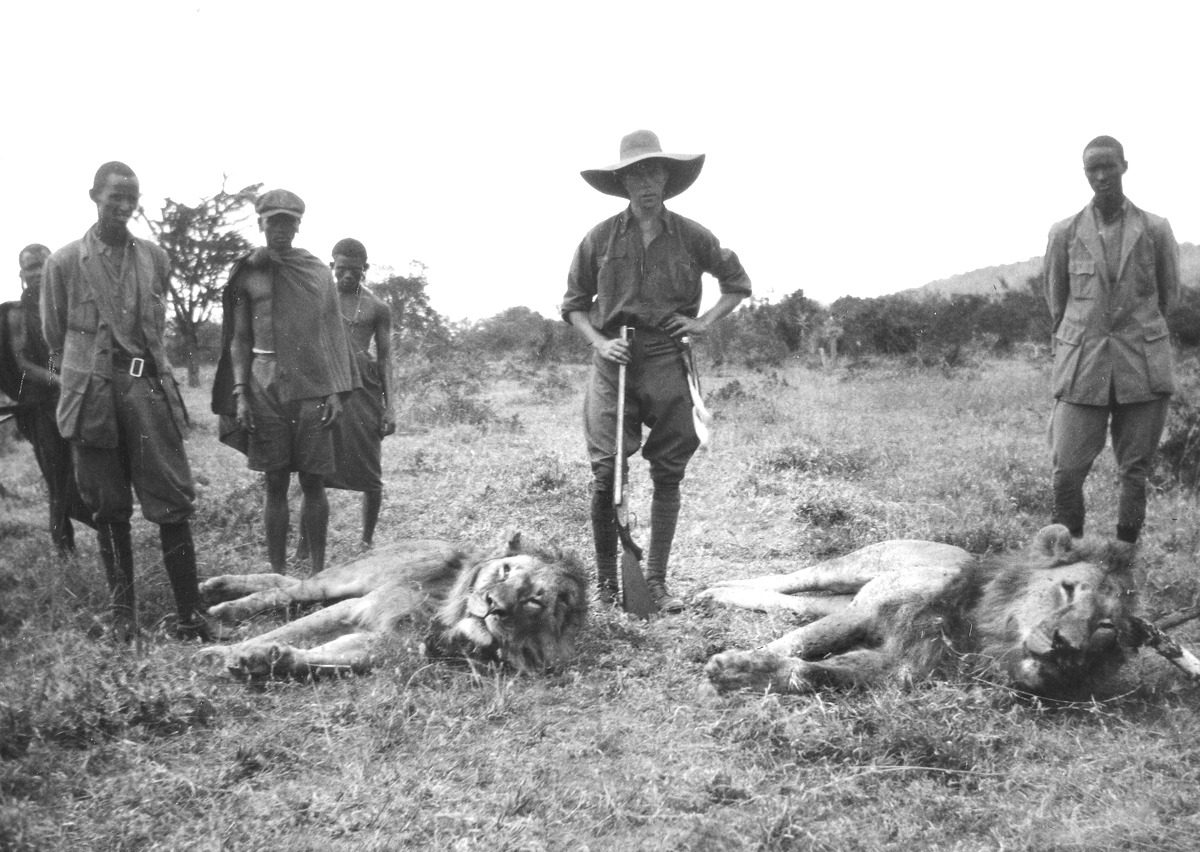
Blix began work as a professional hunter on a three-month safari to produce a documentary for the Swedish film industry. Then he was called to Uganda where elephants were raiding shambas near the Murchison Falls Game Reserve. With two porters to carry salt, tea, sugar, rice and flour, plus his bedding and cartridges, he camped at Masindi and hunted on trails Baker had trod seeking the source of the Nile.
Dead elephants brought Blix the adulation of locals. He was honored nightly: “Fires were lit, the drums came out and soon the night vibrated with [their] beat. Young girls with figures like Venus, a mass of swaying loins. In the fluttering light of the fires their bodies shone like bronze through a veil of dust.”
Sometimes villagers ran afoul of the elephants. One group, looking for honey, was surprised by a cow that overtook the last man. She grabbed him with her trunk and dashed him against a tree. Then she speared him repeatedly and finally knelt on him, “crushing every bone in his body.” Blix and his tracker, Juma, followed her prints. The cover got thick; dung was now steaming. A snapped twig and a deafening scream, and she was on them. “I shot and jumped out of her way to the right, Juma to the left…. I gave her the second barrel and reloaded. Suddenly, within 10 yards, Juma sprinted past me, the mad cow on his heels. This time I brained her. She fell trunk outstretched…six paces from the last of her tracks, so she must have been going flat out.” One tusk had traces of skin and blood; her knee creases held bits of flesh.
A month’s shooting convinced wayward elephants life was quieter in the reserve. Blix’s contract allowed him half the proceeds from the ivory. They funded hedonistic living upon his return to Nairobi. But he soon headed west to shoot buffalo for their hides on the hem of Lake Albert. He then entered the Belgian Congo and the Ituri Forest, where he tarried with Wambuti Pygmies, people he much admired. “No white man,“ he wrote, “can match them for endurance or a quiet step in cover, or steal honey from bees, catch parrot chicks high in the trees [or] gather fruit from the oil palm 90 feet up.”
Blix followed a Wambuti on an elephant track. Eventually they found the beast and crept closer than the Swede “had ever been to an unwounded elephant.” Short thrusting spear in hand, his diminutive companion “advanced slowly, arm raised, muscles taut as steel.” Blix fixed his eyes on the spot where he would place a bullet and “sensed, rather than saw, how the little dwarf leaned back, bringing his left arm up for balance while his [right] arched out….” A quick thrust sent the spear to the elephant’s heart. As it struck, the elephant spun toward them. Blix’s shot broke its neck. “The little man showed no [emotion], just a dignified pride. He cut off the tail as a token of his success and prowess as a hunter.”
Soon villagers popped from the bush. A wild stripping of elephant meat followed. That night the drum tempo increased, as “into the circle of dancers leaped the little hunter, his greased body shining red in the firelight…spear and elephant’s tail held high. In a sea of waving spears [a] pantomime commenced—the hunt, fallen elephant, division of spoils…. I can still feel the ground quiver under their tiny feet.”
Wherever his rifle produced free meat, Blix was hailed as hero. Chiefs offered girls and his pick of elephants. He refused neither. A growing pile of ivory begged more porters; women appeared in tow. Then came the rains. Rivers rose. Crossings, on foot and with rafts, were perilous. The weather, the work and dwindling food supplies brought pneumonia. Two men died; then Blix collapsed on his cot. A week later, runners arrived with more food, but his recovery lagged. When Juma returned to report an elephant with tusks “thick as my thigh,” Blix’s men fashioned a stretcher. The three-day walk was a six-day carry. The local chief yielded his ceremonial chair and eight porters for the hunt. Juma led the group to the bull. Blix managed to walk a few yards for the shot. The tusks weighed 90 pounds.
Soon Blix wrote to a friend, “I am now fit again and can once more walk the feet off my gun bearers. I feel the sun is brighter, the birds more beautiful, and my blood runs thicker. Sorrows and trouble no longer seem insuperable…. Our camp lacks for nothing. Girls with supple back and slender neck bear jars of beer, bananas, chickens and eggs, rice and oil…. The young dance and sing while the elders sit and talk. We talk about days gone by. So much has changed in the last fifty years, with civilization encroaching….”
During this time, Blix continued to write Cockie. Her husband was in England raising money to buy a farm in Kenya.
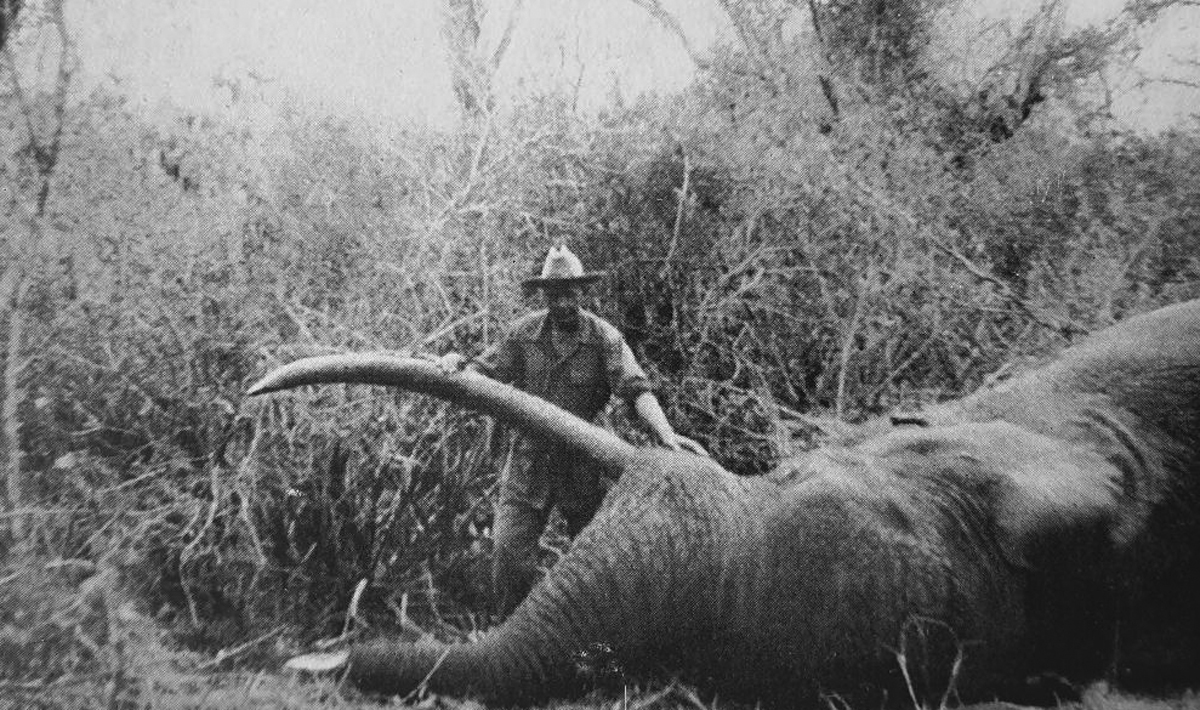
Blix was comfortable in the bush for long periods. Once, essentially alone, he searched for weeks for an elephant natives called Jaho (the invincible). The fabled beast had enormous tusks. But its tracks yielded no sightings. Then, early one morning, he woke to shouts, “Jaho!” Grabbing for his rifle, he found it gone! But lest he miss a chance to see the bull, he rushed out unarmed. Dawn’s gray light blessed him, briefly, with a silhouette. Blix stared at the biggest tusks he’d ever seen.
The stolen rifle turned up in the hands of the camp cook, whose fate is unrecorded.
On hearing of Blix’s encounter with Jaho, a Dutch friend, Mello Versluys, hired him to find the animal again. They came upon it in just a week. The shot was true. Tusk weight totaled 290 pounds.
Soon thereafter, Blix learned his mother was seriously ill. Immediately, he made the long trek to Stanley Falls to catch a steamer on the Congo to Matadi, an Atlantic port. He reached his mother before she died in June. Some sources also put 1925 as the year Blix and Tanne divorced.
British Major Richard “Dick” Cooper, one of Blix’s first sport-hunting clients, quickly became a close friend. Introduced to the game-rich Ngorongoro Crater, Dick was so impressed he bought a farm at nearby Babati. Letters Blix sent him from the field would become a treasury of insightful observations of all that defined safari. The prose was clean and clever, evoking vivid images of people, places and events. It revealed Blix’s deep appreciation for each day, with its hardships and humor, danger and delights.
On safari he traveled light. A loose khaki bush shirt matched the formality of his slouch hat and moccasins without socks. He wore no watch, no elephant-hair bracelet, carried no binocular, no knife. A reported flask was apparently borne by gun-bearers.
A budding safari business, with ivory from elephant control, paid Blix’s bills. In 20-odd years of hunting, he reportedly cleared £200,000, a fortune that diminished quickly between long stints in remote places. In 1923 he’d written Tanne from the Congo, offering help to get her a loan to buy out the Danish shareholders then controlling the farm. Tanne demurred.
In 1931, despite efforts to prevent its transfer, the Blixen farm below the Ngong Hills would sell. An offer of just £10,000 took 5,300 acres—essentially the whole. Tanne’s family had invested £115,000. The new owner promptly pulled 600 acres of coffee trees.
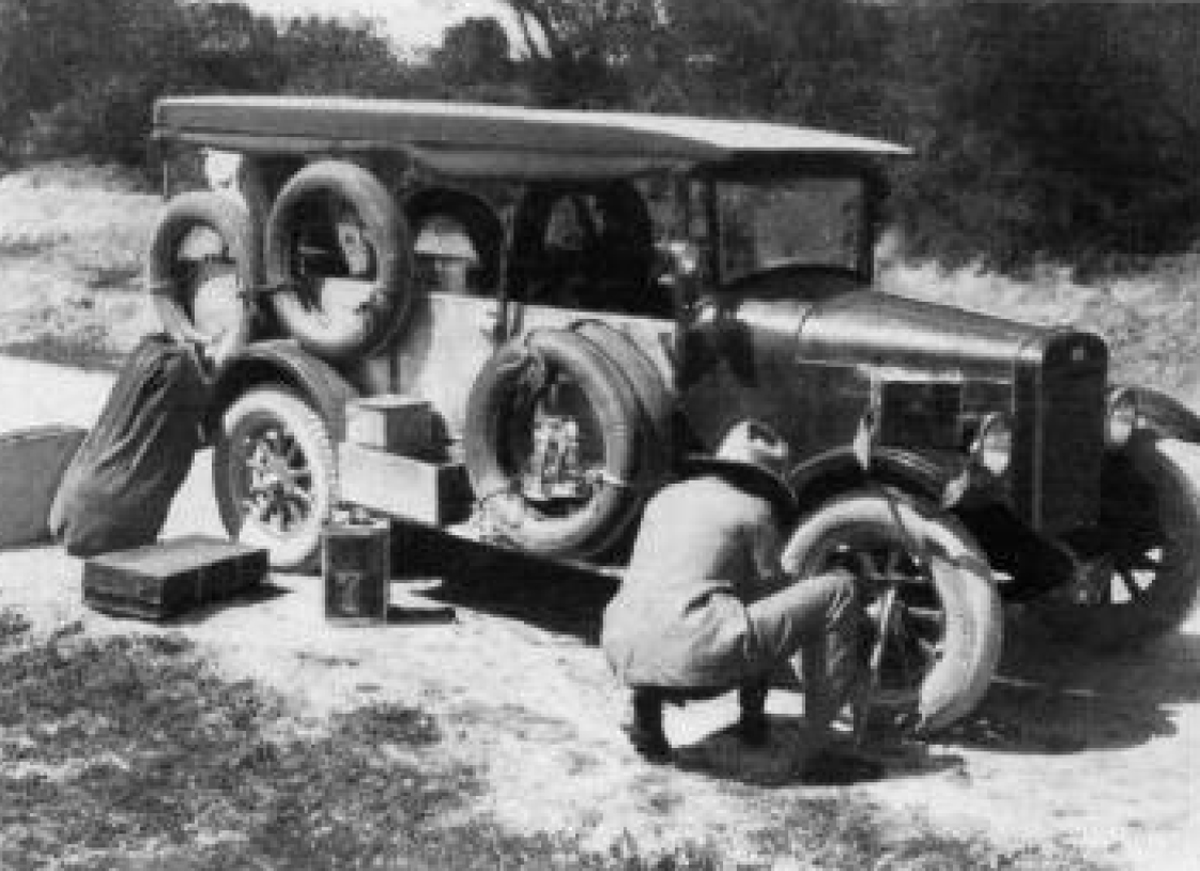
The trans-Africa safari Blix had started with Sir Charles Markham on The Vagrant in 1927 took a turn north when they bought the International car in Kano for a 2,800-mile marathon across the Sahara to Algiers. In temperatures reaching 125 F, radiator water continually boiled. Soft sand slowed the vehicle to 10 mph. Facing a month’s wait for petrol at one fuel stop, Blix persuaded the garrison’s French officer to release a few precious gallons from military stores. Shortly, faded depressions from military traffic were the only road.
The radiator cooked every 10 miles. Ali, their helper, despaired when promised seeps failed to show. The men sipped from near-empty tins of hot, salty water as the car sank in drifts. Jacking up the frame, they laid corrugated iron slabs ahead of the tires to advance 12 feet—then repeated the wearying routine again and again. One evening the track vanished. Two quarts of water remained for the three men and the car. At dawn they set a compass course. The shadow of a track appeared at noon, as the radiator took their last water. Then, steaming, the car stopped in soft sand. Blix climbed a dune. Far off, a wink of light…. Hallucination? No! A barrel! But full or empty? Petrol or water?
That drum of water saved them. Still just half-way across, they could fill their cans. Firmer earth on the Tanezruft desert sped the International along. At Algeria’s southern post of Adrah, an officer gave them four gallons of condemned aviation fuel—enough to reach Timimoun. Rough country beyond forced many tire changes and tube repairs. Then at last they dropped from the Atlas Mountains into Algiers. The car sailed with them to Marseilles, where it popped to life for the drive into Paris. The Markham-Blixen trip across the Sahara was the first ever in a “regular” car, a fact International Harvester advertised boldly!
Cockie welcomed Blix to Paris. By then her sharp wit, brash independence and infectious gaiety had hooked him. He spent freely on her, as was his habit with all women. He demanded no fidelity from her and gave none in return. They married in Sweden August 1, 1928, honeymooned in Scandinavia and partied on their arrival in Nairobi. Dick hosted them at his farm Singu and its 5,000-acre hunting lease. That November in nearby Arusha, the Prince of Wales arrived to hunt with Blix. He and Cockie pitched a tent on the hotel grounds for the welcoming. Prince Edward kept everyone dancing until dawn.
A caravan of cars trailed Blix and royalty to Singu. The prince shrugged off formal trappings and special treatment afield. He impressed all with his good cheer and good shooting and killed a fine lion.
Keen now to take up a career as a PH, Blix joined two friends, Jeff Manley and Philip Percival, to form Tanganyika Guides Ltd. Percival would become founding president of the East African Professional Hunters’ Association in 1934. Presumably he was the inspiration for “Pop” in Hemingway’s Green Hills of Africa. It is said Hemingway used Blix as the model for Robert Wilson, the hunter in The Short and Happy Life of Francis Macomber.
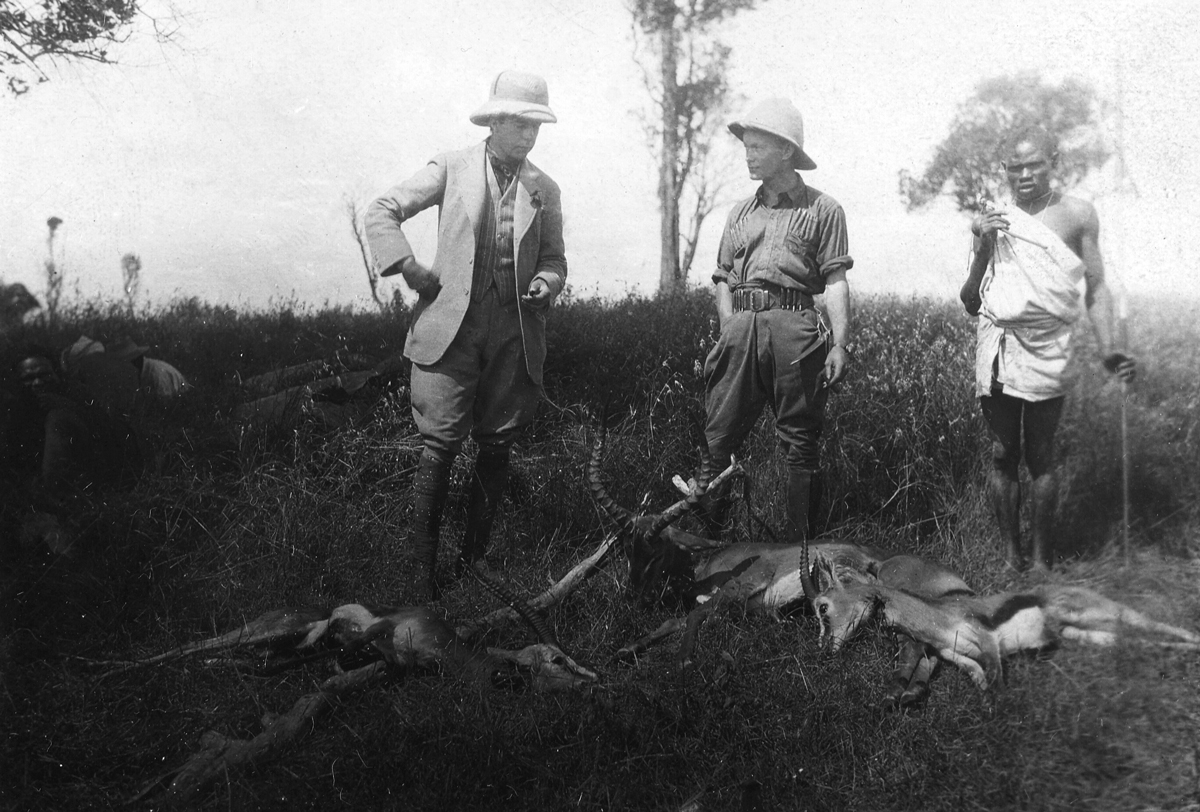
Safari plans for 1929 compelled Blix to relinquish his work for Dick at Singu. The following year Prince Edward returned for a go at elephant with him and Denys Finch-Hatton near Tsavo National Park. Long days on the track didn’t faze the prince; but a snapped twig as they readied for a shot at a big tusker sent the animal off. The prince accepted that result as hunting—effort, with no guaranteed returns.
The chronically unlucky Alfred Vanderbilt was equally charitable. But at the finish of a month’s frustrating hunt for an old elephant, he asked Blix, “If I come back, how much time would we need to get a big bull?”
“Two months should do it,” said Blix.
“Let’s make it three. This is the first time I’ve chased something money can’t buy. I’ve enjoyed every minute!”
Ironically, soon after Vanderbuilt left, Blix and Percival guided a father-daughter pair of clients. In a week they killed four elephants, with tusks that averaged over 100 pounds apiece!
To find elephants more efficiently, Blix engaged the services of Beryl Markham, a gifted Kenyan horse trainer and pilot who’d been married briefly to Charles’ brother. Attractive and spirited, she caught Blix’s eye. They shared times aloft and on safari and grew close. Returning from a trip to London, Cockie saw a challenge. “We never had a row about it,” she’d say later. Theirs was a permissive marriage. But in 1932, after another absence, he met Eva Dickson.
A Swedish adventuress, Eva and a female friend had driven from Dar-es-Salaam on challenging roads to meet Blix. Promptly he fell for her. On Cockie’s return he brought Eva to meet her at the airport, suggesting the three of them spend the weekend up-country. Cockie was quick to retort, “Two is enough. Take your pick.”
Blix chose Eva.
Mused Cockie long after divorcing Blix in 1933, “I was a fool. Had I stuck it out, that affair [with Eva] would have been over in six months. I’ve not regretted anything so much as leaving Blix. He was a wonderful—unfaithful—husband, and the best lover I ever had.” Beryl Markham would remark that “Blix was incorrigible” and, at age 50, “of undiminished appetite, stamina and extravagance.” Even among his colleagues, his charm was legendary. “Although he was my mother’s cousin,” said Tony Dyer, a PH best-known for hosting Robert Ruark on safari, “my father never dared let my mother meet Blix.” What was said of Bror Blixen reached far beyond Kenya’s borders.
Born in 1905, Eva was raised at Sweden’s Ljung Castle. At 19 she married race car driver Olle Dickson. Soon she was showing him up at rallies. They divorced amiably. She bought a fashion house in Stockholm but missed the thrills of the track. Word of a dashing baron in East Africa drew her to Babati. Blix doted on her. Well aware of his reputation, she was non-committal. The chance to prove herself to Muthaiga Club regulars came when one of them bet a case of bubbly she couldn’t motor across the Sahara in 30 days drive time. She and a Somali helper left Nairobi in a six-cylinder Chevrolet late in November, 1932, on the path traveled by Markham and Blix. She arrived in Algiers 27 driving days later.
An able huntress, Eva joined Blix on safari with American ornithologists in 1933. This trip, and another with George Vanderbilt two years later, stoked Blix’s interest in photography. He observed that a good photo “demands more skill from the hunter, better nerves and more patience than a rifle shot.” The Vanderbilt safari was grand and costly, 20 trucks hauling gear and stores. Philip Percival assisted as a PH, Don Ker as camp manager. At trip’s end, Eva, Dick and Blix met in Palm Beach to fish in the Bahamas with Ernest Hemingway from his boat Pilar. Eva became the third Baroness von Blixen in New York. On their way back to Kenya, she and Blix visited Abyssinia to explore new game fields. But Europe was on edge. As the couple entered Addis Abba, Mussolini’s troops prepared to march on the capital. The last leg of their trip reportedly began with a quick exit on two mules!
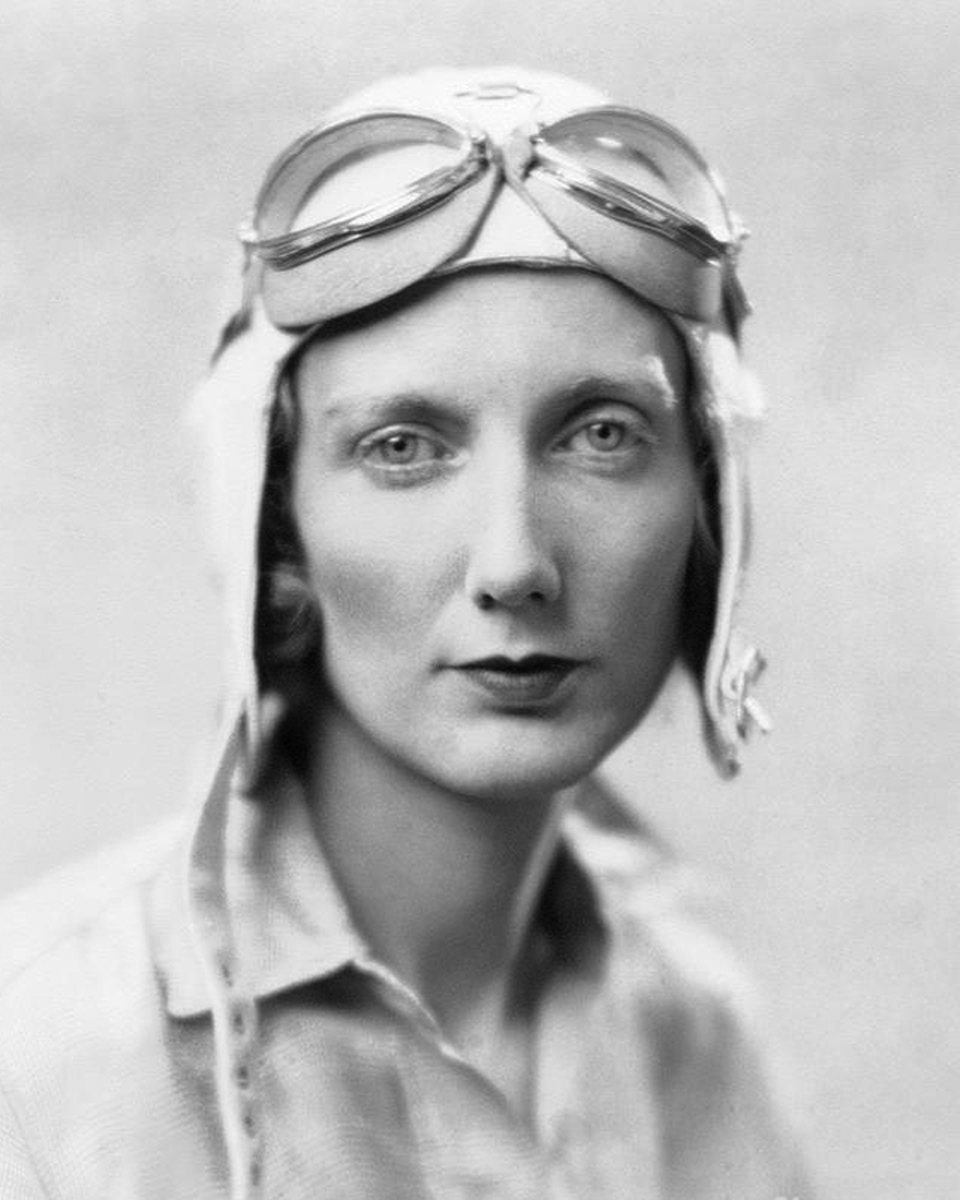
Blix left room in his 1936 schedule for a promised flight with Beryl Markham to England in her Leopard Moth. Beryl would later make history as the first person to fly solo across the Atlantic, east to west, a trip ably chronicled in her book, West with the Night. Threading the Italian net over North Africa, pilot and PH climbed above a white-out and strong winds over Sardinia to refuel at Cannes. They joined Ernest Hemingway, fresh from the Spanish-American War, at the Ritz in Paris.
Two years later, as she planned a marathon drive across Asia, Eva died in a car accident. Sources differ on the crash site, either in India or Iraq. Grieving, Blix left Africa. The family of a client hired him to develop a wildfowl hunting preserve on Gardiner’s Island, leased outside New York City. He stayed a few months. In 1939, Russia invaded Finland. Blix joined a movement to establish a mobile field hospital. By February, 1940, it raised $100,000. With eight doctors, 10 nurses, 18 trucks and 45 tons of equipment, Blix sailed on the Swedish SS Drottningholm for Norway.
War’s end found Blix unsure of his place. He spent summers with relatives at Falsterbo, a resort in southern Sweden. There he met Ruth—or, as he called her, “Mor,” for “Lilla More” (my little mother). Cheerful, practical and independent, she ran a kennel and bred Riessenschnauzers. Blix found her a fine companion, a confidant with whom he could share anything. She didn’t judge him. “He was always so kind and considerate to me. Generous to a fault…. We had so much fun together. They were the happiest years of my life.”
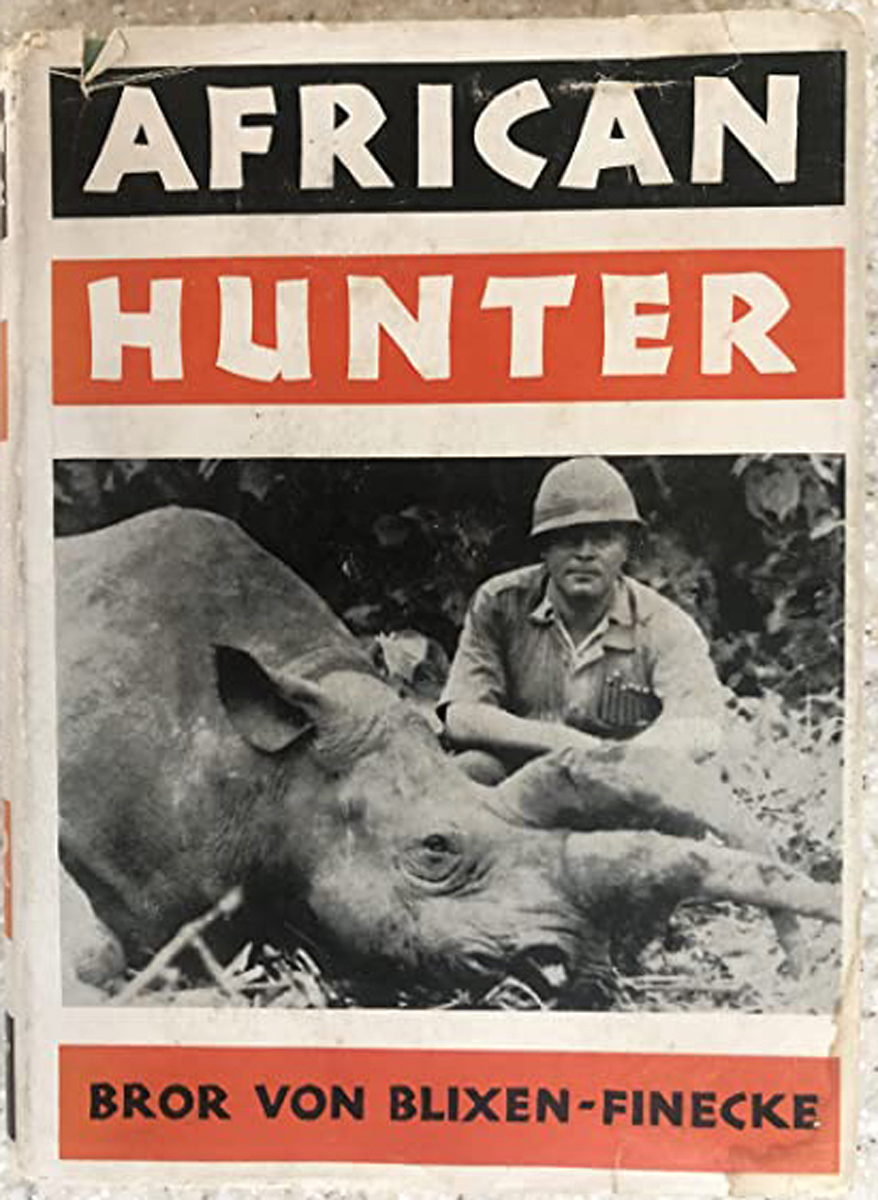
During this time, Blix wrote his second book, Letters from Africa, to follow African Hunter.
“Come on, you two. We’re off!” said his friend, arriving to pick up Blix and Mor during a spring snow in 1946. “Tonight’s will be the best party ever!” The drive to his host’s place was short; but for an instant the tires slid on slick pavement. The vehicle struck a tree. Blix would die of injuries sustained with his arms around Mor to keep her from hitting the windscreen.
It was a gallant last act for the man who had lived and loved without apology.