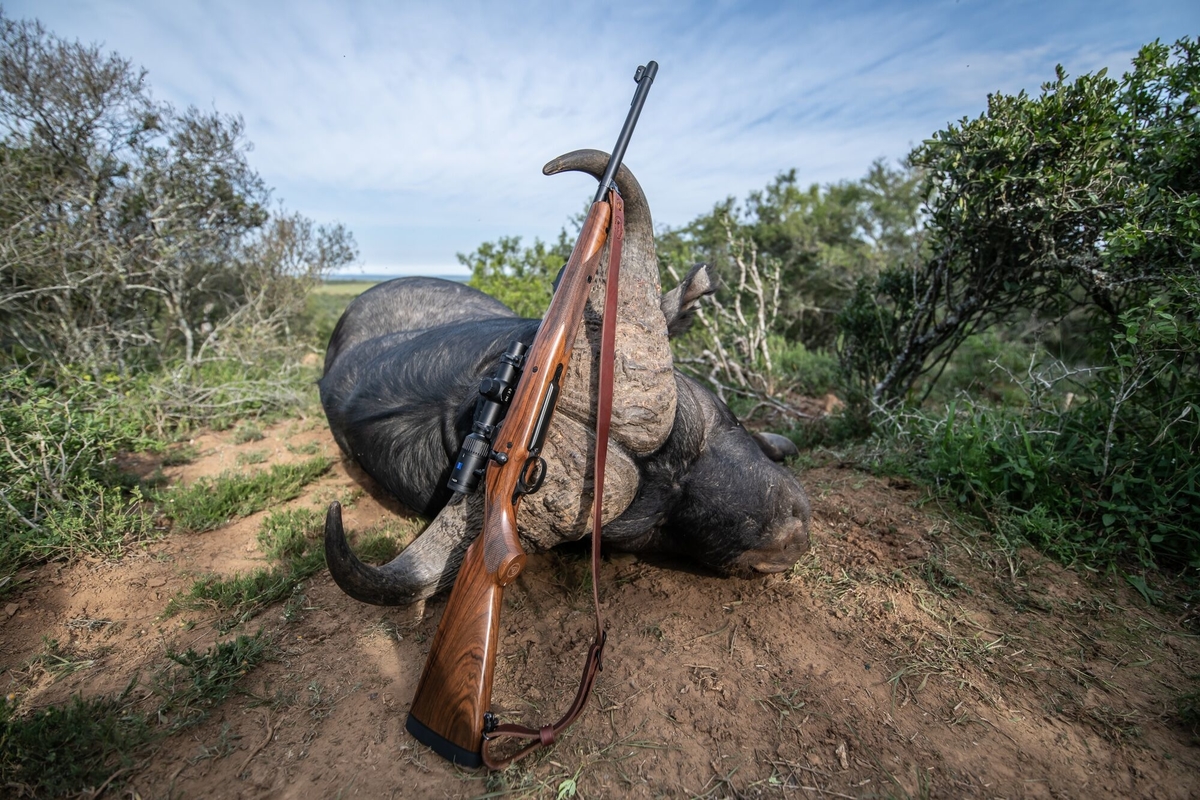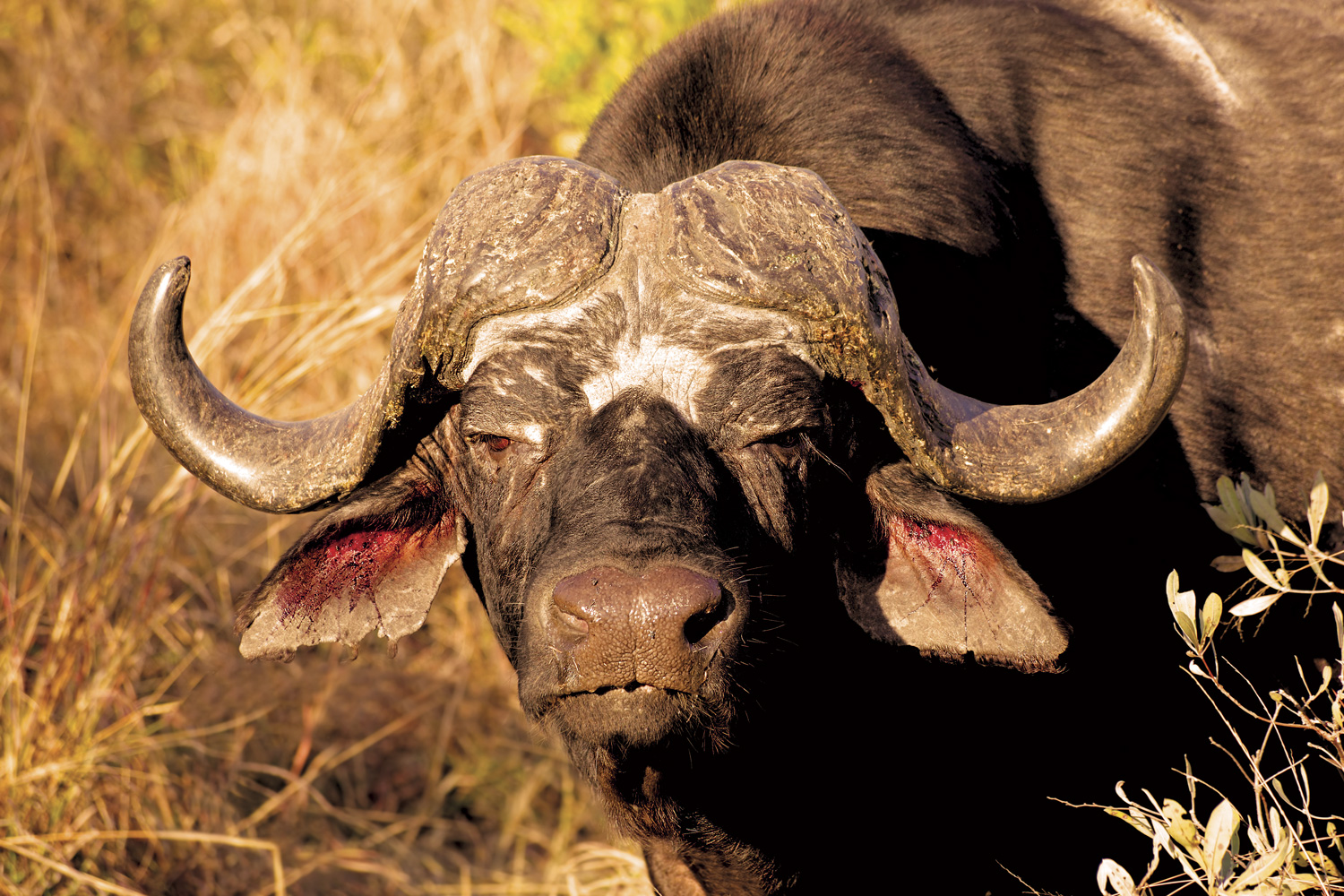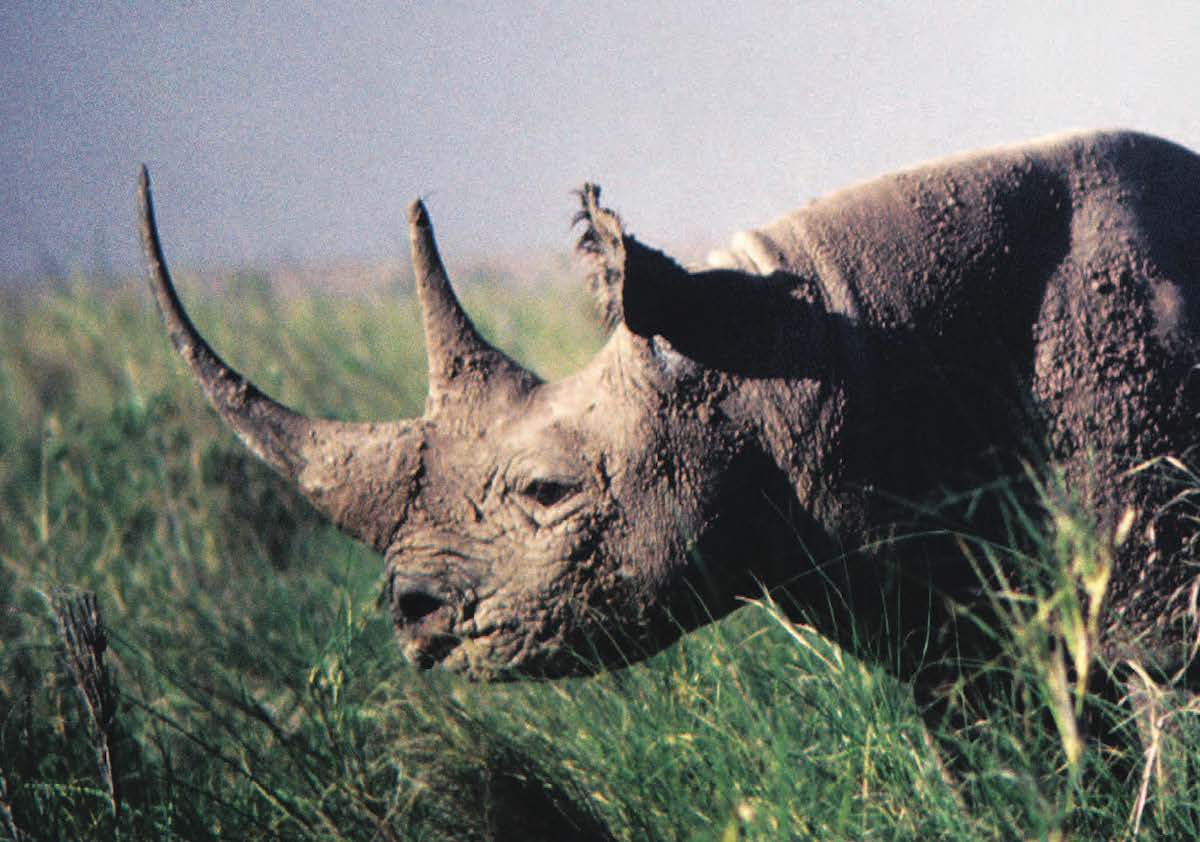
First, let’s get the all-round 375 H&H out of the way. Fine though it is, it’s been dominating Africa rifles discussions too long. Yes, this may indeed be the ultimate one-gun option. With the right bullets at the right muzzle velocity this 111-year-old cartridge is adequate for elephant and buffalo. And yes, it shoots flat enough to 300, even 400 yards. With a 260- to 270-grain bullet, it pretty nearly matches the trajectory curve of a 180-grain spire point from a 30-06. And it does not fly so fast that it tears the smaller antelope to excess. Slip a fairly hard, controlled-expansion bullet—something like a Swift A-Frame, Federal Terminal Ascent, or any copper hollow point—behind the shoulder of a small antelope and it’ll deflate the lungs without pulverizing half the meat.
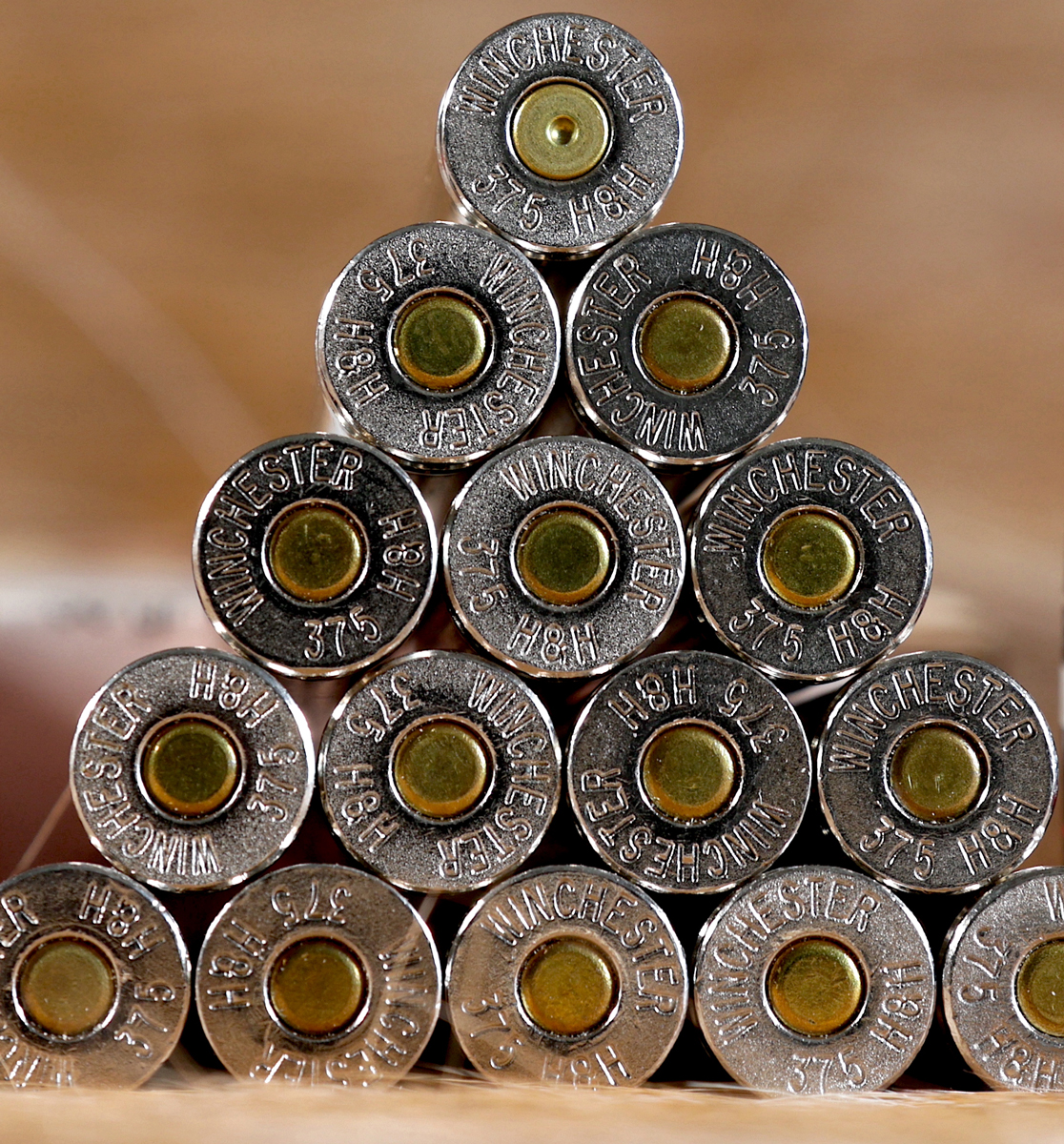
To some, the 375 H&H is not just the top of the Africa cartridge heap, but the foundation and middle, too.
So grab your 375 H&H and go. But if you like something different, something continental (dare we say Germanic?) take a hard look at the 9.3mms. Largely unknown in the USA, 9.3mms (.366-inch diameter bullets) were common across Europe in the late 19th and early 20th centuries, most designed by Germans. The 9.3×74 Rimmed was popular in break-action doubles, the 9.3x64mm Brenneke and 9.3x62mm Mauser in bolt-actions. The latter was so commonly and successfully used by German settlers in Tanzania and Namibia that is has been grandfathered in as one exception to the 375 H&H minimum rule for dangerous game. RWS ammunition drives a 293-grain spire point 2,263 fps to generate 3,332 foot-pounds kinetic energy. The 375 H&H churns up 4,164 foot-pounds with a 300-grain slug at 2,500 fps.
Early 9.3x62mm shooters benefited not only from the cartridge, but the rifles most often firing it—the strong, famously rugged and reliable M98 Mauser. This was a beloved and dependable combination for buffalo and lion.

Hunters more comfortable with larger bullets, calibers and punch on buffalo and elephants will undoubtedly flirt with the 470 Nitro Express. That is the classic powerhouse in double rifles. But the firepower inherent in a four- or five-shot bolt action matched with a more reasonable price tag drags more options off the rack. Big bore enthusiasts are often pleasantly surprised when they discover the 458 Lott with a 500-grain bullet carries more energy than a 500-grain or even 600-grain from the 470 Nitro. Figure 5,000- to 5,175 foot-pounds from the 470 Nitro, 5,500 to 6,000 foot-pounds from the Lott.
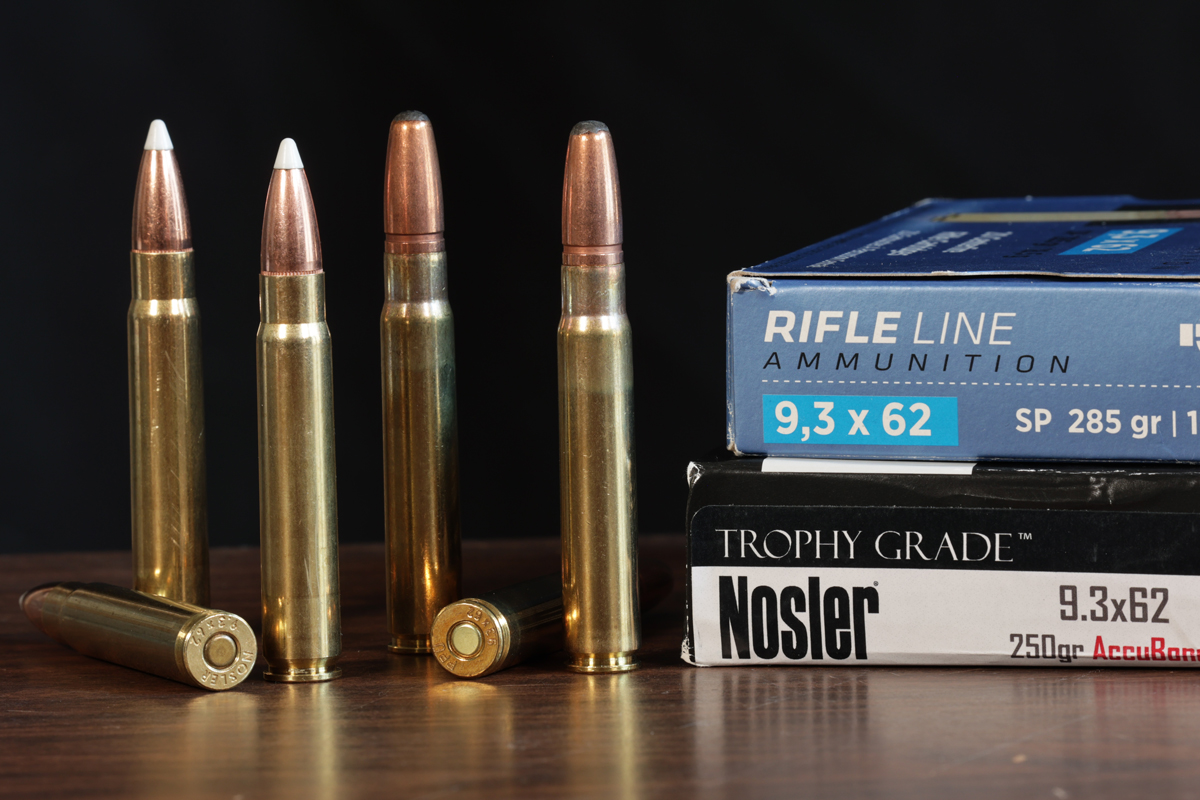
Little known in the USA, Otto Bock’s 9.3mm of 1905 throws 286-grain .366-inch bullets fast enough to generate 3,970 foot-pound of buffalo crushing energy.
Similarly, the 416 Remington Magnum (a necked-up 375 H&H case) chambered in widely available and affordable bolt-actions is a sensible substitute for the bulkier (and admittedly more romantic) 416 Rigby, which requires a magnum-sized action. Both cartridges will push 400-grain slugs 2,400 fps for about 5,100 foot-pounds punch.
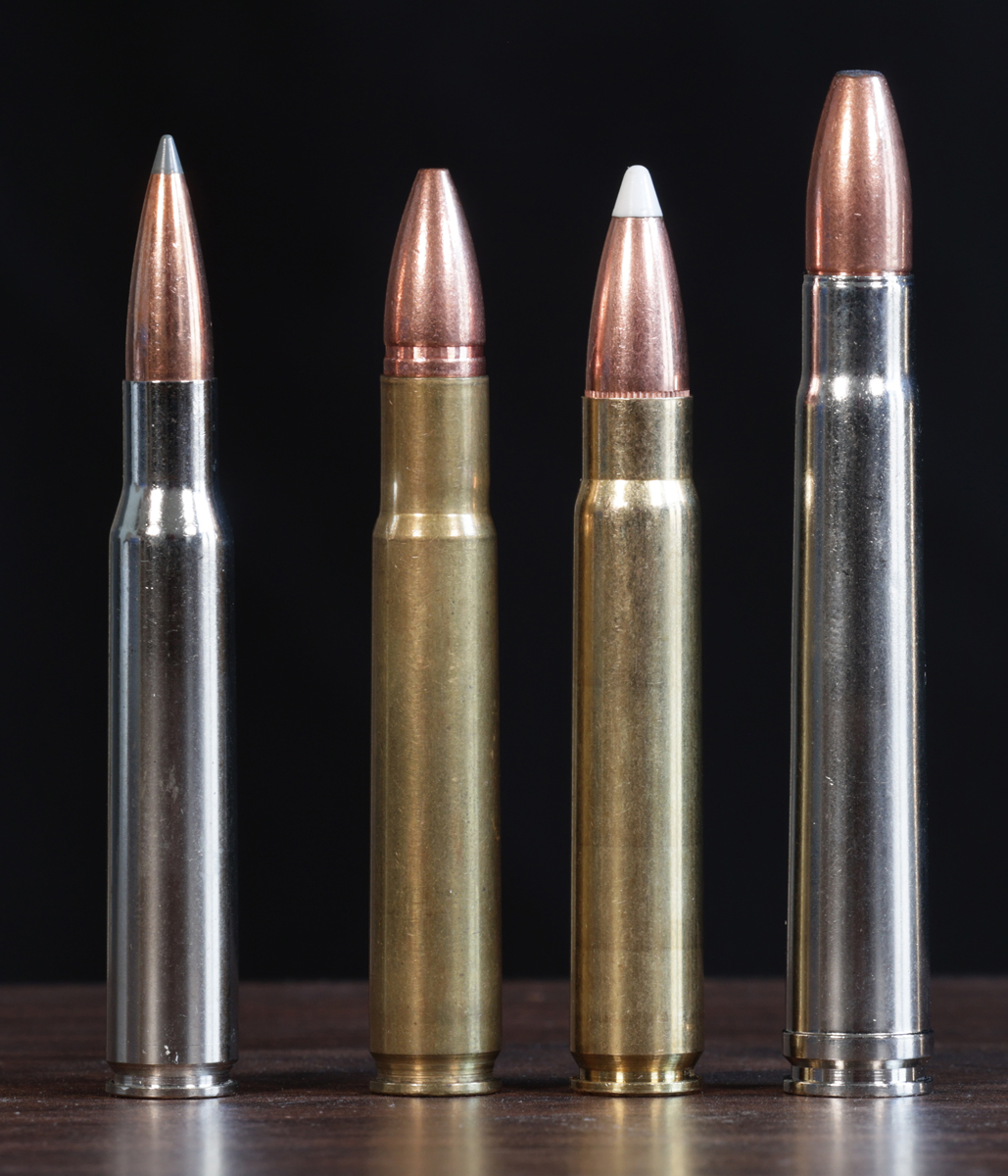
Of these highly efficient rounds, only the 35 Whelen, second from left, has been short-changed on African work. It’s a near performance twin to the 9.3×62, more powerful than the 30-06 and not a lot less than the 375 H&H.
Going whole hog big bore suggests the 500 Nitro Express, 577 Nitro Express, 500 Jeffery and 505 Gibbs. Each cranks out 6,000 to 7,000 foot-pounds of muzzle energy and free recoil to match. The only further steps up are the 600 and 700 Nitro Express rounds delivering 8,400 and 8,900 foot-pounds, respectively. Finding rifles chambered for them (mostly doubles) is a supreme challenge. Total worldwide is likely less than than 100. That’s fine because neither is a practical choice due to rifle weight, recoil and penetration potential of the bullets at the muzzle velocities each generates. Craig Boddington has witnessed solid head shots on elephant that missed the brain, yet failed to drop or even stun the bulls.
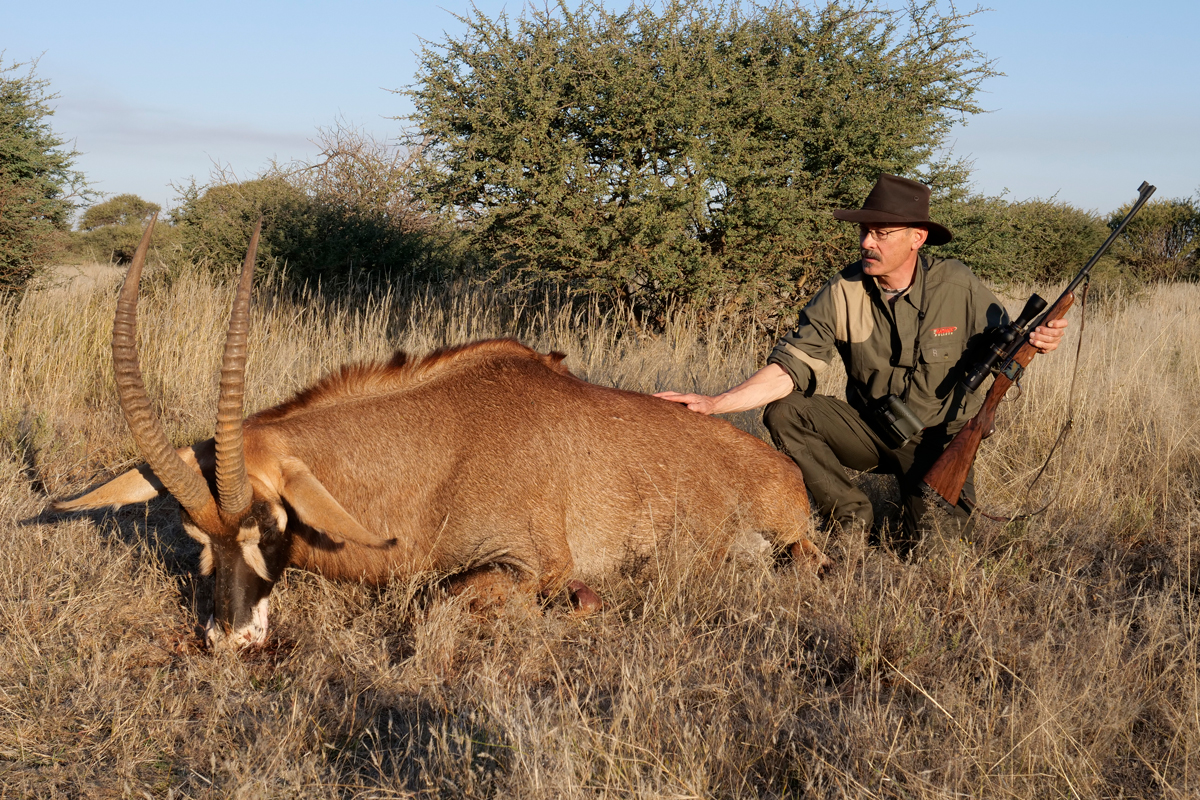
Spomer discovered Karamojo Bell was onto something when he hired a Dakota M10 falling block single shot chambered 7×57 to take this splendid roan, the third heaviest antelope in Africa.
Fortunately, most of us will hunt African game requiring appreciably less bullet energy. Plains game species across the continent are more affordable, more accessible and more abundant. For every buffalo, elephant, lion and leopard hunter there are probably 1,000 plains game hunters. And, despite the 1,800-pound bulk of the southern eland, the 500-pound desert durability of the semi-desiccated Kalahari oryx and the lion-killing toughness of the sable, all these antelope can be and have been neatly “sorted out” with ordinary elk and deer hunting cartridges.
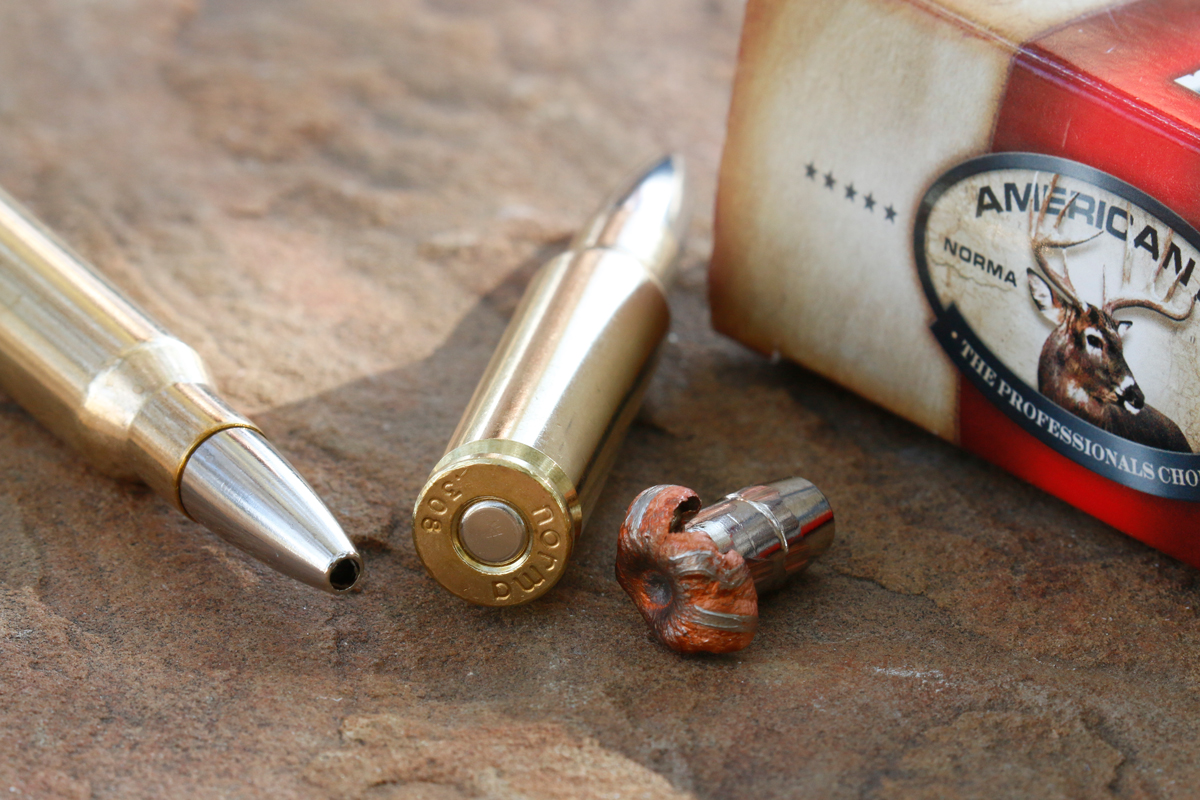
Even the common, lowly 308 Winchester has proven deadly on African plains game, especially when spitting copper hollow points like this Norma Kalahari. Late in life Bell met the 308 Win. and declared it would likely replace his 7×57 as the ultimate choice for elephant.
Yes, we are referencing the boring 30-06, but also the nearly 60-year old 300 Winchester Magnum, every other 30-caliber magnum, the 30-06 Short (308 Winchester) and variations on that theme. But don’t stop there. Try the 338s. The 35s. The 338 Winchester Magnum, of course, comes highly recommended. But why not the 338 Federal? Imagine the swath you could cut with a 35 Whelen. Try Teutonic again with the proven 8×57 JS Mauser or Scandinavian with the extremely potent 338 Norma Magnum.
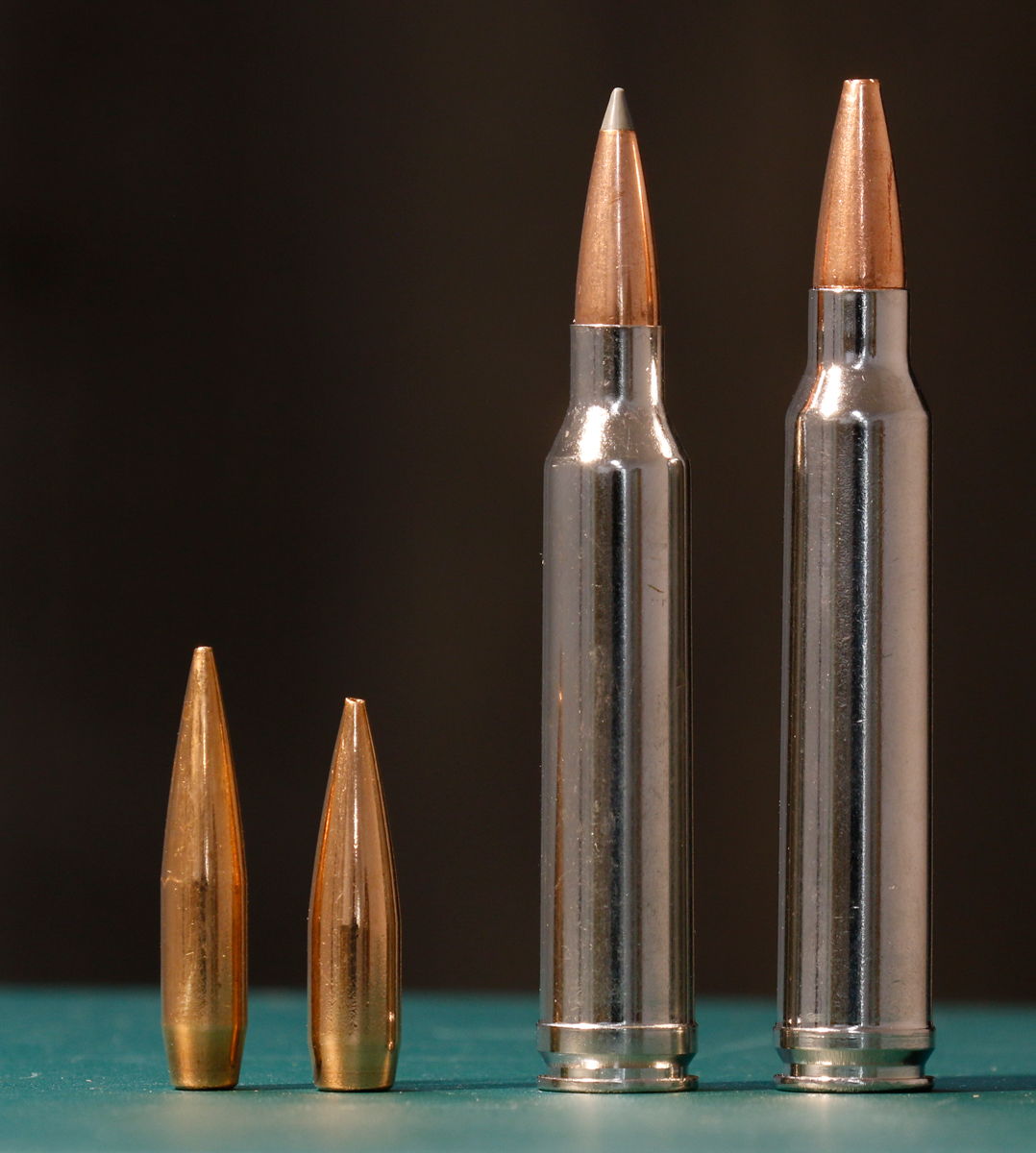
While hunters debate the relative performances of 7mm Rem. Mag. and 300 Win. Mag. cartridges, African plains game don’t seem to notice whether the bullet that hits is .284” or .308” in diameter.
Our 7mms come in for their share of Africa work going back to the late 19th century. We’re not sure who was first to apply a 7x57mm Mauser in the wilds of Africa, but Scotsman Bell certainly cemented its reputation. And not just on 800 elephant. Buffalo, kudu, puku, warthog, eland—Bell had to collect fresh meat daily to keep his porters and staff in top condition. And his 275 Rigby, aka 7x57mm Mauser, handled them all. With today’s powders and bullets, it’s better than ever, but you’ll want to handload to maximize its potential. Still, even with factory ammo, the 7×57 Mauser remains a fine option as a general-purpose hunting round. Its performance is matched by the newer 280 Remington, 7×64 Brenneke and 7mm-08 Remington. None of the kudu, oryx, blue wildebeest, warthogs, eland, dik dik and other species I’ve introduced to these little 7mms voted in favor of them. That means, by extension, that any and all of our 7mm magnums should be on our suitability list, too. And if you are one of the legion who believe the 7mm Rem. Mag. shoots through game “too quickly for the bullet to open,” we need to talk about kinetic energy before even considering the 7mm STW, Weatherby Magnum, 7mm RUM and 28 Nosler.
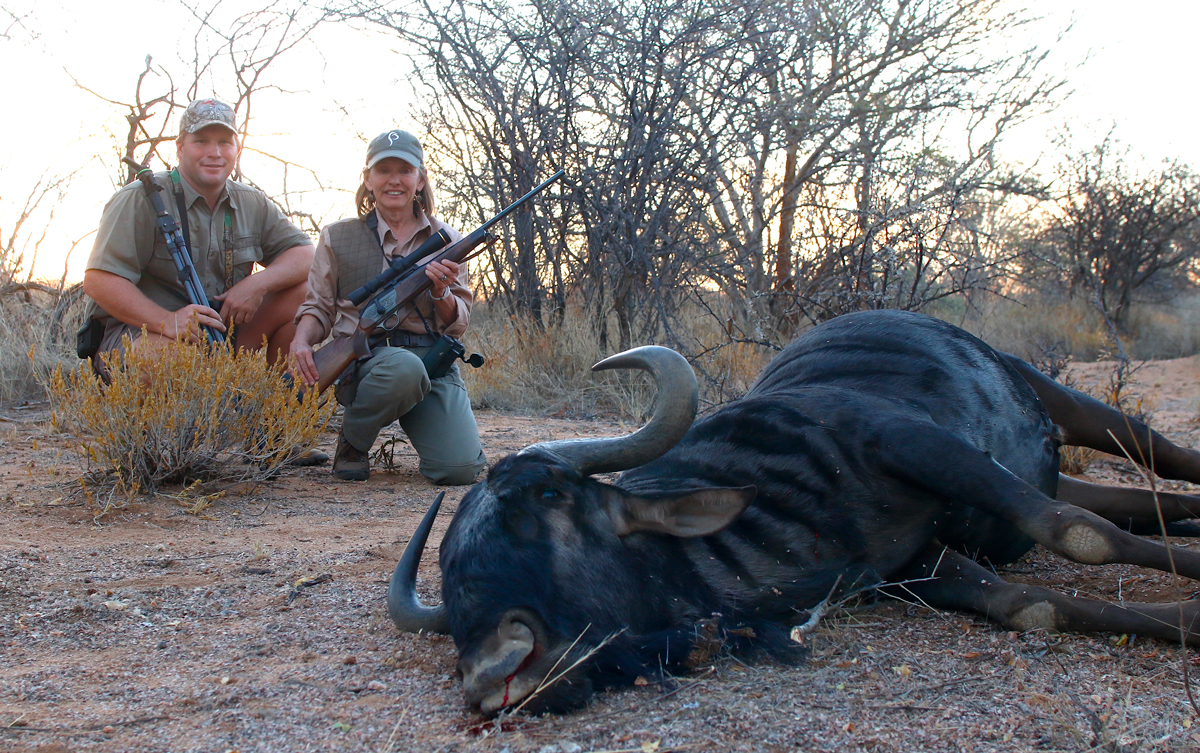
Namibian guide Werner von Seydlitz had no worries when Betsy Spomer leveled her Blaser 300 Win. Mag. on this blue wildebeest.
One Norma Kalahari bullet to the chest concluded the hunt.
For at least half a century our 7mms have been generating at least as much heat as the campfires around which they are discussed. In the hopes we’ll add more light than heat, let’s consider the relative differences between the 7mm Remington Magnum and 300 Winchester Magnum, the latter the “Holy Grail of Plains Game” cartridges. Bullet diameter difference: 0.024 of an inch. Mark those spans on a page and ask yourself if that hair’s width is going to make a difference when a 175-grain bullet going 2,500 fps (1,700 miles per hour) meets hide, muscle and bone. Bigger entrance hole? Really?
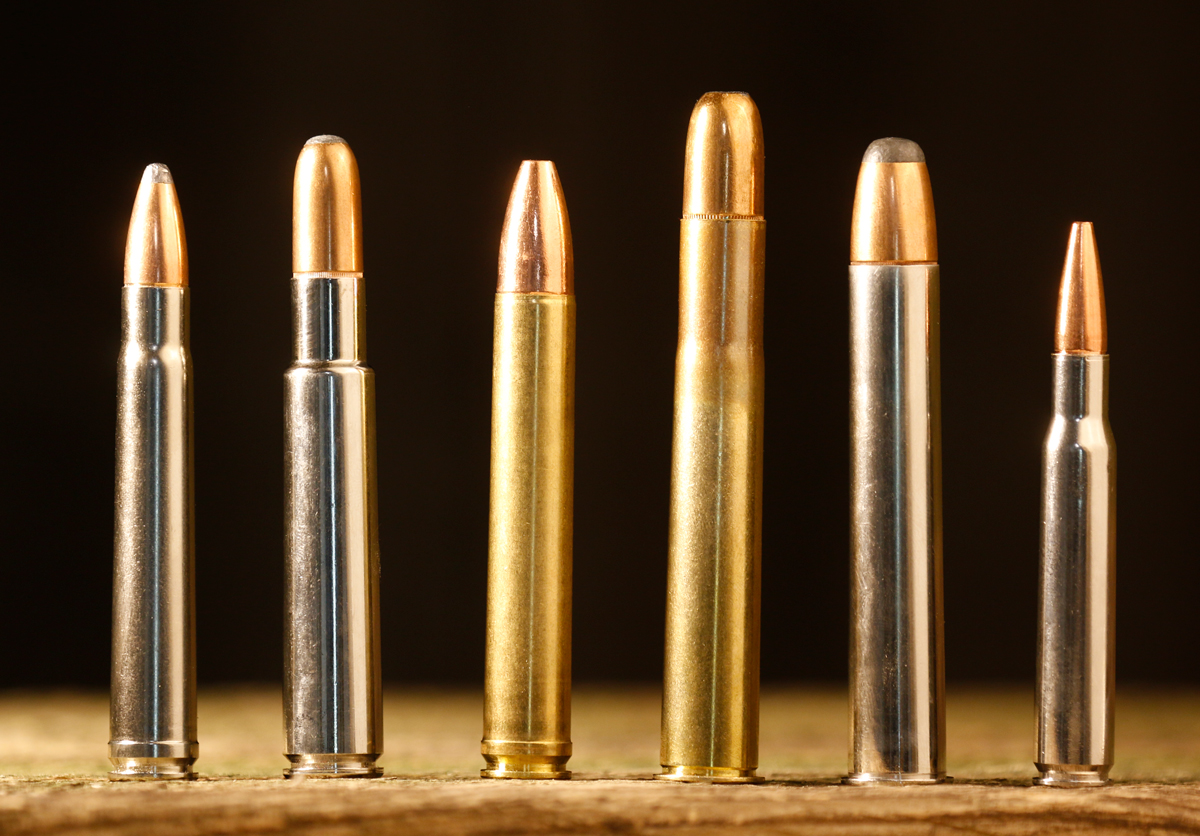
The 30-06 at far right puts some big bore Africa cartridges into perspective. But are they really necessary?
Then consider mass and energy. The classic 180-grain 300 Winchester Magnum spire point launched at 3,000 fps is carrying about 2,630 foot-pounds energy at 200 yards. The 175-grain 7mm Remington Magnum bullet started at 2,900 fps delivers 2,440 foot-pounds at 200. The 7mm will be moving about 2,500 fps, the 300 Win. Mag. projectile about 2,560 fps. If the 7mm zips through too fast to open, what’s the 300 Win. Mag. doing?
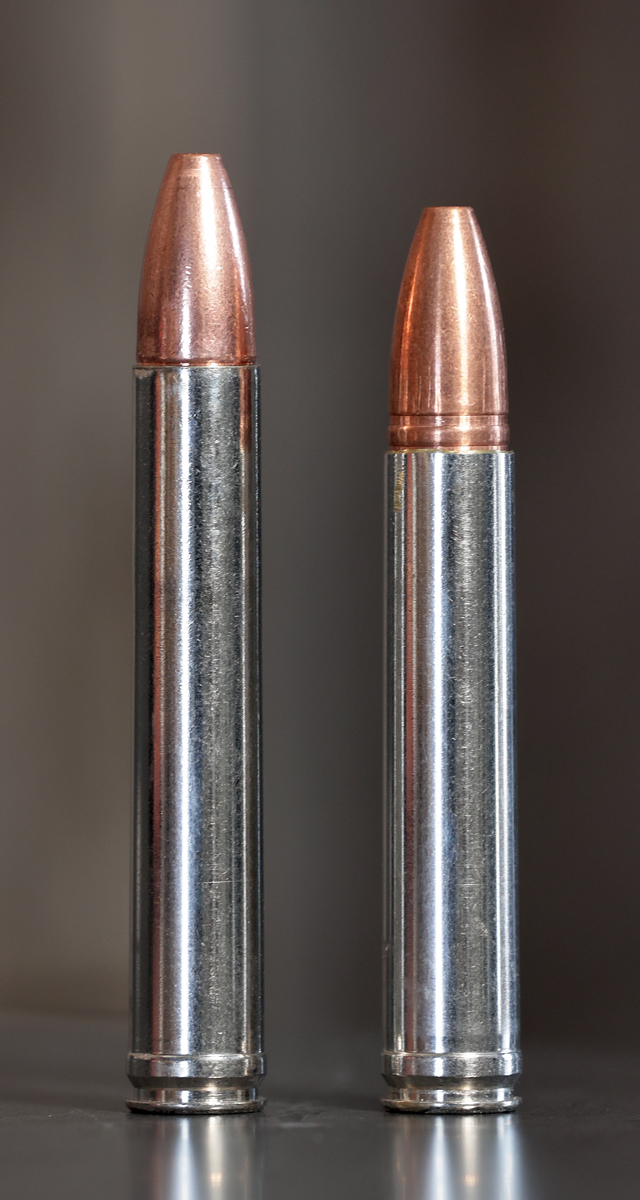
The 458 Lott, stretched version of the 458 Win. Mag., actually churns up more power than the venerable 470 Nitro Express.
The Newtonian truth is that velocity increases kinetic energy. The faster it is going when it hits, the more energy it delivers. The more energy it delivers, the more it expands. The more it expands, the more tissues it touches and tears.
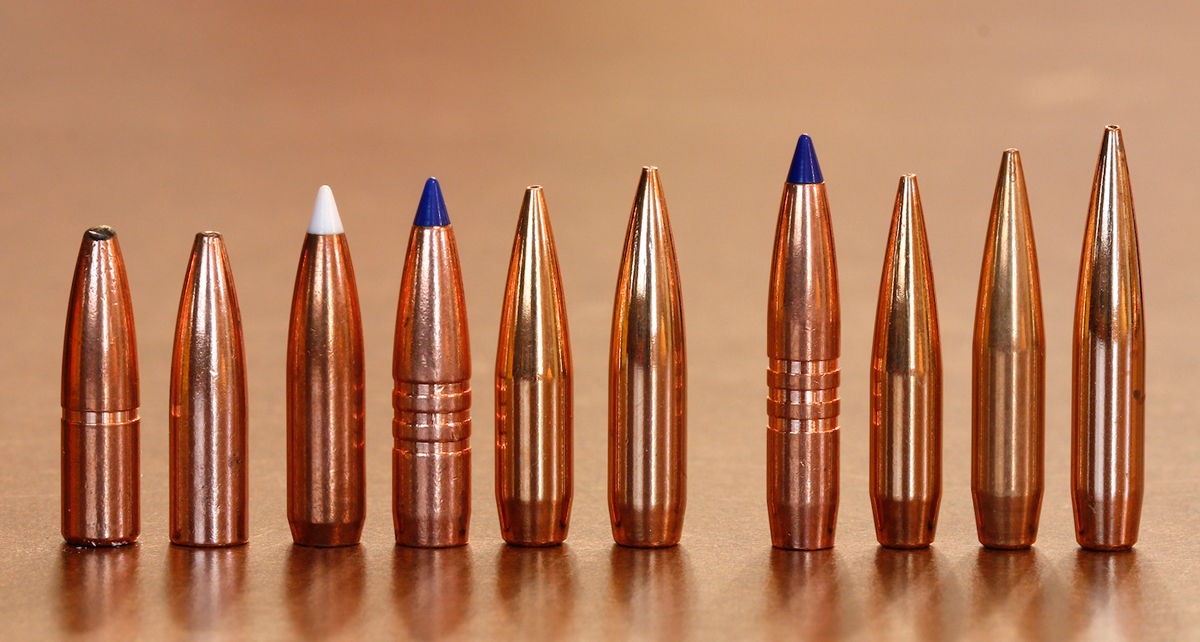
The 300 and 7mm magnums can throw similar weight bullets to similar muzzle velocities. The .308s store the mass in 0.024” more width. The 7mms store it in more length.
And there’s the real key to effective cartridge/bullet performance on African game. Forget the brand. Forget the name. Forget case length and diameter and shoulder angle. Focus on the downrange energy and match it to a bullet that will reliably expand and penetrate at that velocity/energy. The ideal bullet at 50 yards will not likely be ideal at 500 yards, but many come close. And when they do it won’t matter if one started its journey when .308-inch wide and another when .284-inch wide.
Finally, we must be realistic about the operator behind our magic tools. Can we more precisely deliver the goods to the sticking place under 20 foot-pounds of recoil or 80 foot-pounds? Placement, after all, is job one. We can’t assess, let alone argue, expansion, penetration and wound channel until bullet placement is done.