
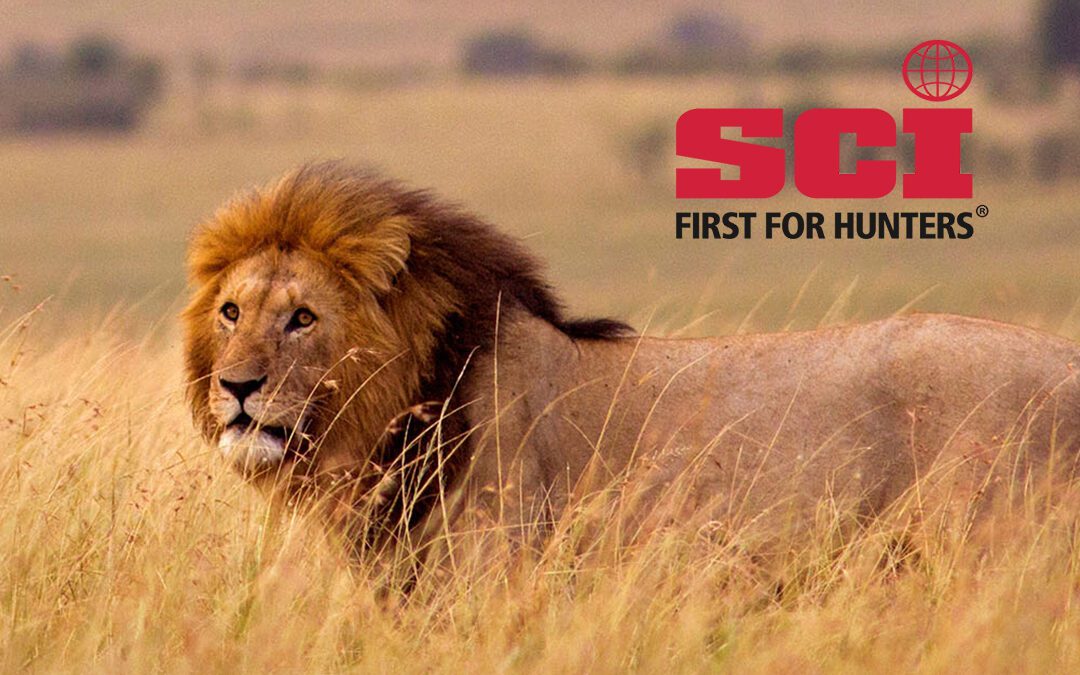
If someone asked me which conservation organization I would want standing beside hunters when the next political assault arrives, my answer would be immediate: Safari Club International.
That isn’t because SCI is the largest hunting organization or because it hosts world-class conventions, celebrates hunting achievements, or promotes international adventure. I support Safari Club International because it understands something many sportsmen still underestimate: every conservation victory won on the landscape can be erased if no one is willing to defend it in courtrooms, legislatures, regulatory agencies, and the court of public opinion.
Habitat alone cannot protect hunting. Science alone cannot protect wildlife management. Someone has to defend the institutions, policies, and legal framework that make conservation possible in the first place.
For well over a century, North American hunters have built what many consider the most successful wildlife restoration model ever devised. Billions of dollars have flowed into conservation through hunting licenses, Pittman-Robertson excise taxes, wildlife stamp programs, private land stewardship, conservation easements, and hunter-funded organizations that have restored millions of acres of habitat.
While hunters may pursue elk, ducks, sheep, deer, or quail, the forests, wetlands, prairies, rivers, and grasslands they finance support hundreds of nongame species that benefit from the same investments. Wild turkey populations have rebounded dramatically. Rocky Mountain elk thrive across much of the West. Whitetail deer are more abundant today than at any time in modern history. Waterfowl populations have recovered because wetlands were protected. Bighorn sheep, pronghorn, wood ducks, black bears, and countless other species owe much of their success to a conservation system largely funded by hunters themselves.
None of this happened by accident. It happened because generations of sportsmen invested their own money, donated their time, and embraced science-based wildlife management decades before conservation became fashionable.
Ironically, despite this extraordinary success, the greatest threat facing conservation today is not biological—it is ideological. Animal-rights organizations have become fundraising giants, raising enormous sums through emotionally charged campaigns that portray hunting as cruel while readily ignoring the very funding model responsible for restoring wildlife across North America and much of the world. Increasingly, their objective goes beyond opposing individual hunting methods. Many seek to dismantle hunting itself and, with it, the conservation system that has financed wildlife management for generations.
Their strategy has grown progressively advanced. Rather than debating wildlife science, they attempt to reframe it. Rather than persuading professional wildlife managers, they seek political appointments that allow them to influence wildlife commissions and regulatory agencies. Rather than trusting peer-reviewed management, they promote emotionally appealing plots often built upon chosen data or questionable research. In too many cases, university professors and researchers have been willing to lend academic credibility to advocacy dressed up as science, particularly when outside funding aligns with predetermined political outcomes.
At the same time, ballot initiatives and social media campaigns have reduced complex wildlife management decisions to simplistic, emotional slogans. “Ballot-box biology” has become one of the most effective weapons in the animal-rights movement’s arsenal, allowing complex biological questions to be decided by advertising campaigns rather than by professional wildlife managers.
This is precisely why Safari Club International has become indispensable. While many organizations do extraordinary work restoring habitat, increasing public access, and funding wildlife research, SCI has willingly accepted the far less glamorous responsibility of defending the entire conservation system. The organization understands that restoring habitat means little if lawmakers eliminate the hunting opportunities that finance it. It understands that wildlife agencies cannot efficiently manage wildlife if they become political battlegrounds rather than science-based institutions. Above all, SCI recognizes that conservation ultimately fails whenever ideology replaces biology.
That mission becomes even more important on the international stage. Across Africa and elsewhere, foreign governments and well-funded advocacy groups continue to push trophy import bans, driven largely by emotion rather than measurable conservation outcomes. Those policies may generate favorable headlines in wealthy nations, but their consequences are borne by rural communities that live alongside elephants, lions, leopards, buffalo, and other dangerous wildlife every day. In those communities, wildlife must provide tangible value if it is to survive.
Revenue generated through regulated hunting funds anti-poaching efforts, habitat conservation, schools, medical clinics, meat distribution, local employment, and incentives that encourage people to tolerate wildlife instead of eliminating it. Remove that value through politically motivated trophy import bans, and wildlife quickly becomes an expensive liability competing with crops, livestock, and human safety. The people who suffer most are not the activists celebrating the bans from thousands of miles away. They are the families who share their farms and villages with dangerous animals.
For decades, Safari Club International has given those communities something they rarely receive in international policy debates: a voice. SCI has consistently reminded policymakers that successful conservation depends upon local people benefiting from wildlife rather than simply being asked to coexist with it for someone else’s moral satisfaction. That message is not always politically convenient, yet decades of conservation experience across southern Africa continue to demonstrate its validity.
Closer to home, SCI remains equally vigilant. Its attorneys monitor legislation, its policy experts analyze regulations, its advocates engage federal agencies, its communications professionals respond when misinformation gains traction, and its lobbyists work the halls of Capitol Hill protecting hunting rights that many sportsmen mistakenly assume will always exist. Increasingly, those rights cannot be taken for granted.
Ballot initiatives seek to prohibit lawful hunting methods. States consider restrictions on trophy imports despite having no wildlife populations affected by those decisions. Activist organizations target predator hunting, bear hunting, mountain lion hunting, trapping, and other longstanding wildlife management tools one campaign at a time. None of these efforts exist in isolation. Together, they represent a deliberate, long-term strategy to gradually weaken public acceptance of hunting until political elimination becomes achievable.
That reality requires far more than excellent habitat work. It demands organizations willing to play defense (and offense) every single day. Safari Club International serves as the global insurance policy for hunters and for conservation itself. It monitors legislative strategies, evaluates international treaties, challenges unlawful government actions, educates policymakers, funds litigation when necessary, and continually reminds the public that hunters remain the world’s single greatest private investors in wildlife conservation.
Much of that work happens quietly. Most sportsmen never hear about the lawsuit that prevented a harmful regulation, the agency decision that changed behind closed doors, or the legislation that was defeated before it ever became a headline. Like any good insurance policy, its greatest value becomes apparent only when disaster has been avoided.

For those of us who believe hunting and conservation are inseparable, supporting Safari Club International is about far more than protecting hunting opportunities. It is about defending the conservation model that has restored wildlife across North America and sustained biodiversity around the globe. If hunters fail to defend that model politically, legally, and culturally, no amount of habitat restoration will preserve it for future generations. The future of conservation will certainly continue to be shaped in forests, wetlands, mountains, and African savannas, but it will be decided just as often in legislative chambers, courtrooms, regulatory agencies, and the marketplace of public opinion.
Fortunately for hunters—and for wildlife—Safari Club International has chosen to stand watch wherever those battles are fought.