

Washington is full of people willing to tell a sportsman what he wants to hear. Finding someone who will tell him what he needs to know takes more insight. That is one reason the Congressional Sportsmen’s Foundation stays near the top of my call list.
I’ve served on its board for several years, long enough to appreciate something that doesn’t fit neatly into an annual report: judgment. CSF’s policy team members are the adults in the room. Thoughtful, measured, and thoroughly prepared, they resist Washington’s temptation to mistake noise for accomplishment.
As a journalist covering issues that affect tens of millions of American hunters and anglers, I often call them first. I need an explanation I can trust, not another talking point. Under President and CEO Jeff Crane, CSF has earned lasting credibility advertising cannot buy. It comes from knowing the details, keeping commitments, and treating people decently, including the ones who aren’t going to agree with you every time.
Their approach reminds me of a Washington where people could disagree over breakfast and still finish something useful before dinner. Perhaps that town was never quite as agreeable as memory suggests. Nevertheless, CSF operates on a proposition worth reviving: conservation should not require a party affiliation. Neither party owns sportsmen, and neither deserves to take us for granted. Earn our support. Do the work.
Republican Congressman Bruce Westerman praised CSF’s Congressional Clays Competition for helping lawmakers “set party lines aside and develop relationships with members who hold different ideals.” Democratic Congressman Jimmy Panetta described the opportunity to “reinforce our common commitment to America’s sporting heritage.” It’s encouraging to see elected officials find common ground somewhere other than a television studio.
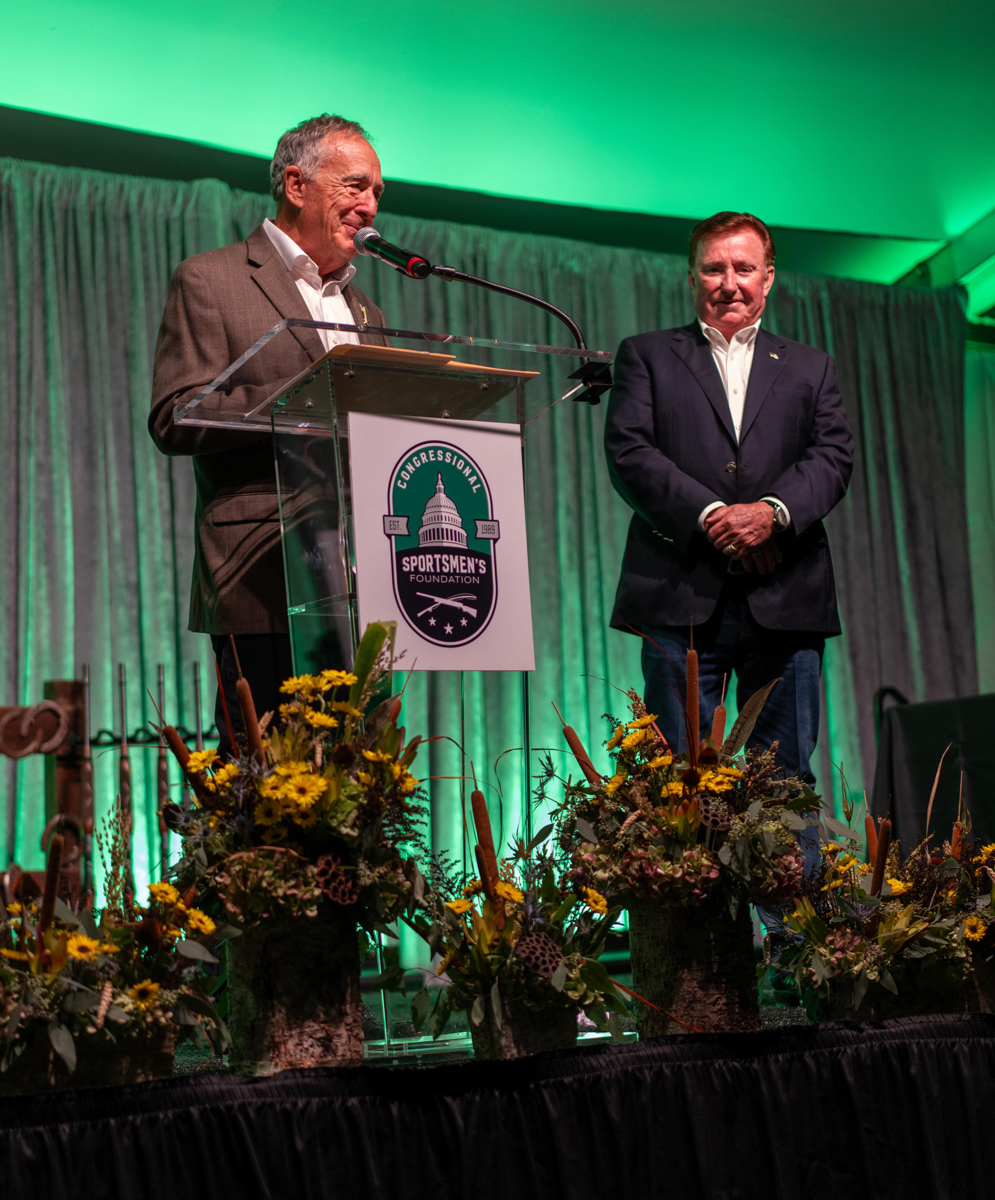
Bass Pro Shops founder Johnny Morris offered an even more direct assessment, calling CSF “one of the most effective bipartisan conservation organizations anywhere in the world.” Morris has invested a lifetime in conservation.
Following that lead is long-time CSF benefactor and past chairman Richard Childress, who has long lauded CSF’s importance and has put his leadership and money behind it—in considerable amounts.
The legislative record supplies its own recommendation. Working with the bipartisan Congressional Sportsmen’s Caucus and conservation partners, CSF helped, among many achievements, advance protections for school hunting and archery programs, season-long electronic duck stamps, and the EXPLORE Act. These are useful, concrete improvements for people who would rather spend Saturday outdoors than deciphering federal requirements. Credit belongs to a coalition, certainly, but CSF has earned its place near the center.
Just as important, the foundation understood early that protecting our heritage required showing up far beyond Capitol Hill. Its National Assembly of Sportsmen’s Caucuses, launched in 2004, now connects more than 2,250 state legislators across all 50 states. When the fight moved into statehouses, CSF followed.
In Colorado, it helped organize conservation groups against Proposition 127, the mountain lion and bobcat hunting ban voters rejected in 2024. That is what a national organization ought to do: offer expertise and connectivity where it is needed.
The stakes extend well beyond one anti-hunting ballot measure. Wildlife for All openly campaigns to restructure state wildlife management and is building a coalition around their agenda. Efforts to diminish hunters’ role in those institutions is a threat to the North American Model of Wildlife Conservation, a system built around public wildlife, scientific management, and generations of sportsmen’s investment. Its achievements deserve defense, not apology. Much of the world would dearly love to inherit what we have.
The wider animal-advocacy movement has formidable resources. Humane World for Animals and its affiliates, together with PETA, reported more than $325 million in support and revenue in their respective 2025 financial statements. While that is not all anti-hunting spending; it shows the fundraising scale conservation advocates must match to be heard.
Members of Congress who sincerely value sportsmen might best show up by introducing legislation earmarking a modest portion of Pittman-Robertson and Dingell-Johnson funds for CSF’s eligible conservation education, research, and technical assistance. Those self-imposed taxes have invested billions of dollars in conserving wildlife. Helping people understand and sustain the institutions responsible for delivering that conservation seems like an overdue use of PR/DJ funds.
Write the legislation carefully. Replace any funding states would otherwise lose, require independent audits, and respect federal restrictions on lobbying. Existing multistate conservation grants already allow eligible nonprofit projects; this would be a defined investment in public benefits, not an unrestricted subsidy for political activity. Private donations should continue supporting work that federal grants cannot. Serious conservation deserves serious accounting, and supporters should welcome it.
I support CSF because I trust the people doing the work…and they’re needed now more than ever. They know the issues, respect the process, and understand that the person across the table may become tomorrow’s essential ally. Washington could use more of that temperament. America’s hunters, anglers and wildlife already benefit from it. We ought to make sure it has the resources to thrive in the years to come.