
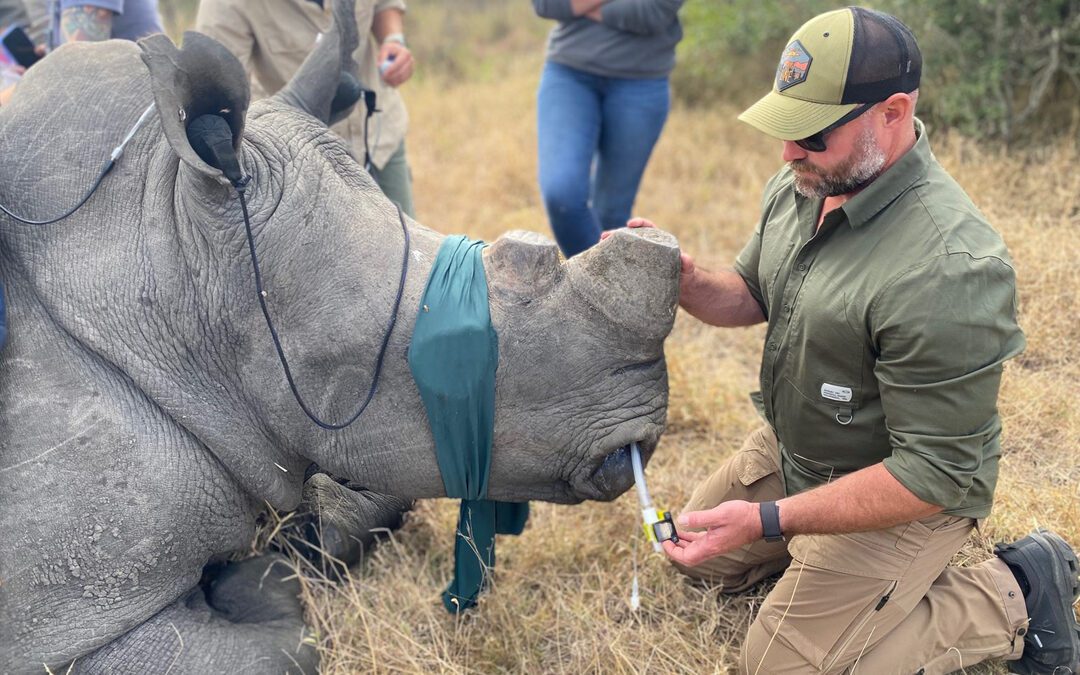
At the Timbavati Private Nature Reserve bordering Kruger National Park in South Africa, a single engine aircraft circles overhead, looking for endangered African white rhinoceros hidden in the bush.
Down below a ruby red Raven II helicopter patiently waits with a veterinarian carrying a Pelican case containing immobilization tranquilizer – enough to temporarily take down a two-ton animal whose horn is worth an arm and a leg.
Rhino horn is valued more than gold or drugs on the Asian black market where it’s sought for its medicinal – and supposed aphrodisiacal – benefits.
Poachers will pay local villagers $3,000 per kg. (2.2 pounds) (or more) to deliver rhino horn – a fortune for those struggling in rural South Africa to feed a family.
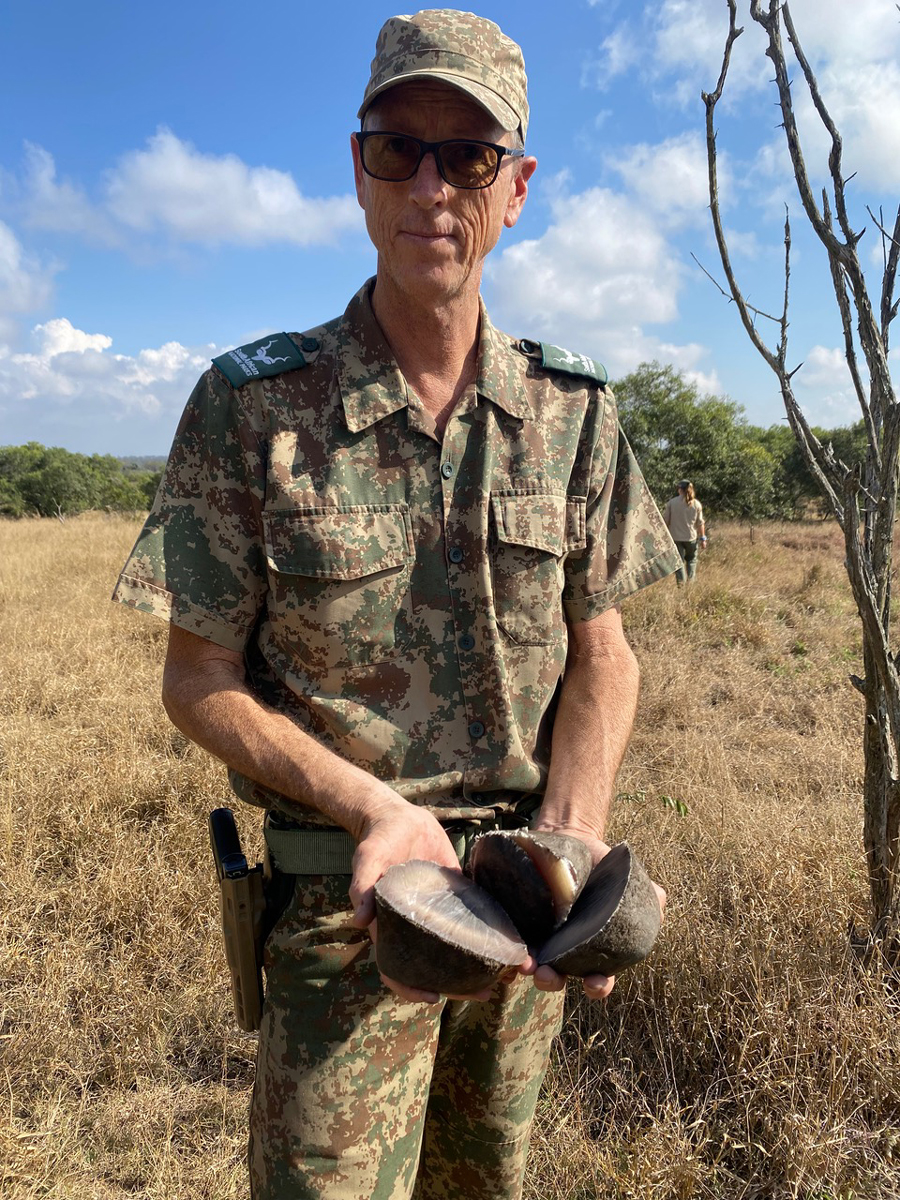
Ranger Greg Bond with about $110,000 worth of
recently trimmed horn (based on black market value). (Photo: Jeff Blumenfeld)
By the time that horn, composed of keratin, like human fingernail, and hair, works its way through the black market to Asia, it could be worth $110,000 for a handful of trimmed horn (about 2 kg.), says South African National Park section ranger Greg Bond.
Poachers think nothing of killing a rhino for its horn. Dehorning is often their only hope.
“It’s senseless really, the most idiotic thing in the world,” Bond tells EN.
As a visiting group from the Denver-based Katie Adamson Conservation Fund (KACF) watches, the circling single-engine aircraft radios the location of two rhino cows, whose horns were removed years ago but have since regrown, again placing the animals in jeopardy.
Once found, the chopper speeds to the animals carrying a sharpshooter armed with tranquilizer darts.
Now sufficiently tranquilized, the rhinos quickly buckle. Vets cover their eyes and check vital signs.
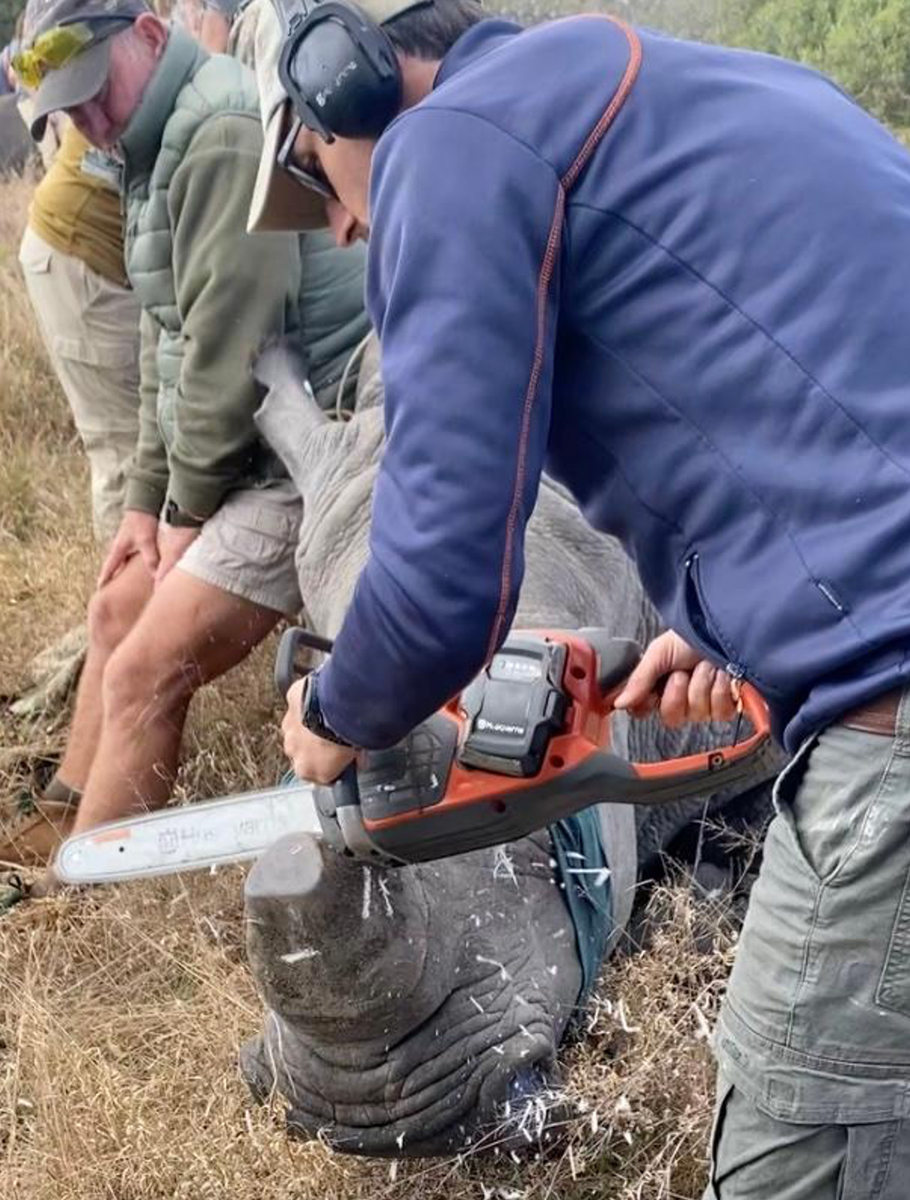
Dehorning begins. Ideally, rhinos should retain their horns for protection. But dehorning has been shown to reduce poaching. What’s more, there are not many other animals, lions included, interested in tackling on a 2-ton rhino with hide as thick as armor plate. (Photo: Jeff Blumenfeld)
Wielding an electric chainsaw, a vet begins removing the horn as shards of keratin go flying. It’s a rather unpleasant smell, akin to burning hair in a bathroom dryer.
They work fast with only 20 minutes before the animals awaken. The rhinos are tagged and microchipped, then stumble awake neither the worse for wear as the team watches from a safe distance.
As for the detached horn, it’s recorded then shipped to a vault for safekeeping.
“Why not sell rhino horn to fund further dehorning?” we ask.

Dave Johnson of KACF
“We don’t want to support an illegal market in rhino horn,” says Dave Johnson, co-founder of KACF.
“In a perfect world we wouldn’t have to deface these animals to save them.”
Dehorning is just one tactic in the fight against rhino poaching. KACF supports armed rangers who patrol the region, contributes to training of anti-poaching tracker dogs, donates to a rhino orphanage to care for sick or abandoned animals, and works with local communities to offer more attractive economic opportunities than poaching these magnificent creatures.
For more information:
katieadamsonconservationfund.org
Interested in volunteering? The Zulu Conservation Trust at the Manyoni Private Game Reserve offers volunteers the opportunity to participate in rhino horn trimming, assist at a rhino orphanage and in K-9 training sessions, and set-up camera traps. Learn more: www.zululandconservationtrust.org
Jeff Blumenfeld, a resident of Boulder, Colorado, is the chair of the Rocky Mountain chapter of The Explorers Club (explorers.org). For 32 years he has been covering the expedition and adventure field in the online publication ExpeditionNews.com.