
Byrnes and I attribute our late-life good looks and prime health to a ceremony we began many years ago when we were only in the male change of life, our 40s. Wednesday afternoons were his time out of the office, a time known to us as Woods Wednesday. A time when we vanished from the known realm and into the forest green, deep into the glades where not even God nor Ma Bell could find us.
“But Doc,” I once asked him in the first days of these forays, “suppose one of your patients should come absolutely unstrung on Woods Wednesday? What then?”
“I have left strict orders at the office to tell them to hold themselves together until Thursday morning. You’d be surprised how many of them can do it,” said old Doctor Byrnes, his brow smoothing out and becoming unfurrowed even as he spoke. In later years, not even his regulars had symptoms on Wednesdays. A one-seventh healing is something any profession could be proud of, although this was never mentioned in the dispatches.
Our destination on Woods Wednesday was a tree-crowned bluff along the muddy, meandering Neches River, a few miles above our homes in Beaumont, Texas. This was in the heavily forested part of deep East Texas (it may surprise some to know that Texas ain’t all prairie and cows). In fact, if a cowboy was to ride down the main street of Beaumont they’d let school out just so the children could come out and see him.
East Texas is a rain forest and dirt roads soon become bog wallows. We would leave the paved farm-to-market roads, drive in as far as we could, Byrnes’ old Plymouth suburban wretching and popping rust from her seams until parked under the trees on a high knoll with a sigh of relief. It was always there when we came back at sunset. Nobody would steal a thing like that, even in Texas.
We packed in the valuables with us, slopping off into the glens to where the mud-rut road gave out and only a foot-path led to our bluff on the river. Over the years we kept adding creature comforts until packing in became a serious matter.
We went there to shoot.
We were both black-powder shooters, each of us carried a beautiful Springfield Model 1873. These old rifled muskets were the culmination of the post-Civil War experiments to make a breechloader out of a million leftover muzzleloaders. Few Civil War parts survived the transition, but the old single shots looked like muskets and they sure did weigh ten pounds apiece.
They fired a slow but hefty .45-caliber bullet loaded on top of 70 grains of black powder; they were both simple and indestructible, and remained a disgrace to the service for about 40 years. A soldier’s hands would freeze to the barrel in winter, get burnt in rapid fire of summer. They never killed anything but buffalo and Americans. We used them against the Indians and in labor uprisings. There were a few in Cuba, but the Spanish 7mm Mauser repeaters made a mockery of that. And what the Indians with their Winchester repeaters did to Custer’s cavalry, who were mounted with these guns as carbines, caused a Congressional hearing.
But there are lots of them, and safe to shoot, and during the times of me and Byrnes you could get a good one for about $18. I think you can still buy brand new ammunition for them.
But Byrnes and I carried our own hand-loading equipment, saving our wallets but adding to the burden in the box. The box was heavy. Mounted on a leather sling to ride along one’s back, it had the powder, lead, hand-loading dies, and a little hand-held press with which a patient and good-hearted man could actually reload cartridges in the field. If there was no hurry.
We were in no hurry. The glorious day stretched out before us. At a frog pond, just some still water gathered in a hole where the road had given out, we would stop and sit on the box. One of us under a shade tree.
“Watch this,” said Byrnes, getting up and stealthily approaching the pond where we were being watched by a pair of frog eyes.
At some given range of danger to the frog, a little one, a little green frog, it broke free of the water and made a mighty leap for deep water.
Only the poor little frog jumped the pond. Tumbling in the dust on the other side, it stared back at us accusingly, not sure of what to do next.
Byrnes came back and reclined under the shade tree. “That,” he observed in his official voice, “is what one calls being overtrained. The kid misses the pond.”
We both paused to meditate on this. The little frog got up and hopped back into his pond, sulking. In the future his mother would have problems with him. That was about the extent of our Woods Wednesday.
On our bluff there was a huge spreading oak with a broad limb extending over the river. We would climb out there, get comfortable in a fork, watch the slow Neches going by and have our usual lunches of King Oscar sardines and crackers. I would tell Byrnes of the perils of the Norwegian sardine fleet, of trying to bait all those tiny hooks in a North Sea gale. And what you got, when you eat sardines, is the whole thing—eyes, gills, guts, and all.
And of the troubles of cracker farmers down in Georgia. That crackers are harder to grow than cotton, one bad rain after they bloom will ruin the whole crop. Must be sold as noodles.
Then we would boom a few rounds out of the muskets, watching the smoke roll across the waters, listening to the mighty echoes in the trees.
The only trouble is that after a few years, Byrnes got to talking about Woods Wednesday around the office and Bill wanted to go. A fellow in the clinic, but you know, sort of a city boy. Byrnes finally told him he could go if Bill would carry the box. He was delighted. Bill had a .45-70 carbine, just like the rifle, only shorter and lighter.
Years ago the Ordnance Department had realized that the 500-grain bullet for the musket was too much for the little carbine. The recoil would spin a cavalryman all the way down under his horse, leave him hanging upside down, girth on top. They made a 250-grain bullet for the carbine.
We didn’t tell Bill this, and I started palming the big musket slugs off to him. Byrnes or I would step up, muskets snugged in tight, roar off a shot with ease and grace, then look over at Bill.
He was already getting a big red cherry on his cheek from where the comb of that carbine stock was hitting him. But Bill was game. He stood up to the punishment, although the recoil of each shot backed him up one step. “Here, you try this thing,” he said, handing over his carbine. I fired it with the proper ammunition, smiled, handed it back.
Then he wanted to shoot one of our muskets; it kicked him sweetly, although he flinched about a foot. Byrnes and I had the helpless giggles by then. “Let me see those bullets,” said Bill, his head still ringing.
He offered to fight a duel with us then and there, rubbing his face as we guffawed.
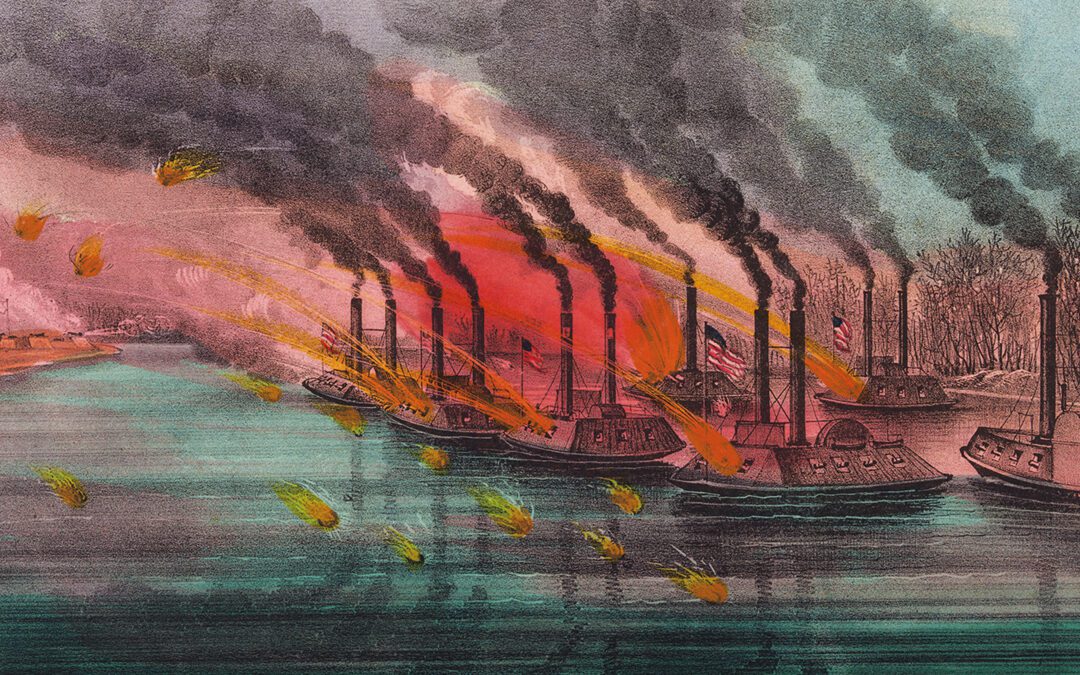
We finally got him cooled down and okay again with the Yankee Gunboat game. This is where we’d go upstream, hunt the bushes for old beer cans, throw them far out in the river, then rush back to our shooting stand and bring the floating cans under great plumes of fire.
“What are we doing?” shouted Bill.
“Those are yankee gunboats and we is the batteries at Natchez, saving Southron Womanhood!” “Nuther one gone!”
“What are we saving Southron Womanhood for?” asked Bill.
“Fo’ah us, you dumb yankee, fo’ah us!”
Note: This column originally appeared in the September/October 1985 issue of Sporting Classics.