
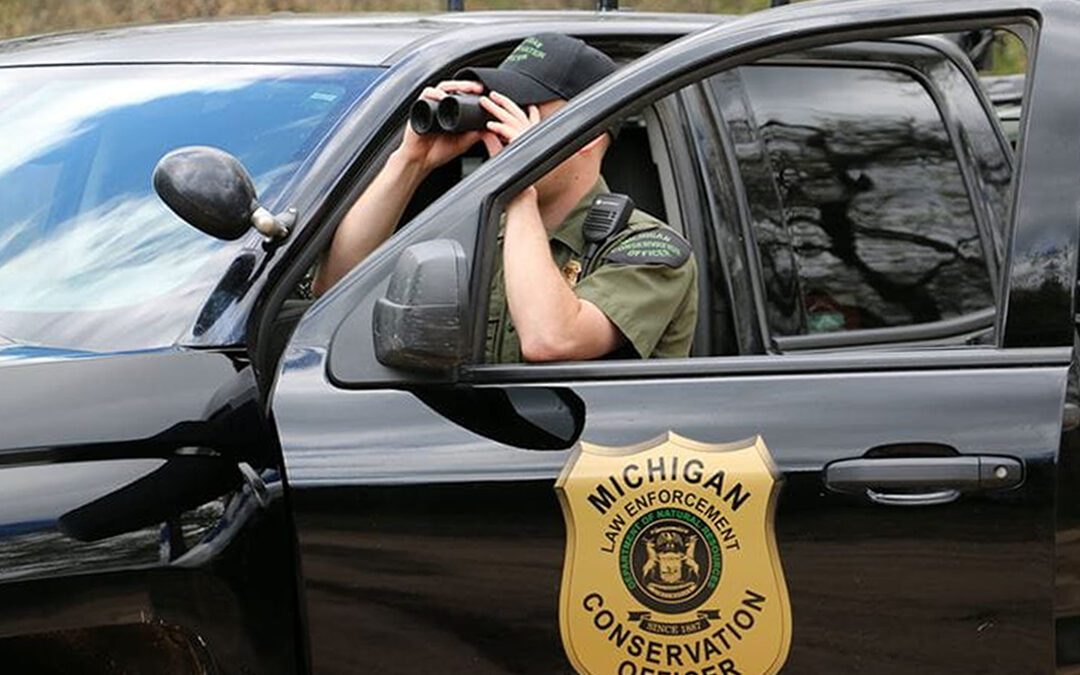
“It’s just a game, you play your half and I’ll play my half,” said the deer poacher after our abrupt 2:00 a.m. meeting along the rural dirt road. He was kinda right, and since I already had his rifle seized and secured, we would now wait for the game to continue. About an hour later, a tow truck arrived at the site, hooked to the poacher’s pick-up and then towed it away. This poacher would find “the game” more difficult to play without his toys! The poacher received a one-way ride to jail.
A few months later I again met the deer poacher in the county courthouse. There he was shocked when the judge awarded his truck—alias one of his toys—to the state game and fish department that I worked for as an enforcement officer. Checkmate in the game.
The poacher sarcastically stated, “That’s OK, I was tired of paying for that truck anyway.” I asked about where his loan on the vehicle was held, and then made a move to continue “the game.”
A couple of weeks later, I met the poacher once again at a savings and loan office in town. There, I secured the title to his truck for the game department, and the poacher completed a mound of paperwork to refinance his home. He would now spend 20 years paying for the truck and the poached deer. Later that week, another wildlife enforcement officer drove away in the poacher’s prized truck and was taking it to another region of the state to be used in undercover work. The game would continue with the poacher’s truck I had seized months earlier.
Meeting Poachers
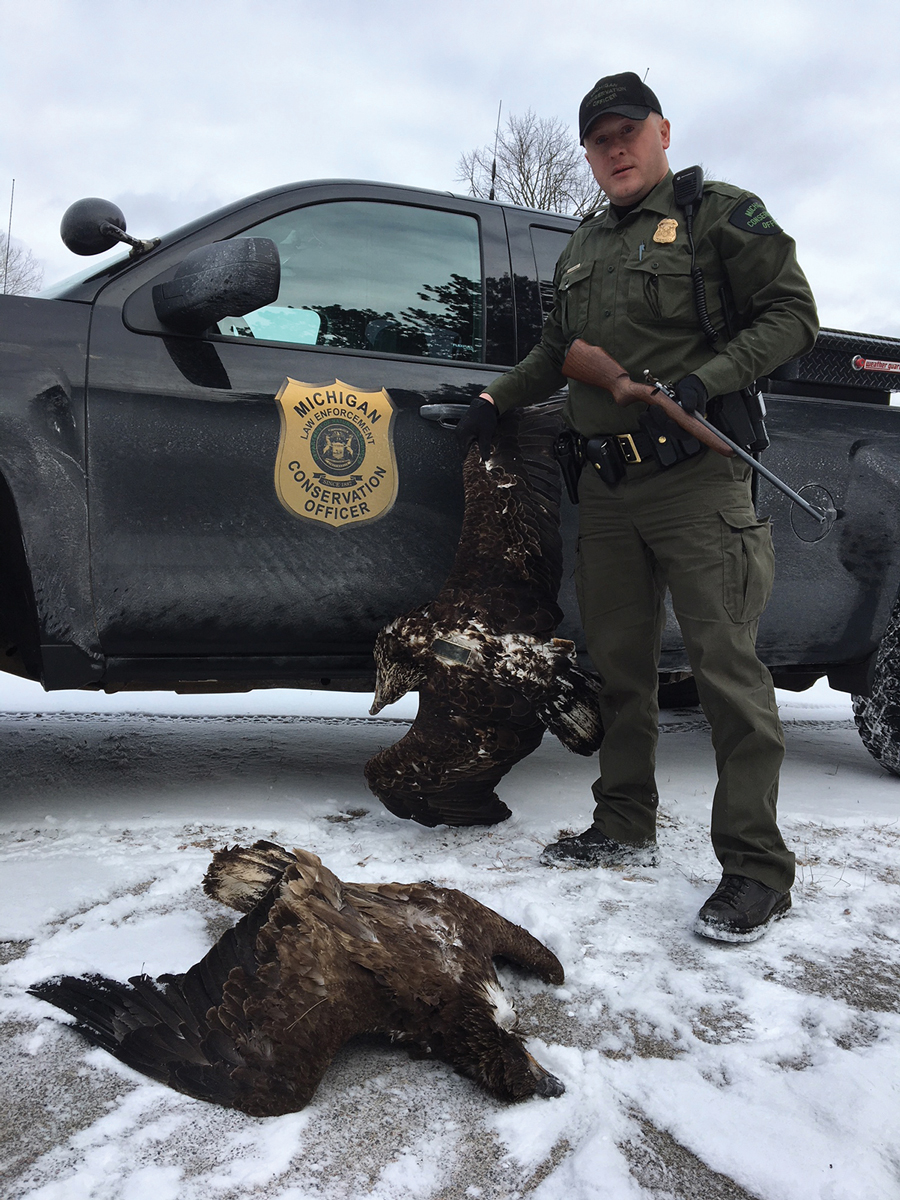
The best way to describe poachers is that they are not the folks you would like living next door to your home. While you work during the day and sleep at nights because you have to work again the next day, many poachers are out driving along back roads in the night and by your property in hopes of spotting game. Once deer, bears, rabbits (you fill in the blank here) are spotted, they then shoot and steal from everyone. Poachers give hunters a bad name, and the mass media often lumps hunters and poachers into the same category.
In another wild meeting with poachers, I had just returned home around midnight from working a CO (conservation officer) detail when my phone rang. The voice on the other end reported where he lived and that someone had just shot a firearm into a field by his home. He believed they had spotlighted and shot a deer. Minutes later I was driving to that location. When I arrived, I was backing into a brush-choked side road to hide my patrol vehicle when I noticed something shining on the paved road surface.
After hiding my patrol vehicle, I went onto the paved road with a flashlight and discovered the shining object was an empty cartridge case. My first piece of evidence. I continued across the road and went into a field to search with my light. There, I spotted a dead deer (second piece of evidence, and it was steaming warm) and was taking a close look at it when I heard a vehicle approaching. I quickly turned off my hand-held light and stepped into the brush at the field’s edge.
When that vehicle—a pickup—stopped, I could see the interior light of the vehicle shining and two subjects exited. The truck then drove away, and the two suspects turned on a flashlight and came directly to the dead deer. They obviously knew where it fell because they could not have seen it from simply passing by on the road.
The duo of poachers next picked up the dead deer and proceeded back to the rural road. I quietly followed along and knelt down as the truck returned to the scene. The poachers with the deer in hand now pulled the truck bed’s tailgate down and swung the deer up onto it.
That’s when I turned on my flashlight, announced my presence, and notified them they were under arrest. Then the action increased dramatically.
The truck driver floored the gas pedal and, as the truck sped away, the deer rolled onto the highway. One now-abandoned suspect ran left, the other ran right. I pursued the one on the right, and soon had him by the collar. With a disrespect for the law, he took a swing at me but soon found himself face down in the ditch by the road with handcuffs applied. His run was over. He was evidence Number 3.
As I was picking him up, I could hear the second runner across the road in the darkness. He was agonizing as he ran through an old clear-cut that was now a dense tangle of briars. He did not have a flashlight, so he was at the full mercy of the thorns.
I escorted the captured poacher back to my patrol vehicle, secured him inside and called for backup. A state highway patrolman was the first LE assistance on the scene and he made a search for the vehicle and also drove along the clear-cut searching with his vehicle’s flood light. He also pulled the dead deer over to the road’s shoulder. No vehicle or suspect was found.
Later, when a duo of other COs from my work area arrived as backup and to assist, one CO stayed in my vehicle with the secured poacher and the other CO and I went to the poacher’s home. There was parked the truck that sped away complete with what appeared to be wet blood on the tailgate. I also noted a rifle inside on the front seat. When I placed my hand on the vehicle’s hood, it was still very warm although the current air temperature was around 20 degrees. The poacher secured back at the crime scene in my patrol vehicle lived at this residence with his mom, who came to the door after a long period of knocking. The time now was around 3:00 a.m.
She gave me permission to remove the rifle from the vehicle that she identified as belonging to her son (the one in my vehicle) because she saw him apply some tape to it the afternoon prior. When questioned about where her son (the poacher) was, Mom next named his accomplices. As we finished our conversation, I told her she could come to the local magistrate’s office in a couple of hours and possibly bail out her son who had been arrested—and to NOT drive the truck.
I discovered the now-seized son’s rifle was the same caliber as the brass casing I found on the road at the crime scene. Evidence Number 4. Back at the truck, the in-custody poacher learned I had his rifle and was seizing his truck as evidence. He was pretty belligerent at that point about his truck being seized, but the magistrate agreed with me and later that morning in pre-daybreak darkness the truck was towed away to impound. Evidence Number 5. The dead deer was also picked up and dissected, and luckily a bullet was discovered. Evidence Number 6. The rifle, brass cartridge casing and the bullet were sent to the state crime lab for a comparison.
Later that morning after regular work hours began, the second poacher was arrested at his place of work by me and an assisting CO. When the poacher was walking to the plant office after being paged at his worksite, I noticed numerous scratches on his face and arms. The briars had shown no mercy. I also told his boss to punch his guy out on the company time clock because he was getting a ride to town with me—now. His workday had ended.
A few months later in court, the evidence was clear that the rifle from the poacher, bullet from the deer and cartridge casing all matched. Both poachers received stiff sentences and paid the state a fine for replacement cost of the deer. The poacher who took a swing at me was also convicted of assaulting an officer. Unfortunately, the truck driver escaped. The poacher did forfeit his rifle, but the judge returned his truck to him. He paid a hefty tow truck impoundment fee before the truck was released.
Sentences for wildlife crimes are often at the discretion of the judge. Fines for assault and similar crimes have clear beginning fine costs.
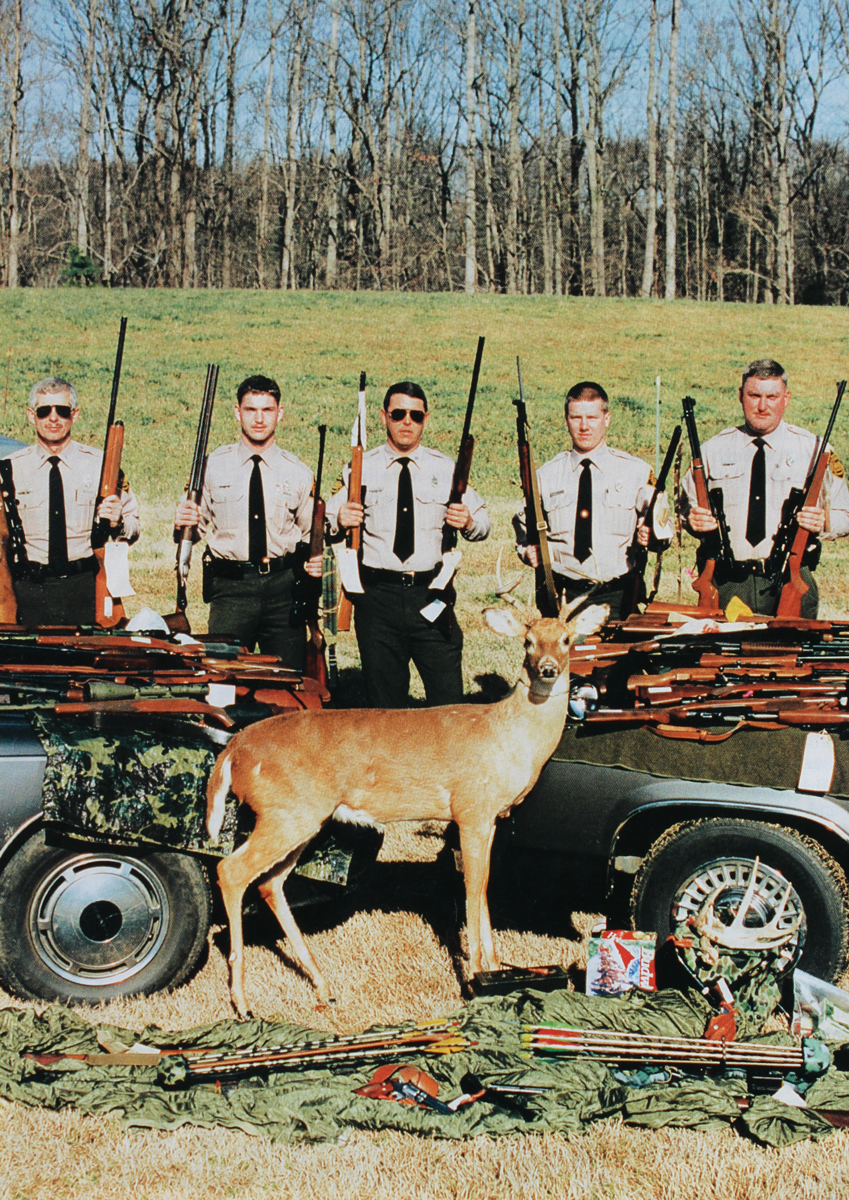
North Carolina WIldlife Dept. COs with confiscated items including firearms.
Just Wait
Sometimes law enforcement is a waiting game and lady justice—the court system—drags her feet. A new officer once came to work with me and he, numerous other COs and I raided a hunt underway in a baited dove field. It was opening day of the dove season and we were in the hunting field based on a tip. Mounds of wheat were poured everywhere—illegal baiting—and samples were taken. Numerous citations were issued at the field, many shotguns were seized and court dates were written on the tickets that were handed out. All doves were also seized.
One dove hunter, however, snubbed his nose at lady justice and failed to appear for his court date the next month. I had an arrest warrant issued.
A couple of days later, I called the new officer and had him join me mid-morning in the nearby town. We parked up the street from a diner where the dove poacher was known to enjoy lunch every day. We sat concealed and observed. At high noon, the poacher left his business, walked up the sidewalk to the diner and had a seat inside. He spoke with the waitress and placed his order for lunch.
The new officer was anxious to make an arrest as the poacher was walking on the sidewalk, but I told him we should wait. Around 10 minutes later, with the aid of binoculars, I could see the waitress place the dove poacher’s ordered meal plate on the table before him. Now was the best time to make the arrest as he was tasting the first bites.
The diner was full of customers as the new CO and I appeared, showed the warrant to the poacher and quickly handcuffed him as he was getting up from his booth. It was so quiet inside the diner now that you could hear other diners swallowing their food. Oh, I did remove one handcuff temporarily so the dove poacher could remove his wallet and pay for the remainder of uneaten meal. Then he was placed in my patrol vehicle and driven to jail.
That arrest was the talk of the town for a long period.
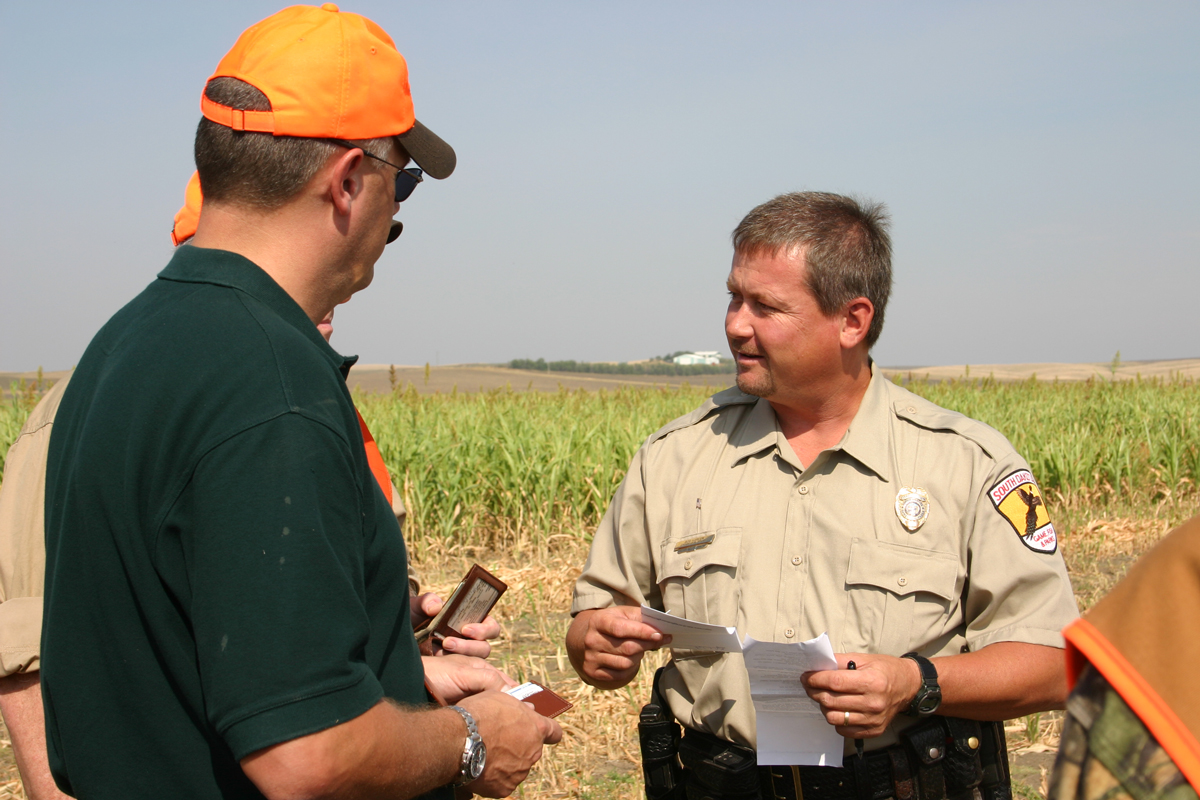
Warden checking licenses.
The Good, and the Bad
The good news about being a CO is that you are outdoors, you meet some truly great folks and you have an interesting job that takes you into many rural and scenic areas. I spent a lot of time patrolling remote backcountry areas and often had hunters I encountered state that they had hunted the location where we met for many years and that they had never seen a CO there. Most were glad to see me patrolling. Part of the job was also often capturing injured wildlife or assisting agency educators or wildlife biologists with various projects.
Then, however, there is the bad side. You have to deal with less-than-honorable folks who have total disrespect for law enforcement, wildlife, regulations and others. Those misfits curse you, threaten you and sometimes assault you. Some court systems were quick to dole out stiff punishments and others turned a blind eye and let poachers off with a simple slap on the wrist. Another bad side is that COs work most weekends, all opening days of seasons and in inclement weather. It’s not the job for everyone.
COs across the nation work for you and your hunting license pays their salaries in most states. You can help them by obeying the laws—and buying a hunting and fishing license.