
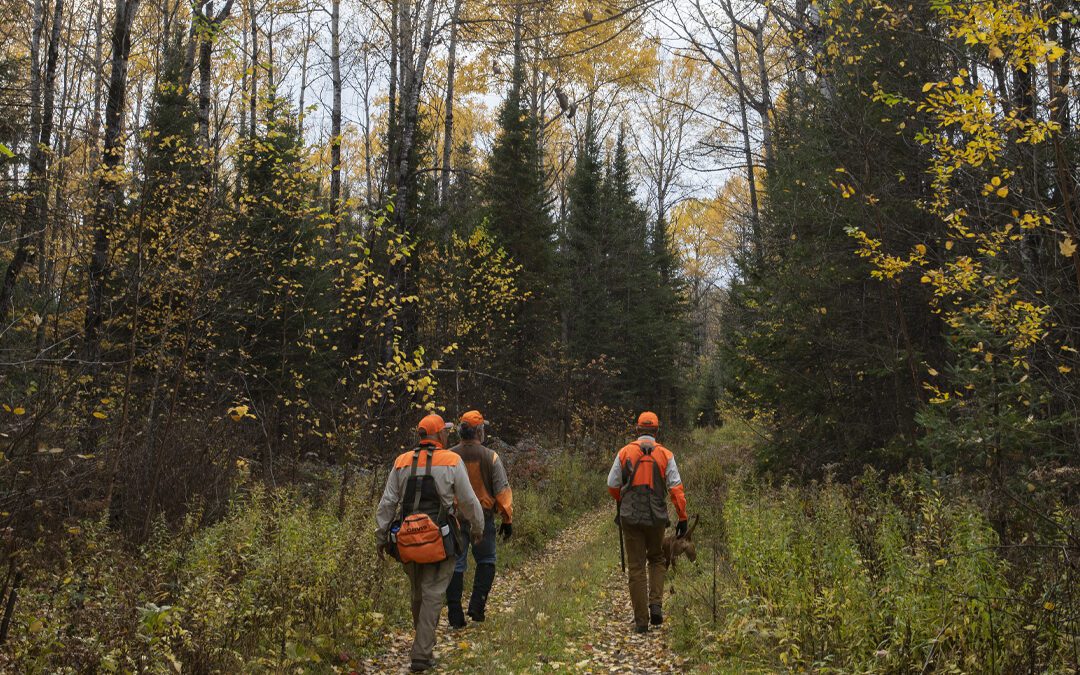
Choosing a favorite upland bird hunt is like choosing a favorite dog. You may have an answer, but it is probably best not to say it too loudly within earshot of the others.
Besides, upland hunting was never meant to be ranked. Its pleasures are too varied, its birds too different and its landscapes too deeply connected to memory. The common thread is autumn—the most magical time of year—and the irresistible promise of following a good dog into country where something wonderful might suddenly explode beneath your feet.
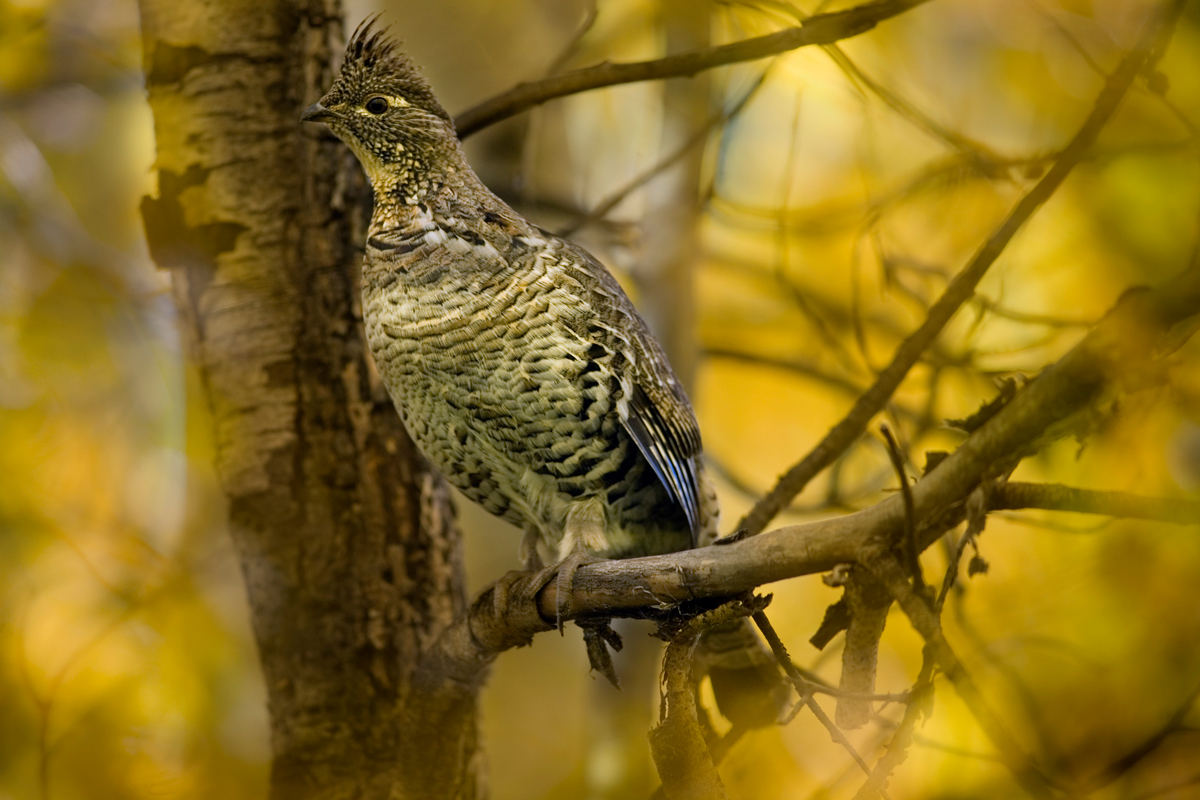
No upland bird manufactures chaos quite like a ruffed grouse. In the aspen and alder forests of northern Wisconsin, the bird does not so much flush as detonate. There is the thunder of wings, a flash through yellow leaves and then nothing but branches, unanswered questions and the slight suspicion that the grouse has once again made a fool of you.
Shooting one is the purest definition of instinctive shooting. You catch half a glimpse of the bird, lose it behind a screen of aspen leaves and fire at the place where geometry, velocity and blind faith suggest it should emerge. No time to measure a lead or seek advice from a committee. A grouse hunter essentially shoots at the bird’s forwarding address and hopes it’s accurate.
Then comes the woodcock—the perfect changeup in the same cover. Where the grouse rockets away with the speed of an escaped convict, the woodcock rises with a fluttering, uncertain flight that somehow proves nearly as difficult. One bird requires a reflex shot through the timber; the other tempts you into waiting just long enough to miss. Together, grouse and woodcock make the northern forest a double feature no upland hunter should miss.
South Texas offers a completely different masterpiece: wild bobwhite quail in thorny country built to defend them.
A covey rise is one of hunting’s great moments. The dog locks up, nostrils drinking in the odor, one back leg shaking in an Elvis jig. He seems to puff the fragrance of quail as though drawing life into a cigar. You step forward, fully aware of what is about to happen and still completely unprepared when a dozen birds erupt at once.
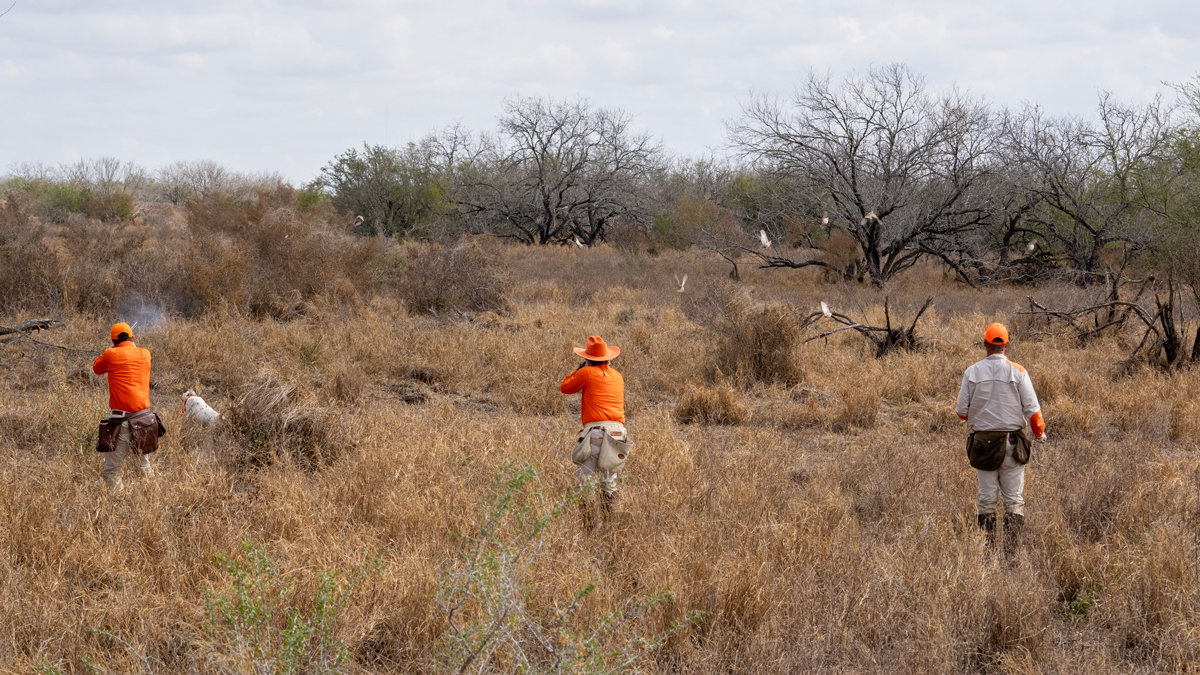
Wild South Texas bobs are artful dodgers. They fly over, under, and around mesquite, frequently flushing ahead of the dog and disappearing into cover with the efficiency of stage magicians. By the time you select one bird, mount the gun, and find an opening, the covey has vanished, and your shooting partner is asking whether you remembered to load.
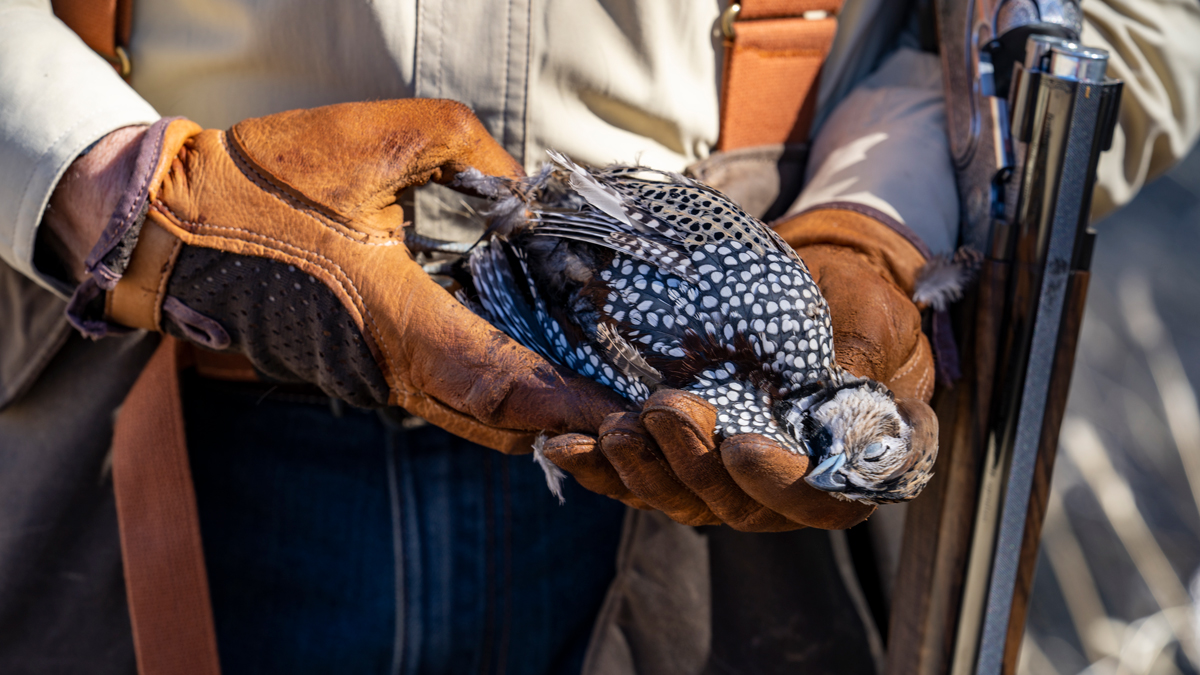
The desert-quail mixed bag may be even more entertaining. Mearns quail look as if they were dressed by Elton John for a particularly festive awards ceremony. Their elaborate markings make them among the most beautiful game birds in North America. They also tend to hold tightly for a pointing dog, allowing the hunter to walk into the moment—right up until the ground erupts in every direction.
Scaled, or blue, quail and Gambel’s quail operate under a different philosophy. Somewhere along their evolutionary trail, they appear to have descended from roadrunners. They would rather sprint into the next county than fly, leaving hunters and dogs to scramble across cactus, rock and sand in negotiations conducted entirely on the birds’ terms.
Then there are the prairie birds. It is easy for an upland hunter to fall hopelessly in love with the northern plains: sweeping horizons, rolling seas of golden grass and a sky so large it makes a man feel properly insignificant. I have wonderful memories of chasing sharp-tailed grouse and Hungarian partridge from the Dakotas into Saskatchewan and Alberta.
Sharptails belong to that landscape. They rise fast, often in bunches, bringing along the wildness of the prairie. Huns are compact rockets with an Old World pedigree and a tendency to flush at precisely the distance where confidence becomes humiliation. A covey can be at your feet one moment and a disappearing rumor over the next rise the next.
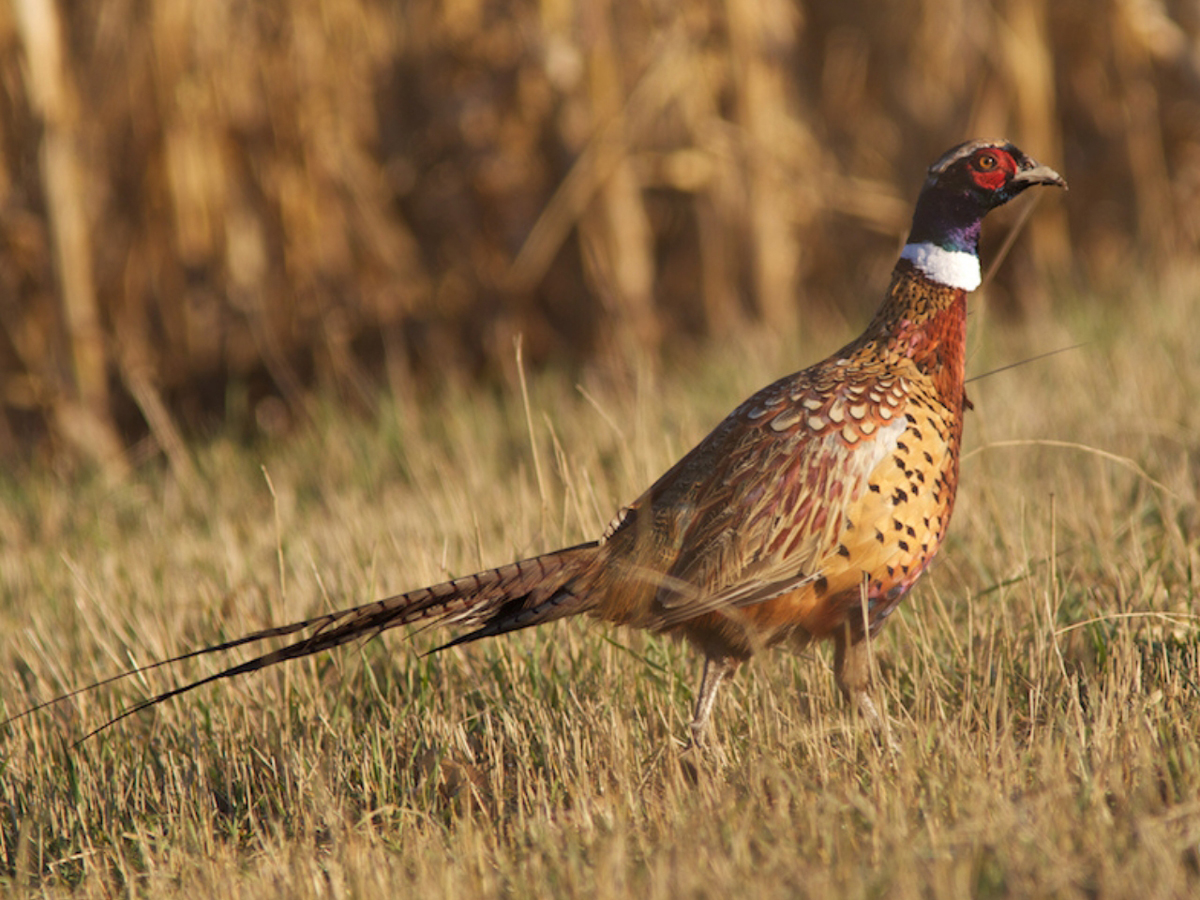
And who could pass up a chance to chase wild roosters through a Midwestern field or marsh? A mature pheasant is not simply a bird; he is a criminal defense attorney in feathers. He knows every escape route, loophole, and procedural delay available. He runs ahead of the dog, doubles back through cover, waits until one hunter crosses a fence and then flushes behind the other.
Every wild rooster taken is a trophy, earned through miles walked, cattails broken, and cornfield tactics that frequently make the hunter look less intelligent than the pheasant. When that long tail finally folds against an autumn sky and a treasured dog charges out for the retrieve, the satisfaction is difficult to describe.
Yet the birds are only part of it. They are the excuse.
The genuine treasure is watching a favorite dog work a scent cone, sharing a sandwich on a tailgate with an old friend and walking through country made beautiful by October. It is the eagerness in the dog’s eyes when the gun case appears, the bell disappearing into the cover, and the abrupt silence that means a point.
These hunts cannot be ranked because each gives us something different: the grouse’s impossible escape, the bobwhite’s explosive rise, the Mearns quail’s beauty, the Hun’s speed, the sharptail’s prairie and the rooster’s cunning.
Taken together, they are autumn itself—a season of dogs, birds, friends and days we spend the rest of the year remembering.