

The old man sat on the cold ground leaning against a cherry tree, taking in the fields before him. Harvest time was past, and a cornfield lay fallow under the slate gray sky of a cold fall day. The stalks lay broken and twisted from the event; their bounty taken. The leaves that remained danced slightly, reflecting a breeze that had the threat and feel of winter behind it.
The ground was resting, its energy spent. The black dirt between the parallel rows was littered with the remains of corn stubble and unwanted weeds. Ruts left by tractor tires had filled with water and froze. From a distance they looked like fragments of a broken mirror scattered at random. The stubble field ended at a fencerow that was grown up with pin oaks and cedars. Beyond, lay a field of winter wheat. The bright green shoots had pushed through the dark earth in contradiction to the season. It seemed a contrast of old and new, of history and future.
A small flock of snow geese locked their black-tipped wings just after sunrise and glided noisily to the center of the patch of green where they now fed. Sentries stood guard as the rest of the flock walked across the frozen field stripping tender sprouts as they went. Their numbers attracted the attention of other flocks overhead and the landing process repeated itself. They circled with wings locked until the last moment when they would beat their wings furiously to slow their descent. They instinctively knew their safety was in numbers, even though it increased the competition for food.
The tree the old man leaned against was on the edge of an overgrown homestead. He knew the tree well, for he had planted it there as a boy on his grandparents’ farm. The bark of the tree pressed into his bony back as he watched the geese, and the cold slowly crept up his spine. He shifted his position slightly and turned his body to look at the old homestead. The house lay in ruin from years of neglect. It was a hollow shell of what it once was. The white paint that remained was blistered and peeled and the rusty heads of nails pushed through the lap siding in vertical rows. A gutter drooped at an angle from the eave allowing water to collect there and icicles to form like the daggers of some Nordic god. The ice was pretty in its own way, but it reinforced the emptiness of the house, a reminder that beauty was an opportunist.
The house lay under the canopy of a huge dying oak tree. A large limb from that tree lay on the roof. The limb, now rotted and crumbling, was heavy enough when it fell to break rafters and tear holes through the cedar shingles. Water and time had done the rest. Water that leaked through the damaged roof had loosened the plaster from the ceiling, allowing it to fall to the floor below. With time, the moisture rotted the floor allowing water to pass under the house. When enough of the dirt was moistened and winter came, frost heaved the rock foundation that the house sat on. With the same process repeated over the following years, the heaving ground buckled the floors and altered the plumb of the windows and doors. A house that had been lived in for more than a century had finally lost its battle against the elements. A tattered white curtain fluttered behind a broken pane of glass as a sign of surrender in rhythm to the pulse of the wind.
The beauty of that broken oak tree had inspired his grandfather to build here many decades ago. His grandparents had crossed an ocean and settled in this county by accident. Weary from travel, they first saw the tree on a warm October day. The trunk was as large as a wagon wheel and the leaves were brilliant as a winter sunset. Dinner was prepared that day under the canopy of orange and the pause gave them an opportunity to take stock of the land and appreciate this place. Their westward journey ended there as they eventually decided to buy this ground.
The old man had heard the story many times as a boy.
As he sat in the cold, looking at the old house, he, too, felt a bond to this ground. His grandparents scratched a living and raised a family from the fertile original 160 acres. Over time, more land was acquired as their resources allowed. Their hands bore the scars and callouses of a hard life, but they had found a small piece of heaven in this place.
He spent many nights in that house as a boy. He could close his eyes and see the rooms with their modest furnishings and ceilings stained with the smoke from oil lamps. When he visited, he stayed in a makeshift bedroom in the loft—a room that was sweltering on hot summer nights and frigid in the winter. On cold nights his grandmother would heat bricks by the stove, wrap them in a dishtowel and place them under the covers to serve as foot warmers. He remembered how he would sink into the down feather bed. It would wrap around him and embrace his tired body after a long day of helping with chores. His breath would billow into the cold night air as the lamp grew dim and darkness overtook the room. He would awake before dawn to the clatter of cast iron and tin from the kitchen below.
The only window in the room was old and drafty. When a snowstorm came from the east, his bed covers would be dusted with white powder the next morning. The 12 steps from the loft would squeak loudly as he descended before dawn. Each step had a different tone, and the pitch would vary from winter to summer with the temperature. With chattering teeth, he would quickly dress in the warmth of the wood stove and wake to the smells of his grandmother’s kitchen. As the sun reluctantly pushed itself over the eastern horizon, he would feast on her biscuits. They were seasoned with the taste of smoke from the wood-fired oven and adorned with honey or canned preserves. A meal of eggs, fried potatoes and smokehouse bacon would follow. Those 80-year-old memories made his mouth water now as he pulled his collar a little tighter around his neck.
His skills as a hunter were honed on this farm. His granddad would sometimes hand him three or four shells and the only gun in the house and expect him to return with three or four rabbits, squirrels or quail. Shells were too valuable to waste on unsure shots, so none were taken. Some years, the game was plentiful and the task was easy and quick. At other times, it required him to hunt all day, walk every fencerow and kick every brush pile. At night, the game was usually pan fried in lard and served smothered with gravy or sautéed onions. He was unsure if the food of those times tasted so good because of the hunger of youth or because it was seasoned with the satisfaction of the hunt.
He thought of these things as he watched the first light of a gray day gradually brighten the hues of green and gold in the field before him. It was the last day of the last deer season he would ever experience. The disease that ravaged his body had stolen the youth from his muscle and bone but not from his mind. He was grateful he still had his memories.
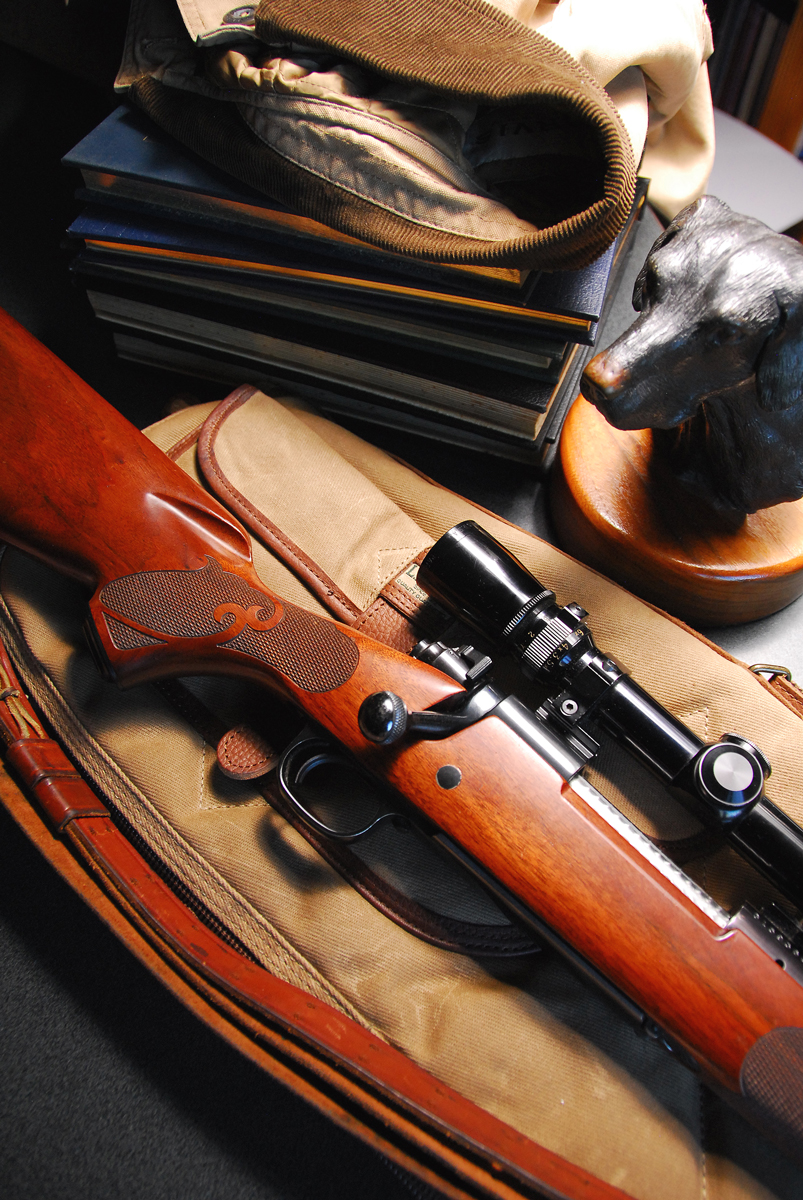
The rifle that lay across his lap had taken 34 deer from this area over the years. As a boy, the season for deer was closed and they were rarely seen. He had a family of his own before they opened this county to deer hunting. Over the years, he learned to love the anticipation of the upcoming season. Opening day was always preceded by a fitful night of sleep but always started with a breakfast of eggs, potatoes and smokehouse bacon.
The antlers from each buck he had killed were nailed to a wall inside his garage displaying the order in which they were taken. Lately, he found himself standing in the old garage staring at the white racks. He could look at each and recall where the buck was taken. With many he could still picture the moment and circumstances like a photograph that was never taken but none-the-less still recorded. He kept the racks as a monument to his persistence as a hunter rather than a tribute to his abilities. More than that, he kept them to honor the deer, those graceful elusive creatures that he loved to hunt.
His thoughts were interrupted by a movement in the distance. A very large buck was polishing his rack against a large cedar in a fencerow between the corn and wheat field. Instinctively, he raised his rifle and peered through the scope for a better look. It was a truly magnificent animal—larger than any he had taken. The buck’s strength rippled below the skin as he thrashed and sparred with the sturdy cedar.
The gun felt comfortable in his hands though much heavier than he remembered. In past years, the crosshairs would have already found their mark, a finger would touch cold steel and his tag would be filled. He steadied the crosshairs behind the shoulder of the buck and held it there for what seemed like an eternity. He changed his mind and moved the crosshairs to the base of the cedar and squeezed the trigger. As the buck bolted across the field, his rack was even more magnificent as it retreated. When it got to the edge of the timber it paused and briefly looked back as if he realized his life had been pardoned that day.
The man lowered the rifle to his lap and slowly ejected the empty round. He picked up the shiny brass off the ground and brought it to his nose. The spent round smelled like they always do, but he savored the odor for a few seconds and tucked it into his pocket. That distinctive smell was always a reminder that something had happened that you couldn’t take back. Korea had taught him that.
The cold air seemed to creep back inside his clothing as he watched the geese that were agitated and alarmed but had not yet lifted off the field. He heard a truck start up over the hill behind him. That would be his grandson. The boy had picked him up this morning well before dawn and dropped him off at the old homestead. In route, he talked about an enormous buck he had seen several times while bowhunting, but it never got close enough. As he slowly got out of the truck, his grandson said he would be glad to sit with him this morning, but the offer was declined. The boy, in spite of his youth, seemed to understand.
“I’m going to be over at the machine shed stacking some firewood if you need me. I’ll hear the shot.”
“Thank you, Earl,” the old man said, “I’ll be just fine.”
As he watched the taillights of the truck disappear, he thought about Earl’s father who had not returned from Afghanistan. The boy had stuck to him like glue ever since. In the years before his body began to fail, they had walked every inch of that property together, usually with a gun or fishing rod in their hands. They had killed game, mended fences and split firewood together. Earl reminded him so much of the son he would never see again.
The old man slowly stood up as the truck approached.
Earl jumped out of the cab and said, “Where’s he at grandpa? We’ll go load him up.”
“He was a big old buck Earl, but I missed him.”
The boy stood and looked at his grandfather. The old man was a lot of things, but a bad shot was not one of them. “We better go down and check anyway,” the boy said. “You know how tough they are.”
“Start up the truck Earl and turn the heater on. I’ll wait in the cab while you walk over there. I’m not up for a hike.”
As Earl made his way to the cedar where the deer had stood, the old man watched him. The boy had the movements of a seasoned hunter. He watched for sign on the ground but also scanned the area in front and to the sides. He approached the tree looking for a tuft of hair or specks of blood and made slightly bigger arcs being careful not to step on any sign. He bent down and looked for several moments at something on the ground and then walked to the tree. As the old man watched his grandson with a pair of field glasses he stuck his finger in a bullet hole on the edge of the cedar and then slowly turned his head back and looked directly at the truck. Earl got up and followed the deer’s tracks that furrowed the soft soil until they disappeared into a tree row. He disappeared from sight for a while and then came walking back directly to the truck.
He climbed into the driver’s seat and shut the door but didn’t say anything for a few seconds. “Looks like you missed him grandpa. The slug hit the cedar on the opposite side that he was standing on. That was the big buck I have been seeing. He has a slightly deformed front hoof on the left side.”
“Well, I guess it’s time to upgrade to a better scope” the old man replied. “It’s for the best; I wasn’t really up to butchering one anyway.”
“I wish you’d have got him grandpa. That’s why I wanted you to hunt over here instead of the blind by the pond. He seems to like these fields.” The old man looked at his grandson and smiled knowing he had been offered a gift. A gift with a huge set of antlers. Earl put the truck in gear, and they slowly made their way back to the gravel road.
Several weeks later, Earl was pushing some food around on his plate trying to find an appetite. The simple graveside service for his grandfather had taxed all the energy he had. The hollow words spoken by the preacher brought little comfort.
The dinner afterward was held at an aunt’s house and fairly well attended. The tables were full of all the types of food that country folk bring. There wasn’t a bad dish on the table. A heavy-set man in a well-tailored suit asked if he could sit next to him. He extended a hand and with a very firm handshake he said “I’m Roy Larson. Sorry about your grandpa. I have known him for a lot of years.”
Earl mumbled the obligatory thank you to yet one more person who seemed entirely sincere. The man handed him a business card. “Come see me on Tuesday morning if you are free. Paul left me in possession of a very well-worn rifle he wanted you to have.”
The man got up and walked away heading toward the desert table, so Earl looked at the business card. “Roy Larson Attorney at Law” was printed in Victorian print. An address was printed in smaller letters below it.
On Tuesday morning, the boy sat in a reception area for a few minutes until the secretary said he could go into the office. Roy met him at the door and ushered him in and asked if he would like coffee or something to drink. Earl declined and sat down on a plush leather chair. An old cardboard Winchester rifle box sat on the desk with the lid closed. Earl had been around his grandfather a lot over the years and had never seen that box. The fact that he had saved it emphasized the importance of the purchase.
“Your grandfather killed a lot of deer with this rifle, son. He asked me to take it to a gunsmith and get it freshened up a bit. Go ahead, he gestured with a hand, take a look.”
Earl stood and opened the box and at first didn’t recognize the rifle. The stock had been refinished, and the crotch figure
of the walnut glowed with a deep finish that was not shiny.
The bluing had been redone and was shiny and deep. The old ratty scope had been replaced with one that was top of the line. Earl picked up the rifle and noticed the original black butt plate had been left alone. There was no doubt now that it was his grandfathers gun because there was a row of fine notches carefully filed into the edges. One mark for every deer the gun had taken. The boy wished there had been one more freshly scribed notch there.
“There is nothing on this earth I’d rather own,” Earl said fighting back some tears.
“You might have spoken a little too soon” Roy said. “Take a look inside the envelope in the bottom of the box.”
Earl carefully leaned the rifle up against a chair and opened the envelope. He stood for a moment looking at the sheet of paper, not certain what he was looking at. The real estate deed to 640 continuous acres was in his name. He slowly sat down in the chair trying to absorb the moment.
“Paul was very clear about who should inherit the family farm. There will be a few other relatives who probably expect a portion of it, but he wanted you to be the only owner. He had me set up an escrow fund to pay the taxes for the next 25 years. He also had me arrange a cash rent agreement with the farmer who has been planting the fields for several years. You graduate high school this year if I remember correctly. I think you will find the yearly check adequate to fund a college education or trade school if you so desire. Paul had me make a provision for the farming contract to require re-signing each year so that if you decide you want to farm it yourself you can do so.”
“Heritage, Roy continued, is not a blood right. It is earned. Paul and I have both witnessed family farms dispersed to multiple heirs only to have pieces sold off for some quick cash that usually gets wasted. Your ancestors settled on that piece of dirt a long time ago. They farmed and toiled and raised livestock on it. They bled and had babies and died on it. As you know, some of the old limestone markers are on that hill overlooking the creek. Paul considered having his own burial there as well, but he didn’t want to burden the future owner with the upkeep.”
The boy sat in the lawyer’s parking lot in the old truck with the Winchester box next to him and held the envelope in his fingers. Tears slowly dripped onto the paper until he realized what was happening and set it on the seat next to him. He put the truck in gear and slowly made his way from paved streets to gravel roads and found himself at the farm looking at the old broken-down house. People he had never met had lived there and the only thing they had in common was the blood that pulsed through their veins.
A ragged white curtain in one of the windows moved slightly with the wind as he had those thoughts. Earl looked past the house into the corner of a field and saw the crooked-toe buck. It stood there motionless, looking in his direction, without a care in the world as if he knew the season was over. He flicked his tail once and disappeared into the timber.
“I’ll see you again,” Earl said as he started the truck and put it in gear.