
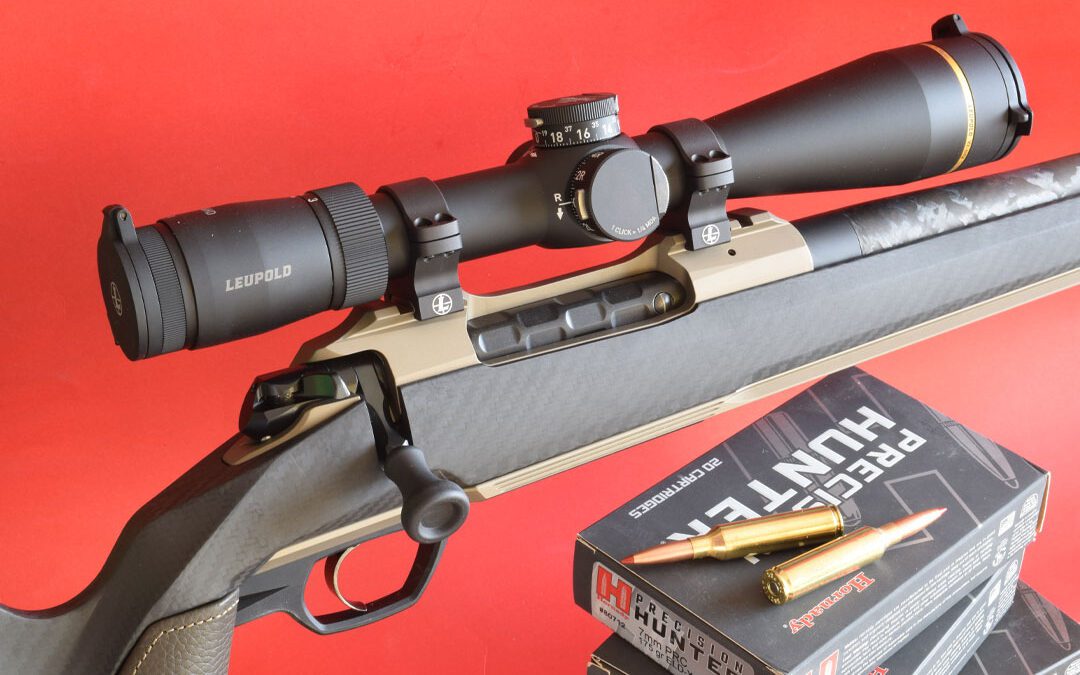
Having grown up hunting November hardwoods, where riflescopes were scarce as clean socks in deer camps, A. B. Learned could be forgiven a provincial view: “I always use open sights,” he declared, “preferring their speed to the somewhat slower peep sight. I have decided definitely that telescope sights are far too slow…. I invariably shoot offhand, if the game is within reasonable range.”
Alaska’s sheep country would test those convictions.
It was 1936, the year L.S. Chadwick killed his incomparable Stone’s ram in British Columbia’s Muskwa drainage. Learned flew by bush plane to a camp on the Russian River where he readied his 30-06, a Winchester Model 54 he described as an “ideal” hunting rifle. Many hunters of the day would have agreed with that view. The 54’s replacement, the Model 70, was in the wings, but not yet announced. And anyone who dismissed the 30-06 as sub-par would have triggered a fight.
Learned’s chance, however, came at “a mighty long distance” during “a gale.” He missed. But so magnificent was the ram that he and his guide scrambled up and over the ridge on an intercepting route. They got lucky. The horns taped just shy of 46 inches and, 50 years later, still ranked in the top 25 of all Dall’s sheep on Boone & Crockett’s roster.
By the 1930s, riflescopes were poised to change the minds of hunters such as A.B. Learned. Barrel-length optics serving target shooters and snipers as early as the 1860s were unreliable and optically crude. Short receiver-mounted scopes followed a 2x Zeiss prismatic sight in 1904, soon after the J. Stevens Tool Co. began making scopes in the U.S. By 1929, Winchester’s A-5 scope had become Lyman’s 5-A. Zeiss had acquired Hensoldt. Scopes from that union included 1-4x and 1-6x variables!
In 1930 in his Newport, Kentucky, shop, 24-year-old Bill Weaver built by hand a 10-ounce, 2 3/4x scope with a 3/4-inch steel tube. He even developed tooling to produce it! The Model 330’s windage and elevation dials had 1- and 2-minute “clicks” respectively. For $1.50 more than the scope’s $19 price, shooters could order a crosswire instead of the standard post reticle. Weaver included a wiry mount that brought to mind a sprung paper clip. The 330 would prompt a generation of hunters to try optical sights.
About this time, a Zeiss engineer found coating lenses with magnesium fluoride cut reflection and refraction, which bled up to 4 percent of incident light at each uncoated surface, but not until after WW II would his discovery bless scope makers around the globe.
Shooters of analytic bent soon trumpeted the scope’s main advantage: Reticle and target appeared in one plane. Gun writer E.C. Crossman enthused that a scope was more “natural [than metallic sights] for shooting running game” and even for aerial targets, as “there is no front and rear sight to fuss with.”
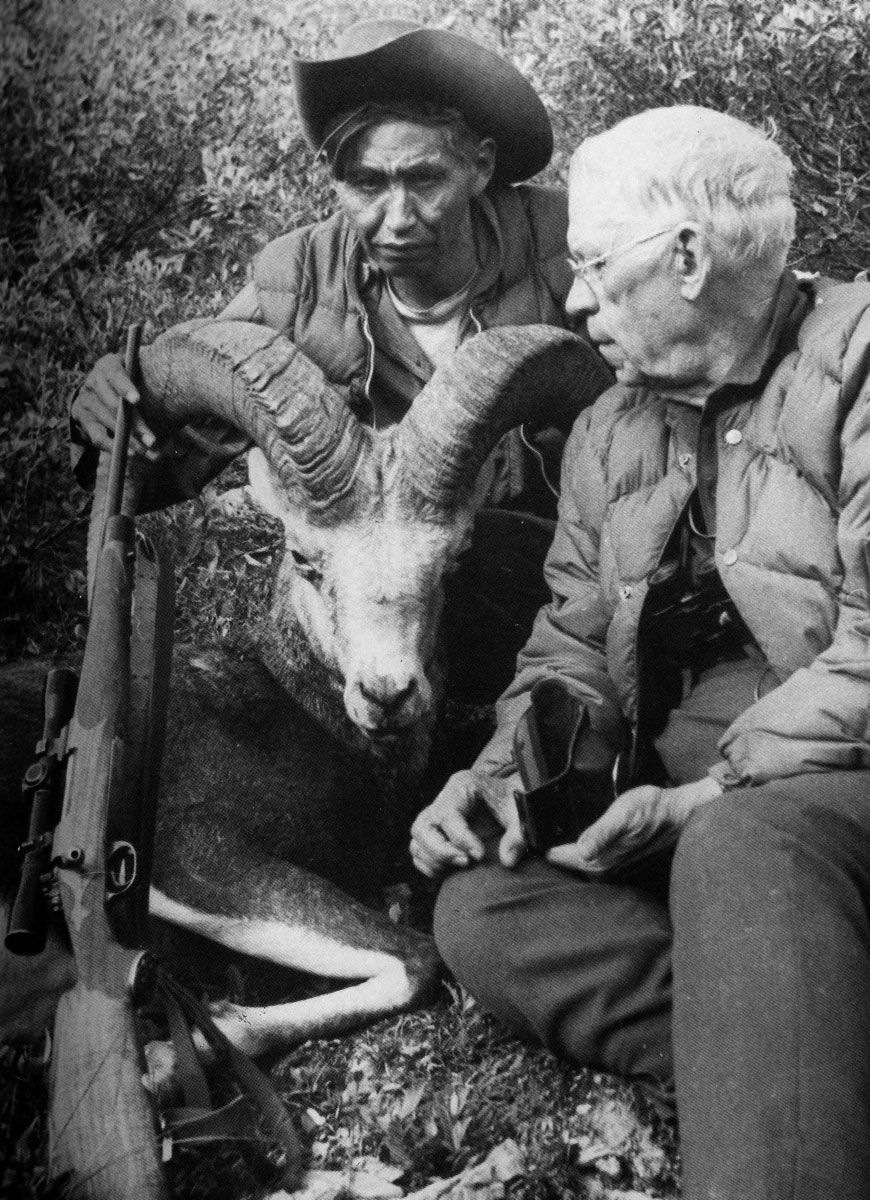
O’Connor started out with 2 3/4x scopes. Later he used a Leupold 4x on this famous “No. 2” 270 Winchester Model 70.
Grancel Fitz, who famously hunted all species of North American big game beginning in the late 1920s, had a Hensoldt 2 3/4x scope on his Remington 30S, a G&H 30-06. Gun gurus Jack O’Connor and Townsend Whelen favored Hensoldts, too. These scopes featured 7/8-inch tubes, as did “Fieldscopes” by Rudolph Noske, whom O’Connor credited with “the first good American hunting glass.” Functional eye relief of 3 to 12 inches let shooters place Noske scopes in front of safeties and bolt handles.
Depression-era improvements in the optical quality and durability of scopes yielded Lyman’s $45 Alaskan. In 1947, Weaver’s K2.5 and K4 scopes pioneered 1-inch tubes. Two years later, Marcus Leupold used his Merchant Marine experience to seal nitrogen in scopes, fog-proofing them.
So, on the heels of WW II, hunters had practical, reliable riflescopes.
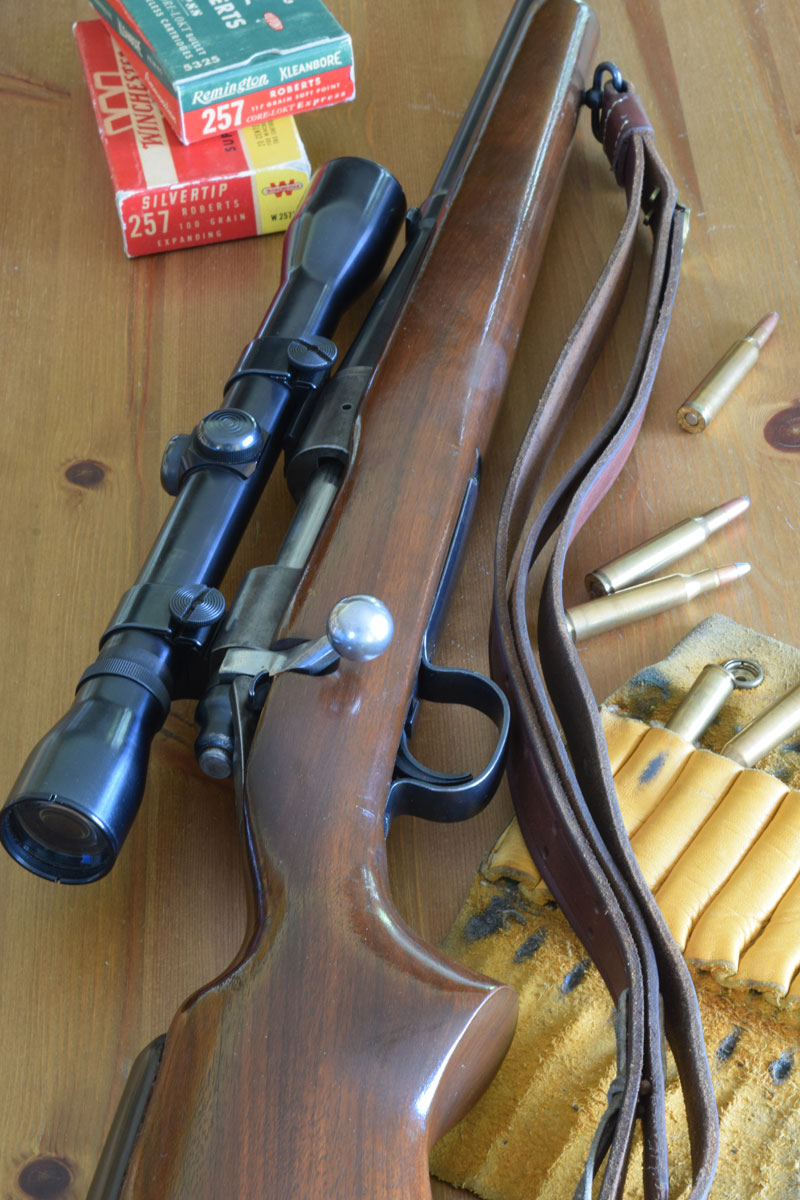
Weaver’s K4, here on a Remington 722, pioneered the 1-inch tube. For years it was the all-around sight.
Cynics might say progress in scope design has since been incremental, that the “essentials” of an optical sight haven’t changed and that many features of modern scopes add significant cost but little utility. Just before Weaver announced its K4, O’Connor touted 2 3/4x and 3x as best magnifications for all-around hunting, conceding 4x made sense “in the mountains.” Field & Stream Shooting Editor, Warren Page, liked 4x scopes on sheep rifles. Idaho hunting writer Bob Hagel declared the 4x was “best suited to all types of western hunting.” Redfield reported the 4x “outsells all other powers.”
Sadly, the simple, lightweight, reliable, inexpensive fixed-power scope is following the dodo into the abyss.
By 1962, Leupold and Redfield had scopes that gave hunters instant choice of magnification. Both 3-9x variables had second-plane, non-magnifying reticles (on the heels of Lyman’s Perma-Center reticles) that stayed in the field’s middle through windage and elevation adjustments. Those scopes, and Bushnell’s 3-9x, retailed for less than $100. What more could hunters want?
Well, they came to want brighter images in dim light, plus higher magnification. Scope makers sighed and installed bigger objective (front) lenses to boost the size of the light bundle, or exit pupil (EP), in the scope. Hunters wanted generous fields of view, too, and enough eye relief to protect their noggins during recoil, so eyepieces changed. To nix parallax and sharpen target focus at all distances, engineers added left-side turret dials. Keeping reticles on targets farther and farther away begged greater elevation ranges. Custom-cut dials allowed hunters to index them to the distance instead of counting clicks.
Scope makers like big tubes, too. They allow for bigger lenses in the erector assembly, which, all else equal, yield higher resolution. Alternatively, an erector assembly with standard lenses has more room to move in a 30mm tube. While few 1-inch scopes exhaust windage adjustment, long-range shooting has run many elevation dials to their stops before reticles lift far enough to fully compensate for bullet drop at distance. More room for erector tubes to tilt adds clicks to those dials.
Big tubes are also a convenience in scope assembly. As turrets become more complex and electronic circuitry joins optical components, loading the pipe while hewing to gnat’s-lash tolerances is less and less entertaining. That’s partly why tube diameters have increased steadily over a century, from half an inch to nearly three times that (dismissing Swarovski’s 40mm dS as an outlier).
Here are the numbers:
12.70mm = .500 inch (1/2 inch)
19.05mm = .750 inch (3/4 inch)
22.23mm = .875 inch (7/8 inch)
25.40mm = 1.00 inch
26mm = 1.02 inch
30mm = 1.18 inch
34mm = 1.34 inch
36mm = 1.42 inch
40mm = 1.57 inch
A primary reason to adopt bigger tubes is to broaden power ranges. The 3-9x scopes of the 1960s had three-times ranges—top power three times the bottom. The magnification choices on those dials must have wowed shooters weaned on Weaver’s first variable. Its topside dial offered two options: 2 1/2x or 5x.
Four-, five- and six-times ranges came pell-mell, a game of one-upmanship. Eight-, even 10-times ranges proved some scope makers would rather test limits than improve utility. Field curvature on the low end of some of those sights delivered fish-bowl views.
Adding versatility to scopes imposes trade-offs. Weight, bulk, complexity and cost increase, even before the intrusion of electronic and digital assists. Conceding rifles and loads are ever more capable and tasked with ever longer shots, and bipods have become standard shooting aids, a 4-16x power range still seems to me as wide as any hunter could want, even if the rifle must tumble whitetails in thickets, then tip over distant rockchucks.
A scope with just the essentials—the modern equivalent of Weaver’s K4, even Leupold’s original Vari-X—is as hard to find now as a pickup without power steering. But carriage-class optics do still turn up in variables stripped of things few hunters need.
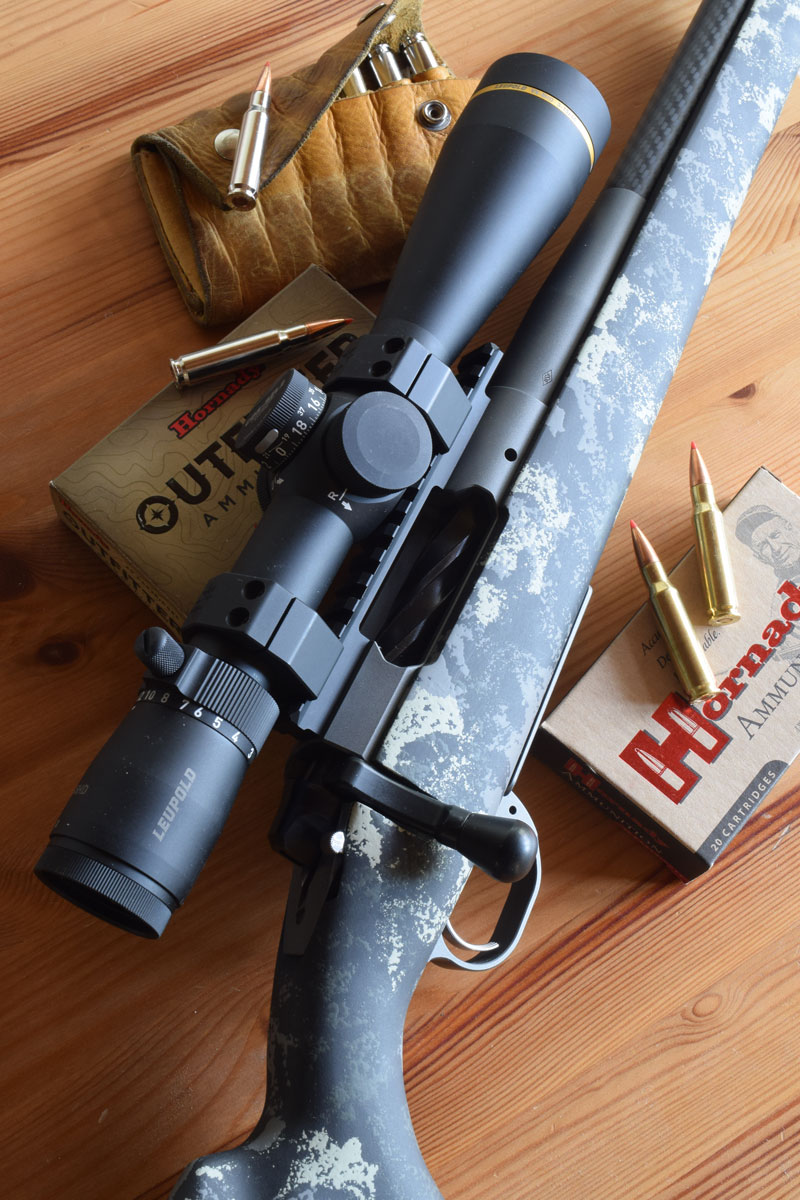
Leupold’s VX-5HD 3-15×44 is the evolutionary result of its Vari-X.
Thank 30mm tubes for 1.5-6×24 scopes, which appeal to me. One-inch tubes limit low-power variables to 1-4x and 1.5-4.5x (Leupold has a 1.5-5×20), but a 30 mm pipe adds 6x without a front bell. The four-times range includes almost every magnification I’ve used to shoot game. At 4x the 6mm exit pupil admits as much light as the human eye can use in dusk’s shadows. At 6x an animal at 300 yards looms as large as one seen with the naked eye at 50. Some of these scopes are cataloged as 1-6x24s; but 1x has no value to me, as I seldom dial below 2.5x. Field curvature aside, most people find images of game viewed through 1x glass oddly small.
Of 1.5-6×24 (1-6x) scopes, I’m sweet on Swarovki’s Z6. At just less than 15 ounces, it’s among the lightest. The 1-6×24 EE has extra-long 4 3/4-inch eye relief, useful with hard-kicking rifles. At around 17 ounces, the Spectra 1-6x24i from German Precision Optics (GPO) lists a German #4 reticle with lighted dot, as in the 1-6×24 Zeiss Conquest. Leupold’s VX-6HD Gen 2 CDS with Firedot Duplex is a standout in that weight class, mechanically, optically and cosmetically. So, too, Leica’s illuminated Amplus 6.
A 6x top magnification may seem modest, but it bolsters twilight factor (TF), a measure of how well a scope shows detail in dim light. TF is the square root of objective diameter multiplied by magnification:
For a 2.5×20 1-inch scope,
TF equals the square root of 50, or 7.1For a 4×20 1-inch scope,
TF equals the square root of 80, or 8.9For a 2.5×24 30mm scope,
TF equals the square root of 60, or 7.7For a 4×24 30mm scope,
TF equals the square root of 96, or 9.8For a 6×24 30mm scope,
TF equals the square root of 144, or 12For a 4×36 1-inch belled scope,
TF equals the square root of 144, or 12For a 6×36 1-inch belled scope,
TF equals the square root of 216, or 14.7
Note that a 1.5-6×24 scope at 2.5x has a TF of 7.7, but at 4x TF jumps to 9.8. At 6x TF is 12. At the same time, EP shrinks from 9.6mm to 6mm to 4mm. In failing light, adding magnification can offset smaller EPs. If your eye’s maximum dilation is 6mm, a bigger EP brings no brighter image. Even at 6x, which has a limiting EP in dim light, a high TF may better reveal the target.
Of course, bigger objective glass boosts both EP and TF. As when Weaver courted shooters with his Model 330 and later with the superior K3, some hunters crave more power than offered in any scope without a front bell. This year’s upgrades of mid-power variables by Leupold and Swarovski include a couple of candidates for an “essential scope” roster. Leupold’s flagship VX-6HD Gen 2 series features a 2-12×42 and a 3-18×50. The 2-12×42 is a wonderfully versatile variable, with carriage-class lenses and coatings, a SpeedSet elevation dial swappable without tools, a Precision Side Focus knob and a choice of four lighted reticles. With its 42mm objective, it can be installed in low rings on most rifles.
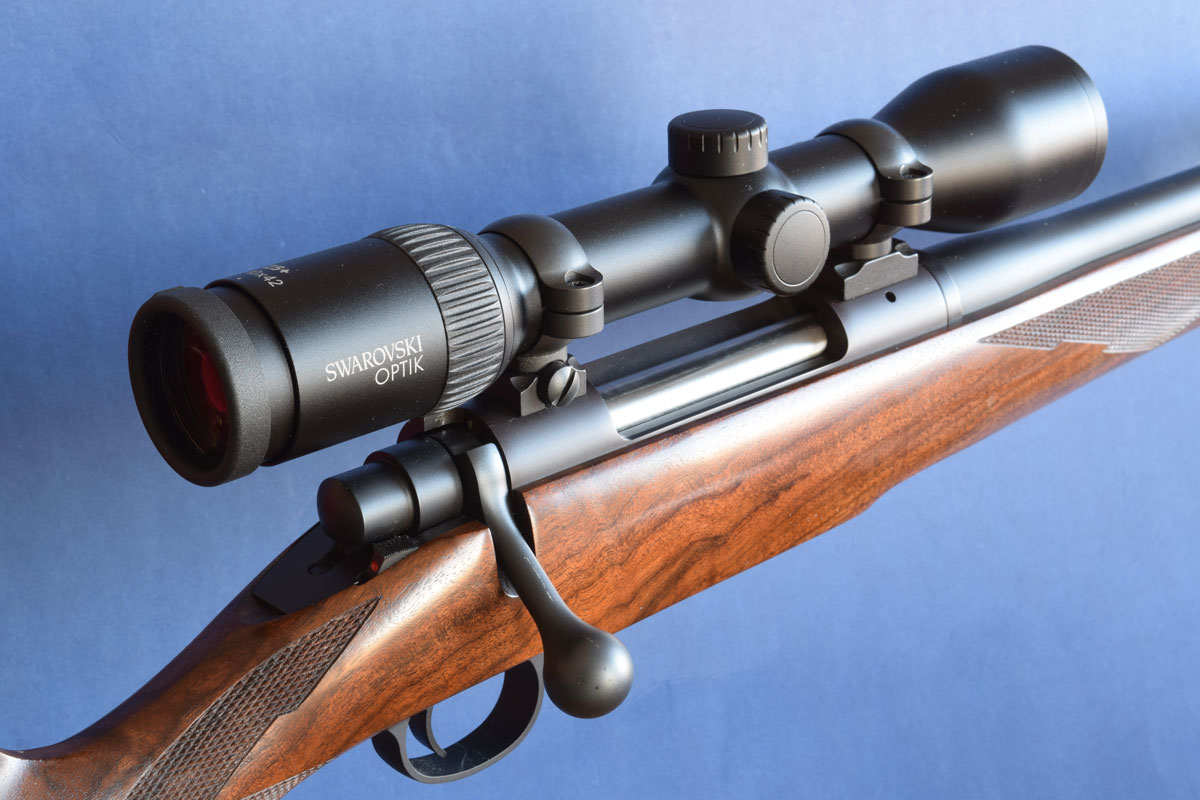
Swarovski’s new 30mm Z5+ series includes this 2-10×42, offering light weight, clean lines and superior optics!
Like its 1-inch Z5 line, Swarovski’s new Z5+ scopes feature five-times power ranges. They differ in their 30mm tubes—and, reportedly, three times the windage/elevation adjustment range of Z5s! The 3.5-18x and 5-25x have focus/parallax dials. All models are available with glass-etched illuminated reticles (i) and, for help at extreme range, Swarovski’s ballistic turrets (BT). Each of these features adds about 1 1/4 ounces to the scope’s weight and $100 to its price. For its combination of top-end optics and sleek simplicity, I like the 15-ounce 2-10×42 with a standard plex reticle. On any version, a Personalized Ballistic Ring (PBR) adds “dial-to-the-distance” convenience.
Even scopes limited to essentials now cost 50 times what I paid for my first. But in 1926, when Zeiss listed its 1-6x Zeilmultar at $66, a new Ford Model T fetched $360. Odds are your pickup, new, cost more than 5.8 times as much as a new scope. And while it constantly cries for fuel, it cannot help you shoot.