
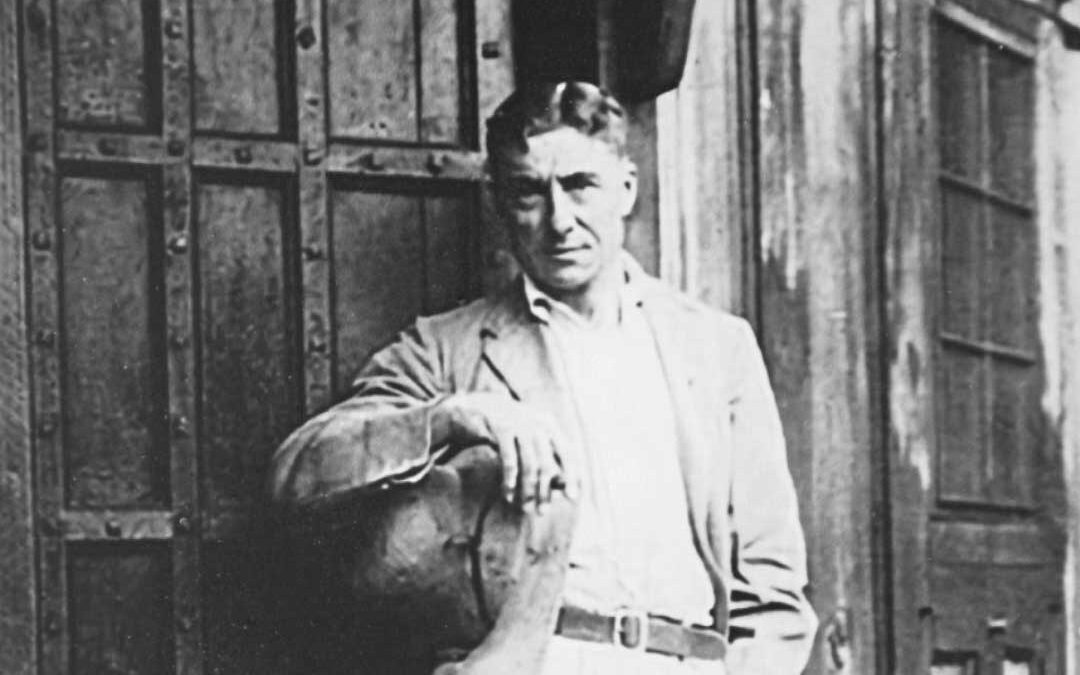
There is a certain kind of man who can get away with damn near anything. They generally come from a line of charming rebels and often combine good looks with a devil-may-care attitude and a distaste for authority. Standing alone is their superpower, vanity their Achilles heel, forgiveness their last resort.
In 1885, Ewart Grogan was just 11 years old, but already people were noticing something different. Perhaps it was his penetrating yellow-green eyes or his sharp mind. Others saw easy charm and a total absence of fear. Either way, that boy had begun to read King Solomon’s Mines and found himself on fire.
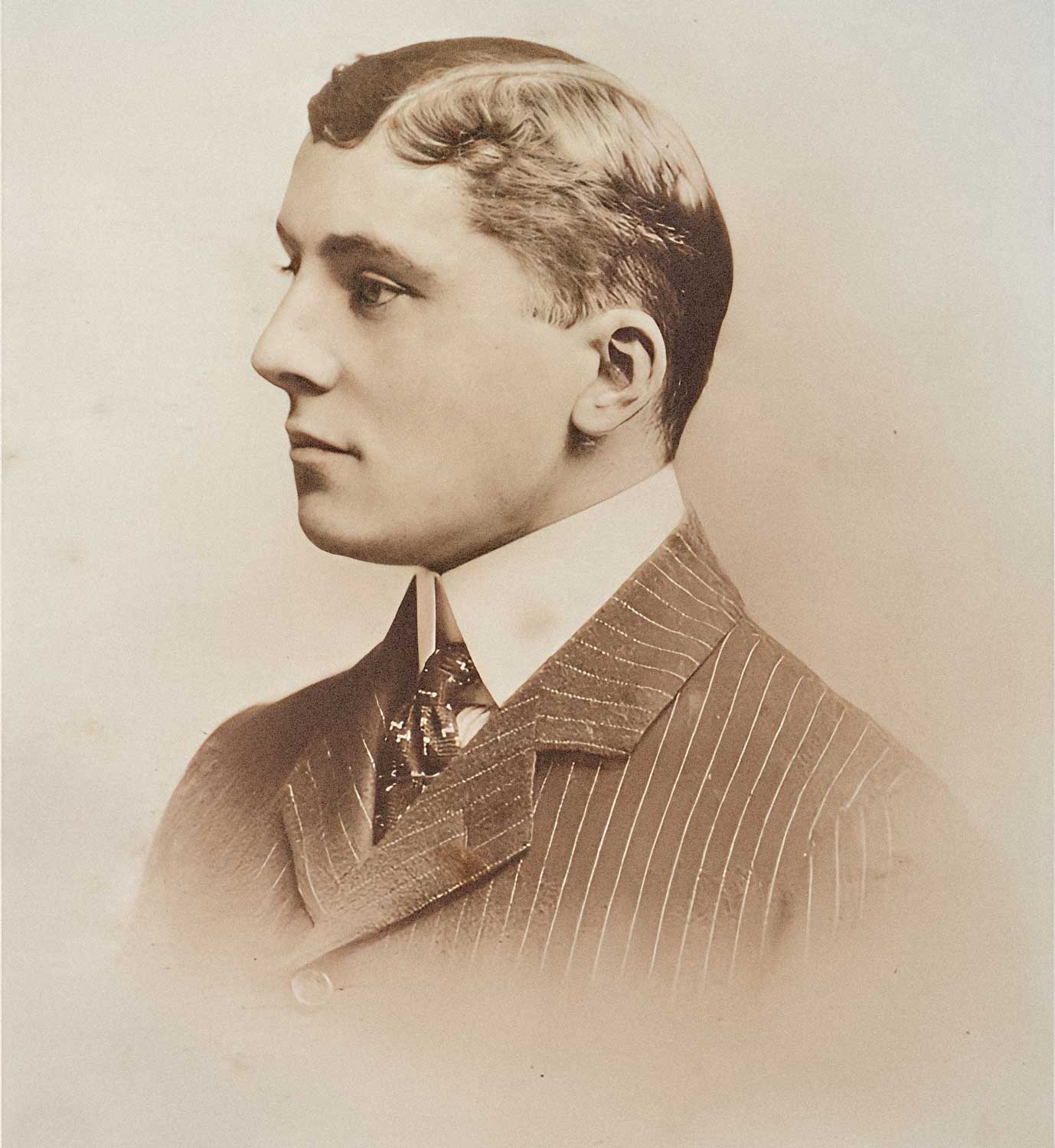
Grogan was born into a Victorian England determined to paint the map pink. As a youth, it was off to Cambridge, and it was there where he met a young New Zealander named Eddie Watt. The two became firm friends, though Watt studied hard and Grogan hardly at all. Grogan drifted into mountaineering, climbed the Matterhorn and became the youngest man ever invited to join the Alpine Club. It meant nothing to him, and he continued to drift—an arrow with no mark to find.
News broke of a rebellion in faraway Southern Rhodesia. Grogan took a halfpenny from his pocket and threw it in the air—tails for Matabeleland, heads for study. Within a week he was on a ship sailing for Cape Town.
On arrival, he was dispatched by wagon to Bulawayo, today in Zimbabwe. He followed trails littered with the bodies of thousands of cattle killed by the rinderpest plague. He found Bulawayo—“the place of slaughter” as every second-place name seems to mean in Africa—a fortress. The next day he signed up to the Matabele Mounted Police and within a week fought the Ndebele on the Umguza River. Later, he was ordered back to Bulawayo to briefly join the escort of Cecil Rhodes.
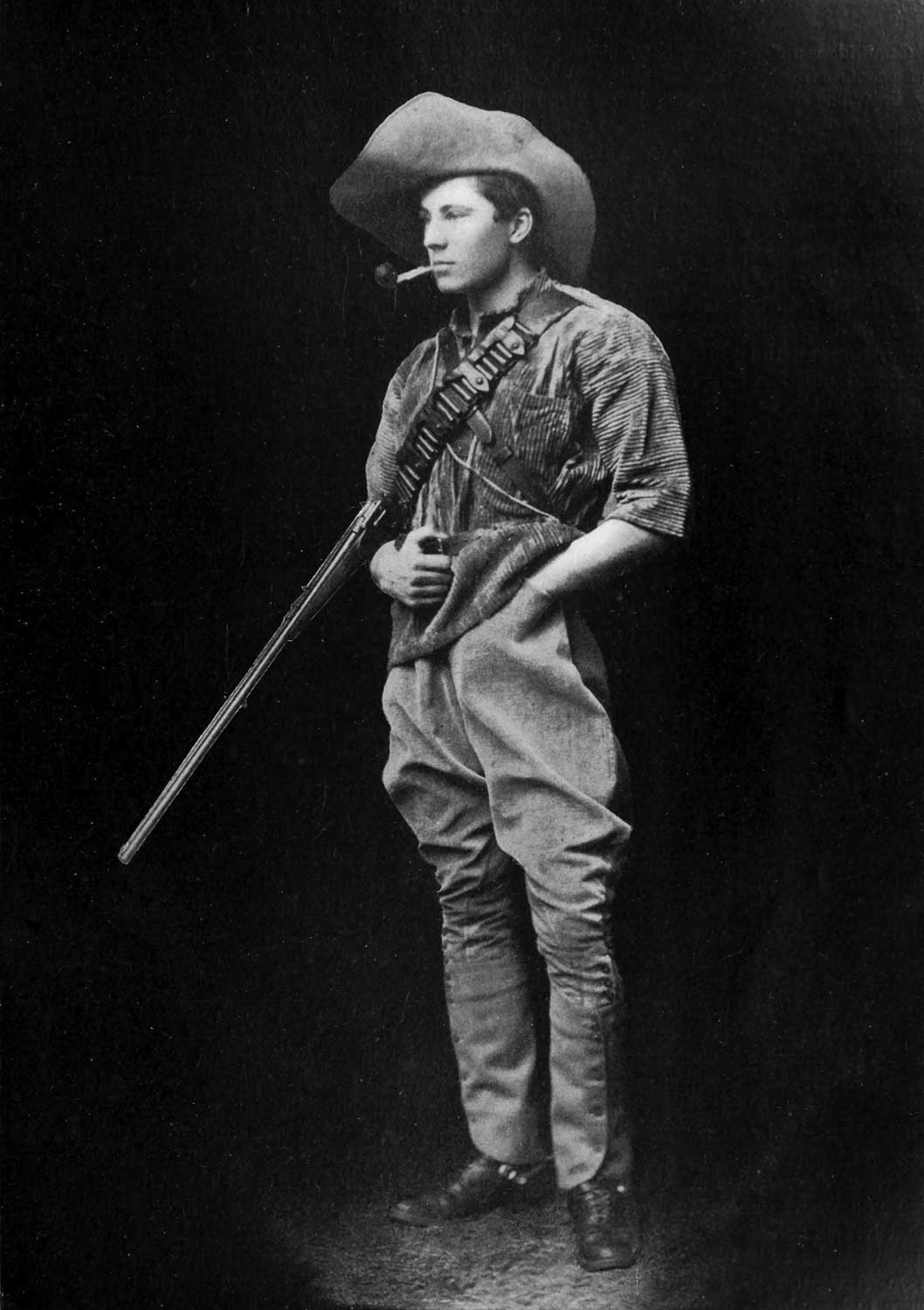
Released from service, Grogan jumped on the chance to hunt in Portuguese East Africa, now Mozambique. That hunting trip failed as his companions died and Grogan’s malaria flared. He fell unconscious and woke in the port of Beira. He found the town a grim prospect —it still is —with evenings punctuated by shooting in the streets.
At a party, a Portuguese officer caught Grogan’s eye wandering over his pretty cousin and pulled a knife. It was the last thing he ever did. He missed, got a straight jab in the face, struck his head as he fell and died on the spot. Chaos erupted and Grogan had to be spirited out of the colony and back to Britain.
Still unwell, Grogan recovered in the English countryside with Caroline Eyres, the aunt of his old varsity friend Eddie Watt, and so began a game of chess that spanned the globe.
Caroline was a wealthy widow who had interests in great estates. Deeply struck by the young man, she took him off to Sligahan, a holding she leased on the Isle of Skye, to stalk red stags and fish for salmon. Later, she laid a plan to ship Grogan off to New Zealand with Eddie. The trip was a ruse to introduce him to Eddie’s sister, Gertrude. It was, in fact, little more than an 11,000-mile blind date.
Gertrude was tall and a little shy, with large blue eyes, a fresh complexion and full of laughter—perhaps not the Victorian ideal of beauty, but throughout her life people would comment on her generous spirit, captivating manner and warmth. She was also worth a fortune. The Watts were direct descendants of the inventor of the steam engine, in an era when steam powered the world. Her dowry was, at the very least, between five and 20 million in today’s U.S. dollars.
Gertrude found the supremely confident, handsome young man fascinating and within days they began to talk of a life together. There was just one barrier, but it was a truly enormous one —for all his connections, Grogan was, in his own words, “little more than a skinful of amoeba, malaria germs…plus a handful of vagrant ideas.”
Gertrude’s stepfather, James Coleman, was the archetype of a Victorian entrepreneur. He would have instantly spotted the fact that Grogan was, in ranching language, all hat and no cattle. Legend has it that Coleman questioned the young man on how he would prove himself worthy to marry his stepdaughter.
According to Grogan’s nephew, writing almost 60 year later, “Grogs” needed an ace fast and played one. To prove his character, he would be the first man to travel the length of Africa, from Cape Town to Cairo. The story goes that Coleman took the bet, and Grogan began his plans.
Grogan left for England where he hit Caroline up for funding. She agreed to the staggering expenses, provided Grogan took her brother, Harry Sharp. With no choice but to accept, planning began in earnest. Ewart Grogan was then 23 years old.
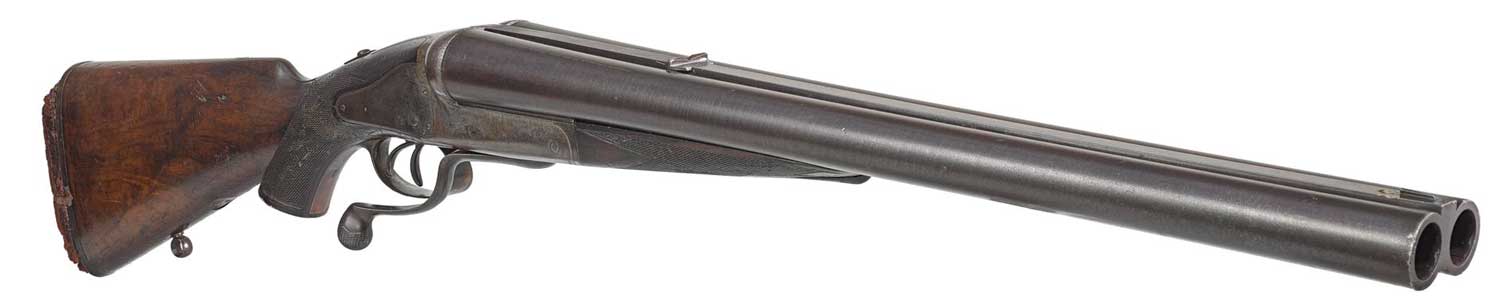
The stores were complex: rifles, boxes of ammunition, tinned food, trade goods, gifts for chiefs. Grogan visited Holland & Holland and walked out with a ten-year-old hammerless 4 bore for the big stuff, an underlever double rifle “burning 14 drams and throwing a 4-ounce (1750 grain) spherical ball.” The rifle had the classic back-action sidelocks of the day, 24-inch barrels and an all-up weight of 23 pounds.
He also took a .303 double rifle and a “.500 magnum” —likely the 500 Black Powder Express rather than the 500 Nitro Express. Harry took a practical piece, a 10-bore Paradox capable of firing either slug or shot.
Grogan had earlier travelled from Cape Town to Beira, so with a third of the journey already completed, the two men began at Beira, arriving at the port “in the company of sundry German officers and beer enthusiasts.” Grogan was struck by fever again, but this time rallied quickly and went hunting on the Pungwe Flats and Gorongosa.
Then, as now, the Gorongosa plain was a wonderland. The party was struck dumb by the sight of 50,000 head of game—wildebeest, zebra, impala, waterbuck and hartebeest. They stalked buffalo, knowing the risks.
Grogan dropped a bull, but the creature suddenly rose at 30 yards and charged hard, nose in the air. Grogan put both barrels in his chest without effect and, with no time to reload, took off. Harry stood. He shot and staggered the bull, which recovered yet again with fresh fury, only to meet the second barrel, pitching forward onto its nose three yards from Harry’s feet.
Grogan went on to take two enormous male lions, both more than 10 feet, and also faced a very close-range lion charge in long grass without incident. But Africa will get you with little things if the big ones don’t work. He got badly spiked through his boot and leg by the sharp quills of a porcupine. An African with him got tagged too and died two days later of blood poisoning. On another occasion, Grogan suffered a deafening crash behind him and the uncomfortable sensation of a 1/4-pound ball whistling past his skull—his gunbearer had slipped the safety on the 4-bore and a twig caught the trigger.
Harry later took a magnificent 42-inch buffalo. Grogan sat up all night over the carcass pestered by mosquitoes and hyenas but brought the 4-bore to bear on a huge male lion at first light. He was especially struck by sable: “no antelope looks grander than an old bull sable, standing like a statue under some tree, his mighty horns sweeping far back over his shoulders.”
After three months in the field, the pair dropped their trophies for treatment and sailed for Chinde in the north of the Zambezi Delta. With their baggage temporarily lost, Grogan journeyed alone up the Zambezi. Fever was their constant companion—this area is known, even today, for falciparum malaria, the most lethal form. Grogan was keen to find rhino and, after some hot noonday tracking, located a bull. But, reaching for the 4-bore, he found his bearer up a tree with the rifle dropped below. He managed to get a shot away, but the bull charged past him through clouds of smoke. After a lengthy follow-up, the rhino was secured. That evening news came that their stray baggage had arrived, and he headed north to rendezvous with Harry.
Not long after, Grogan brought down an unusual silver-grey antelope on the run. It was not a new species but a color variation of the common reedbuck and, even today, the area is known for leucistic genes. I’ve seen several “silver” waterbuck and other antelope in the area. Grogan’s full mount is still held by the Natural History Museum in London.
At M’towa he finally found Harry. The flesh had melted from his frame and the two men reunited in a somber mood. The lands to the north were in rebellion, to the west lay the brutality of the Belgian Congo. The weakened pair set off for Ujiji, meeting place of Stanley and Livingstone, and the root of the great slave-raiding ulcer.
Fever struck yet again and Grogan began to lose control of his hands, but the pair and their porters set off to the north.
The journey north up Lake Tanganyika’s shore was awful. The trail was poor and men deserted, taking food and equipment with them. By the time the party staggered to the top of the lake, Harry was only half-conscious, and Grogan had a severe fever.
The little caravan was amazed by volcanoes smoking above the lake and clouds, then a bitter struggle across the vast flows of sharp volcanic basalt that surrounded what was then called Mt Götzen, but it quickly became clear from miserable local refugees that marauding Baleka from the Congo were rampaging across the area.
The warnings were straight out of a Hollywood movie—paths littered with pools of blood, skeletons, skulls. Finally, near an empty village, figures brandishing spears came running down from a nearby hill. Grogan consulted his porters for advice on the intentions of the shouting mob. “They are coming to eat us” came the terse reply. Without hesitation Grogan picked up his .303 and waited until there was no doubt as to what would happen next. He then began to lay down fire and, after some tense moments, the attackers slipped away.
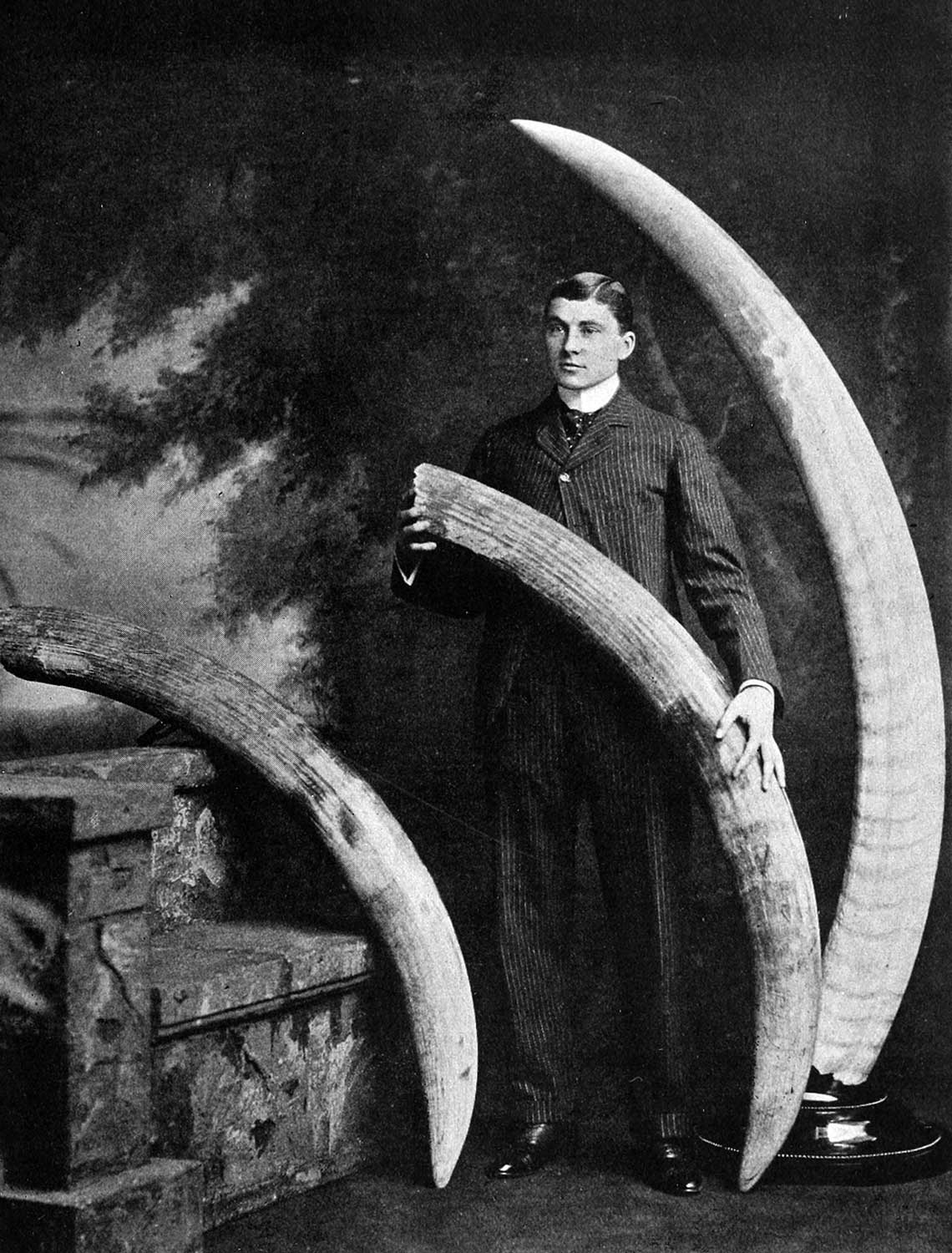
Grogan gladly detoured for ivory throughout the trek. His of 72 and 69 pounds sparked a frenzy among locals, who were “perched on every inch of the carcass, hacking away with knives and spears…the new arrivals tearing off lumps of meat….” Anyone who thinks this an exaggeration should know that such scenes still happen today. Another bull went 85 and 86 pounds, killed with a single shot from the .303.
Soon enough they found themselves in the Uganda Protectorate, headed for Fort Portal. Then the bomb dropped—Harry was turning for home. It is difficult to imagine Grogan’s thoughts. The two had hunted and endured much together and had become friends. The porters too had grown on him and now most were gone. Tackling the path ahead by himself must have been daunting—Cairo must have seemed a million miles away.
His decision was typical: move now, move fast and move light.
He moved on up through Wadelai on the British Nile, then pushed on by boat. The clouds of mosquitoes from the papyrus swamp islands made each night a hell. At times, Grogan fired great swathes of dry reeds to lay down smoke and kill the insects, but they kept coming.
The boat could only go so far. Grogan and his light team struck out on foot for a 300-mile stretch, starting in the sudd. Even today the word has an ominous tone—it means a barrier, an impassable place. A maze of floating islands of vegetation, meandering channels and lagoons, neither the Egyptians nor the Romans ever made it through.
Attacks by Dinka warriors depleted the party and those who were not wounded were sick. Grogan was in a state of continual anxiety. Low on ammunition, sitting up on night watch with a rifle, vomiting up the marsh water they were forced to drink, he later wrote, “I heartily wished myself quit of Africa and all its abominations.” The ragged team lived on whatever the swamp afforded —pelican, marabou, duck, hippo.
Close to breaking, dazed and delirious, he chanced upon a Sudanese solider far out on the shimmering plain. The soldier led him to a camp, where he met Captain Dunn, medical officer to a British exploratory expedition, taking a shooting holiday.
It was not until the two had settled into each other’s company that Dunn felt able to ask where the devil his guest had come from. Only then, with the hope of his journey’s end in sight, did Grogan begin to understand what he had done.
He and his depleted team travelled by gunboat to Khartoum, then by various boats and trains to Cairo to complete the final third of the journey and show his handful of Watonga porters the sparkling Mediterranean.
The great trek was at an end after more than two years. On retuning to England, Grogan went to Lancaster Gate, where Caroline kept a townhouse near Hyde Park. Gertrude was waiting for him.
They were married on October 11, 1900. The couple honeymooned then went on a long trip, effectively a book tour for Grogan’s From the Cape to Cairo, including a visit to New Zealand.
In the red stag rut of 1901, Grogan went stalking stags with Heaton Rhodes. I have handled Rhodes’ lovely old Holland & Holland 450/400 double rifle, still held locally, with some jealousy. The group stalked what turned out to be an especially loud and long rut.
In Kenya, he built Chiromo, the Grogan home. Gertrude, ever the dedicated wife, mother and worker, threw herself into managing domestic life—cooking, washing, poultry farming, gardening, household pursuits and care of the stables. After dinner, they often heard lions in the distance.
It wasn’t all good news. Years later, Grogan tied up three Kikuyu rickshaw drivers and personally flogged one of them in the town square. He was given a month in detention and later admitted that he “had made a fool of himself.” The charge was later dismissed on a technicality, but its ugly nature lingers to this day.
In 1967, as his health declined, Grogan attended the monastery hospital at Seapoint, a suburb of Cape Town. I lived and worked there for a while. He is buried in Maitland Cemetery, just past the chapel. Someone had left a sprig of acacia thorn last time I was there. He lies facing toward Table Mountain—the same mountain that saw his African adventures begin 71 years before.
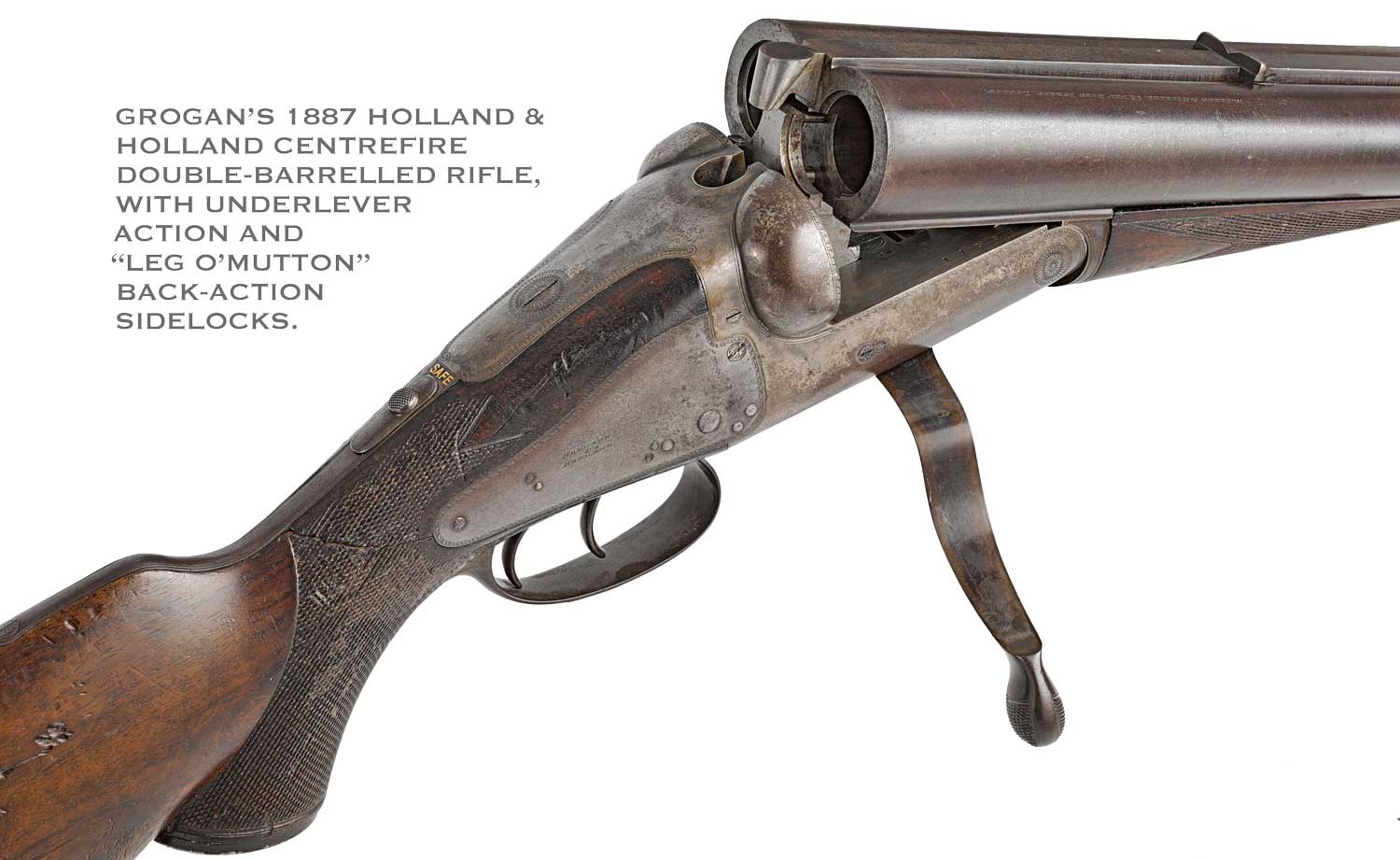
His 4-bore is still held in the Royal Armouries in Leeds, England. It’s a reminder of the old joke about big bore doubles—shoot twice, and if that doesn’t work, hide inside the barrels. There is a serious crack through the top of the grip, exactly where heavy rifles usually go first.
“Cape-to-Cairo” Grogan was my boyhood hero. It is impossible to doubt his courage, and his expedition demanded relentlessness beyond the grasp of ordinary people. Through adult eyes, Grogs the family man and business mogul is harder to like.
He skirted the edge of the law his whole life. The endless, grinding disrespect shown to his kind-hearted wife was a disgrace, even by the standards of the day. (He kept several families, set up homes nearby for his mistresses and even brought his illegitimate children home for Gertrude to meet and care for.) None of the four daughters he had with Gertrude had a loving relationship with him as adults. His brother, Quentin, himself a courageous big game hunter and adventurer, walked away after witnessing the emotional blood trail Grogan left behind. The two never met again.
Yet judgement counts for nothing. Why? Because Ewart Grogan was both the master and the victim of a great talent and, in the end, that talent owned him as much as he owned it.
He preferred the dance to brute force where he could use charisma, a sparkling argument and banter. In truth, he charmed his way across the world, and that charm let him get away with damn near anything.
His good looks, rebellious nature and raffish smile let him be selfish, and he decided to let the chips fall as they may, no matter what it cost those around him. He knew it. In his last years he called his heart pills “devil dodgers.”
But, of course, Grogs would not give a damn what any of us think anyway.
Peter Ryan has hunted across four continents and didn’t get lost on some of them.This is an excerpt from his fourth hunting book, Riding the Echo Down (Bateman Ltd) launching October 2025.