
I guess I’m just a born country boy. I’ve always felt most at home in the woods and fields with a dog and a shotgun for company. Early on, I “took to” the home-spun philosophy in country music, too, and Tom T. Hall was one of my favorite inspirations. I was still a fairly young man when I heard his estimation of what was worthwhile in life. He revealed it in a ballad about a grizzled old cowboy who enlightened him about life’s ultimate answers. The cowboy allowed that life was about “faster horses, younger women, older whiskey, more money.” Personally, I might expand the list a little, but the sheer brashness of the proposition just “caught my ear.”
Now, with the passage of much time, I’ve joined the ranks of the old and grizzled. I’ve “been around,” and “seen the elephant,” as the old cowboy might say. And now, I get questions, too. Folks always want to know “What’s best?” Doesn’t matter what the subject is. Guns. Loads. Chokes. Places. Seasons. Guides. One of the most common questions that I get is about the birds and hunting. “What’s the best bird hunting in the world?” they ask. “If you were going to take just one more bird hunt in your life, what would it be?”
Well, I guess that I’ve got enough opinions to share. Like a cowboy and horse hockey, I’ve got lots. On the other hand, I have to concede right now that the whole subject is pretty much a vanilla vs. chocolate thing. Some folks like one thing and some like another, and while I can’t answer for everybody, if you’ll bear with me, I’ll give you my personal choice.
Like most things in life, it “depends.” How do you personally define “best?” If you truly like tradition, if you like refinement and the general ambiance of the hunt, then it’s hard to beat a traditional Southern bobwhite hunt with all the trappings, or an English “driven” hunt, no matter the bird that’s driven.
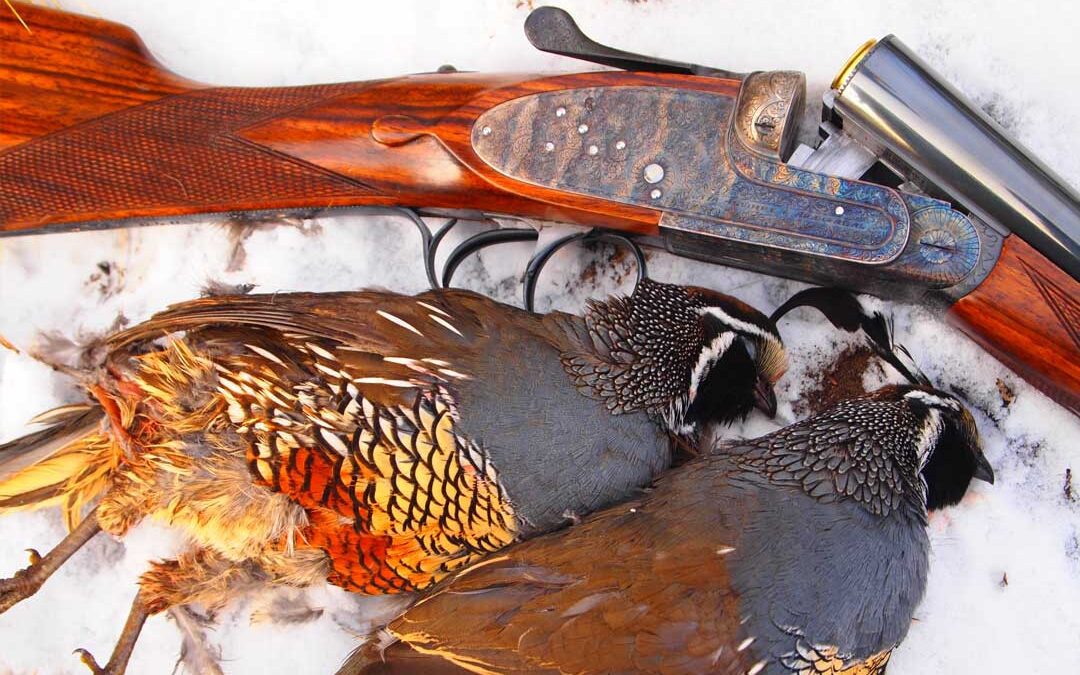
The quail hunt should involve a mule drawn wagon for the “gentlemen,” and white-coated outriders on horses to keep track of the pointers, who need to be lanky, long-legged, well-bred and impeccably well mannered. It also has to feature lunch on the plantation grounds, set in a breezy spot beneath towering live oaks. Hammocks for the shooters’ mid-day nap are a nice touch. The plantation must be private, of course, and quite large, so that the coveys are not over-gunned. A few thousand acres will do. If the birds are all wild and fly well, and you throw in a nice best-quality double to gun them with, that’s about as good as it gets.
The same can be said for a good English or continental driven shoot. An ancient stone castle in the background makes it even nicer. The locals may be a little picky about you and what you wear and what kind of gun you shoot. It may be a bit pricier, too, but we are talking absolutes, here.
Less impressed with ambiance? Want to focus on the shooting? In that case, plain old garden-variety mourning doves on a windy day with “dust devils” skipping across a close-cropped corn field are truly tough! They’ll give you a test that sends you home with your tail between your legs, if you’re not on your game. The same can be said of teal on a blustery morning, and “old ruff” in an alder thicket, too!
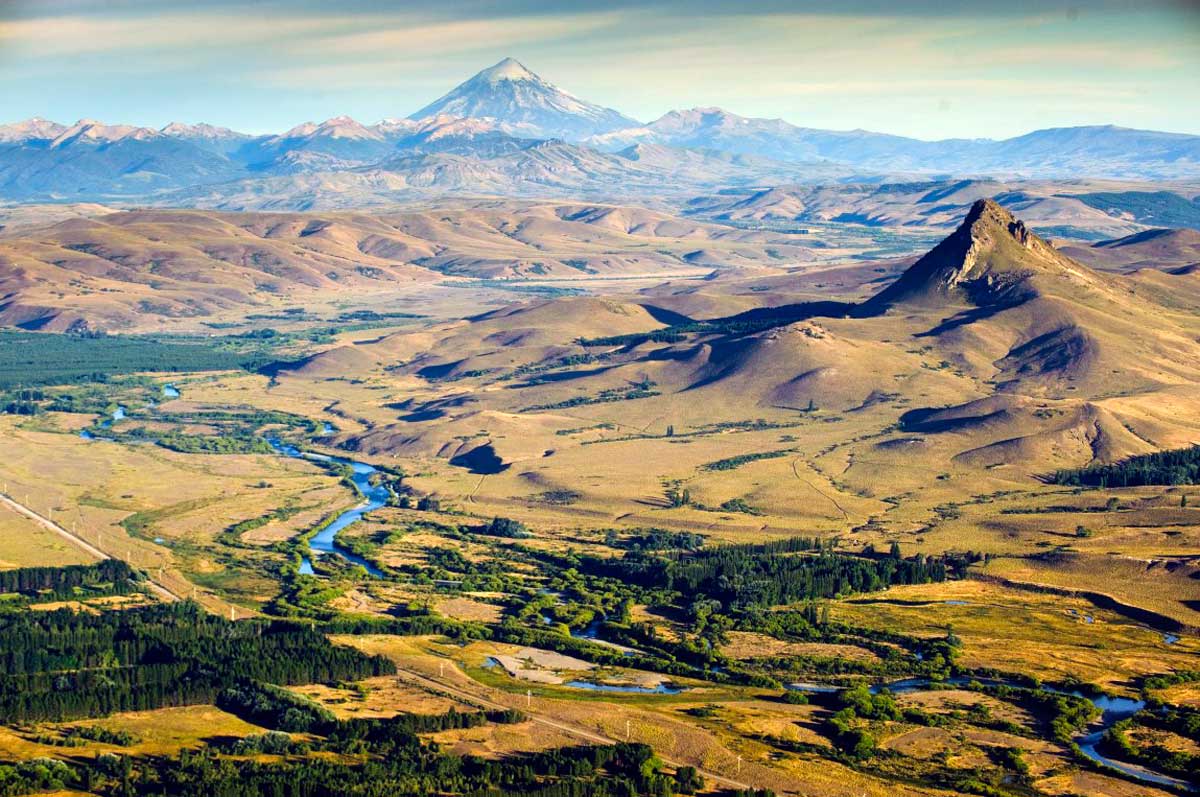
One of my favorite trips is for mixed-bag Western shooting. Montana comes to mind. Wide open, “Big Sky” country where the horizon stretches forever, and you can watch the dogs work from a half-mile away. And when you get a point, you might find Huns or sharpies or a big, cackling cock-pheasant. Depending on your location, you might also find sage grouse, mountain grouse, ruffs and chukars, too. It doesn’t get more fun than that!
And if you’re talking pure fun, try perdiz in Argentina or wherever you might stumble upon some. It’s not hard hunting. Usually, they’re found in very benign habitat. They’re usually gunned in expansive, lush green fields where the walking is easy. I sometime describe perdiz hunting as “bobwhite without the briars.” They’re not really tough shooting, just enough so to keep you entertained. A limit usually comes easily, and it’s just plain fun.
Another bird that’s really fun is the sand grouse. They’re liberally scattered across the southern half of Africa. They’re not too hard either, and they’re most cooperative in their habits. They keep to a scrupulously regular schedule and announce their arrival with a faint peeping that you can hear from a pretty good distance. Just plant yourself by a waterhole about five or 10 minutes before their scheduled arrival and get ready for about 30 minutes of the funnest shooting you ever had.
I guess I’ve mentioned most of my favorites, but I may have even missed one or two. I may have missed your favorite, too. And I guess that you’ve figured out by now that I haven’t told you the “very best.” That’s tough in a way, because, like intimate relations with the opposite sex, the worst I ever had was wonderful, and I love ’em all.
Since I’m running out of space, I guess I’ll have to quit pussyfooting around and tell you my personal choice for the tip-top, finest wingshooting in the world. You’ll be surprised by my choice, but since you asked.
To go there, you have to board a plane bound for Buenos Aires. With me so far? When you get there, spend a couple of days just resting and enjoying the place. Have some wine. Try the empanadas. Try the beef. Ogle some of the most gorgeous women in the world. When you’re sated, get on another plane and fly right over all the places where other bird hunters spend their time and fortune.
Your destination is Patagonia, southern Argentina. Specifically, the foothills lying hard against the east side of the Andes Mountains. It’s vast, and arid, with snow-capped mountains looming to the west, and it’s home to the densest population of California quail that you ever imagined in your wildest dreams. If the story is true, they were introduced to the area sometime in the 19th century and quickly flourished in the ideal habitat. Now they inhabit a band of semi-desert that’s about 200 miles wide and extends 1,000 miles or more along the foot of the Andes. While I can’t vouch for the truth of the story, I promise that you’ve never seen anything like it.
Callies are never easy, but in Patagonia, they’ve found a habitat that makes them even more difficult. Not difficult to find, mind you, but very difficult to hit. The magnificently colored birds still love to run, but seem to hold a little better in the thick stuff than they do in the western U.S. For the most part, they live in brush country that’s broken by deep, thick ravines choked with dense cover. They roam widely in daylight but congregate in the ravines morning and evening.
They can be flushed out of the dense cover but make short work of getting back into it when they do. They kind of “zip out” and “zip back in” so fast that there’s seldom time to get on them, and when you do, they’re moving like their tails are on fire. If there is a tougher target in the world, I don’t know what it is.
The good news is that there are LOTS of them! When you miss, as you will with great frequency, it’s easy to find some more. One of their more endearing qualities is that occasionally they will mass in great “coveys” so large that it’s hard to even make a competent guess how many there are. Once, when I was hunting with Will Cowan, who runs an outfitting company called Hookfire, we flushed a covey that I truly think would have numbered in the hundreds! I got two! Yep, I said two! Did I mention that they were tough? Did I mention that a robust sense of humor is required?
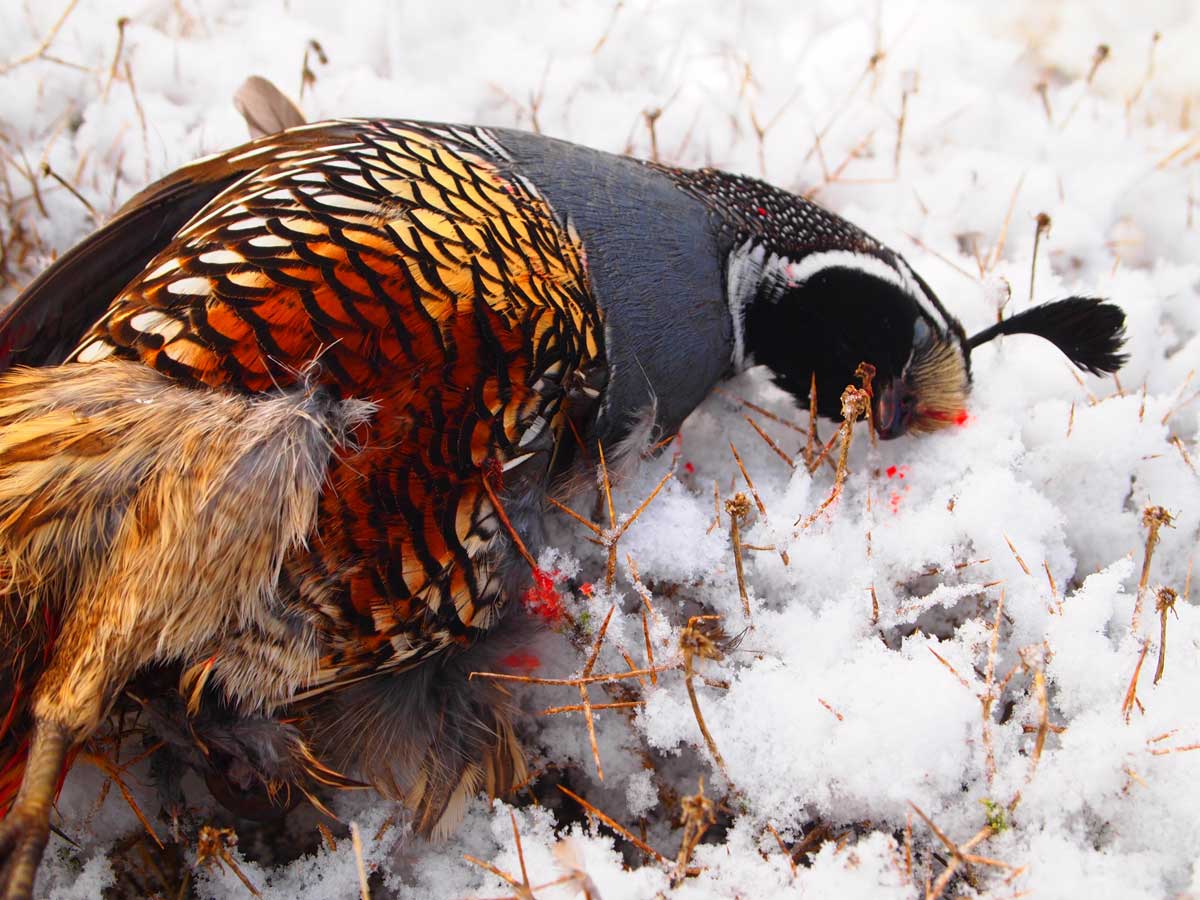
If you’re really lucky, you may get a skiff of snow that blankets the desert with white and makes the brightly colored birds glow like Christmas lights. It happened to me a couple of times and I’ll never forget it.
All in all, gunning California quail under the watchful gaze of the ancient spirits of the Andes can only be described as “exquisite.” And if I found that I only had one hunt left in my old carcass, this would be it. Period. You’re welcome.