

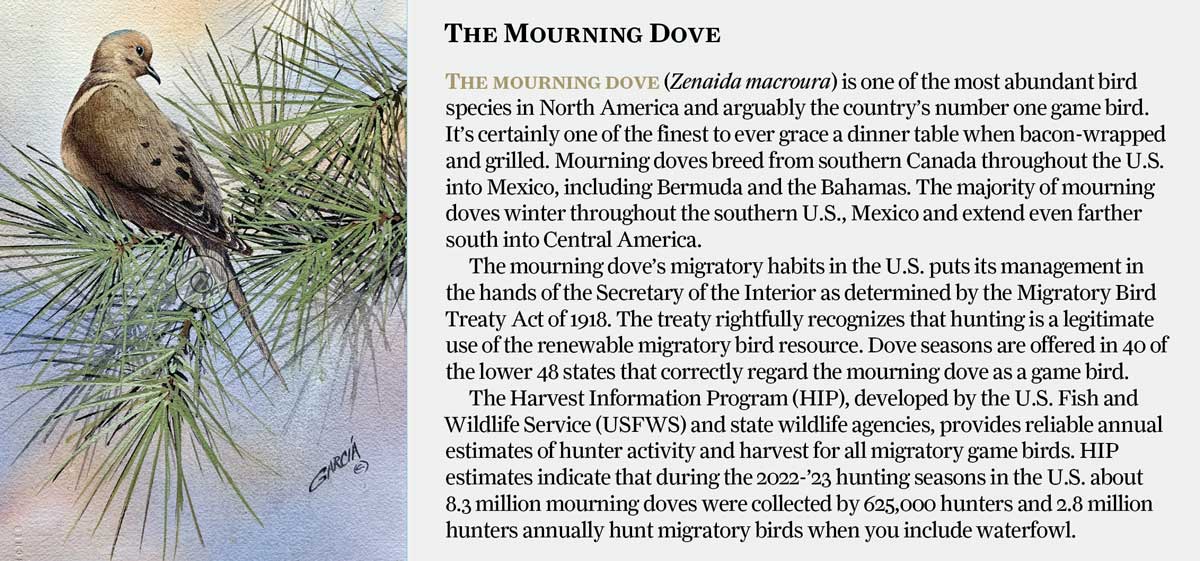
Dove openers initiate the beginning of the fall hunting seasons—special occasions that create wonderful memories. Doves embody the best features of upland game birds rolled into a gray bullet that challenges the best of shooters.
The stars must have aligned early for me to become a hunter, because I can remember the excitement of my first hunt just as the fog of toddlerhood began to clear. I was four or five years old when I accompanied my father to a dove field near Corpus Christie, Texas. There I watched wide-eyed as birds twisted and darted across the field dodging waving barrels and banging guns. But the biggest thrill for me came when Dad folded a dove and I got to race out to retrieve it. He shot a Winchester Model 12, 12-gauge and no bird shooter ever had a more enthusiastic retriever than I was that day. That Texas dove opener introduced me to the grand tradition of bird shooting, a sporting pursuit I’ve enjoyed ever since.
I was nudged ever closer to my lifelong bird shooting passion during an excursion to a local landfill with my father. Armed with a toy popgun loaded with a string-attached cork, I enthusiastically popped away at seagulls hovering above us, firmly convinced I might bring one down. My optimism was not diminished one bit by missing, and going home empty-handed only bolstered my determination. I believed then, and still do now, that lots of trigger-pulling is key to bagging birds. I couldn’t wait for the chance to swing a real gun at a dove.

A Texas dove opener introduced the author to the grand tradition of bird shooting, a sporting pursuit he has enjoyed ever since.
I regarded my childhood as reasonably normal, but don’t most kids with little to compare it to? We moved around a lot owing to my father’s career as an aviator in the United States Navy. We were fortunate to live in many interesting places where I learned to adapt, meet new friends—and say goodbye. I survived the transitions by embracing a sense of adventure and adhering to a healthy sense of self-preservation.
In the mid-1950s, my family spent 18 days aboard a Military Sea Transport Service (MSTS) ship, crossing the Pacific on our way to Guam. Arriving at the 30-mile-long island felt as though I’d stepped into a youngster’s dreamland of tropical jungles, coconut palms and shady mango trees bordered by sugar-white beaches and blue water. The island was literally crawling with large coconut crabs—hermit crabs weighing five pounds or more that could tear apart a green coconut with their fist-size claws.
There I honed my hunting instincts and stalking techniques without the aid of gun. As a first grader, I focused on lizards, specifically green anoles, that inhabited the verdant foliage near my school’s playground. Leaving the playground for any reason was strictly forbidden, but for us recess renegades the lure of the green anole was too tempting. Their color-changing abilities made the streamlined lizards hard to spot and we perfected the art of snatching them before they darted from one branch to another. The biggest challenge we faced during our forbidden forays into the leafy realms was to do so without getting caught ourselves.
By the age of six I was an incorrigible Guamanian lizard-wrangler. A good day at school was capturing several trophy-size green anoles and bringing them home alive in my empty lunch pail. I released the lizards unharmed to roam the neighborhood environs where we lived and I like to think a healthy population of green anoles thrives there today, thanks to my early catch-and-release efforts.
We moved to Florida during my early teens and there the dove season became a much-anticipated time of the year for me and several like-minded pals. We didn’t have planted or prepared fields in which to hunt, so finding doves meant learning what they ate, when they drank and the types of trees—usually tall pines—where they rested or roosted. Doves were where we found them and we worked hard to locate natural honey-holes and, like all honey-holes, we kept the locations closely guarded secrets. We kept a sharp eye out for them throughout the year but really focused on their whereabouts as the dove opener approached.
Once the season began, we continued searching for virgin vicinities where doves might congregate. Power lines and bare-branch trees were good dove indicators as they served as favored perches for staging doves before they winged into nearby food or water. Time was of the essence to get to our prime spots before the doves did. So, in order to save time, we often brought our shotguns and gear to school so that we could head to a dove location as soon as classes let out.
While still in our early teens, my friends and I were entrusted with the responsibility of having our own guns, which for many of us were Winchester Model 12 20-gauge shotguns. Abusing our gun freedom by using them in an unsafe manner or shooting at anything other than game or targets was inconceivable. I’m quite certain that more of us had access to guns back then than do kids today, but we took our gun privileges very seriously and there was certainly never any thought of settling a dispute with gunplay.
Look out…here they come!
One of our more unique honey-holes was discovered purely by accident. Living in Cocoa Beach, Florida, the Banana River was literally in our backyards and boats were a big part of our lives. We cruised the intracoastal waters in skiffs and runabouts like most kids race around their neighborhoods on bicycles. During the summers, we waterskied and fished, and in the winter months we duck hunted among a maze of mangrove islands called the “Thousand Islands.”

Power lines and bare-branch trees are good dove indicators as they serve as favored perches for staging doves before they wing into nearby food or water.
The mangrove islands incorporated a labyrinth of shallow, navigable canals, backwater ponds, coves and inlets appealing to wintering flocks of pintails, widgeon, teal and uncountable numbers of bluebills. On one occasion, we wrapped up a late afternoon duck hunt with limits of green-wing and blue-wing teal. We picked up the decoys and headed for home motoring past “Big Island,” the westernmost island in that section of the Banana River. We were astonished to see swarms of doves flying in to roost on Big Island, something we’d been unaware of before that moment.
“Well, I know where we’re going to be this time, tomorrow,” I said to my buddies, who all nodded in agreement.
The next day we returned to Big Island armed with 20-gauge guns and plenty of dove loads. When we got there, we shoved our boat out of sight under the mangroves and found spots on the island from which to shoot. Not a bird showed until almost 15 minutes before sundown, and then the onslaught began. The appearance of the first lone dove gave little indication of the numbers that would follow. As more and more doves arrived, they literally dive-bombed us in order to land among mangrove branches. Once we started shooting, we couldn’t reload our guns fast enough. Within minutes, picking out a single bird among the frenzied flock overhead was almost impossible.
The shooting was fast and furious while it lasted but ended just as quickly as it began. And as exciting as the shooting had been, in the rapidly fading light we battled to find our downed doves among the island’s thick saltmarsh undergrowth. Loosing birds in the thick vegetation was more than frustrating and it forced us to reconsider where we should be shooting. Not only did we lose too many birds, but we also recognized that we were shooting too close to the roost. We needed to make another plan.
Putting some thought into our predicament, we came up with a more tenable tactic. The island was surrounded by a broad, shallow, sandy flat that stretched out for about 100 yards. Most of the doves came from the west, so we figured the best place from which to shoot would be about 75 yards in front of the west-facing edge of the island—standing in knee-deep water. Fortunately, Florida’s fall weather was warm enough to make wading out in the shallow water wearing shorts and tennis shoes comfortable. The only thing we had to be careful of was the odd stingray, which scooted out of the way when you shuffled your feet.
In our new shooting spot in front of the island, bagging a limit before sunset was possible and picking up birds was easy. Fortunately, a majority of the doves zipped past our guns without missing a beat and were able to settle undisturbed on the mangrove branches behind us. To avoid too much pressure on the roost, we only shot Big Island very few times during the season.
Many years later, while hunting sandgrouse in Botswana in the late afternoon, I was reminded of those Big Island dove hunt. Although most sandgrouse fly to water in the mornings, there are a couple of species of sandgrouse that drink in the late afternoon. Coming in fast and furious, they arrive at waterholes during the last 15 minutes of daylight. Like we had done at Big Island, we stood well away from the edge of the waterhole to allow most of the birds to reach the water.
Let the Season Begin
Millions of hunters across the nation enjoy September dove openers each year. Merely contemplating the approach of fall’s first outing with a gun can lift the spirits of any hunter who’s ever swung a gun at the four-ounce “gray bullet.” It’s an enjoyable experience, which can be shared with friends and dogs in natural surroundings and in reasonably comfortable weather.
Traditionally, dove shoots are social gatherings of hunters who enjoy good sport and watching others make a good shot as much as making a good shot themselves. It’s also a chance to renew old friendships and make new ones as well as providing an excellent opportunity to introduce a youngster or new shooter to the fun of hunting in familiar surroundings.
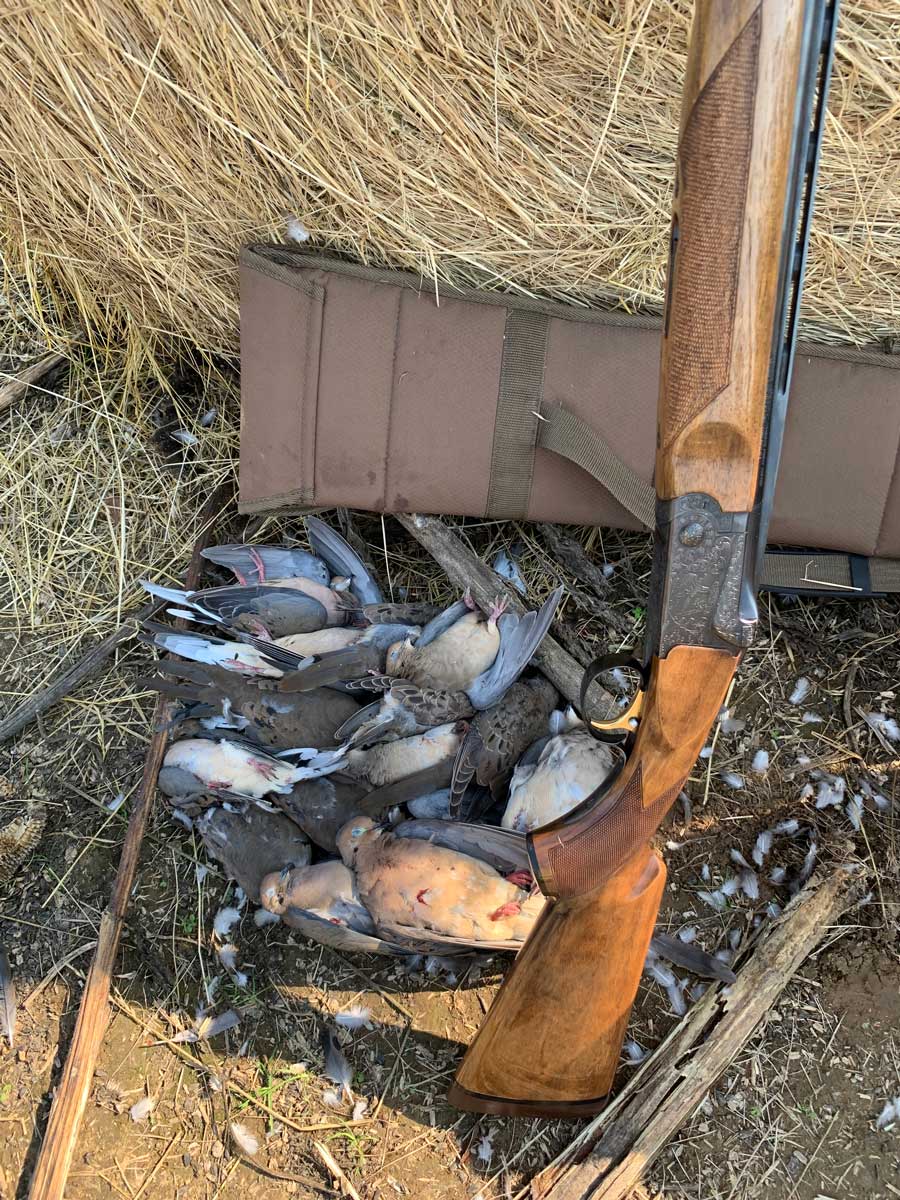
Millions of hunters across the nation enjoy September dove openers each year.
Anticipating the first of the fall hunting seasons is the time to begin preparing and gathering gear as well as purchasing licenses, stamps, shotgun shells, bug repellant, sunscreen and whatever hot new gear item is on the market. Dove gear includes camo clothing of the lighter, cooler variety, hats, boots, shooting glasses, ear plugs, shell carriers, game bags and stools and cool boxes or a combination of both.
Preparation should also include shooting practice. Any of the clay target games are good, especially sporting clays and skeet, which present many of the shot angles you can expect in a dove field. Even hand-throwing clay targets with a buddy will sharpen your eye and help quicken your response.
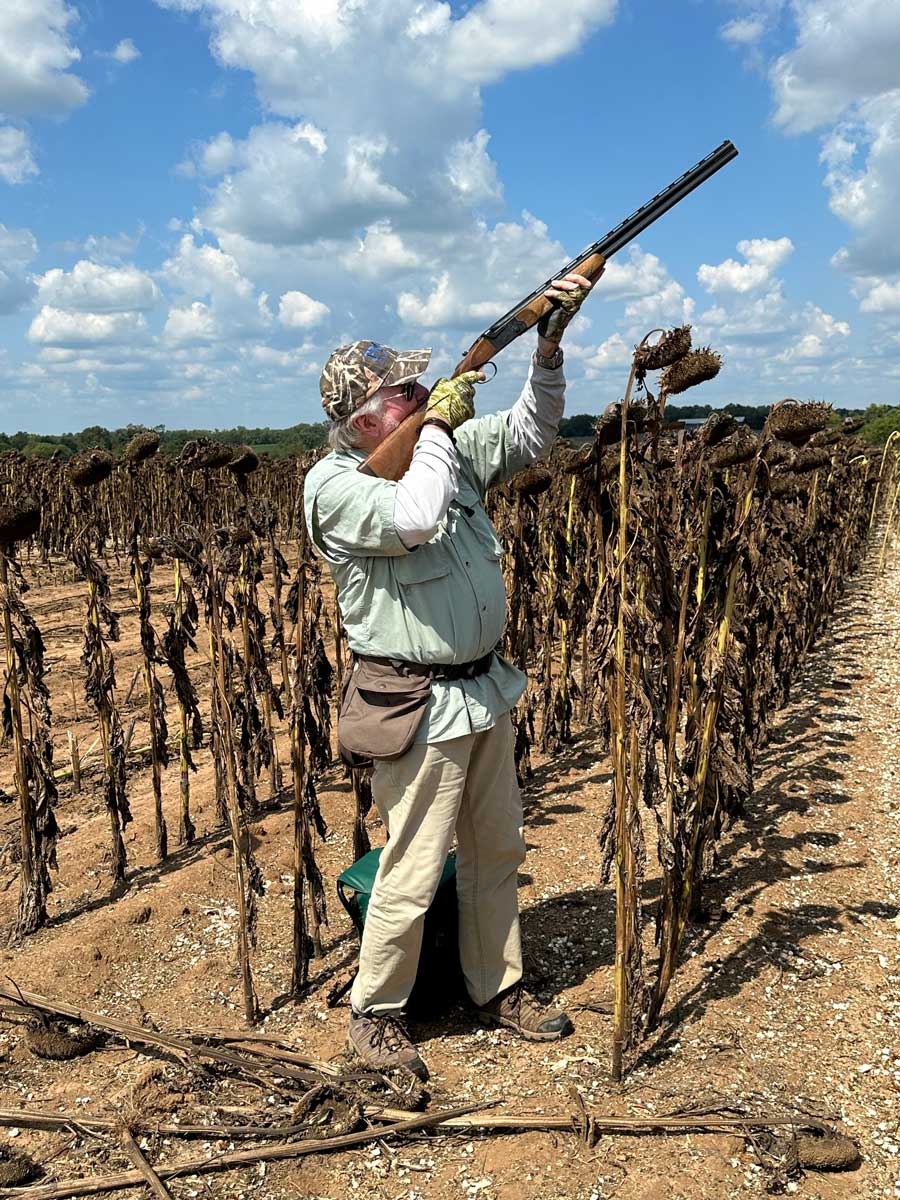
Traditionally, dove shoots are social gatherings of hunters who enjoy good sport and watching others make a good shot.
Also key to success is pre-season scouting, when you familiarize yourself with dove movements in your area. If you’re looking for a place to hunt in an agricultural area, recently harvested cropland is attractive to doves and access is often available just for the asking. Many states’ wildlife departments prepare public dove fields, which are available to hunters for nominal fees that allows access to the field. Once you’re in the field, if shooting positions are not allocated, you need to find a spot from which to shoot. Just remember that dove field safety and etiquette require that you keep a safe distance between yourself and other shooters.
Crucial to locating a good spot is understanding the lay of the land and having a good idea about the directions from which the birds will fly. The doves themselves will let you know the best places to be in a field by the flight lines they follow. A concealed spot near a stand of trees or a point of brush is usually a good bet for intercepting arriving doves. Concealing yourself as much as possible is important. Camouflage clothing helps, but you still need cover to break up your outline. Crouching among ground cover, sitting behind a bush, or standing next to a tree are effective ways to break up your outline. If no natural cover is available nearby, you may need to bring in cover to make a small blind. A stool/cooler combination provides a comfortable place in which to sit and shoot and keeps water and drinks cold and handy.
If the weather is very hot, find a shady spot to wait for birds and be sure to bring extra water, especially if you take a dog. Dogs, like people, tend to get out of shape during the off season and can suffer with the sudden exertion and excitement of chasing after birds on the first day. Physical exercise and honing retrieval skills beforehand will enhance both your and your dog’s enjoyment of the hunt.
Be patient and wait until doves are in range before you raise up to shoot. Doves will flare when they spot movement so only mount your gun to take your shot when they are close enough to shoot. Typically, doves are plentiful enough to offer lots of shot opportunities, so when you do miss don’t berate yourself—everyone misses. Keep in mind shotgunning basics such as mounting the gun correctly, keeping your head down and placing your cheek firmly on the stock. The tendency to lift our heads as we shoot is a constant battle to overcome, but keeping your head down will make a world of difference to collecting your limit. And always keep your gun moving as you pull the trigger.
Selecting the right shotgun is a matter of picking the one with which you’re most familiar and comfortable shooting. Choosing between a 12-, 16- or 20-gauge gun is really a personal choice—they’ve all accounted for many doves. Both 20- and 28-gauge guns have roughly the same reach as a 12 gauge, only with smaller shot patterns owing to fewer pellets in the smaller shells.

Whether you’re a novice or an experienced shotgunner, sub-gauge shotguns are a delight to handle and shoot. A 28-gauge gun is very effective, but the margin for error is slim—you must be on target to be successful. Consider its use at pigeon shoots where I’ve watched many crack shots drop just as many pigeons in the ring with their 28-gauge guns as they do with long-barreled, 12-gauge guns stoked with high-brass pigeon loads. The moderate recoil will increase your shotgunning pleasure, and you’ll find these versatile shotguns are equally at home in woods, fields and marshes. If you do choose to shoot a sub-gauge gun such as a 28-gauge or .410, put in lots of shooting practice beforehand in order to become proficient and confident, otherwise your dove field experience could be quite humbling.
Generally speaking, improved cylinder (IC) is a good all-around choke for doves. Opening day doves, not yet wary and wild, normally offer closer shots, but the “honeymoon period” doesn’t last long. After the opener you can expect longer shots requiring a tighter choke and concealment becomes ever more important.
Ammo choices can have a big impact on your bird tally. For maximum effectiveness, you need a uniform and consistent shot-pattern, which most target loads provide. Knowledgeable dove hunters choose trap or skeet target loads stoked with No. 8 or No. 7 1/2 shot over more economically priced field loads.
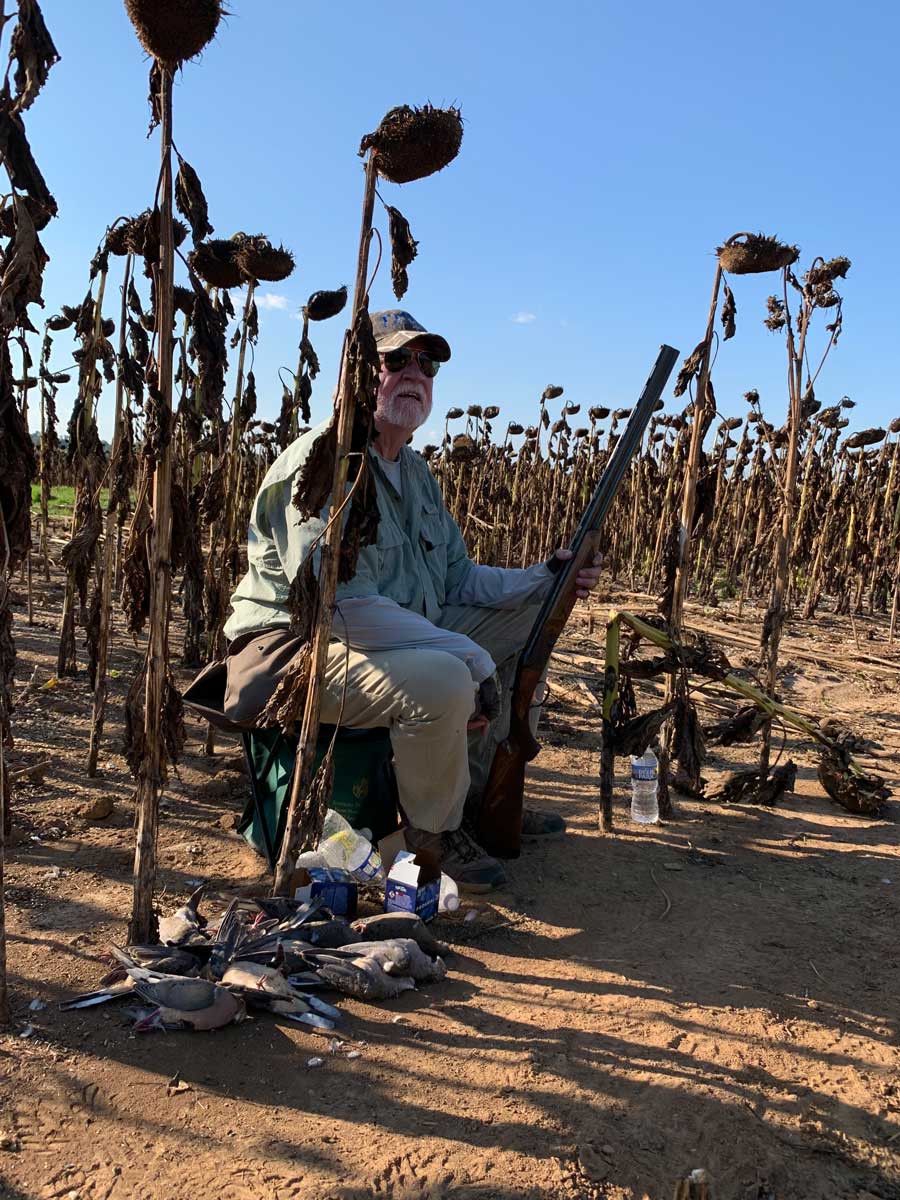
Many states’ wildlife departments prepare public dove fields, which are available to hunters for nominal fees.
I’m proud to call myself a bird shooter, having spent most of my life pursuing game birds of one type or another in various parts of the world. I’m always amazed by the excitement and fun that bird shooting provides. I’ve also found that participating in other types of hunting, including quite a lot of big game hunting, has never diminished my appreciation or enjoyment of bird shooting. Plentiful doves, good friends, eager dogs, pleasant weather and the great outdoors are all wonderful elements that make up the grand tradition of dove hunting that we look forward to each season.
Notable Quotes
“‘Doves,’ the Old man began, ‘are the easiest hard shootin’ in the world. Or maybe it’s the other way around. Maybe they’re the toughest easy shootin’ in the world. I’m telling you right now, you figger to miss more’n you hit and it would surprise me none if you didn’t hit any for your first box o’ shells.’” — Robert Ruark The Old Man and the Boy, 1957
“…the dove is the only bird I know that is immune to static ballistics. I mean to say, once you’ve got your swing grooved on duck or quail or grouse or chukars, the killing gets to be pretty automatic. Maybe the African sandgrouse shares some of the dove’s ability to loop and dart and sweep, to fly fast or lazy, and to change his pace like a good pitcher, but I doubt if it compares with the dove in versatility of erratic action.” — Robert Ruark Field & Stream, 1959
“If a game bird is judged by the relative speed of getaway, and erratic line of flight, then the dove, with his brilliant speed and his dipping, rolling flight, takes the highest honors here.” — Byron Dalrymple Doves and Dove Shooting, 1949
“I can bring home about twice as many ducks for each box of shells as I can doves.” — Jack O’Connor Hunting in the Southwest, 1945
“You must hold right, otherwise you go home light in both shells and birds. However, one is likely to go home light in both respects, no matter how cute the hold.” — Major Charles Askin Sports Afield, prior to 1945