

Ancient walls of huge, dry-stacked, weather-worn boulders hint at a distant past and parallel us as we travel through crisp morning air along a sandy, sun-dappled road toward our shooting pegs. They look European. Beyond the stone walls, giant hardwoods rise over the undulating terrain, their dark trunks and huge limbs floating in a sea of bright, incredibly colorful leaves. The scene paints a backdrop so dazzling it reminds me of impressionist Claude Monet’s almost abstract lily pad paintings.
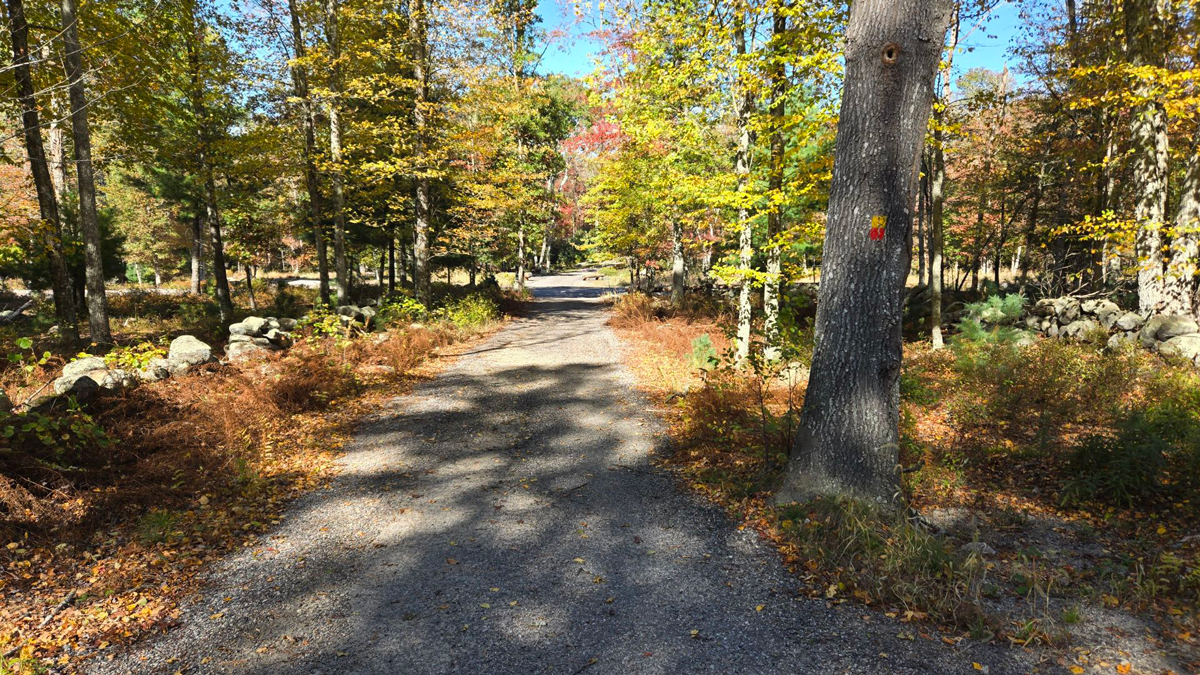
Not far from Providence, Rhode Island, The Preserve Sporting Club’s ancient stone walls line part of the King’s Highway. They add a degree of beauty and history to a magical place where members and their guests can come to hunt, shoot and fish.
Fifty yards from our pegs, I’m walking with—and getting to know—club member Dr. Steve Colagiovanni who will be my partner in this driven pheasant shoot. We are dressed for the occasion in tweeds and neckties. It is Saturday, October 19, 2024, opening day of pheasant season at The Preserve Sporting Club & Resort in Rhode Island. We arrived the day before.
On various sporting adventures, I’ve been picked up by trucks, trains, boats, buses, old Jeeps, ATVs, mules, horse-drawn wagons and float planes. But this was a first. At the Providence airport, a very polite driver named Jack opened my door for me and loaded my luggage into the boot of a brand-new Bentley Bentayga SUV. After we arrived at the lodge, he parked it among perhaps seven others. It was a statement about this place, its owner and its members that did not go unnoticed. It inspired a multitude of questions about The Preserve, who built it and why it came to be.
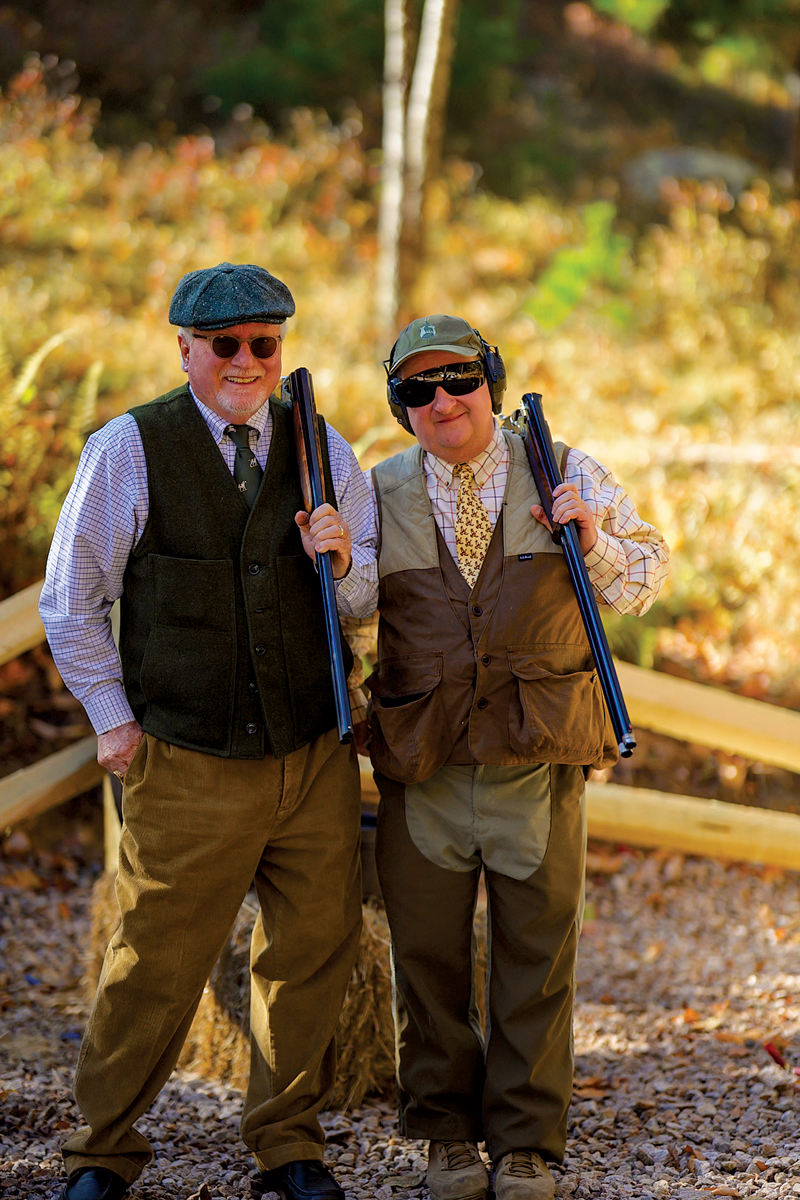
Author Duncan Grant (Left) with shooting partner and Club member, Dr. Steve Colagiovanni.
Jack dropped me off at Hilltop Lodge and my apartment in order to put away luggage and freshen up prior to lunch. Almost palatial, it had a kitchen, den with fireplace, large bedroom and a very nice bath. Perfect for someone staying a while. It lived up to its Hilltop name. The Preserve is located 20 minutes south of Providence on Boulder Hill, so I had stunning views of the surrounding countryside from my apartment’s second-floor deck.
Jack picked me up again and we made the short drive over to the main lodge for lunch where I met The Preserve’s gracious Chairman, Paul Mihailides and VP of Operations, Liz Leonard.
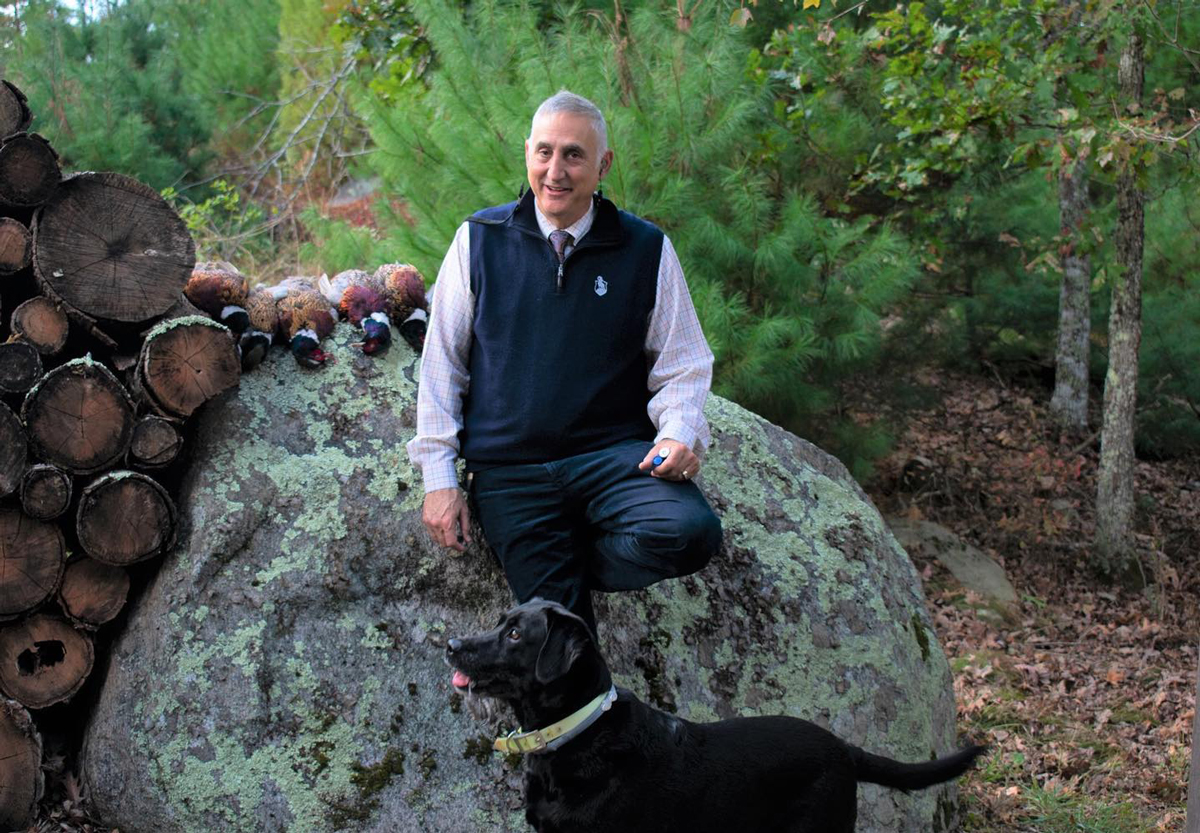
Indefatigable serial entrepreneur, Paul Mihailides, proprietor of The Preserve Sporting Club.
Paul is a complex man with a complex personality. Selena Barr of Tweed Media describes him as a “serial entrepreneur,” and I agree. He is also brilliant, and one of those very driven people with boundless energy who never seems to rest. Curious, I asked him how he got his start.
“My parents divorced when I was young. At 14 years old, I went to work in a pallet-making factory. Yes, those wood shipping pallets,” he answers the question before I can ask.
“On the very first day, I noticed that workers were measuring and cutting each individual board, then slowly nailing them together to form a single pallet. It took forever. So, at the end of the day, I suggested that we build jigs for the different parts and the pallet itself, and they agreed. Of course it worked, and we improved production more than ten-fold. In six months, I was running the division.” Grinning, he adds, “I’m good at math, too.”
After lunch, we take a short tour to see the basics of the 3,500-acre property, which features shooting, hunting and sporting clays venues—including America’s longest indoor range—in addition to a golf course, walking trails, tennis courts, swimming pools, zip line, apartments, townhouses and individual homes—all the family things you might see in very posh resorts.
Then, as we continue the tour, I begin noticing details that are not the norm these days. First, there seems to be an absence of knots in the hardwood trim in the buildings we visit. Even the tiny homes. In fact, though there must be some, I can’t find a single knot anywhere. Joints in stone walls and foundations are extremely precise. And, unless it was built that way on purpose, there is nothing out of square. As we tour, I notice something else: the number “8” and hand-carved, heart-shaped stones appear like subtle Easter eggs in the exterior walls of the buildings. The level of craftsmanship is what you’d find in a German castle.
My curiosity takes over, so I ask Paul about what I’m seeing. “The number eight represents infinity and perpetual motion. The hearts represent hope, love and commitment,” he explains. “My son, Alec, is a landscape architect. He and I designed the venues, landscaping and some of the homes. He oversees construction. We even mine the granite used in the buildings from here.”
It’s obvious that he loves and takes great pride in whatever he builds.
As our tour ends, Paul says that he takes his role as steward of The Preserve incredibly seriously. “I want to tear up the cliché that the entrepreneur and the preservationist act at cross purposes,” he says, adding: “Many think corporate acumen and social conscience are impossible to reconcile—I want to do things differently.”
Although his core business is property, only three percent of the land is developed.
“Over the years, I’ve been offered the opportunity to build housing developments and a hospital on this land, but I’ve always turned it down—I want to keep it as a wilderness. It is incredibly well-located with road networks and airports all within close proximity, so no one can understand why I wouldn’t want to sell it.”
As Paul finishes his sentence, as if on cue, a whitetail buck crosses the road in front of us and disappears into the thick, golden-leafed hardwoods to our right.
Friday evening, we are treated to dinner at Double Barrel Steak, The Preserve’s five-star cuisine. The dinner is delicious, so of course I eat too much. The conversation with members and guests, as you might imagine, is fascinating because these intelligent, interesting people represent the sporting cognoscenti primarily from this very populated part of New England. Most have traveled the globe, hunting, fishing, exploring and discovering for themselves the intricacies of the world and its cultures. The conversation is beyond intriguing, however, I’m fading fast. Having risen at 4:00 a.m. in order to catch my flight, I excuse myself and head off to bed early. Tomorrow we shoot!
The next morning, as Dr. Steve and I walk along the old road, the land rises on both sides and our conversation turns to shooting, primarily shotguns, The Preserve and what attracted him to become a member.
“Duncan, I love to shoot rifles, shotguns, pistols—you name it,” he says. “I can close my office on a Friday afternoon at 4:00 and be here in 20 minutes. The sporting clays courses are the best I’ve ever seen. Some are covered and heated, which is helpful during our cold winters. All are handicap accessible.” He continues, “If it’s raining, I go to our 150-yard indoor shooting range. And should I bring family or friends who don’t shoot, there are dozens of other things for them to enjoy.”
“So, part of the attraction is the convenience?” I ask.
“Yes, but it’s much more than that. The Preserve is a fraternity of like-minded individuals. Paul sets the example. He makes sure every member is invited to our functions. I’ve found members to be extremely generous with their time and willing to answer questions, from choosing firearms to advising on other places to travel. Outsiders have described this as an EX-clusive club. I would say it’s the exact opposite—very IN-clusive. Sure, you need money to be a part of it. Because that’s exactly what it takes to make a rare place like this sustainable.
The more I talk with Dr. Steve, the more impressed I become, especially by his deep knowledge of firearms. I don’t suggest that he give up his medical practice to write for us, but the thought crosses my mind.
We choose shotguns from a rack containing a few dozen. I pick a heavily engraved, single trigger Italian FAMARS over/under with a shorter length of pull that fits me. Steve, meanwhile, uncases one of his favorites, a custom double by Rich Cole.
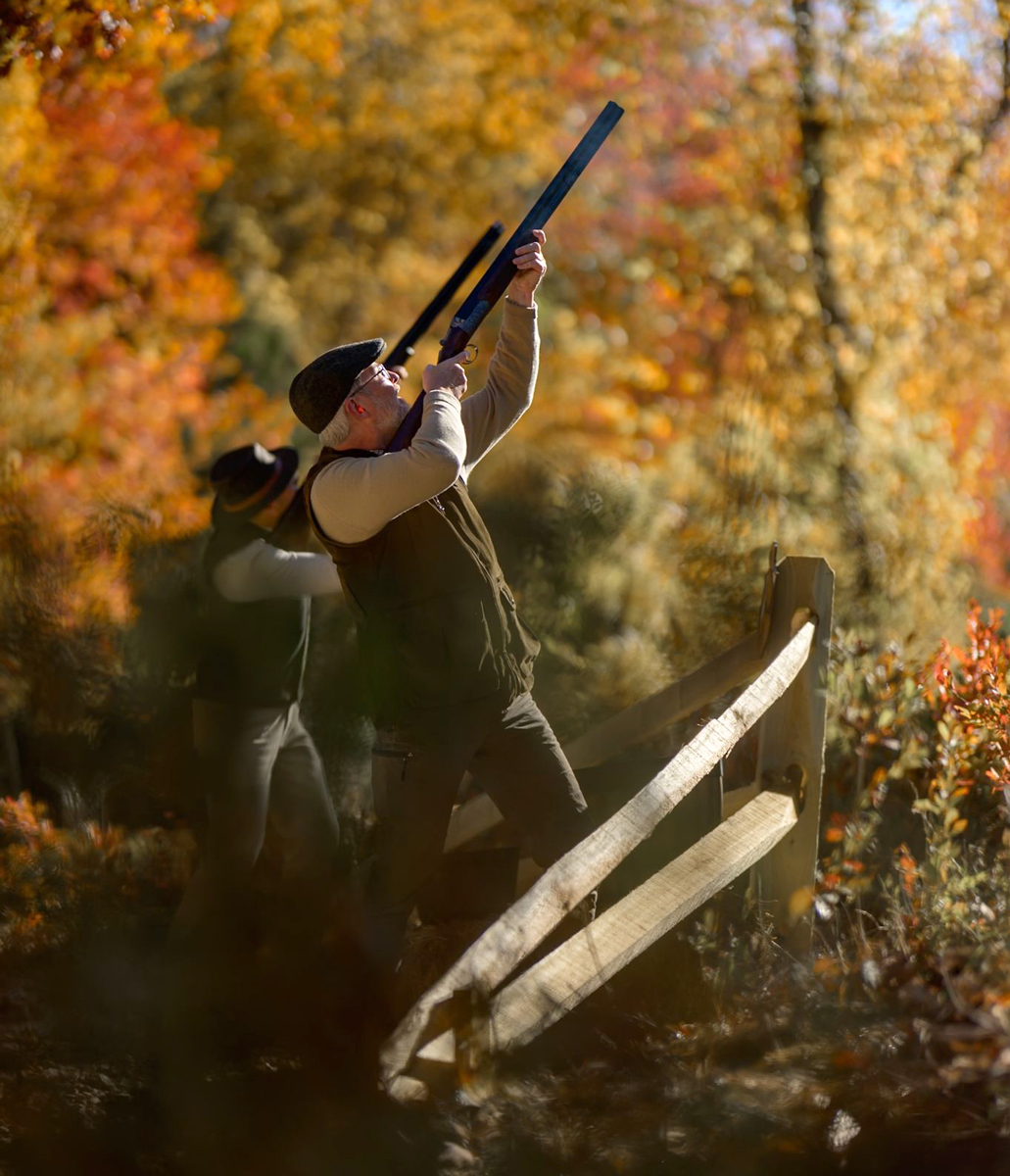
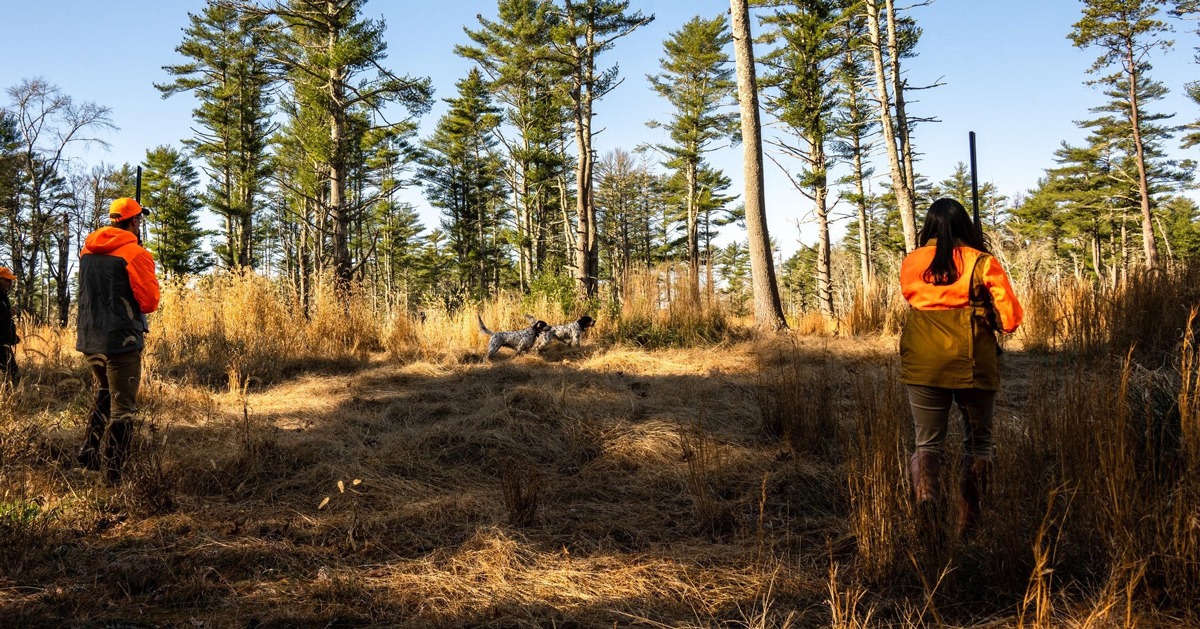
Birds wing high through hardwoods dressed in their most beautiful fall colors. Guests fire away from pegs below.
Positioning ourselves behind split-rail fences at Peg 8, the tree-covered terrain rises steeply in front of us, flattens out where we are standing at the edge of the road and rises again 20 yards behind us where retrieving dogs shiver and handlers stand anxious. I glance around. It’s a bit surreal, as if I’ve stepped into the vibrant yellows, ochres and browns of a Lynn Bogue Hunt painting. The weather is perfect, a little warm, so off comes my tweed jacket. Excitement and anticipation build. Along with everyone else, Steve and I grow quiet.
From a distance, the sound of a horn cuts through the eerie silence. Echoing down this narrow valley, it upholds an ancient tradition, indicating the beginning of the hunt. I slide two shells into the chambers of the FAMARS, snap the action shut and check the safety. In a few seconds, firing begins far to our left and proceeds closer. I ease off the safety. Suddenly, against a blazing, azure-blue sky, I see the long, brilliantly colored tail feathers of ring-necked pheasants winging through the trees over us. They don’t get far. The doctor is as good a shot as he is knowledgeable.
For a few seconds, I just watch as birds fall. Dr. Steve is deadly. Shooting between trees against the sun is a challenge, so I put on my sunglasses and begin to get the feel of the FAMARS, a company that Paul also owns. It has the heft of a serious 12-gauge over/under, making follow-through easy. The handsomely burled walnut and engraving give it a classic beauty. It’s the kind of gun you’d be proud to take anywhere. I practice swinging at birds until it feels comfortable.
Then, watching the uphill horizon, I spot a pheasant winging for a narrow opening in the forest crown in front of me and to the right. I lead him only an inch or two, squeeze the trigger and down he comes, landing about ten feet to my right with a solid thud. From behind me a retriever appears and picks up the bird. I bag several more before the horn sounds again. Time for us to move to the next peg.
While I got my very first bird, I don’t mean to imply that I didn’t miss any of those following. I missed plenty. Thankfully, Dr. Steve’s shooting helps save me from any embarrassment. We move down the line and my shooting improves at every peg.
One of the special guests manning pegs is Paul’s friend, David Burke, the famous chef. This is David’s first experience shooting pheasants, so in order to honor tradition, he gets bloodied and takes it all good-naturedly.
Burke tells us, “I’m thrilled to be part of this! It’s a chance to bring the joy of eating game to city dwellers, and a unique way to connect urban food lovers with the rich traditions of hunting. By serving pheasant on opening day, we’re not just offering a meal, we’re celebrating food providence, seasonal flavors and the spirit of the outdoors.”
When the final horn blows and shooting concludes, we’ve taken a considerable number of birds. Some are hurried to the David Burke Tavern in New York City, a three-hour Bentley drive away. There, much of our pheasant bag will be served to guests as part of the Glorious 19th celebration. The remainder become part of our own feast, which takes place as an alfresco lunch outside one of The Preserve’s three famous Hobbit Houses. Yes, I did write “Hobbit Houses.”
While the movies are make-believe, these unique buildings are very real. Designed to host weddings, bar mitzvahs and other special occasions, their 18-inch thick walls and stone floors, like many other walls and foundations on the property, are of solid granite mined here on Boulder Hill. The hand-carved circular doors, hinged in the middle, must weigh hundreds of pounds, yet are balanced and easy to open.
Sure, Hobbit houses may seem a bit odd for the traditional sportsman, but these creative venues are just another way that Paul has devised to help his dream support itself.
Prior to our feast, I’m sitting outside having a drink at a fire pit with Byron Kirk, a youngish member. I watch as he interacts with other members and can tell that they are close. Bonded by a respect for the outdoors, they easily mix their love of shooting, hunting and fishing with talk of their businesses. I ask Byron what attracted him to join.
“My wife and I love the outdoors,” he quickly responds. “My Tundra gets us here in 25 minutes. That’s less time than we’d spend in many TSA lines to travel anywhere else by air.” Laughing, he continues, “And we don’t have to check baggage or take off our shoes. She can bring her target pistol and never have to fill out a single form. This is a phenomenal place with phenomenal people.”
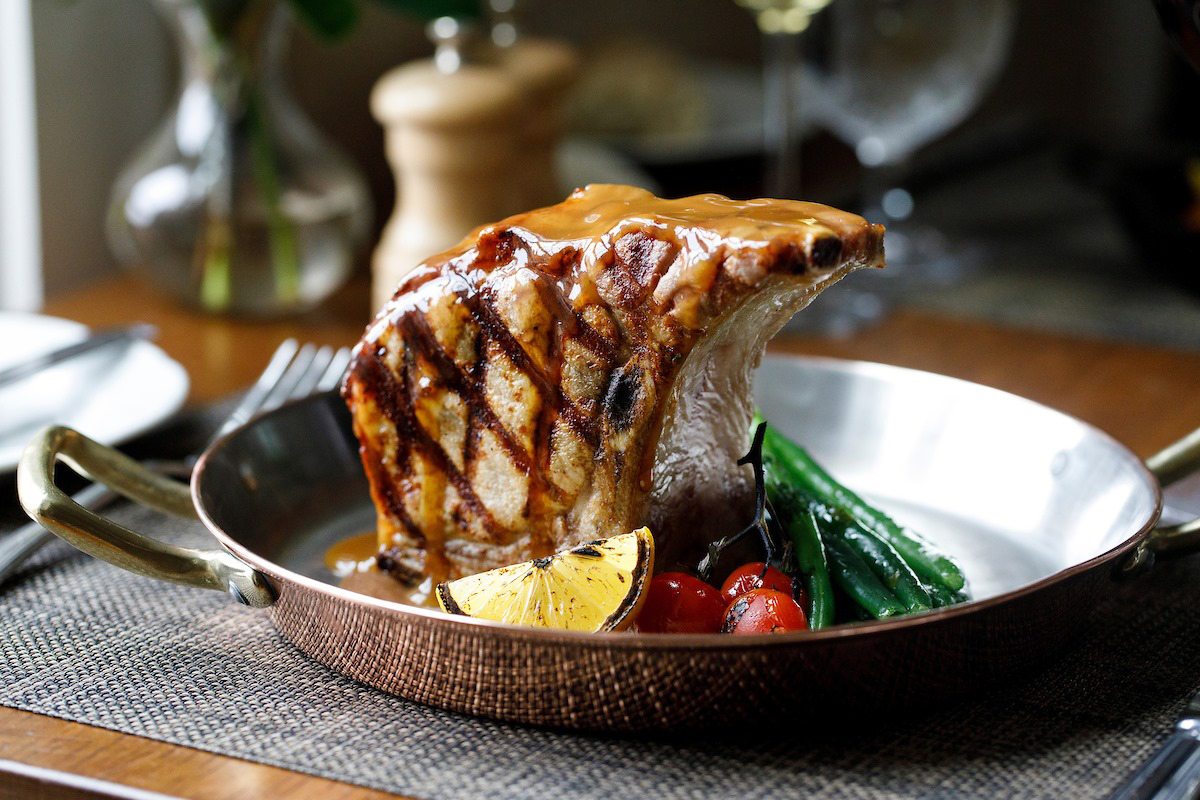
Visit The Preserve and you’ll want to leave your diet at home. There are reasons it gets five stars.
A five-course menu curated by Chef Burke with pheasant as the star ingredient is ready. The food is beyond incredible. No one is leaving hungry. Byron and I eat all we can hold and talk with the group into the evening.
Gradually, I realize that The Preserve is much more than what I and many other outsiders imagine. It’s more than shooting, hunting or fishing. More than biking, ATV riding, zip lines or horseback trails. More than its lodges, tennis courts and swimming pools. More than its five-star restaurants and incredible 25,000-square-foot sportsman’s store.
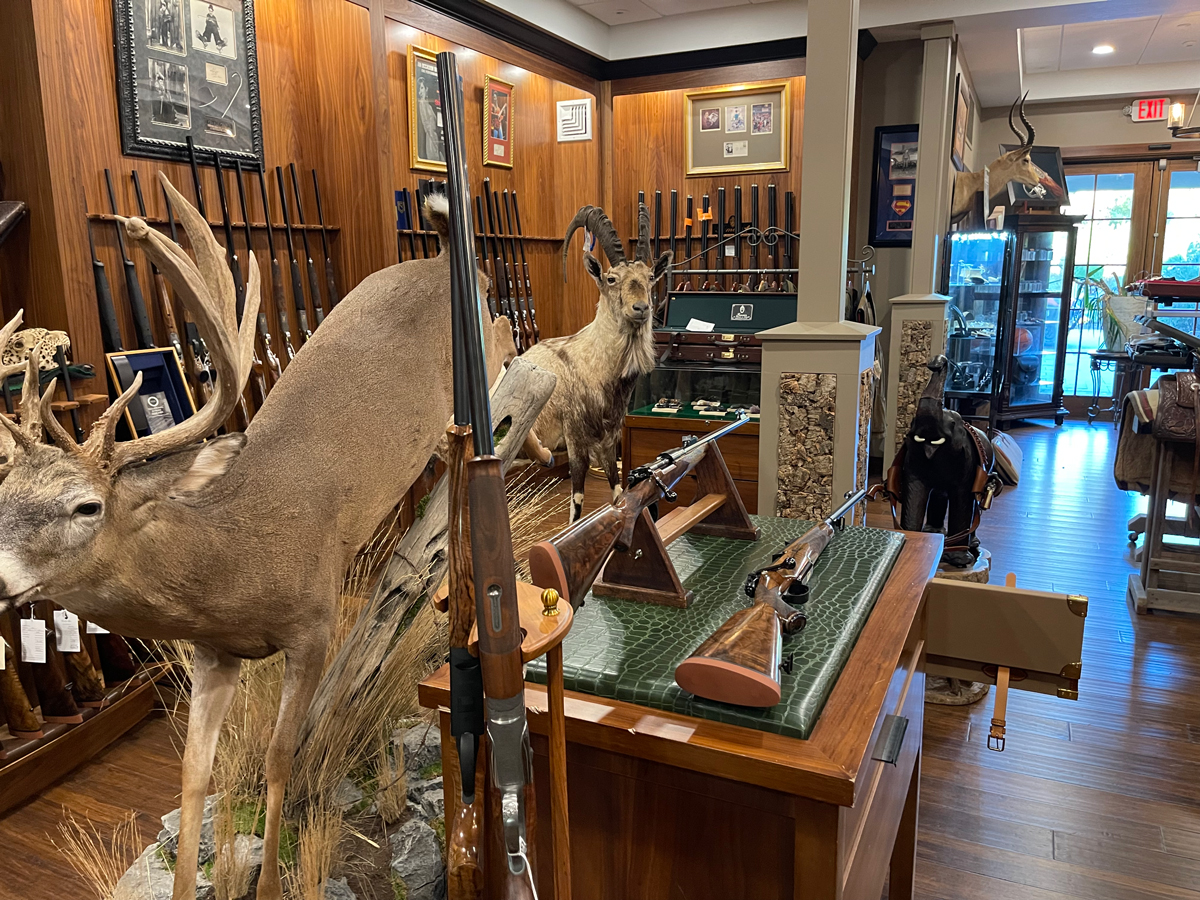
The gun room at The Preserve Sporting Club features an incredibly fine arrays of firearms including many from FAMARS, a company also owned by proprietor Paul Mihailides.
This club is a shooter’s and conservationist’s dream, a place that pays homage to—and preserves—the traditions of our sporting life. Developer Paul Milihades has used his talent and vibrant imagination to craft a three-dimensional, 3,500-acre artform, a culmination that showcases our outdoor heritage in the finest of ways. In crowded, expensive New England, he’s figured out a way to create this place, surround himself with like-minded friends who share his love of the wilderness, hunting and fishing, and makes it all sustainable.
On my early Sunday morning flight home, I’m staring through the window of American Airlines seat 24A. Flying at a lofty 13,750 feet allows me to see the Atlantic Ocean off in the distance, and I watch as a greenish-yellow dawn begins to illuminate the eastern sky over New York City. Somewhere below are remnants of that same ancient road, the one with the huge stacked boulders that I mentioned earlier. In the 1670s, a time when much of our food came from the game we caught or killed, that ancient path was part of the King’s Highway. It took travelers from Boston, through Providence, Rhode Island, to Charleston in Sporting Classics’ home state of South Carolina.
Here is history professor Jim Casada’s poignant description of our end of The King’s Highway:
The S. C. section of the road was sometimes called the Georgetown Road. In its heyday, it was THE route for travel and commerce, with everything from deerskins to turpentine, Carolina Gold rice to cotton. It was also traveled by the likes of the Swamp Fox, Francis Marion, and George Washington during his visit to Archibald Rutledge’s Hampton Plantation.
Today, avenues of asphalt have mostly supplanted moss-laden oaks and a surface of sand as the route, but there are places where the winds of yesteryear blow through Spanish moss in a fashion that is at once haunting and heartening. No lover of the past, no devotee of the natural world, can fail to be deeply moved by traveling along the stretch near renowned Hampton Plantation, the ancestral home of one of sporting literature’s grandest scribes, without being stirred in their innermost being. You are on sacred ground—places where the music of hounds once rang through the crisp December air as Old Flintlock (Rutledge’s moniker), his sons, neighbors and a host of black huntermen pursued the enduring tradition of deer drives. Or, in springtime, where lordly gobblers declared their dominion over everything within earshot.
When Paul first mentioned the name of the road where we were traveling at its far north end, I felt that same eerie stirring. You could almost sense a link to our nation’s history, a link that, in many ways, reminds me of this magazine’s mission: To Preserve The Heritage, The Romance, The Art of Hunting & Fishing. It’s a mission that Paul and I share.