
A witless beast could hardly inflict the trials, even perils, visited on caribou hunters. Could it?
Had the rain paused more often, I might have looked longer. But the ceiling had a deliberate set, as if the low, lugubrious clouds were screwed in place. Dawn’s veil of mist remained, hiding the horizon behind a colorless wash that might have been 300 yards off or 3,000. Distance seemed irrelevant on this tundra. I was wet, chilled and ready to blow the cobwebs from my Winchester.
The bull was old enough, its antlers tall enough, even taking into account caveats from the Inuits: “Every caribou looks big if you’ve never before seen one.”
Prostrate, dabbing the lenses of the 4x Redfield with a sopping Kleenex, I sagged into the sling. The tundra, having saturated my feet, now sponged cold water through invisible crevices onto my belly. Water ran into my eyes as the trigger broke. All looked good. Compliantly, the bull wilted. No clouds parted in applause, but with the knife work came visions of heat and dry clothes, if only in a small tent with half a can of butane.
As the other hunters killed bulls that day, we planned a return to Repulse Bay early next morning. It would be a swift trip with the Evinrudes throttled up. The rain abated that evening, also the wind.
“Nobody knows the way of the wind and the caribou.” —Chipewyan proverb
But the Arctic had other plans. We awoke in the shadow of a range of ragged white peaks. During the night, the cool push of rain and drizzle from the west had given way to a south wind, dry and stronger. The ice, yesterday scattered as white hyphens on the horizon, was now a mountain range jammed against the north shore of Hudson’s Bay. Grinding to a stop, it left only dark slivers of water between blocks too big to yield or calve. Tugging on cold boots, I trudged after a hat-less Inuit lad scaling a promontory. Ice stretched as far as he could see.
Presently a stocky Inuit, by dint of age the expedition’s chief, squatted on an adjacent floe. His parka’s wolf-hair ruff rimmed copper cheeks corrugated by wind and years. He held his binocular tight to eye—vertically, as it had but one functioning barrel—then lowered it. Expressionless, he gazed into the wind as if probing its source. Then he shook his head, rose and hobbled down off the ice toward the tents.
Impatient, noting our supplies would soon run low if the ice didn’t shift, we prevailed upon our guides to pack up anyway and try to reach open water.
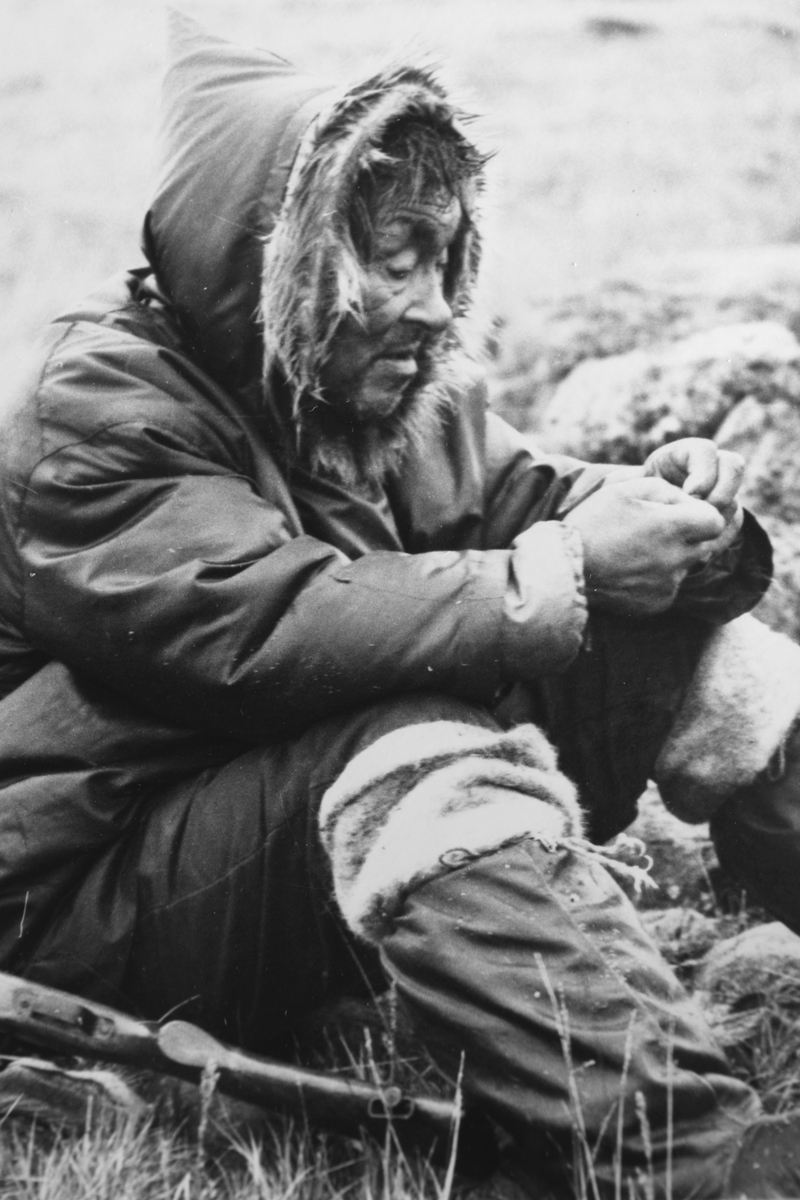
With an open-sighted .22 rifle, this Inuit shot six caribou in one day, cached the meat and packed the hides for miles on a cord about his shoulders.
Tugged with heavy ropes by knee-booted Inuits, the 20-foot freighter canoes nosed into pitifully small channels. Pushing and pulling, we nudged them over pressure ridges and around towering blocks of ice. As the floor of the Bay fell away, garage-size chunks were freed to jostle, even spin to the press of deep currents. Inuits up front on the ropes were a step away from plunging into the frigid water.
The Arctic humiliated us that day. By mid-afternoon, exhausted, we turned back, lest night catch us on the unstable floes. Providentially, a seal surfaced in a pool long enough for one of our lads to pop it with a 30-30. On a floe we sectioned the creature, boiled it in a pan over butane and ate it all. Beaching at dusk, we awaited a turn in the wind.
Not that caribou had anything to do with that misadventure. The caribou is neither vindictive nor cunning. Writer Jack O’Connor once likened it to a lovely girl he’d known, beneath whose “exquisitely contoured bones rattled the brains of a chipmunk.” More objectively, he described its “dull and infantile curiosity and a mind of almost incredible indecision.”
“Suddenly the cow began running in a swift gallop, taking various directions and circling in her efforts to find the strayed calf. At times she would lower her nose to the ground and seek to smell the calf’s tracks, until finally she winded it and galloped in the right direction, circling about until she found it. Many times I have observed similar cases. Caribou are the only wild ruminants I have ever seen that constantly lose their young.”
– Charles Sheldon
John Jobson, another scribe with solid field credentials, opined: “Some people say caribou are incredibly stupid. I don’t agree…. Caribou sometimes act obtuse, but that is something else. They are short-sighted and they have an insatiable curiosity. They will trot merrily up to a pack-train, and will try to sniff the horses. Herds may wander into camp,… sampling the wondrous new sights and smells.”
Gun writer and well-traveled hunter, Bob Hagel, cautioned that, while many “consider the caribou the dumbest big game animal on earth, [just when he seems a pushover], he upsets your best efforts to get within even long rifle range…. Whether this is by design or accident matters little … the hunter, who is supposed to have a brain capable of outthinking any animal, is still left holding the sack.”
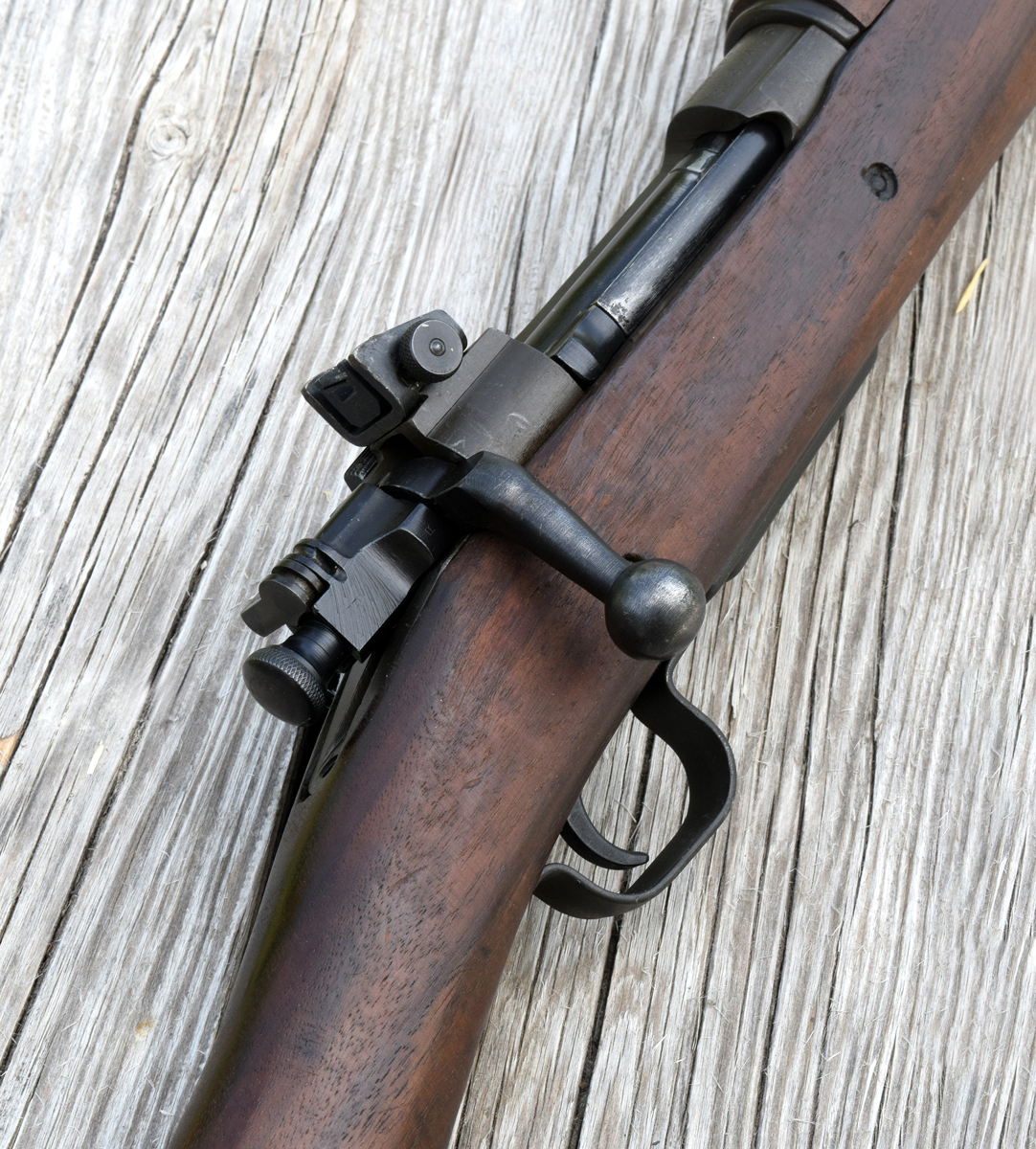
After WW I, Canada’s SMLE rifles in 303 British, U.S. Krags in 30-40 Krag and (here) 30-06 Springfields made their way north. Not needed for caribou, they had the power to upend moose, polar bears and grizzlies.
To his guide’s dismay, Hagel once refused to stalk a dozen mountain caribou bulls bedded high on a snow field. “Even with horses, it would have taken more than two hours to reach shooting range, and I knew there was less than one chance in ten those bulls would still be there…. We were already 20 miles from camp, [late in the afternoon,] without even a sandwich.” A hungry, tent-less night after finding the bulls gone had little appeal.
The ability of caribou to vanish from open landscapes has flummoxed many hunters. Some lay it to arctic voodoo. In truth, it is mainly a function of the vast places caribou live. Heck, they’re not even places. Places have boundaries, marked or not. Caribou live where there’s yonder beyond yonder, farther than you can imagine and then some. In the mountains or forests or on the tundra, there’s no telling how far a herd or a small group or a single animal will go in any direction. Or how long you’ll have to walk to get there. Besides, the caribou won’t be there when you arrive, wherever “there” is. Their foot-loose habit will have taken them from here to another there, for no reason apparent even to them.
Caribou are circumpolar, found in Europe and Asia, as well as in North America. The reindeer of the Laps are small, domesticated caribou. Wild in Norway and Sweden, reindeer are game. Small remnant herds of woodland caribou, most common in eastern Canada, ghost along the northern hems of Montana, Idaho and Washington State. The woodland is one of five caribou sub-species recognized by the Boone and Crockett Club. In 1968, the Quebec-Labrador category was established to distinguish, for recording purposes, these beasts from smaller woodland caribou native to Newfoundland. The other three caribou: mountain (northern British Columbia and the Yukon, into the Northwest Territories and Alberta), barren ground (Alaska and northern Yukon) and central barren ground (the Northwest Territories into northern Saskatchewan and Manitoba).
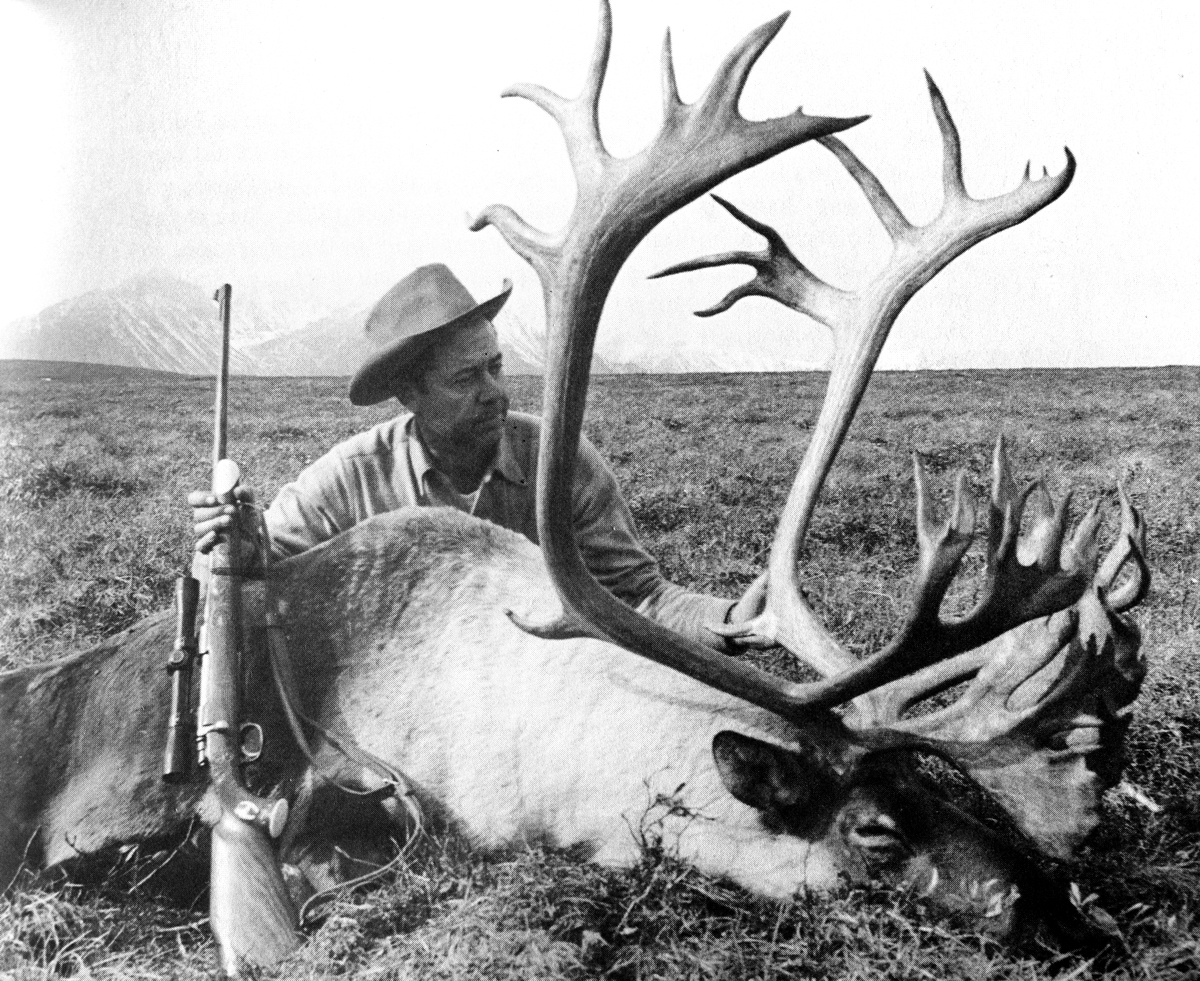
Caribou antlers vary a great deal in form, but gun writer Bob Hagel saw everything he wanted in these.
Widely known as creatures of the tundra, subspecies also inhabit woodlands and subalpine steeps in northwestern Canada. Migrating, barren-ground caribou can move like tide, leaving hundreds of square miles empty in their wake as they flood fresh country. Grazers, caribou subsist mainly on lichens, grass and moss. Occasionally they browse willows. Unlike most other big game, caribou feed at all times of the day over much of their range. They bed for only short periods.
Caribou have the largest eyes of any North American deer, also the warmest coats. Long hollow hairs add buoyancy in water, where oversize hooves make the beasts champion swimmers. Females have antlers—a unique feature among the continent’s deer.
Like many hunters, I’ve had trouble finding caribou. Once, motoring low over Canadian tundra in a de Haviland Beaver, I asked the pilot, over the engine’s sonorous growl, why we hadn’t seen caribou.
“Aren’t there,” he said.
“I was told migrations were less predictable than in the past. But shouldn’t we see some caribou?”
“Not if we aren’t where they are.”
“Will I be hunting where they are?”
“Can’t say. That’s up to the caribou.”
“Don’t biologists track the herds?
“Yup.”
“So have they been here lately?”
“Biologists or caribou?”
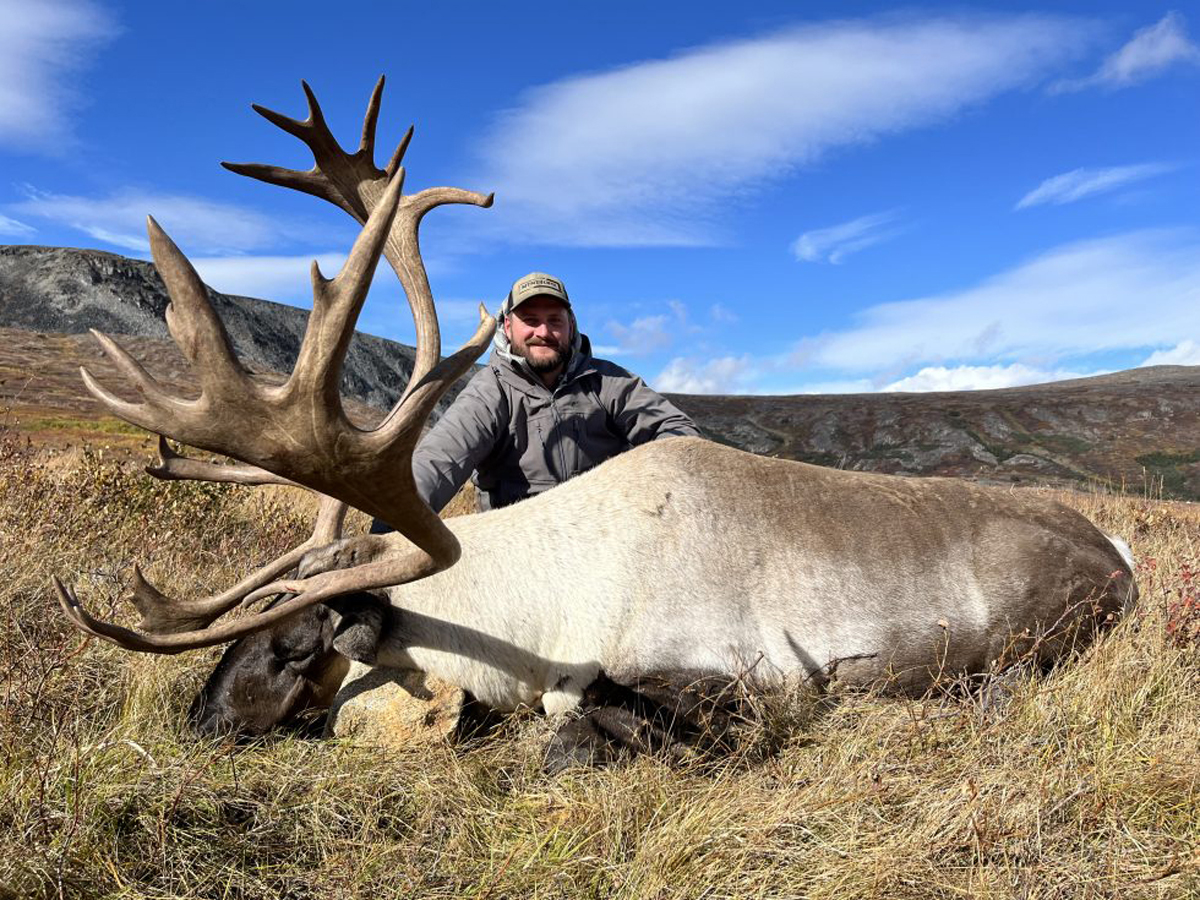
This superb mountain caribou was taken recently in northern B.C. Photo: Kawdy Outfitters.
I sat back to watch empty tundra roll under the wing. Eventually the floats slapped water. Silver wakes followed us to a crude dock. White tents loomed on a slope beyond in gathering mist. As I tugged my duffle from the back and slung my rifle, the pilot removed his headset. “
A biologist in his Super Cub tried once to find caribou where they’d usually herded up. Open country, just like here. He saw nothing. Many kilometers on, he spotted one caribou, hoofing it to nowhere. He overtook and saw another, then a few in small groups. Soon he was flying over a moving carpet of caribou. For an hour, ’til his fuel gauge got his attention, caribou were spooling out under that Cub. Thousands of ’em. When you see that many in one bunch, you understand why there’s none where you’ve been and probably none where you’re going.”
Of course, you needn’t see a lot of caribou to shoot one. Decades ago, on bald Canadian tundra, I took my eye from my compass to glass. A tiny white dot appeared in the lenses. I hurried closer, made out the neck of a bedded caribou, a thread of scarlet evidence of fresh- stripped velvet from tall antlers. Oh boy! But there was no cover for an approach, even on my belly. And I’d have to get close. The Savage 99 had only open sights.
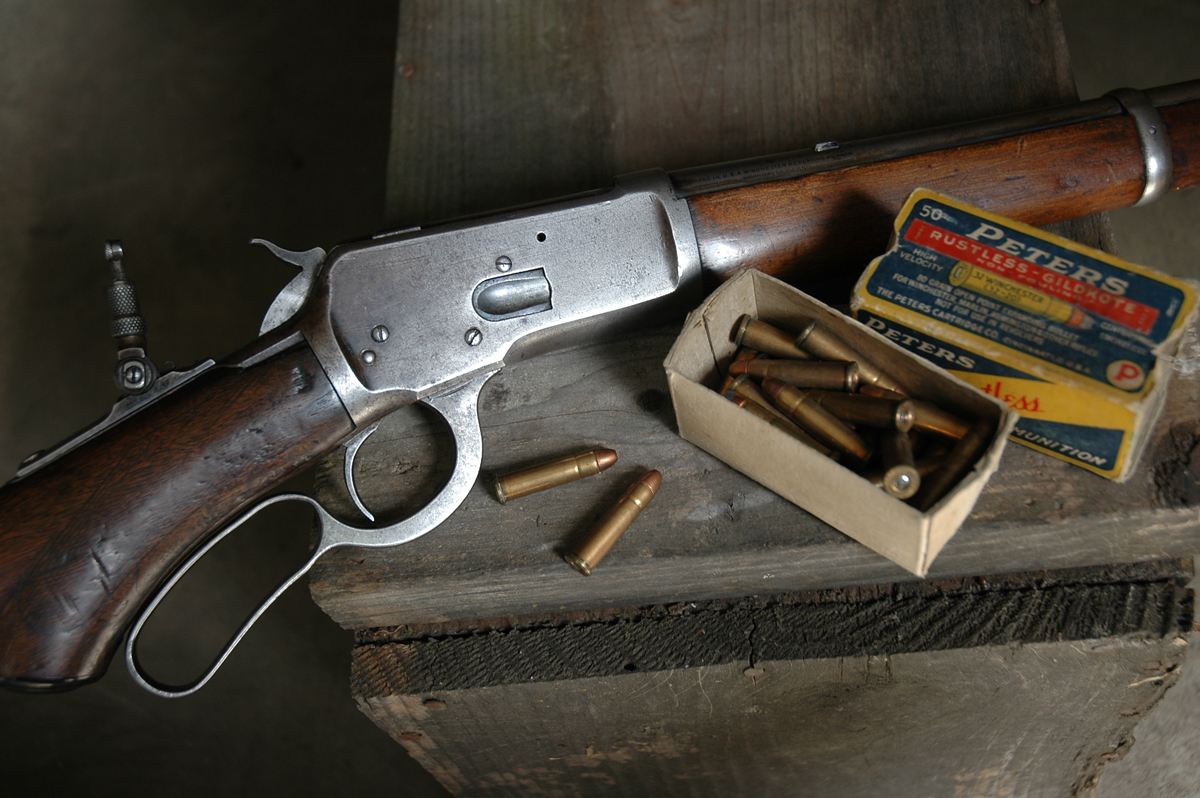
This 32-20 Winchester 92 shows hard use. Such modest cartridges have supplied generations of Inuits with caribou meat. At open-sight range, skilled hunters kill caribou with .22 rimfires.
My one chance: a long trek around the bull, keeping at least a half mile between us, then a crawl from behind. An hour later, in steady breeze under gray but dry skies, I completed the arc. From there I wore out knees and elbows, alternately on rock and in spongy pools sheathed by skim ice. A small shelf behind the bull allowed an occasional peek as the gap closed to roughly 60 yards. Improbably the only animate life in this vast, silent Big Empty, we two were now joined in the most ancient of dramas, heartbeats away from its sudden, violent finish.
The bullet quartered through to a shoulder. Wild-eyed, the caribou lunged, failed to rise, kicked and died. Its antlers had few points, but were thick and wider than my rifle was long. A grand bull.
Playing predator with a caribou that has your wind and divines your intent, you’re bound to lose.
But keeping low, downwind and stalking like a cat, close to the earth, you can tap the caribou’s penchant for almost ceaseless movement. Advancing incrementally toward where the animal seems to be heading, and lying still when its head is up, you may intercept it. You’ve a pretty slim chance of crawling up on a traveling bull’s flank. Even at an aimless walk, he moves faster than you can move undetected. A herd further reduces your odds.
Once, I borrowed a friend’s muzzleloader to try for the second animal on my license. Assuring me his 50-caliber T/C was zeroed to the open sights; he handed me two extra pre-measured charges.
Some hours later, I was bellying toward a solitary bull. He changed directions several times. I did not, careful to keep the wind. By great good luck, my pause-and-crawl approach slowly reeled me closer, a net gain despite the beast’s meanderings. A dip in the tundra also blocked from view all but the animal’s red antlers, bright under shredded velvet. I lay still as more of the bull appeared over the lip of the hollow. The wind held as he nibbled at lichens, closing the gap step by casual step. Prone, I eased the bead onto his forward ribs as they came clear at 25 yards. The trigger broke. I had expected a thunderous report. But were it not for the white smoke, I’d have called a misfire. The caribou ran off.
Reloading, I applied a cap and eased forward. A few drops of blood from where the caribou had stood, I found him dead. The ball had gone where directed: low, tight to the foreleg. A heart shot.
At camp, I thanked my pal for the use of his rifle. “But the charge seemed light. The ball didn’t even punch through the narrow part of the chest.”
He grinned sheepishly. “I packed plenty of charges for this hunt; but the Inuits around here got a kick out of that .50’s smoke. I ran low on powder letting ’em take turns on the trigger, so I split charges. You got the last of those.”
Getting close was a must for bowhunter Lowell Eddy who in 1967 traveled with two friends to Duti Lake in northern B.C. to hunt mountain caribou, moose and goat with a bow. Fees for the 10-day hunt, he wrote later, came to about $725 per man, including charter air service from and back to Smithers.
Well into the hunt, “Ed” had yet to get within bow range of anything. After a fine goat slipped by at 90 yards, just out of reach, he declined to use a friend’s rifle.
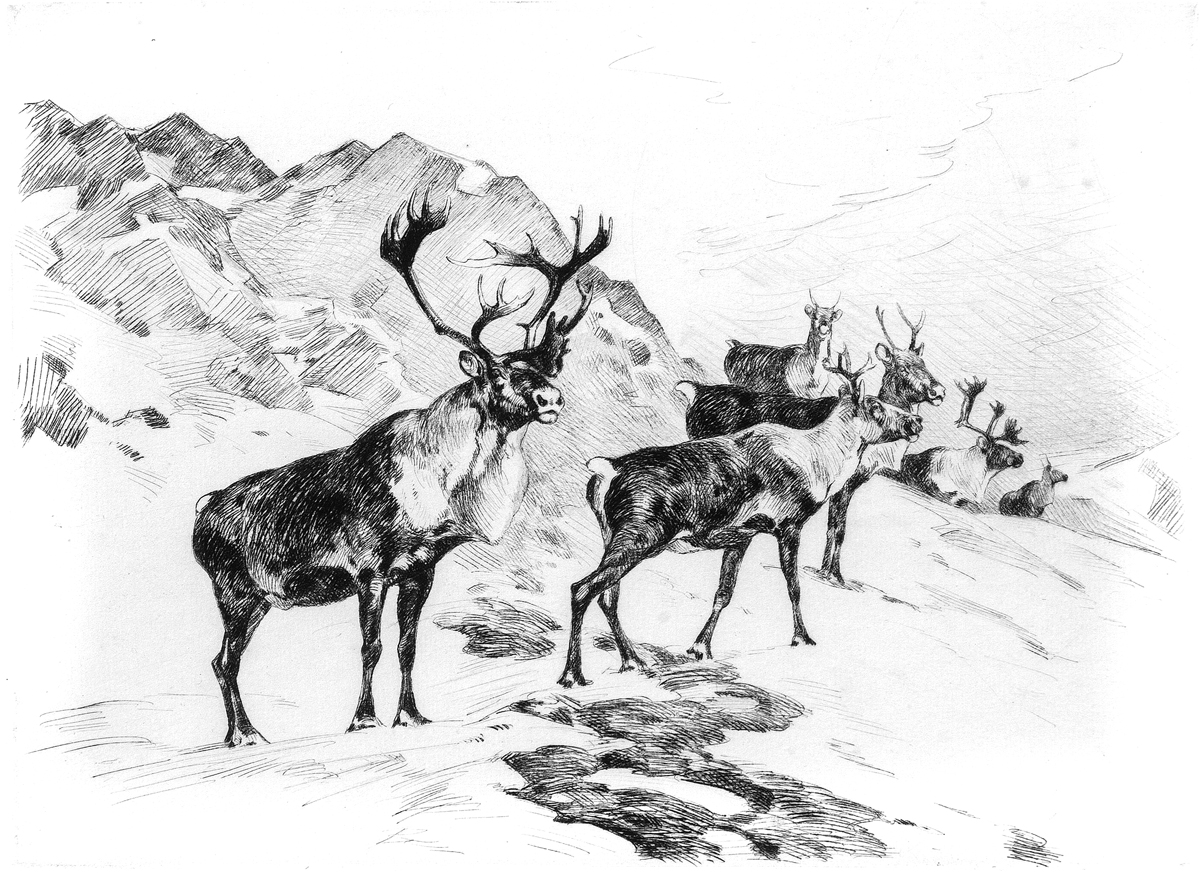
Carl Rungius, Etching and drypoint on paper. Rungius accompanied Charles Sheldon on the 1908 expedition.
The hunt’s last day brought rain—and a change in Ed’s fortunes. He and his guide, Bill, spotted a young bull and the enormous antlers of a bedded caribou. In grass and low bush, they closed within 200 yards. “You’ll have to take it from here,” said Bill. For most of an hour, in gusty wind and rain that turned to hail, Ed bellied forward, hands nearly numb from cold. He dared not lift his head to check his course.
Suddenly, 20 yards ahead, the young bull rose and stared. The big bull lay still at 35. Deciding to shoot, lest waiting he’d lose a chance, Ed drew his 55-pound Bear Kodiak Special. The Razorhead-tipped fiberglass arrow flew just over the big bull’s back. Both caribou thundered up a knoll, then paused to look back. Bill had crawled up beside Ed. In desperation, Ed asked him to wave his hat gently. Slowly the big caribou stepped toward them, halting at about 75 yards—still a long shot.
Ed took it. Again, the shaft sailed high. Quickly he corrected and sent another.
It lanced the great animal’s ribs. Minutes later, the hunters lifted the antlers of what would be for a time the world’s record mountain caribou taken with a bow.
Sometimes caribou make mistakes. As do hunters. Caribou have yet to conjure up excuses.
North to Alaska
Important early records of caribou in the Canadian North have come from naturalists and hunters exploring the haunts of wild sheep. Charles Sheldon (1867-1928) was a Yale-educated engineer whose smart mining investments enabled him to retire at 36. He indulged his interests in wildlife and wilderness by studying sheep from Mexico to the northern limits of their range. Travels in 1904 and 1905 yielded his book, Wilderness of the Upper Yukon.
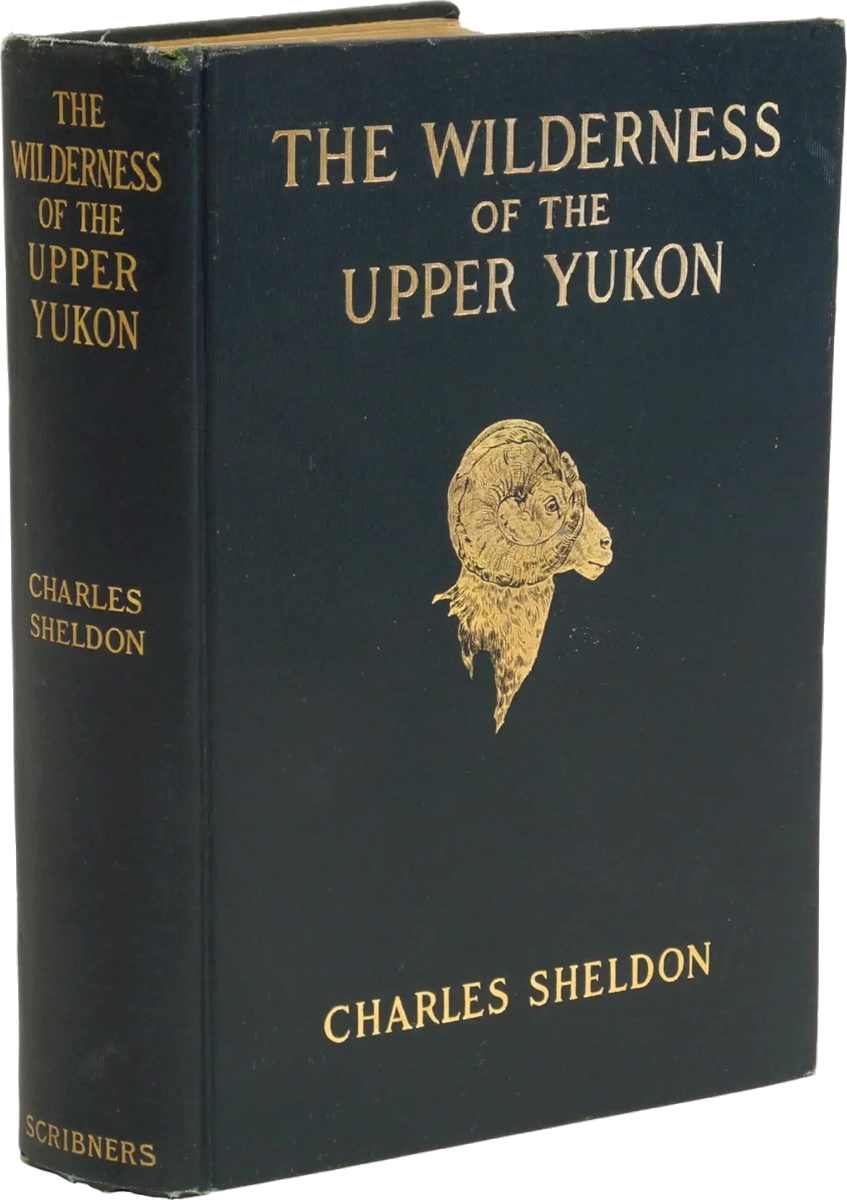
Turning his eye to Alaska, he lived for two years in the shadow of its tallest mountain, in 1908 mapping what he hoped would become a national park. The threat of rail encroachment into that area in 1915 spurred his efforts. With help from the Boone and Crockett Club, the proposal got President Wilson’s signature two years later. Sheldon lobbied for the name Denali—a local term meaning “the high one.” Politics prevailed in the naming of Mt. McKinley National Park. In 1980 President Carter would include Mt. McKinley in a new, larger protected area called Denali.
Charles Sheldon’s son, William, followed his father’s paths north. Still a teenager in 1930, he and companion Dick Borden embarked on what William later described as a short trip into “a well-known bighorn sheep range in Alberta.” It only whetted his appetite to venture farther and hunt longer. The next year, he and Borden took on a more ambitious expedition. In his subsequent book, Exploring for Wild Sheep in British Columbia in 1931 and 1932, he pointed out that “the era of these trips coincided with the Great Depression. Food and labor…were very cheap…. From the East Coast we [rode in] tourist or homesteader Pullmans of the Canadian National Railroad [to] Dawson Creek and Prince George.”
Roads and rails had yet to advance much beyond these towns, from which Sheldon and Borden made their way into the wilderness. “Expenses for a canoe journey of three weeks came to a total of $20. [At] Prince George, we purchased a 15-foot Peterborough canoe for $30, [then spent] $10 for food. We later sold the canoe at a Hudson Bay Post for $20…. The food we carried included the staples toted in those days by most prospectors and trappers in the North—flour, baking soda, canned butter, cornmeal, rice and occasionally corned beef …. We carried oatmeal, sugar and enough salt for our use and for curing skins of large animals, [plus] tea, coffee, cocoa and sometimes jam. [Horseback] we carried more food and heavier utensils and equipment than we took by canoe.”
“It was a fine large bull, in thick, dark summer-coat, its mane just beginning to turn white; its horns in velvet of a rich, dark, grayish-brown color, well palmated at the ends, with twenty-one points on one side, fourteen on the other, and both brow antlers particularly well developed, giving beauty and proportion to the head. The length of the caribou was seven feet, the height at foreshoulder four feet. These were the first caribou I had ever seen…”
– Charles Sheldon
On the 1931 Sheldon-Borden expedition, “we used three saddle horses and seven pack horses and were accompanied by one other man, [paid] $5 a day for his services. The charge for horses was 75 cents each a day; the cost divided between us was $6.25 per day! We paid little more than $30 for food for 90 days and depended on wild meat for our protein….
“We both carried binoculars, cameras and Mannlicher .256 caliber [or 6.5x54mm] rifles. My rifle was an English Jeffery rifle purchased about 1900. Dick’s was a carbine model. My rifle had a longer barrel and used rimmed cartridges loaded from clips of five each, whereas Borden’s rifle took rimless cartridges loaded individually in the magazine. [Besides our open sights], I also had a peep sight mounted on the cocking piece of the bolt of my rifle.
“Though it is now considered virtually obsolete, the .256 caliber rifle can be effective on any large animal in the world, if the shots are well placed, except for elephants, rhinoceros and possibly Cape buffalo. Several large bears in the Kodiak, Alaska, region were killed with single shots by another using my rifle….”
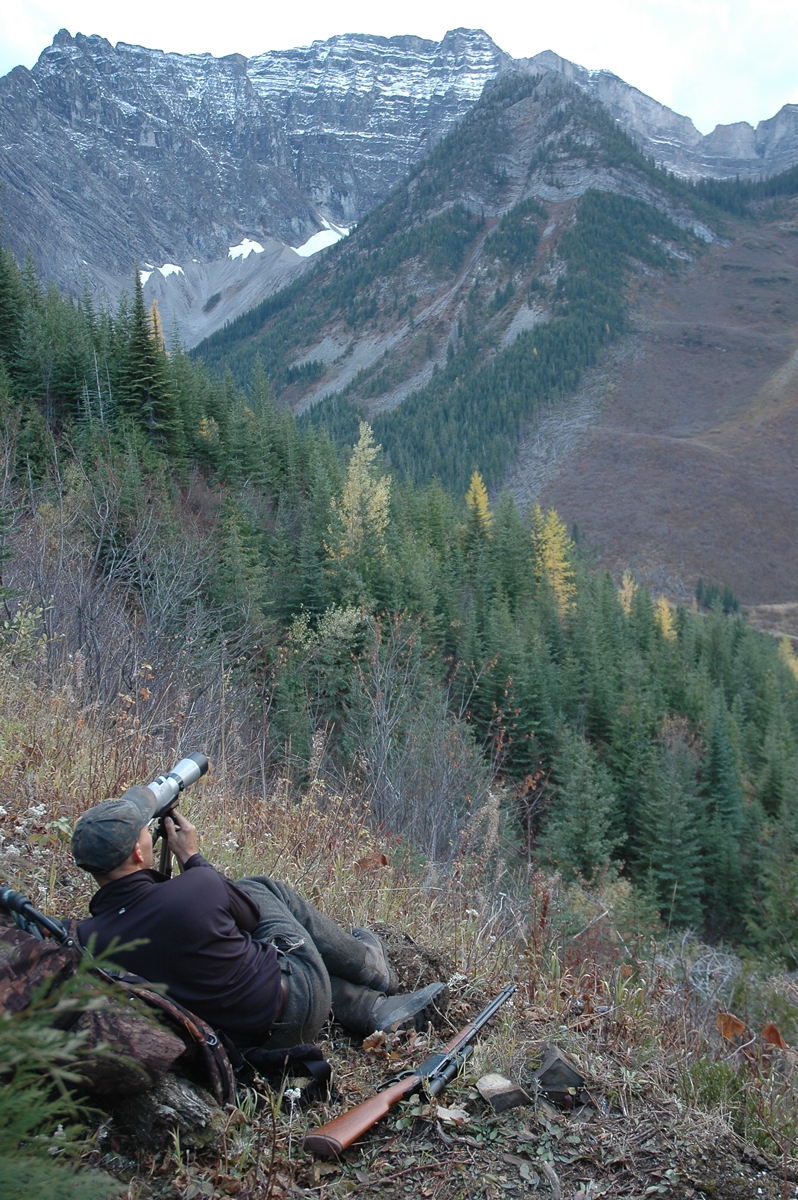
Powerful glass helps you spot caribou far away, but long stalks give the restless animals time to move.
As keen a naturalist as he was a hunter, Sheldon prepared museum skins of animals as small as mice. Borden captured the trip in photographs.
The men probed deep into the British Columbia wilderness, meeting challenges in a range of environs. Most recorded hunts were for sheep. The 19-year-old Sheldon noted: “Quality, in the sport of hunting, is directly proportional to the difficulty of finding the game and shooting accurately…. I felt highly challenged by any mountain sheep or grizzly bear, but less so by moose, goat or caribou.”
Oddly, caribou eluded him when he most wanted one.
Nearing the end of the 1931 expedition, Sheldon looked hard for a mature bull. Spotting a single caribou on a creek bottom, he closed within 100 yards. “ A closer look convinced me he was too immature for a good museum specimen. It was a pity, as I could easily have killed him. [After I stepped into view] he did not bound off immediately, but began to circle…in a series of nervous, swinging trots trying to scent me…. As I stood motionless, he walked a few feet toward me [until he got] my wind….
“When I reached camp, I was delighted to find that Dick had shot a mature male caribou. This practically ensured the completion of our collection, and if I could shoot one, we would have procured all of the game we had set out to take.”
But caribou kept out of their path. “Our hunting days were drawing to a close [when] we retraced our route to Laurier Pass. Between September first and fifth I rode or walked over plateau caribou country each day but saw only a cow and a calf.”
Sheldon and Borden reached Taylor’s Flats by canoe September 17, then drove to Dawson Creek to catch the train for the East and home. Despite his focus on shooting a mature bull and his observation that caribou didn’t offer the challenge of some other game, he did not record a caribou kill during the last 16 days of this expedition!