
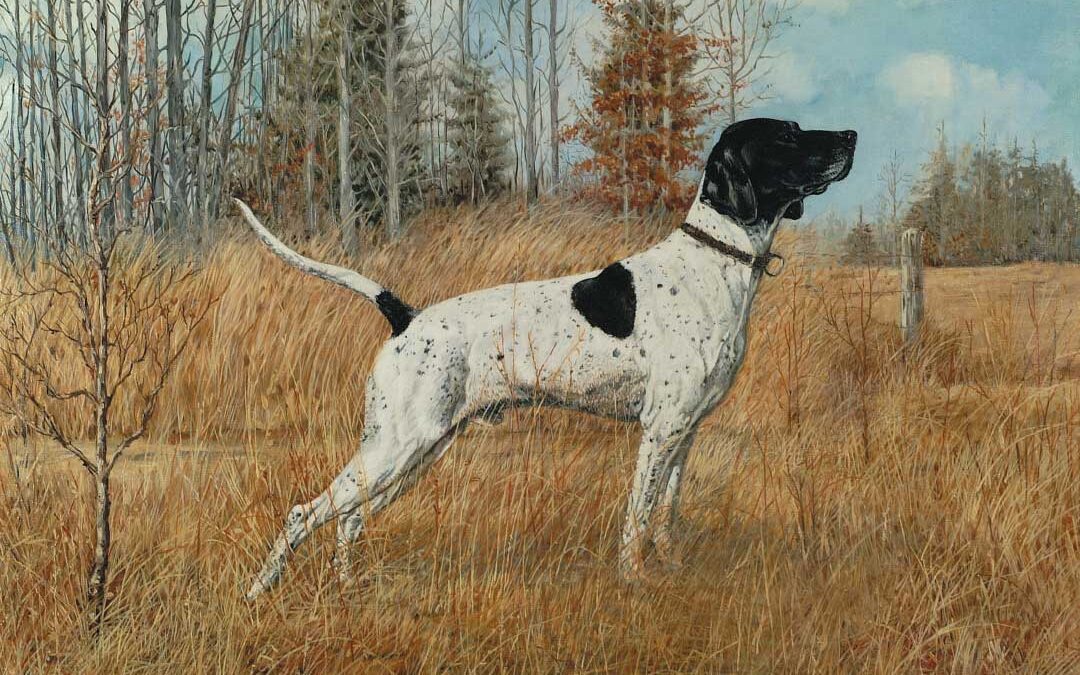
They mended our imagination. The most astounding canine players ever to grace the century-and-a-quarter theater of American pointing dog trials. Can we help but suppose which was best?
Sioux, La Besita, Palamonium. Luminary, Red Water Rex, Native Tango. Toe the stirrups, stand tall in the saddle. Watch! See them sweep the front, racing out of the shadow of the years into the brilliant spot of sunlight that has just broken through the clouds of time. As on they roll – over the golden sedge of the savannas, to the farthest gray-silver bluffs of the prairies, across the long black bottomlands of the deltas – never to be forgotten. Le tres meilleur. The very best. The most astounding canine players ever to grace the stage of celebrity, across the century-and-a-quarter theater of major American field trials.
The Texas Ranger, Home Again Hattie, Flaming Star.
Unique in all of sports, the standards of excellence for major circuit pointing dog trials by horseback. Prescribed only marginally by concept, scarcely by regulation. Wisely so, for the boundaries of human conception are incapable of forestalling the mystery, much less the limits of a superlative canine performance. So it is left to the dogs themselves, and only in the aftermath of their brilliance can we attempt, vainly, to describe it. That unanticipatable measure of awe at the way a dog, on a given day, in a given arena, surpasses all others, altering to unthinkable heights the premise of triumph.
Wrap-up, Sports Peerless Pride, Miller’s Silver Bullet.
Sinews of steel, unquenchable quest for game, indomitable determination, matchless heart, uncanny sense of location on birds, infallible orientation to the front, elegance of motion, majesty on point. All requisites of genius.
But it is a thing more, that finally drives a great dog to a performance that is laid to the grounds like a silk glove slides perfectly over the slender fingers of a woman’s hand, that knocks the halt out of the horizon, that draws short your breath and throttles your throat with wonder. That, my friend, is God-given – ever so rarely – a white-hot ember of desire that burns more fiercely than all the others. A force so elusively tied up in the vapor of spirit that it is enigma, that incinerates so perfectly all that’s left is the magic of its passing.
“Once,” the most sagacious and weathered of the old dog-men will say. One great dog, one good horse, one good woman. “Once . . . in a lifetime.”
Mississippi Zev, Ariel, Mary Montrose.
And of them all, the dogs that have mended our imagination, can you help but suppose which was the greatest?
There would surge immediately to mind singular exploits of the golden era immortals. The astonishing victory of Sioux in the National Championship, 1902: the triumph of indomitable courage over extreme adversity, likely the most incredible exhibition of stamina the realm of trialing will ever know. A lithe Llewellin bitch of classic colors, one of the smallest dogs ever to toe the big-time, many venerated disciples of the game vow she was the greatest that ever ran. The almost mythical dominance of the pointer Luminary, under similar conditions in the Big-War National of 1942. If ever fact, feat and fantasy has spun a legend for all time, here it is. Read Nash Buckingham’s multi-hued accounts of each in National Field Trial Champions and you can know how it unfolded. Then sit back in your chair, while you’re yet in the saddle, and try to sense how it felt to be there.
The Texas Ranger in the finals of the 1941 Free-For-All, conquering supremely all contenders, and the awesome “hog-wallow” Mississippi bottomlands as well. “If ever there was a four-hour dog . . . ” Jack Harper said of him. The bird sense of Wayriel Allegheny Sport over the quail-rich Ames Plantation in 1957: twenty-three contacts in three hours – nineteen bevies, an average of one every ten minutes – all creditable. Imagine, had you been following the nervy fellow that day with the gun. The strength and style of Palamonium, same venue, two years later. “If you want the cherries, you have to climb the tree.” He did, magnificently, sewing between trips to the horizon, seventeen sterling finds. The flamboyance of Riggins White Knight as a derby, Grand Junction, 1961. The preeminence of Flaming Star in the Saskatchewan Chicken Championship of the mid-sixties.
But the greatest of all-time?
Time and space have closed the door. Beyond the doctrine and variance of conjecture, it is unsound and unjust to say. Maybe one day when all who love the fire of a dog assemble on the Elysian Fields, sit an anxious steed before the Stake of the Ages, and await the breakaway of Eugene’s Ghost against Flaming Star, Medallion against Riggins White Knight, Sioux braced with Allure . . . we can know.
Maybe, though, there’s a second door to the stairwell. Of all the stories of drama and awe, told and retold over 129 years of major American field trials, which tower so appealingly iconic, paint a mind image so transfixing, they can stand as simile for all the greatest dogs that ever ran, as archetype for all things field trials seek to glorify. Which reign as the most quintessential field trial legends of all time?
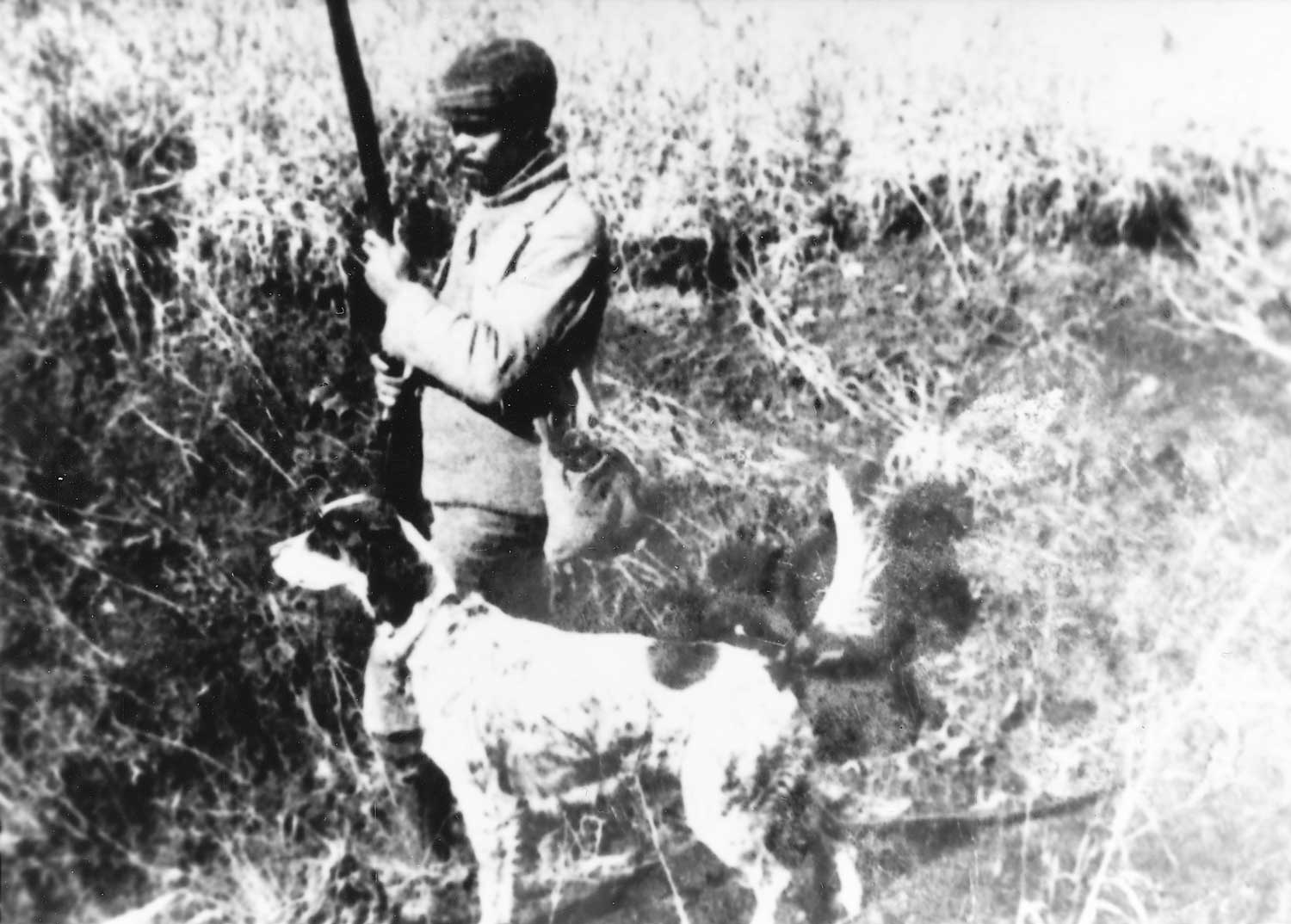
Sioux – here in a rare workout photo – was the greatest of the Llewellins, acclaimed by many as the best that ever ran. She was the first consecutive Nationals winner, in 1901 and ’02.
With respect to all and slight to none, there are three. Two of them, from the National Championship, are aforementioned: Sioux in 1902 and Luminary, 1942. Both will inspire incredulity as long as people live to celebrate the gift of a pointing dog.
The third may surprise you. For it does not yet wear the patina of a century, even half-that. But set your stirrups, gather up the reins. Cause it’s a helluva thrill.
On the ideal, a field trial might unfold during its course to an astounding slugfest between two great dogs. A spectacular match-race, one-on-one, to the birds. It rarely happens. Luck of the draw, along with reluctance of judges to gamble a call-back, usually thwarts the premise, and the best dog of an outing is “spotted” from the general field. But Fate has delivered a hand-full of such encounters, mostly from the all-age legions and great wild-bird trials, to wit, Sioux and Geneva, Sulu and Homewood Flirtacious, Medallion and Palamonium.
However, the meeting which vies demonstrably for the most legendary, perhaps the most electrifying and classic head-to-head duel ever – presented so completely are all elements of anticipation, perfection, stalemate, drama and awe – comes from the shooting dog ranks. It opened by prescription as a sprint; brilliance lifted it incredibly to a marathon. And still, so giftedly and equably did it transpire, that two of the best judges in the land were fraught to a virtual dead-lock.
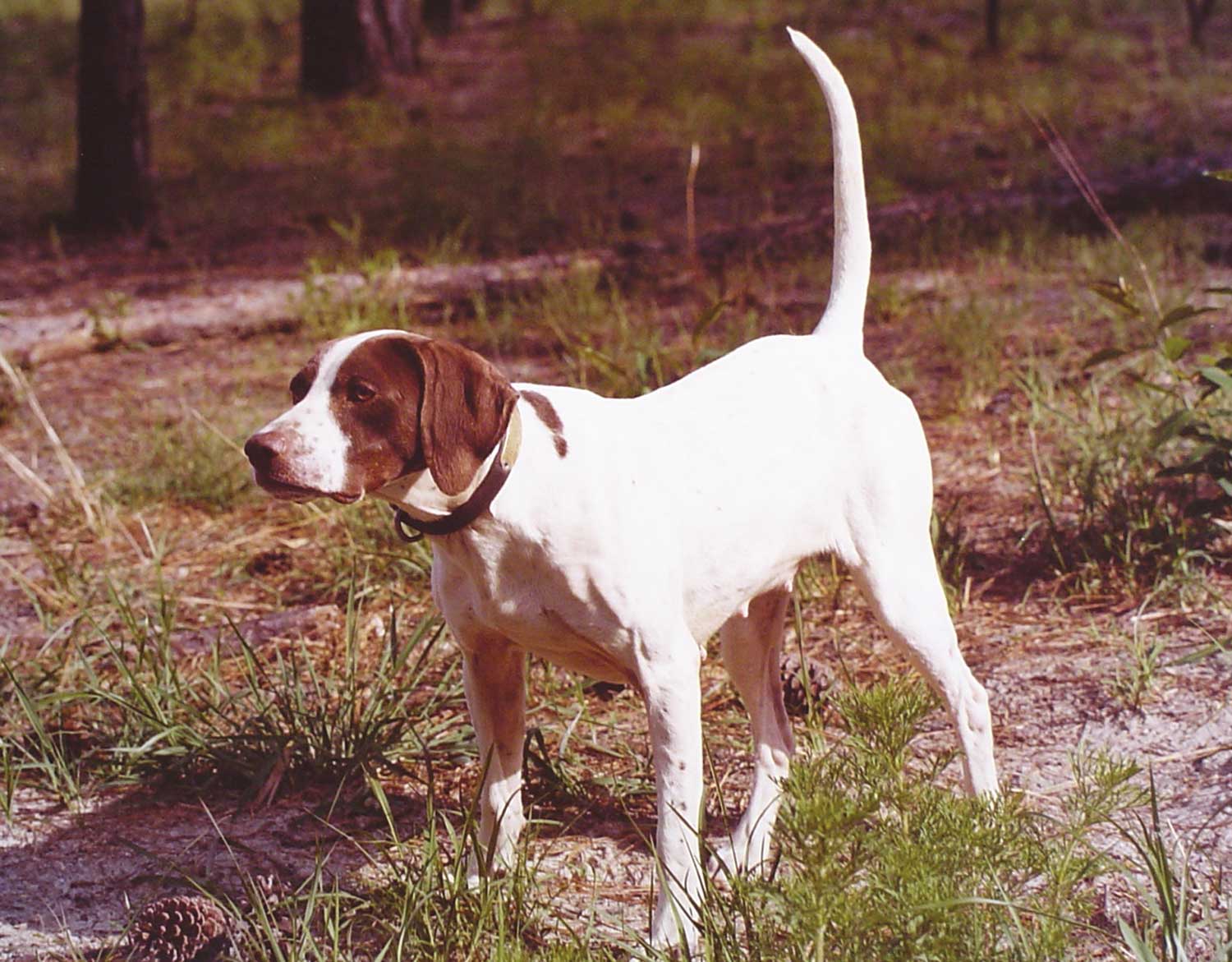
Little Diamond
Great Notion and Little Diamond came to the 1979 renewal of the Illinois Shooting Dog Championship in the pink of their prime, two of the most persistently winning pointers on the Eastern Seaboard. Perhaps the Gods of Phenomena had decreed their meeting exceptional from the moment they entered the trial. Certainly, the possibility was predictable. Both were at the top of their game; between them they shared evenly titles from fourteen prominent championships. With Larry Moon and Eddie Rayl, respectively, came the wit and wisdom of two of the most seasoned and accomplished handlers on the national circuit. But no one – no one – that special April day could have surmised the call to glory that vaulted them to such an unimaginable pinnacle.
So overshadowed by their climax was the field, it’s easy to forget there were sixty-three other dogs in the fight. Good dogs. For three rousing days, under sagging clouds, numbing cold and howling prairie winds, the qualifying skirmish raged. But the stars were aligned. Afterward, when Judges Marshall Loftin and Harold Davis tapped eighteen dogs to toe the finals, Diamond and Notion were easily among them. Ben (Notion) by venture of a bold, scorching race and one supreme find; Sally (Diamond) fancy, fast and wide, with five beautiful finds and a back.
Two more days, over the frozen hills and ice-spewn bottoms about the Green River, the dispute hammered on. While the hand-picked best fought for the crown with a fury. Notion and Diamond prevailed impressively – over all but each other.
A juggernaut of desire, Ben tore the grounds apart, reaching fast and far, cast after riveting cast, composing a commanding ground pattern and seven polished finds into a collage of class. Sally, as feverishly impassioned, was hard back at him, gracing the ten-to-two front as beautifully as a ballerina, finding six flawless times – “snap-bang” – and jamming once into as stunning a natural back as God ever gifted goodness. Either, in the absence of the other, would have claimed the title outright. But so evenly superlative were the performances, the judges were at a stand-off to declare a winner.
Loftin held for the bitch, Davis for the dog.
Destiny begged for more.
“We kin argue this all day,” Loftin told Davis. “But there ain’t but one right thing left to do. Let the dogs decide it.”
Everybody was waiting round the Permit Station for the announcement, the handlers that hoped they had a piece of it, and after a time it was certain something was afoot. Then the judges returned, with just eight words.
“We wanna see Great Notion and Little Diamond.”
Come morning, it was going into over-time.
“I told ’em,” Loftin recalls, “you Boys can come along or go to th’ house, but other’n these two dogs, it’s over.”
Then he called Moon and Rayl aside. “Be prepared to run. Don’t know how long. Maybe five minutes, or all afternoon.”
Actually, Davis and Loftin had already agreed. There’d be no sudden death. “We’ll go thirty minutes and talk about it.”
The physical difference between the two dogs would have loomed obvious as they were led to the line early the following morning, the male big and brawny, the bitch small and fine, fragile as Dresden china, it would mistakenly seem. Both stood at the start now, collared and readied by the scouts. Two great champions, proven many times over. Both shivered in the brittle morning air, but not from the cold. Wonder . . . how they thought?
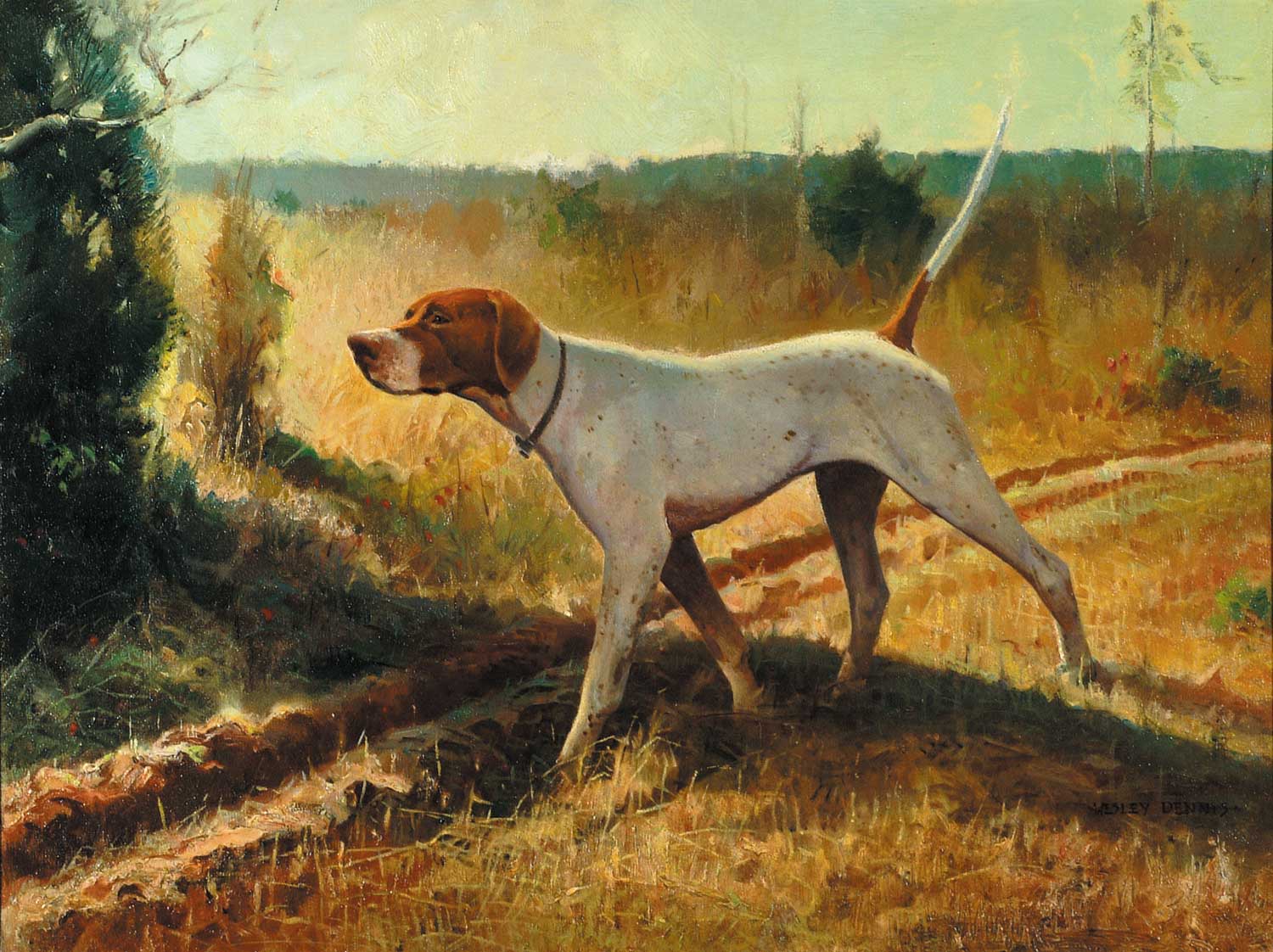
Ariel, three-time winner of the National.
Immediately behind them, Moon and Rayl leniently sat their horses, masking their anticipation. Unknowing they were about to make history.
Loftin and Davis pulled up, reined to a halt. Quickly the gallery assembled, huddling under hats and the collars of their coats. Gauzy puffs of steam pulsed from the warm nostrils of the horses, were whipped tersely away by the wind. Suspense tottered like a boulder on a precipice, and a simple nod passed between the judges and the handlers. The only thing missing was the concussion. The dogs were away like a shot!
Fast and far, over the first hill, they flew. Lick-and-lick. Three minutes down, and ahead hats are up, horses and riders skylined on the crest. Both Moon and Rayl. “Point!” A wild ride there, but just then the dogs correct, move on. Hard and away.
Bang. Swapping ends by a brier strip. Sally. First blood. Poetry against the tawny paint-stroke texture of the grass. A single, up and away. Rayl gathers her up, hurries her to the front. Tween times, Ben has carved loose a huge chunk of prairie, lodging tightly alabaster against the muted gray treeline to distant right. Point. Moon’s off, flush and shot. Spit-and-polish. Even-steven.
The dogs are locked up again, the pace furious, each scalding the edges opposite sides of the course. Thirteen minutes now, seems like twenty. Past the Pump Factory road, in Russian olive, Ben again. Standing elegantly. His nostrils pulsating, drinking the incoming breeze. The bird is served and Moon has the big dog on. Through the gap and east toward the bottomlands. Now both dogs have sailed out of kin to the front. Gone a spell. And . . . POINT. Sally. She’s stacked twelve-high at the end of another long, blistering cast, by brush-tops, the birds just off the height of her nose. Rayl kicks them out. My, what a piece of work.
The bitch is really fired now. Soonaway, she finds again, sliding majestically to halt at the shout of the scent. After the birds, she’s hard yet to the front, and once more, the dogs come together, heels and hurry. Ben, going recklessly, gambles a roundhouse swing left across a boggy bottom, burying himself in a ditch, stove up on birds. Moon, off to check, finds both dogs, Sally backing. It’s a calendar scene, the twenty-fourth of Remember, in the Land of Forever.
Tit for tat. Neither dog is giving an inch. Gone, the first thirty minutes, and hastily the judges confer. Nothing settled, on they run. The marshals are frenzied: striving to warn the handlers of the course, to hold the judicial cadence, to stay the gallery, while excitement stacks like powder over a primer, and chatter hums like a voltage wire.
Sally is spied ahead, stopping prettily, then correcting on, across the road in the big sand bottom. Ben is sailing down the other side of it, scouring every objective, just as Sally hauls decorously up again to nail a hen pheasant. The knot of horses splits, as judge and a half-dozen riders gallop to her. Then back to the fore, after the whoom of the gun and Rayl hustles her on. Then all are off again.
For at fifty minutes, both dogs have ranged beyond the big hill, and somebody’s call of point is floating on and off the distance. Sally sparkles white and intense in the dusky recess of a thicket. Every mince of her says “they’re square ahead.” And they are, ’cause suddenly Ben is discovered, thirty yards right, taut and trembling, dividing the find precisely in front of them.
Into a second hour now and God in Heaven, there’s still nothing to separate them. Round and swing – and back – into another huge bottom. Marshall Billy Martin spots Ben pointing along the fenceline. Sally is pouring it on up the row. Moon puts up the bird, right where Ben said he should. Even as, over the next rise, Rayl’s horse is crow-hopping to a halt, and his rider sits high in the saddle, jamming a hat stiffly skyboard. Over Sally, who’s countered once the more, evocatively. Oh, Boy.
A huge loop now, and back across the Factory Road. Ben has rolled with the punch, reached far ahead. Yonder. Standing spectacularly again, do you believe it, against the ditch bank. Moon is off and flying. Sally’s ahead too, touring another piece of the kingdom. Ben says “hurry.” Moon rushes the bird up and out. After the gun, the big dog impatiently fires for the front, off to regain the relentless bitch.
An hour ten . . . twenty. The dogs are inspired, neck-and-neck, grabbing up the landscape. The judges have quit counting thirties, just watch for a blink, one or the other. Almost hoping it doesn’t come. Behind him, Judge Loftin can overhear Gordon Hazlewood, asking somebody beside him, “How long they gonna run these dogs?”
“Who cares,” comes the reply. “I hope forever. Damn finest thing I ever saw.”
Flying, heels and hallooos, both dogs, out front. Then gone, clean out of sight. Now both scouts are out. Anxious shouting and hat-waving from the fore. They have found them, stitched beautifully into the olive rows. Ben with the birds, Sally backing? Or divided find? Either way the bitch has anointed herself with honor. Both handlers are off and flushing. Both guns bark as the birds blow out. A mad scramble for horses. Horses, dogs, everybody’s excited.
Whistles blast. Off again tear the canines.
An hour-thirty. We’re past a shooting dog stake, into a marathon. Across the big, wet bottom the dogs are still beat-for-beat, pouring it on. Refusing to buckle. Unbelievable, the pace. Suddenly, both dogs whip sharply into the treeline. Don’t come out. “P-O-I-NN-T.” You can just hear it. Spurs and hooves. Ben’s as stone-tall as a statue, his eighth find, Sally the same, her second back. Ten minutes on, each scores independently, Ben at the bear trap crossing, Sally farther up the hill in the briers. Both letter perfect.
Away again, and Ben’s gained a hair of ground. Across the clubhouse road, abruptly he slams into point, so hard you can almost see his back feet lift and settle. Sally is forced to back again, but exquisitely. She won’t allow that for long. At the edge of the black timber swamp, she swaps ends again, for the ninth time, strikingly set before a feeding covey. They sputter up to the salute of Rayl’s gun. The bitch is off and gone. But shortly, there she stands again, way ahead on a hedgerow, tying the score – ten all – masterfully.
Can this be possible? Perfection has never dwelled so long.
Coming two hours, the dogs are together once more, tails still popping, both hearts reaching. It’s sheer courage now. Never say die. Maybe the dog has been slightly the stronger just lately, but . . . ? Maybe Eddie Rayl is beginning to second-guess the wisdom of swimming Sally across an icy creek a short time before. Rather than lifting her across on the saddle. Is the numbing cold beginning its toll? But, then . . . look at her go. There’s so much momentum, it barely registers that the judges are trying to signal time. No one wants it to end . . .
But all things must. At 11:20, two hours, four minutes into one of the most spectacular dog races of all time, the dogs are ordered up.
Now the painful dilemma of all great duels. Convention says one of the two must be the winner, but the judges – every soul of us witness to the fact or the legend – stand reluctant, for neither has lost.
So couldn’t we, here at least, just this once…