
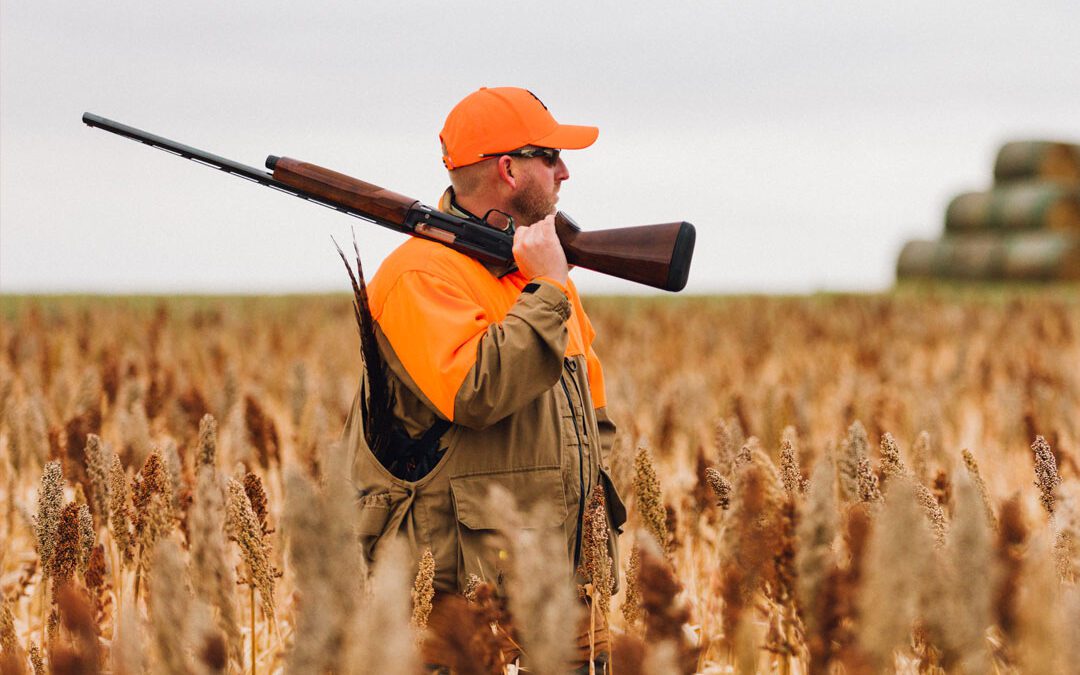
To me, the Browning A5 seems as old as time itself. My father had one when I was a teenager, and that was a long time ago. The A5 wasn’t new even then. In fact, the old man’s was an old, “used hard and put away wet” specimen that we found and revived from near dead when he decided that he’d give a whirl at quail hunting with me. The old man and I did a lot of things backward. I’d been hunting quail for several years at the time, while he just couldn’t bring himself to try. After surviving the beach at Normandy, and carrying an M1 all the way to Berlin, he allowed that he had “seen enough killing.”
Fortunately, with time the war gremlins faded, and he eventually warmed to the idea. It was a grand thing, too, because he was a hard man to get close to after the war, and hunting together helped to narrow the gap. In fact, the fondest memories that I have of him involved just the two of us, a 1945 army surplus Jeep and a pair of shotguns. Of course, we had company in the form of a couple of rough-edged pointers that we had home-schooled as best we could.
I think that the Browning A5 was the most coveted of all the shotguns available to quail hunters at that time. They were good looking, well-made, durable and as reliable as the sunrise. I owned a couple later in life, but that wouldn’t happen until my financial means were a little more stable.
The current A5s are newly designed but, while just as good, they achieve it with a slightly different twist. They still bear a certain hump-backed family resemblance, but they’ve been redesigned and work slightly differently. The old ones worked on a long-recoil principle, while the new ones sport a snappy short-recoil mechanism. And while “nimble” was not a word that you’d ever use to describe the originals, I can’t think of any word that describes the new ones any better.
I made my first acquaintance with the “new” A5 about 10 or 12 years ago when the company introduced the new version of the fabled “Sweet Sixteen.” Browning unveiled the Sweet Sixteen at a big shindig in South Dakota where a handful of gun writers were given the chance to work the guns out on all the big brassy pheasants you’d ever want to see. We did, too, and for me it was love at first sight.
The 16 gauge was light, well-balanced and nimble as a fairy princess. It was easy to carry and, when a rooster flushed, it was lightning quick as well. And boy, did the roosters tumble! Despite my well-known predilection for side-by-side doubles, I knew before sundown of the first day that I had to have one of the new guns for myself! I wasn’t able to talk the folks from Browning into letting me buy one of the pre-production models, but they promised to send me one of the first production units available. I still have the little gem, and it still tumbles the birds just like the very first one!
Beside the fact that the Sweet Sixteen was a fabulous upland gun, there was one other thing that all the writers present agreed on—that the platform would make a stunningly good 20 gauge and that making a 20 would be the obvious “next move” from a marketing standpoint. Before we left South Dakota, I queried the folks from Browning about when the 20 gauge might come out. They didn’t have an answer except that it would probably be out after they caught up with demand for the 16. Yep, it took ’em a while, but it’s out now, and it’s a real “honey.”
I have the new 20 gauge in my hands now and the best thing that I can say is that it’s darn-near a twin of my glorious Sweet Sixteen. That’s high praise, because the original package was as close to a perfect upland gun as I can imagine. With a 28-inch barrel that sports a low matte rib, the sample gun weighs 5 pounds,10 ounces, which is precisely what my 16-gauge weighs. Despite its meager weight, the gun has a very pleasant forward balance that gives it a truly “sweet swing” while avoiding the ponderous slowness of a heavier gun.
The muzzle is threaded for a full complement of choke tubes to suit just about any gamebird alive, and the butt sports a nice, soft, rounded recoil pad that effectively tames what little recoil the 20 gauge generates. The dimensions of the receiver are identical to the 16-gauge, which means that it carries comfortably in your hand or draped across your elbow, and it is easily carried for mile after mile over a hard day’s hunting.
Another very practical characteristic that I’ve discovered is that it is very easily managed with one hand while you grapple with brush using the other. Any woodcock or ruffed grouse hunter should appreciate that. Actually, that’s a pretty handy trait for fending off blackberry briars while after quail.
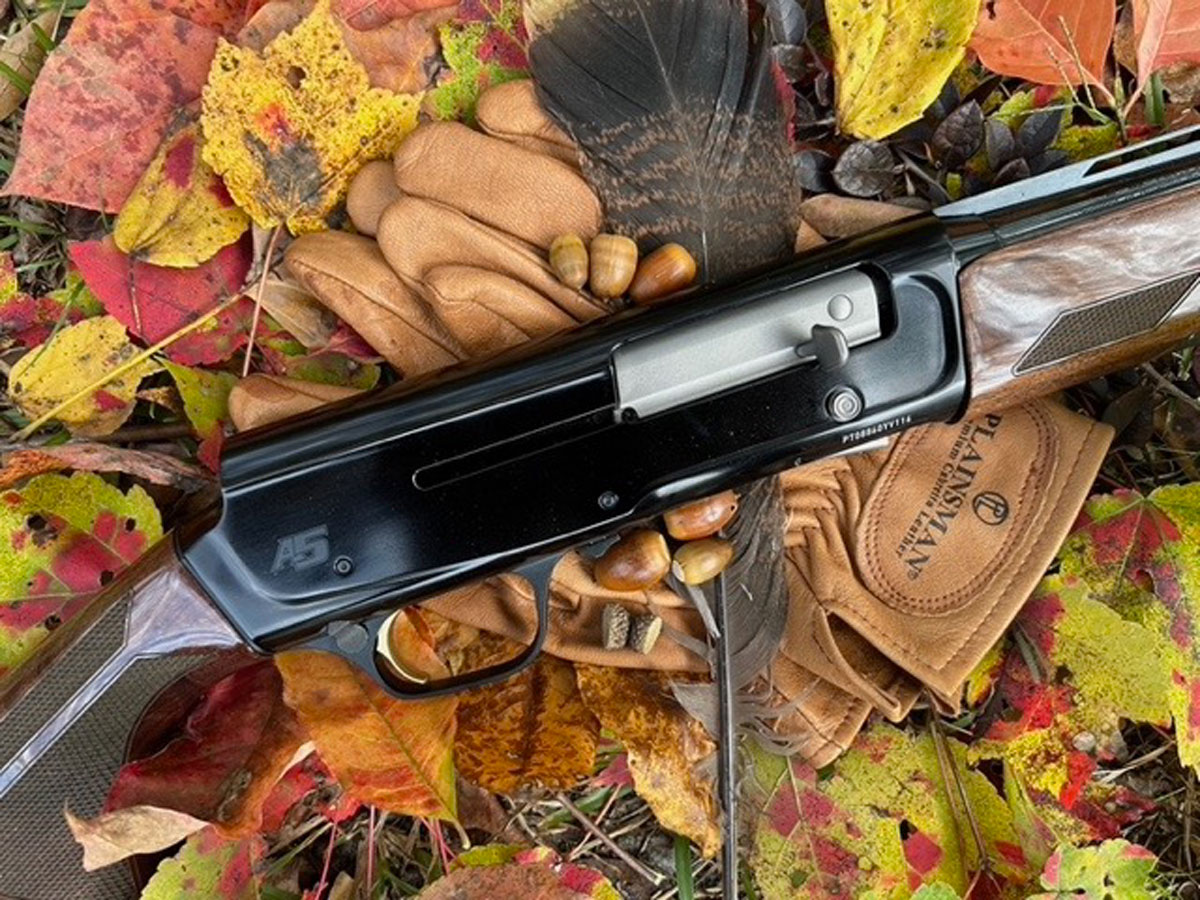
The sample gun just happens to fit my average-sized frame pretty well, but just in case it doesn’t fit yours, the gun comes with stock shims to adjust the fit until it does. Needless to say, since it’s a Browning, the little gun feeds and ejects perfectly and is as reliable as a semi-auto can be. There’s no way to know today if it’ll actually hold up for 40 or 50 years until you’ve given it the opportunity to prove it, and I don’t think that I have that much time left in my old carcass. Based on 10 or 12 years with its “big sister” and a lifetime of experience with the old-style “humpbacks,” I’d be willing to bet a pretty penny that it will. If you’ll take the bet, I’m sure that my heirs will be happy to take payment when that time comes.
As good as my Sweet Sixteen is, I know that there are many folk who prefer the 20 gauge. It’s a wonderfully adaptive, practical chambering that works nicely for almost any upland bird that you’re likely to chase. Because it handles either 2 3/4- or 3-inch shells, it’ll probably do more than that! No, I’m not going to forsake my beloved 16 gauge, but I have to admit that, paired with the light “new” A5 platform, I just don’t see how you could find anything that would work better than this great little 20 gauge.