
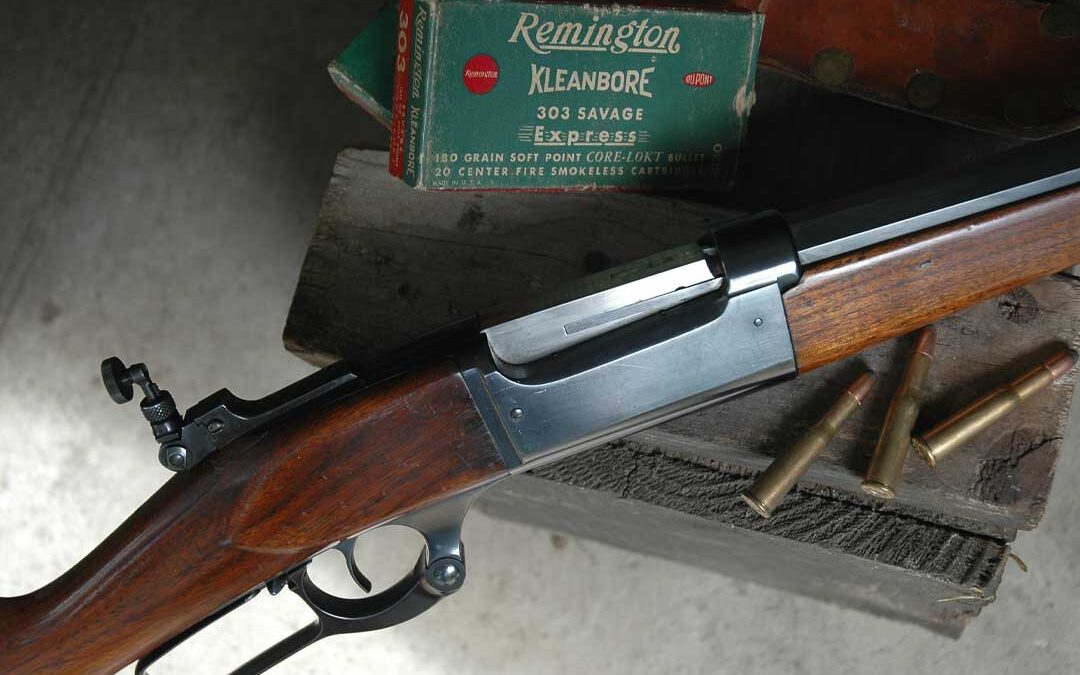
Unlikely seed of cattle, coffee and a torpedo, his rifle failed. Its revival blessed hunters for a century.
Gashes in the old snow pulled me into a riot of swamp-grass. Yards into it, a speck of red winked from the tangle. Confirmation, not a promise. I’d called a good hit, the bullet striking mid-rib as the buck quartered off. But it hadn’t passed through. Evidence would fade as the deer slowed in leaf litter sheltered from snow and the entry wound sealed. A second chance would have to come within short yards. I stepped carefully, glassing into the hackberry and cedars ahead.
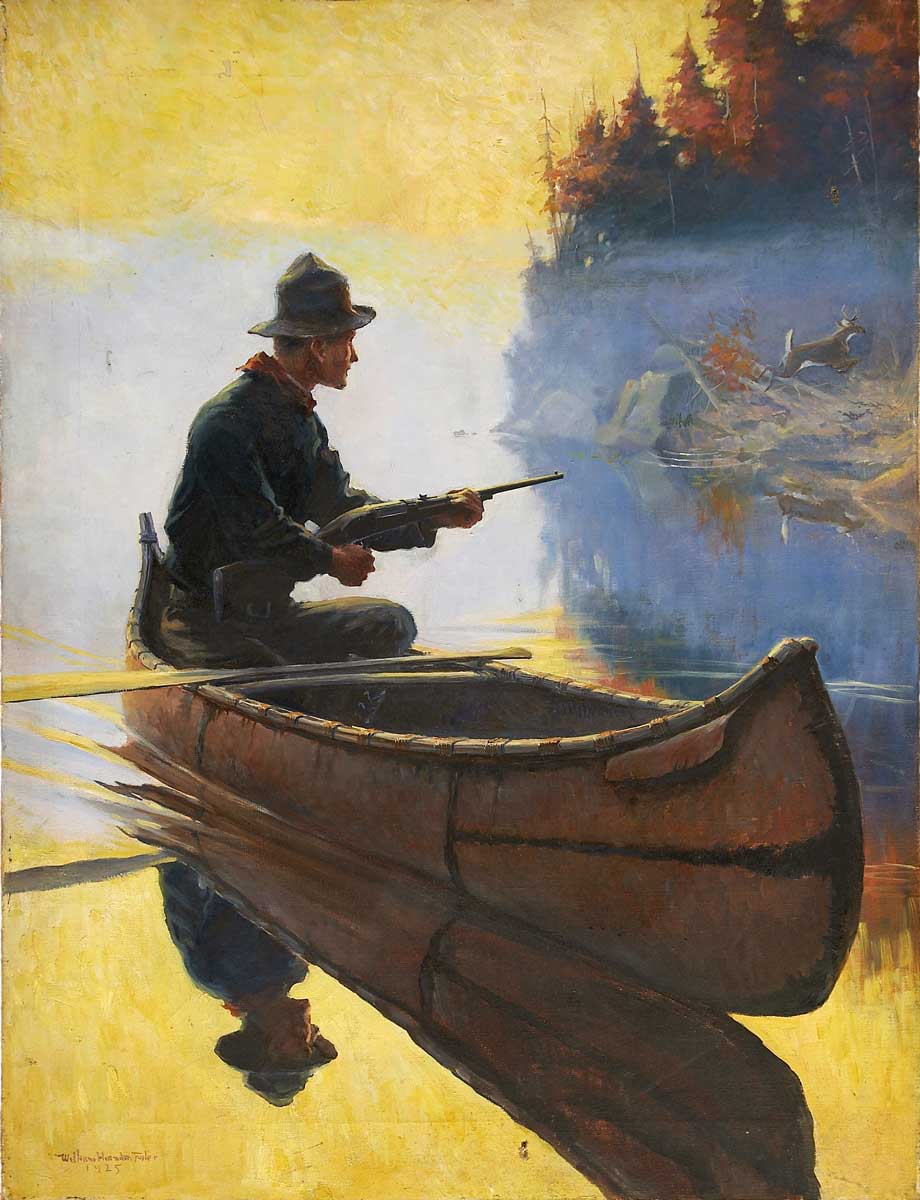
William Harnden Foster’s illustration for National Sportsman depicted a hunter raising his Model 1899 Savage rifle. Only One Shot (1925). Oil on canvas, 20 x 26 inches.
My rifle was of a gentler time, its report a snap that had barely dented the silence. The deer had rocketed off, tail high. I’d knelt, peering under limbs, loath to move lest it had paused, looking back.
It had. I’d seen it too late.
A second pause was unlikely. Not in this island of swamp grass. I inspected the shadows again and caught a thin white fringe. The brass bead quivered on a faint arc of rib beside it. I fired, flipped the lever, fired again. The deer was gone.
Then, a flash of antler, a hoof-flurry, a white belly in the leaves.
That Dakota still-hunt and its climax was hardly a test for the century-old 25-35 I’d borrowed. If anything, it was just what its designer had had in mind. He’d priced the slender rifle at $27. The Marble’s tang sight would have cost extra.
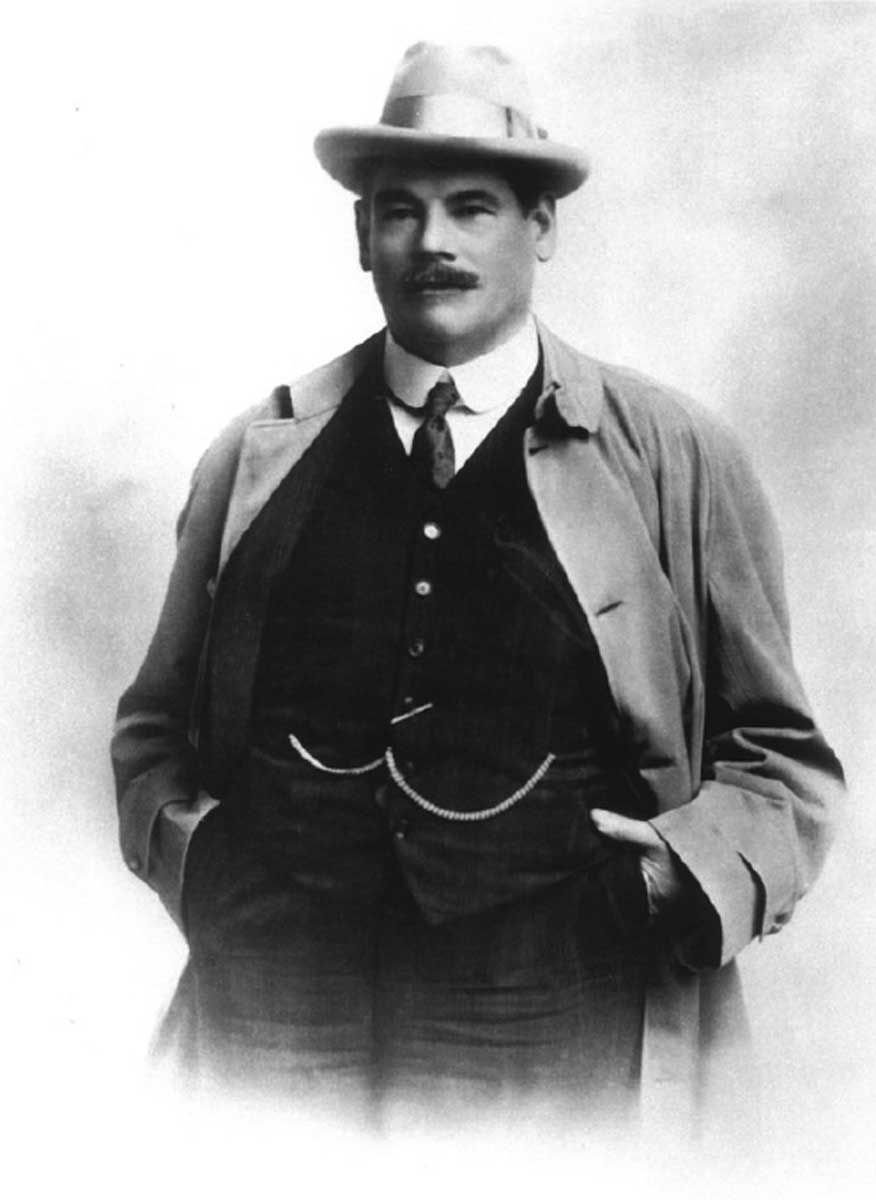
Adventurer and inventor, Arthur Savage (1857-1938) lived in many places, worked on many projects.
Arthur William Savage was born May 19, 1857, in Kingston, Jamaica. His father, John, had been posted there as England’s Special Commissioner to establish schools, primarily for newly freed slaves. In 1865 Arthur’s mother, Jane, took him and his siblings to visit England. Political unrest in Jamaica would prevent their return. When Jane later moved to Baltimore in the U.S., Arthur took his classes in England. Unlike most 19th-century gunsmiths schooled at forges and workbenches, he got a classical education. In 1871 he joined his mother. Shortly thereafter, she moved with her children to Glasgow to be near relatives. In 1873 Jane died tragically, following complications from minor surgery. Arthur lodged with an uncle in London, where again he found school stultifying. Then, a lecture by Charles Darwin inspired him to seek adventure abroad and from his uncle he wrangled passage to Australia.
After a prospecting effort with three companions turned up neither gold nor opals, Arthur lived with Aborigines for two years. In 1876 he re-entered white society, working as a hotel bouncer, then as a sheep shearer before landing in the cattle industry. He shot kangaroos for bounty. By this time he’d met Annie Bryant. They married in 1879 and would remain together until her death in 1919. Arthur proved an able stockman and was soon managing a ranch. He bought cattle, too, and built a prosperous operation. In 1884 he sold it to buy a plantation in Jamaica—to raise bananas or coffee or both. That venture lasted two years, after which he moved Annie and their four children (first of eight) to New York. There he worked for a publisher, Munn & Co., while indulging his inventive mind. The first of many patents came in 1886, for a hemp-cleaning machine. Then he explored firearms.
The British government was looking for a repeating rifle, so Arthur fashioned a 45-70 with the Martini’s pivoting breech-block but a tube magazine in the stock. After it lost out to the bolt-action Lee in military trials, Savage revamped the design. Reportedly he sold it for $10,000 to Hartley & Graham years later; but the rifle was not produced.
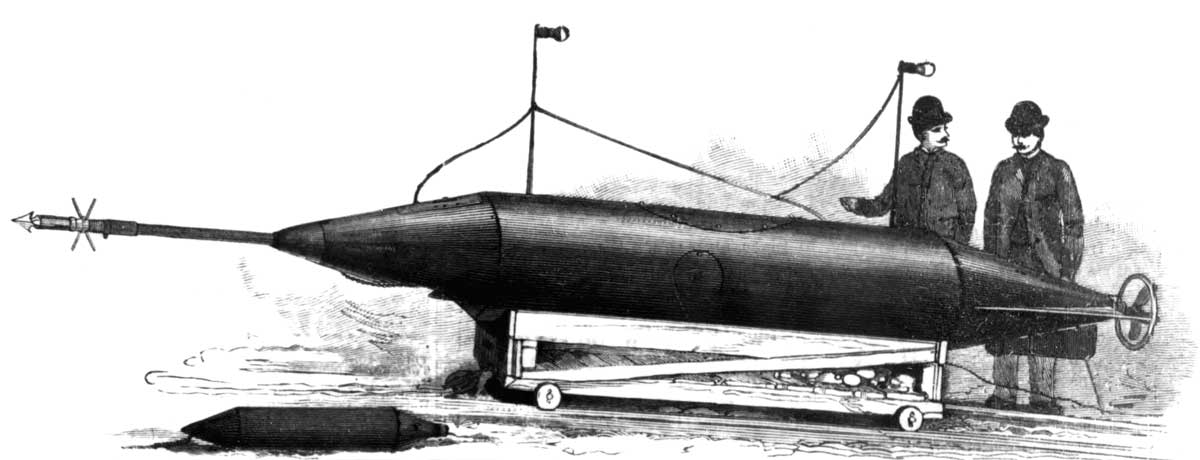
His wanderlust next drove Arthur to Utica. The task: re-build its derelict railroad. He succeeded, then delivered like results for Saratoga Springs’s streetcar line. Meanwhile, he helped fashion what would become the Savage-Halpin torpedo. It sold to Brazil after the U.S. Navy demurred.
The enterprising Arthur was 35 years old when he invented a repeating rifle. The lever-action Savage No. 1, cycled by one finger, had a musket-style stock that cradled a 29-inch barrel. Notable for its hammerless profile, it also featured an ingenious rotary magazine that held eight cartridges.
The U.S. Army was ready for a repeating rifle to replace its 1873 Trapdoor Springfield. But Europe was adopting Paul Mauser’s bolt-actions. Despite the popularity of lever rifles stateside, ordnance officers deemed them awkward to operate from prone, and less reliable than turn-bolts under battle conditions. In military trials, the Savage No. 1 lost to the Norwegian-designed Krag-Jorgensen. In 1892 the Krag became the first U.S. service rifle for smokeless cartridges.
As tenacious as he was clever, Savage adapted his repeater for hunters. He re-shaped the lever to accept three fingers and reduced magazine capacity to five so the rifle had a slimmer waist. Patents issued in 1893 described a prototype. This action was truly hammerless. In battery, its bolt abutted a stout web of steel at the rear of the forged receiver, protecting the shooter in the event of case failure. A through-bolt secured the butt-stock better than did screws in tang extensions. The Savage’s coil mainspring was first ever on a lever-action and more durable than common leaf springs. Unlike Winchester receivers, Savage’s wasn’t slotted on top, so it better shed rain, snow and debris. It didn’t eject cases into the sight-line. There was no side loading slot, common to both Winchesters and Marlins—nor a fragile magazine tube to dent. While most hunters were accustomed to using the round- or flat-nosed bullets required in tube magazines, they would come to appreciate the Savage’s spool, which allowed safe use of pointed bullets and didn’t change the rifle’s balance as it emptied. Loading was easy through a generous ejection port. A window in the receiver (front, left) indicated cartridge count.
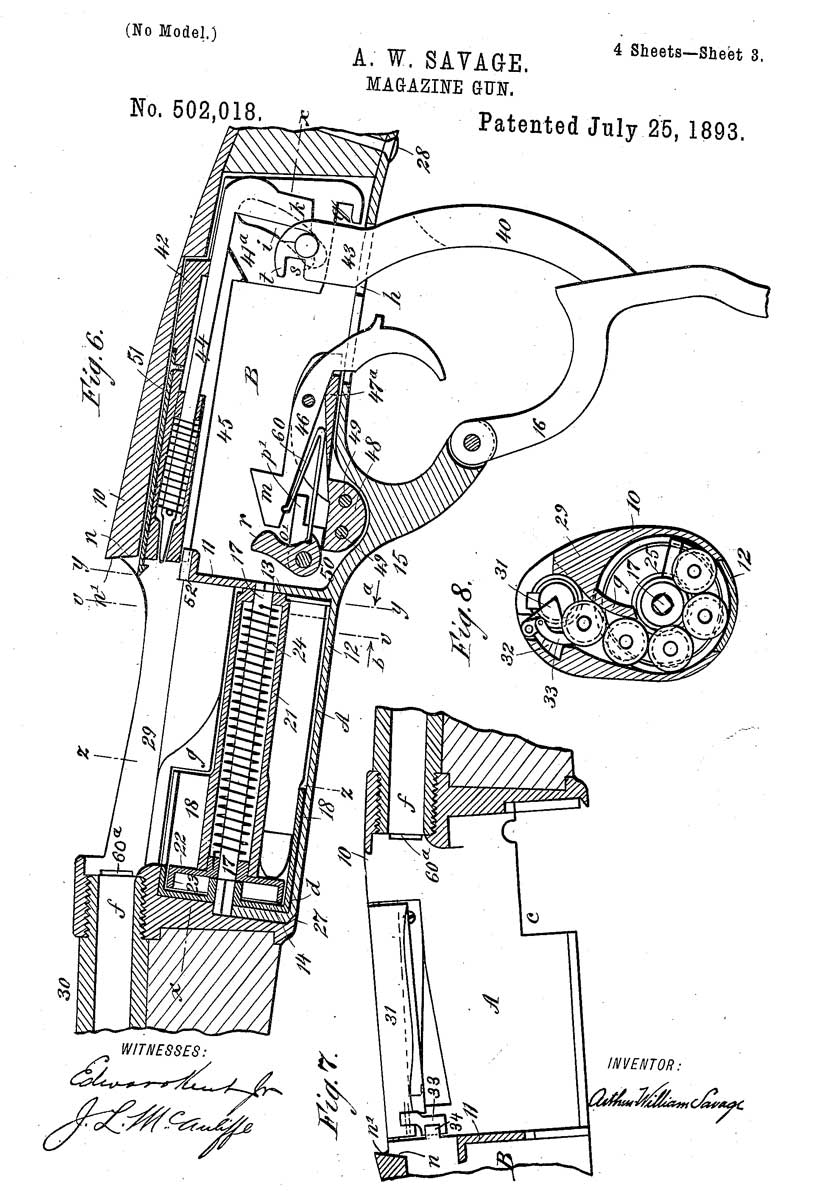
Savage’s magazine gun patent #502018 applied for on April 10, 1889 and granted on July 25, 1893.
Early in April 1894, the Savage Repeating Arms Company was formed in Utica, New York. The Marlin Firearms Company of New Haven, Connecticut, used its tooling to produce the first Savage Model 1895s, to speed their arrival at market. They were chambered for a new 303 Savage cartridge, its rimmed, generously tapered case matching the capacity of the 30 W.C.F (30-30). Its longer neck held a 190-grain flat-nose bullet that hit a little harder than did Winchester’s 160-grain, both initially loaded to about 1,950 fps.
Friskier ammunition later made 180-grain 303 Savage and 170-grain 30 W.C.F. ballistic equals. My two 303 Savage rifles have .308-inch bores; I handload the same Hornady flat-nose bullets that suit the 30-30, but a knowledgeable friend insists he’s slugged an early 303 Savage bore at .311-inch—the diameter of 303 British bullets. (Developed in 1888, Great Britain’s enduring military round is longer and more powerful.) Savage listed a blackpowder load for its .303 until 1903, when it also ditched a target load with a paper-patched bullet.
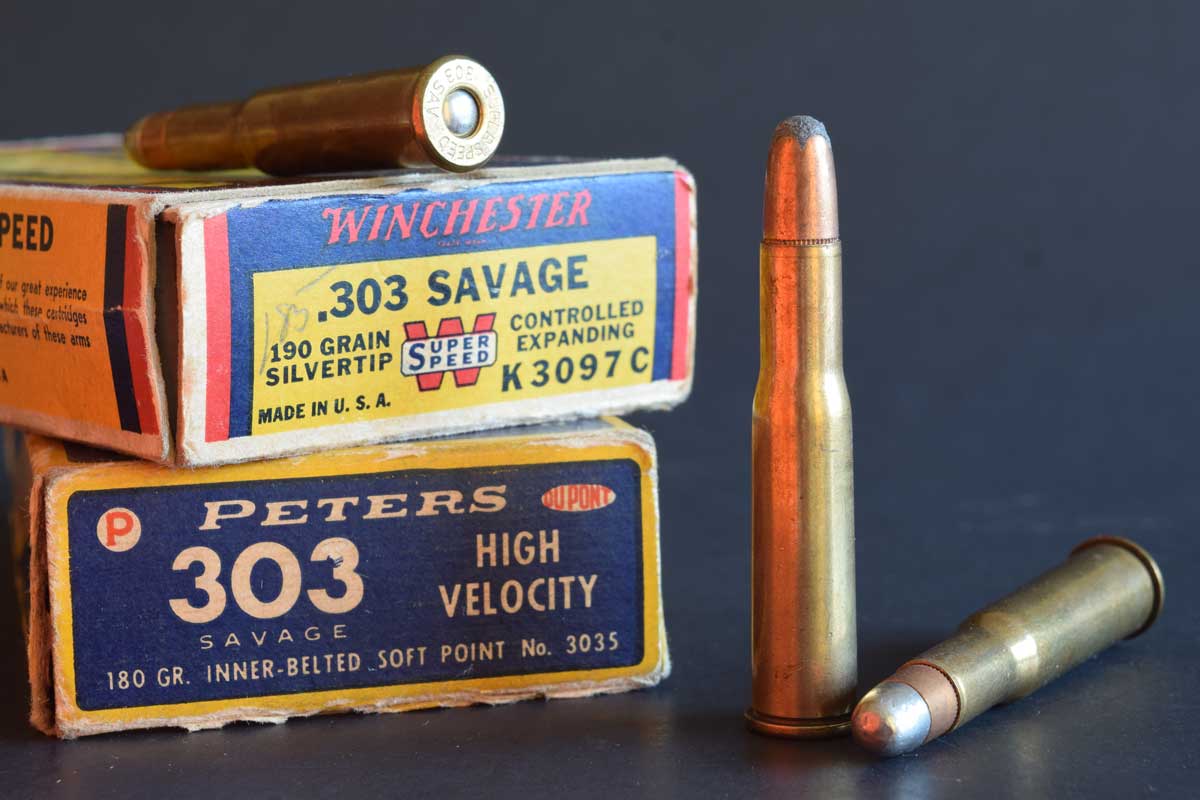
With 190- then 180-grain bullets, the 303 Savage reportedly edged the 30 W.C.F. in killing effect.
Even in its earliest forms, Arthur Savage’s duck-necked .30 got fine reviews. A Canadian hunter claimed 18 kills with a box of 20 cartridges, with two grizzlies in that tally! China missionary and intrepid adventurer Harry Caldwell used a 303 Savage to shoot tigers. A letter from Alaska, published in the 1900 Savage catalog, told of a .303 killing a whale!
The cartridge excelled on more common game, too. W.T. Hornaday, author of Campfires in the Canadian Rockies, wrote of a moose he felled at 350 yards “with one of your incomparable .303 rifles.” His guide killed “a large mountain sheep [with] the first shot 237 yards off and in a very strong wind….” Hornaday added, insightfully, that the Savage’s barrel “is small and [has] no long magazine to catch the wind….”
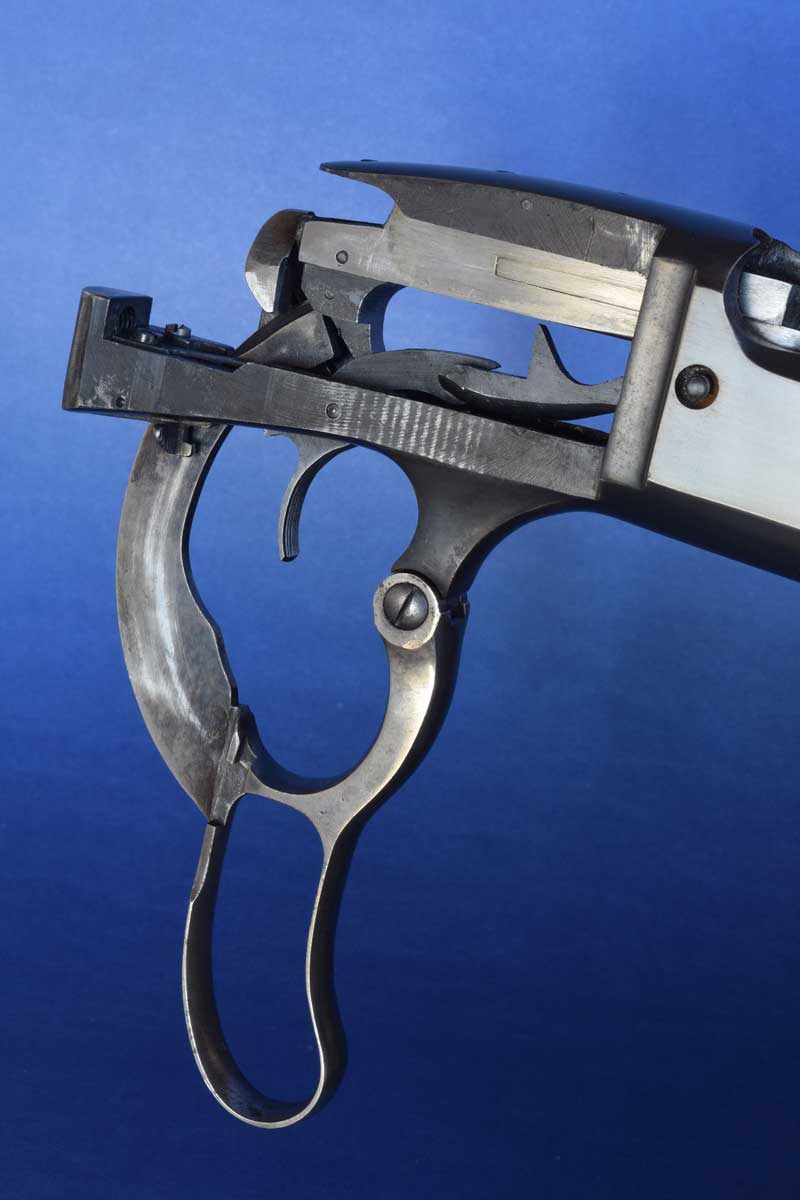
In 1899 Arthur Savage’s hammerless action was ahead of its time. This action is from a 99, circa 1950s.
The Model 1895 rifle in 303 Savage, with 20-, 26- or 30-inch barrels, had a short life. Only about 6,000 were produced between 1895 and 1899, when Savage modified the action and began barreling it to the 30 W.C.F. as well. In 1903 chamberings included the 25-35, 32-40 and 38-55 (all would be discontinued in 1919). So similar was the 1899 to its predecessor that Savage offered to convert 1895s, replacing the bolt body and its components, plus hammer, sear and hammer indicator. Charge for this conversion: $5. The indicator, by the way, was a slender bar atop the bolt nose. Cocking the rifle raised the bar. Not long into production of the 1899, this bar was replaced by a pin that protruded from the top rear of the receiver.
Early Model 1899s listed for $20, with checkering from $2, engraving from $5. A Lyman aperture rear sight or a wind-gauge globe front added $3.50, sling and swivels $1.50. Letter suffixes designated barrel contours: A for round, B for octagonal, C for half-octagonal. Unimaginatively, letters would tag myriad stock and profile variations, too. Popular from the start: 1899-F saddle-ring carbines. Custom buttstock dimensions could be ordered, though in 1905 Savage reminded buyers that “…deviation [from standard measures] requires the stock to be cut from the solid block by hand. This is expensive work and there is an extra charge of $10….”
A feature commonly overlooked in 1899 (and later Model 99) rifles is their rebounding firing pin. It aids ejection and permits de-cocking. Arthur Savage designed the action so both primary extraction and cocking occur with the loop close to the grip, where your fingers have their greatest leverage. To de-cock, you lower the lever part-way (past resistance), then pull the trigger as you return it. The cocking indicator will then lie flush with the receiver top. Safe carry is thus possible with a loaded chamber. “Cougar Pete” Peterson, first government hunter in the Pacific Northwest, was known to remove the safeties of his rifles. He carried them uncocked but “a squeeze from ready.”
Savage touted the 1899’s accuracy in its 1903 catalog, showing a 10-shot, 100-yard group 1 5/16 inches across. Surely Arthur was delighted when Teddy Roosevelt, whose affinity for Winchesters was well known, wrote that his Savage 1899 was “the handsomest and best turned out rifle I have ever had.”
CD Deluxe and H Featherweight rifles appeared in 1905. The Model 1899-D, a .303 with musket stock and bayonet, wilted that year—though a batch of D rifles showed up in 1915. Savage announced a take-down rifle in 1909. Four years later a hot new cartridge put the skids under the 25-35.
New York attorney Charles Newton would spend most of his working life wildcatting cartridges and designing rifles. Newton developed a short-action 25-caliber by trimming and necking down the 30-06. A fast-stepper for the times, it had about 350 fps on the 25-35. Savage seized on it for the 1899 rifle. As the story goes, Newton suggested a 100-grain load at about 2,800 fps. But an 87-grain bullet could be kicked to 3,000, and Savage saw that blistering pace as a great selling point. It hawked the load in the cartridge’s name: 250/3000. Peters offered a 100-grain factory load in 1932. Later the round would become simply the 250 Savage. Factory loads with 100-grain bullets are now standard. Roy Chapman Andrews, famed explorer for the American Museum of Natural History, used an 1899 Savage in this chambering, which he called “the most wonderful cartridge ever developed.”
Charles Newton also gave Savage the .22 Hi-Power, or “Imp.” It debuted in the Model 1899-CD rifle in 1912. Its 70-grain .228-inch bullets at 2,700 fps zapped creatures up to the size of whitetails, but couldn’t ensure quick kills on big bucks. The 22-250 edged it out of ’chuck pastures, and by World War II, the Imp would be gone.
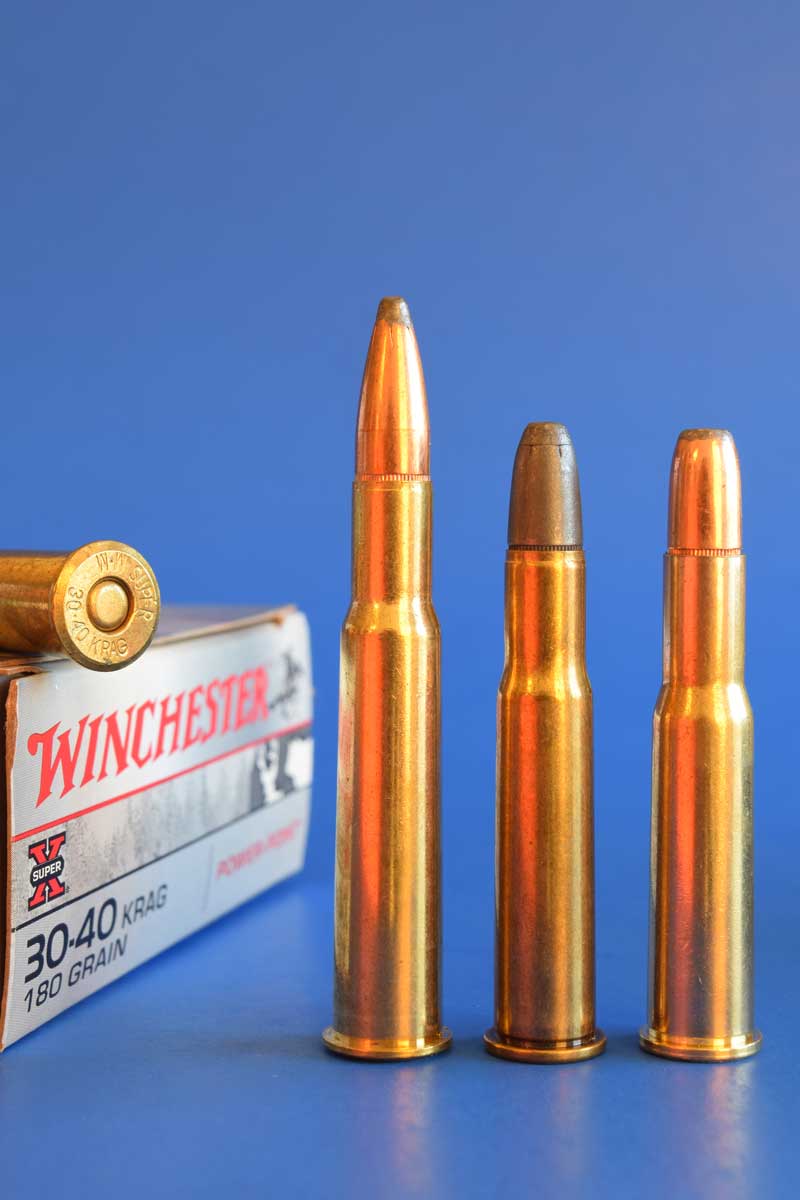
Krag rifles fired the 30-40 (left). The 30 W.C.F. (center) followed the 303 Savage in the Savage 1899.
As Savage’s lever rifle became more popular (and the Krag that had beaten it in ordnance trials acceded to the 1903/03A3 Springfield), the Savage Corporation grew. During World War I,
it partnered with Pennsylvania’s Driggs-Seabury Ordnance Company to build Lewis machine guns.
In 1920 Savage diversified its business by purchasing the J. Stevens Arms Company of Chicopee Falls, Massachusetts. Before his death in 1907 at age 92, Joshua Stevens had turned his 1860s gun shop into a booming enterprise that produced affordable but high-quality target and hunting rifles. Savage was now more than a “one-gun company ”—though its 1899 still paid the bills. With the Stevens acquisition, Savage gave this rifle minor refinements and a new moniker.
The Model 99 differed little, mechanically, from its forebear. Early 99s came in five styles. Letter designations (except the A) remained; but as if to confuse customers, Savage applied them to different rifles! The new 99-D was a take-down sporter, not a military musket. Some letters would be recycled on different versions. The original 99-E, produced from 1920 to 1933-34, was a “Light Weight” with a Schnabel-style forend. A 99-E would arrive in 1961 with a rounded, press-checkered hardwood stock. In 1926-27 the 99-A supplanted the original 1899-A. In 1971 a different 99-A appeared briefly, bearing a new safety.
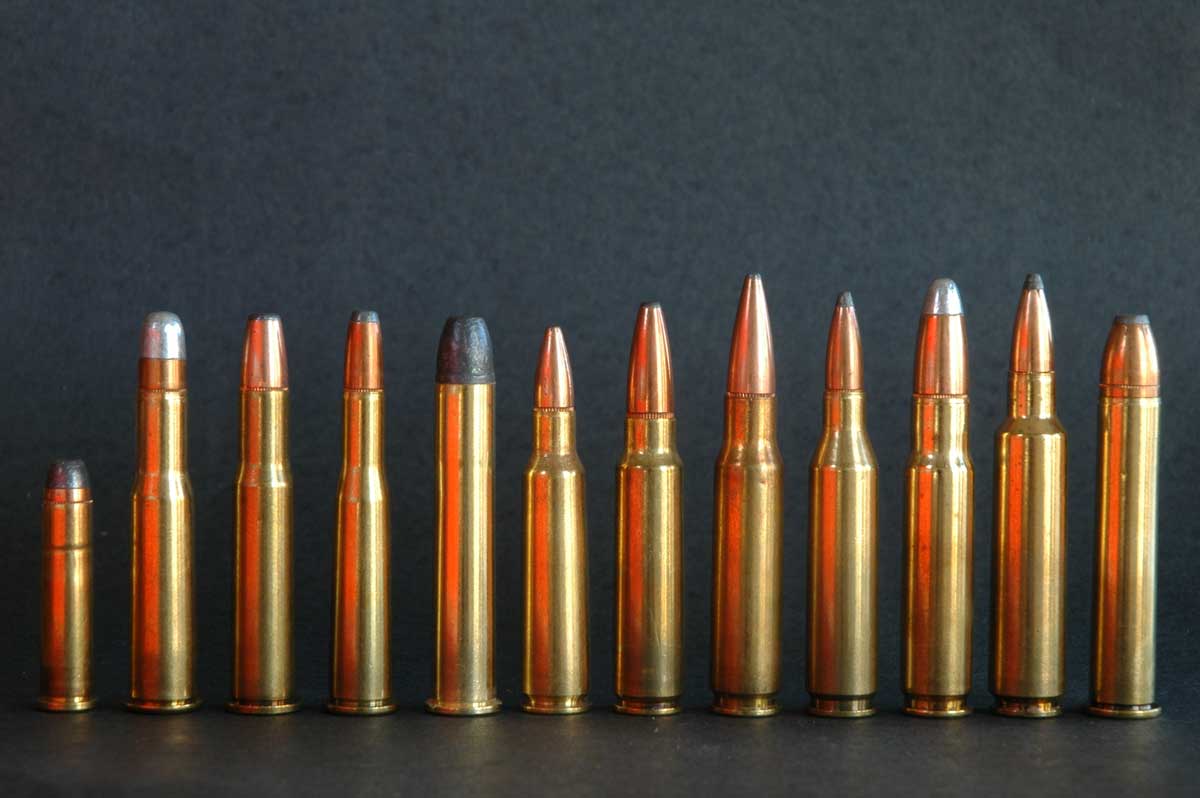
Cartridges for Savage lever-actions, in chronological order, L-R: 32-20 (prototype rifle), 303 Sav., 30 W.C.F. (30-30), 25-35, 38-55, 250 Sav., 300 Sav.; 308, .243, 358, 284 and 375 Win. Not shown: the 32-40 (dropped in 1919), 22 Hi-Power (dropped in 1941) and 22-250 (99-C only, from 1977).
With the Model 99’s debut came a new Savage cartridge, the first “.300” sold stateside. By some accounts, it was to bring 30-06 zip to saddle rifles, but its 1.871-inch case couldn’t hold nearly as much powder as the ’06’s 2.494-inch hull, and there was a 250 fps velocity gap. Still, legions of the lever-action faithful bought 99s in 300 Savage to hunt elk, moose and big bears as well as deer. In Savage barrels (rifled 1:12-inches), the .300 would remain the 99’s most powerful chambering for 32 years. During that time, it found a home in other rifles, too, from Remington’s 81 autoloader and 760 pump to its 722 and Winchester’s M70 bolt-actions. Around 1950, U.S. armed forces considered the 300 Savage as an alternative to the 30-06; but its 30-degree shoulder balked in some auto mechanisms. A slightly bigger cartridge with a 20-degree shoulder evolved as the T-65. It became the 308 Winchester in 1952, the 7.62 NATO three years later. Savage added it to the Model 99s’s roster.
During WW II, Savage turned to the manufacture of military weapons, shipping as many as 8,500 guns a month from 1.2 million square feet of factory floor in four plants. Payroll grew 10-fold to 13,000. By war’s end, the company had built more than 2.5 million firearms, half of them Thompson submachine guns. It also produced 330,000 Lee-Enfield rifles for Great Britain after its huge losses at Dunkirk. Then, per the Lend-Lease Act, Savage agreed to double SMLE production to 60,000 per month. By mid-1944, it had manufactured a million.
Arthur Savage had no doubt reveled in the success of his Model 1899 rifle in the first decades of the century, and in the 99’s on its heels. But he’d divested himself of the company early on in 1905. His next project was growing oranges in California. By 1911 he had left the agricultural life to patent a radial automobile tire in San Diego. The Savage Tire Company resulted. He sold it in 1919, two years after he’d formed a new firearms company in partnership with his son, Arthur J. That business failed. Later Arthur would dabble in other enterprises: drilling for oil, prospecting for gold and the production of bricks, tile and ceramics. For a time, he managed the San Gabriel Water Company.
He ran out of new horizons in 1938. On September 22, facing a slow, painful death from terminal cancer, Arthur William Savage took his own life with a pistol. He was 81.
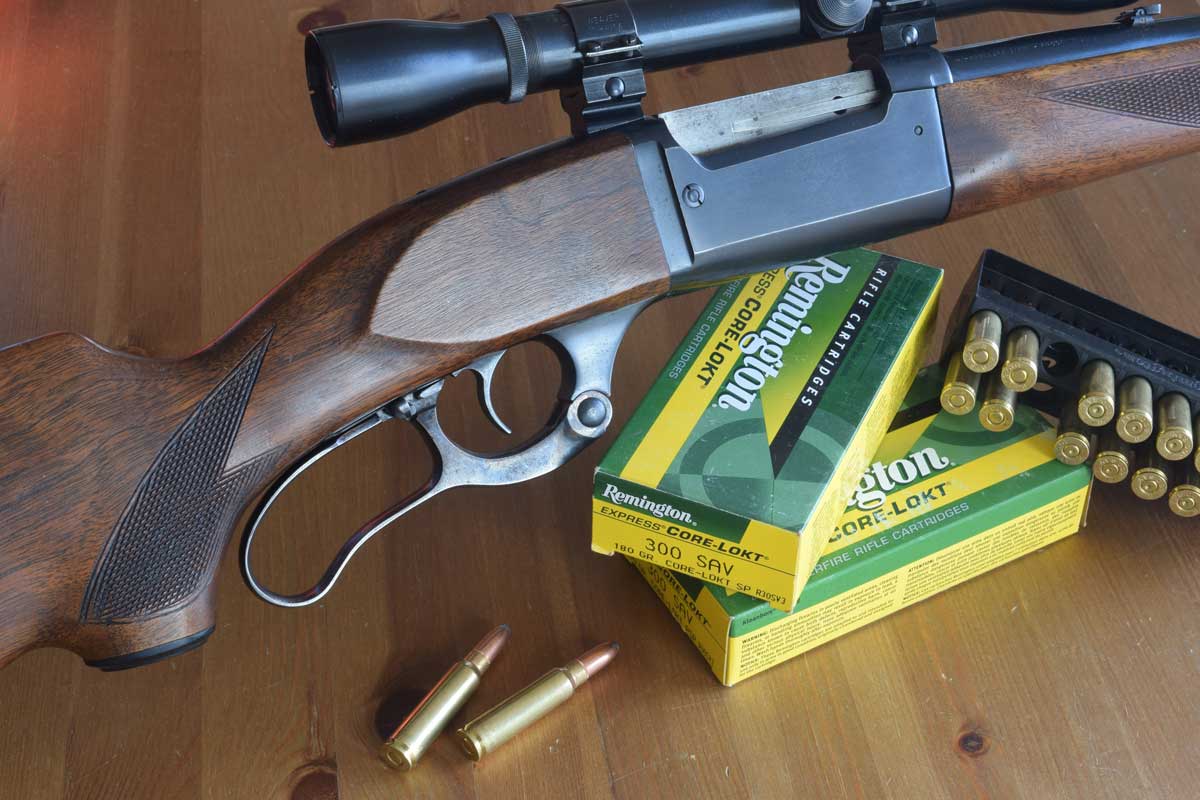
In 1920 Savage introduced its 300 Savage round and changed the rifle’s name from Model 1899 to Model 99.
In 1949 Savage Arms consolidated firearms production at Chicopee Falls, shuttering the original Utica facility. It trimmed the line of Model 99 rifles down to the 99-EG and the beefier 99-R and 99-RS. The EG, a svelte rifle with 22- or 24-inch barrel and Schnabel forend, had sold exceedingly well before the war. The RS was a deluxe R with a Redfield receiver sight and a 7/8-inch sling in QD swivels. These rifles were of solid-frame design and barreled only to 250 Savage or 300 Savage. Prices: $89, $101 and $121.
Beginning in 1950, Savage drilled and tapped Model 99 receivers for scope bases. That decade, production passed the million-rifle mark. The 99’s chambering list added Winchester’s new short-action cartridges: the .308, .243 and .358. The .308 proved hugely popular, denting sales of 99s in 300 Savage. The .243 pulled customers from the .250. In 1961 the 99’s original lever-side safety gave way to one on the tang. In 1965 a detachable box magazine replaced the spool. About then “hardwood” stocks (typically beech) replaced walnut, and hand checkering acceded to pressed panels. The Savage 99 first chambered the 284 Winchester in 1964, the 375 Winchester in 1980.
During the 1960s and ’70s, eight new versions of the 99 appeared, including DE and PE engraved presentation rifles (1965) and a 75-year anniversary rifle (1970). Twenty years later, the 99 was clearly bound for the boneyard. The 99-C reappeared in 1995 in .243 and .308 only. The next year Savage built 1,000 Model 99-CEs, (Centennial Editions) in 300 Savage. Both production runs ended in 1997. The 99-C listed for $650, the 99-CE for $1,660.
All told, the Savage 99 has been sold in 14 chamberings including, briefly, the 22-250. Catalogs have listed 31 versions, as many as 10 at a time. A take-down 99 came with a .410 shotgun barrel.
There’s no lever-action quite like a Savage. Winchester’s 88 and Sako’s Finnwolf—hammerless, front-locking rifles—gave the 99 only token competition before they expired after runs of about a decade.
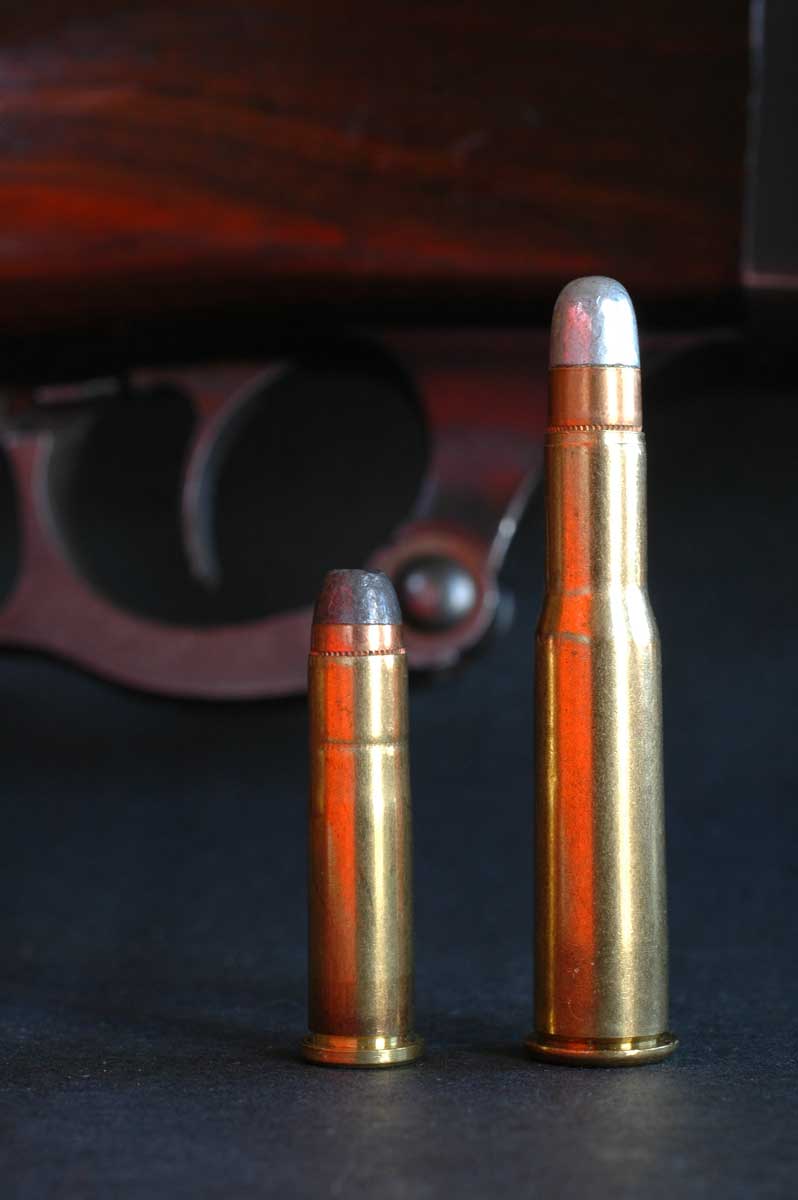
A Savage prototype rifle may have been barreled in 32-20 (left). The rifle was first sold in 303 Savage.
Savage Model 1899s and 99s in 25-35, 303 Savage, 250 Savage and 300 Savage have helped me take a variety of big game over many seasons. A 300 Savage with a Weaver K4 dropped a big elk with one round-nose Core-Lokt. Another elk fell to a .303 with a tang sight, yet another to a .250 with a Williams receiver sight. Iron sights bring the hunt properly close. A caribou in its bed died to a shot from my open-sighted .300 after a half-mile sneak. I’ve frayed many shirt sleeves elbowing through sage with scope-less 1899 and 99 rifles to clobber mule deer and pronghorns.
Alas, Savage lever-actions show up less and less frequently at gun shows. Those that do evidence hard life afield with tang splits, scabbard shine, scratched wood. Early rifles not factory-tapped for scope bases are commonly perforated by goons with no sense of propriety. But a 99 is hard to kill. A pal forgot he’d left his leaning against his pickup, until he backed over it and bent the barrel. Loath to abort his hunt, he flipped the rifle and motored over it again. The barrel was then “straight enough.” He killed a moose.
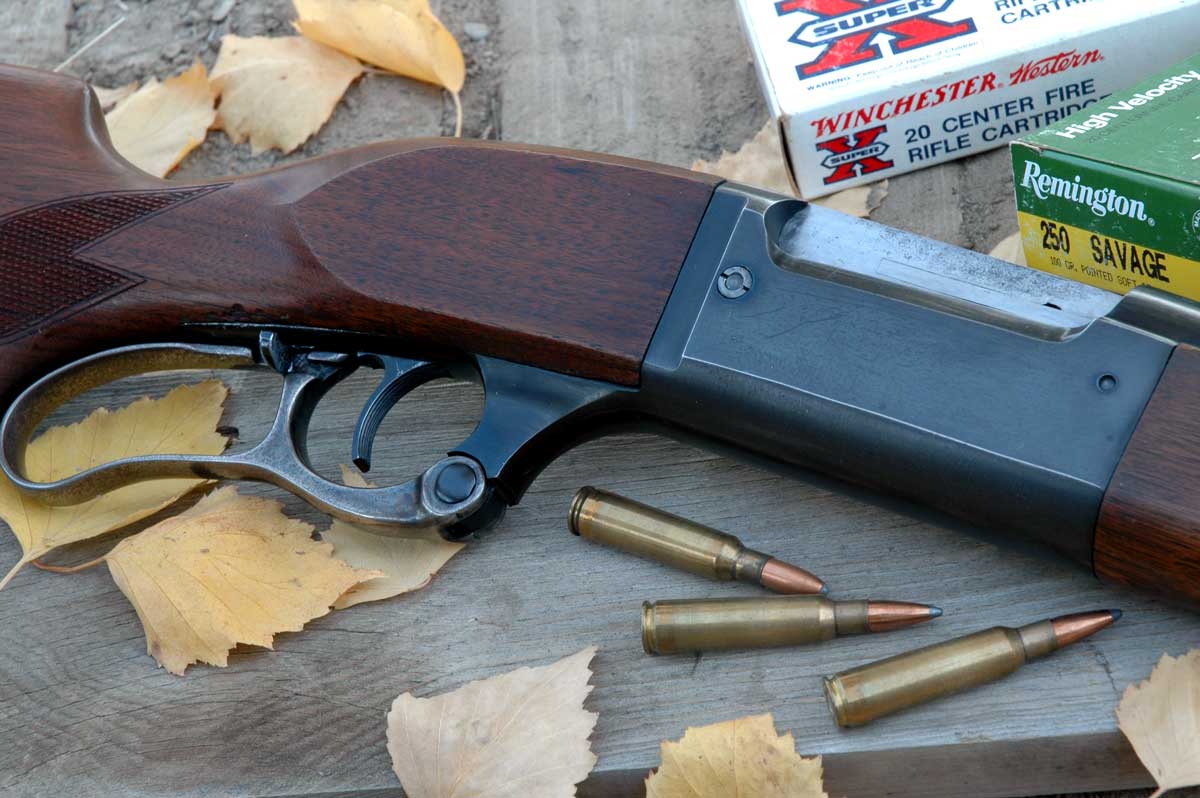
Still loaded, Savage’s .250 is a flat-shooting deer cartridge, coveted in 99s. Wayne has used it on elk.
Throughout the 99’s long run, bolt rifles became ever more economical to produce, while the cost of building lever-actions climbed. A Savage 99 requires hand fitting, a step complicit in its demise. In the early 1990s, Savage tried to save this rifle by shipping parts to an investment casting enterprise in Spain to make the receivers. Barreled actions were then sent stateside for stocking. This arrangement was short-lived. A century earlier, lever rifles had sold as entry-level deer guns for as little as $10. Mauser sporters would cost many times that. Now the world is awash in cheap bolt rifles with tubular receivers, synthetic stocks and detachable magazines. Price-conscious shoppers find great bargains in turn-bolts, and they get to choose from many powerful cartridges.
“We’d have to charge $1,000 for a 99 now,” Savage’s president told me a decade ago. The rifle had then been out of production 15 years. “I’d like to revive it, but the numbers are against us.”
He’s right, of course. More’s the pity.
The Bolt-Action Play
Long before the Model 99’s doom became evident, Savage had joined other firearms companies vying for shares of a growing market in bolt-action rifles. In 1920 the 99 shared the spotlight with a new Savage Model 1920 bolt rifle in 250/3000 and 300 Savage. Fed by five-shot stripper clips, it lasted until 1931. But in 1928, Savage had announced a Model 40 Sporter. As with its predecessor, the Model 40 wore a plain stock with Schnabel-style forend. Besides 250/3000 and 300 Savage, it was offered in 30-30 and, notably, 30-06. A Model 45 Super Sporter featured a checkered stock and Lyman receiver sight. Both rifles were dropped in 1940 to be supplanted a decade later by the Savage Model 340. Barreled to 22 Hornet, 222 Remington or 30-30 Winchester, and later 225 Winchester, it was an affordable mid-range option for predators and woodland deer hunting. (Despite its stamped parts and homely profile, my 340 in .222 functions reliably and shoots tight groups!) It would be followed in 1958 by Savage’s Model 110, now produced in myriad variations, and chamberings from 223 Remington to 375 Ruger.