
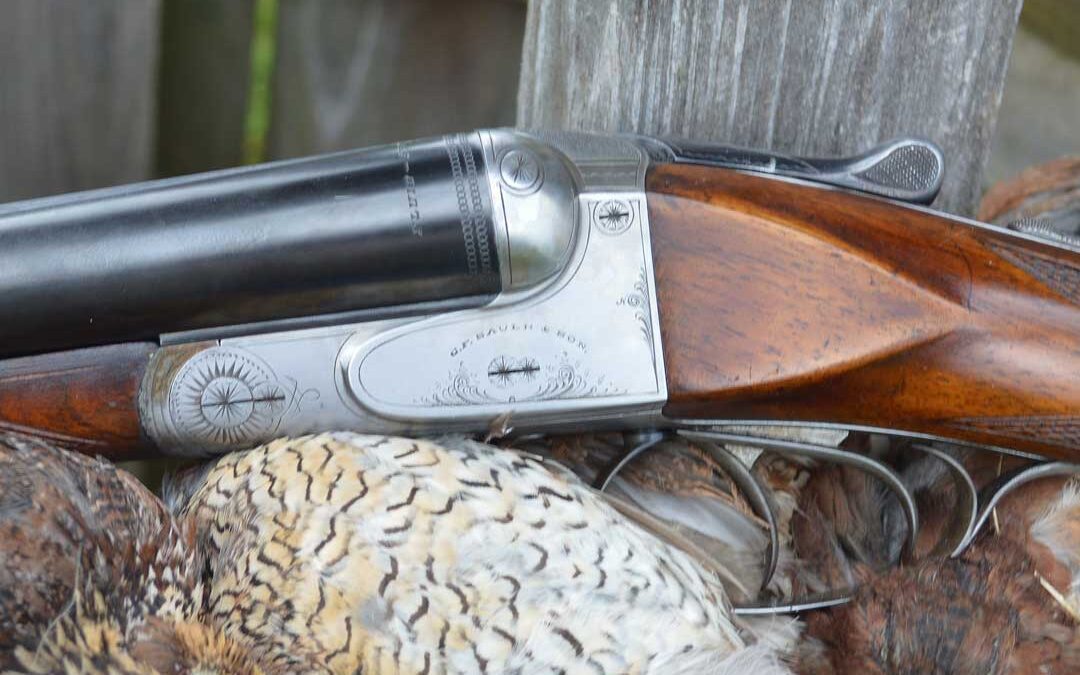
This is the second half of a two-part article on classic European doubles imported into the U.S. between the end of our Civil War and the start of the First World War. Part I, which was published in Sporting Classics July/August 2025 issue, covered classic doubles made by W. & C. Scott & Son, Charles Daly and August Francotte & Son. This part addresses classic doubles by J.P. Sauer & Son, W.W. Greener and Westley Richards & Co. These six manufactures were chosen because their side-by-side shotguns exemplified the best of their class, have a timeless quality, and have been valued for more than a century. They were also selected because they actively marketed their guns in the U.S. and achieved significant penetration of the American sporting arms market before 1915.
J.P. Sauer & Son, Suhl
The first Sauer company was founded in 1751 in the city of Suhl. Suhl was the most important gunmaking center for sporting arms in Germany for about 200 years. In the late 19th and early 20th centuries, Sauer’s international reputation rested on its production of high-quality sporting and hunting arms. These included side-by-side and over/under shotguns, rifles, double rifles and drillings. It was also Germany’s “gunmaker to gunmakers,” producing receivers, actions and other metal components for smaller firms.
Until the 1870s, gun ownership in Germany was largely limited to the nobility, whose needs were primarily met by local master gunsmiths. However, with the new wealth created by the Industrial Revolution and the unification of the German states under Prussian leadership in 1871, sporting gun ownership expanded significantly. J.P. Sauer & Sohn (Sauer & Son) was well positioned to meet the needs of this new class of non-aristocratic sportsmen.
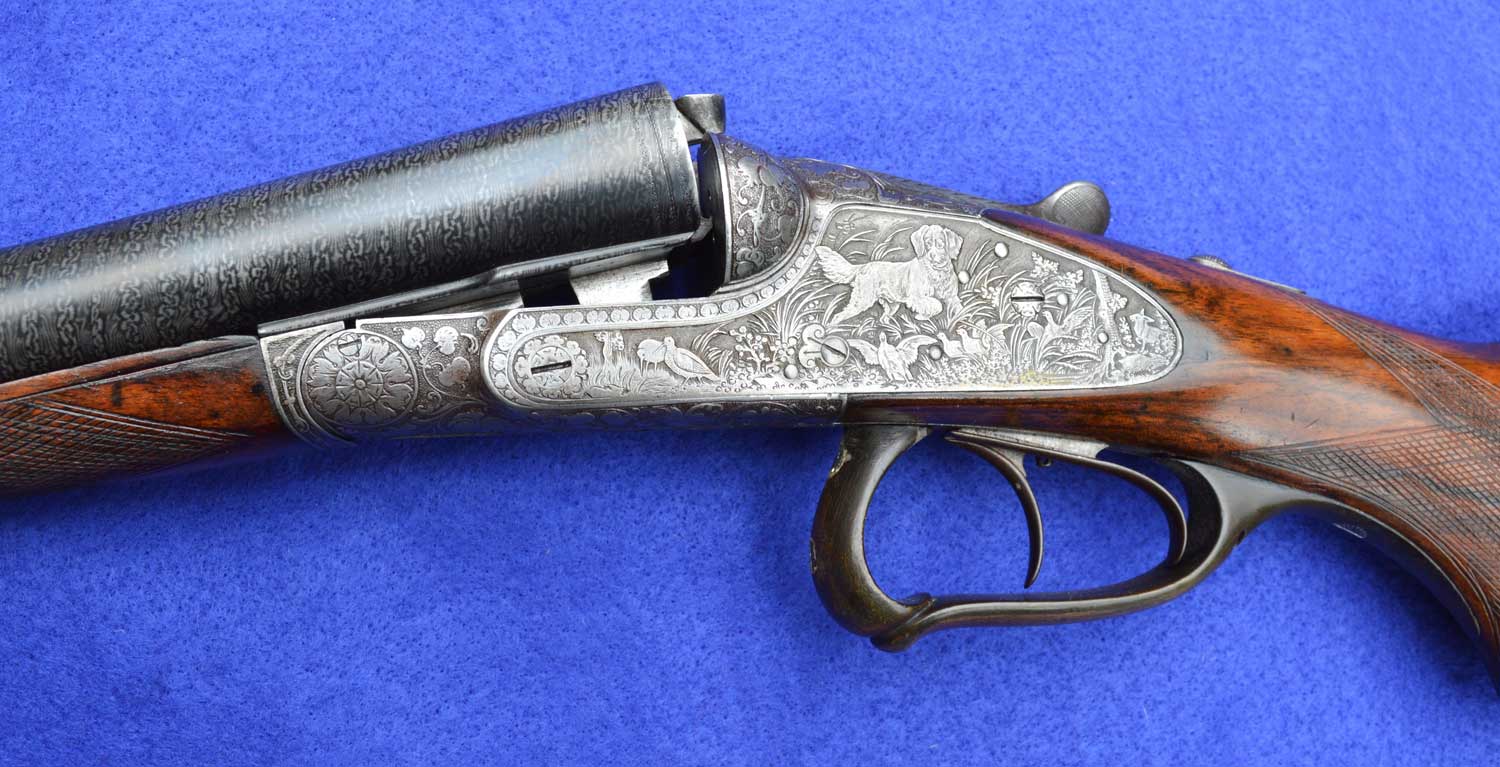
Sauer & Son produced the highly ornamented Meister Werke targeted to the super-wealthy, as well as more practical game guns for affluent hunters. The 1890 sidelock pictured below, No. 37325, is a good example of the latter. Like most other Sauer doubles made for its domestic market, its engraving is in classic Germanic style. The locks are intricate, and the components precisely milled and hand-fitted. The stock has a cheekpiece and the hardware for a sling; the trigger guard is horn. This shotgun was ordered from Sauer & Son and sold by the Eduard Kettner Company, a high-end gun store and outfitter in Cologne.
Sauer & Son was a late entry into the U.S. shotgun market. It caught up quickly by partnering first with Von Lengerke & Detmold (VL&D) and then Schoverling, Daly & Gales (SD&G), both high-end retail gun and outfitting companies in New York City. Both firms had extensive experience in importing and marketing high-quality European doubles to wealthy American sportsmen.
The shotguns these two companies ordered from Sauer & Son were made specifically for the American market. They were intended to meet the demand for high-quality light weight game guns. To adapt to American tastes, the engraving was in the British, rather than Germanic, style. The stocks most often did not have cheekpieces or sling swivels. The median price point was lower than Sauer & Son doubles made for its domestic market. Whereas the export guns had less ornamentation, they used the same locks and other mechanical components, which were superbly crafted and of the most modern design.
The VL&D Sauer
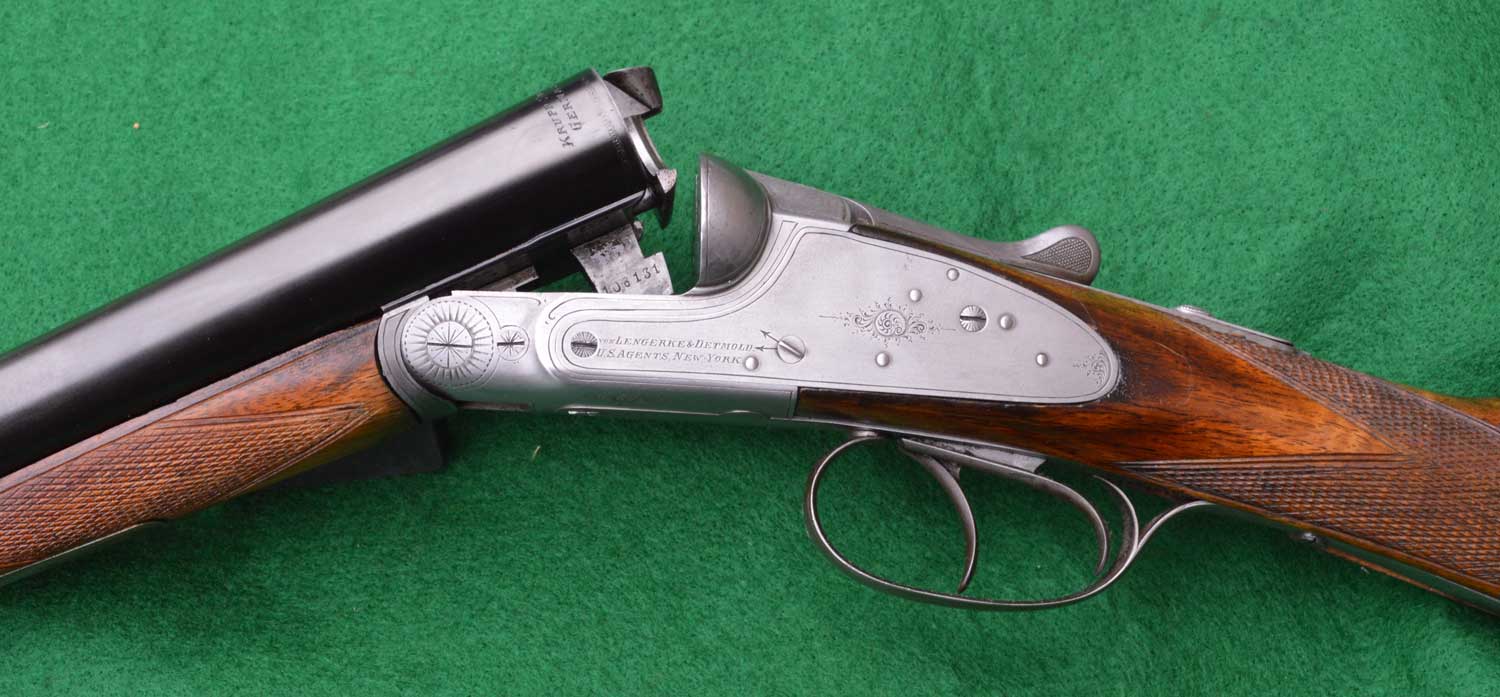
The first Sauer-built double entered the U.S. market in 1898. It was a sidelock that VL&D named the “Knock-About.” The name symbolized the market niche it was intended to fill. The Knock-About was an immediate hit. VL&D continued importing this model through 1904, when Sauer started building guns for SD&G. The gun pictured above, No. 10613, was produced in 1903. It retailed for $60.
This gun weighs 6 pounds, 5 ounces, and has a number of features not found on any other gun, domestic or imported, in its price range. The barrels are made of Krupp fluid steel. The stock and forend are grained European walnut and have 22-point checkering. The forend uses a Deeley & Edge latch, and the gun has cocking indicators. The locks on this gun are identical to those on Sauer No. 37325.
Both sideplates are inscribed “von Lengerke & Detmold U.S. Agents New York.” The German proof marks establish the origin of the gun, but the only indication that it was made by Sauer & Son is the company trademark (Hercules holding a club) stamped on the barrel flats among the many production and proof marks. That suggests that VL&D did not think the Sauer brand added value. Nevertheless, judged in terms of the quality received for the price paid, the gun itself was one of the best values on the market.
The Charles Daly Sauer
For two years, beginning in 1904, Sauer & Son manufactured for SD&G a boxlock bearing the Charles Daly label. Priced at $80, it was the least expensive gun in the Daly product line. This would be a temporary solution, driven by the fact that H.A. Lindner could not produce enough Charles Daly guns to meet the demand. The 12-gauge at the top left of the next page, Daly No. 28993, is a fine gun in every respect. The Sauer origins are only identified by its trademark stamped on the barrel flats and watertable.
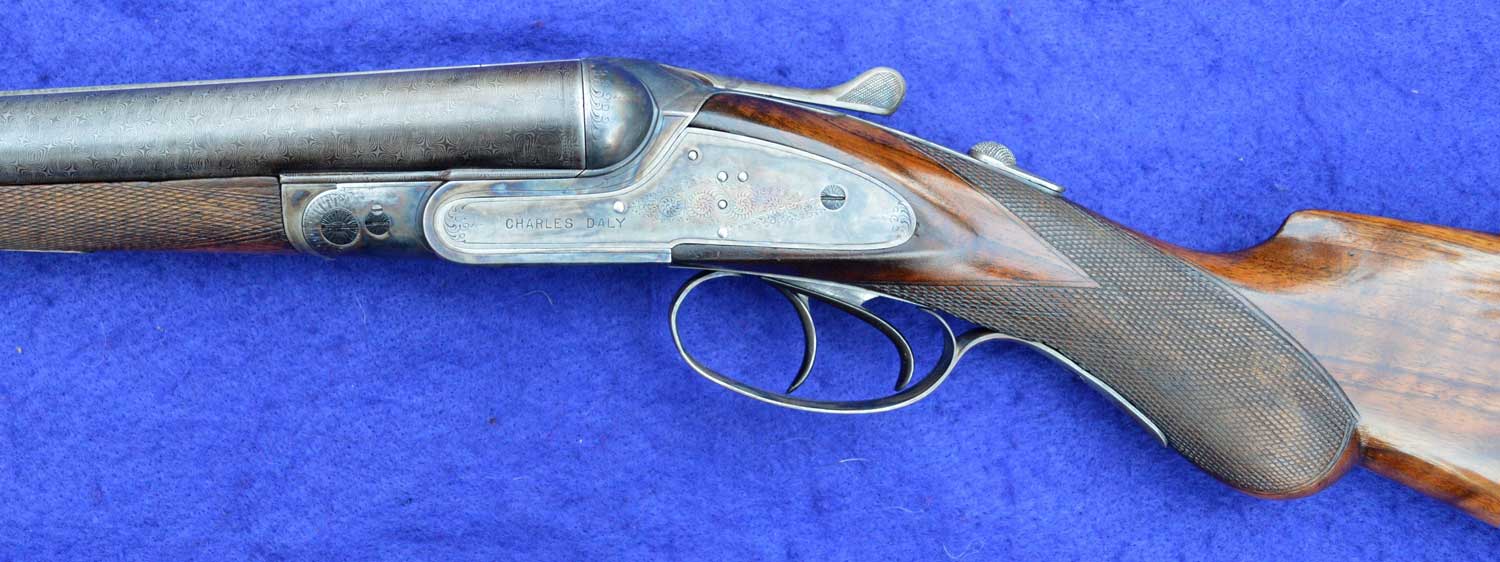
Sauer & Son’s Own U.S. Product Line
Despite being one of the major producers of fine sporting arms in Europe for decades, Sauer & Son was not well-known in the U.S. before 1905. The introduction and endorsement by its U.S. agent, SD&G, established the brand in America as a manufacturer of high-quality game guns.
The 1907 SD&G catalog, which was the first to provide full descriptions, drawings and prices of all models, begins:
“Messrs. J.P. Sauer & Son—one of the oldest Gun factories in the world…have always been looked upon, in Europe, as leaders in the manufacture of Sporting Fire Arms. Some 25 years ago—then pioneers—they adopted machinery for making guns, and since then have improved their plant steadily, so that to-day they have over 1,000 machines making parts for Shot Guns and Rifles, all worked by electricity…. [We] can say that there is no machine-made gun in the world that can compare with a Sauer Gun.”
The catalog characterizes the No. 1, No. 2 and No. 3 grade guns, which sold for $80, $100 and $125, respectively, as “made to meet the demand for thoroughly good guns at a moderate price…. While devoid of elaborate ornamentation and ‘luxuries’ they are handsomely finished, durable, reliable, and accurate, and are made on the same lines and by the same machines as the higher grades.” This is a clear statement of Sauer’s core value proposition to American hunters.
Being priced below the bottom of the Charles Daly line, these guns were not competing with SD&G. They were, however, directly challenging the top of the product lines of the premier American manufacturers. Sauer offered three higher grades that did have “elaborate ornamentation and luxuries” priced at $400, $450 and $600. The price gap between these guns, and the “thoroughly good guns at a moderate price” it was primarily promoting, suggests that the intent was more to shape the Sauer & Son brand than to sell luxury shotguns.
The 12-gauge Sauer & Son boxlock at top right is a grade No. 1 made in 1908. It weighs 6 pounds, 4 ounces, and has superb handling characteristics.
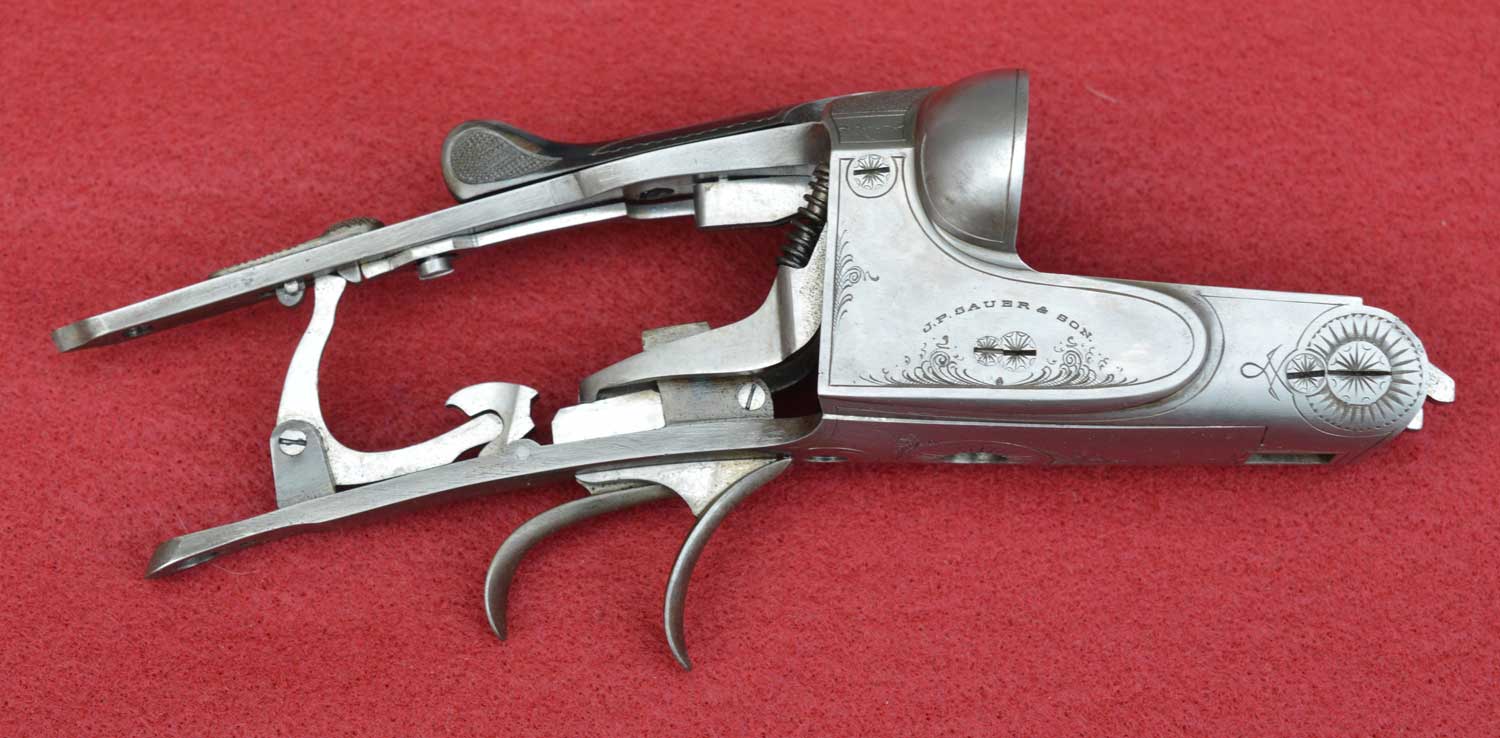
The locks are a modified version of the Anson & Deeley boxlock action patented in 1883 by Westley Richards. The gun uses a Purdey-style double-underbolt and a Greener-style cross-bolt to secure the barrels and receiver. The receiver is 1 5/8 inches wide, 1 3/4 inches tall and 3 1/4 inches long, not including the tang. Together, the receiver, bottom metal and locks weigh 1 pound, 10 ounces.
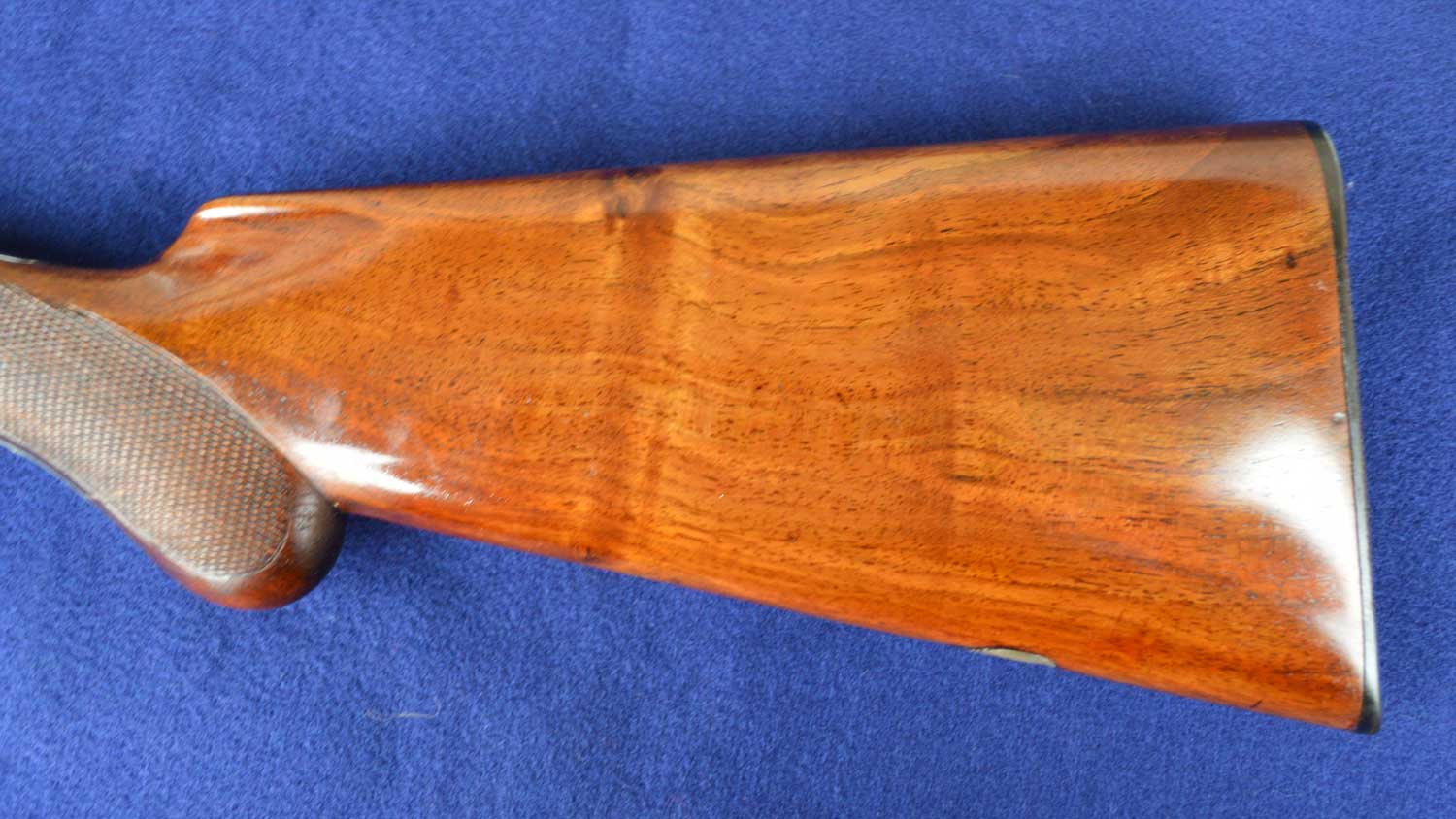
The stock has excellent grain alignment, giving it strength. This was the most important criteria used by European gunmakers to judge quality. Being made of Italian walnut, it is dense and hard, making it resistant to damage. However, because of the uniform background color and absence of figure, on a scale of 0 to 6, this stock would rate a 2+.
The checkering is 22-point. The buttplate is made of horn. The shooting dimensions are modern—drop at comb is 1 1/2 inches, drop at heel is 2 5/8 inches and length of pull is 14 1/4 inches.
The 26-inch Krupp fluid-steel barrels have 2 3/4-inch chambers and are choked improved cylinder and extra full. The barrels weigh 3 pounds, 2 ounces. Engraving coverage is light, but more than sufficient to achieve its primary purpose on a game gun—to reduce shine and hold oil.
German exports to the U.S. were halted by the British and French naval blockade in late 1914. In 1924, Sauer & Son resumed exporting shotguns with VL&D as its U.S. agent. The new line of doubles had different model numbers and put more emphasis on engraving and other adornments. As a result of war casualties and post-war economic collapse, many of the small multi-generational firms of highly skilled craftsmen that previously provided parts and services were gone. Sauer & Son doubles imported into the U.S. between World Wars are stamped “Germany” rather than “Prussia.”
Military firearms were a significant component of Sauer & Son’s business throughout the 19th and early 20th centuries. However, during World War II, the company became an integral part of the Nazi war machine. It was progressively destroyed in the last year of the war, first by America bombers in March, then by its former forced-labor workers who were liberated by the U.S. Army in April and, finally, by Soviet expropriation and liquidation in October 1945.
In 1950, communist East Germany formed a socialist cooperative that produced sporting arms. It sold shotguns under the names of Sauer and others famous Suhl companies. The right to use the Sauer name in West Germany was sold by the family to an industrial group that, in 1952, began building sporting arms at its new factory in Eckernforde.
More than half of the double barrel shotguns on the market today bearing the Sauer label were not manufactured by Sauer & Son. The doubles produced in West Germany are sound, medium-priced guns and can be a good value. However, potential buyers may want to be cautious of most shotguns made in East Germany.
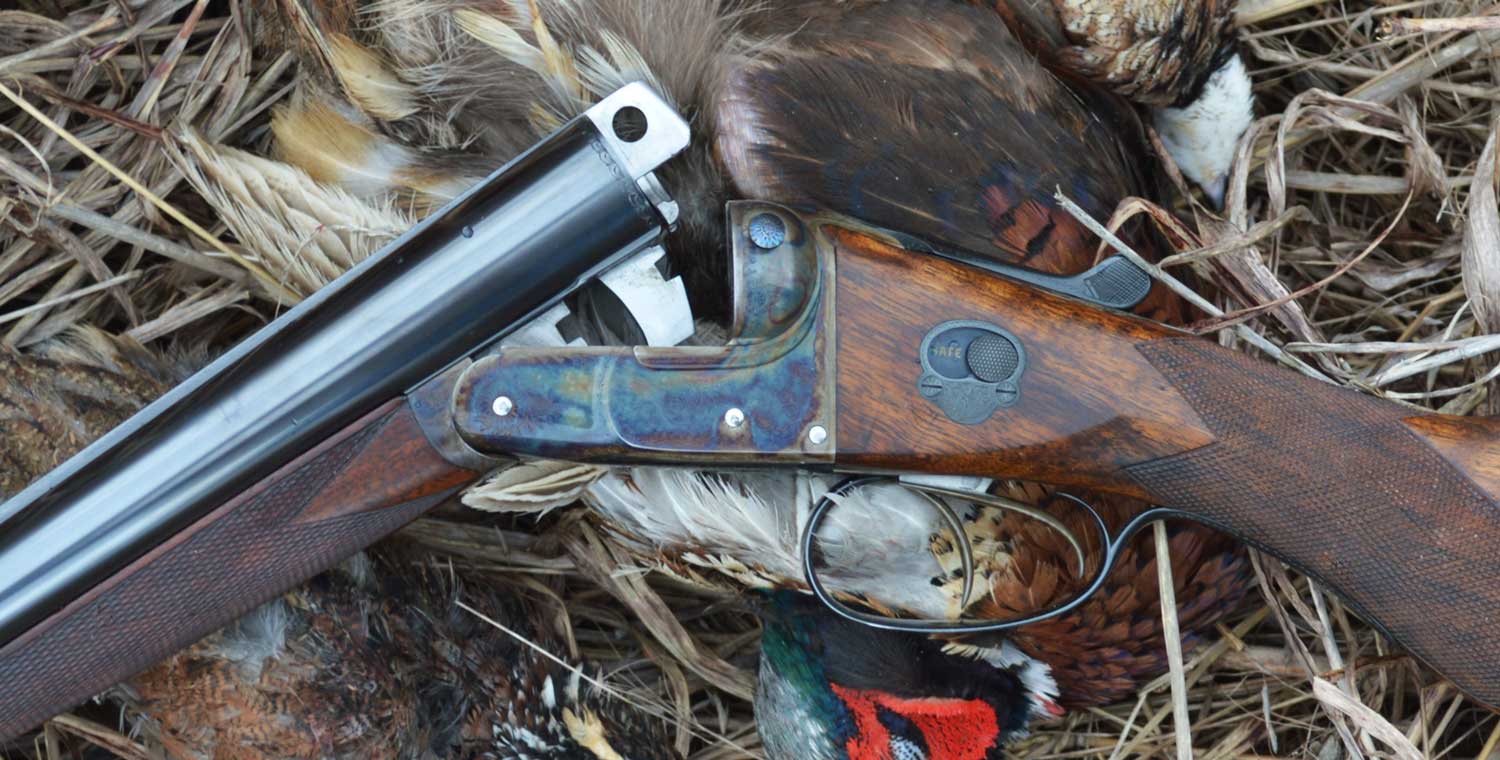
In 1899, when this 12-gauge live-pigeon gun was made, the Birmingham-based firm of W.W. Greener was the largest manufacturer of sporting arms in Great Britain and a major exporter to the U.S.
W.W. Greener, Birmingham
The history of the W.W. Greener company is generally regarded as beginning in 1829, when William Greener founded the W. Greener company. Its muzzleloading rifles and shotguns achieved international recognition in the early 1850s at the London, New York and Paris Exhibitions. William Greener authored two significant books, The Gun and The Science of Gunnery. They solidified his personal reputation and brought national and international customers to his company.
In 1863, at the age of 29, William Wellington Greener left his position as plant manager of his father’s company and established his own—W.W. Greener.
The place of the W.W. Greener company in the history of the double barrel shotgun was secured by two accomplishments. The first was what became known as the Greener cross-bolt, invented in 1867 and improved in 1873. It contributed to the solution of the major problem with break-action cartridge shotguns at the time. When the blackpowder in a cartridge exploded, it created an outward force in all directions. Unless constrained, the force going backward along the axis of the gun could push the rear of the metal cartridge against the face of the receiver with enough force to damage the gun. The double-underbolt patented by James Purdey 1863 dramatically reduced this risk. The doll’s-head top-rib extension, patented by the Westley Richards company in 1862, limited lateral movement. The Greener cross-bolt kept barrels from moving upward. When mated with the Purdey and Westley Richards inventions, the receiver and barrels were secured at three points. Europe’s best gunmakers licensed the three inventions, and the triple-bolt locking system became the industry standard. For marketing reasons, W.W. Greener labeled the triple-bolt system used on its guns as the “Treble Wedge Fast.”
The second great accomplishment was the introduction of choke bores. The concept had been around for decades, however, W.W. Greener was the first company to develop a method for choke boring that worked on an industrial scale, and its engineers designed the machines to bore chokes precisely and economically.
When the company’s advertised claims of the substantially improved performance were challenged by other manufactures, William Wellington Greener personally took the lead in responding. He encouraged public trials pitting Greener-choked guns against all comers, which first took place in London in 1875. The Greener guns performed dramatically better than cylinder bore guns. Similar results were replicated in 1877, 1878 and 1879. He aggressively used the press to convince the public of the benefits of choking. The industry followed.
William Wellington Greener was a major force in the sporting guns industry for half a century. The title of a 1992 Double Gun Journal article by Douglas Tate, “W.W. Greener: A Life of Controversy,” artfully condenses much of what has been written about him. The portrait that emerges is that of a “very difficult man” who “was almost always at the heart of one heated debate or another, always up to his neck in controversy—not surprising perhaps for a man who achieved fortune and fame by adapting the ideas of others.”
His most publicized controversy surrounded the invention in 1880 of a boxlock action that he named the Facile Princeps (First Principles). Fellow Birmingham gunmaker Westley Richards & Co. believed that the W.W. Greener invention infringed on its 1875 A&D patent and asked Greener to pay royalties. Greener refused, contending the Facile Princeps (FP) was based on a different self-cocking principle. Westley Richards filed a lawsuit in 1881. W.W. Greener eventually won and would use its Facile Princeps action over the next six decades. The process took three years, and the dispute divided the British sporting arms industry and sportsmen, sometimes bitterly. Ironically, after the Westley Richards patent expired, W.W. Greener used A&D actions on at least three different models.
William Wellington Greener considered himself an “idea” man who took vague ideas and turned them into something valuable. He passionately believed in the superiority of his guns and was relentless in his efforts to convince others. Some of his contemporaries, however, saw him as a ruthless businessman and shameless self-promoter who used the power of the pen to exaggerate his own contributions, diminish those of rivals, and attack his perceived enemies.
He is best known today as the author of two books. The first was The Gun and Its Development published in 1881. This 700-page tome was ambitious in scope and covered each topic in detail. The content was updated regularly in the eight editions that followed over the next 30 years. The second famous book bearing William Wellington Greener’s name, Modern Shotguns, was published in 1888. It is a well-researched contemporary source of information about guns and gunmaking at the end of the 19th century. But, as revealed in The Greener Story, William Wellington Greener did not write either book. They were written by his eldest son, William Oliver Greener, although the father had the final say on content. William Oliver Greener left the company in 1894 and became an accomplished international correspondent and journalist.
W.W. Greener Shotguns
The W.W. Greener company produced a wide variety of types and models of shotguns. Most were exported. Other than the British Empire, the U.S. was its largest market.
Between 1863 and 1875, the company manufactured about 15,000 back-action and bar-action sidelock hammerguns. Between 1875 and 1900, the number of hammerless boxlocks and the number of sidelocks (hammer and hammerless) were about equal. Between 1900 and 1915, three quarters of its guns were hammerless boxlocks.
Identifying the type, model, grade and quality of Greener shotguns is difficult. In the five decades before World War I, the company used four different systems of grading and pricing. Names were assigned for different purposes, including differentiating among grades of best quality guns, characterizing different models and labeling specialty guns. In some instances, guns of the same model and quality level have different actions and ejectors. Fortunately, The Greener Story contains detailed descriptions and tips on how to identify types and models. It also organizes grades into three levels—best quality, medium quality and inexpensive. The Appendices have tables that simplify and facilitate comparisons among the four systems.
Potential American buyers likely found this as confusing as we do today, especially in the early years. For example, an 1879 catalog featuring guns imported by the New York firm, Henry Squires, advertises 11 numbered grades of Greener hammerguns (12 if you count No. 7-1/2). The No. 1 grade gun is priced at $275, the No. 11 at $75. The advertisement lists them all on one page with very brief descriptions. One suspects this was not particularly effective, but Greener learned and adapted.
The 1892 Schoverling, Daly & Gales catalog advertises three grades of medium quality hammerless ejector guns. They are priced from $110 for a plain gun with laminated steel barrels to $250 for a Damascus-barreled gun with “neat engraving.” A best quality “Pigeon Gun” with ejectors, fine Damascus barrels and engraving cost $350. J.P. Lovell in Boston advertised in its 1890 catalog four grades of medium quality hammerless guns, priced from $125 to $250, and one best quality hammerless gun, priced at $350. Both SD&G and Lovell advertised two specialty hammerguns, the “Trap Gun” ($85) and the “Far Killing Duck Gun” ($100 to $120).
Given the number of types, models and grades of Greener shotguns, it is not feasible to include in this article a representative example of each. The alternative chosen was to select a gun that has components and traits similar to many of its medium quality and best quality shotguns. The restored Monarch Model bespoke 12-bore Pigeon Gun, No. 48692, pictured at the beginning of this section and immediately below, is such a gun.
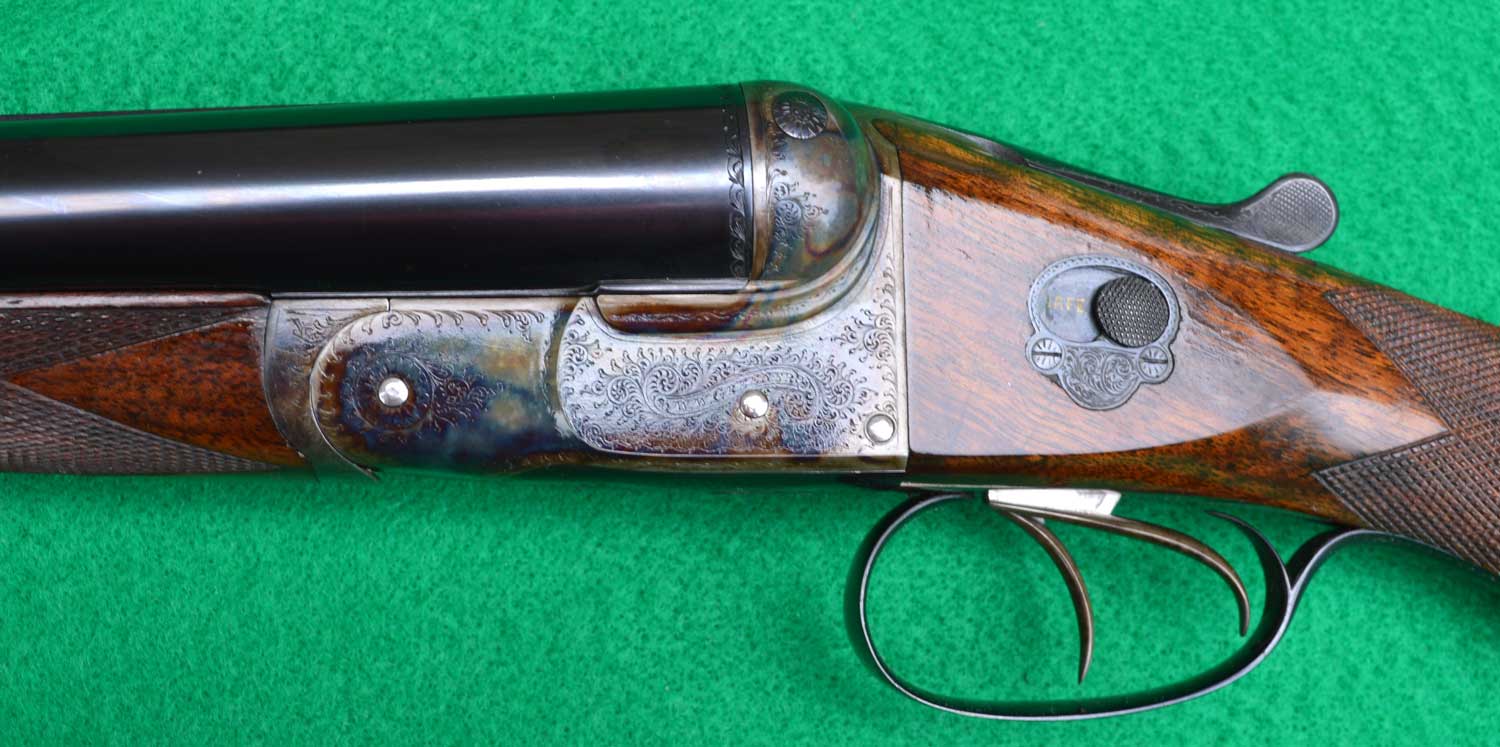
Monarch Model doubles were produced between 1895 and 1903. In 1903, the firm’s London catalog lists the prices of best quality Monarchs—Royal Grade, Imperial Grade and Presentation Grade—at 85, 70 and 60 British guineas, respectively (approximately $450, $350 and $300). The price for medium quality Monarchs ranged from 45 to 25 British guineas ($230 to $125).
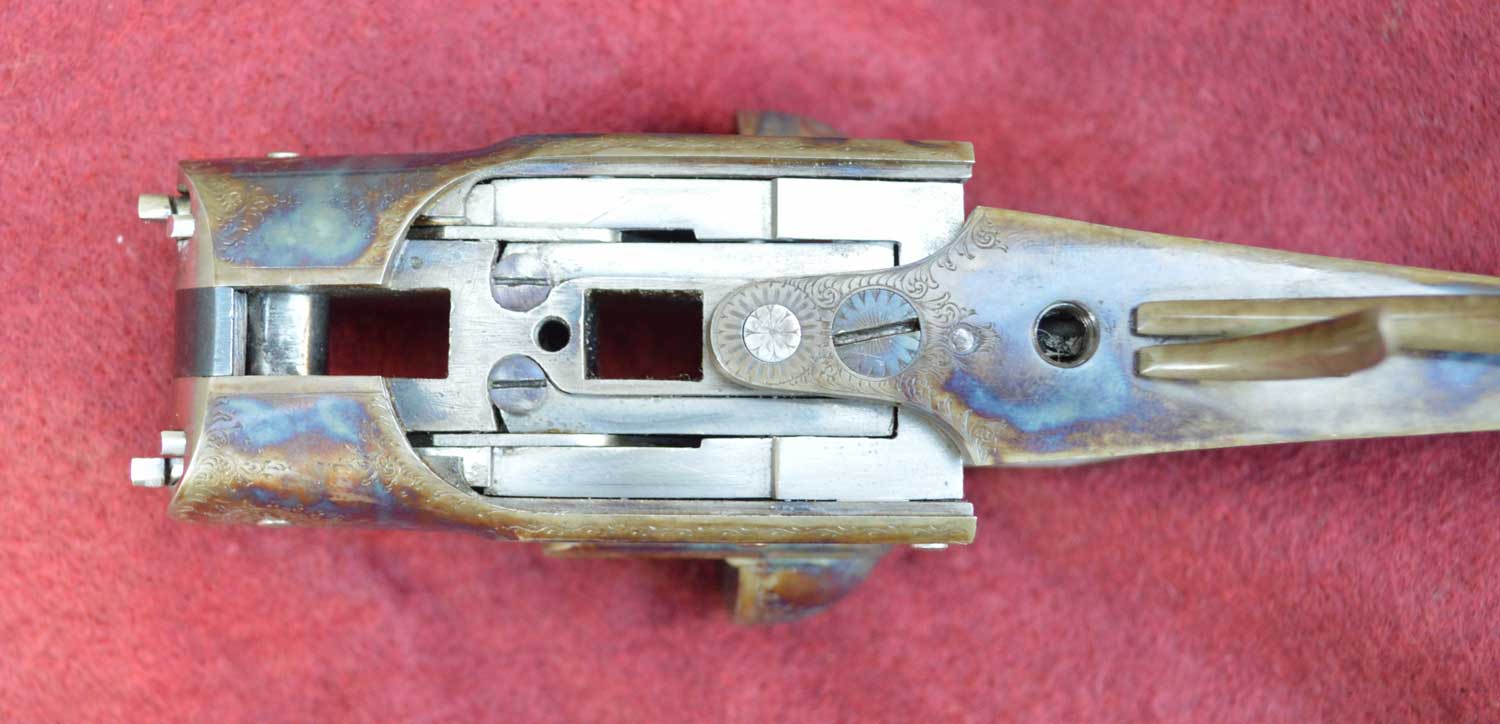
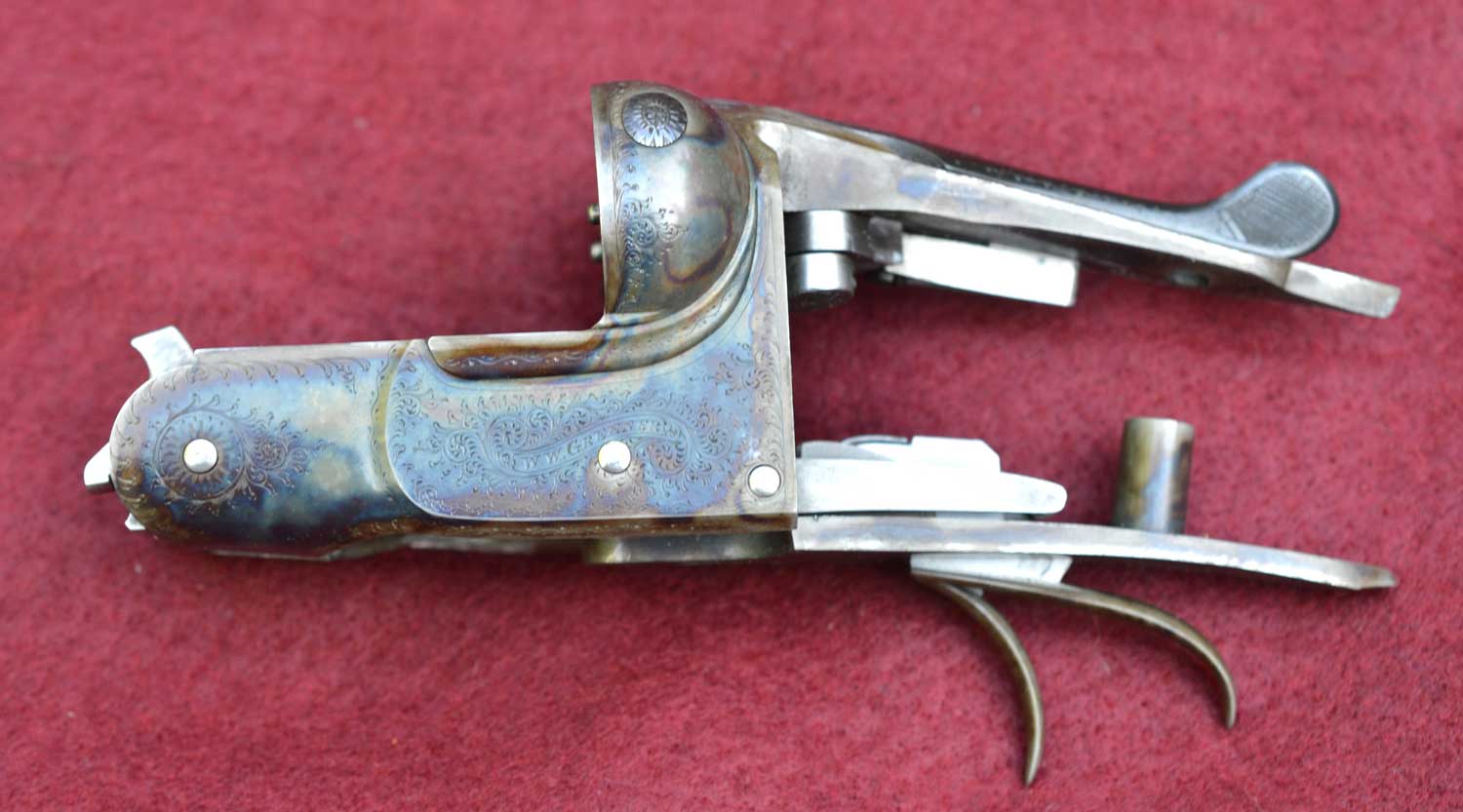
No. 48692 is built on a modified A&D boxlock action. In the top picture, the bottom plate is removed to reveal the core elements of the lock.
This gun uses an 1896 Greener-patented trigger mechanism. Each of the two independent sears has an automatic intercepting safety-catch to prevent the gun from discharging if a sear is jarred or released in any way other than pulling the trigger. The receiver itself is 1 5/8 inches wide, 2 1/4 inches tall and 3 1/4 inches long without the tang. Together, the receiver, action and trigger mechanism weigh 1 pound, 12 ounces.
The gun is fitted with the Greener Independent Side Safety. Because the Side Safety allows less wood to be removed from the center of the stock head than a tang-mounted safety, W.W. Greener promoted it as allowing for a stronger stock. The Side Safety does not automatically reset when the gun is opened to reload. This is ideal for shooting trap; however, hunters must train themselves to refocus quickly on reactivating the safety after a shot. Also, hunters accustomed to a safety being on the tang may find it challenging to smoothly shoulder while simultaneously taking the safety off.
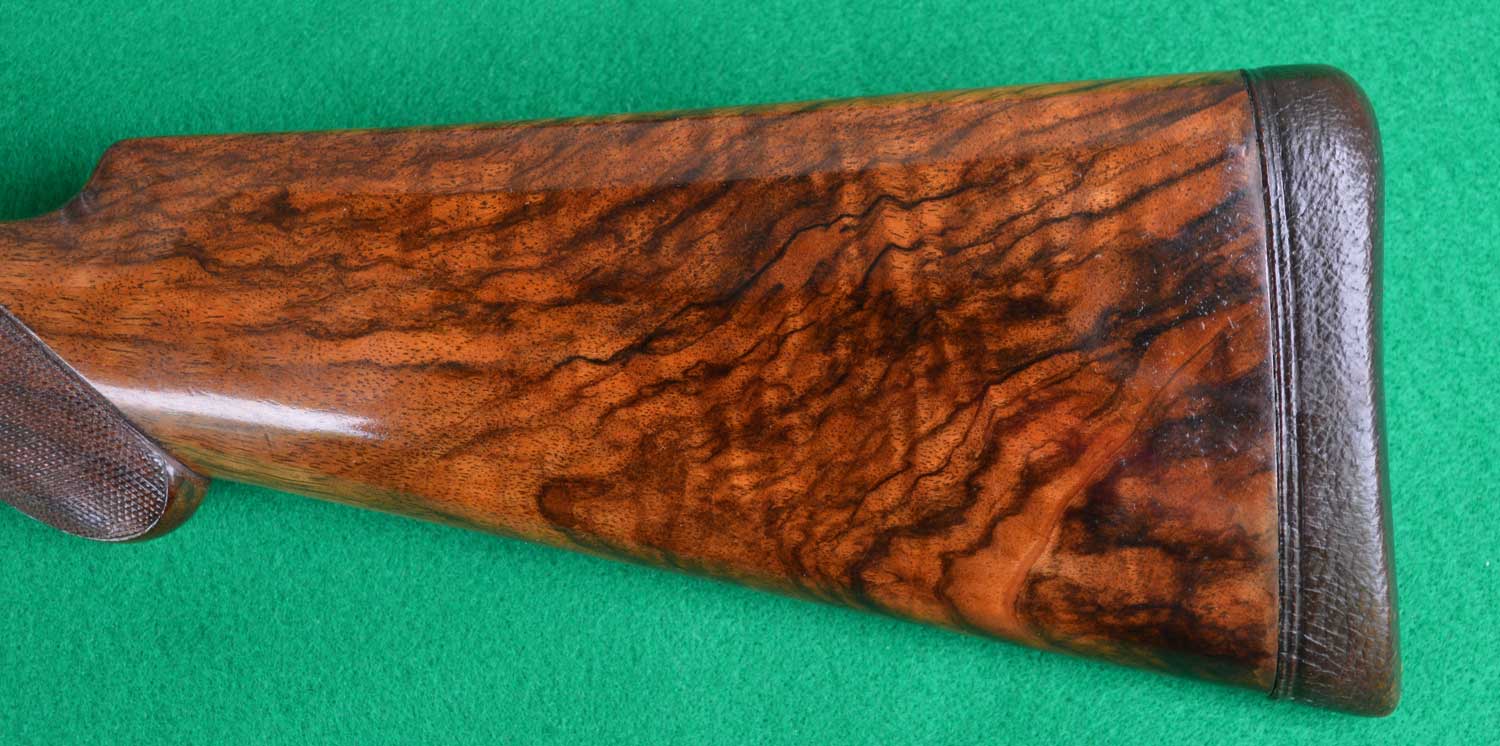
The stock is made of highly figured French walnut that would have been seasoned for between eight and ten years. The grain alignment is perfect. The effect of the dark grain against a highlighted multi-tonal background is visually stunning. The figure, color and contrast are similar on both sides, which is rare. The checkering is 28-point. This stock rates a 4+.
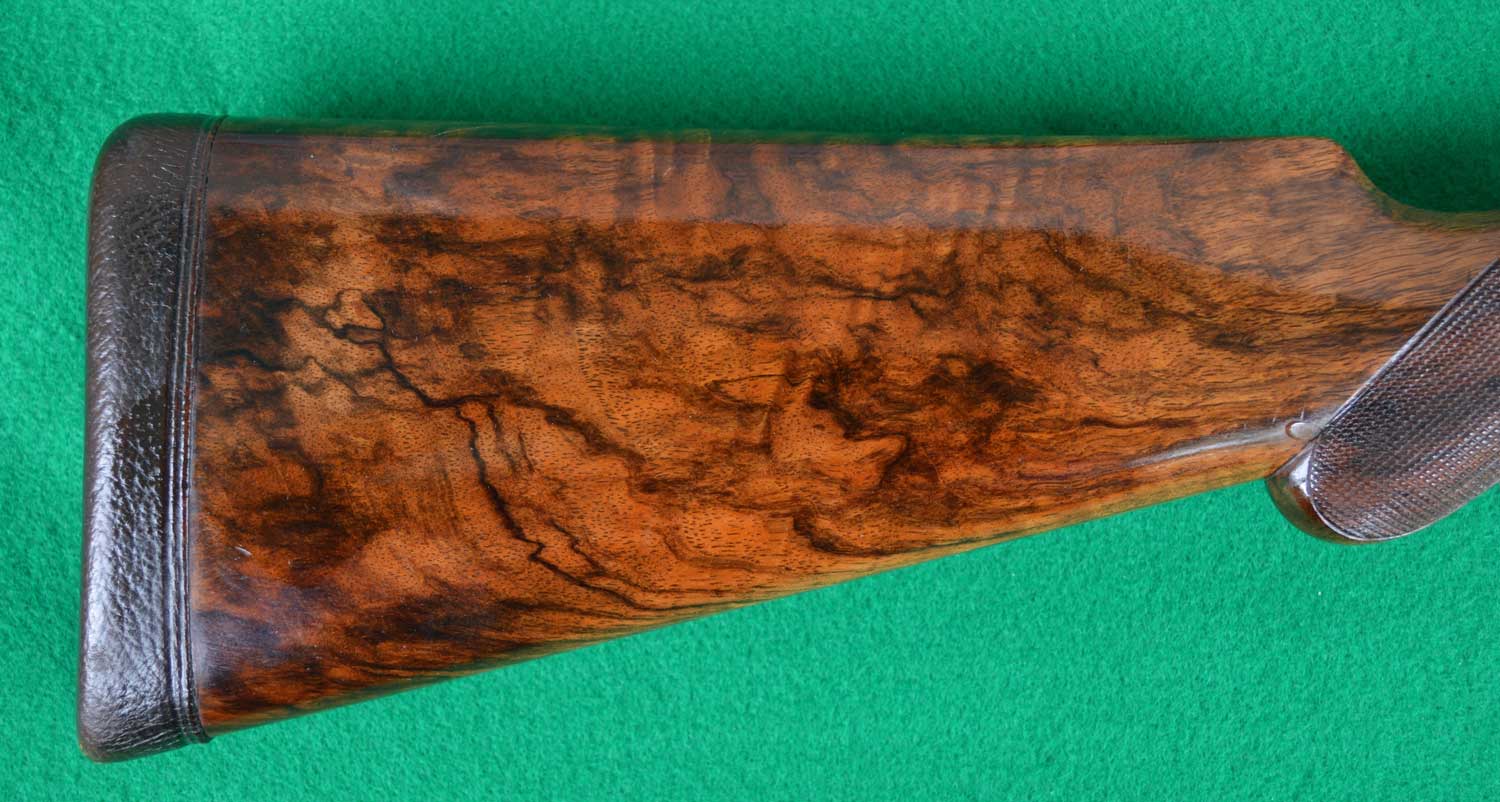
The length of pull is 14 inches to the end of wood, the drop at comb is 1 3/8 inches and the drop at heel is 2 inches. The cast is 1/8-inch off. The stock is fitted with a 1-inch leather recoil pad. The modified pistol grip was very popular on live pigeon guns, as it allowed the gun to be held more securely than the straight grip.
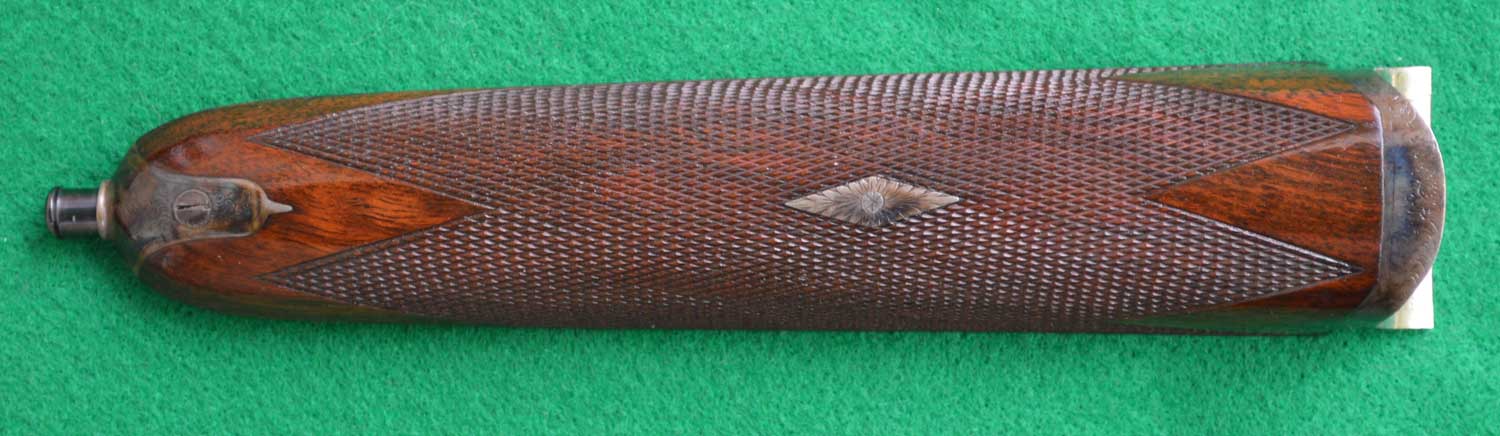
Monarch shotguns used different makes of ejectors. This gun has a Westley Richards-style ejector and forend release mechanism, readily identified by the Anson-plunger at the top.
Pigeon guns required a different type of barrels than general-purpose game guns, primarily because the rules of competitive live-pigeon shooting allowed for more powerful loads. As described in the 1903 W.W. Greener catalog, “the barrels are chambered for longer cases and bored to give the best results with large charges of powder and shot…. The Standard Pigeon Gun (12 bore) is chambered for the 2 3/4 inch case and bored for the load of 48 grams [of powder] and 1 1/4 oz. shot.” Barrels with 2 7/8-inch and 3-inch chambers, which were designed for loads of up to 56 grams of powder, were available by special order.
The 30-inch barrels are made of Siemens steel and nitro-proofed at 4 tons. They have 3-inch chambers and are choked modified and extra-full. The barrels weigh 3 pounds, 7 ounces. The overall weight of the gun is 7 pounds, 2 ounces.
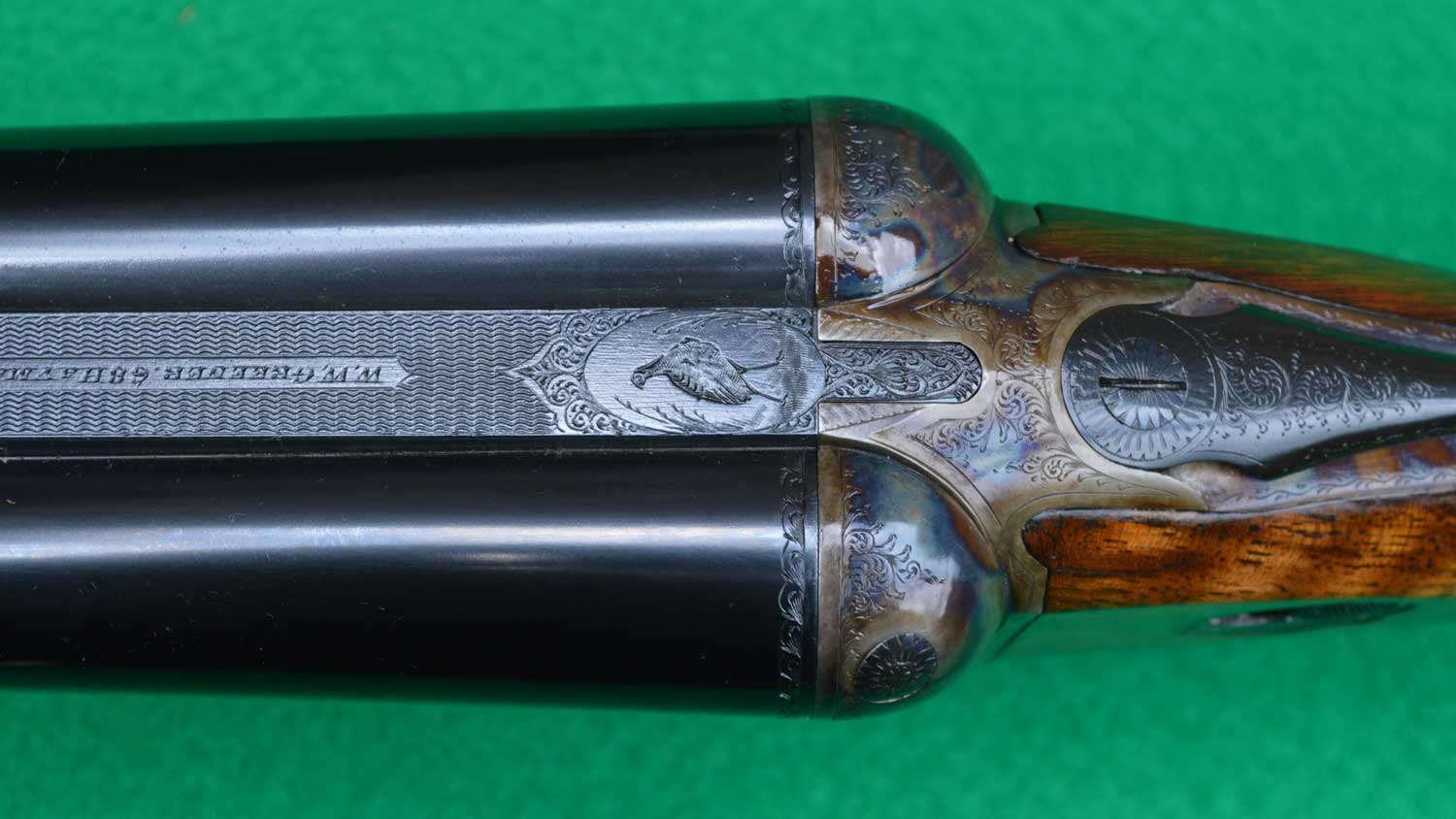
The gun has a “pigeon rib.” The term is defined as a top rib that is flat, straight, raised and matted or otherwise surfaced to reduce glare. The beautifully engraved English blue rock pigeon on the top rib was not primarily intended to reduce glare or for easy identification. Rather, as stated in Greener advertisements, it was engraved on the rib as “a sign that the gun has been bored specifically for this class of shooting.”
The engraving on the receiver is classic English scroll. It is nicely cut, and the coverage is moderate. The absence of more complex and extensive engraving, as well as other elaborate forms of ornamentation such as carved fences and sterling silver inlay, was not an oversight. The person who ordered this gun intended it to be seen as tasteful, but not ostentatious. Visually, the style of this shotgun is best described as under-stated elegance.
William Wellington Greener retired in 1910. Two of his sons, both of whom had been working at the company for many years, took over. When they incorporated in 1920, the company was renamed W.W. Greener, Ltd. It continued manufacturing shotguns and other sporting arms until 1965.
Westley Richards & Co., Birmingham
The firm of Westley Richards & Co. contributed more to the development of double barrel shotguns in the late 19th and early 20th centuries than any other gunmaker in the world. It was the only Birmingham shotgun manufacturer to receive a royal warrant from a British monarch, King George V, in 1911. Westley Richards highest quality doubles are in the same best-in-class category as those made by the top London gunmakers.
Westley Richards & Co. was founded in 1812 by William Westley Richards. He reportedly was very intelligent, public spirited and what we would call today a “people person.” He was a zealous innovator and received nine patents. Upon his death in 1865, his eldest son, Westley Richards, took over the company.
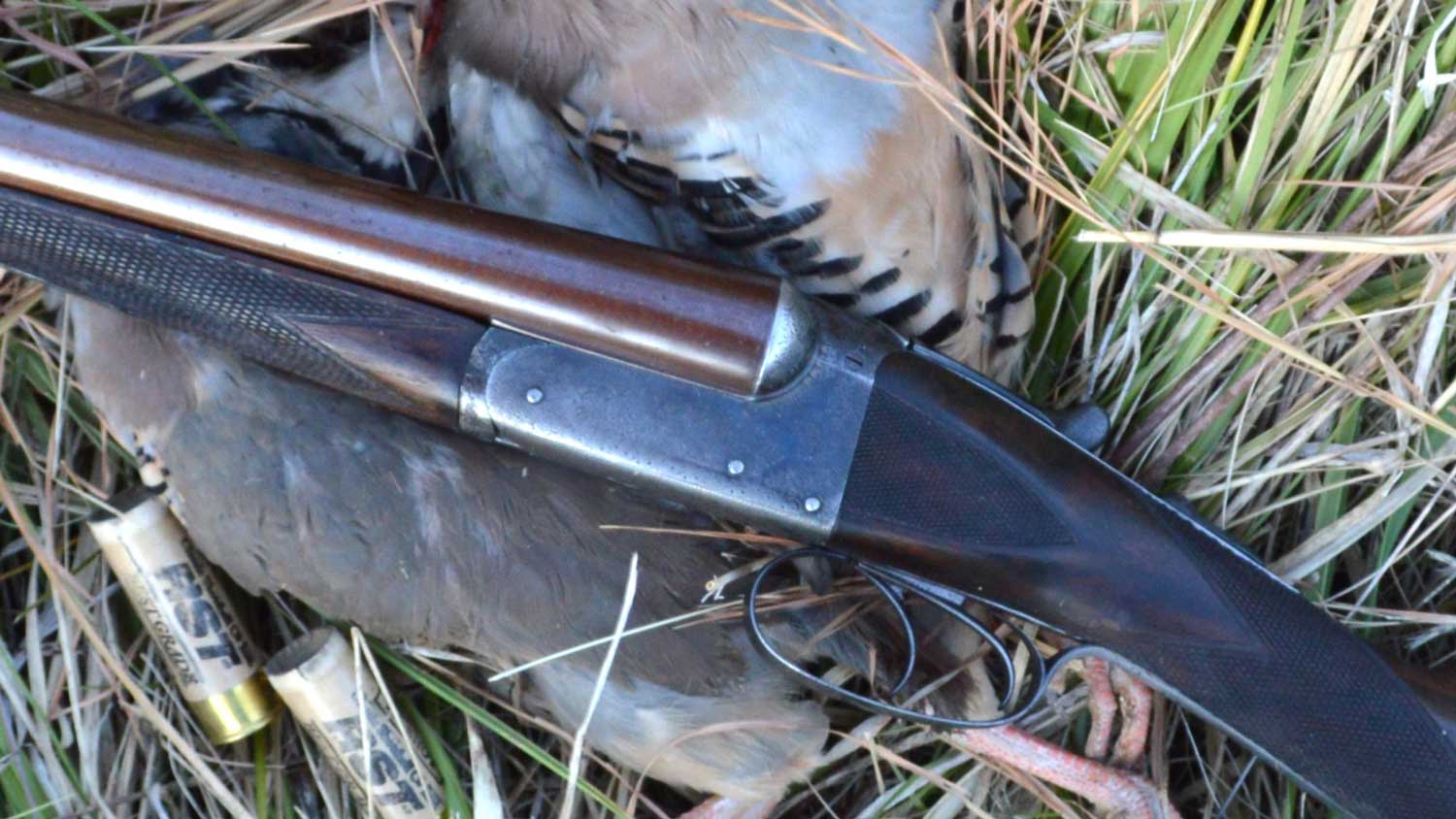
This 1877 Westley Richard 12-bore shotgun is built on the improved Anson & Deeley boxlock patented in 1883, has an English walnut stock with a traditional English straight grip and 30-inch fine Damascus-steel barrels. Weighing 6 pounds, 4 ounces, it is well-suited for hunting upland game.
Westley Richards was definitely not a people person. In 1913, Leslie B. Taylor, who was the managing director of the firm at the time, published A Brief History of the Westley Richards Firm, 1812-1913. In it, he describes Westley Richards as: “Naturally stern and self-willed, reticent, obstinate, unforgiving, he was unquestionably what is termed a ‘hard’ man.” Taylor also describes him as “a man of outstanding ability” and having “a perseverance so indomitable that it never ceased to be a wonder even to those who knew him best.”
Westley Richards kept the firm on a steady course. He sustained the corporate culture of innovation and is personally credited with the two landmark inventions patented in 1862—the top-lever release-action and the doll’s-head top rib extension. The firm continued attracting and keeping very skilled craftsmen, in part because it continued paying among the highest wages in the industry. Westley Richards led the company into the global market. He retired as managing director of the firm in 1872 but continued maintaining control as chairman. One of his last best decisions was selecting John Deeley to succeed him as managing director.
Deeley led the company from 1872 until 1899. Under his leadership, the company’s international presence continued expanding, first in Africa and India and later the U.S. Technical innovation, to which he personally contributed throughout his tenure, continued giving Westley Richards a competitive advantage. Together, Deeley and William Anson, who was foreman of the gun action department, invented the Anson & Deeley boxlock action. Deeley and James Edge, a mechanical engineer who was foreman of the sporting and military rifle department, invented the Deeley & Edge forend latch. It became the most widely used in the industry. The Deeley ejector patented in 1884 became one of the two most commonly used automatic ejectors on shotguns. In 1897, Westley Richards & Co. patented a hand-detachable lock, known as a “droplock.” It was a key element in the company’s reputation and finances in the first half of the 20th century.
Westley Richards & Co. Shotguns
Westley Richards & Co. made its hammerless “Best Gun” in three quality levels: “A,” or “best” quality, “B,” or “plain” quality (same components as best quality but not engraved); and “C” quality (some engraving; same components but with some being a step down in quality—e.g., standard rather than fine Damascus barrels). The company used the term “Special” for guns other than its best gun, typically a less-expensive, rugged, mid-quality shotgun intended for export.
The 1899 catalog of Hartley & Graham (Westley Richards’ New York agent) listed two grades of Westley Richards double hammerless ejector guns. The highest quality (A) gun is described as having the “Best Finest Damascus” barrels, a “Heel Tipped and Checkered” stock, “Best” engraving and “all the latest improvements.” Offered only in 12 gauge with 30-inch barrels, it was priced at $210. The “C” quality gun, which is described as having Damascus barrels, a horn heel plate and engraving, listed for $185. The catalog also advertises a “Special” grade gun priced at $105.
By 1908, Westley Richards’ highest quality hammerless ejector gun with hand-detachable locks and a single trigger had become the star. It was priced at $450 in the 1908 VL&D catalog. If ordered with A&D locks and two triggers, the price was reduced by $100.
Westley Richards’ most expensive shotguns, the Modèle de Grande Luxe and the Modèle de Luxe, did not make it to America. The firm’s 1910-1911 London catalog describes the Modèle de Grande Luxe as being of “superb quality of design and ornamentation” and “truly representative of the highest attainment of the art of gunmaking.” Hand-detachable locks, ejectors and the choice of single or double triggers, and fluid-steel or Damascus-steel barrels were standard. The price of a Modèle de Grande Luxe shotgun ranged “according to the client’s requirement as to gold ornamentation and so forth” from 105 to 210 guineas ($535 to $1,075).
The Modèle de Luxe was offered in two grades, highest quality and plain. The functional components are the same as those used on the de Grande Luxe. The highest quality de Luxe gun, priced at 85 guineas ($435), is ornamented with “elaborately and artistically carved and engraved game scenes.” The plain gun, priced at 52 guineas ($265) has no engraving. The company name is lettered in gold on both sides of the receiver (hence it became known as the “Gold Name” gun). The highest quality hammerless sidelock ejector gun, which was introduced in this catalog and priced at 65 guinea ($325), may also have not made it to America before the start of World War I.
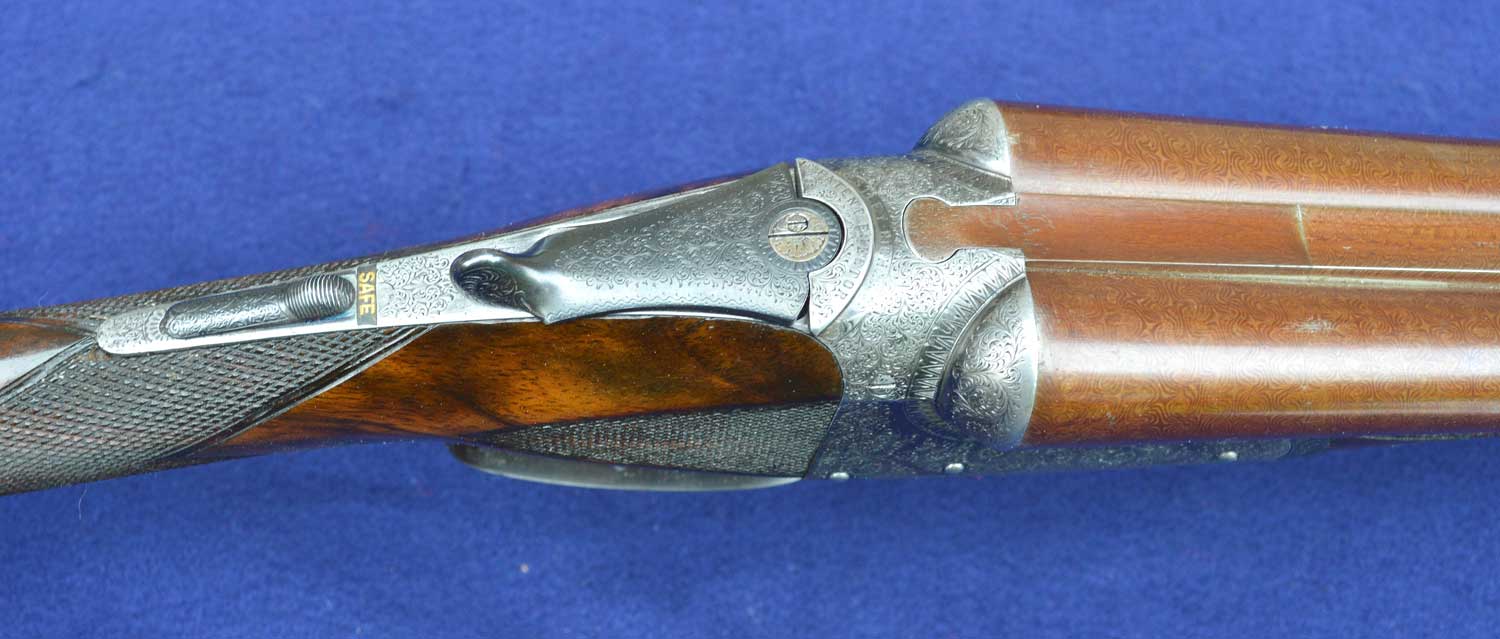
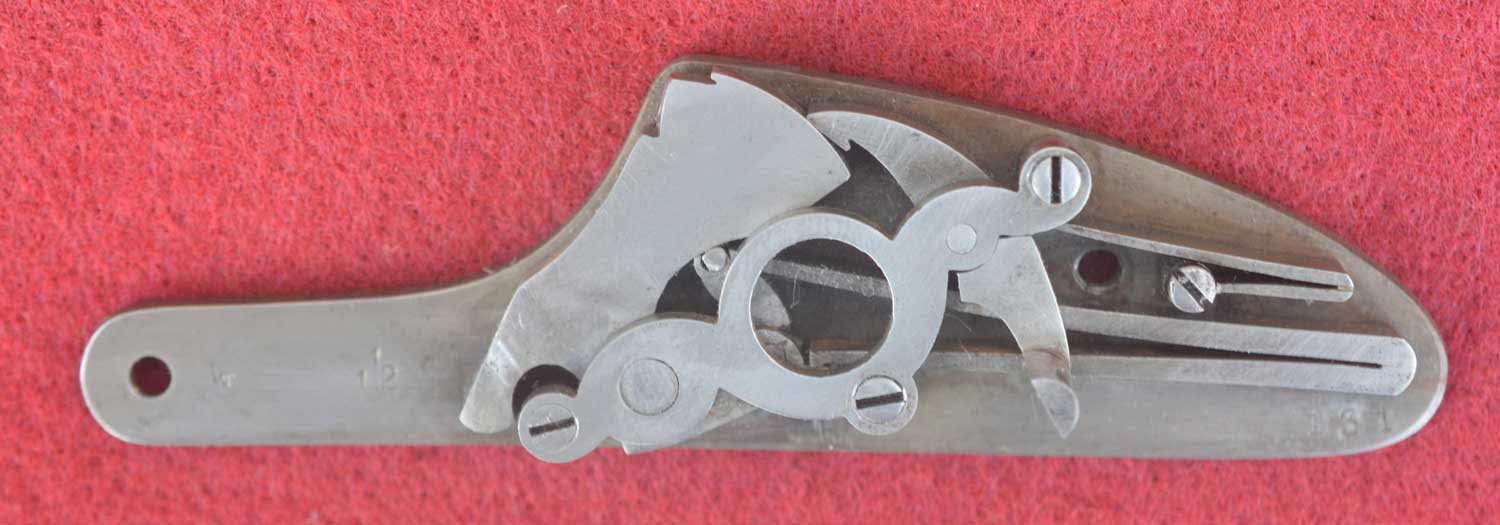
The Westley Richards 12-bore hammerless ejector gun No. 14367 shown here is a highest quality (A) gun. It was manufactured in 1887 and is built on an 1883 patent-improved A&D action pictured below. [The Sauer and Greener guns described earlier in this article use “modified” A&D actions. The A&D action on No. 14367 is the original design.]
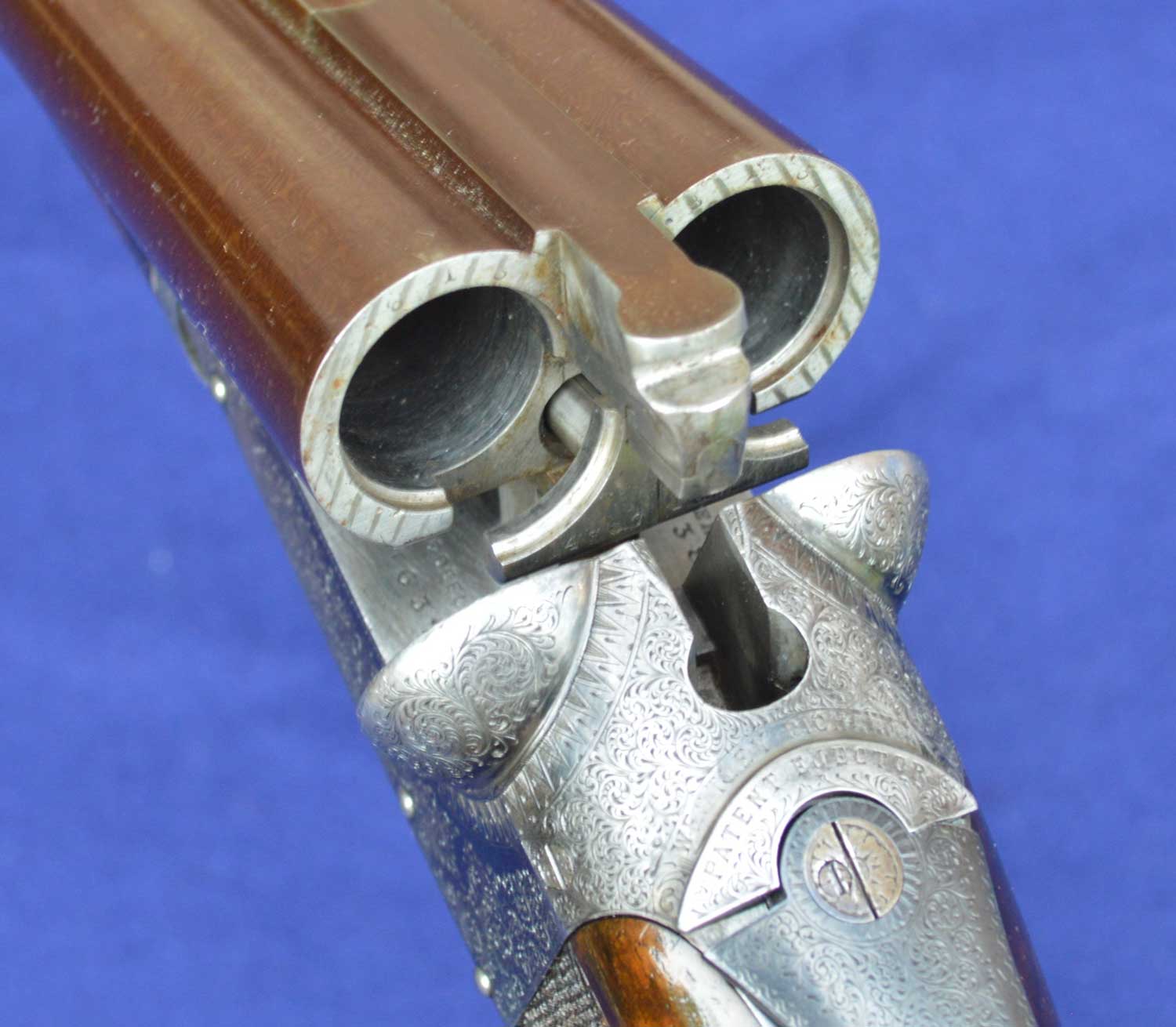
Two differences with the locks on the Sauer and Greener guns provided a higher level of safety. One is double-intercepting sears, which were the most advanced means of preventing accidental discharge. The other is the Westley Richards patented rocker safety mechanism, the most robust and reliable in the industry.
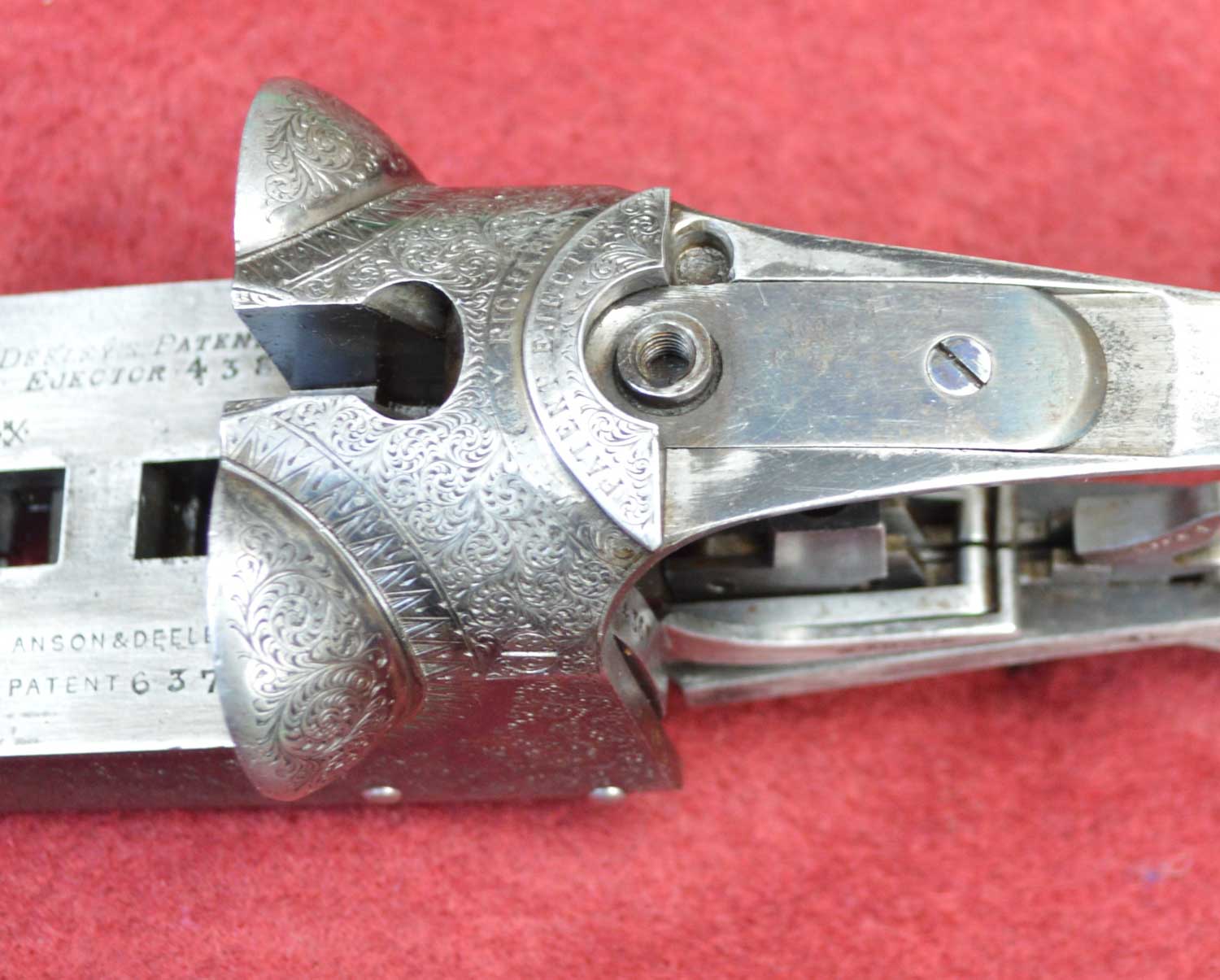
The release-action is powered by a coil spring, which is stronger and less prone to break than a leaf spring. And, of course, the gun incorporates Westley Richards’ first-ever patented top-lever release-action. It uses a sliding bolt under the top-lever to secure the receiver and barrels. When the gun is in the closed and locked position, the bolt is seated forward into the horizontal slot on the doll’s head extension. As the top-lever is rotated, it moves the bolt to the rear allowing the barrels and receiver to separate.
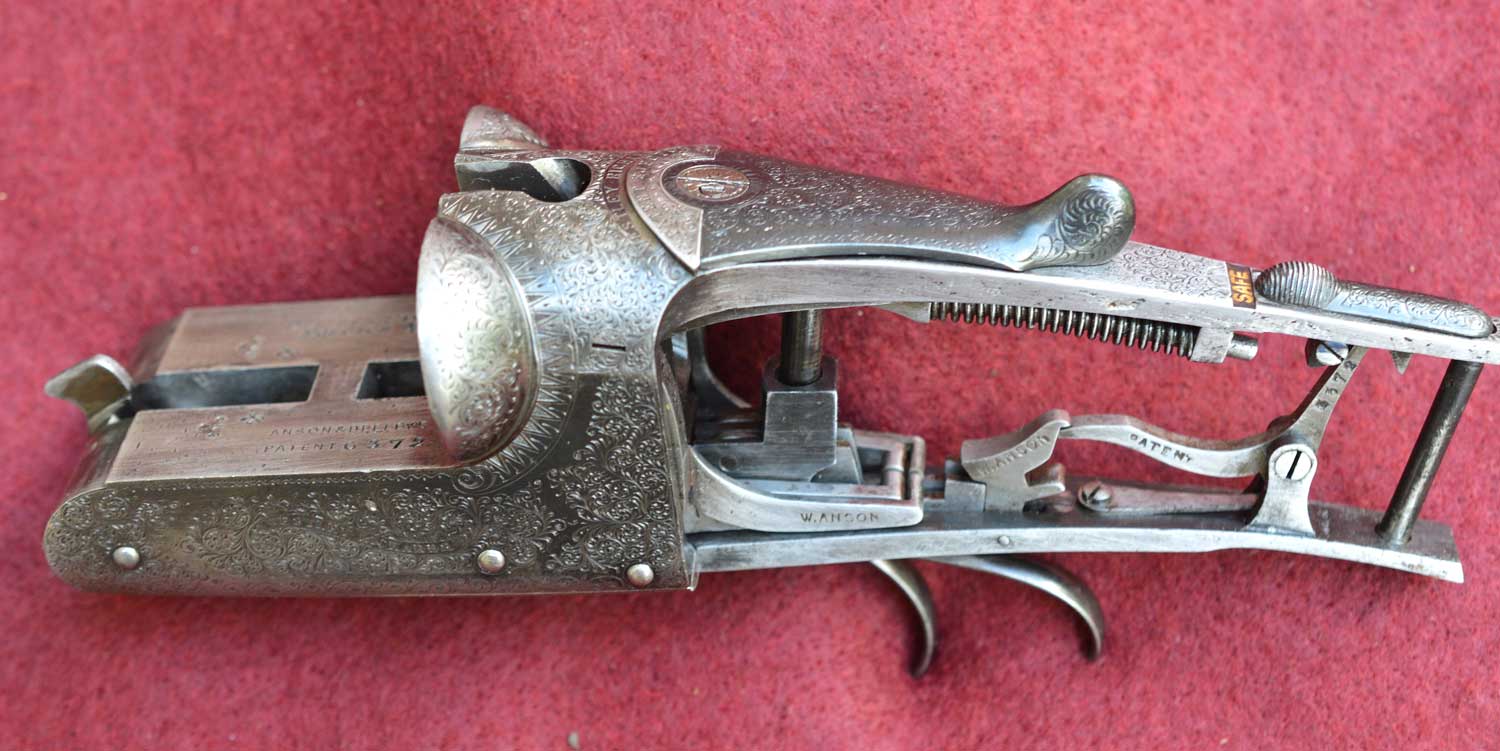
The receiver itself is 1 5/8 inches wide, 2 inches tall and 3 1/4 inches long. The receiver, locks and trigger plate weigh 1 pound, 11 ounces.
The stock is made of English walnut and has as a traditional straight grip. Given the shooting style at the time, this type of grip was thought to allow the shooter to engage the second trigger more smoothly and quickly. The downside of stocks with pistol grips is that the wrists tend to be longer, narrower and, hence, potentially weaker. Long tangs and trigger guards serve to reinforce the wood. Nevertheless, the strength of a stock primarily comes from grain alignment, assuming the stock blank is dense and properly seasoned. On this gun, the dark, curved grain flows from the body of the stock through the wrist and into the stock head. Because the left side is a bit less well aligned, this stock rates a 3+.
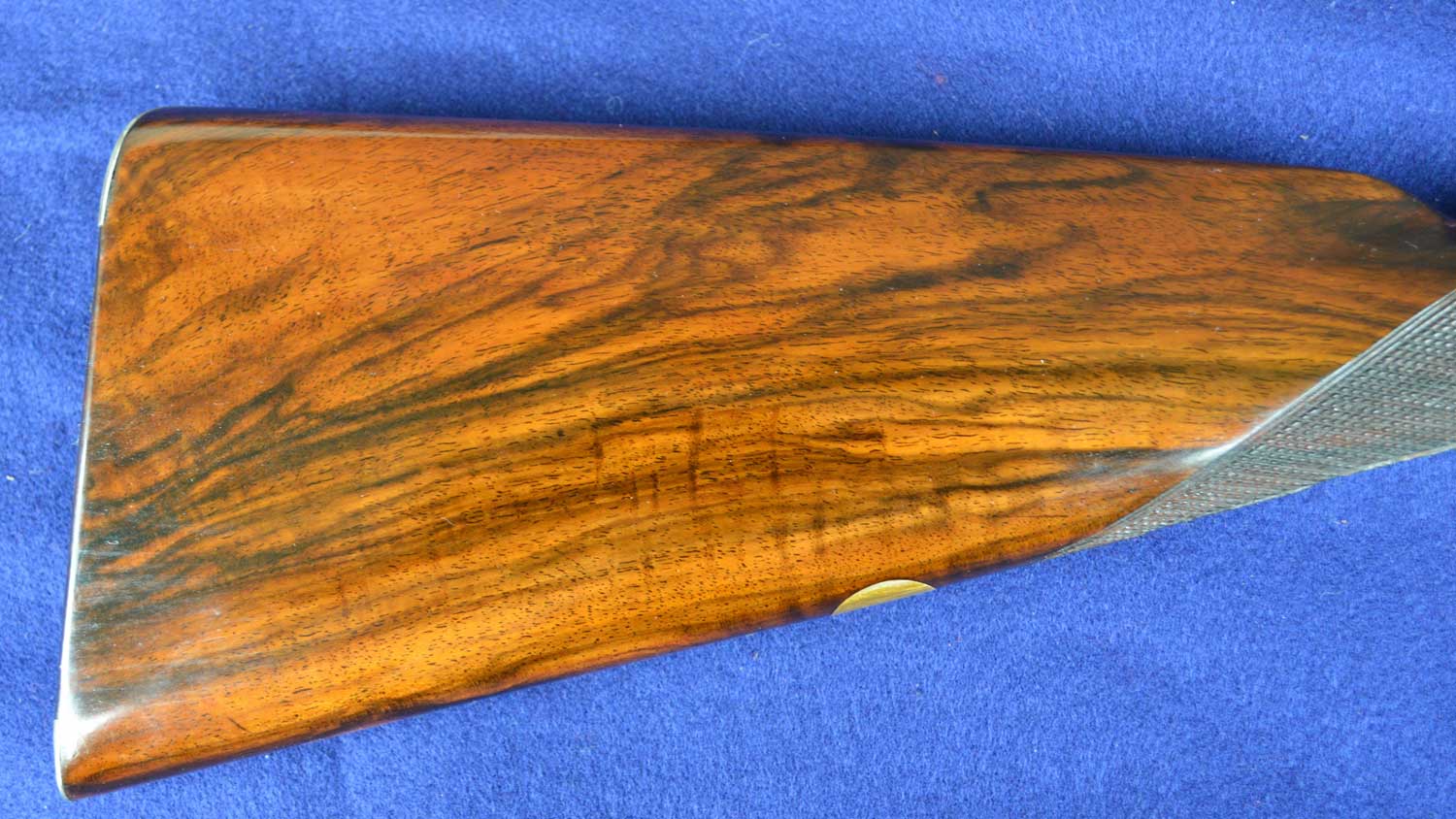
The butt of the stock has steel toe and heel caps. The drop at comb is 1 3/4 inches, the drop at heel is 2 3/8 inches and the length of pull is 14 1/4 inches. The cast is 3/8-inch off. The checkering is 30-point.
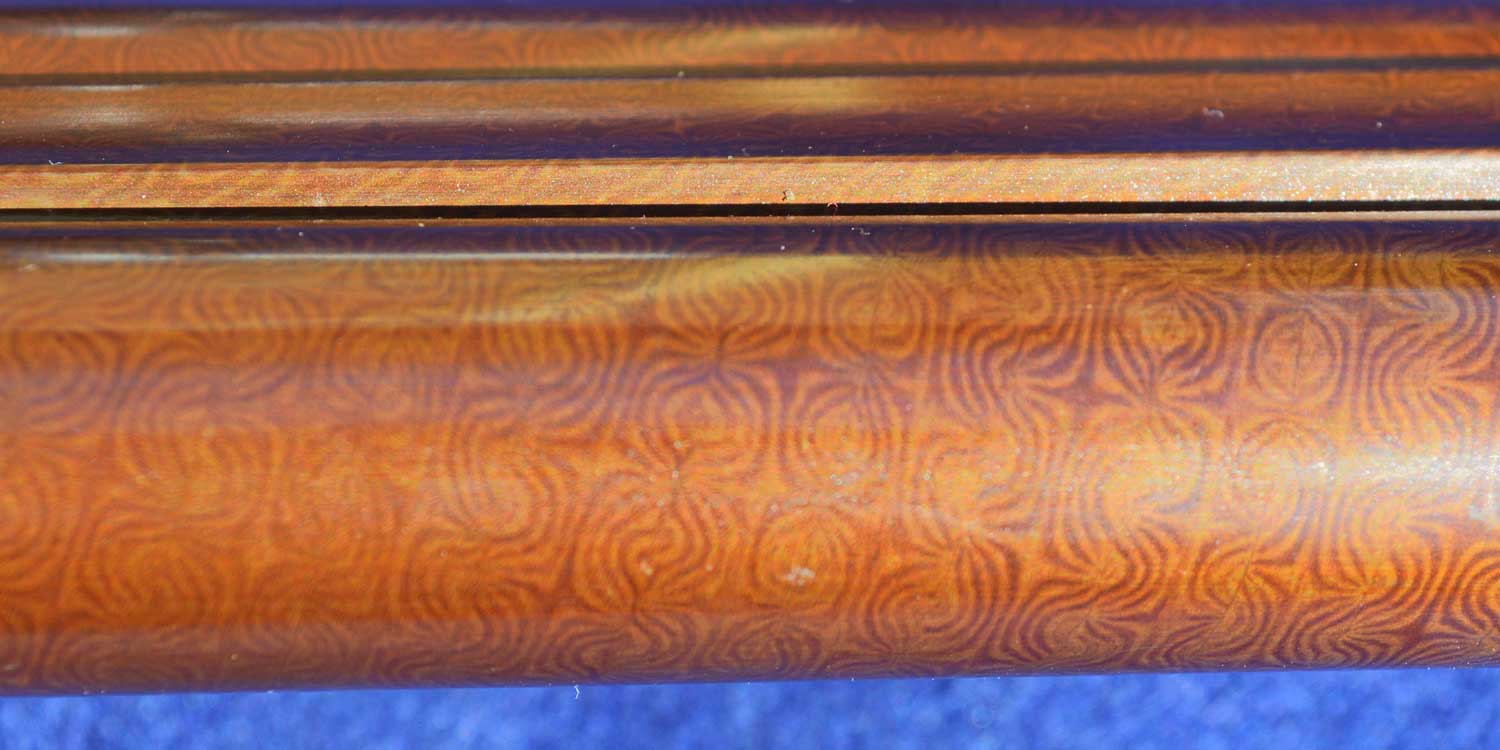
The 30-inch barrels are made of fine (3-rod) Damascus steel. They have 2 5/8-inch chambers and are choked skeet and improved modified. The London-brown finish adds considerably to their beauty. These barrels are strong (nitro-proofed in modern times at 3 tons) and light, weighing 2 pounds, 13 ounces.
The engraving, softened by use over the past 150 years, is finely cut English scroll. The coverage is 95 to 100 percent.
Westley Richards & Co. is the only one of the famous Birmingham gunmakers founded in the 19th century still in operation. Its ultra-modern plant is located at 130 Pritchett Street in Birmingham. As described on its website, Westley Richards & Co. Ltd. offers “customised guns and rifles with embellishments to suit all fine tastes, from our classic house scroll to that seen on our prized Modèle de Grand Luxe grade.” The descriptions of the bespoke process, type of clientele and guns on the website are reminiscent of the descriptions in the 1910-1911 catalog introducing the Modèle de Grand Luxe.